Fuel price hike, road rage, and EV launches dominate auto talk
A jumbo fuel price hike triggers panic buying and transport protests, while road rage incidents and an MMDA enforcer scandal fuel public anger. Meanwhile, EV and hybrid launches offer a counter-narrative of sustainable mobility.
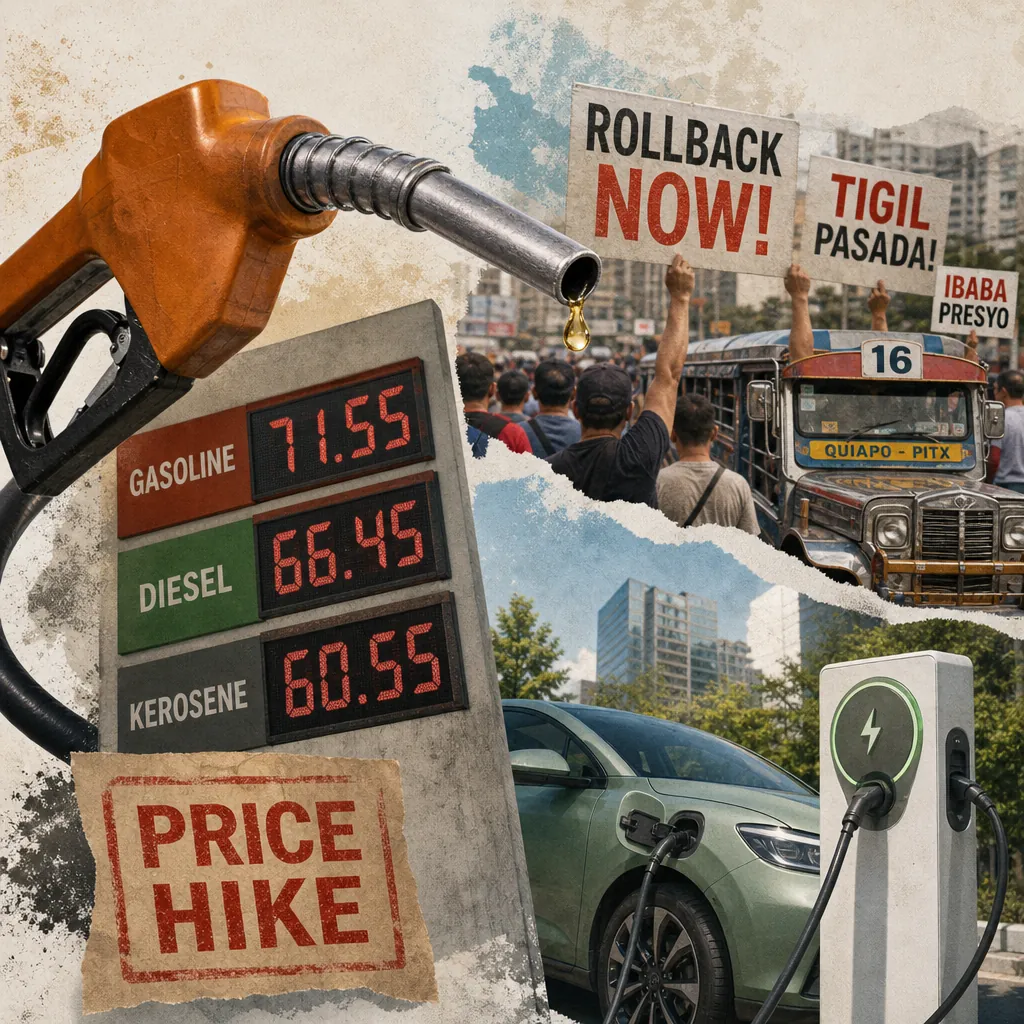
The conversation on July 20–21, 2026, was dominated by a severe fuel price hike that sent diesel up by ₱10.68 per liter and gasoline by ₱3.65, triggering panic buying at gas stations and renewed calls for fare increases and tax relief from transport groups. Social media buzzed with outrage and sarcasm, while news outlets covered long queues and protests. At the same time, a viral video of an MMDA enforcer counterflowing on the EDSA Busway—later revealed to be rushing to his child with a heart condition—sparked a heated debate between sympathy and accountability. Road rage incidents, including a barangay official shooting a truck driver in Pampanga and a motorcycle taxi rider beaten in Marikina, added to the sense of lawlessness on the roads. Amid the gloom, several automakers launched new models: Toyota began selling the Land Cruiser FJ, Nissan opened reservations for the Kicks e-Power, and Jaecoo prepared to launch the J5 EV, offering a glimpse of a more fuel-efficient future. The day's conversation thus ran on two tracks: one of economic pain and enforcement failures, the other of industry innovation and the slow shift toward electrification.
Key themes
- Fuel price hike triggers panic buying and transport protests – Diesel rose by ₱10.68 per liter, kerosene by ₱11.77, and gasoline by ₱3.65, effective July 21, driven by renewed Middle East tensions. Long queues formed at gas stations in Quezon City, with one station running out of diesel. Transport groups PISTON and MANIBELA staged protests and renewed calls for a fare increase and the scrapping of oil taxes. The Department of Energy attributed the hike to global market forces, while the Department of Social Welfare and Development began rolling out a ₱2,000 cash assistance program for 7.5 million households.
- MMDA enforcer counterflow incident divides public opinion – Traffic Aide I Jeffrey Tablan was caught on video counterflowing on the EDSA Busway. He later explained he panicked after learning his 10-year-old child with Down syndrome and a heart condition was struggling to breathe, and admitted to having consumed alcohol. MMDA General Manager Nicolas Torre III issued a show-cause order and threatened dismissal. Public reaction on Facebook shifted from mockery (thousands of "haha" reactions) to a mix of sympathy and skepticism.
- Road rage and rider violence intensify calls for enforcement – A barangay official in Pampanga was arrested for shooting a truck driver in a road rage incident. In Marikina, a motorcycle taxi rider was beaten by two men despite bystanders intervening, drawing 462 reactions and 70 comments on Facebook. These incidents amplified demands for LTO action on plate identification and rider accountability.
- New vehicle launches offer a counter-narrative of innovation – Toyota Motor Philippines started retail sales of the Land Cruiser FJ (₱2.235 million), a compact SUV blending off-road capability with daily usability. Nissan Philippines opened reservations for the 2027 Kicks e-Power, an electrified crossover with updated tech. Jaecoo announced the July 22 launch of the J5 EV, which has been the best-selling pure EV in Thailand and Indonesia. These launches signal industry confidence in the Philippine market despite economic headwinds.
- EV and hybrid adoption gains momentum – Pasig City turned over 10 Toyota Zenix hybrid vehicles to city offices, part of its sustainable governance initiative. The Department of Energy updated its list of recognized hybrid electric vehicles to include the Lexus ES 350h. A review of the Hyundai Ioniq 5 highlighted the EV's continued appeal amid the fuel crisis. Meanwhile, VinFast promoted its Viper electric motorcycle with a battery-swapping program, and Vietnam's new registration rules classified eight types of electrified vehicles.
- LTFRB implements regulated pickup fares for TNVS – The Land Transportation Franchising and Regulatory Board introduced a tiered fare system for ride-hailing services, with rates ranging from ₱24 to ₱145 depending on vehicle type and distance. The move aims to compensate drivers for rising fuel costs while protecting commuters from overcharging.
- NCAP scam warning and LTO system issues persist – The MMDA warned the public about text and website scams using the No Contact Apprehension Policy (NCAP) to defraud motorists. The agency clarified that legitimate NCAP notifications do not include payment links or reply options. Separately, the LTO's Land Transportation Management System (LTMS) experienced an outage, the second in a week, highlighting ongoing digital infrastructure challenges.
- Converge launches youth tech program for digital skills – Converge ICT Solutions Inc. piloted "TechForGood: Code the Future, Build New Paths" in Oriental Mindoro, teaching underserved youth programming and robotics. The initiative supports the company's evolution from an internet service provider to a technology company focused on social impact.
How the narratives stack
Dominant – The fuel price hike and its economic fallout dominated both news coverage and social conversation. The story was carried by major outlets including ABS-CBN, Philstar, Inquirer, and Manila Bulletin, with combined advertising-equivalent value exceeding ₱1 million across the captured set. On social media, posts about the hike generated hundreds of shares and comments, with one tweet reaching 852 views and a YouTube daily wrap garnering 1,003 views. The narrative was reinforced by visuals of long gas station queues and emotional interviews with drivers and transport workers. This is the dominant narrative within the captured set because it generated the highest volume of coverage and the most intense public engagement.
Counter-narrative – The launch of new vehicles, particularly EVs and hybrids, provided a counterpoint to the gloom of rising fuel costs. Toyota's Land Cruiser FJ, Nissan's Kicks e-Power, and Jaecoo's J5 EV were covered extensively by automotive media, with combined AVE of over ₱1.5 million. These stories framed innovation and sustainability as a way forward, even as consumers grappled with higher operating costs. The Pasig City hybrid fleet turnover and the DOE's updated hybrid vehicle list reinforced this narrative, suggesting that government and industry are investing in alternatives.
Emerging – Road rage and rider violence are emerging as a persistent sub-narrative that could escalate into a broader crisis of public confidence in road safety. The Pampanga shooting and Marikina beating, combined with the earlier viral rider-kicking-cyclists video, suggest a pattern of aggression that demands systemic response. Social media engagement on these posts was high, with the Marikina beating post alone drawing 462 reactions and 70 comments. If authorities do not act visibly, this narrative could shift from isolated incidents to a critique of enforcement failures.
Suppressed – The LTMS system outage and NCAP scam warnings received relatively little attention compared to the fuel price hike and road rage stories, but they represent ongoing vulnerabilities in government digital services. The LTMS outage, the second in a week, could snowball into a crisis if it recurs during peak renewal months. The NCAP scam warning, while important for consumer protection, was overshadowed by more dramatic news. These issues are under-covered in the captured set relative to their potential impact.
Platform insights
- Facebook: The dominant platform for volume and emotional reaction. Fuel price hike posts generated hundreds of shares and comments, with one post collecting 222 sad and 145 angry reactions. The MMDA enforcer story saw a shift from mockery (4,892 "haha" reactions on a News5 post) to mixed reactions after the enforcer's explanation. Road rage posts, particularly the Marikina beating, drew high engagement (462 reactions, 70 comments). Facebook's reaction buttons enabled rapid sentiment tracking, with "haha" and "angry" dominating early, then "sad" and "care" appearing as personal stories emerged.
- Twitter: Used more for factual updates and amplification than for debate. Tweets from news outlets about the fuel price hike and MMDA enforcer received moderate views (852 and 2,598 respectively) but low retweet and comment counts. Twitter served as a real-time news feed for official statements and links to longer articles.
- YouTube: Information dissemination rather than conversation. TV Patrol's livestream (263,761 views) included the MMDA enforcer story among many headlines, but standalone clips had low engagement (208 views, 5 likes). A daily fuel price wrap garnered 1,003 views. YouTube was a passive consumption channel, with active debate happening elsewhere.
- Reddit: Introduced practical, rule-based discussions. A post about liability in a parking-lot collision (15 comments) and another about driving reluctance (29 comments, 16 upvotes) added a personal, narrative layer to the broader discourse. Reddit users engaged in nuanced debates about traffic rules and personal responsibility, contrasting with the raw emotion on Facebook.
Key voices and communities
- Motorcycle riders and commuters – The most vocal group, dominating conversation on YouTube, Facebook, and Reddit. They are highly reactive to road safety violations and fuel price hikes. Their discourse ranges from daily commuting frustrations to viral confrontations that amplify calls for accountability. The Marikina beating post (462 likes, 70 comments) intensified demands for LTO action on plate identification and rider protection.
- General motorists and private vehicle owners – Less vocal but highly engaged on Facebook, where fuel price announcements generate hundreds of shares and comments. They express frustration over rising cost of ownership and demand better road conditions and enforcement. A Reddit thread from a driver struggling with motivation to drive (16 upvotes, 29 comments) highlights underlying fatigue that may affect vehicle usage patterns.
- Government and regulatory agencies (LTO, LTFRB, MMDA, DOE) – These agencies appear as both actors and subjects. The MMDA's swift response to the enforcer incident and the DOE's explanation of fuel price hikes are notable. However, public counter-narratives highlight inefficiency and systemic dysfunction. The LTFRB's fare increase suggestion was met with harsh criticism, framing regulators as detached from commuter realities.
- Public transport operators and drivers – A smaller but strategically important group directly affected by fuel price hikes and fare regulation. PISTON's protest and the call for a ₱23 minimum fare (from ₱13) underscore the squeeze between rising costs and regulator-imposed fares. The "bite the bullet" remark by LTFRB was widely seen as tone-deaf.
- Automotive industry and media – Carmudi, Top Gear, AutoIndustriya, and other automotive outlets covered new model launches and EV developments. Their content provides a counter-narrative of innovation and sustainability, reaching enthusiasts and potential buyers. The Chamber of Automotive Manufacturers of the Philippines (CAMPI) reported a 133.5% year-on-year increase in EV sales, signaling industry momentum.
Narrative streams
Fuel price hike: economic pain and public anger
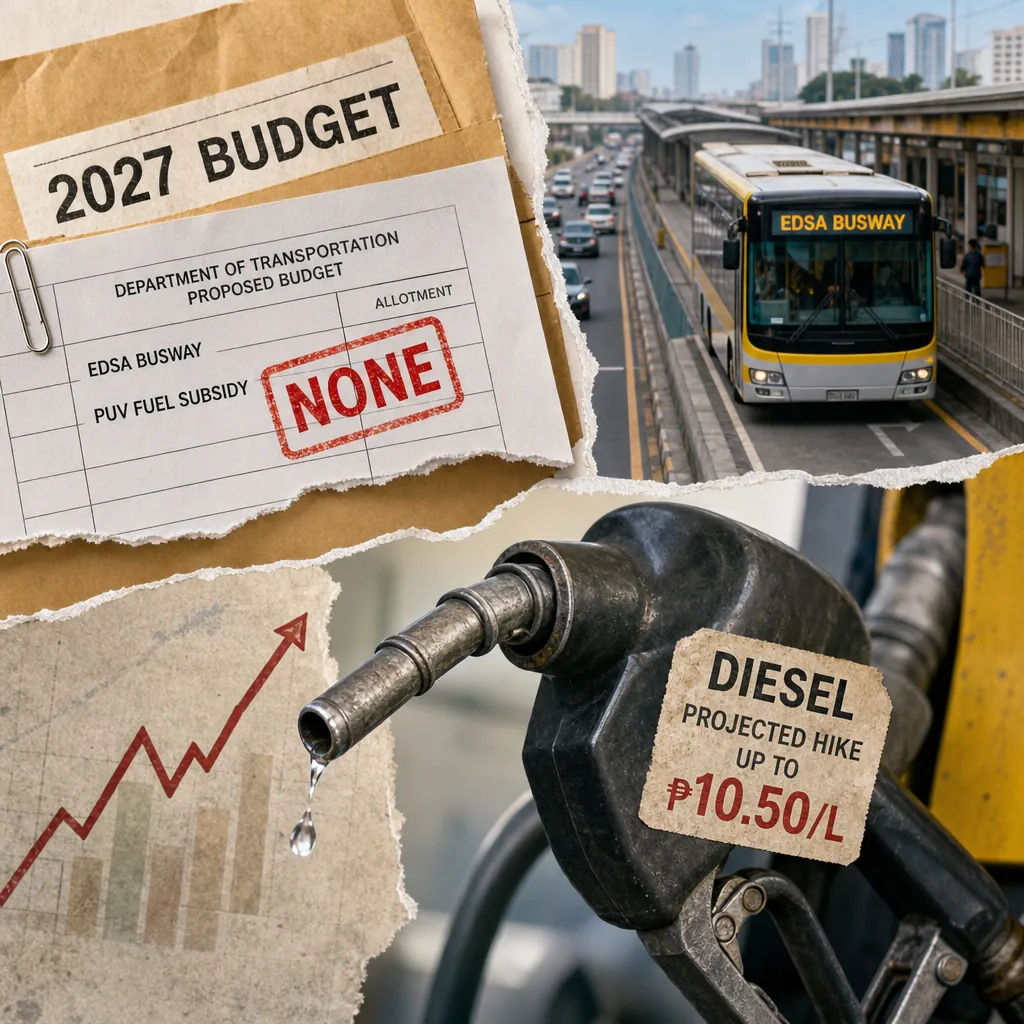
The most significant narrative of the day was the implementation of a major fuel price hike on July 21. Diesel rose by ₱10.68 per liter, kerosene by ₱11.77, and gasoline by ₱3.65, driven by renewed tensions in the Middle East involving Iran, Israel, and the United States. Energy Secretary Sharon Garin acknowledged the burden but said the government could not change global market directions. The Department of Social Welfare and Development began rolling out a ₱2,000 cash assistance program under Executive Order 1110, targeting 7.5 million households. However, transport groups PISTON and MANIBELA dismissed this as insufficient, staging protests and renewing calls for a fare increase and the scrapping of oil taxes. PISTON President Mody Floranda said jeepney drivers are losing around ₱1,850 a day due to fuel expenses alone, and need to earn about ₱4,600 just to cover fuel costs and boundary payments. The conversation on Facebook was dominated by sarcastic and angry reactions, with one post collecting 222 sad and 145 angry reactions. Long queues formed at gas stations in Quezon City, with one station running out of diesel. The narrative is a direct threat to consumer confidence and government approval, and it will likely intensify as the new prices take effect.
MMDA enforcer scandal: accountability vs. sympathy
The story of Traffic Aide I Jeffrey Tablan, who was caught on video counterflowing on the EDSA Busway, evolved rapidly from mockery to a complex debate. Initial coverage by ABS-CBN's TV Patrol on July 19 drew 97 "haha" reactions on Facebook, signaling public ridicule. However, when Tablan voluntarily appeared before MMDA officials on July 20 and explained that he panicked after learning his 10-year-old child with Down syndrome and a heart condition was struggling to breathe—and admitted to having consumed alcohol—the conversation fractured. News5's Facebook post on his explanation garnered 4,892 "haha" reactions alongside 65 "sad" and 21 "care" reactions, showing a polarized audience. MMDA General Manager Nicolas Torre III issued a show-cause order and threatened dismissal for grave misconduct, stating the agency "will not tolerate" such actions. The incident highlights the tension between rule-of-law and personal hardship, and it sets a precedent for how the MMDA handles internal discipline. For government communicators, the challenge is managing the timeline of disclosure—Tablan's explanation came within 24 hours, but the initial mockery had already cemented a viral reputation.
Road rage and rider violence: a pattern of aggression
Two new road rage incidents added to the week's narrative of unchecked aggression. In Guagua, Pampanga, a barangay official was arrested after allegedly shooting a truck driver during a road dispute. CCTV footage showed a truck and a white pickup traveling toward Bataan before the incident escalated. The victim, a 28-year-old man from Nueva Ecija, sustained injuries. In Marikina, a motorcycle taxi rider was beaten by two men despite bystanders intervening, drawing 462 reactions and 70 comments on Facebook. The post was tagged as a "sensitive report on violence" and deepened the narrative of public fear. These incidents, combined with the earlier viral rider-kicking-cyclists video, create a pattern that demands systemic response from the LTO and local authorities. The public is increasingly calling for plate identification, rider background checks, and stricter penalties. If authorities remain silent, the conversation could shift from individual accountability to systemic enforcement failure.
New vehicle launches: a counter-narrative of innovation
Amid the gloom of fuel price hikes, several automakers launched new models that offered a glimpse of a more fuel-efficient future. Toyota Motor Philippines started retail sales of the Land Cruiser FJ, a compact SUV priced at ₱2.235 million that blends off-road capability with daily usability. The model is powered by a 2.7-liter gasoline engine and is expected to appeal to both outdoor enthusiasts and urban professionals. Nissan Philippines opened reservations for the 2027 Kicks e-Power, an electrified crossover with a 134hp and 280Nm output, updated NissanConnect services, and a 12.3-inch screen. The Kicks e-Power is part of Nissan's strategy to expand its electrified lineup. Jaecoo announced the July 22 launch of the J5 EV, which has been the best-selling pure EV in Thailand and Indonesia. The J5 EV offers a 461-kilometer NEDC range, validated by the Automobile Association of the Philippines (AAP) with a real-world achievement of 539.2 km. These launches signal industry confidence in the Philippine market and provide a counter-narrative of innovation and sustainability.
EV and hybrid adoption: government and industry push
The shift toward electrification was reinforced by several developments. Pasig City turned over 10 Toyota Zenix hybrid vehicles to city offices, part of its sustainable governance initiative. Mayor Vico Sotto described the acquisition as "very timely" given rising fuel costs. The Department of Energy updated its list of recognized hybrid electric vehicles to include the Lexus ES 350h, which will be available in two variants with a 2.5-liter hybrid system producing 247 PS. A review of the Hyundai Ioniq 5 highlighted the EV's continued appeal, with CAMPI reporting a 133.5% year-on-year increase in EV sales. VinFast promoted its Viper electric motorcycle with a battery-swapping program, offering a different ownership experience. In Vietnam, new registration rules classified eight types of electrified vehicles, providing a regulatory framework for the growing market. These developments suggest that despite economic headwinds, the transition to electrified mobility is gaining momentum.
LTFRB regulated pickup fares for TNVS
The Land Transportation Franchising and Regulatory Board implemented a regulated pickup fare system for ride-hailing services (TNVS) as a response to rising fuel costs and Metro Manila traffic. The tiered fare structure ranges from ₱24 for hatchback/subcompact TNVS within a 1km radius to ₱145 for sedan/AUV/SUV types within a 5km radius. This is not the first time the LTFRB has implemented such a system; a similar measure was introduced in December 2025. The policy aims to protect commuters from excess charges while compensating drivers properly. However, the announcement received zero engagement on social media, suggesting low public interest or acceptance. The policy is a win for drivers but may lead to higher costs for passengers, potentially reducing demand for ride-hailing services.
Conversation trajectory
- Fuel price anger will peak within 5–7 days as the new prices take full effect. Public frustration will focus on the LTFRB and DOE for lacking relief measures. The government's ₱2,000 cash assistance may be seen as insufficient, and transport groups are threatening a nationwide strike. Expect intensified protests and social media campaigns demanding fare increases and tax relief. A proactive subsidy or fare-moderation message from Malacañang before July 23 could mitigate the backlash.
- Rider violence videos are multiplying, intensifying calls for plate enforcement – The Marikina beating adds to the Binangonan rider-kicking case and the motorcycle taxi fight, accelerating the demand for systematic enforcement of plate visibility, rider background checks, and penalties. If LTO does not publicly identify and penalize the assailants within 10 days, the conversation will pivot from individual accountability to systemic enforcement failure.
- MMDA enforcer case will polarize further – The disciplinary ruling (expected within 1–2 weeks) will either reinforce public trust or deepen cynicism. Harsh punishment could be framed as heartless given the child's medical condition, while leniency could be seen as corruption. The MMDA must balance accountability with compassion, and its handling will set a precedent for future cases.
- EV and hybrid adoption will continue to grow – The fuel price hike provides a real-world trigger for consumers to consider fuel-efficient alternatives. The Jaecoo J5 EV launch and Nissan Kicks e-Power reservations will keep the EV narrative alive. Expect more automakers to announce electrified models in the coming months, and for government incentives (e.g., EVIDA) to gain traction.
- LTMS system failures remain a latent risk – No new LTMS outage was detected in the latest data, but the lack of a public LTO fix announcement leaves the risk of a third outage snowballing into a PR crisis, especially during peak renewal months. Silence beyond 10 days may allow negative sentiment to resurface.
Trigger events to watch:
- The July 21 fuel price hike implementation and any subsequent protests or strikes.
- The MMDA disciplinary ruling on Jeffrey Tablan.
- Any new viral road rage or rider violence incident.
- The Jaecoo J5 EV launch on July 22 and its market reception.
- A third LTMS outage, which could trigger widespread complaints.
Response guidance
For government clients (Malacañang, LTO, DOE, MMDA):
- Fuel price hike: Pre-position a response on fuel subsidy continuity and LTFRB fare flexibility before anger fully crystallizes. Use explainer content to contextualize global crude trends and tariff mechanisms. Partner with fuel retailers to pre-bunk price hike rumors and reduce panic-buying visuals.
- Road rage and rider violence: Issue a joint statement with LTO, LTFRB, and motorist groups condemning violence and calling for enhanced rider protection and accountability. Pair it with a plate accountability reminder to demonstrate proactive enforcement.
- MMDA enforcer case: Publish a clear timeline for disciplinary action and emphasize due process. Acknowledge the human element without validating the violation. Use the incident as a teachable moment for rule-of-law messaging.
- LTMS outages: Prepare a contingency communications plan for a third outage. Proactively announce system upgrades or fixes to preempt negative sentiment.
For private clients (automakers, insurers, fuel retailers):
- Fuel price hike: Avoid aggressive marketing during peak anger (July 21–23). Pivot to fuel-efficient and EV adoption messaging by the following weekend. Co-branded campaigns with CAMPI or LGUs can position stakeholders as consumer champions.
- Road rage and vehicle crime: Promote anti-theft features and safety tips. Partner with LGUs on parking ordinance education. The double-parking liability debate opens a door for insurers to clarify accident liability rules.
- EV and hybrid launches: Leverage the fuel price hike as a real-world trigger for EV messaging. Highlight lower operating costs and government incentives. The Pasig City hybrid fleet story provides a ready-made case study for EV advocacy.
Platform-specific approaches:
- Facebook: Address fuel price concerns with empathy and factual clarity. Share safety tips and legal guidance on parking disputes. Respond to road rage posts by reinforcing public safety awareness.
- Twitter: Post real-time alerts on fuel price adjustments and link to official sources. Share concise safety reminders on parking etiquette and ordinance compliance.
- YouTube: Produce short explainer videos on how global oil price fluctuations affect local pump prices. Feature community-driven discussions on driving habits and overcoming anxiety.
- Reddit: Engage with practical, rule-based discussions by providing clear guidance on traffic rules and liability. Use relatable scenarios to build trust.
Key messages:
- "Fuel price hikes are driven by international tensions; government subsidies and fuel-saving tips are available to help affected motorists and transport operators."
- "Observance of local parking ordinances and mutual responsibility can prevent vehicle damage disputes."
- "Authorities are actively addressing road rage and violence against riders; public vigilance and proper reporting channels remain crucial."
- "The shift to electrified mobility is gaining momentum, offering consumers more fuel-efficient and sustainable options."
Sensitive topics to navigate:
- Fuel price hike discussions may trigger anger and economic anxiety; frame responses with empathy and factual clarity.
- Violent incidents raise public safety fears; avoid overly defensive language, and instead highlight law enforcement actions and prevention tips.
- The MMDA enforcer's child's medical condition is a sensitive topic; acknowledge the difficulty without validating the violation, and focus on due process.
See the full picture behind today's signals.
This report draws from Media Meter's MediaWatch, our real-time monitoring engine tracking 2,470+ Philippine sources across print, broadcast, digital, and social. Explore how the platform turns raw coverage into decision-grade intelligence, then see how it's configured for teams like yours — whether you're in PR agencies, corporate comms, government, or marketing.
Want more? Browse our Report Library for sector and crisis intelligence, or request a demo and we'll have your brand set up before the call.
Want this kind of intelligence on your brand?
This brief is built on the same MediaWatch methodology that runs continuously across every brand we monitor. See your competitive landscape, Impact Score, and narrative trajectory in a 30-minute demo.