Marcos Orders Barrier-Free Tollways by Year-End
President Marcos Jr. has directed the Department of Transportation and the Toll Regulatory Board to begin pilot testing a barrier-less toll collection system in December, with toll operators required to submit readiness plans by December 21. The order came alongside announcements on MRT-3 station rehabilitation, nine regional airports opened to public-private partnership, and a two-day transport strike over the possible removal of the Land Transportation Office chief.
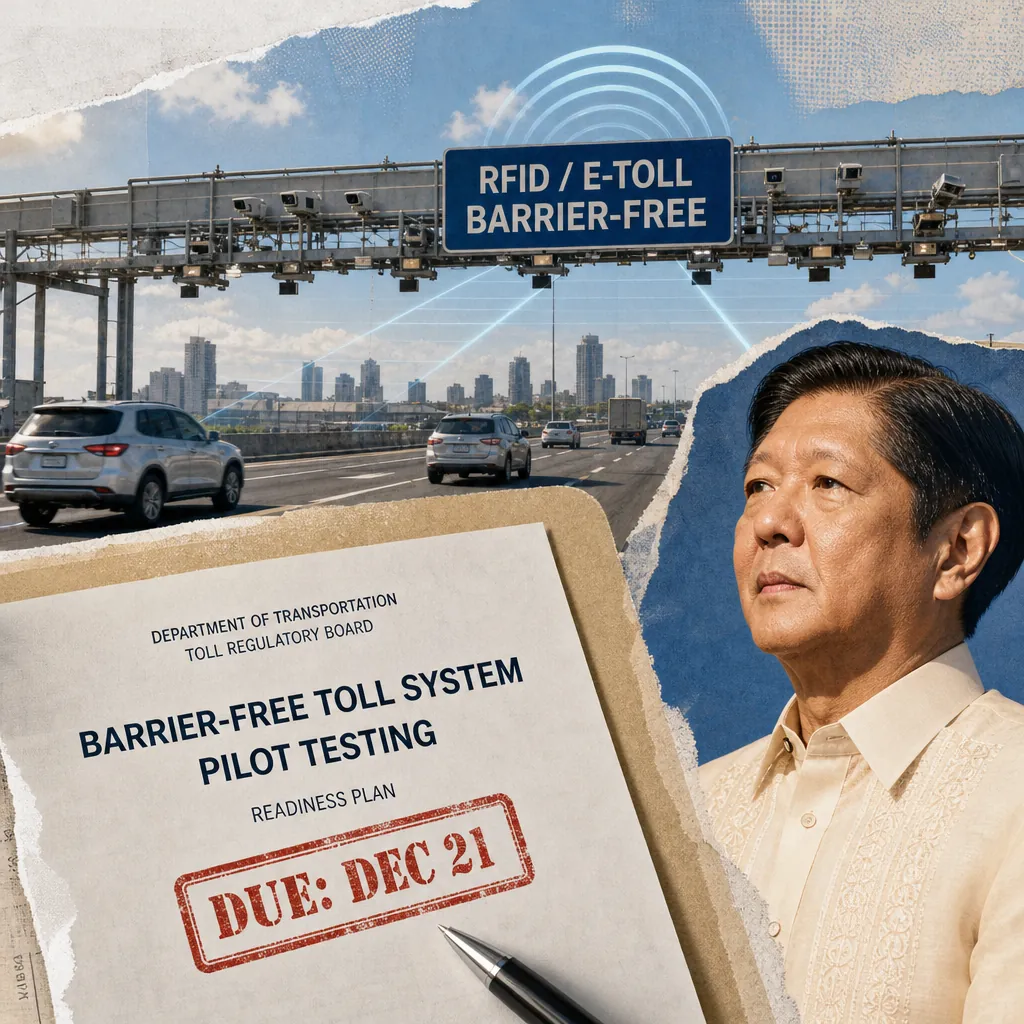
President Ferdinand Marcos Jr. has ordered the Department of Transportation (DOTr) and the Toll Regulatory Board (TRB) to prepare a barrier-less toll collection system on all expressways before the end of the year, with pilot testing to begin in December25. Transport Secretary Vince Dizon said the directive is meant to cut congestion at toll plazas and let motorists enter and exit expressways without stopping at physical barriers25. The DOTr has given toll operators until December 21 to submit a comprehensive action plan and a readiness assessment of their cashless payment infrastructure to the TRB, including strategies for raising electronic toll collection use36.
Dizon called the shift to a multi-lane free-flow system an "urgent national priority," citing shorter travel times, lower fuel consumption and reduced carbon emissions from vehicles idling at toll gates36. The same day, the DOTr announced it will rehabilitate five of the 13 Metro Rail Transit 3 (MRT-3) stations next year at ₱150 million each, and that nine regional airports are being readied for development under public-private partnership (PPP) arrangements3133. A separate labor dispute is also building: transport group Manibela will hold a two-day strike on November 23 and 24 against the possible replacement of Land Transportation Office (LTO) chief Markuz Lacanilao, and Dizon said he will meet transport groups next week1437.
Across the items captured for this window, the toll announcement drew the widest pickup, appearing in both the Manila Times and Philstar, with the Philstar report alone carrying an estimated ₱229,542 in advertising-equivalent value — the notional cost of buying the same space as paid advertising, not a count of readers2536. The MRT-3 and airport PPP stories ran in Philstar at ₱228,743 and ₱475,881 respectively3133. The Manibela strike coverage ran in Inquirer and Philstar's Filipino-language edition1437.
Key themes
- Barrier-less tolls get a December deadline. Marcos ordered the DOTr and TRB to roll out barrier-less toll collection on all expressways before year-end, starting with a December pilot, and toll operators must file readiness plans by December 212536.
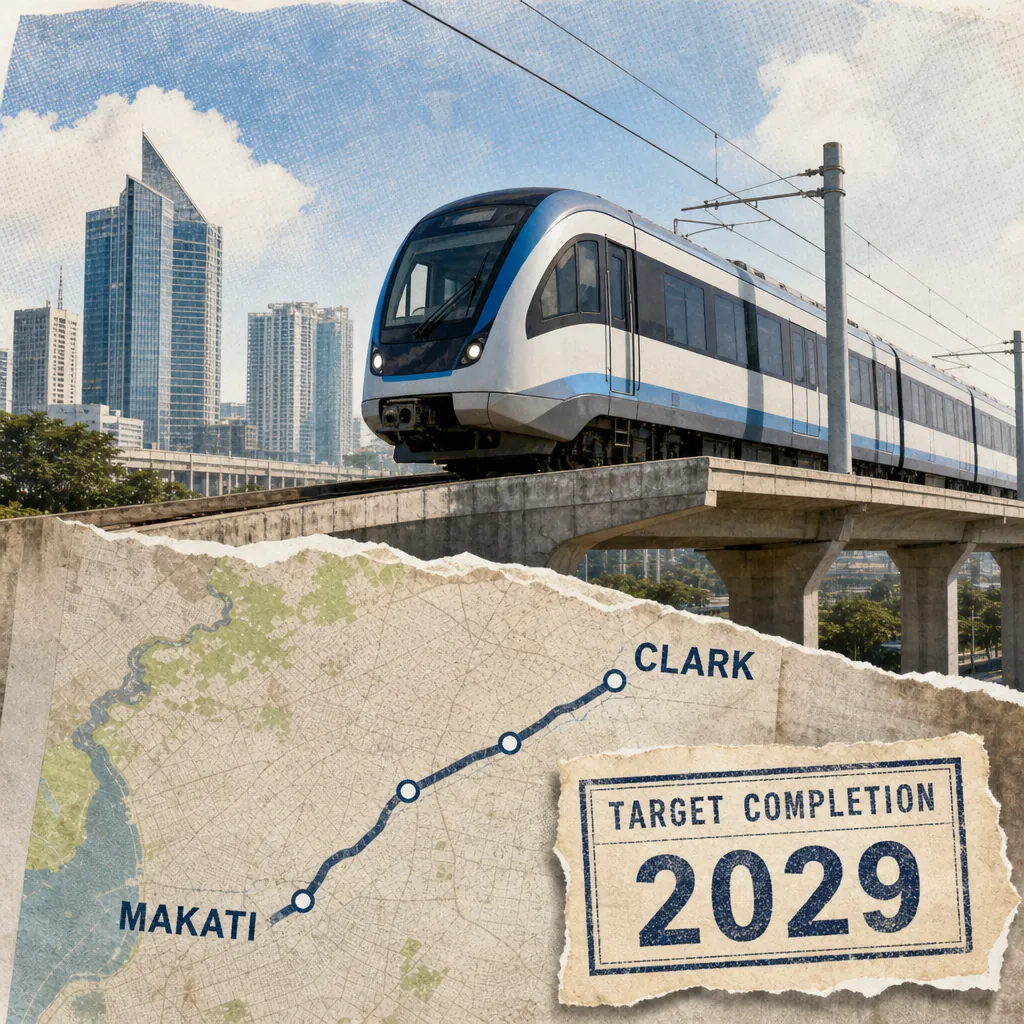
- Five MRT-3 stations get ₱150 million each in 2027. The DOTr will upgrade North Avenue, GMA-Kamuning, Araneta Center-Cubao, Shaw Boulevard and Taft Avenue stations, with work at the first two starting in January and targeted for completion by June31.
- Nine regional airports are opened to private partners. Davao, Siargao, Bicol, Iloilo, Bacolod, Puerto Princesa, Busuanga, General Santos and Tacloban are being prepared for PPP development, beginning with a bundled Davao-Siargao-Bicol package expected to be awarded in the first quarter of 202733.
- A two-day strike targets the LTO leadership question. Manibela will hold a transport strike on November 23 and 24 and protest at the LTO Central office at 9 a.m., opposing the possible removal of LTO chief Markuz Lacanilao, with jeepney, motorcycle-taxi, transport-network vehicle, UV Express and truck drivers expected to join37.
- Dizon agrees to meet transport groups next week. The transport secretary said the meeting will cover "everything" — the range of concerns raised in recent weeks — and said he has no objection to the strike14.
- EDSA roadworks slowed weekend traffic. The Department of Public Works and Highways (DPWH) ran reblocking, asphalt overlaying and restoration works on several EDSA sections, with heavy congestion reported from Kamuning southbound to Cubao and along Shaw southbound toward Ortigas-Greenhills611.
- Electric-vehicle incentives face a scope fight before launch. The Electric Vehicle Association of the Philippines (EVAP) wants the government's Electric Vehicle Incentive Strategy (EVIS) to cover more than four-wheeled cars, arguing the 50-percent EV fleet target for 2040 cannot be met otherwise34.
- Cagayan de Oro pushes a noisy-exhaust crackdown. A city councilor reminded a task force to keep running operations against motorcycles exceeding the 99-decibel limit, citing complaints from Kauswagan, Gusa and the uptown area1.
How the narratives stack
Dominant. The barrier-less toll order is the lead story in this set. It carries a presidential directive, a named December deadline, a December 21 compliance date for toll operators and a stated rationale that touches every expressway user in the country2536. It appeared in two national outlets in the captured set, and the Philstar version alone carried an estimated ₱229,542 in advertising-equivalent value36. The dominance is a property of the items gathered here — the monitoring behind this set leaned toward national online news — but the substance of the story justifies the placement: a system change ordered at the top of government with a fixed implementation window.
Counter-narrative. The Manibela strike is the main opposing story. Where the toll order is a government efficiency push, the strike is a labor action against a personnel decision — the possible replacement of the LTO chief — and it is scheduled to begin the day after these reports were published37. Dizon's response was permissive rather than defensive: he said the strike is within the groups' rights and that he will meet them next week14. The counter-narrative here is not that the toll plan is wrong; it is that the same agency pushing the toll modernization is simultaneously facing a driver-and-operator walkout.
Emerging. Two stories sit below the lead but point forward. The nine-airport PPP program is the largest by potential capital, with a bundled Davao-Siargao-Bicol package expected to be awarded in the first quarter of 2027 and an unsolicited proposal from the group operating Clark International Airport already on the table33. The EVAP push on EVIS scope is earlier still: the executive order was signed in July but the implementing rules and regulations are still being finalized, and the association is arguing for coverage beyond passenger and commercial vehicles34. Both will generate procurement and policy news over the next several months.
Under-covered. The Cagayan de Oro noisy-exhaust enforcement item is the local story in this set with the least national pickup1. It matters to residents of Kauswagan, Gusa and the uptown area who filed complaints about motorcycles revving near highway convenience stores, and it illustrates how a national law — Republic Act 4136, the Land Transportation and Traffic Code — gets enforced at the city level. It placed low because it is local, not because it was suppressed.
Platform insights
- Facebook. The Cagayan de Oro enforcement story ran on Bombo Radyo CDO's online news channel, a regional broadcaster whose audience is concentrated in Northern Mindanao1. Local enforcement stories of this kind circulate through radio-affiliated Facebook pages and barangay networks rather than national outlets, which is why the item's reach stayed local even though the underlying rule — a 99-decibel exhaust limit — applies nationwide.
- X. The transport stories in this set are the kind that generate quote-post traffic on X: a presidential directive with a deadline, a strike announcement with dates, and a fare-and-congestion angle that commuters recognize immediately. The captured items do not include engagement figures for X posts, so the volume of that reaction cannot be measured here.
- Reddit. Philippine commuting communities on Reddit typically pick up EDSA roadworks and MRT-3 rehabilitation stories because both affect daily routes631. The DPWH reblocking report and the MRT-3 station upgrades are the two items in this set most likely to be discussed in route-specific threads, though the captured material does not include thread-level data.
- YouTube. The EDSA traffic story originated in a television report on 24 Oras Weekend, and the GMA News Online write-up preserves the broadcast framing6. Broadcast-derived traffic reports tend to travel on YouTube through clipped segments and local vlogger recaps, which extends the story's life beyond the publication date.
Key voices and communities
The DOTr leadership. Secretary Vince Dizon is the central voice in this set, announcing the toll pilot, the MRT-3 rehabilitation and the airport PPP program in a single news cycle253133. His framing is efficiency-and-modernization: shorter travel times, lower fuel use, fewer bottlenecks. He also set the tone on the strike — permissive, dialog-oriented, unwilling to characterize the protest as a problem14.
Manibela and its chairman, Mar Valbuena. Manibela is a transport group representing drivers and operators, and Valbuena is its public face in this dispute37. The group's framing is personnel-based: it wants President Marcos to keep Lacanilao in the LTO post, and it is willing to stop work for two days and protest at the LTO Central office to make that point37. The coalition it describes — jeepney, motorcycle-taxi, transport-network vehicle, UV Express and truck drivers — is broader than a single route or vehicle type37.
Toll operators and the TRB. The toll companies are the parties who must actually deliver the barrier-less system, and the TRB is the regulator collecting their readiness plans by December 2136. Their submissions will determine whether the December pilot is a full rollout or a limited test, and their cashless-payment penetration strategies are the operational core of the plan36.
The Electric Vehicle Association of the Philippines. EVAP president Willy Tee Ten is arguing that the EVIS should cover "all" vehicle types, not just the passenger cars and commercial vehicles named in the program34. The association's interest is in the size of the incentive pool and who can claim it, and its argument is tied to the government's own 50-percent fleet target for 204034.
Local enforcement officials in Cagayan de Oro. Councilor Roger Abaday, who chairs the city council's committee on police, fire and public safety, is pressing the task force to keep operating against noisy motorcycles1. His complaint is about consistency — he described the pattern he wants to avoid as "now you see me, now you don't" — and he named the partner agencies: the police, the Roads and Traffic Administration, the LTO and barangay officials1.
Narrative streams
Barrier-less tolls get a December pilot and a December 21 paperwork deadline
The barrier-less toll plan is the most concrete commitment in this set. Marcos directed the DOTr and the TRB to prepare the system for all expressways before year-end, with pilot testing in December25. The mechanics are straightforward: instead of stopping at a barrier, vehicles pass through a multi-lane free-flow gantry that reads an electronic tag or plate and bills the account later. Dizon said the change would save motorists time and fuel and reduce carbon emissions from idling vehicles25. The TRB, which regulates toll rates and tollway operations, is the agency that will collect the operators' readiness plans36.
The compliance requirement is specific. Toll companies must submit a comprehensive action plan and a readiness assessment of their cashless payment infrastructure to the TRB before December 21, including electronic toll collection penetration strategies36. That deadline is nine days before the end of the year, which leaves little room for a full-system pilot if operators are still filing plans in late December. The practical question for motorists is whether the December test will run on one expressway or several, and whether cash-paying drivers — who still use the barriers — will be accommodated during the transition. The captured reports do not specify either.
The read for the sector: toll operators face a compressed compliance window and will need to demonstrate cashless readiness on a timeline set by the Palace, not by their own capital-spending cycles. For motorists, the benefit is real only if the gantries work reliably; a barrier-less system that misreads tags creates billing disputes rather than saving time. For the TRB, the December 21 submissions are the first test of whether the operators can meet a national deadline.
Five MRT-3 stations get ₱150 million each, starting with two in January
The DOTr will rehabilitate five of the 13 MRT-3 stations next year, Dizon announced on Friday: North Avenue, GMA-Kamuning, Araneta Center-Cubao, Shaw Boulevard and Taft Avenue, each with a budget of ₱150 million31. Work at GMA-Kamuning and North Avenue will start in January and is targeted for completion by June, with the rest finishing toward the end of 202731. Dizon said the DOTr will use the Quezon Avenue station as a model, citing its improved ventilation, ceiling fans, lighting, facilities for persons with disabilities, restrooms and public address system31.
The MRT-3 is Metro Manila's busiest rail line, running along EDSA from North Avenue in Quezon City to Taft Avenue in Pasay. Station rehabilitation is less visible than new rail lines but affects every rider on the system: ventilation and lighting are the two complaints that surface most often during peak hours, and accessibility facilities determine whether passengers with disabilities can use the line at all. The Quezon Avenue model gives the DOTr a template it can point to when the first two stations reopen.
The read for the sector: contractors and suppliers of station equipment — ventilation, lighting, accessibility fittings, public address systems — have a defined pipeline through 2027, and MRT-3 riders get a staged improvement rather than a single system-wide upgrade. The risk is construction disruption at the two stations under work in the first half of 2027, which will overlap with the barrier-less toll pilot on the same EDSA corridor.
Nine regional airports are prepared for PPP, starting with Davao, Siargao and Bicol
Nine regional airports are being readied for development under PPP arrangements by next year: Davao, Siargao, Bicol, Iloilo, Bacolod, Puerto Princesa, Busuanga, General Santos and Tacloban33. Dizon, speaking at the Stratbase Institute's Pilipinas Conference 2026, said the DOTr will begin with a bundled PPP covering Davao, Siargao and Bicol, expected to be awarded in the first quarter of 202733. The proposal was submitted by the group operating Clark International Airport as an unsolicited offer covering the development and operation of the three airports33.
A PPP is an arrangement in which a private company finances, builds or operates public infrastructure under a contract with the government, typically for a fixed term during which it recovers its investment through fees. For airports, that usually means terminal upgrades, runway work and commercial development in exchange for operating rights. The unsolicited-proposal route matters because it lets a private group propose a project the government has not yet tendered; the government then has to decide whether to accept it or open it to competitive bidding.
The read for the sector: airport operators, construction firms and airline planners get a clearer picture of which gateways will be upgraded first, and the Clark group's early position gives it an advantage in the Davao-Siargao-Bicol bundle. For travelers in those regions, the timeline is 2027 and beyond; for local governments, the PPP structure determines how much say they have over airport expansion.
Manibela calls a two-day strike over the LTO chief's possible removal
Manibela will hold a two-day transport strike on November 23 and 24 to oppose the possible removal of LTO chief Markuz Lacanilao, chairman Mar Valbuena said37. The group will also protest at the LTO Central office at 9 a.m., and Valbuena said jeepney, motorcycle-taxi, transport-network vehicle, UV Express and truck drivers will join37. He called on President Marcos not to remove Lacanilao37.
Dizon's response, given to reporters, was that he will meet the transport groups next week and that the meeting will cover "everything" — the range of concerns raised in recent weeks14. He also said he has no objection to the planned protest: "The transport strike is okay. For me, it's up to them. You have the right to do everything," he said14. The Palace had earlier urged Manibela to hold a dialog with the DOTr chief instead14.
The LTO is the agency that registers vehicles, issues driver's licenses and enforces traffic rules, so its leadership matters directly to the drivers and operators Manibela represents. A change at the top can shift enforcement priorities, licensing procedures and the pace of digitalization — all of which affect operating costs for transport groups. The strike is scheduled for the start of the work week, which maximizes disruption to commuters.
The read for the sector: commuters should plan for reduced public transport on November 23 and 24, and the DOTr's willingness to meet signals that the dispute is being handled through dialog rather than confrontation. For transport operators, the strike is a test of coalition strength — whether the jeepney, motorcycle-taxi, UV Express and truck groups Valbuena named actually join — and the outcome will shape how much leverage the sector carries in future negotiations with the DOTr.
EDSA roadworks add to weekend congestion on the same corridor
The DPWH ran reblocking, asphalt overlaying and restoration works on several EDSA sections over the weekend, and motorists faced heavy traffic as a result611. Traffic was particularly heavy along EDSA Kamuning southbound toward EDSA Cubao in Quezon City, where vehicles moved slowly as early as 2 p.m., and along EDSA Shaw southbound toward Ortigas-Greenhills6. Northbound traffic before New York Avenue was slow due to concrete reblocking between Santolan and Mega Q-Mart, while EDSA Guadalupe southbound in Makati was relatively light6.
The DPWH is the agency responsible for national roads and bridges, and its rehabilitation program on EDSA is meant to extend the road's life and improve ride quality. The timing matters because the works overlap with the holiday season, when traffic volumes rise, and with the MRT-3 station rehabilitation that will begin in January on the same corridor31. The barrier-less toll pilot, when it starts in December, will affect expressways rather than EDSA itself, but the two changes together will reshape how Metro Manila drivers plan their routes.
The read for the sector: logistics operators and commuters should expect weekend and nighttime disruption on EDSA through the rehabilitation period, and the overlap with MRT-3 station work in 2027 will concentrate construction activity on the same north-south corridor. For the DPWH, the weekend works are routine maintenance; for the riding public, they are the most visible transport story of the weekend.
EVAP pushes for broader EVIS coverage before the rules are finalized
The government has not yet implemented its Electric Vehicle Incentive Strategy (EVIS), but the Electric Vehicle Association of the Philippines is already pushing for a review that goes beyond four-wheeled cars34. EVAP president Willy Tee Ten said: "We as EVAP, we believe all should be covered"34. Under the EVIS, the government will provide fiscal support for the manufacture of hybrid electric vehicles (HEVs) and battery electric vehicles (BEVs), specifically passenger cars and commercial vehicles, including their parts and components34. The program will have four slots, and each participant will receive up to ₱15 billion worth of incentives34. The executive order was signed and released in July, but the implementing rules and regulations are still being finalized34.
The government's target is a 50-percent EV fleet by 2040, and Tee Ten's argument is arithmetic: "We cannot reach the 50 percent that the President wants if it's only cov[ered]" by four-wheeled vehicles34. The Philippines' vehicle fleet is dominated by motorcycles and tricycles, particularly outside Metro Manila, so an incentive program limited to cars and commercial vehicles leaves most of the fleet untouched. The EVIS is the government's main fiscal tool for building a domestic EV manufacturing base, and the scope decision determines which manufacturers can apply for the four slots.
The read for the sector: motorcycle and small-vehicle manufacturers have a stake in how the implementing rules define "covered vehicles," and the four-slot structure means the program will favor a small number of large manufacturers. For EVAP, the push is about market size; for the government, the question is whether a car-focused incentive can deliver a fleet-wide target.
Cagayan de Oro keeps pressure on noisy motorcycles
Cagayan de Oro City Councilor Roger Abaday, who chairs the city council's committee on police, fire and public safety, reminded the task force assigned to catch noisy motorcycles to keep operating without stopping1. Abaday said many complaints had come from Barangay Kauswagan, Barangay Gusa and the uptown area, especially from convenience stores beside the highway where motorcyclists gather to rev their engines1. He said the operation already includes the police, the Roads and Traffic Administration, the LTO and barangay officials, but the campaign needs to be continuous rather than the "now you see me, now you don't" style1.
Abaday clarified that under Republic Act 4136 — the Land Transportation and Traffic Code, the national law governing traffic rules and vehicle registration — and Department of Trade and Industry (DTI) policy, exhaust noise above 99 decibels is illegal1. The decibel limit is the enforcement threshold: a motorcycle whose exhaust exceeds it can be cited, and the DTI sets the product standards that manufacturers must meet. The complaint pattern Abaday described — groups gathering at highway convenience stores to rev engines — is a nuisance issue that local governments handle through task forces rather than through national regulation.
The read for the sector: motorcycle owners in Cagayan de Oro face continued enforcement against modified exhausts, and the task force's partner agencies give the operation legal grounding through RA 4136 and DTI standards. For local officials, the story is about consistency — a task force that operates intermittently invites the complaints it is meant to resolve.
Conversation trajectory
December 21, 2026 — toll operator readiness submissions. Toll companies must file their action plans and cashless-readiness assessments with the TRB by this date36. Watch for which operators file complete plans and whether any request extensions; a wave of extension requests would signal the December pilot is slipping. Observation window: the next four weeks.
December 2026 — barrier-less toll pilot. The pilot is scheduled to begin in December, and the first days of operation will show whether the gantries handle peak volumes without misreads25. Watch for reports of billing errors, queueing at gantries, and whether cash-paying motorists are accommodated. Observation window: the first two weeks of the pilot.
November 23–24, 2026 — Manibela strike. The two-day strike and the 9 a.m. protest at the LTO Central office will show how many drivers actually join and whether the coalition Valbuena described holds together37. Watch for the DOTr's meeting with transport groups next week and whether it produces a commitment on the LTO leadership question14. Observation window: the next seven days.
January–June 2027 — MRT-3 station rehabilitation. Work at GMA-Kamuning and North Avenue starts in January and is targeted for completion by June31. Watch for service adjustments during construction and whether the Quezon Avenue model is replicated on schedule. Observation window: the first half of 2027.
First quarter of 2027 — Davao-Siargao-Bicol airport PPP award. The bundled PPP is expected to be awarded in the first quarter of 2027, following the Clark group's unsolicited proposal33. Watch for whether the government accepts the unsolicited offer or opens the bundle to competitive bidding. Observation window: the first quarter of 2027.
Ongoing — EVIS implementing rules. The executive order was signed in July, and the implementing rules and regulations are still being finalized34. Watch for whether the final rules expand coverage beyond passenger cars and commercial vehicles, and how the four slots are allocated. Observation window: the next several months.
Trigger events. A formal announcement on the LTO leadership question would resolve the strike dispute; a TRB announcement on pilot scope would clarify the toll timeline; and a DPWH schedule for EDSA works would let commuters plan around the disruption61436.
Response guidance
Toll operators: file early and communicate the transition. Submit the TRB readiness assessment well before December 21 and publish a plain-language explanation of how the barrier-less gantries will bill motorists, including what happens if a tag fails to read. Drivers who do not understand the billing will dispute charges, and disputes slow adoption.
Transport groups: separate the personnel dispute from the service disruption. Manibela's strike is aimed at the LTO leadership question, and the group should state clearly which routes and hours will be affected so commuters can plan37. A strike that disrupts without a published route list loses public sympathy and shifts the story to inconvenience.
DOTr: use the next-week meeting to produce a written agenda. Dizon said the meeting will cover "everything," which is broad enough to raise expectations without committing to outcomes14. A published agenda — LTO leadership, licensing, enforcement, toll modernization — would let transport groups prepare and give the DOTr a record of what was discussed.
Local government units: publish enforcement schedules for exhaust-noise operations. Cagayan de Oro's task force works best when residents know when and where it operates1. A published schedule, paired with the 99-decibel standard and the RA 4136 basis, gives residents a way to report violations and gives enforcers a defensible record.
Airport and construction firms: track the PPP bundle's procurement route. The Davao-Siargao-Bicol bundle may be awarded through an unsolicited proposal or opened to competitive bidding33. Firms considering participation should prepare for either route and watch the first-quarter 2027 award date.
EV manufacturers: engage the EVIS rule-making now. The implementing rules are still being finalized, and the scope decision determines which manufacturers can apply for the four slots34. Manufacturers of motorcycles, tricycles and smaller vehicles should make their case before the rules are published, when the scope is still open.
Communicators across the sector: distinguish the confirmed from the pending. The toll pilot date, the MRT-3 station list and the airport list are confirmed announcements253133. The pilot's scope, the strike's actual participation and the EVIS final rules are not yet settled. Messaging that treats pending items as settled will need correction within weeks.
See the full picture behind today's signals.
This report draws from Media Meter's MediaWatch, our real-time monitoring engine tracking 2,470+ Philippine sources across print, broadcast, digital, and social. Explore how the platform turns raw coverage into decision-grade intelligence, then see how it's configured for teams like yours — whether you're in PR agencies, corporate comms, government, or marketing.
Want more? Browse our Report Library for sector and crisis intelligence, or request a demo and we'll have your brand set up before the call.
Want this kind of intelligence on your brand?
This brief is built on the same MediaWatch methodology that runs continuously across every brand we monitor. See your competitive landscape, Impact Score, and narrative trajectory in a 30-minute demo.