Philippine Banking: Political Scrutiny, Fraud, and Digital Push
A daily snapshot of the Philippine financial sector conversation on July 31, 2026, covering political banking scrutiny, fraud enforcement, digital banking innovations, and economic indicators.
The Philippine financial conversation on July 31, 2026, was a study in contrasts. On one hand, the day was dominated by the ongoing impeachment trial of Vice President Sara Duterte, with the Senate formally receiving her bank and tax records and the Anti-Money Laundering Council (AMLC) expected to release a report on alleged P6.7-billion transactions involving the Vice President and her husband, Atty. Manases Carpio. On the other, the day was punctuated by a wave of digital banking innovations—from LandBank's ID-free account opening to BDO Pay's fee waivers and hints of Apple Pay's arrival—alongside a high-engagement story about an NBI arrest of an identity thief. This juxtaposition of political risk, consumer protection, and brand-building activity defined the day's narrative, offering a window into the sector's dual nature: a pillar of the economy and a stage for political and social drama.
On social media, the conversation on Twitter (now X) unfolded in three distinct movements. The first, early in the day, was a post about the AMLC report, which drew only 156 views and a single like but carried outsized political weight. The second, which became the day's most-viewed item at 2,300 views, was the NBI's arrest of an identity thief linked to a P470,000 online scam. The third was RCBC's extension of its P1 LRT-2 fare promo, which drew 1,472 views and offered a lighter, customer-focused counterpoint. These three posts, all on Twitter, illustrated how the financial news ecosystem oscillates between reputational risk, consumer protection, and brand-building activity.
Meanwhile, the news media was awash with economic data and corporate earnings. The Bangko Sentral ng Pilipinas (BSP) reported that bank lending growth slowed to a four-month low in June, business sentiment improved to neutral, and inflation likely remained above target in July. Banks like Metrobank and EastWest posted their first-half results, with Metrobank's profit steady at P24.9 billion and EastWest's down 17% due to higher provisions. The stock market fell for a second straight session, closing at 6,236.44, as investors digested a record national debt of P19.07 trillion. These stories, while less sensational than the political drama, provided the economic backdrop against which the sector's challenges and opportunities played out.
Key themes
- Political banking scrutiny intensifies: The impeachment trial of Vice President Sara Duterte took center stage as the Senate formally received her bank and tax records from four banks and the Bureau of Internal Revenue. The AMLC's expected report on alleged P6.7-billion transactions was framed as a decisive moment, with lawmakers dismissing the Carpio complaint as a "delaying tactic." This theme underscores how bank transaction records have become central pieces of public-interest evidence.
- Fraud enforcement as a trust signal: The NBI's arrest of an alleged identity thief in connection with a P470,000 online scam drew the highest social engagement of the day, with 2,300 views. This story offered a resolution arc—the criminal caught—that contrasted with the unresolved AMLC narrative, reinforcing the importance of visible law enforcement in shaping public confidence around digital banking.
- Digital banking innovations accelerate: LandBank launched ID-free account opening via PSA verification, BDO Pay waived transaction fees, and hints emerged that Apple Pay may be coming to the Philippines. These developments signal a competitive push toward cashless payments and financial inclusion, with banks embedding themselves into everyday transactions.
- Economic headwinds persist: BSP data showed bank lending growth slowed to 9.8% in June, a four-month low, while business sentiment improved to neutral. Inflation remained above target, with July forecast at 5.6-6.6%. These indicators point to cautious borrowing and spending amid global uncertainties.
- Bank earnings reflect prudence: Metrobank's first-half profit was steady at P24.9 billion, while EastWest's fell 17% to P3.4 billion due to higher provisions for credit losses. Both banks cited a challenging operating environment, highlighting the sector's focus on risk management.
- Consumer promotions balance the narrative: RCBC extended its P1 LRT-2 fare promo, and BDO Pay eliminated fees, offering tangible consumer benefits that generate positive sentiment. These initiatives demonstrate how banks can maintain visibility and goodwill even amid heavier news cycles.
- Financial inclusion remains a priority: Stories about women-led businesses, sari-sari store ledgers, and digital lending for legal aides underscored the sector's commitment to reaching the unbanked. These narratives, while less prominent, reinforce the industry's social role.
How the narratives stack
Dominant: The dominant narrative of the day was the political banking scrutiny surrounding Vice President Sara Duterte. This story dominated the news media, with multiple articles covering the Senate's receipt of bank records, the AMLC report, and the Carpio complaint. Within the captured set, this story drew the highest advertising-equivalent value, with the Inquirer's article on the "delaying tactic" worth an estimated ₱471,744 in ad space, and the Manila Times' headline on the Ombudsman probe worth ₱621,416. The story's consequence for the sector—tying banking data to political accountability—made it the lead, even though its social engagement was modest.
Counter-narrative: The counter-narrative was the consumer-facing story of fraud enforcement and digital banking innovation. The NBI arrest story drew the highest social engagement (2,300 views), and the slew of digital banking announcements—LandBank, BDO Pay, Apple Pay—offered a positive, forward-looking contrast to the political drama. This narrative emphasized the sector's resilience and its focus on serving customers.
Emerging: An emerging narrative was the privacy-versus-security tension, as the AMLC's transaction monitoring and cybercrime enforcement converged. This cross-cutting theme, which connects regulatory, institutional, and individual perspectives, is likely to gain momentum as political and consumer conversations intersect.
Suppressed: A story that received relatively little attention was the US ban on Philippine blue crab imports, which has adversely affected the billion-peso crab industry in the Visayas. While not directly a banking story, it has economic implications for the sector, as it affects the livelihoods of fisherfolk and could impact rural banking and microfinance. The story was covered by Panay News but did not feature prominently in the national financial conversation.
Platform insights
- Twitter/X: All three social posts appeared on Twitter, creating a compressed narrative arc from scrutiny to enforcement to promotion. The platform's real-time nature allowed these distinct stories to coexist, with scam-related enforcement drawing the highest viewership at 2,300 views. This suggests that audiences on Twitter gravitate toward concrete, actionable law enforcement outcomes.
- Facebook: While no direct Facebook data was captured, the platform's role in sharing longer-form content and community-oriented posts is implied. For example, the NBI arrest story could be contextualized on Facebook with educational content about identity theft prevention, as the popularity of scam-related news suggests such content would resonate.
- Instagram: The platform's visual nature makes it ideal for cybersecurity tip cards and shareable graphics about responsible banking. The RCBC fare promo could be showcased through short, energetic clips of commuters benefiting from the P1 fare, highlighting tangible consumer value.
- LinkedIn: Thought-leadership articles on the evolving financial fraud landscape and the importance of consumer vigilance would find a home here. The AMLC development could be used to reinforce institutional commitments to transparency and compliance, without commenting on named individuals.
Key voices and communities
- Financial Integrity and Enforcement Watchers: This community includes regulatory monitors, legal affairs observers, and anti-money-laundering specialists who track actions by AMLC, NBI, and other financial enforcement bodies. They engage most with arrests, investigation updates, and suspicious transaction reports. The NBI identity-theft item drew roughly 2,300 views, the highest among the sampled posts, indicating strong interest in enforcement outcomes.
- Political Accountability and Governance Monitors: This group follows public officials' financial dealings and uses bank transaction reports as political accountability tools. The AMLC-related post concerning Vice President Sara Duterte drew slightly over 150 views, but its influence extends through political networks that treat financial intelligence as a transparency issue. Their impact is outsized because of the individuals involved.
- Consumer Banking and Everyday Finance Participants: Bank customers, commuters, and value-driven consumers make up this community, engaging most with tangible financial benefits. The RCBC LRT-2 fare promo update attracted nearly 1,500 views, showing stronger consumer appeal than the political transaction story. Their interests center on convenience, affordability, and real-world banking utility.
- Cybersecurity and Digital Fraud Advocates: Security researchers, consumer protection proponents, and digital literacy advocates interpret scam arrests and identity theft cases as symptoms of broader system vulnerabilities. They connect individual incidents to issues like SIM fraud, phishing, weak identity verification, and gaps in financial consumer protection. The NBI arrest gives them a concrete anchor for broader commentary.
Narrative streams
The Impeachment Trial and the AMLC Report
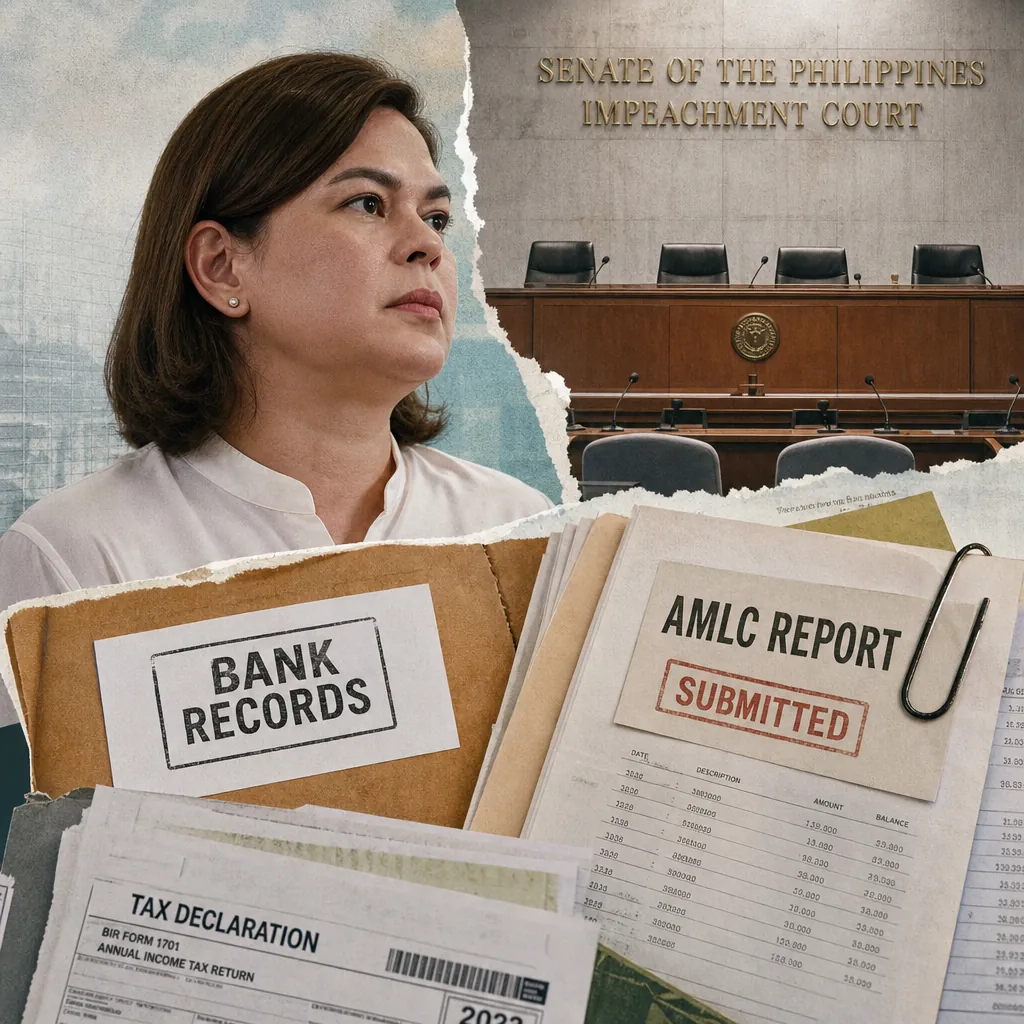
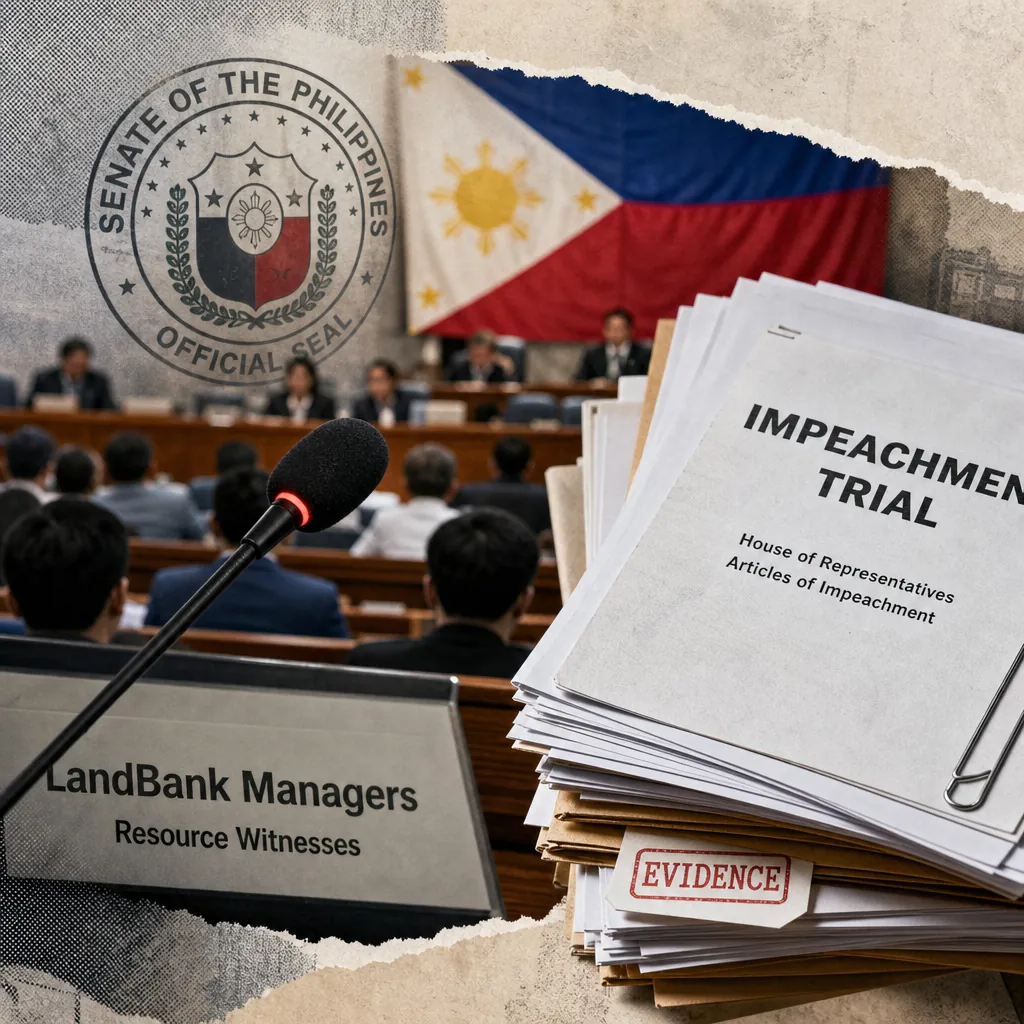
The impeachment trial of Vice President Sara Duterte reached a critical juncture on July 31, as the Senate impeachment court formally received her financial and tax records. Four banking institutions—BDO Unibank, Philippine Savings Bank, Metrobank, and Security Bank—submitted Duterte's bank records, while the Bureau of Internal Revenue delivered her tax documents in a red box. The court had issued subpoenas to the BIR, the Anti-Money Laundering Council, and several banks, giving them until July 30 to comply.
The AMLC's expected report on alleged P6.7-billion transactions involving Duterte and her husband, Atty. Manases Carpio, was a focal point. A social media post framed the AMLC as the decisive authority, stating, "Malapit nang mabigyang-linaw ang mga isyu sa likod ng umano'y P6.7-B bank transactions nina Vice President Sara Duterte at Atty. Mans Carpio matapos ihayag ng prosecution ang inaasahang AMLC report." This post drew only 156 views, but its political weight far exceeded its modest engagement.
Lawmakers, including ACT Teachers party-list Rep. Antonio Tinio and Kabataan party-list Rep. Renee Co, dismissed Carpio's complaint against House members as a "delaying tactic." Co, a spokesperson for the prosecution team, said, "This complaint just aims to derail those who seek accountability. It's not even up to standard! It is a distraction from the whole impeachment proceedings."
An editorial in the Philippine Star, titled "Unusual but not suspicious," highlighted testimony from a LandBank branch manager who described a P125-million cash withdrawal by the Office of the Vice President as "unusual" but not "suspicious," because procedures were followed. This nuance underscores the tension between banking compliance and political scrutiny.
For the banking sector, this narrative carries reputational risk. Financial institutions may be drawn into political controversies, even when their role is merely to comply with legal subpoenas. The low current engagement should not be mistaken for low future impact; once the AMLC report surfaces, the story could amplify significantly.
Fraud Enforcement and Consumer Protection
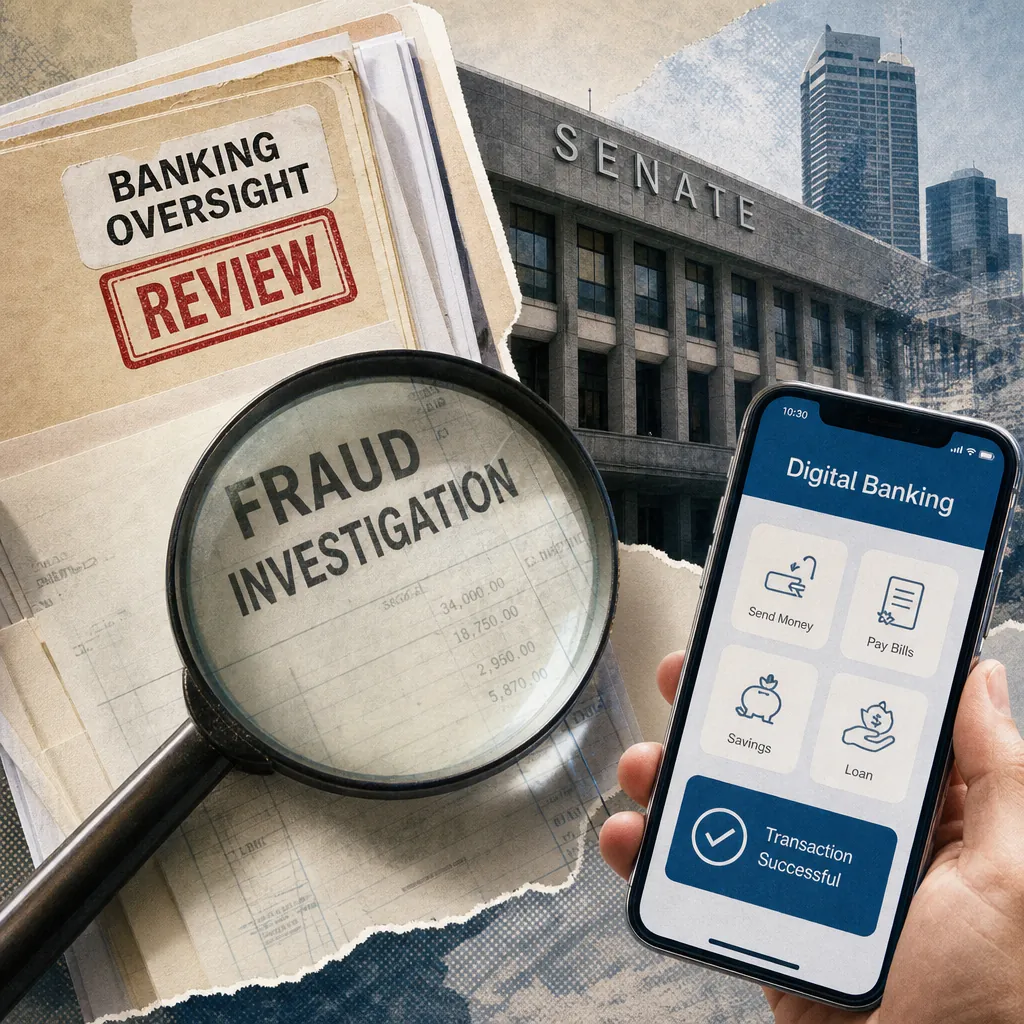
The NBI's arrest of an alleged identity thief in connection with a P470,000 online scam was the day's most-viewed social post, drawing 2,300 views. The suspect, a female who allegedly used another person's photos to create fake accounts on social media, was nabbed in an entrapment operation in Santa Maria, Bulacan, on July 24. The NBI's Digital Forensics Laboratory confirmed that the fake Instagram, Facebook, and Viber accounts were logged into from the suspect's seized devices.
This story resonated because it offered a resolution arc—the criminal caught—which contrasts with the unresolved AMLC narrative. It reinforced the importance of visible law enforcement action in shaping public confidence around digital banking and e-wallet platforms. For banks and fintech companies, this narrative provides an opportunity to reinforce e-KYC (Know Your Customer), fraud monitoring, and customer-protection messaging without appearing defensive.
The story also feeds into a broader conversation about digital financial safety. Cybersecurity advocates use such cases to press for stronger verification systems and faster complaint resolution. The P470,000 amount is significant enough to capture attention but not so large as to seem remote from everyday concerns.
Digital Banking Innovations and Financial Inclusion
July 31 was a banner day for digital banking announcements. LandBank launched ID-free account opening via PSA verification, allowing customers to open accounts without presenting physical IDs. This is a significant step toward financial inclusion, as it removes a common barrier for the unbanked. The service leverages the Philippine Statistics Authority's (PSA) digital verification systems, making it easier for Filipinos to access banking services.
BDO Pay announced it would waive transaction fees across its platform, allowing users to transfer funds, pay bills, and make QR-based payments without additional charges. This move is aimed at making digital payments more accessible by removing costs that often discourage consumers from using electronic financial services. The app also integrates rewards and promotional offers, creating a one-stop shop for digital banking.
Hints emerged that Apple Pay may be coming to the Philippines. BSP Deputy Governor Mamerto Tangonan told reporters, "We didn't object to it. So, it's up to the banks," and added, "Stay tuned kasi may alam akong mga banks mag-launch" (I know some banks are looking to launch). Several major bank apps are already showing "Supports Wallet" on the App Store, suggesting preparations are underway. This development could significantly boost contactless payments in the country.
These innovations are part of a broader trend toward cashless transactions. The RCBC LRT-2 fare promo, extended through August 31, is another example. The promo, which offers P1 fares for up to eight LRT-2 rides a day for MySSS Cardholders, has driven a 95% surge in unique card users and a 57% increase in transit transactions within two weeks. This initiative, developed with the Department of Transportation, the Light Rail Transit Authority, the BSP, and Visa, demonstrates how banks can embed themselves into everyday commuter transactions.
Economic Indicators and Bank Earnings
The BSP released several key economic indicators on July 31. Bank lending growth slowed to 9.8% in June, a four-month low, down from 12.1% in May. Domestic liquidity (M3) grew by 10.6% to P20.5 trillion, easing from 12.8% in May. The moderation in credit growth suggests that both businesses and consumers are becoming more cautious and selective in taking on new debt, reflecting anxiety over an economy facing multiple headwinds.
Business sentiment improved to neutral in June, with the confidence index rising to zero from -25.2% in May. This improvement was attributed to lower oil and energy prices and the reopening of classes, which boosted expectations of increased consumer spending. However, optimists and pessimists are now nearly equal in number, indicating that businesses are not yet broadly optimistic.
Inflation remained above target, with the BSP forecasting July inflation to settle between 5.6% and 6.6%. This range straddles June's 6.4% print, and even at the lower end, it would remain above the BSP's 2-4% target. Upside pressures include elevated petroleum prices, higher electricity rates, rising fish prices, and a weaker peso, while lower food prices for rice, meat, vegetables, and fruits are expected to mitigate these pressures.
Bank earnings reflected the challenging environment. Metrobank reported a net income of P24.9 billion for the first half, up marginally from P24.8 billion a year earlier, supported by sustained loan growth and stable margins. EastWest, however, saw its net income fall 17% to P3.4 billion, as higher provisions for credit losses offset strong revenue growth. Both banks emphasized prudence in managing credit risk amid macroeconomic and geopolitical uncertainties.
The stock market fell for a second straight session, with the benchmark Philippine Stock Exchange index down 1.1% to 6,236.44, as investors digested a record national debt of P19.07 trillion. This cautious sentiment reflects broader concerns about the economy's trajectory.
Consumer Promotions and Brand Building
Amid the heavy news cycle, consumer promotions offered a positive counterpoint. RCBC's extension of its P1 LRT-2 fare promo was covered by multiple outlets, including the Inquirer and Manila Times. The promo, which runs through August 31, aims to sustain the shift toward digital fare payments. The Department of Transportation's Secretary Giovanni Lopez commended the partnership, saying it aligns with President Marcos Jr.'s directive to make rail fares more affordable while advancing digitalization.
BDO Pay's fee waiver is another example of a consumer-friendly initiative. By eliminating transaction fees, BDO aims to make digital payments more accessible, encouraging everyday use. These promotions generate positive sentiment and help balance the conversation around fees, access, and customer experience.
For banks, such initiatives are not just marketing; they are strategic investments in customer loyalty and financial inclusion. They also provide a narrative that can be amplified during news cycles dominated by political or economic concerns.
Conversation trajectory
Over the next 1-2 weeks, the release of the AMLC report on the P6.7-billion transactions will be a key trigger event. This could catalyze sustained commentary across political and financial sectors, potentially drawing banks into the spotlight. Financial institutions should prepare for questions about their role in the transactions and their compliance with anti-money laundering regulations.
In the coming month, the NBI's case against the identity thief will likely progress, providing periodic engagement spikes as legal proceedings unfold. This will sustain the enforcement narrative and offer opportunities for banks to reinforce their fraud-prevention messaging.
The BSP's policy announcements, including any digital banking circulars, will frame the regulatory context for both monitoring and consumer protection discussions. The potential launch of Apple Pay, if confirmed, could be a significant positive story for the sector.
Privacy-versus-security tension is an emerging theme that will likely gain momentum. The convergence of AMLC transaction monitoring and cybercrime enforcement creates conditions for broader debates about financial data privacy, surveillance boundaries, and consumer protections. This cross-cutting theme offers a lens that connects regulatory, institutional, and individual perspectives.
Trigger events to watch: the AMLC report release, the next BSP policy meeting, the official July inflation data on August 5, and any announcements about Apple Pay's launch.
Response guidance
For banking and fintech communicators, the immediate 1-2 week window before the AMLC report surfaces is critical for reinforcing consumer protection and security messaging. Proactively communicating fraud-detection capabilities, compliance frameworks, and transparent monitoring practices will position institutions to shape the conversation rather than respond defensively.
On social media, use a "monitor-first" approach for AMLC-related threads, tracking sentiment without directly engaging political figures. Publish concise fraud-prevention reminders in response to the identity theft arrest, emphasizing verification steps and official bank channels. Amplify consumer-friendly initiatives like the LRT-2 fare promo, but frame them as part of broader financial inclusion efforts rather than standalone marketing.
For government-affiliated communicators, address the AMLC thread through official statements that reaffirm institutional processes rather than personal defenses. Deploy a rapid-response team to correct false claims that a specific bank is implicated.
Key messages to emphasize: financial institutions treat data privacy as a non-negotiable responsibility; consumers should rely only on official channels when verifying account activity; digital financial services are most valuable when they are accessible; the industry supports swift enforcement against online scams; and ongoing investigations should be allowed to proceed without speculation.
Sensitive topics to navigate: high-profile AMLC investigations involving political figures require emphasizing rule-of-law and due process, avoiding statements that could be read as defending or condemning any individual. Online scam cases should avoid victim-blaming while educating users. Promotional campaigns during a mixed news cycle should be paired with reassuring content about security and consumer protection.
Establish a crisis-monitoring dashboard around the AMLC narrative to detect whether any client banks are being named or associated with the transaction story. Launch a coordinated fraud-awareness campaign across owned channels, piggybacking on public interest generated by the law enforcement arrest. Use the fare promo as a positive anchor for the banking sector's consumer relevance, sharing it with adapted messaging that balances optimism with reassurance.
See the full picture behind today's signals.
This report draws from Media Meter's MediaWatch, our real-time monitoring engine tracking 2,470+ Philippine sources across print, broadcast, digital, and social. Explore how the platform turns raw coverage into decision-grade intelligence, then see how it's configured for teams like yours — whether you're in PR agencies, corporate comms, government, or marketing.
Want more? Browse our Report Library for sector and crisis intelligence, or request a demo and we'll have your brand set up before the call.
Want this kind of intelligence on your brand?
This brief is built on the same MediaWatch methodology that runs continuously across every brand we monitor. See your competitive landscape, Impact Score, and narrative trajectory in a 30-minute demo.