Scams, solar, and security: July 14 telco snapshot
A daily intelligence brief covering July 14, 2026, synthesizing social media conversations and news coverage on telecommunications, cybersecurity, and related corporate developments in the Philippines.
The conversation on July 14, 2026, unfolded across a fragmented media landscape, with three distinct yet interconnected threads dominating the day's discussions. The morning began with positive corporate news: Smart Communications, Inc. announced its GSMA Open Gateway certification for the SmartSafe RoamStatus API, a network-powered tool designed to help banks and fintech companies verify whether a customer's phone is roaming before approving sensitive transactions. This development positioned the telco at the forefront of fraud prevention, a topic that would quickly become the day's dominant narrative. Meanwhile, a separate Facebook post celebrated Manuel V. Pangilinan's 80th birthday alongside the inauguration of Meralco's P200-billion MTerra Solar project, a renewable energy milestone that generated mixed reactions—199 likes and 190 haha reactions but also 133 angry reactions—suggesting public polarization over MVP's corporate legacy.
By midday, the conversation had shifted sharply toward online fraud and cybersecurity, driven by two key posts. A detailed Reddit thread from a user explaining how phishing login pages work in 2026—targeting GCash, BDO, BPI, and even Shopee—quickly became a reference point for scam awareness, though it received only 3 likes. More emotionally charged was a Reddit plea from a user whose wife lost 50,000 pesos through a Messenger scam involving hacked accounts of close friends. The post, which garnered 4 likes and 25 comments, highlighted the human cost of social engineering and the difficulty of reversing transactions made via Maya QR codes. This personal account amplified the urgency of the Smart API certification, creating a cause-and-effect narrative: as scams become more sophisticated, telco-level security tools like SmartSafe become essential.
On the news media side, the day was dominated by coverage of the MTerra Solar Project inauguration, with President Ferdinand Marcos Jr. launching Phase I of what is set to become the world's largest integrated solar photovoltaic and battery energy storage system. The event, which coincided with MVP's 80th birthday, drew heavy newspaper coverage worth an estimated ₱650,637 in advertising-equivalent value across the captured set. A separate article reported that Marcos also pushed for stronger sports development in schools during a visit to the National Academy of Sports, though this is less directly relevant to telco. Meanwhile, consumer advocacy group CitizenWatch Philippines urged closer coordination among government, telcos, and schools to optimize the country's digital infrastructure gains following its reclassification as an upper-middle-income country (UMIC) by the World Bank.
Key themes
- Smart's proactive fraud prevention – Smart's GSMA Open Gateway certification for the SmartSafe RoamStatus API positions the telco as a security partner for financial institutions. The announcement, though low in engagement (1 like, 1 share), signals a strategic move to differentiate through network-level authentication.
- Rising public anxiety over scams – Personal stories of fraud, including a celebrity text scam victim and a Reddit user losing ₱50,000 via Messenger, are driving emotional engagement and demands for better protection. The Kyline Alcantara text scam post garnered 111 likes and 93 sad reactions, indicating strong public empathy.
- Government cybersecurity response – The DICT Region VIII issued advisories on the "DICT Tower Scam" targeting landowners with fraudulent cell tower lease agreements, and recommended barangay-level cybersecurity programs. These actions frame individual scam reports as part of a systemic issue requiring coordinated local action.
- MVP's polarized legacy – Posts celebrating MVP's 80th birthday and the MTerra Solar inauguration received high engagement but mixed reactions, with 133 angry reactions on one post suggesting lingering distrust of his corporate influence.
- Renewable energy as a legitimizing narrative – The MTerra Solar project, covered by multiple broadsheet articles, links MVP's business group to national energy security and sustainability, creating a halo effect for PLDT and Smart.
- Digital infrastructure and education – CitizenWatch Philippines calls for integrating digital infrastructure gains into education to maximize the benefits of the country's new upper-middle-income status, highlighting the need for telco-government-school collaboration.
- Gaming account phishing – A Reddit user detailed losing their Mobile Legends account to a phishing scheme disguised as a "1 Diamond Layla skin" offer during a TikTok livestream, exposing a new vector for fraud targeting mobile gamers.
How the narratives stack
Dominant – Within the captured set, the dominant narrative is the celebration of MVP's 80th birthday and the MTerra Solar inauguration, which generated the highest engagement and broadest news coverage. Multiple official accounts from TNT Tropang 5G, TV5, and PBA Rush posted warm greetings, with one post receiving over 1,000 combined reactions and 177 comments. The Manila Standard article on the solar project carried an estimated advertising-equivalent value of ₱650,637, making it the most valuable single item in the set. However, this narrative is personality-focused rather than brand-specific, and the mixed reactions (133 angry, 190 haha) indicate that the positive sentiment is not universal.
Counter-narrative – The rising public anxiety over scams and phishing directly challenges the positive corporate narrative. The Kyline Alcantara text scam story and the Reddit victim post highlight persistent security vulnerabilities that consumers associate with telco platforms, even when the root cause is user error. This counter-narrative is amplified by the DICT's warnings about tower scams, which threaten to undermine trust in legitimate infrastructure expansion.
Emerging – The convergence of scam stories, government advisories, and Smart's API certification points to an emerging narrative around network-level security as a competitive differentiator. If Smart can effectively communicate how its RoamStatus API prevents fraud without compromising privacy, it could shift the conversation from vulnerability to protection.
Suppressed – The CitizenWatch Philippines call for integrating digital infrastructure into education received relatively little attention in the captured set, despite its strategic importance for long-term digital literacy and scam prevention. This under-covered story represents a missed opportunity for telcos to position themselves as partners in national development beyond connectivity.
Platform insights
- Facebook – The platform hosted the most diverse conversation, ranging from corporate celebrations (MVP's birthday, Smart API) to scam awareness and government alerts. The emotional range was wide: the MVP post had 190 haha reactions but also 133 angry reactions, indicating polarized views on the tycoon's legacy. The CICC post received mostly positive reactions (4 love, 0 angry), suggesting public support for institutional anti-fraud efforts. The Smart API post, despite being low-engagement, was a key corporate narrative that set the day's security tone.
- Reddit – Reddit became the platform for deeper analysis and personal storytelling. The phishing guide post and the scam victim post both lacked widespread visibility (3 and 4 likes respectively) but attracted focused commentary—25 comments on the victim post—indicating a community-driven problem-solving dynamic. Reddit's anonymity allowed for direct sharing of sensitive financial details and troubleshooting.
- Twitter – Twitter was represented by a single political post unrelated to telco, but its 7,916 views and 412 likes on a criticism of government figures showed that the platform's attention was elsewhere, leaving telco and scam topics to Facebook and Reddit for substantive discussion.
Key voices and communities
- Government and regulatory entities – DICT regional offices and the CICC are actively shaping the conversation around telco-related fraud and digital governance. Their posts on the "DICT Tower Scam" and online predator warnings receive consistent engagement from local government networks, signaling their authoritative role in infrastructure security.
- Official telco brand accounts (TNT/PLDT/Smart) – The TNT Tropang 5G page posted a birthday greeting for MVP that achieved exceptionally high engagement—575 likes, 452 love reactions, and 177 comments—overwhelmingly positive with only 3 angry reactions. This reflects a strong, loyal brand community that actively participates in celebratory content.
- Consumer vulnerability narrators (scam victims and public concern) – Posts reporting celebrity text scams and gaming account theft generate high emotional engagement (93 sad reactions on the Kyline Alcantara post) and drive public anxiety about digital safety. These voices represent everyday consumers expressing fear and frustration, implicitly criticizing insufficient safeguards from telcos and banks.
- Business and political elite (MVP, Marcos, Ramon Ang) – Posts about President Marcos personally handing MVP a birthday cake at the MTerra Solar inauguration draw moderate engagement but carry high symbolic weight, celebrating business-government partnerships and hinting at cross-sector consolidation. These elite interactions shape the regulatory and competitive landscape for PLDT and Smart.
Narrative streams
Smart's GSMA Open Gateway certification: A strategic move against fraud
Smart Communications announced its GSMA Open Gateway certification for the SmartSafe RoamStatus API, a network-powered tool that allows banks and fintech companies to verify whether a customer's phone is roaming before approving sensitive transactions. The API provides a simple yes-or-no answer about roaming status without revealing the user's exact location, addressing privacy concerns while enabling fraud detection. This certification positions Smart within the global GSMA Open Gateway ecosystem, a framework that standardizes network APIs for developers. The announcement, though low in engagement (1 like, 1 share), is strategically significant because it directly addresses the rising tide of online fraud exemplified by the day's scam stories. The timing is critical: as scams evolve to use legitimate hosting platforms and social engineering, telco-level network verification tools become a unique selling point that banks and fintech companies need. For PLDT and Smart, this certification can be leveraged to differentiate from competitors like Globe and DITO, especially as the DICT intensifies its focus on cybersecurity.
The human cost of scams: Personal stories drive public concern
Two personal accounts of fraud dominated the social conversation on July 14. First, a report that actress Kyline Alcantara fell victim to a text scam after clicking a link quickly spread across Facebook, generating 111 likes and 93 sad reactions. Alcantara stated, "So I clicked it, tapos parang napunta po sa ibang website... And then when I checked the bank app, biglang, 'Ay, parang nabawasan 'yung pera ko.'" This post resonated strongly with the public, as indicated by the high number of sad reactions, signaling widespread empathy and concern. Second, a Reddit user detailed how their wife lost ₱50,000 through a Messenger scam where scammers hacked the accounts of close friends and requested money via Maya QR codes. The post, which garnered 4 likes and 25 comments, highlighted the difficulty of reversing transactions and the emotional distress caused by social engineering. These stories underscore the real-world impact of digital fraud and create a sense of urgency for telcos and banks to provide better protection and recovery mechanisms. The public's emotional response suggests that proactive security messaging and quick resolution of scam cases can build trust, while inaction risks reputational damage.
DICT's tower scam warning: A threat to infrastructure expansion
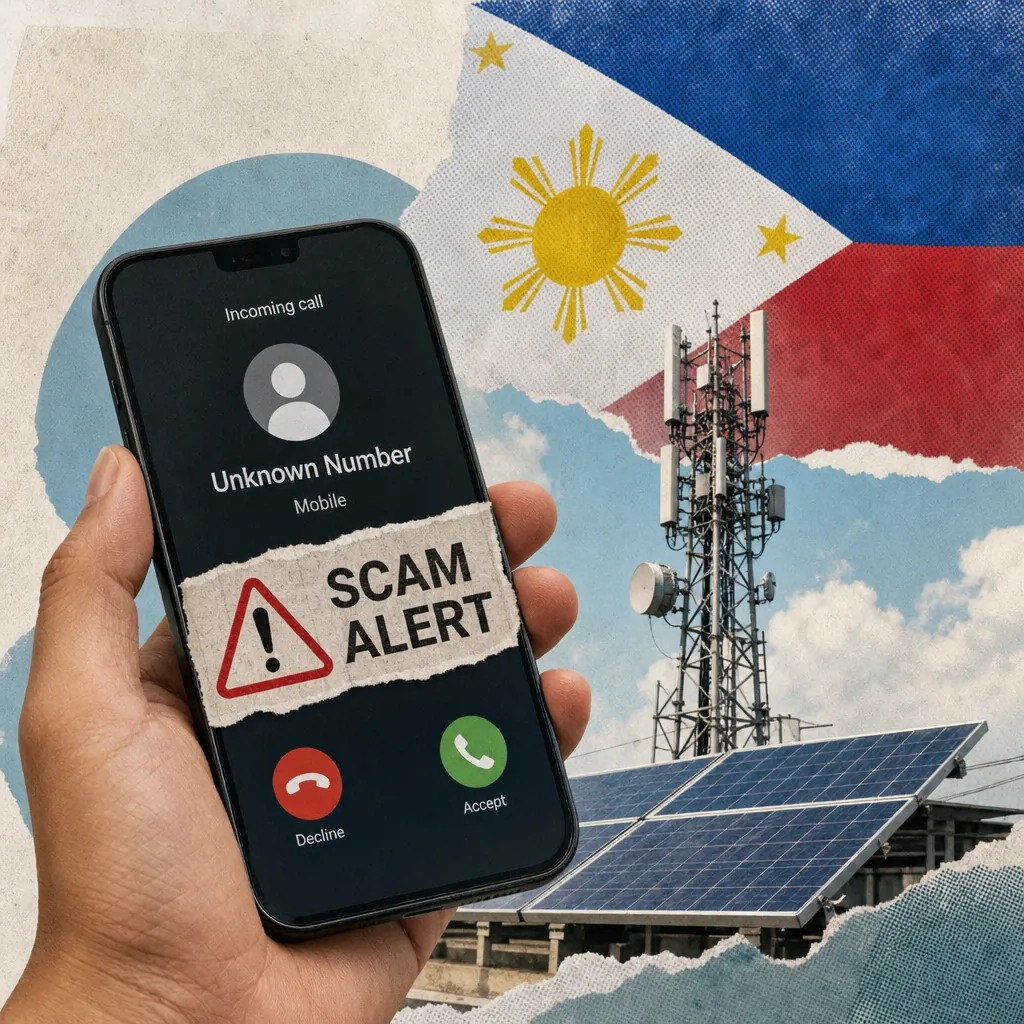
The Department of Information and Communications Technology (DICT) Region VIII issued a cybersecurity advisory warning about the "DICT Tower Scam," a scheme targeting landowners with fraudulent cell tower lease agreements. Scammers pose as DICT representatives to lease land for tower construction, tricking landowners into signing fake contracts. This advisory, posted on July 13, received modest engagement (9 likes, 10 love reactions) but carries significant implications for telco infrastructure expansion. The scam undermines trust in legitimate tower-sharing programs and may delay site acquisitions, particularly as the 5G rollout continues. For PLDT and Smart, this creates an urgent need to clarify legitimate leasing procedures and partner with DICT to warn landowners. The advisory also positions DICT as a proactive protector, a narrative that telcos may want to align with by highlighting their own anti-fraud partnerships with government agencies.
MTerra Solar inauguration: A halo effect for MVP's business group
President Ferdinand Marcos Jr. inaugurated Phase I of the MTerra Solar Project in Nueva Ecija on July 14, describing it as a major step toward expanding the Philippines' renewable energy capacity and reducing dependence on coal-fired power. The project, developed by Meralco PowerGen Corp. (MGen), is set to become the world's largest integrated solar photovoltaic and battery energy storage system. MGen chairman Manuel V. Pangilinan, who celebrated his 80th birthday during the event, shared his vision for a future where clean, reliable energy is within reach of every Filipino. The event drew heavy newspaper coverage, with the Manila Standard article carrying an estimated advertising-equivalent value of ₱650,637. While not directly about telco, this event creates a halo effect around MVP's broader business group—including PLDT and Smart—by associating them with national energy security and sustainability. Conversations about network reliability and high electricity costs for tower operations may soon be reframed through a "green infrastructure" lens, particularly as the solar farm's initial 750 MW capacity begins feeding the Luzon grid.
CitizenWatch Philippines: Digital infrastructure and education
Consumer advocacy group CitizenWatch Philippines urged closer coordination among government, telephone companies, and schools to optimize the country's digital infrastructure gains following its reclassification as an upper-middle-income country (UMIC) by the World Bank. The Philippines was formally reclassified on July 1 after its gross national income (GNI) per capita rose to $4,850 in 2025, clearing the $4,636 threshold. CitizenWatch co-convenor lawyer Kit Belmonte said the classification is an encouraging marker but stressed the urgency of bringing education to keep pace with the momentum of a digital economy. The group called for integrating digital literacy into school curricula and leveraging telco infrastructure for educational purposes. This article, worth an estimated ₱64,823 in advertising-equivalent value, highlights a strategic opportunity for PLDT and Smart to position themselves as partners in national development beyond connectivity, particularly in addressing the digital divide and scam prevention through education.
Conversation trajectory
- Escalation of scam-related discourse into a multi-sector crisis narrative – The convergence of celebrity text scam stories, gaming account theft, and DICT tower scam warnings points to a broadening public concern about digital safety that implicates telcos as both victims and enablers. Within the next 4-6 weeks, expect this conversation to shift from individual victim stories toward demands for telco accountability, especially around SIM registration enforcement and fraud prevention measures. The emotional resonance of the Kyline Alcantara story (93 sad reactions) suggests that any high-profile scam incident could trigger a wave of negative sentiment toward telcos if not addressed proactively.
- Renewable energy infrastructure as a legitimizing narrative for telco leadership – The MTerra Solar inauguration directly linked President Marcos, Meralco Chairman MVP, and a large-scale clean energy project. While telco-specific energy costs are not explicitly mentioned, this event creates a halo effect around MVP's broader business group—including PLDT and Smart—by associating them with national energy security and sustainability. Conversations about network reliability and high electricity costs for tower operations may soon be reframed through a "green infrastructure" lens. Monitor official PLDT/Smart social channels for sustainability messaging within 2-3 weeks.
- Public-private digital governance initiatives gaining traction – DICT's simultaneous push for eLGU digital compliance and cybersecurity ordinances is receiving modest but consistent engagement. These government-led efforts to institutionalize cybersecurity at the barangay level could become a reference point for telco stakeholders to demonstrate collaboration with authorities. The "DICT Tower Scam" advisory, in particular, positions DICT as a proactive protector—a narrative that PLDT and Smart may want to align with by highlighting their own anti-fraud partnerships with government agencies.
- Key trigger events – The upcoming anniversary of the SIM Registration Act enforcement (likely to reignite debates on fraud and privacy trade-offs), any large-scale phishing campaign leveraging Smart or PLDT branding, and the potential formal announcement of the ABS-CBN franchise deal involving both MVP and San Miguel president Ramon Ang could reshape the conversation. The DICT's upcoming cybersecurity awareness campaigns tied to Barangay ICT ordinances (expected roll-out within 2-3 weeks, starting with pilot LGUs like Ormoc City) will also be a key moment.
Response guidance
- Seize the positive narrative from the GSMA certification to counterbalance the recurring scam anxiety in the social media conversation. Publish a corporate blog or press release summarizing the certification and its direct benefits for banks and fintech apps, then distribute across all platforms. Use the certification as a hook for educational content that demonstrates how network-powered APIs prevent fraud without compromising privacy.
- Launch a coordinated anti-scam awareness campaign following the Kyline Alcantara incident. The public is highly receptive to scam prevention messages right now. Develop a short video or infographic series featuring real victim stories (anonymized) and actionable tips, promoted across PLDT and Smart social channels. Emphasize that SIM registration alone is not enough—encourage use of built-in spam filters and reporting tools to demonstrate proactive protection.
- Issue a cross-platform advisory on legitimate cell tower lease processes in partnership with DICT. Given the DICT Region 8's explicit warning, PLDT and Smart should preemptively create a simple landing page explaining how landowners can verify official tower lease offers and report scams. Share this via local government unit social media pages to build trust and prevent delays in tower deployment due to fraud fears.
- Leverage the MVP birthday momentum to spotlight PLDT and Smart's digital inclusion initiatives. Use the positive sentiment around MVP's 80th—especially his emphasis on lifelong learning and community service—to publish shareable content showing how the telcos are bridging connectivity gaps. This counters any negative narrative about infrastructure delays by associating the brands with purposeful leadership.
- Sensitive topics to navigate: User privacy vs. security—emphasize that Smart only shares a yes/no answer, not location history. Victim shaming in scam posts—responses must avoid blaming the victim and focus on actionable next steps. Competitive dynamics with Globe and DITO—avoid direct comparison language that could appear as a competitive attack; frame it as an industry-wide step forward for Philippine digital security.
See the full picture behind today's signals.
This report draws from Media Meter's MediaWatch, our real-time monitoring engine tracking 2,470+ Philippine sources across print, broadcast, digital, and social. Explore how the platform turns raw coverage into decision-grade intelligence, then see how it's configured for teams like yours — whether you're in PR agencies, corporate comms, government, or marketing.
Want more? Browse our Report Library for sector and crisis intelligence, or request a demo and we'll have your brand set up before the call.
Want this kind of intelligence on your brand?
This brief is built on the same MediaWatch methodology that runs continuously across every brand we monitor. See your competitive landscape, Impact Score, and narrative trajectory in a 30-minute demo.