Sept. 21 Protests Test Flood-Control Accountability
Protests across Metro Manila, Bulacan and Panay mark the 54th anniversary of martial law with demands for accountability over flood-control spending, as Malacañang locks down and the flood-control controversy reaches a year. Coverage also tracks the Aeta tribe's uncertainty over the Pax Silica tech hub and the DPWH's defense of a bamboo-based flood solution.
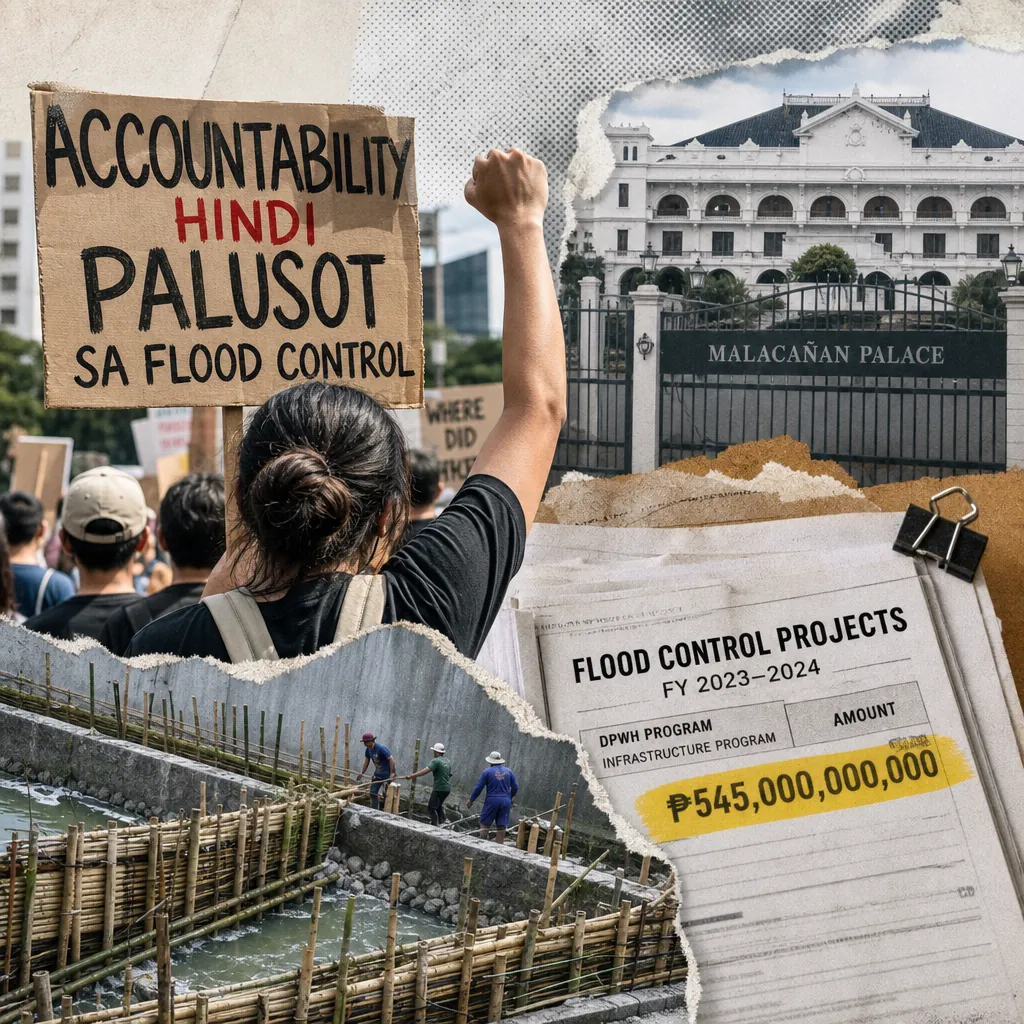
Protest caravans and rallies across at least four regions on Sunday, September 20, set the terms for the 54th anniversary of the 1972 declaration of martial law, with flood-control corruption as the central grievance rather than the anniversary itself. Groups marched from De La Salle Greenhills to the EDSA Shrine under the banner "Never Forget: Hindi Mababaha ang Katotohanan," a day before the anniversary and a year after the Trillion Peso March, calling for charges against everyone implicated in flood-control irregularities and for the recovery of stolen public funds76. In Calumpit, Bulacan, residents rallied along MacArthur Highway carrying placards reading "Flood control, hindi fund control," "Ibalik ang perang ninakaw," and "Taxes not for thieves," burned an effigy of a crocodile in a barong carrying briefcases of money, and staged a mud-covered theatrical act mirroring the aftermath of the floods before ending in a candle-lighting ceremony2325. In Iloilo City, the Kahublagan Kontra Korapsyon coalition, with progressive and sectoral organizations, expected at least 500 core delegates plus walk-in participants, with parallel actions in Capiz and Aklan and a delegation from Antique18.
The government's response was logistical. The Presidential Communications Office announced that the New Executive Building inside the Malacañang complex would be closed on Monday "due to standard security protocols," that the Presidential Action Center — the frontline channel between the Office of the President and citizens seeking assistance such as guarantee letters or filing complaints against government offices — would suspend operations "to ensure public safety," and that roads and gates leading to Malacañan Palace would be restricted1. Manila's city government also announced its own measures1.
The flood-control controversy has a specific legal trigger this week. Former Senator Ramon "Bong" Revilla Jr. was granted bail by the Sandiganbayan Third Division in July in a malversation case involving an alleged P92.8-million ghost project, and protesters on Sunday questioned what that release means for others still detained39. Joanna Caumeran, one of the protesters, said: "I hope this continues because many people have yet to be jailed and held accountable, including big names and politicians who were involved in the flood control controversy."39 The Sandiganbayan is the Philippines' anti-graft court, which hears criminal cases against public officials; malversation is the misuse or theft of public funds by an official entrusted with them.
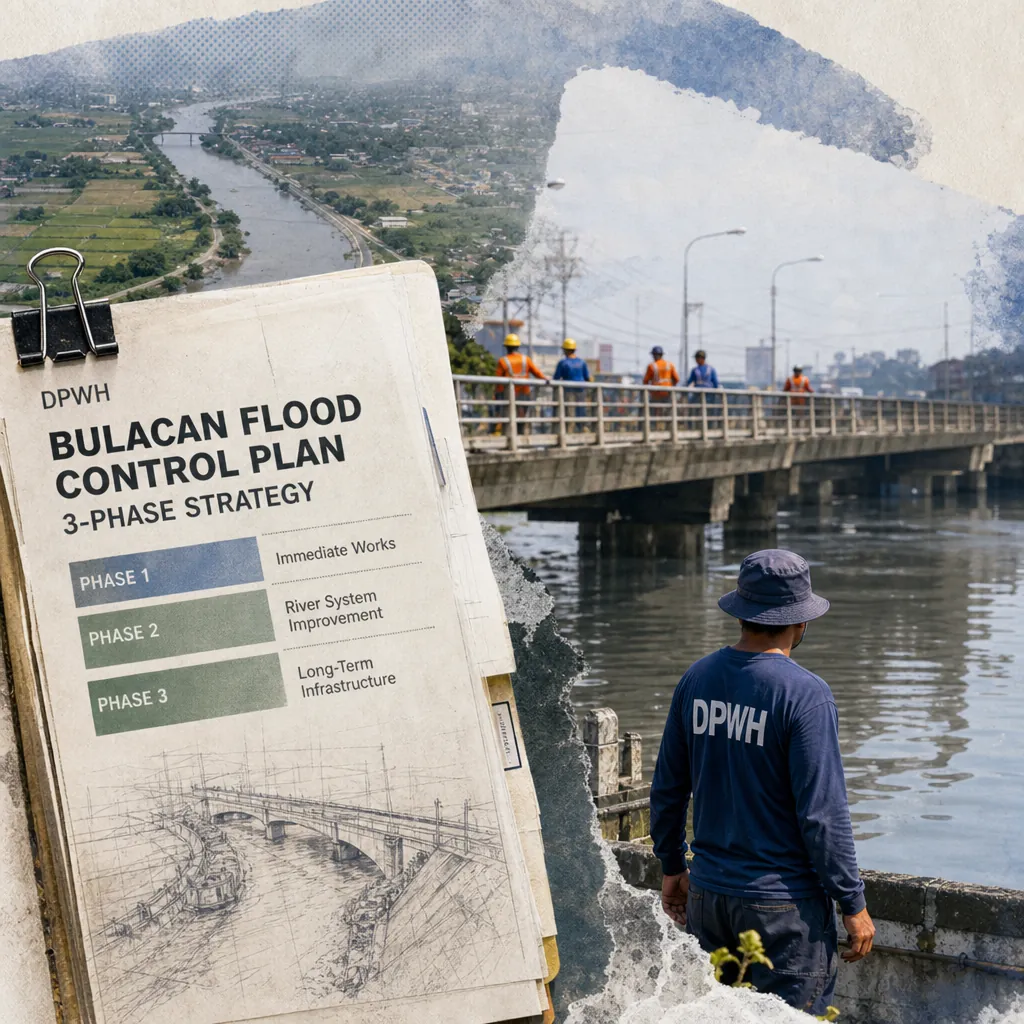
A separate thread of the day's coverage pointed at what a working flood response looks like. Department of Public Works and Highways Secretary Vince Dizon praised a bamboo cribbing project in Barangay Pamarawan, Malolos, Bulacan — a nature-based engineering technique using interlocking bamboo frames filled with soil or rock to stabilize riverbanks, prevent erosion and reduce flooding — as an example of flood control that works, and said the medium-term project could be replicated in flood-prone Hagonoy and applied in vulnerable neighboring communities68. The same agency issued a show-cause order against the contractor of a multi-purpose building at the Lakeshore Complex in Barangay Lower Bicutan, Taguig, for allegedly continuing construction despite a cease and desist order covering reclaimed areas of Laguna de Bay, giving the contractor five days to explain why administrative or contractual action should not be taken34.
Key themes
- Flood-control corruption drives the Sept. 21 protests, not the martial law anniversary alone. Groups in Metro Manila, Bulacan and Panay framed their demands around accountability for flood-control funds, with the anniversary serving as the date rather than the message762318.
- Malacañang closes offices and restricts access ahead of the rallies. The New Executive Building and the Presidential Action Center suspended operations Monday, and roads and gates to the Palace were restricted1.
- Revilla's bail becomes the protest's legal flashpoint. The Sandiganbayan's July grant of bail in a P92.8-million malversation case drew questions about whether other detainees would also walk free39.
- The DPWH promotes a bamboo-based flood solution in Malolos. Secretary Dizon cited bamboo cribbing as a replicable model for Hagonoy and other flood-prone areas68.
- A Taguig contractor faces a show-cause order over construction on reclaimed Laguna de Bay land. The DPWH gave the contractor five days to explain continued work despite a cease and desist order34.
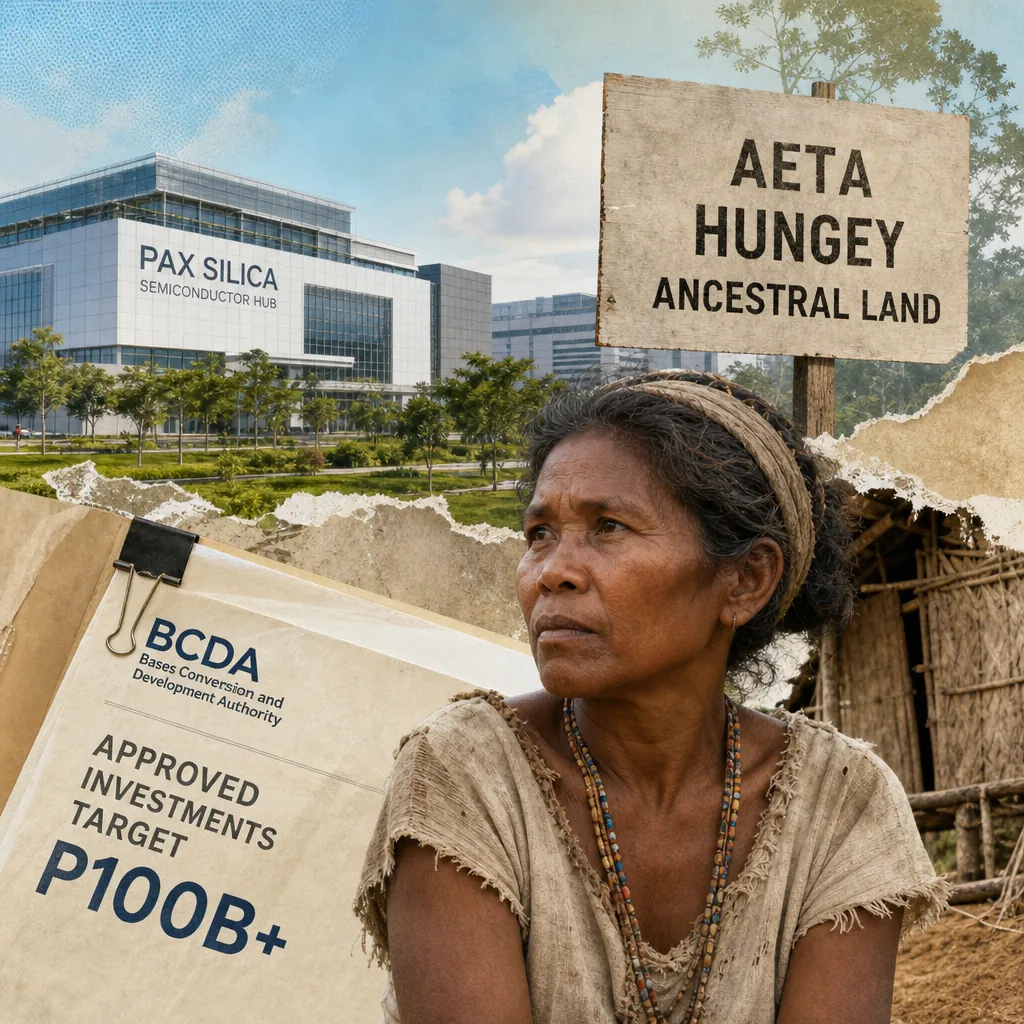
- An Aeta tribe in New Clark City says it still lacks clarity on the Pax Silica tech hub. Chieftain Petronila Muñoz said a July letter from the Bases Conversion and Development Authority warned the project "could affect your occupied lands," and asked, "What will happen to us? That's our biggest question."4349
- The BCDA turns to unsolicited proposals for a ₱2.5-billion New Clark City ICT project after three failed biddings. The agency declared a failure of bidding on June 25 and is now seeking private-sector proposals under a public-private partnership69.
- Senator Pangilinan presses the Department of Agrarian Reform for transparency in beneficiary identification. During deliberation of DAR's proposed P16.935-billion 2027 budget, he called for geotagged, publicly verifiable facilities and beneficiaries17.
How the narratives stack
Dominant. The Sept. 21 protests and the government's security response dominated the day's coverage in this set, with at least six items across Metro Manila, Bulacan and Panay addressing the rallies, the lockdown, and the flood-control controversy12325394176. The framing was consistent: protesters tied the martial law anniversary to present-day corruption allegations, and the Palace responded with closures and restricted access. Within the captured items, this story carried the heaviest newspaper coverage, with the Manila Times opinion piece on martial law's legacy drawing an estimated ₱800,600 in advertising-equivalent value and the Philstar report on the youth march drawing an estimated ₱659,8355676.
Counter-narrative. The DPWH's promotion of the Malolos bamboo cribbing project and its show-cause order against the Taguig contractor offered a counterpoint: the same agency under scrutiny was also presenting a working flood solution and enforcing a cease and desist order6834. This is not a rebuttal of the corruption allegations but a parallel account of the agency's operational response.
Emerging. The Aeta tribe's uncertainty over the Pax Silica industrial hub in New Clark City is an emerging story with clear forward momentum. The tribe received a July letter from the BCDA warning that the project "could affect your occupied lands," and the Philippines designated 1,620 hectares in New Clark City for a manufacturing hub producing high-end components for artificial intelligence data centers4349. The BCDA's turn to unsolicited proposals for the ₱2.5-billion ICT project after three failed biddings suggests the infrastructure build-out is behind schedule69.
Suppressed. No story in this set was actively kept down. The under-covered thread is the Department of Agrarian Reform's budget deliberation, where Senator Pangilinan's call for transparency in beneficiary identification received a single item despite its implications for the government's land-reform program17.
Platform insights
- Facebook. The day's most visible social activity around the protests came through photo and video posts from rally sites, including the Calumpit effigy burning and the EDSA Shrine march. The Bandera item on Joshua Garcia's appearance at a movie mediacon shows how entertainment content competes for attention on the same platform, with netizens commenting on his appearance in Facebook reels and a Reddit thread questioning whether his new hair color made him look tired22.
- X. The protest coverage circulated through news outlet accounts and stringer photos, with the GMA News Online item on the Bulacan rally and the Philstar report on the youth march providing the most shareable visuals2376. The platform's role was primarily amplification of on-the-ground reporting rather than original organizing.
- Reddit. A thread discussing Joshua Garcia's appearance at the "Always Yours, Never Mine" mediacon shows the platform's role in entertainment commentary, with one netizen asking whether the actor's new hair color was responsible for his tired look22. The platform also carried discussion of the Ateneo law student's death after falling from a condominium building in Bonifacio Global City58.
- YouTube. No meaningful activity was captured in this set.
Key voices and communities
Protest coalitions and youth groups. Akbayan Youth, the Student Council Alliance of the Philippines, Youth Against Kurakot, Tindig Pilipinas, the Nagkaisa! Labor Coalition, Kalipunan ng Kilusang Masa, iDefend, and Clergy for Good Governance drove the Metro Manila mobilization4176. Their framing tied the martial law anniversary to present-day corruption, political dynasties, workers' rights, and government repression. These groups matter because they are the organized base that has sustained the flood-control accountability campaign for a year.
Local community groups in Bulacan and Panay. Calumpit residents and the Kahublagan Kontra Korapsyon coalition brought specific local grievances — persistent flooding, brownouts, low wages, deteriorating basic services — into the national protest agenda2318. Their participation shows the accountability campaign has moved beyond Metro Manila.
The Aeta Hungey tribe. Chieftain Petronila Muñoz has become the most visible voice opposing the Pax Silica project's impact on ancestral land, telling Agence France-Presse, "There's still no clarity. What will happen to us? That's our biggest question."4349 The tribe's situation matters because it tests whether the government's flagship industrial policy will proceed with or without consultation with affected Indigenous communities.
Government officials. DPWH Secretary Vince Dizon, BCDA officials, and Senator Francis Pangilinan each staked out positions on flood control, the New Clark City project, and agrarian reform transparency686917. Their statements define the government's response to the day's pressure.
Narrative streams
Flood-control protests converge on the martial law anniversary
The Sept. 21 mobilization is the second consecutive year that flood-control corruption has anchored the martial law anniversary protests. Last year's Trillion Peso March drew thousands to the streets over allegations that billions in flood-control funds were lost to ghost projects and kickbacks. This year, the groups returned with a broader agenda: the Metro Manila caravan moved from the House of Representatives and the Supreme Court to the EDSA Shrine, while the Bulacan rally in Calumpit focused specifically on the flooding that continues to inundate the province4123. The Panay mobilization, led by Kahublagan Kontra Korapsyon with former Kabataan party-list representative Raoul Manuel, brought brownouts, low wages, and deteriorating services into the same frame18.
The read for the sector is that the flood-control controversy has become a durable organizing frame that now absorbs other local grievances. For government agencies, this means that any flood-control spending — even legitimate projects — will face heightened public scrutiny, and that the anniversary date will continue to serve as an annual focal point for accountability demands.
Malacañang's lockdown and the limits of the security response
The Presidential Communications Office's decision to close the New Executive Building and suspend the Presidential Action Center's operations on Monday is a standard security protocol, but it carries a specific cost: the Action Center is the frontline channel for citizens seeking assistance, including guarantee letters and complaints against government offices1. Closing it for a day means those requests are delayed. The restriction of roads and gates to Malacañan Palace follows the same logic1.
The read for the sector is that the government's physical security measures are proportionate to the anticipated crowd size but create a one-day service interruption for citizens who rely on the Action Center. For communicators, the message is that the lockdown is a logistical measure, not a political statement, and should be framed as such.
Revilla's bail and the question of accountability
The Sandiganbayan's July grant of bail to former Senator Ramon "Bong" Revilla Jr. in a malversation case involving an alleged P92.8-million ghost project has become the protest's most concrete legal grievance39. Revilla's release does not end the case; it allows him to remain free while the case proceeds. But protesters on Sunday questioned what it means for others detained in connection with flood-control cases39. The Sandiganbayan is the anti-graft court that hears criminal cases against public officials, and its bail decisions are watched as signals of how aggressively the cases will be pursued.
The read for the sector is that the bail grant has shifted the protest narrative from "investigate the corruption" to "why are the accused walking free." For the justice system, this means that every bail decision in a flood-control case will be read as a test of the government's seriousness.
The DPWH's two-track response: enforcement and a working model
The DPWH's show-cause order against the Taguig contractor is a concrete enforcement action: the contractor allegedly continued construction on a multi-purpose building at the Lakeshore Complex in Barangay Lower Bicutan despite a cease and desist order covering reclaimed areas of Laguna de Bay34. The five-day window for explanation is a procedural step that could lead to administrative or contractual penalties. Separately, Secretary Dizon's praise for the Malolos bamboo cribbing project offers a positive counterpoint: a nature-based engineering technique that uses interlocking bamboo frames filled with soil or rock to stabilize riverbanks and reduce flooding68.
The read for the sector is that the DPWH is trying to demonstrate that it can both enforce its own orders and promote solutions that work. For contractors and local governments, the message is that compliance with cease and desist orders is not optional, and that nature-based solutions are being evaluated for replication.
The Aeta tribe and the Pax Silica project
The Philippines joined Pax Silica, a US-led initiative to strengthen supply chains for semiconductors and rare earth elements and reduce participating countries' dependence on China, in April4349. The government designated 1,620 hectares in New Clark City in Tarlac for a manufacturing hub producing high-end components for artificial intelligence data centers4349. The Aeta Hungey tribe received a letter from the BCDA in July warning that the project "could affect your occupied lands," and chieftain Petronila Muñoz said the tribe still lacks clarity on how much land could be affected or what will become of the livelihood it provides4349.
The BCDA's turn to unsolicited proposals for the ₱2.5-billion ICT infrastructure project in New Clark City, after declaring a failure of bidding on June 25 and three failed attempts to find a private partner, suggests the project's timeline is slipping69. The ICT project is intended to support the Pax Silica hub under an open-access fiber model69.
The read for the sector is that the government's flagship industrial policy is proceeding without clear consultation with affected Indigenous communities, and that the infrastructure build-out is behind schedule. For investors, the combination of land-tenure uncertainty and procurement delays is a risk factor. For the BCDA, the challenge is to demonstrate that the project can proceed with community consent, not just legal authority.
Agrarian reform transparency and the DAR budget
Senator Francis Pangilinan, who chairs the Senate Committee on Agriculture, Food, and Agrarian Reform, led the deliberation of the Department of Agrarian Reform's proposed P16.935-billion budget for 2027 last Thursday17. He called for full transparency in identifying agrarian reform beneficiaries, saying that "every facility, business, and beneficiary supported by the DAR must be readily verifiable: geotagged, with contracts and information open to the public, subject to independent inspection, and proven to be actual, existing, and operational."17 He also said that "climate shocks, so to speak, will not recognize corruption, negligence, or slow bureaucracy. Neither can imports replace the resilience, strength, quality output, and productivity of Filipino farmers."17
The read for the sector is that the DAR's budget is now subject to the same transparency demands that have driven the flood-control protests. For agrarian reform beneficiaries, the risk is that delayed or opaque identification processes slow down land distribution. For the DAR, the challenge is to demonstrate that its programs are verifiable and operational.
Conversation trajectory
Over the next 24–48 hours. The Sept. 21 protests will produce a wave of social media posts, news reports, and statements from government officials. Watch for crowd-size estimates, any clashes or arrests, and the Palace's response. The Malacañang lockdown will be lifted after the protests, and the Presidential Action Center will resume operations. The DPWH's show-cause order against the Taguig contractor will be due within five days of receipt, so a response could come this week34.
Over the next 1–2 weeks. The initial report on the management and loss issues of the Federal Land Development Authority (FELDA) in Malaysia is expected to be announced next week, according to Prime Minister Anwar Ibrahim, who said the report is not aimed at seeking revenge but forms part of the government's efforts to address problems within the agency3. While this is a Malaysian story, it is relevant to the broader accountability theme in the region. In the Philippines, the Senate's deliberation of the DAR budget will continue, and Pangilinan's transparency demands could produce specific commitments or amendments17.
Over the next 4–6 weeks. The BCDA's search for unsolicited proposals for the ₱2.5-billion New Clark City ICT project will test whether the agency can attract private partners after three failed biddings69. The Aeta tribe's situation could escalate if the BCDA proceeds without consultation. The flood-control cases in the Sandiganbayan will continue, and any new bail decisions or convictions will be read as signals of the government's seriousness.
Trigger events. The Sept. 21 protests themselves are the immediate trigger for the next news cycle. The DPWH's response to the show-cause order, the BCDA's next move on the ICT project, and any new developments in the flood-control cases are the events to watch.
Response guidance
For government communicators. Frame the Malacañang lockdown as a standard security measure, not a political statement, and provide clear information about when the Presidential Action Center will resume operations. Avoid dismissing the protests as partisan; the flood-control grievance has broad public support, and the government's response should focus on the concrete steps being taken to address it.
For the DPWH. The show-cause order against the Taguig contractor is an opportunity to demonstrate that the agency enforces its own cease and desist orders. Publicize the outcome of the five-day window. The Malolos bamboo cribbing project is a positive story that can be replicated; provide details on cost, timeline, and effectiveness.
For the BCDA. The Aeta tribe's uncertainty over the Pax Silica project is a reputational risk. Proactive consultation with affected communities, clear information about land boundaries, and a transparent process for addressing grievances would reduce the risk of protests or legal challenges. The failed biddings for the ICT project suggest that the agency needs to reassess its procurement strategy.
For the DAR. Senator Pangilinan's transparency demands are likely to be repeated in future budget deliberations. Geotagging beneficiaries and making contracts publicly available would address the core concern and reduce the risk of future criticism.
For the private sector. Companies operating in New Clark City or bidding on government infrastructure projects should monitor the BCDA's procurement process and the Aeta tribe's situation. The flood-control controversy has shown that public scrutiny of government spending can escalate quickly, and companies associated with disputed projects may face reputational risk.
For civil society and protest organizers. The Sept. 21 mobilization has established flood-control accountability as a durable frame. The next step is to translate the protests into specific policy demands and to monitor the government's follow-through on the show-cause order, the DAR budget, and the flood-control cases.
See the full picture behind today's signals.
This report draws from Media Meter's MediaWatch, our real-time monitoring engine tracking 2,470+ Philippine sources across print, broadcast, digital, and social. Explore how the platform turns raw coverage into decision-grade intelligence, then see how it's configured for teams like yours — whether you're in PR agencies, corporate comms, government, or marketing.
Want more? Browse our Report Library for sector and crisis intelligence, or request a demo and we'll have your brand set up before the call.
Want this kind of intelligence on your brand?
This brief is built on the same MediaWatch methodology that runs continuously across every brand we monitor. See your competitive landscape, Impact Score, and narrative trajectory in a 30-minute demo.