ASF vaccine approved for commercial sale in PH
The Bureau of Animal Industry approved the first commercial African swine fever vaccine, a key step in rebuilding the hog industry. The day's coverage also tracked the peso's record low, a proposed DOE budget hike, and MSME support initiatives.
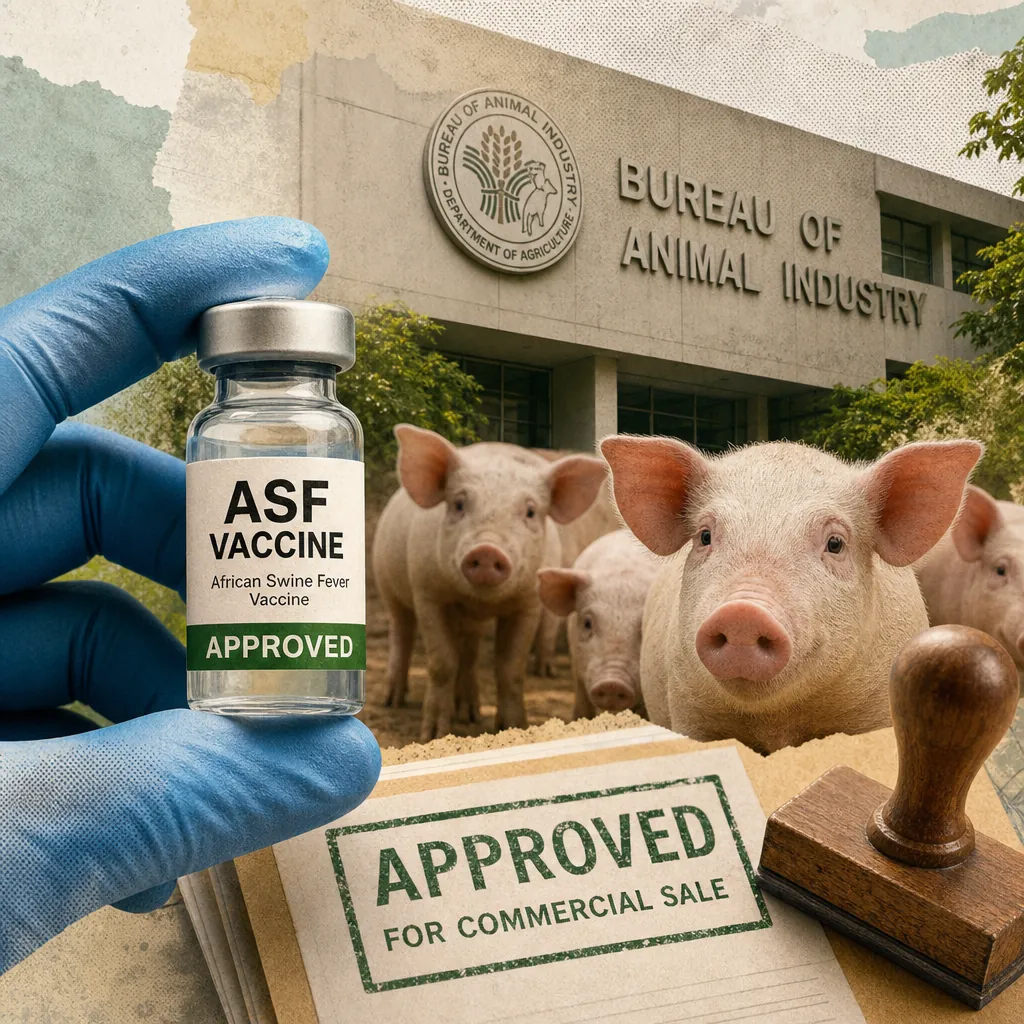
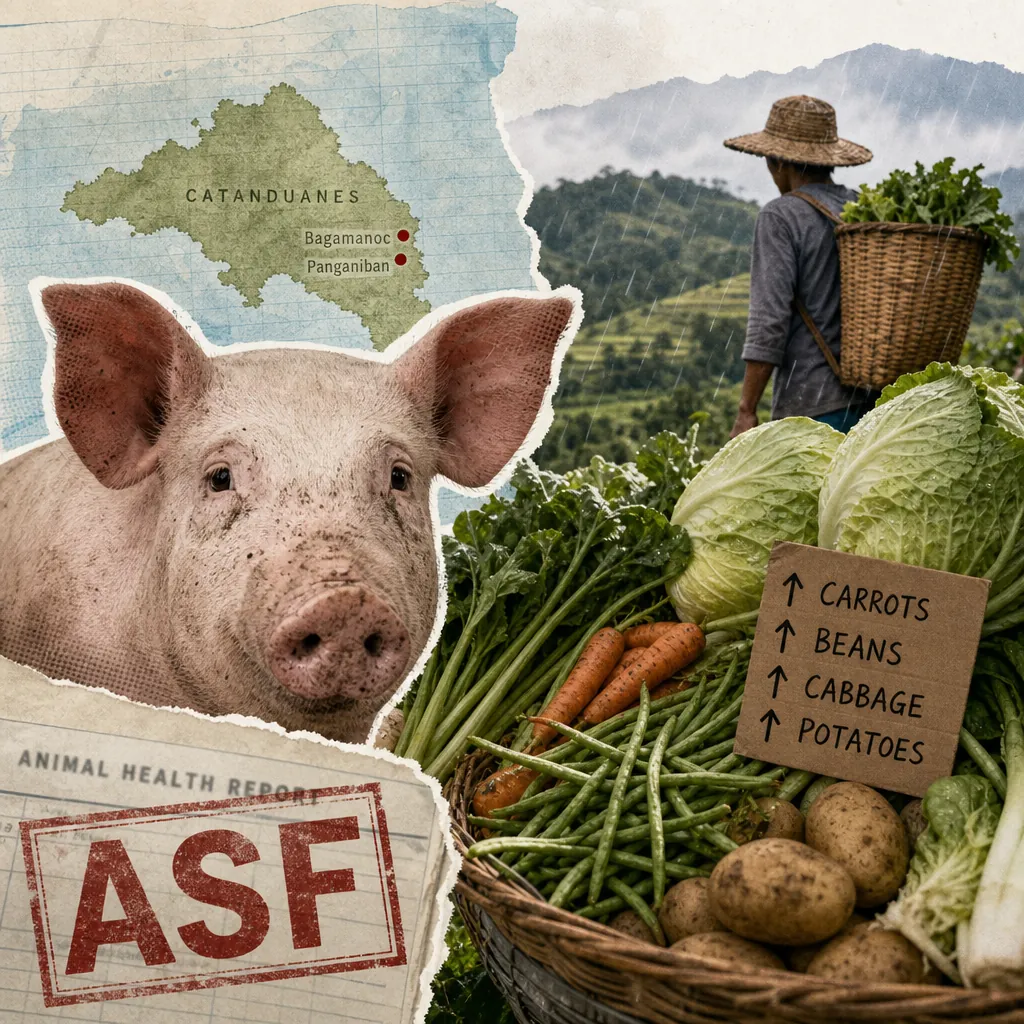
The Bureau of Animal Industry (BAI) approved the commercial sale of the first African swine fever (ASF) vaccine in the Philippines, a live, weakened, gene-deleted freeze-dried product developed by Vietnam's AVAC Joint Stock Co. 101548 Agriculture Secretary Francisco Tiu Laurel Jr. called the approval "crucial to our repopulation program," giving hog raisers "another tool to protect healthy animals as we work to rebuild the industry and secure a more stable supply of pork." 1048 The decision caps years of effort to contain a disease that has cut the national swine herd from roughly 13 million heads before 2019 to about 8 million today. 15 A second vaccine, Provac from South Korea's Komipharm International, is still under testing and could reach the market next year. 1048 Agriculture Undersecretary Constante Palabrica said he has requested ₱1 billion in next year's budget to subsidize vaccine purchases. 48
The approval dominated the day's agriculture coverage, appearing across the Inquirer, Daily Tribune, Panay News, and Philstar, with the Inquirer's report drawing the heaviest coverage value at an estimated ₱437,000 in advertising-equivalent space. 10154850 The story also reached the provinces, where the stakes are most immediate: in Bacolod City, the city veterinary office is intensifying its ASF information drive across 61 barangays even as local hog raisers complain about low farmgate prices for live hogs. 26 The vaccine's arrival is meant to address both the disease and the price problem — by protecting healthy animals, the government hopes to stabilize supply and, in Tiu Laurel's words, "stabilize prices at farmgate levels." 50
Beyond the vaccine, the day's conversation ranged across the economy. The peso slid to another record low against the dollar, closing at 60.48, its weakest finish since early May, while the Philippine Stock Exchange index fell 0.67% to 6,053.23 on renewed US-Iran tensions and rising oil prices. 2427 Energy Secretary Sharon Garin told a House budget hearing that the Department of Energy's proposed ₱5.6-billion budget for 2027 — 25% higher than this year's ₱4.43 billion — would eventually lower electricity prices through new programs like a gradiometry study and mobile energy systems. 1 And in the retail sector, Robinsons Retail Holdings officially ended its nearly 13-year run on the stock exchange, with chairwoman Robina Gokongwei-Pei saying she would not miss "explaining to 23-year-old analysts who ask me what I'm doing, why I'm doing it and how I am doing it." 52
Key themes
- First ASF vaccine cleared for commercial sale, a milestone for hog repopulation — The BAI approved AVAC's live, weakened, gene-deleted vaccine, giving raisers a new tool against a disease that has cut the national herd by roughly 40%. A second vaccine from South Korea is in testing. 101548
- Peso hits another record low, stocks fall on global tensions — The currency closed at 60.48 to the dollar, its weakest since early May, while the PSEi dropped 0.67% to 6,053.23. Rising oil prices and US-Iran tensions weighed on sentiment. 2427
- DOE seeks 25% budget hike, promising lower power rates — Energy Secretary Sharon Garin told lawmakers the proposed ₱5.6-billion 2027 budget would fund programs aimed at cutting electricity prices, though the link drew skeptical questioning. 1
- MSME support expands through AI hubs, hiring programs, and trade fairs — The DTI and Converge launched an AI and Scale Up Center for small businesses, Jobstreet by SEEK rolled out hiring initiatives, and the Women Strong Network trade fair showcased women entrepreneurs. 22533
- Sugar exports to the US may be skipped again this year — The Sugar Regulatory Administration said production constraints from last year's floods, a pest infestation, and a looming El Niño could leave too little supply to meet the US quota. 53
- Robinsons Retail goes private after 13 years on the exchange — The Gokongwei-led retailer delisted, with executives saying they will run the company as if it were still public. 52
- Community resistance shapes large investments, from AI data centers to infrastructure — The withdrawal of an AI data center project in Oton, Iloilo, left a lesson for investors about transparency and consultation, even as San Miguel Corp. moved to address flooding in Pampanga. 2944
- Food safety and public health cuts draw scrutiny in the US — A Florida congressman's TikTok video linked rising food recalls to cuts at federal health agencies, echoing concerns about the erosion of detection systems. 13
How the narratives stack
Dominant — The ASF vaccine approval is the clear lead. It is a concrete, long-awaited development with a named product, a named agency, and a direct line to the government's stated goal of rebuilding the hog industry. Within the captured set, it drew the most distinct coverage across the most outlets — the Inquirer, Daily Tribune, Panay News, and Philstar all carried it — and it speaks to a problem with real economic weight: pork is a staple protein, and the industry's contraction has kept prices elevated for years. 10154850
Counter-narrative — The peso's slide to another record low and the stock market's fall offer a sobering counterpoint to the vaccine's optimism. While the agriculture story is about rebuilding, the currency story is about external pressure — US-Iran tensions, oil prices, and global yields — that the Philippines cannot control. The Manila News PH piece captured the public's disconnect, noting that the peso's recovery to 60 was driven by a diplomatic breakthrough in a region most commuters could not locate on a map. 2427
Emerging — The push to support micro, small, and medium enterprises (MSMEs) is gaining institutional momentum. The DTI and Converge launched an AI hub, Jobstreet by SEEK is running hiring summits, and the Women Strong Network trade fair wrapped up at SM Megamall. These are separate initiatives, but together they signal a coordinated effort to address the sector's chronic challenges — a talent crisis affecting 46% of MSMEs, according to a Boston Consulting Group and DTI survey, even as 72% plan to expand. 22533
Under-covered — The sugar industry's likely decision to skip US exports this year received relatively little attention given its implications. The Sugar Regulatory Administration cited last year's floods, a red-striped soft scale infestation, and a looming El Niño as reasons production may fall short of the US quota. This is a quiet but significant signal of an industry under compounding stress. 53
Platform insights
- Facebook — The ASF vaccine approval and the peso's slide generated the most discussion, with provincial pages and agriculture groups sharing the news. The Bacolod angle — hog raisers' price concerns — resonated with local communities who feel the disease's impact directly. 26
- X (formerly Twitter) — Financial and political accounts drove the conversation on the peso's record low and the DOE budget hearing. The Manila News PH satirical take on the peso's recovery — noting that the catalyst was a strait "nobody in Manila has ever sailed through" — captured the public's frustration with the gap between macro indicators and daily reality. 27
- YouTube — GMA's "Pera Paraan" segment on a former corporate employee who turned a frozen dough reselling side hustle into a full-fledged supplier business drew attention, reflecting sustained interest in entrepreneurship and food-related small business stories. 32
- TikTok — US Congressman Maxwell Frost's "Is It Safe?" quiz format on food recalls demonstrated how policy messages can travel on short-form video. His blunt line — "You can't 'Make America Healthy Again' while playing games with our food safety" — framed the issue in a way that resonated beyond policy circles. 13
Key voices and communities
- Agriculture officials and hog raisers — Agriculture Secretary Francisco Tiu Laurel Jr. and BAI officials are the primary voices on the vaccine rollout, framing it as a tool for repopulation and price stabilization. Provincial hog raisers, particularly in Bacolod, provide the ground-level perspective, expressing concern about low farmgate prices even as the government pushes prevention. 102648
- Financial and economic commentators — Analysts and business reporters tracked the peso's slide and the stock market's fall, explaining the external drivers. The Manila News PH satirical voice offered a counterpoint, highlighting the disconnect between macro indicators and ordinary Filipinos' experience. 2427
- Government officials in budget hearings — Energy Secretary Sharon Garin and the House Committee on Appropriations, including Akbayan Rep. Perci Cendaña, shaped the conversation on the DOE's proposed budget increase, with Cendaña pressing Garin on whether the spending would actually lower electricity prices. 1
- MSME advocates and entrepreneurs — The DTI, Converge, Jobstreet by SEEK, and organizations like WomenBizPH are pushing a narrative of support and capacity-building for small businesses. Individual entrepreneur stories, like Pamela Boglosa's frozen dough business, humanize the sector's potential. 22532
- Community and religious leaders in Iloilo — Monsignor Meliton Oso of the Jaro Archdiocesan Social Action Center and local farmers emerged as voices on the Oton AI data center withdrawal, arguing that development must respect communities through transparency and consultation. 29
Narrative streams
ASF vaccine approval marks a turning point for the hog industry
The Bureau of Animal Industry's approval of the AVAC ASF vaccine is the most significant development in the Philippine hog industry since the disease arrived in 2019. The vaccine, a live, attenuated, gene-deleted freeze-dried product, is designed to protect pigs from the ASF virus. 1015 Its commercial availability gives raisers a preventive tool after years of relying on culling and biosecurity alone.
The context is stark. The national swine herd has fallen to about 8 million heads from roughly 13 million before ASF reached the Philippines. 15 That contraction has kept pork prices elevated and strained the livelihoods of small raisers. Agriculture Secretary Francisco Tiu Laurel Jr. framed the vaccine as essential to the government's repopulation program, which aims to rebuild the herd and stabilize supply. 1048
The rollout will not be instant. The vaccine must be distributed through BAI-accredited veterinary shops and outlets, and Agriculture Undersecretary Constante Palabrica has requested ₱1 billion in next year's budget to subsidize purchases. 4850 A second vaccine, Provac from South Korea's Komipharm International, is still under testing and could provide another option by next year. 1048
In the provinces, the urgency is palpable. In Bacolod City, the city veterinary office is intensifying its ASF information and education campaign across 61 barangays, profiling hog raisers and conducting seminars on biosecurity. 26 Local raisers there are expressing concern over low buying prices for live hogs — a reminder that the vaccine is not a cure-all. It protects healthy animals, but it does not immediately restore demand or raise farmgate prices.
The read for the sector: the vaccine is a necessary but not sufficient condition for recovery. Hog raisers now have a preventive tool, but rebuilding the herd to pre-2019 levels will take years of sustained effort, subsidized access, and continued biosecurity. The government's ₱1-billion subsidy request signals it understands the cost barrier, but the industry's recovery ultimately depends on raisers' confidence that the disease is truly under control.
Peso slides to record low as external pressures mount
The Philippine peso closed at 60.48 to the dollar on September 2, its weakest finish since early May, while the Philippine Stock Exchange index fell 0.67% to 6,053.23. 24 The triggers were external: renewed tensions between the United States and Iran, rising oil prices, and higher global yields. 24 The peso's decline reflects the Philippines' position as a net oil importer — when crude prices rise, the import bill grows, and the currency comes under pressure.
The stock market fall was broad-based, with most sectoral indices ending in negative territory. Services led the decline at 1.46%. 24 Trading activity was weak, with net value turnover at ₱5.14 billion, and foreign investors recorded a net outflow of ₱559.82 million. 24
The Manila News PH piece offered a satirical take on the peso's earlier recovery to 60, noting that the catalyst was a US-Iran peace agreement reopening the Strait of Hormuz — "a body of water that approximately zero percent of Metro Manila commuters could locate on a map without help." 27 The satire underscores a real tension: the currency's movements are driven by geopolitical events far from ordinary Filipinos' daily concerns, yet their effects — on fuel prices, on imported goods, on the cost of living — are felt immediately.
The read for the sector: businesses that rely on imported inputs or foreign currency debt face continued cost pressure. The peso's weakness feeds into inflation through higher import prices, and the stock market's decline reflects investor caution about global risks. For communicators, the challenge is explaining these external drivers without appearing to dismiss their real-world impact on consumers.
DOE's proposed budget hike promises lower power rates, but questions remain
Energy Secretary Sharon Garin told the House Committee on Appropriations that the Department of Energy's proposed ₱5.6-billion budget for 2027 — 25% higher than its ₱4.43-billion approved budget for 2026 — would lower electricity prices across the country. 1 The increase focuses on three programs: a gradiometry study, a mobile energy system, and automation. 1
Akbayan Partylist Rep. Perci Cendaña pressed Garin on whether the spending would actually deliver lower rates, asking directly: "Para sa ating mga kababayan na nakikinig, given all this po, Bababa na po ba ang presyo ng kuryente?" (For our countrymen listening, given all this, will the price of electricity go down?) 1
The skepticism is understandable. Electricity prices in the Philippines are among the highest in Southeast Asia, and past budget increases have not always translated into lower rates. The DOE's programs — a gradiometry study (a geophysical survey method to map underground resources), a mobile energy system, and automation — are long-term investments whose payoff is not immediate.
The read for the sector: the DOE is making a bet that targeted investments in resource mapping and system efficiency will eventually lower costs. But the link between budget allocations and consumer rates is indirect, and lawmakers' questions reflect public impatience with a problem that has persisted for decades. For energy stakeholders, the lesson is to manage expectations: these programs are foundational, not quick fixes.
MSME support ecosystem expands with AI, hiring, and trade initiatives
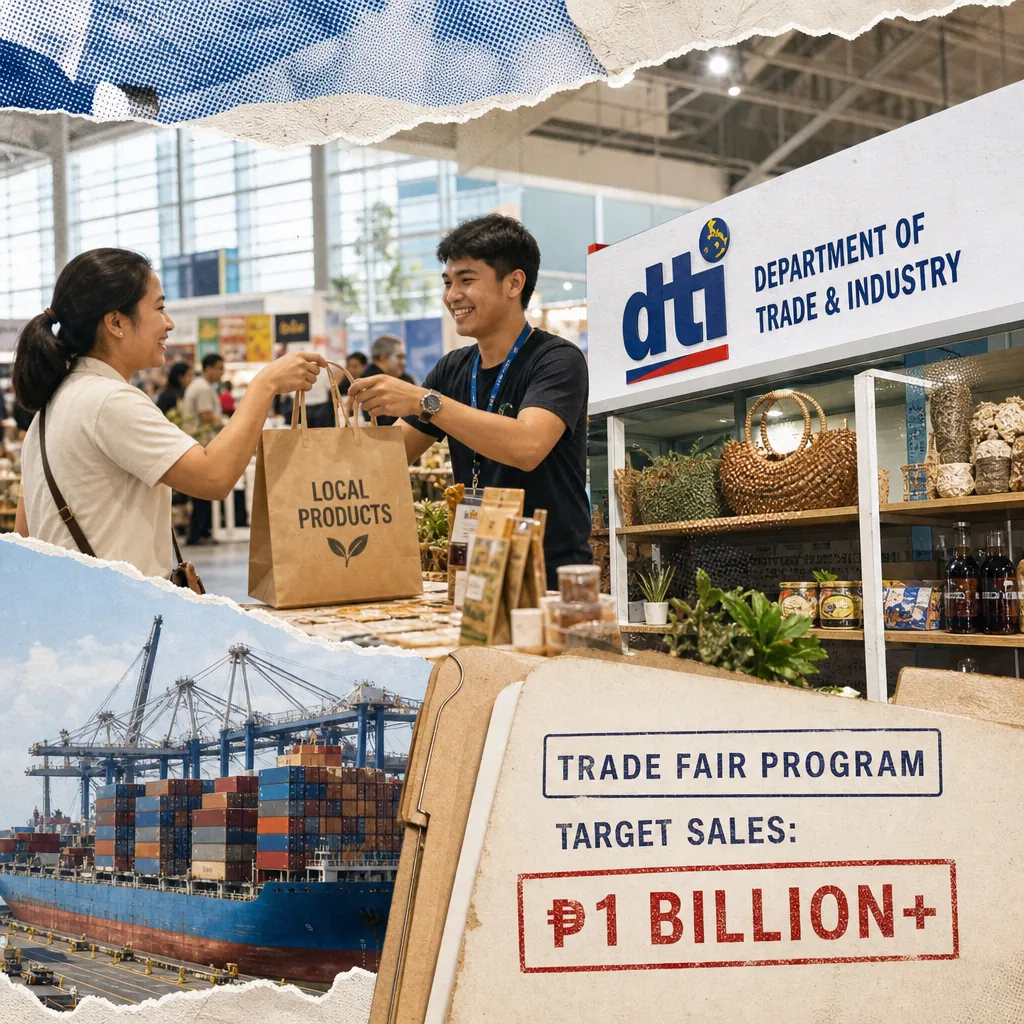
The Department of Trade and Industry (DTI), in partnership with Converge ICT Solutions, launched the DTI AI and Scale Up Center, where micro, small, and medium enterprises (MSMEs) can test artificial intelligence tools, showcase products, and develop growth strategies. 33 The initiative aims to lower the barriers to technology adoption for small businesses.
Jobstreet by SEEK is also strengthening its support for MSMEs, rolling out business talks, summits, and capacity-building initiatives in partnership with local government units and business organizations. 2 The effort is anchored on the theme "Building Better Teams. Growing Businesses." 2 The need is clear: around 46% of MSMEs are experiencing a talent crisis, even as 72% plan to expand their workforce, according to a survey by Boston Consulting Group and the DTI. 2
The Women Strong Network Hybrid Trade Fair 2026, which opened at SM Megamall on August 10, brought women entrepreneurs, government leaders, and industry partners together for three days of business and learning. 25 Organized by WomenBizPH in partnership with SM Supermalls, the fair showcased handcrafted accessories, woven textiles, artisanal delicacies, and sustainable fashion — products made by women who "dared to turn an idea into a business." 25
These initiatives share a common thread: they recognize that MSMEs are the backbone of the Philippine economy but face structural disadvantages in talent, technology, and market access. The DTI's AI hub, Jobstreet's hiring programs, and the Women Strong Network fair are all attempts to level the playing field.
The read for the sector: MSME support is moving from general encouragement to concrete, targeted programs. The challenge for communicators is ensuring these initiatives reach the businesses that need them most — particularly those outside Metro Manila and those led by women and other underrepresented groups.
Sugar exports to the US may be skipped again as production struggles
The Philippines may not export sugar to the United States this year, according to Sugar Regulatory Administration (SRA) administrator and CEO Pablo Luis Azcona. 53 Local production may be insufficient to meet the US export quota due to last year's floods, an ongoing red-striped soft scale infestation, and a looming El Niño dry spell. 53
"I'm not really sure whether we will export and to what amount as of now," Azcona told reporters. 53 If realized, this would mark another year where the Philippines opts out of the US sugar export program.
The US sugar export program is a preferential trade arrangement that allows the Philippines to sell sugar to the US at above-world-market prices. Skipping it means forgoing a valuable revenue stream, but the alternative — exporting when domestic supply is tight — would drive up local prices.
The read for the sector: the sugar industry is under compounding stress from weather, pests, and climate variability. The SRA's cautious language suggests the industry is prioritizing domestic supply over export revenue, a choice that reflects the political sensitivity of sugar prices in the Philippines. For stakeholders, the focus should be on building resilience — through pest management, irrigation, and crop diversification — rather than relying on a single export market.
Robinsons Retail goes private, ending a 13-year public run
Robinsons Retail Holdings Inc. (RRHI) officially ended its nearly 13-year run on the Philippine Stock Exchange. 52 Chairwoman Robina Gokongwei-Pei said she would miss seeing the company's stock ticker but would not miss "explaining to 23-year-old analysts who ask me what I'm doing, why I'm doing it and how I am doing it." 52
Despite the delisting, Gokongwei-Pei emphasized that the company would continue to run as if it were still listed. 52 RRHI president and CEO Stanley Co said being private means less time speaking to investor relations and more time focusing on operations. 52
The privatization reflects a broader trend of Philippine conglomerates taking subsidiaries private, often to escape quarterly earnings pressure and pursue longer-term strategies. For RRHI, which operates supermarkets, department stores, and specialty retail formats, the move gives it flexibility to invest without the scrutiny of public markets.
The read for the sector: privatization allows retail operators to focus on long-term growth rather than quarterly results, but it also removes a layer of public accountability. For consumers, the change is unlikely to be visible — stores will continue operating as before. For investors, it means one fewer retail stock to trade.
Community resistance shapes the future of large investments
The withdrawal of the proponent of the controversial AI Hyper Scale Data Center in Oton, Iloilo, has effectively ended the project in that municipality. 29 But opposition groups say the episode leaves a larger message: major developments cannot simply enter communities without transparency, meaningful consultation, and safeguards for people's land and livelihoods. 29
Monsignor Meliton Oso, director of the Jaro Archdiocesan Social Action Center, had pushed for clear and comprehensive disclosure of the project's implications. 29 "Residents deserve a thorough understanding of how such a large-scale project could affect their" economic well-being and livelihoods, he said. 29
The Oton case is a cautionary tale for investors in the Philippines' booming data center market. The country has become a favored destination for hyperscale facilities due to its strategic location and growing digital economy, but local communities are increasingly demanding a voice in how these projects proceed.
The read for the sector: community engagement is no longer optional for large infrastructure and technology projects. Investors who skip transparency and consultation risk not only delays but outright cancellation. The lesson from Oton is that developers must build social license alongside physical infrastructure.
Conversation trajectory
- ASF vaccine rollout and adoption (observation window: 3–6 months) — The BAI's approval is the first step; the real test is uptake. Watch for distribution through accredited outlets, the ₱1-billion subsidy request's fate in budget deliberations, and whether hog raisers — particularly smallholders — actually vaccinate their herds. A second vaccine from South Korea could broaden options by next year. 104850
- Peso and inflation trajectory (observation window: 1–3 months) — The peso's slide to 60.48 reflects external pressures that could persist. Watch for central bank intervention, the next inflation print, and whether oil prices stay elevated amid US-Iran tensions. A sustained weak peso would feed through to consumer prices and could prompt policy responses. 24
- DOE budget deliberations (observation window: until the 2027 budget is passed, typically by year-end) — The House budget hearing is the first step. Watch whether the 25% increase survives committee and plenary debates, and whether lawmakers extract concrete commitments on electricity prices. 1
- Sugar production and export decision (observation window: until the next crop year, typically starting September) — The SRA's uncertainty about US exports reflects deeper production challenges. Watch for updates on the red-striped soft scale infestation and El Niño's impact on sugarcane areas. 53
- MSME program uptake (observation window: 6–12 months) — The DTI's AI hub, Jobstreet's hiring summits, and the Women Strong Network fair are recent launches. Watch for participation numbers, success stories, and whether these programs translate into measurable business growth for small enterprises. 22533
Trigger events to monitor:
- BAI's release of distribution guidelines and the first commercial vaccine stocks arriving at accredited outlets.
- The peso crossing a new record low or the central bank intervening.
- The House Committee on Appropriations' report on the DOE budget.
- The SRA's formal announcement on US sugar exports.
- The next inflation print and its impact on consumer sentiment.
Response guidance
ASF vaccine communication — Lead with the practical steps: where raisers can buy the vaccine, how it is administered, and what it costs. Address cost concerns directly by highlighting the ₱1-billion subsidy request. Pair the vaccine news with continued biosecurity messaging — the vaccine is a tool, not a substitute for prevention. Use provincial channels, particularly in hog-raising areas like Bacolod, to reach smallholders who may not follow national news.
Peso and inflation messaging — Acknowledge the real-world impact of a weak peso on consumers before explaining external drivers. Avoid appearing dismissive of public concerns about rising prices. For businesses, emphasize hedging strategies and cost management. For communicators, the key is to explain the global context without sounding like an excuse.
Energy sector engagement — Manage expectations around the DOE budget increase. The link between budget allocations and lower electricity rates is indirect and long-term. Frame the programs — gradiometry study, mobile energy systems, automation — as foundational investments whose payoff will come over years, not months. Be transparent about timelines.
MSME support promotion — Highlight concrete success stories, like Pamela Boglosa's frozen dough business, to make support programs tangible. 32 Emphasize the range of initiatives — AI tools, hiring support, trade fairs — so entrepreneurs can find the right entry point. Use local government and business organization partnerships to reach beyond Metro Manila.
Community engagement for large projects — The Oton data center withdrawal is a clear warning. For any large infrastructure or technology project, prioritize early and genuine community consultation. Transparency about environmental impact, land use, and economic benefits is not optional. Build social license before breaking ground.
Food safety and public health — The US congressman's TikTok on food recalls shows how policy messages can go viral. For communicators in food and agriculture, the lesson is to be proactive about safety messaging and to connect specific recalls to broader systemic issues without causing panic. Clarity and calm are essential.
See the full picture behind today's signals.
This report draws from Media Meter's MediaWatch, our real-time monitoring engine tracking 2,470+ Philippine sources across print, broadcast, digital, and social. Explore how the platform turns raw coverage into decision-grade intelligence, then see how it's configured for teams like yours — whether you're in PR agencies, corporate comms, government, or marketing.
Want more? Browse our Report Library for sector and crisis intelligence, or request a demo and we'll have your brand set up before the call.
Want this kind of intelligence on your brand?
This brief is built on the same MediaWatch methodology that runs continuously across every brand we monitor. See your competitive landscape, Impact Score, and narrative trajectory in a 30-minute demo.