EVIS, fare hikes, and new model launches reshape PH auto landscape
President Marcos signs the Electric Vehicle Incentive Strategy (EVIS) program, LTFRB begins fare hike deliberations, and GAC, BYD, and MG launch new electrified models, as social conversation splits between policy excitement and commuter cost concerns.
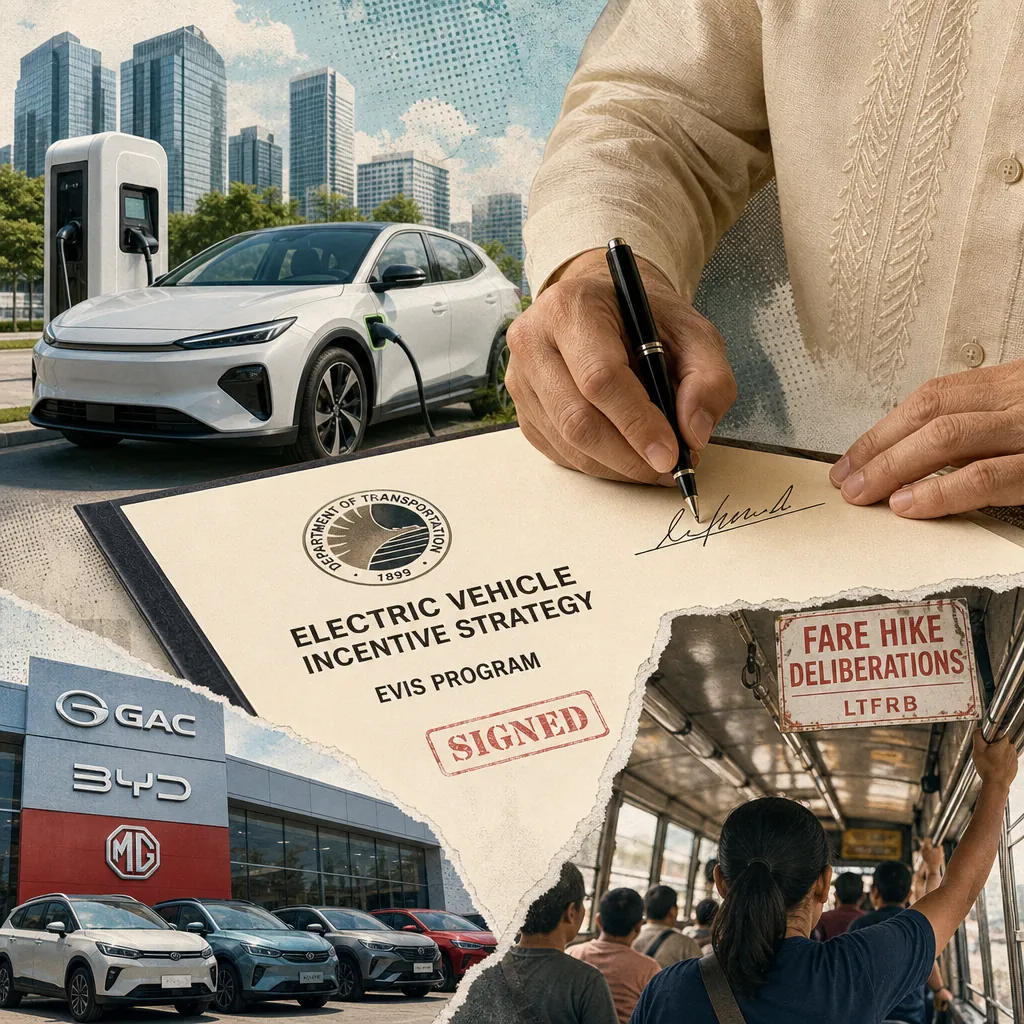
The Philippine automotive conversation on July 29–30, 2026, was defined by three simultaneous developments: President Ferdinand Marcos Jr. signed Executive Order No. 121 establishing the Electric Vehicle Incentive Strategy (EVIS) program, the Land Transportation Franchising and Regulatory Board (LTFRB) began formal deliberations on fare hike petitions from five major transport groups, and multiple automakers—GAC, BYD, MG, and VinFast—launched or previewed new electrified models. Social media engagement was split between enthusiastic reception of new products and anxious discussion of rising transport costs, with the EVIS announcement drawing broad but measured coverage across online news outlets.
Key themes
- EVIS program signals major government push for EV manufacturing – President Marcos signed Executive Order No. 121 on July 29, creating the Electric Vehicle Incentive Strategy (EVIS) program. The program offers tax payment certificates covering up to 40% of investment costs for battery electric vehicles (BEVs) and 30% for hybrids and plug-in hybrids, with a maximum of ₱15 billion per model. Companies must invest at least ₱5 billion or produce 10,000 units to qualify. The order aims to attract large-scale EV manufacturing, create jobs, and reduce dependence on imported oil. Coverage appeared across multiple outlets including the Daily Tribune, Manila Times, BusinessWorld, and Philstar, with a combined advertising-equivalent value of over ₱1.5 million in the captured set.
- LTFRB fare hike deliberations dominate public concern – The LTFRB announced on July 30 that it had begun reviewing fare hike petitions from PISTON, Manibela, Metro Comet Transport Service Cooperative, UV Express National Alliance, and the United Transportation Coalition. The petitions cite rising petroleum product prices and cover jeepneys, buses, UV Express, taxis, and motorcycle taxis. Chairman Vigor Mendoza II stated the board would balance operator costs with commuter welfare. The announcement generated the highest social engagement of any LTFRB post in the monitoring window, with 74 likes, 60 shares, and 25 comments on Facebook, plus 3,859 views on Twitter.
- GAC launches three-model MPV lineup, directly challenging Toyota – GAC Motor Philippines held an official launch event at Makati Shangri-La on July 29, unveiling the GN6 (₱1.198 million introductory), E8 HEV (₱1.778–1.918 million), and GN8 PHEV Executive (₱3.338 million introductory). Multiple automotive media outlets and influencers covered the event, with Top Gear Philippines explicitly positioning the GN8 PHEV against the Toyota Alphard. The launch generated hundreds of engagements across Facebook and YouTube, signaling strong consumer interest in Chinese-brand premium electrified MPVs.
- Consumer comparison threads show shifting purchase criteria – A Facebook post comparing the BYD Sealion 6 PHEV against the Toyota Corolla Cross G HEV attracted 145 comments, the highest comment count in the dataset. A Reddit thread asked for advice between the BYD Atto 2 DM-i and Sealion 5 DM-i for a first-time buyer. These discussions indicate that consumers are actively weighing total cost of ownership, range, and features rather than relying on brand loyalty alone, with fuel economy a primary driver.
- Jetour T1 generates intense positive sentiment – A personal post about test-driving the Jetour T1 in Sand Gold color received 628 likes and 627 love reactions on Facebook, the highest engagement in the dataset. The near-perfect sentiment score suggests strong consumer excitement for the brand, which may signal growing acceptance of Chinese automotive brands beyond their initial budget positioning.
- VinFast e-motorcycles and Green SM taxi service expand EV presence – VinFast Philippines promoted its e-motorcycle lineup with a ₱3,000 pre-order deposit, explicitly tying the offer to rising fuel prices. Separately, Green SM (VinFast's taxi arm) launched an all-electric taxi service in Copenhagen, Denmark, marking its entry into the European market. These moves reinforce VinFast's strategy of building brand visibility across multiple vehicle segments and geographies.
- Road safety incidents raise enforcement concerns – Two separate incidents on July 30—a dashcam video showing a rider urging a motorist to run a red light for a convoy, and a truck accident in Batangas that buried an oncoming AUV—drew public frustration and highlighted persistent road safety challenges. The convoy post generated a mix of amusement and anger (4 haha, 3 angry reactions), while the truck accident drew 152 likes and 20 shares, indicating stronger concern about heavy vehicle safety.
How the narratives stack
Dominant – The EVIS program announcement and the LTFRB fare hike deliberations together formed the dominant narrative of the two-day window, though they operated on different tracks. The EVIS story was the most covered by traditional media, appearing in at least seven major online news outlets with significant advertising-equivalent value. The fare hike story, meanwhile, generated the highest social engagement, reflecting direct public concern over commuting costs. Within the captured article set, the EVIS-related items totaled over ₱2.5 million in estimated advertising-equivalent value, while fare hike coverage added another ₱750,000. These two policy stories—one offering a long-term solution, the other addressing immediate pain—dominated the conversation across both news and social channels.
Counter-narrative – The enthusiastic reception of new vehicle launches, particularly the GAC MPV lineup and the Jetour T1, provided a counterpoint to the cost-of-living anxiety. While fare hike discussions focused on financial strain, product launch posts emphasized aspiration, innovation, and the expanding availability of electrified vehicles at various price points. This counter-narrative was strongest on Facebook, where visual content and influencer posts drove high engagement.
Emerging – Consumer comparison threads between Chinese PHEVs and Japanese hybrids represent an emerging narrative that could reshape competitive dynamics. The 145-comment thread comparing BYD Sealion 6 and Toyota Corolla Cross HEV suggests that buyers are moving beyond brand origin to evaluate specific metrics like range, fuel consumption, and resale value. This trend, if sustained, could pressure established Japanese brands to more aggressively communicate their hybrid value propositions.
Suppressed – The road safety conversation, while present, remained relatively contained. The convoy abuse and truck accident posts did not cross over into broader policy debate about traffic enforcement or vehicle safety standards. Given the public anger evident in the reactions, this topic could escalate quickly if similar incidents recur, but for now it remains a secondary concern compared to fare and EV policy.
Platform insights
- Facebook – Dominated both volume and engagement. The LTFRB fare hike press release (74 likes, 60 shares, 25 comments) and the Jetour T1 test-drive post (628 likes, 627 loves) represent the two poles of the conversation: policy anxiety and product enthusiasm. Community-driven explainer posts, such as the breakdown of the fixed pick-up fare rates, also performed well (48 likes, 18 shares), indicating that users seek accessible interpretations of regulatory changes. Facebook remains the primary platform for both official announcements and grassroots automotive discussion.
- Twitter – Served as a reach amplifier for regulatory news. The LTFRB fare hike tweet achieved 3,859 views despite zero engagement, suggesting passive consumption by a wide audience. A Daily Tribune tweet on the motorcycle taxi accreditation story received 136 views. Twitter's role appears to be news dissemination rather than conversation generation for automotive topics.
- YouTube – Limited activity. The GAC launch video received 149 views, while a CAMPI interview on electrified vehicles drew 282 views. LTFRB-related videos had minimal traction (4–10 views). YouTube serves a niche audience for in-depth content but does not drive the broader conversation.
- Reddit – One comparative query thread (BYD Atto 2 vs. Sealion 5) with limited upvotes but no comments, indicating nascent interest. Reddit's potential for technical EV discussions remains underdeveloped in the Philippine context.
Key voices and communities
- Automotive manufacturers and distributors – GAC, Jetour, BYD, VinFast, and MG are the most active brand voices, using Facebook and YouTube to announce launches, share pricing, and promote test drives. Their content generates high engagement, particularly when tied to fuel savings or premium features. GAC's explicit comparison to Toyota Alphard signals an aggressive competitive stance.
- Regulatory and government agencies – The LTFRB and the Presidential Communications Office are the primary official sources. The LTFRB's fare hike and accreditation announcements are widely reposted by media, while the EVIS announcement was amplified by Malacañang through press briefings. Their messaging emphasizes balance between stakeholder interests and long-term policy goals.
- Automotive media and influencers – Top Gear Philippines, ZIGWHEELS, Philstar Wheels, and individual bloggers provide editorial coverage that shapes purchase consideration. Their comparative framing (e.g., GN8 PHEV vs. Alphard) and detailed spec breakdowns are trusted by consumers. The GAC launch was covered by at least five automotive-specific outlets.
- Consumer and community discussion groups – Everyday buyers and EV-curious consumers drive the highest-engagement threads, particularly comparison posts. The BYD vs. Toyota thread with 145 comments shows that peer advice is a critical factor in purchase decisions. These communities are decentralized but highly active on Facebook.
- Transport groups and driver communities – PISTON, Manibela, and other transport groups are the primary advocates for fare hikes, framing their demands around fuel cost increases. Driver-aligned accounts also push for enforcement of the fixed pick-up fare policy, tagging TNCs like Grab and JoyRide to demand compliance.
Narrative streams
EVIS program: A ₱60-billion bet on local EV manufacturing
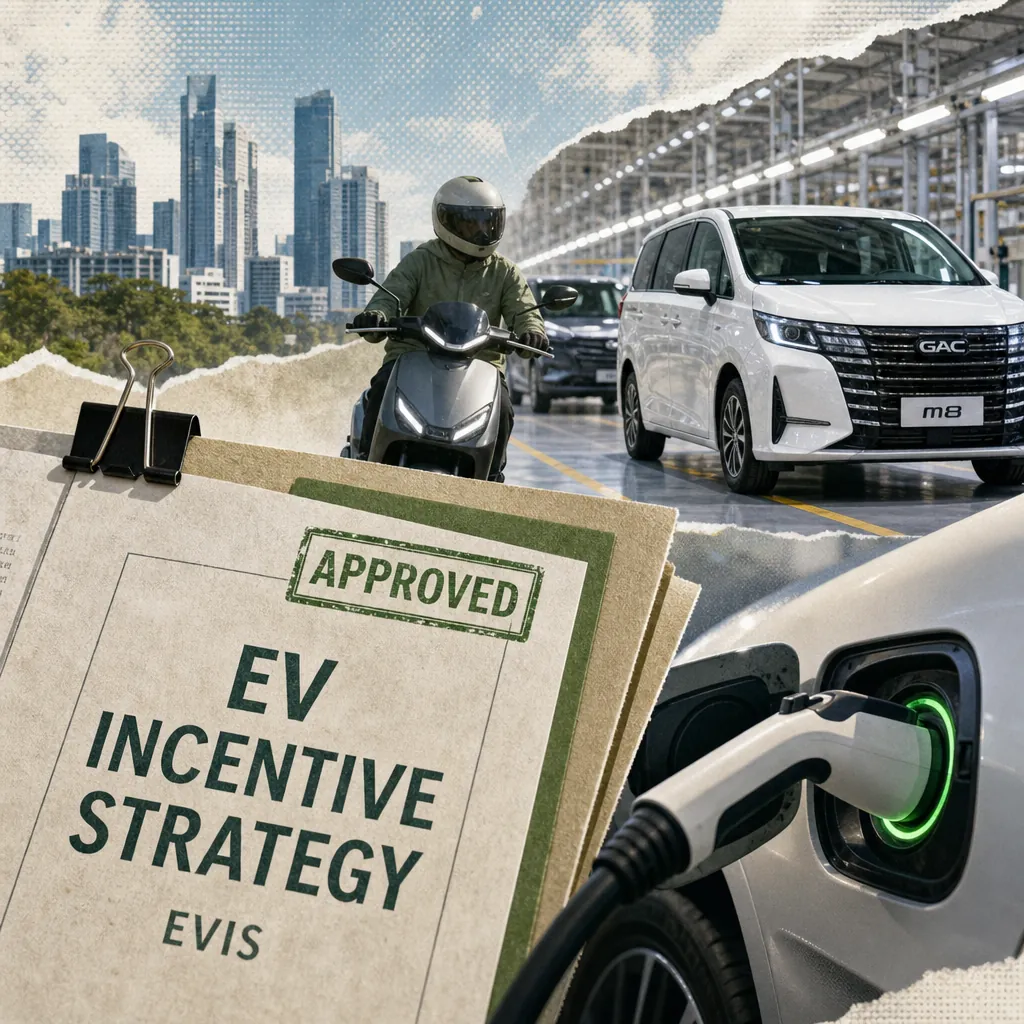
President Marcos signed Executive Order No. 121 on July 29, establishing the Electric Vehicle Incentive Strategy (EVIS) program with a total package of up to ₱60 billion in tax payment certificates. The program is designed to attract investments in the local manufacture of electric vehicles, their parts, and components. Qualified manufacturers can register up to two EV models and receive incentives covering 40% of investment costs for BEVs and 30% for hybrids, PHEVs, and fuel-cell vehicles. To qualify, companies must invest at least ₱5 billion in new capital or produce at least 10,000 units, and roll out models within three years.
Presidential Communications Office Undersecretary Claire Castro announced the EO in a briefing on July 30, stating that it would "create more jobs, attract new investments, strengthen local manufacturing, and reduce the country's dependence on imported oil." The program also aims to narrow the cost gap between EVs and conventional vehicles over the next eight years.
Coverage was extensive across the captured article set. The Manila Times, Daily Tribune, BusinessWorld, Philstar, and Head Topics all ran stories, with combined advertising-equivalent value exceeding ₱1.5 million. Mitsubishi Motors Philippines immediately welcomed the EO, reaffirming its ₱7-billion investment commitment to locally produce hybrid electric vehicles—a move that positions Mitsubishi as an early partner in the government's strategy.
The EVIS program represents a significant escalation from the earlier Electric Vehicle Industry Development Act (EVIDA), which provided tariff reductions and non-fiscal incentives. By adding direct fiscal support tied to production targets, the government is signaling that it wants the Philippines to become a regional EV manufacturing hub, not just a market for imported EVs.
Fare hike deliberations: Balancing operator costs and commuter welfare
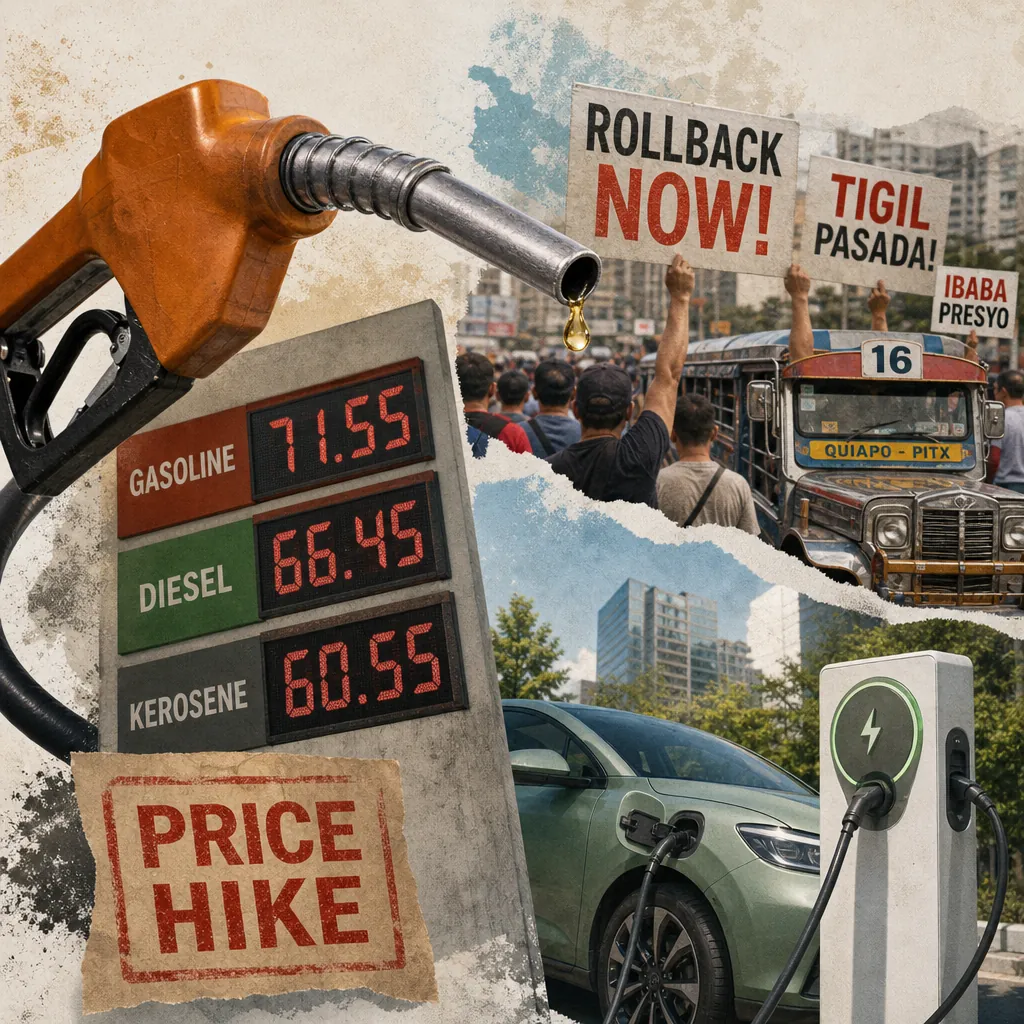
The LTFRB announced on July 30 that it had begun formal deliberations on fare hike petitions from five major transport groups: PISTON, Manibela, Metro Comet Transport Service Cooperative, UV Express National Alliance, and the United Transportation Coalition. The petitions cover passenger jeepneys, buses, UV Express, taxis, and motorcycle taxis, all citing "big-time increases in the prices of petroleum products."
Chairman Vigor Mendoza II stated that the board would consider inflation and commuters' ability to pay, assuring that "the welfare of commuters and the general public are protected." The deliberation follows a directive from DOTr Secretary Giovanni Lopez to recompute fare adjustments based on pending petitions.
The announcement generated the highest social engagement of any LTFRB post in the monitoring window, with 74 likes, 60 shares, and 25 comments on Facebook. A separate Twitter post from a news outlet achieved 3,859 views. The Philstar and Manila Times both ran articles, with the Philstar piece noting that Manibela and PISTON are seeking specific fare increases (amounts not specified in the captured text).
The fare hike narrative is directly linked to the EV conversation: rising fuel costs are both the justification for fare increases and the primary driver of consumer interest in EVs. This creates a policy coherence challenge for the administration, which must demonstrate that its long-term EV strategy offers tangible relief to commuters facing immediate cost pressures.
GAC MPV launch: Chinese brands target premium segments
GAC Motor Philippines launched three new MPV models on July 29 at the Makati Shangri-La: the GN6 (₱1.198 million introductory), the E8 HEV (₱1.778–1.918 million), and the GN8 PHEV Executive (₱3.338 million introductory). The event was covered by multiple automotive media outlets, including Top Gear Philippines, ZIGWHEELS, and TurboZone.
Top Gear Philippines explicitly positioned the GN8 PHEV Executive against the Toyota Alphard, stating that it "goes up against premium vans like the Toyota Alphard." This comparison was repeated across three separate posts on July 30, signaling that GAC is directly challenging Toyota's dominance in the luxury MPV segment. GAC also highlighted its claim of over 880,000 global MPV deliveries to add credibility.
The launch generated hundreds of engagements across Facebook and YouTube. A YouTube video of the event received 149 views, while Facebook posts from influencers and news pages accumulated dozens of likes and shares. The introductory pricing, valid until August 31, creates a sense of urgency that may drive showroom traffic.
This launch is part of a broader trend of Chinese automakers entering the Philippine market with competitively priced electrified vehicles. GAC's move into the premium segment, following BYD's success with the Sealion and Atto models, suggests that Chinese brands are no longer content with the budget niche.
Consumer comparison threads: The rise of rational EV shopping
Two high-engagement threads on July 30 illustrate a shift in consumer decision-making. A Facebook post asking "What made you decide to go with BYD Sealion 6 PHEV versus Toyota Corolla Cross G HEV?" attracted 145 comments, the highest comment count in the dataset. A Reddit thread asked for advice between the BYD Atto 2 DM-i and Sealion 5 DM-i for a first-time buyer, with the user stating "Gusto ko lang i-maximize shempre" (I just want to maximize value).
These threads indicate that consumers are actively comparing Chinese PHEVs against Japanese hybrids based on specific metrics: range, fuel consumption, battery safety (BYD's Blade Battery), and total cost of ownership. Brand loyalty appears to be secondary to rational evaluation. The VinFast e-motorcycle promotion, which offers a ₱3,000 deposit and battery subscription model, further lowers the barrier to entry for electrified vehicles.
For established Japanese brands like Toyota and Honda, this trend represents both a threat and an opportunity. If they can effectively communicate the long-term value of their hybrid systems—including reliability, resale value, and service network—they may retain buyers. But if consumers perceive Chinese PHEVs as offering better value for money, market share could shift.
Road safety: Convoy abuse and truck accidents
Two incidents on July 30 highlighted persistent road safety challenges. The first, shared by Interaksyon, showed a dashcam video of a rider instructing a motorist to run a red light for an approaching convoy. The post generated 6 likes, 4 haha reactions, and 3 angry reactions, reflecting public frustration with perceived entitlement.
The second, reported by ABS-CBN News, showed a truck carrying soil overturning in Barangay Luntal, Tuy, Batangas, burying an oncoming AUV. The post drew 152 likes, 20 shares, and 8 comments. Barangay Captain Jerome Basit confirmed the driver was rushed to the hospital.
These incidents, while not directly connected to the EV or fare hike narratives, contribute to a broader context of transport-related anxiety. The convoy abuse story taps into resentment of VIP privileges, while the truck accident raises questions about vehicle safety and road infrastructure. Neither story has yet triggered a policy response, but both could amplify if similar incidents recur.
Conversation trajectory
- EVIS program implementation will be closely watched – Over the next 3–6 months, the key question will be how many manufacturers apply for EVIS incentives and whether the program attracts new investments beyond Mitsubishi's already-announced ₱7 billion. The ₱5 billion minimum investment threshold may limit participation to large players, potentially excluding smaller EV startups. Expect media coverage to focus on application deadlines, approved models, and job creation claims.
- Fare hike decision will test public sentiment – The LTFRB aims to issue a final resolution "in the soonest possible time," likely within 4–6 weeks. The decision will be a critical moment for the administration: if fares rise significantly, public anger over commuting costs could intensify; if hikes are minimal, transport groups may protest. The outcome will also affect the EV narrative, as higher fares reinforce the cost-saving argument for electrified vehicles.
- Chinese brand momentum will continue – With GAC, BYD, MG, and Jetour all launching or previewing new models in July and August, Chinese automakers are building a critical mass of offerings across segments. The August 31 deadline for GAC's introductory pricing and the upcoming MG S5 EV launch will keep the spotlight on Chinese brands. Toyota's response—particularly through the Toyota Legacy Experience event starting July 31—will be important to watch.
- Motorcycle taxi regulation could spark privacy debate – The LTFRB's reopening of motorcycle taxi platform provider accreditation on August 5, combined with proposals for body cameras on riders and facial verification for passengers, may trigger privacy concerns. The killing of two riders in Cavite and Caloocan has intensified calls for safety measures, but the balance between security and privacy will be contested.
- Road safety incidents may coalesce into a broader narrative – If additional convoy abuse videos or truck accidents surface, the scattered incidents could coalesce into a sustained conversation about traffic enforcement and vehicle safety standards. The LTO's clarification that LGUs cannot confiscate licenses, and the Bacoor-LTO clash over the same issue, add a regulatory dimension that could fuel debate.
Trigger events to monitor: LTFRB final fare hike resolution (4–6 weeks); August 5 motorcycle taxi accreditation opening; August 31 GAC introductory pricing deadline; MG S5 EV launch in August; any repeat of high-profile convoy or truck accident incidents.
Response guidance
- For automotive manufacturers and distributors – The EVIS program provides a strong policy hook for marketing electrified vehicles. Position hybrids and EVs as solutions to rising fuel costs, using the government's own framing of energy security and job creation. In comparative conversations (e.g., BYD vs. Toyota), focus on total cost of ownership data rather than brand attacks. The high engagement on comparison threads suggests that consumers want objective information—consider creating side-by-side spec sheets or cost calculators.
- For government and regulatory agencies – The fare hike deliberation is a high-risk, high-visibility issue. Proactively release simplified infographics showing the deliberation process, stakeholder inputs, and the formula for balancing costs and commuter welfare. This preempts accusations of opacity. For the EVIS program, amplify early success stories—Mitsubishi's investment commitment is a strong proof point. Use the Cebu City EV charging resolution as a model for local-level action that supports national policy.
- For ride-hailing platforms and TNCs – The fixed pick-up fare revival and the motorcycle taxi accreditation reopening create both compliance requirements and reputational risks. Proactively communicate how you are implementing the pick-up fare and ensuring driver benefits. The JoyRide financial aid controversy (₱10,000 to a slain rider's family, met with public criticism) shows that driver welfare is under scrutiny—consider more substantial support programs.
- For road safety advocates and LGUs – The convoy abuse and truck accident incidents, while not yet viral, carry emotional charge. Use them as teachable moments: the convoy story can reinforce that traffic laws apply to all, while the truck accident can promote load-securement practices and vehicle safety checks. Partner with barangay officials for local credibility.
Sensitive topics to navigate: Avoid appearing indifferent to commuter hardship when discussing fare hikes; acknowledge the burden while presenting electrification as a long-term solution. In convoy-related conversations, avoid criticizing specific offices or personalities—emphasize that all road users are subject to the same rules. When discussing motorcycle taxi regulation, balance safety arguments with privacy protections.
Key messages to amplify: "Electrified vehicles, combined with local biofuels, directly reduce our dependence on imported fuel—strengthening both energy security and fare stability." "The EVIS program creates jobs, attracts investments, and positions the Philippines as a regional EV manufacturing hub." "The LTFRB is committed to a fare adjustment that balances operator costs with commuter welfare."
See the full picture behind today's signals.
This report draws from Media Meter's MediaWatch, our real-time monitoring engine tracking 2,470+ Philippine sources across print, broadcast, digital, and social. Explore how the platform turns raw coverage into decision-grade intelligence, then see how it's configured for teams like yours — whether you're in PR agencies, corporate comms, government, or marketing.
Want more? Browse our Report Library for sector and crisis intelligence, or request a demo and we'll have your brand set up before the call.
Want this kind of intelligence on your brand?
This brief is built on the same MediaWatch methodology that runs continuously across every brand we monitor. See your competitive landscape, Impact Score, and narrative trajectory in a 30-minute demo.