Fuel price hike, Jollibee win, and food safety fears shape the day
A massive fuel price hike dominates Philippine news and social media, sparking transport protests and political criticism, while Jollibee's third consecutive USA TODAY award generates brand pride. A US cyclospora outbreak raises food safety concerns, and rice and pork prices show slight declines.
The conversation on July 20–21, 2026, was dominated by two sharply contrasting narratives: a punishing fuel price hike that triggered public anger, transport protests, and political fallout, and a celebratory wave around Jollibee's third consecutive USA TODAY Best Fast Food Fried Chicken award. A US cyclospora outbreak linked to lettuce added a note of food safety vigilance, while data showing slight declines in rice and pork prices offered a rare piece of good news on the inflation front. The day's conversation was split between economic pain and brand pride, with the fuel hike drawing the heaviest engagement and the most emotional reactions.
Key themes
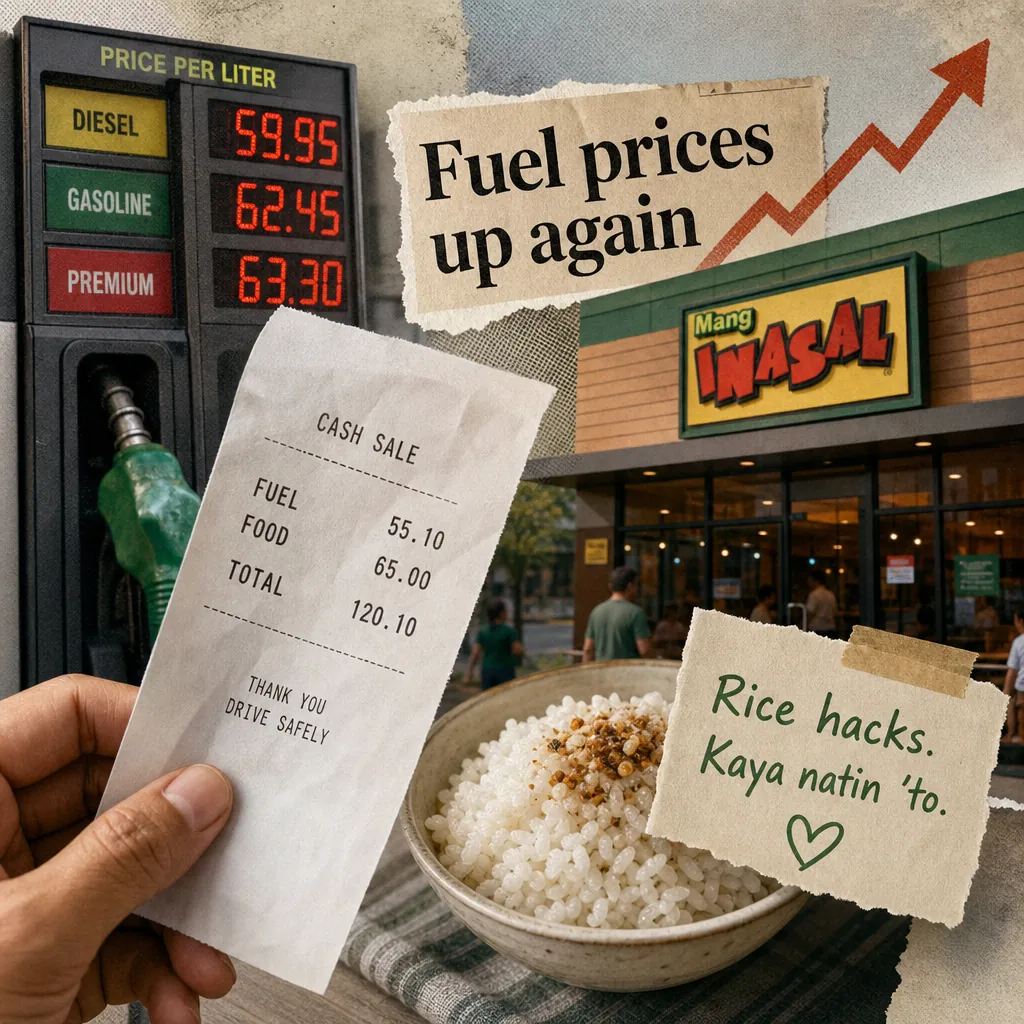
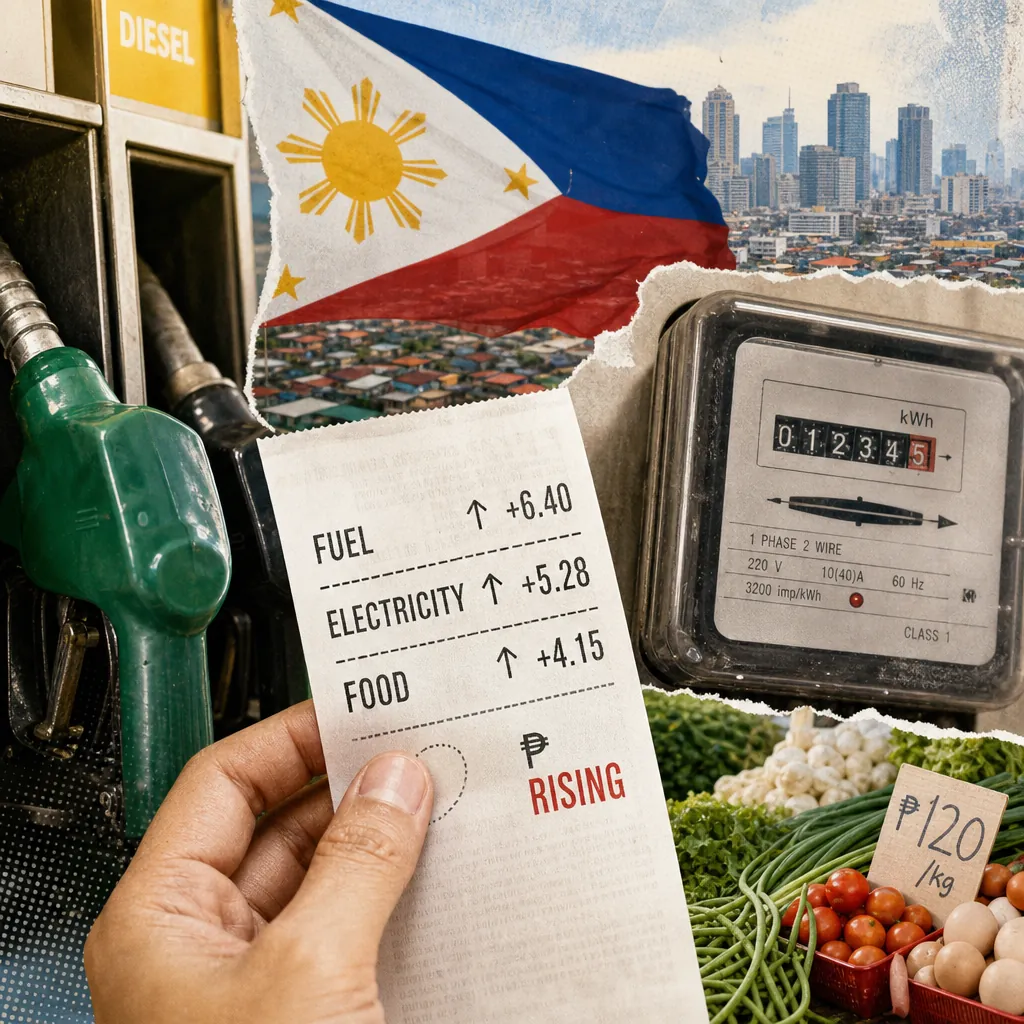
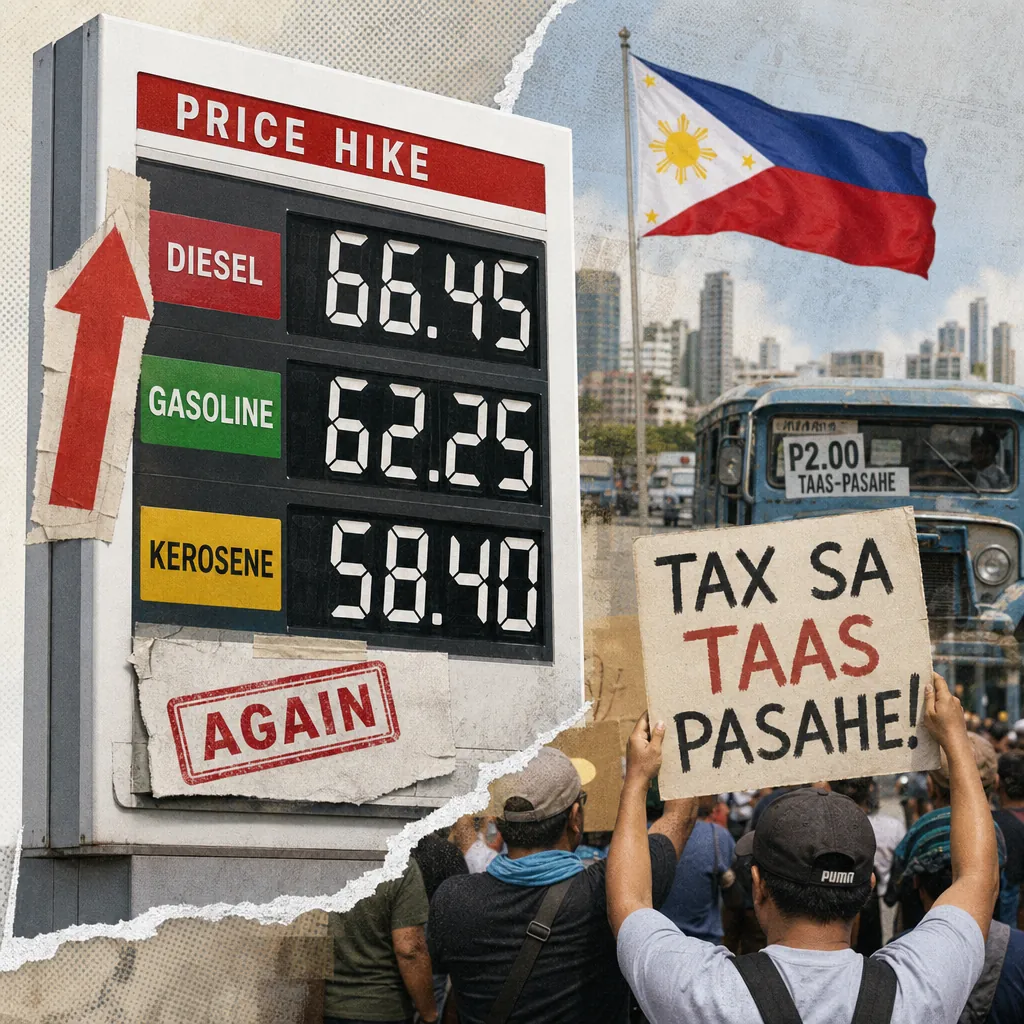
- Fuel price hike triggers public anger and transport protests: The Department of Energy (DOE) announced a massive fuel price increase effective July 21: diesel up by ₱10.68 per liter, kerosene by ₱11.77, and gasoline by ₱3.65. The hike, attributed to renewed US-Iran tensions and Middle East instability, immediately sparked long queues at gas stations as motorists rushed to fill up. Transport groups Manibela and PISTON staged protests, demanding fare hikes and the scrapping of oil taxes. The public reaction on social media was overwhelmingly negative, with a mix of sadness, anger, and dark humor—one GMA Frontline Express post accumulated 926 likes and 623 comments, with 580 "haha" reactions, 304 "sad," and 156 "angry." The sentiment reflected both genuine distress and a cynical resignation to recurring price shocks.
- Jollibee's Chickenjoy wins USA TODAY award for third straight year: Jollibee's flagship product, Chickenjoy, was voted No. 1 Best Fast Food Fried Chicken in the USA TODAY 10Best Readers Choice Awards for the third consecutive year. The news generated a wave of national pride and brand affection on social media, particularly on Facebook, where posts accumulated hundreds of "love" reactions. One post warning "THIS NEWS COULD TRIGGER YOUR CHICKENJOY CRAVING" received 152 likes and 233 love reactions. The award reinforces Jollibee's global expansion strategy and strengthens its competitive position in the US quick-service restaurant (QSR) market.
- Political criticism links fuel hike to governance failures: Public health advocate Dr. Tony Leachon posted a lengthy critique on Facebook, framing the fuel price increase as a symptom of broader leadership failures under President Ferdinand Marcos Jr. He cited falling trust ratings, corruption in flood control projects, and the diversion of PhilHealth funds. The post generated 26 likes, 25 sad reactions, and 17 angry reactions, indicating strong negative sentiment. This narrative weaponized the fuel hike to attack the administration's credibility, with calls for VAT reduction and the removal of Executive Secretary Ralph Recto.
- Philippines has highest electricity rates in ASEAN: The DOE confirmed that the Philippines has the highest electricity rates in Southeast Asia, with an average of ₱12.43 per kilowatt-hour in June, surpassing even Singapore. The high rates were attributed to supply shortages, forced outages of power plants, and reliance on imported coal and fossil gas. Consumer group Power for the People Coalition criticized the government for failing to address the root causes, calling the situation "a full-blown crisis." This news compounded the public's cost-of-living anxieties, coming on the same day as the fuel price hike.
- US cyclospora outbreak raises food safety concerns: A cyclosporiasis outbreak linked to Taylor Farms shredded iceberg lettuce from central Mexico has sickened thousands in the United States. The FDA confirmed a voluntary recall, though it later clarified that a false-positive test result does not change the epidemiological evidence. Social media posts about the recall generated high engagement, with one post receiving over 60 reactions and 110 shares, indicating strong viral potential for food safety alerts. While the outbreak is US-focused, it raises questions about imported produce safety in the Philippines and could amplify consumer vigilance.
- Rice and pork prices show slight declines: The Philippine Statistics Authority (PSA) reported that average retail prices of rice and pork dropped nationwide in early July. Well-milled rice fell to ₱49.30 per kilogram from ₱49.67 in mid-June, while pork prices also eased. This offers a rare positive signal for consumers grappling with rising fuel and electricity costs, though prices remain elevated compared to a year ago.
- Solo dining and samgyupsal trends emerge: On Reddit, users posted requests for solo-friendly samgyupsal (Korean BBQ) and ramen dining options, indicating a growing demand for personalized, high-quality dining experiences. Facebook pages for samgyupsal restaurants promoted unlimited meal deals and solo-dine-in pricing, though engagement was low. This niche trend suggests a shift in consumer preferences toward affordable indulgence and solo dining, which could influence QSR menu innovation.
How the narratives stack
Dominant: The fuel price hike and its cascading effects—transport protests, political criticism, and public anger—dominated the day's conversation across news media and social platforms. The DOE's announcement was covered by every major outlet, and social media engagement was intense, with thousands of reactions and comments. The narrative was amplified by transport groups' threats of strikes and fare hike demands, and by political figures linking the hike to governance failures. This story had the highest reach and emotional resonance, making it the clear dominant narrative.
Counter-narrative: Jollibee's USA TODAY award provided a positive, pride-filled counterpoint to the economic gloom. While the fuel hike drew anger and sadness, the Jollibee story generated love reactions and national pride. This narrative was primarily driven by brand loyalists on Facebook and by news outlets covering the award. It offered a respite from the day's negative news and reinforced the strength of a Filipino brand on the global stage.
Emerging: The solo dining and samgyupsal trend is a small but notable signal of changing consumer behavior. Reddit posts seeking solo-friendly dining options, combined with promotional content from samgyupsal restaurants, suggest a growing market for personalized, high-quality dining experiences. This trend could accelerate as consumers seek affordable treats amid inflation, and it may influence QSR menu innovation and marketing strategies.
Suppressed: The slight decline in rice and pork prices, reported by the PSA, received relatively little attention compared to the fuel hike and electricity rates. This positive economic data point was overshadowed by the day's dominant negative narratives. For communicators, this represents a missed opportunity to highlight some relief for consumers, though the declines are modest and may not significantly ease household budgets.
Platform insights
- Facebook: The dominant platform for both the fuel hike and Jollibee narratives. The fuel hike posts from ABS-CBN and GMA generated the highest engagement, with thousands of reactions and comments. The reaction data showed a prevalence of "haha" over "sad" and "angry," suggesting that users processed the news through sarcasm and ridicule. Jollibee award posts, by contrast, drew overwhelmingly positive reactions, with "love" reactions far outpacing likes. Facebook was also the platform for political criticism, with Dr. Leachon's post generating strong negative emotions.
- YouTube: Served as the primary platform for in-depth news reports and interviews. TV Patrol's coverage of the fuel hike amassed over 263,000 views, while interviews with transport leaders and DOE officials provided the raw material that Facebook and Twitter users then commented on. YouTube comments were sparse, but the high view counts indicate that users consumed the news passively, then expressed their reactions elsewhere.
- Twitter: Played a secondary, news-dissemination role. Posts from ABS-CBN, GMA, and other accounts tweeted the DOE figures with relatively low engagement (1–4 likes per tweet) but high view counts (up to 1,016 views), suggesting Twitter was used for rapid, shareable updates rather than sustained discussion. The Jollibee award also appeared on Twitter, with one tweet receiving 394 views but only 2 interactions.
- Reddit: Hosted niche conversations about solo dining and samgyupsal cravings, with moderate engagement (4–10 upvotes per post). These discussions were highly targeted, with users exchanging recommendations in the comments. No discussion of the fuel hike or Jollibee award appeared on Reddit in the captured data.
Key voices and communities
- Transport groups (Manibela, PISTON, Pasang Masda): These groups were highly vocal, staging protests and demanding fare hikes. Their leaders, such as Manibela Chairman Mar Valbuena and PISTON President Mody Floranda, framed the fuel hike as an existential threat to drivers' livelihoods, with daily income losses of up to ₱1,850. Their messaging was concrete and emotionally charged, and they threatened nationwide strikes if demands were not met.
- Government agencies (DOE, LTFRB, DOTr): The DOE was the central authority, announcing the exact price adjustments and attributing them to global oil volatility. The LTFRB proposed a ₱1 minimum fare increase, which was widely rejected as insufficient. The government's messaging emphasized external causes and the availability of subsidy programs, but this did little to mitigate public anger.
- Political activists and governance critics: Dr. Tony Leachon emerged as a key voice, linking the fuel hike to corruption and leadership failures. His post directly targeted President Marcos Jr., citing falling trust ratings and unresolved scandals. This narrative resonated with opposition-leaning audiences and added a political dimension to the economic story.
- Jollibee brand enthusiasts and loyalists: This community drove the positive narrative around the USA TODAY award, generating hundreds of love reactions and shares. Their messaging was celebratory and pride-filled, with posts using phrases like "Jollibee numbawan!" (number one). They represent a core consumer base that validates brand equity and market positioning.
- Consumer safety alert networks: Facebook pages disseminating the cyclospora recall information generated high engagement, with one post receiving over 60 reactions and 110 shares. These networks are trusted sources for peer-to-peer alerts and could be critical channels for official food safety communications in the Philippines.
Narrative streams
Fuel price hike and its economic fallout
The DOE's announcement of a double-digit fuel price hike on July 21 dominated the day's news cycle. The increases—₱10.68 per liter for diesel, ₱11.77 for kerosene, and ₱3.65 for gasoline—were the largest in recent memory, driven by renewed US-Iran tensions and Middle East instability. Energy Secretary Sharon Garin stated that the Philippines is "at the mercy of world oil prices," a phrase that drew criticism for appearing to absolve the government of responsibility.
The immediate impact was visible at gas stations across Metro Manila, where long queues formed as motorists rushed to fill up before the hike took effect. ABS-CBN News reported that at least one station along Commonwealth Avenue ran out of diesel by Monday evening. Transport workers were particularly hard hit: motorcycle taxi rider Aldrin Dabo told reporters that the price surge made his livelihood "very difficult."
Transport groups quickly mobilized. Manibela Chairman Mar Valbuena demanded a ₱2 fare increase for jeepneys and threatened a transport strike if the LTFRB did not act, though he pledged not to disrupt the upcoming State of the Nation Address (SONA). PISTON staged a protest at a gasoline station in Quezon City, renewing calls for the scrapping of oil taxes and a ₱10 fare increase to raise the minimum jeepney fare from ₱13 to ₱23. PISTON President Mody Floranda said drivers were losing around ₱1,850 a day due to fuel expenses alone, and needed to earn about ₱4,600 just to cover fuel costs and boundary payments.
The DOE attempted to soften the blow by asking oil companies to stagger the price increase over several days. Shell Pilipinas and Seaoil agreed to implement the diesel and kerosene hikes in three tranches: over ₱8 on Tuesday, and over ₱1 each on Wednesday and Thursday. However, this did little to assuage public anger. Social media reactions were overwhelmingly negative, with a mix of sadness, anger, and dark humor. One GMA Frontline Express post accumulated 926 likes and 623 comments, with 580 "haha" reactions, 304 "sad," and 156 "angry." The high number of "haha" reactions suggested that many users were mocking the situation's inevitability rather than expressing constructive outrage.
The political dimension was amplified by Dr. Tony Leachon's Facebook post, which directly tied the fuel hike to President Marcos Jr.'s falling trust ratings and unresolved corruption issues, including flood control projects and PhilHealth fund diversion. Leachon called for a reduction in VAT from 12% to 10% and the removal of Executive Secretary Ralph Recto. The post generated 26 likes, 25 sad reactions, and 17 angry reactions, indicating strong negative sentiment. This narrative framed the fuel hike not as an isolated economic event but as a symptom of institutional decay.
For the food and beverage sector, the fuel hike has direct implications: higher logistics costs will inevitably push up the prices of basic goods, including food. Transport groups' fare hike demands will further reduce household disposable income, potentially leading to a shift toward budget meals and value offerings. Brands that proactively communicate their efforts to absorb costs or offer value meals may build goodwill, while those perceived as profiteering risk backlash.
Jollibee's third consecutive USA TODAY award
Amid the economic gloom, Jollibee provided a bright spot with the announcement that Chickenjoy had been voted No. 1 Best Fast Food Fried Chicken in the USA TODAY 10Best Readers Choice Awards for the third consecutive year. The recognition, determined by public voting, highlights the brand's growing presence in the competitive US QSR market.
Jollibee Group Global President and CEO Ernesto Tanmantiong said, "This recognition for the third consecutive year is especially meaningful because it reflects the consistency of the quality, taste, and customer experience that we work hard to deliver with every serving of Chickenjoy." The award reinforces Jollibee's international expansion strategy and strengthens its brand appeal among American diners.
On social media, the news generated a wave of national pride and brand affection. Facebook posts sharing the award accumulated hundreds of love reactions, with one post receiving 152 likes and 233 love reactions. The most effective posts combined the award announcement with emotional triggers, such as "WARNING: THIS NEWS COULD TRIGGER YOUR CHICKENJOY CRAVING," achieving share rates above 20% of total engagement. Users expressed joy through reaction buttons, with love reactions far outpacing likes, indicating deep brand affection rather than mere information consumption.
In a separate but related development, Jollibee also announced an upgrade to its Jolly Spaghetti, now made with more of its signature sweet-sarap sauce while remaining affordably priced at ₱72. The launch was supported by a video featuring the Arellano family, emphasizing the dish's role in family traditions and childhood memories.
Additionally, Jollibee Group Global CHRO Arsenio "Archie" Sabado was named among Southeast Asia's 100 Most Influential HR Leaders for the second consecutive year by ETHRWorld Southeast Asia. This recognition, though lower in engagement, adds a layer of corporate credibility, positioning Jollibee as an employer of choice and linking internal excellence to external reputation.
For the food industry, Jollibee's sustained brand strength offers a template for leveraging third-party recognition to build consumer trust and brand love. The award also provides a positive narrative that can be used to counterbalance negative news cycles, such as the fuel price hike.
Philippines has highest electricity rates in ASEAN
The DOE confirmed that the Philippines has the highest electricity rates in Southeast Asia, with an average of ₱12.43 per kilowatt-hour in June, surpassing even Singapore. The high rates were attributed to supply shortages, forced outages of power plants, and reliance on imported coal and fossil gas. The Visayas region was particularly affected, with 21 plants experiencing forced outages, leading to yellow alerts and reliance on power from Luzon and Mindanao.
Consumer group Power for the People Coalition criticized the government for failing to address the root causes. Convenor Jerry Arances said, "We are not surprised, but we are more angry. The government is deaf to the need for alternative energy sources." He noted that the high generation charges stem from contracts with coal and fossil gas plants, all of which rely on imported fuel.
The news compounded public frustration over the fuel price hike, as electricity costs are a major household expense. For food and beverage businesses, high electricity rates increase operational costs, particularly for refrigeration, cooking, and air conditioning. This could lead to higher menu prices or reduced margins, further squeezing consumers.
US cyclospora outbreak raises food safety concerns
A cyclosporiasis outbreak linked to Taylor Farms shredded iceberg lettuce from central Mexico has sickened thousands across the United States. The FDA confirmed a voluntary recall of the products, though it later clarified that a false-positive test result does not change the epidemiological evidence. The FDA stated, "This false-positive lab sample DOES NOT change the basis for FDA's ongoing outbreak investigation or the overwhelming epidemiological data supporting the current voluntary recall by Taylor Farms."
Social media posts about the recall generated high engagement, with one post receiving over 60 reactions and 110 shares, indicating strong viral potential for food safety alerts. The posts included action-oriented checklists, symptom guides, and disposal instructions, emphasizing personal responsibility and consumer protection.
While the outbreak is US-focused, it raises questions about imported produce safety in the Philippines. Filipino consumers may become more vigilant about the origin of fresh produce, and any local recall could trigger similar panic. For food brands, this underscores the importance of transparent supply chain communication and robust food safety protocols.
Rice and pork prices show slight declines
The PSA reported that average retail prices of rice and pork dropped nationwide in early July. Well-milled rice fell to ₱49.30 per kilogram from ₱49.67 in mid-June, while pork prices also eased. This offers a rare positive signal for consumers grappling with rising fuel and electricity costs, though prices remain elevated compared to a year ago.
The decline may be attributed to improved supply conditions and government interventions, such as import tariff reductions. However, the fuel price hike is expected to reverse this trend in the coming weeks, as higher transport costs feed into food prices. For the food industry, this data point provides a brief window to highlight affordability before the next wave of price increases.
Solo dining and samgyupsal trends
On Reddit, users posted requests for solo-friendly samgyupsal and ramen dining options, indicating a growing demand for personalized, high-quality dining experiences. One user wrote, "Reco solo samgyupsal /ramen," seeking a place with solo tables, authentic Japanese ramen, and a relaxing ambiance. Another user asked for "buffet or unli premium yakiniku" for a birthday, reflecting a preference for beef over pork.
Facebook pages for samgyupsal restaurants promoted unlimited meal deals and solo-dine-in pricing, though engagement was low. Premier the Samgyupsal in Malate offered a solo dine-in promo at ₱1,032 per head, while Sibyullee promoted an ice cream trio to conclude their unli samgyupsal meal.
This niche trend suggests a shift in consumer preferences toward affordable indulgence and solo dining, which could influence QSR menu innovation. Brands that offer solo-friendly pricing or bundling deals may capture this growing segment. For the food industry, this trend also signals the importance of digital platforms in reaching solo diners, who may rely on food delivery apps or online reservations.
Conversation trajectory
- Fuel price hike to drive food price increases within 2–4 weeks: The current fuel price hike will inevitably push up logistics costs, leading to higher prices for basic food items such as rice, cooking oil, and poultry. Historical patterns show that fuel-related anger on social media precedes a wave of posts about "presyo ng pagkain" by roughly two weeks. Brands should prepare for increased consumer scrutiny of pricing and potential backlash against perceived profiteering.
- Transport strike and SONA as inflection points: The threatened transport strike by Manibela (post-SONA, likely late July) will keep fuel costs in the news cycle, sustaining pressure on food supply chains. Concurrently, the July 27 State of the Nation Address will feature economic hardship topics, including oil and food inflation, providing a platform for opposition voices and consumer groups to call for price controls or subsidy expansions.
- Food safety awareness to increase: The cyclospora outbreak in the US may lead to heightened consumer vigilance about imported produce in the Philippines. Any local recall or food safety incident could trigger a spike in engagement, similar to the viral spread of the Taylor Farms recall posts. Brands should ensure robust traceability systems and be prepared to communicate transparently about sourcing.
- Solo dining trend to accelerate: The demand for solo-friendly dining options is likely to grow as more consumers seek affordable treats amid inflation. Brands that innovate with solo pricing, value meals, or digital ordering platforms may capture this segment. The trend also aligns with the rise of food delivery and the gig economy.
Key trigger events to watch: the next fuel price adjustment (weekly), the LTFRB decision on fare hike petitions (within two weeks), the release of the July food price index (mid-August), and any FDA Philippines recall or food safety advisory.
Response guidance
- For QSR and FMCG brands: Proactively communicate value offerings and price stability. Emphasize budget-friendly options, value meals, and loyalty programs. Avoid tone-deaf marketing that ignores the financial strain consumers face. If price adjustments are unavoidable, announce them with clear, transparent explanations of cost drivers, and frame them as a last resort after absorbing costs where possible.
- For government communicators: Address the emotional core of public anger by acknowledging the pain of rising costs. Provide clear, factual information about subsidy programs and government interventions. Preempt corruption narratives by linking to independent audit reports and committing to transparency. Use regional news outlets to tailor localized messaging.
- For banking and telecom clients: Monitor consumer sentiment for shifts in spending behavior. For banks, consider launching content campaigns around budgeting for rising costs or offering fuel loan options for small transport businesses. For telecoms, anticipate increased demand for digital services as consumers seek to save on transportation costs, and ensure network capacity in urban areas.
- Sensitive topics to navigate: Avoid directly linking menu prices to oil hikes, as this can be seen as an excuse. Instead, frame any adjustments as part of broader economic pressures while emphasizing value retention. Do not use crisis language for PR opportunities; the public mood is volatile, and brands that appear opportunistic risk backlash. When addressing food safety concerns, avoid alarmist language and provide clear, actionable guidance.
See the full picture behind today's signals.
This report draws from Media Meter's MediaWatch, our real-time monitoring engine tracking 2,470+ Philippine sources across print, broadcast, digital, and social. Explore how the platform turns raw coverage into decision-grade intelligence, then see how it's configured for teams like yours — whether you're in PR agencies, corporate comms, government, or marketing.
Want more? Browse our Report Library for sector and crisis intelligence, or request a demo and we'll have your brand set up before the call.
Want this kind of intelligence on your brand?
This brief is built on the same MediaWatch methodology that runs continuously across every brand we monitor. See your competitive landscape, Impact Score, and narrative trajectory in a 30-minute demo.