Fuel Hikes and Rice Hacks: Filipino Consumers Adapt
A daily snapshot of the conversation around rising fuel and food costs in the Philippines, featuring a viral Mang Inasal incident and its implications for QSR brands, workers, and government messaging.
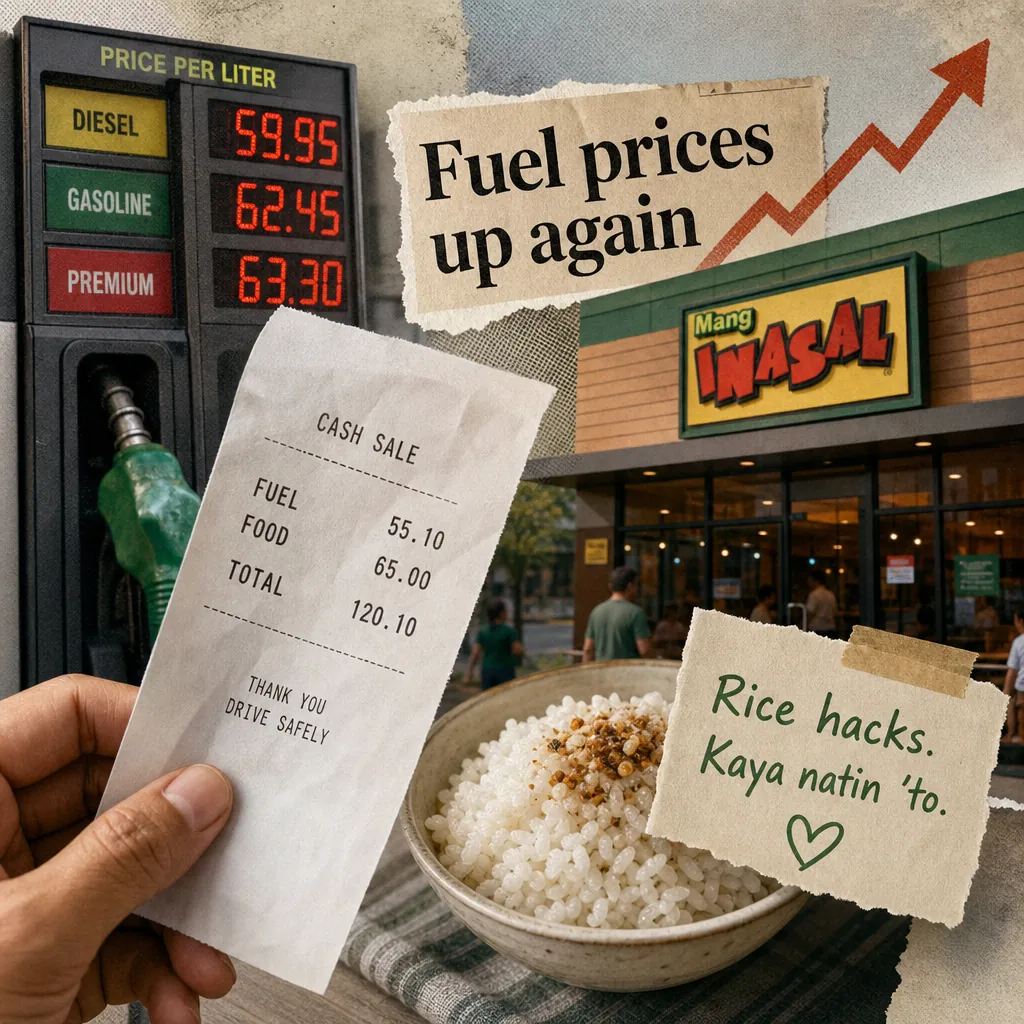
The conversation on July 14, 2026, opened with cascading reports of price increases that immediately set a tense economic backdrop. Early morning coverage from GMA's Unang Balita highlighted rising vegetable prices at Calasiao Public Market due to heavy rains, while a separate Department of Energy (DOE) announcement confirmed fuel price hikes of up to P4.62 per liter for diesel, triggered by renewed Middle East tensions and supply risks in the Strait of Hormuz. By mid-morning, ABS-CBN's TV Patrol amplified the severity, reporting that diesel had spiked nearly P5 per liter on the first trading day and warning that prices could reach P80–90 if tensions escalated further. As the day progressed, the conversation pivoted from reporting to lived experience—most notably through a viral Facebook post about a couple sharing a single unlimited rice order at Mang Inasal. That post, which accumulated 255 reactions and 70 shares within the day, was followed by a comment from a self-identified employee who wrote, "We don’t get paid enough to police it." This remark sparked a wave of haha reactions (711) alongside a smaller undercurrent of anger (4) and sadness (3), revealing both public amusement at the couple's "hack" and underlying sympathy for underpaid service workers.
Meanwhile, the news media coverage captured in this set included a Manila Standard article on DoubleDragon's CITYMALL welcoming the Jollibee Group's Mix and Match concept—a multi-brand food court featuring Jollibee, Chowking, Mang Inasal, and Greenwich—at a new branch in Cavite. This piece, worth an estimated P535,119 in advertising-equivalent value, signals continued expansion and investment in the quick-service restaurant (QSR) sector even as consumer sentiment tightens. Other articles covered the National Development Company's P140-million equity infusion into the World Trade Center expansion and the Board of Investments' certification of 17 Green Lane projects worth P351 billion, mostly in renewable energy. These stories, while not directly about food, provide context on the broader economic environment in which food companies operate.
Key themes
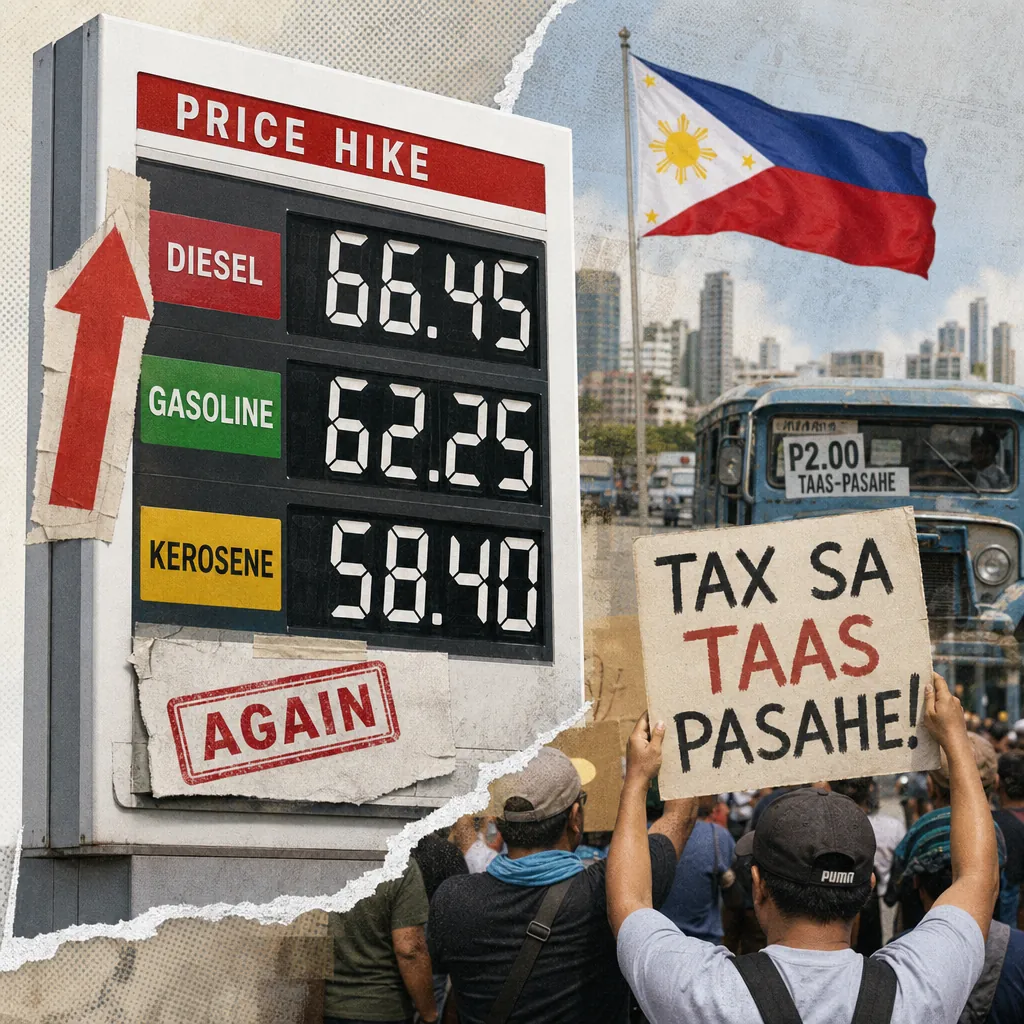
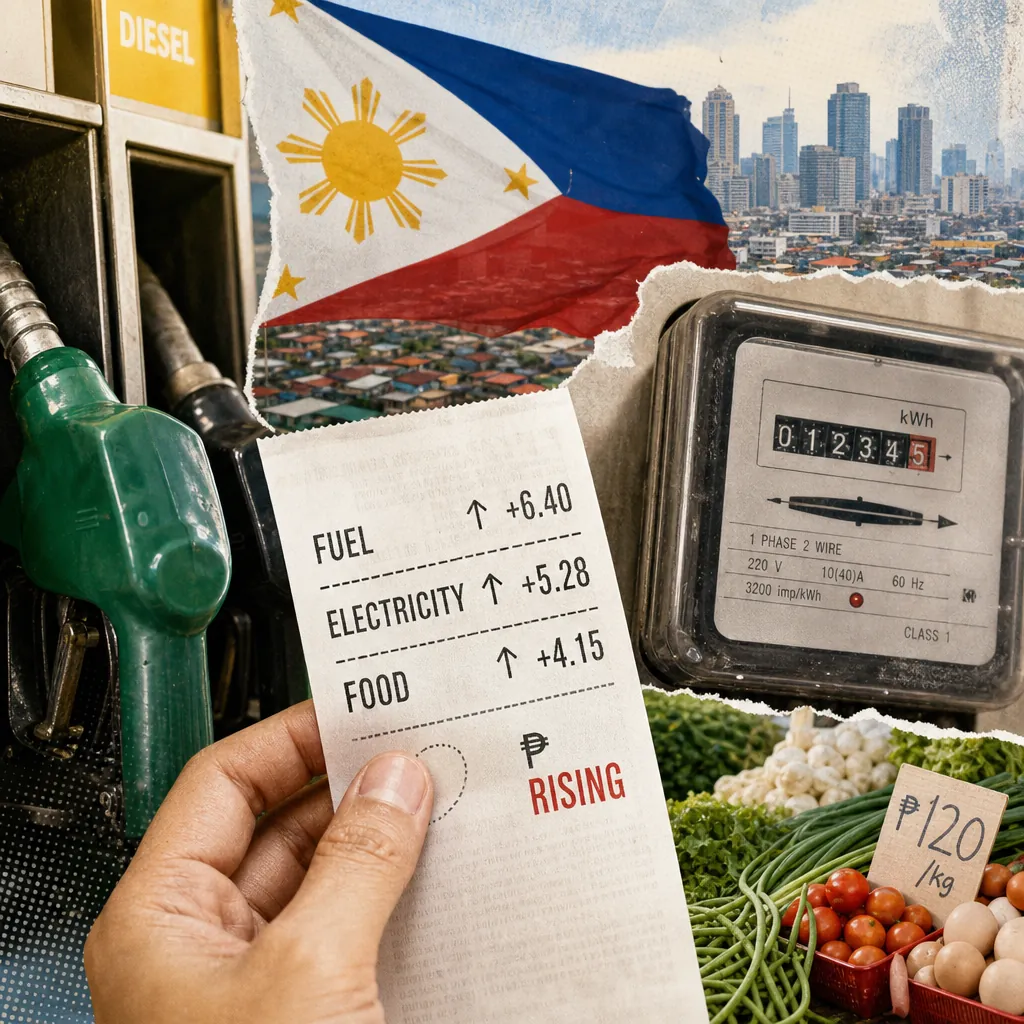
- Fuel price hikes drive consumer anxiety – The DOE's announcement of diesel price increases of up to P4.62 per liter, attributed to Middle East tensions and Strait of Hormuz risks, dominated news coverage. TV Patrol's report that diesel had risen nearly P5 per liter and could hit P80–90 if tensions escalate generated 939 views on YouTube and 357 likes on Facebook. This primes consumers to expect higher food prices due to increased transportation and production costs.
- Viral cost-saving hacks normalize rule-bending – A Facebook post about a couple sharing one unlimited rice order at Mang Inasal went viral, accumulating 255 reactions, 70 shares, and 89 comments. The employee's comment, "We don't get paid enough to police it," shifted the narrative from a simple money-saving hack to a critique of low wages and policy enforcement. The overwhelming haha reactions (711) suggest public amusement, but the anger (4) and sadness (3) reactions indicate underlying concern about worker welfare.
- Worker welfare emerges as a secondary narrative – The Mang Inasal employee's candid admission exposed tension between corporate policies and real-world enforcement. While the original post framed the couple's behavior as clever, the reaction to the employee's quote—dominantly laughter but also serious discussion in comments—indicates that many see the humor in a system where neither customers nor staff are willing to police "unli" offerings. This signals potential reputational risk for QSR brands if labor issues surface more prominently.
- Government messaging fails to gain traction – An Integrated State Media post highlighting DSWD financial aid from the Marcos administration received only 2 likes and 0 comments, indicating low public engagement with institutional reassurances. This contrasts with the high engagement on user-generated content and news about price hikes, suggesting that official messaging is not resonating with cost-conscious consumers.
- QSR expansion continues despite economic headwinds – A Manila Standard article reported that DoubleDragon's CITYMALL welcomed the Jollibee Group's Mix and Match concept—a multi-brand food court—at a new branch in Cavite. This P535,119-worth coverage signals that major QSR players are still investing in physical expansion, even as consumers tighten their belts.
- Broader economic context: Green Lane projects and infrastructure investment – The BOI certified 17 Green Lane projects worth P351 billion in the first half of 2026, mostly in renewable energy, expected to generate 39,368 jobs. Meanwhile, the NDC infused P140 million into the World Trade Center expansion. These developments, while not directly food-related, shape the economic environment in which food companies operate and may influence consumer spending power.
How the narratives stack
Dominant – Within the captured set, the dominant narrative is the intersection of rising fuel costs and consumer coping behaviors, particularly the viral Mang Inasal incident. The fuel price hike coverage (multiple news outlets, high engagement) sets the context, while the Mang Inasal post (255 likes, 711 haha, 89 comments) provides a relatable, human-scale story that resonates deeply with the public. This narrative dominates because it combines macroeconomic pressure with a tangible, everyday example of how Filipinos are adjusting.
Counter-narrative – The government's messaging about DSWD financial aid and the DOE's assurance of sufficient fuel supply (47.87 days of inventory) attempts to counterbalance the negative sentiment, but with only 2 likes on the Integrated State Media post, it fails to gain traction. The Manila Standard article on QSR expansion (Mix and Match at CITYMALL) offers a positive business story, but its engagement is not captured in this set.
Emerging – Worker welfare as a narrative is emerging from the Mang Inasal incident. The employee's comment about not being paid enough to enforce policies hints at broader labor dissatisfaction that could escalate if fuel price hikes squeeze both consumer spending and worker wages. This could become a more prominent story in the coming weeks.
Suppressed – The story of how food companies are managing supply chain costs and passing on or absorbing price increases is largely absent from the conversation. While the fuel price coverage implies that food prices will rise, there is little direct discussion of how specific brands are responding—whether through shrinkflation, value meal promotions, or price freezes. This gap represents an opportunity for proactive communications.
Platform insights
- Facebook – Facebook was the epicenter of the Mang Inasal conversation, where the employee's quote generated 89 comments and 70 shares, indicating strong audience engagement and rapid spread through peer networks. The platform's reaction buttons revealed emotional nuance—dominantly humor (711 haha), but with pockets of anger (4) and sadness (3) that suggest a secondary concern about fair wages. News posts about fuel prices also performed well on Facebook, with ABS-CBN's post earning 357 likes and 44 comments.
- YouTube – YouTube served as the initial channel for price hike news via Unang Balita and TV Patrol, but these broadcasts received minimal comment activity (0–2 comments each), showing that viewers preferred to react on more interactive platforms like Facebook rather than on the video itself. The TV Patrol report on diesel prices garnered 939 views, indicating reach but not engagement.
- Twitter – Twitter had virtually no food-related discussion on this date; the only Reddit post concerned secondhand iPhone price hikes, which is unrelated to food or beverage brands.
- Reddit – Reddit had no food-related conversation in this set, though a post about secondhand iPhone prices shows that inflation anxiety extends beyond food.
Key voices and communities
- Budget-conscious consumers and diners – This group includes everyday Filipinos actively discussing price increases across multiple categories, from fuel to food. Their highest engagement occurred around the Mang Inasal post, where the overwhelming reaction (711 haha, 89 comments) signals a mix of amusement and tacit approval of the hack, revealing a community that prioritizes stretching every peso. They frame their choices as survival tactics in an environment where fuel price hikes inevitably raise the cost of goods.
- Frontline food service workers – Employees from QSR chains emerged as a distinct voice through the Mang Inasal incident. While only one post directly quotes a worker, its viral spread indicates that similar sentiments are widespread among staff. The worker's comment implicitly criticizes management for expecting low-wage employees to enforce policies that customers feel are unfair. This group could become more vocal during wage or policy debates.
- News media and official information sources – Major Philippine news organizations—GMA, ABS-CBN, NET25—dominate the volume of posts, particularly around fuel price hikes. Their coverage sets the context for consumer anxiety. For example, TV Patrol's report on diesel prices reached 939 YouTube views within hours, while NET25's forecast of P80–90/liter diesel generated 413 views. Government-adjacent channels like Integrated State Media push messaging about DSWD financial support, but with minimal engagement.
- Government and regulatory bodies – The DOE, Energy Regulatory Commission (ERC), and DSWD appear through official announcements. DOE Director Rino Abad's statement on potential P80–90 diesel appears in NET25 coverage. The Integrated State Media post ties President Marcos Jr. to DSWD aid distribution. These entities are not active conversationalists but are referenced as authoritative sources.
- Promotional and retail marketers – Corporate accounts like SM Store and RCBC posted promotions during the period, offering discounts on travel, shopping, and dining. SM's 3-Day Sale promises up to 50% off, while RCBC's Trip.com promo targets cardholders. These posts generate moderate engagement (8–10 likes) but serve as countersignals to the prevailing price anxiety narrative.
Narrative streams
Fuel price hikes and the Strait of Hormuz risk
The day's most-covered news story was the DOE's announcement of diesel price increases of up to P4.62 per liter, effective immediately, driven by renewed Middle East tensions and supply risks in the Strait of Hormuz. TV Patrol reported that diesel had risen nearly P5 per liter on the first trading day, and NET25 quoted DOE Director Rino Abad warning that prices could reach P80–90 per liter if tensions escalated further. The DOE also assured the public of sufficient fuel supply—47.87 days of inventory—but this message received modest engagement (4 likes, 1 sad reaction) compared to the price hike news. This stream sets the macroeconomic context for all other narratives: higher fuel costs mean higher transportation and production costs, which will inevitably cascade into higher food prices. For QSR brands, this primes consumers to expect menu price increases or to seek value alternatives.
The Mang Inasal unli rice incident: a symbol of cost-cutting
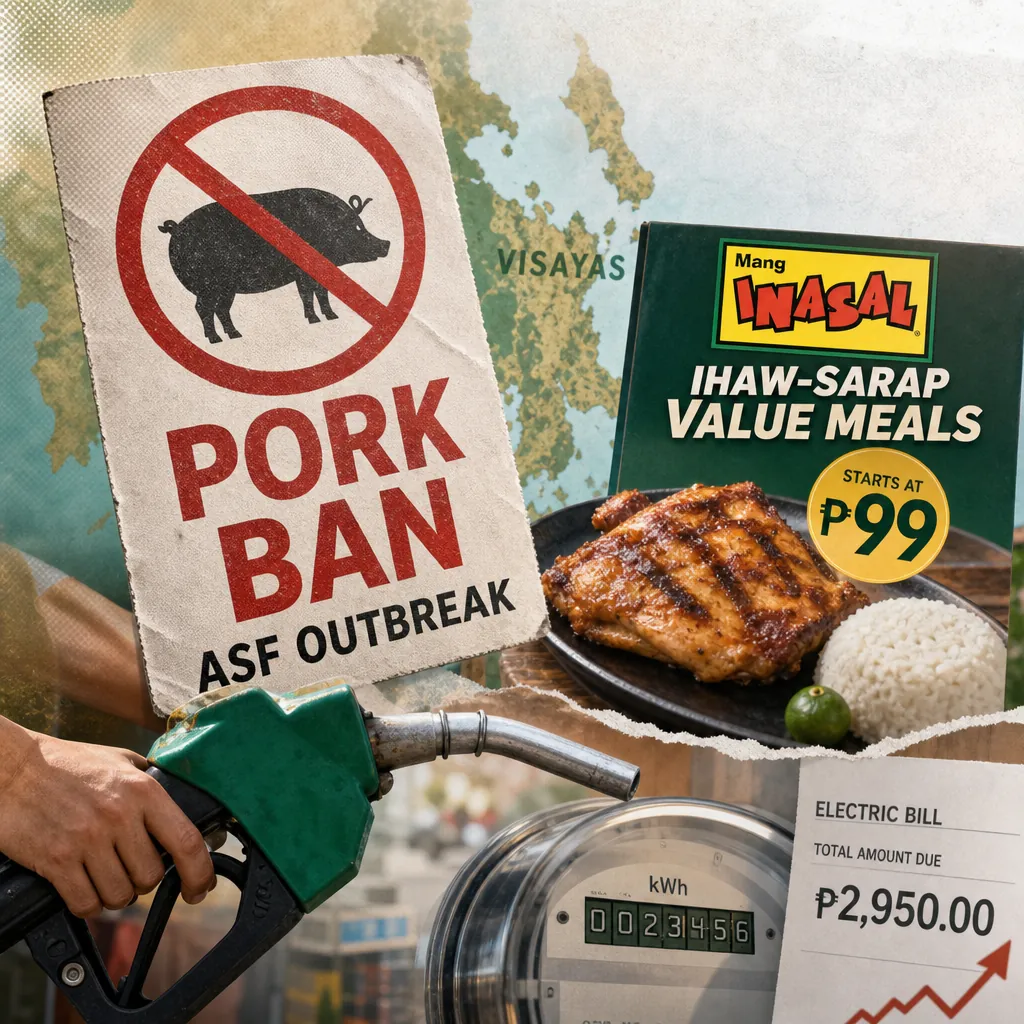
The most engaging social media story of the day was a Facebook post about a couple sharing a single unlimited rice order at Mang Inasal. The post accumulated 255 reactions and 70 shares, but the real conversation driver was a comment from a self-identified employee who wrote, "We don't get paid enough to police it." This remark sparked 711 haha reactions, 89 comments, and a smaller undercurrent of anger (4) and sadness (3). The narrative evolved from a simple "money-saving hack" to a critique of workplace pay and policy enforcement. For Mang Inasal's parent company, Jollibee Foods Corporation, this incident represents both an opportunity and a threat: the brand's unli rice concept remains a powerful draw, but the worker's comment highlights potential labor dissatisfaction and policy enforcement gaps that could escalate into negative press if not managed. The public's amused reaction suggests that consumers are sympathetic to both the couple and the worker, and any heavy-handed enforcement could backfire.
Government messaging and public skepticism
Later in the day, an Integrated State Media post attempted to counterbalance the negative sentiment by highlighting DSWD financial aid from the Marcos administration. With only 2 likes and 0 comments, this message gained minimal traction, indicating that the public was more engaged with relatable, user-generated stories than with institutional reassurances. This stream reveals a trust gap: official messaging about financial aid and fuel supply is not cutting through public skepticism. For the Malacañang client, this suggests a need to amplify the DSWD narrative through localized, relatable testimonials rather than government press releases.
QSR expansion amid economic headwinds
A Manila Standard article reported that DoubleDragon's CITYMALL welcomed the Jollibee Group's Mix and Match concept—a multi-brand food court featuring Jollibee, Chowking, Mang Inasal, and Greenwich—at a new branch in Cavite. This coverage, worth an estimated P535,119 in advertising-equivalent value, signals that major QSR players are still investing in physical expansion despite the challenging economic environment. The Mix and Match concept allows customers to order from multiple brands in one location, potentially encouraging higher spending per visit. This stream provides a counterpoint to the dominant narrative of consumer belt-tightening, suggesting that brands are betting on long-term growth even as short-term sentiment sours.
Broader economic context: Green Lane projects and infrastructure
The BOI certified 17 Green Lane projects worth P351 billion in the first half of 2026, mostly in renewable energy, expected to generate 39,368 jobs. Meanwhile, the NDC infused P140 million into the World Trade Center expansion, a P3-billion project that includes a hall expansion and a high-capacity parking building, with commercial operations projected to begin in May 2028. These developments, while not directly food-related, shape the economic environment in which food companies operate. Renewable energy investments could eventually lower electricity costs for food manufacturers, while the World Trade Center expansion may boost business tourism and demand for food services in Metro Manila.
Conversation trajectory
Over the next 1–2 weeks: The next DOE fuel price forecast announcement (around July 20–21) will either confirm or escalate the diesel trend. If prices rise further, expect intensified conversation about food price pass-through, with consumers sharing more cost-saving hacks and comparing prices across brands. The Mang Inasal incident may inspire similar viral posts at other QSRs, particularly those with "unli" offerings.
Over the next 2–4 weeks: The convergence of fuel price hikes and rainy-season vegetable price increases will likely drive a surge in search and discussion around budget meals, karinderya options, and home cooking. Consumers may reduce food delivery orders, impacting GrabFood and foodpanda usage. QSR brands that proactively offer value meal bundles or loyalty discounts can capture positive sentiment before the conversation turns critical.
Over the next 4–6 weeks: The scheduled release of the July food price index by the Philippine Statistics Authority (likely late July) will provide official data on rice, sugar, and meat prices. This could amplify cost-of-living narratives, with food affordability becoming a central theme. Expect a spike in social media conversations comparing product sizes and prices, similar to the onion price crisis patterns observed in 2023.
Trigger events: The next DOE fuel price forecast (around July 20–21); the possible extension of the ERC no-disconnection policy for electricity; the PSA food price index release (late July). Each event will likely amplify cost-of-living narratives, with food affordability becoming a central theme.
Response guidance
Platform approaches:
- Facebook: Monitor the Mang Inasal unli rice sharing conversation closely. Engage by acknowledging the broader economic context rather than directly commenting on the specific viral hack. Use comment replies from official brand pages to share practical meal value options without policing customer behavior. Create shareable infographics comparing the cost of cooking at home versus dining out, using the vegetable price increase story as a springboard.
- YouTube: Respond to the Unang Balita segment on vegetable price hikes by producing a follow-up video or comment that offers tips on affordable, nutritious meal planning using locally available produce. Partner with known food vloggers or nutritionists to add credibility. For news channels reporting on fuel-driven inflation, request inclusion of your brand's perspective on how supply chain efficiencies help stabilize food prices.
- Twitter: Track related hashtags like #presyo #budgetMeals and engage by retweeting credible financial or consumer advocacy accounts that share cost-saving tips. Post a series of threads explaining how your brand manages input cost increases (e.g., through long-term supplier contracts) to reassure consumers that price adjustments are measured and transparent.
Key messages:
- "We understand that every peso counts for Filipino families right now. That's why we continue to offer affordable meal options without compromising quality."
- "Gastos sa pagkain ay patuloy naming binabantayan. Sa kabila ng pagtaas ng presyo ng gulay at petrolyo, nagsusumikap kaming panatilihing abot-kaya ang aming mga produkto."
- "Salu-salo sa handaan, hindi kailangang maging mamahalin. Maari pa ring mag-enjoy sa paboritong pagkain nang hindi nabibiyak ang bulsa."
- "We support our team members who work hard every day. Their welfare remains a top priority, and we are continually reviewing compensation and benefits to reflect current economic conditions."
Sensitive topics to navigate:
- Employee compensation and policing of rules: The Mang Inasal worker's comment highlights frontline dissatisfaction. Any response must avoid punitive language against staff or customers. Instead, acknowledge the worker's perspective and focus on internal support systems without discussing specific pay levels.
- Price increases vs. value perception: With vegetable prices rising due to weather and fuel hikes driving logistics costs, customers are highly sensitive to any menu price changes. Avoid justifying increases solely by external factors; instead, emphasize what remains unchanged in terms of portion size, quality, and affordability.
- Consumer "hacks" and brand reputation: The couple sharing one unli rice order could be seen as either creative saving or rule-breaking. Engaging directly risks alienating cost-conscious customers. A balanced approach is to thank customers for their loyalty while clearly but gently restating dining policies through general FAQs, not in response to the viral post.
Response priorities:
- Address the value conversation head-on. The Mang Inasal post has gone viral with significant "haha" reactions (711), indicating the public is amused yet sympathetic to both the couple and the worker. Priority: release a short statement on owned channels reaffirming commitment to affordable dining and front-line employee welfare, without naming the incident. This preempts negative media pickup.
- Proactively share budget meal guides. Given the vegetable price increase story, there is an opportunity to position your brand as a partner in smart spending. Priority: publish a blog or social carousel comparing the cost of a home-cooked vegetable dish vs. your brand's value meal, showing tangible savings.
- Monitor employee-related sentiment across platforms. The worker's comment reveals underlying labor unrest that could escalate. Priority: conduct a quick internal pulse survey or roundtable with store staff to gather feedback, then craft a supportive internal and external narrative around staff benefits. This reduces the risk of a larger crisis.
See the full picture behind today's signals.
This report draws from Media Meter's MediaWatch, our real-time monitoring engine tracking 2,470+ Philippine sources across print, broadcast, digital, and social. Explore how the platform turns raw coverage into decision-grade intelligence, then see how it's configured for teams like yours — whether you're in PR agencies, corporate comms, government, or marketing.
Want more? Browse our Report Library for sector and crisis intelligence, or request a demo and we'll have your brand set up before the call.
Want this kind of intelligence on your brand?
This brief is built on the same MediaWatch methodology that runs continuously across every brand we monitor. See your competitive landscape, Impact Score, and narrative trajectory in a 30-minute demo.