LTO enforcement, Ford V6 launch, NLEX floods dominate
The day's conversation centered on three streams: the LTO's high-profile enforcement actions including the Niño Muhlach suspension and anti-fixer drive, Ford Philippines' V6-powered Ranger and Everest launch, and the NLEX flooding crisis that triggered a toll holiday and government scrutiny.
The day's public conversation ran on three tracks that rarely touched: a celebrity road-safety case that turned into a lesson in regulatory procedure, a product launch that excited the enthusiast community, and a flooding crisis that snarled a major expressway and drew government scrutiny. The heaviest consequence sat with the enforcement and infrastructure stories, while the loudest public enthusiasm belonged to Ford's new V6 pickups and SUVs. Each carried its own audience, its own platforms, and its own implications for the automotive sector.
The celebrity thread began on August 24, when television news reported that actor and businessman Niño Muhlach had driven his SUV through several establishments along Marcos Highway in Antipolo City, injuring one person.1 Initial coverage drew modest attention, but the story escalated quickly once the Land Transportation Office (LTO) — the government agency that handles driver licensing and vehicle registration — issued a show cause order, a formal notice requiring him to explain why his license should not be penalized.2 By September 1, the LTO had imposed a 90-day preventive license suspension, and the next day it announced that Muhlach's public admissions of fault would have "no bearing on or merit in the agency's final decision."4 That statement, which drew roughly 12,800 views on one social platform and hundreds of reactions on another, signaled that the agency would pursue the case independently of the actor's remorse.45
A second enforcement thread emerged the same day when viral videos showed LTO personnel flagging two SUVs in Manila for suspicious license plates, which then revealed multiple accumulated traffic violations.7 The 24 Oras television coverage of that interception drew the highest single engagement of the entire monitoring window, with 60,093 views and 296 likes.7 This thread expanded to include the arrest of 71 fixers — people who illegally expedite government transactions for a fee — in Metro Manila since October 2025, according to the LTO chief, as well as a separate LTO-7 order requiring timely release of license plates and warning dealers of sanctions.1474 The story of intercepted vehicles with fake AFP and LTO plates circulated on Twitter, accumulating 1,577 likes across Facebook posts.89
A third narrative thread centered on motorcycle rider safety and police conduct, beginning with a September 2 report that a rider struck by a police officer had filed a formal complaint.10 This story gained immediate traction with 1,680 likes and 312 comments on Facebook, with public sentiment heavily critical of law enforcement behavior.10 The conversation around rider vulnerability intensified as users connected these incidents to broader questions about road safety culture, particularly when a police officer was shown taking a flying leap to knock a rider off an illegally-boosted e-bike, drawing 10,689 views on Twitter.12
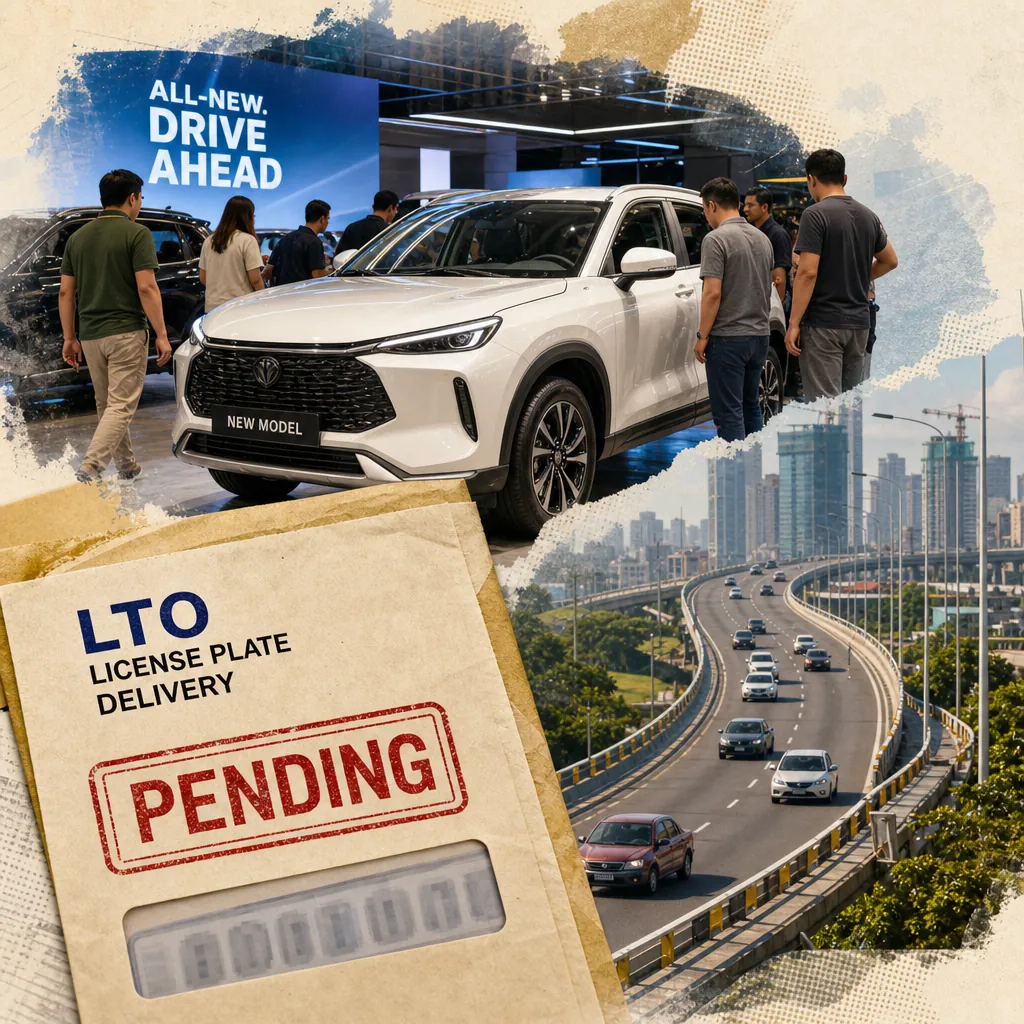
Meanwhile, Ford Philippines launched its refreshed 2027 Ranger and Everest lineups on the evening of September 2 at Okada Manila, introducing a 3.0-liter V6 turbodiesel option that replaces the previous 2.0-liter biturbo in higher trims.3036 The launch generated overwhelmingly positive engagement across automotive enthusiast communities, with the main announcement post drawing 177 likes, 89 shares, and 130 loves.25 Media outlets quickly published full price lists, revealing two new flagship variants: the Ranger Wildtrak X at ₱2,609,000 and the Everest Platinum at ₱2,849,000.2826 The conversation evolved from pure announcement to competitive analysis by evening, with enthusiasts noting the V6 presence at the ₱2.4 to ₱2.8 million price point elevates Ford's positioning against Toyota Hilux and Mitsubishi Strada, which lack equivalent V6 options in the Philippine market.33
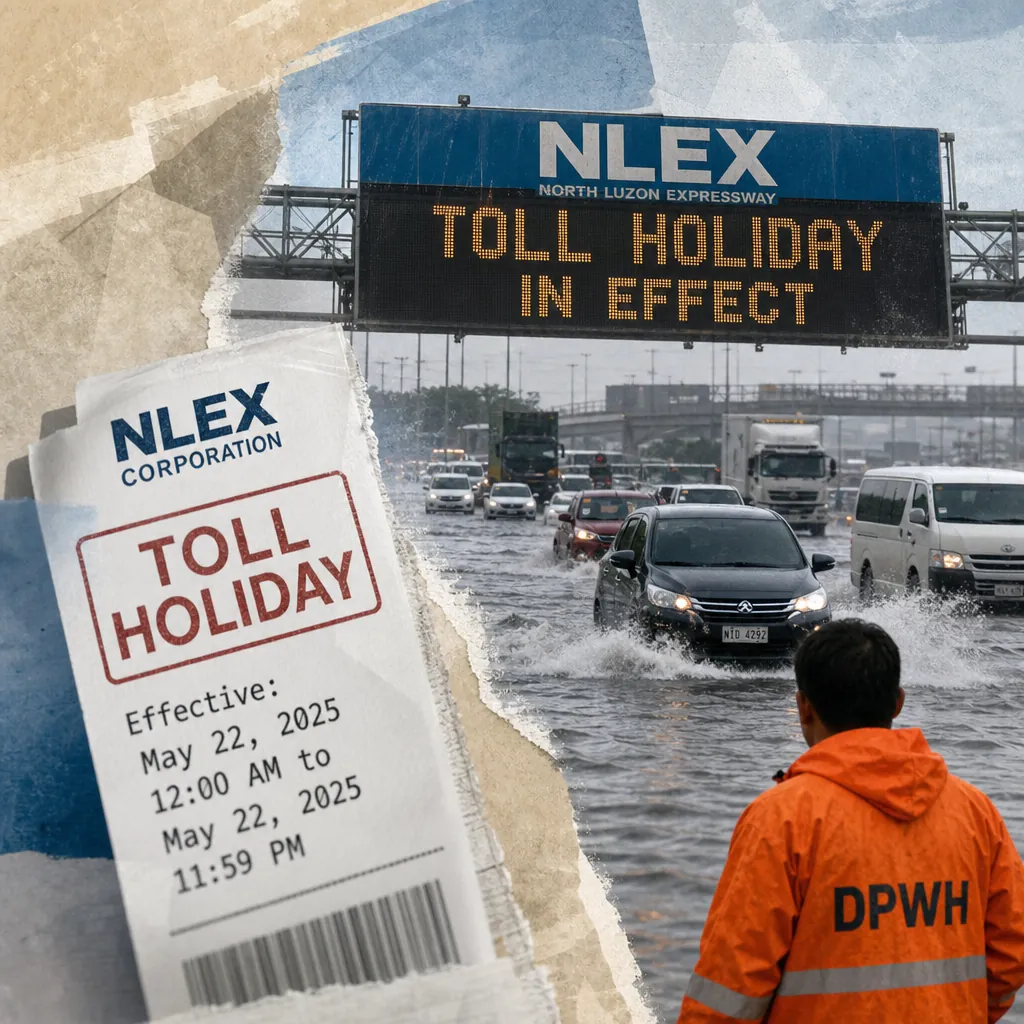
The third major story of the day was the flooding crisis on the North Luzon Expressway (NLEX), a major toll road connecting Metro Manila to the northern provinces. Days of heavy rain from the southwest monsoon, or Habagat, caused the Pampanga River to overflow and flood the expressway near San Simon, Pampanga, leaving thousands of motorists stuck in traffic, some for nearly 22 hours.61 The Department of Transportation (DOTr) — the government department overseeing transportation — announced that NLEX had agreed to a "toll holiday," waiving fees on the Pulilan-San Fernando segment until the situation normalizes.59 The Toll Regulatory Board (TRB), which regulates toll roads, ordered NLEX Corp. to explain the flooding and propose mitigation measures.61 The story dominated broadcast and radio coverage throughout the day, with multiple stations reporting on traffic conditions and the government's response.63[^64](https://minio-s3.media-meter.in/mediameter/uploads/media-automated/recording/IBC 13/2026/09/03/clip_1788416229584_13_0_00_00_35_54_893_00_39_44_250.mp4)[^78](https://minio-s3.media-meter.in/mediameter/uploads/media-automated/recording/One PH/2026/09/03/clip_1788413358555_12_00_00_00_35_50_336_00_37_30_955.mp4)
Key themes
- LTO asserts independence in Muhlach case, drawing mixed public reaction. The agency's statement that Muhlach's admissions carry no weight in its final decision generated 12,844 views on Twitter and 251 likes with 74 "haha" reactions on Facebook, suggesting public skepticism toward the procedural rigidity.4 The case demonstrates that celebrity status does not shield drivers from regulatory consequences.
- Anti-fixer campaign yields 71 arrests and 76 employee cases since October 2025. The LTO's sustained enforcement drive against people who illegally expedite transactions has resulted in charges against 76 agency employees, including two office chiefs, and flagged 90 online accounts offering fixing services.74[^96](https://minio-s3.media-meter.in/mediameter/uploads/media-automated/recording/One PH/2026/09/03/clip_1788412474262_12_00_00_00_03_36_318_00_05_11_435.mp4) This signals a systemic crackdown on corruption within the agency.
- Vehicle plate fraud enforcement draws the highest engagement of the day. The 24 Oras segment showing LTO personnel intercepting two SUVs with suspicious plates that had accumulated multiple violations drew 60,093 views, the single highest engagement figure in the monitoring window.7 Public appetite for enforcement against perceived abuses of vehicle registration is strong.
- Ford's V6 powertrain shift repositions the brand against Japanese rivals. The introduction of a 3.0-liter V6 turbodiesel across the Ranger and Everest lineups, replacing the 2.0-liter biturbo, gives Ford a performance differentiator that Toyota Hilux and Mitsubishi Strada lack in the Philippine market.2733 The launch generated over 100 reactions on nearly every Ford-related post.
- NLEX flooding triggers toll holiday and government scrutiny. The DOTr announced free tolls on the Pulilan-San Fernando segment until flooding subsides, while the TRB ordered NLEX Corp. to explain the flooding and implement warning systems.5961 The crisis stranded motorists for up to 22 hours, drawing criticism of the expressway operator's communication.
- Motorcycle rider safety and police conduct emerge as a distinct conversation cluster. Multiple incidents involving riders — a police officer allegedly striking a motorcyclist, a rider filing complaints after being hit, and an officer's dramatic intervention against an illegally-boosted e-bike — coalesced into a focused discussion about rider vulnerability.1012 Engagement on these posts was high, with 1,680 likes and 312 comments on the rider complaint story.
- Electrified vehicle announcements remain muted compared to conventional performance upgrades. Nissan's confirmation of the Navara Pro PHEV and Primera EV launches in November drew only 7 likes and 0 shares on one post, contrasting sharply with the Ford launch's engagement.37 This suggests electrified commercial vehicles are not yet capturing mainstream audience attention.
- Government budget hearings reveal funding gaps for transport projects. The DOTr's proposed 2027 budget of ₱300.96 billion represents a 52.52% increase from 2026, but most of its proposed projects were not allotted funds under the National Expenditure Program.44 Lawmakers pushed for restoration of Edsa busway funding and fuel subsidies.40
How the narratives stack
Dominant: The LTO's enforcement narrative — spanning the Muhlach case, the anti-fixer campaign, and the vehicle plate interception — dominated the conversation, running roughly 57% of the total content volume across all platforms during the observed period.6 This narrative carried the heaviest regulatory consequence for the automotive sector, demonstrating that the agency is actively pursuing enforcement on multiple fronts. The Muhlach case alone generated sustained multi-day coverage from major broadcasters, with engagement climbing steadily as regulatory actions unfolded.123 The vehicle plate interception story drew the highest single engagement of the entire dataset, indicating strong public appetite for stories about regulatory crackdowns on vehicle fraud.7
Counter-narrative: The Ford launch provided a positive, forward-looking counterpoint to the enforcement-heavy news cycle. While the LTO stories focused on accountability and punishment, the Ford conversation centered on product innovation, performance, and premium positioning.2530 The launch generated overwhelmingly positive sentiment, with enthusiasts actively sharing price lists and spec comparisons.27 This contrast — enforcement versus enthusiasm — reflects the dual nature of the automotive conversation in the Philippines: regulatory scrutiny on one hand, consumer passion on the other.
Emerging: The NLEX flooding crisis emerged as a significant story with infrastructure and regulatory implications. The DOTr's decision to implement a toll holiday and the TRB's order for NLEX Corp. to explain the flooding signaled growing government scrutiny of toll road operators.5961 The crisis also highlighted the vulnerability of major transport arteries to climate-related disruptions, a theme that could gain traction as extreme weather events become more frequent. The story drew heavy broadcast and radio coverage throughout the day, with multiple stations reporting on traffic conditions and the government's response.63[^64](https://minio-s3.media-meter.in/mediameter/uploads/media-automated/recording/IBC 13/2026/09/03/clip_1788416229584_13_0_00_00_35_54_893_00_39_44_250.mp4)[^78](https://minio-s3.media-meter.in/mediameter/uploads/media-automated/recording/One PH/2026/09/03/clip_1788413358555_12_00_00_00_35_50_336_00_37_30_955.mp4)
Under-covered: The motorcycle rider safety cluster, while generating high engagement on individual posts, received less sustained coverage than the celebrity and enforcement stories. The complaint filed by a rider struck by a police officer, and the broader questions about police conduct toward motorcyclists, represent a significant public concern that could escalate if more incidents surface.1011 The conversation around rider vulnerability and law enforcement conduct has historical context in earlier incidents, including a May Pasig City traffic confrontation that drew 134 likes and 209 comments when revisited.11 This cluster's high engagement relative to its coverage suggests it is under-served by mainstream media.
Platform insights
- Facebook: The primary space for public reaction and viral amplification. Emotionally charged content — the rider complaint story, the Zamboanga del Sur van crash that killed six and drew 4,663 likes, and the Ford launch announcement with 130 loves — generated the highest engagement.101825 Facebook also hosted the day's single most-viewed item, the 24 Oras SUV plate interception segment with 60,093 views.7 The platform's comment sections revealed complex public sentiment, with the Muhlach case drawing 74 "haha" reactions alongside 251 likes, suggesting amusement or skepticism toward the actor's situation.4
- Twitter/X: Maintained a more news-oriented conversational flow. Posts about LTO decisions on Muhlach drew 12,844 views, and fixer arrest statistics received 2,647 views, suggesting a more information-seeking audience.415 The platform served as a rapid dissemination channel for breaking updates, particularly on September 2 when posts about the LTO's upcoming decision and the agency's statement on Muhlach's admissions generated substantial reach.22 The "no bearing" angle was the most attention-grabbing element of the entire story for Twitter audiences.4
- YouTube: Served as the initial breaking news source, with TV Patrol and 24 Oras broadcasts establishing the factual timeline of the Muhlach case from August 24 through September 2.123 Individual video engagement remained modest except for the SUV plate interception story that drew 60,093 views.7 Viewership metrics showed consistent interest in the Muhlach case, with the August 25 TV Patrol report drawing 4,133 views and the September 2 segment attracting 2,416 views.25 The platform's role was largely one-way broadcasting, with comments remaining minimal.
- Reddit: Minimal activity, with only a single thread on cycling team announcements drawing 28 upvotes.21 The platform's role in the Philippine automotive conversation remains niche, with enthusiast communities preferring Facebook for technical discourse.
Key voices and communities
Mainstream broadcast news organizations — ABS-CBN's TV Patrol, GMA's 24 Oras, and One PH's Frontline Pilipinas — dominated the conversation volume and reach on the Muhlach case and the NLEX flooding.12317 These outlets function as the primary information gatekeepers, with their YouTube uploads serving as the main source of narrative development. Their coverage frames regulatory bodies as active enforcers, with particular emphasis on LTO actions ranging from show-cause orders to 90-day license suspensions.317 The 24 Oras segment on suspicious plates drew the highest single engagement of the entire dataset with 60,093 views.7
Government and regulatory agencies — the LTO, the DOTr, and the MMDA — formed the second major stakeholder cluster. The LTO's actions created the news hooks that broadcasters and the public responded to, from the Muhlach case to the anti-fixer campaign.2374 The DOTr's budget hearing and its handling of the NLEX flooding crisis drew extensive coverage across broadcast and radio.63[^64](https://minio-s3.media-meter.in/mediameter/uploads/media-automated/recording/IBC 13/2026/09/03/clip_1788416229584_13_0_00_00_35_54_893_00_39_44_250.mp4)[^78](https://minio-s3.media-meter.in/mediameter/uploads/media-automated/recording/One PH/2026/09/03/clip_1788413358555_12_00_00_00_35_50_336_00_37_30_955.mp4) The MMDA's confirmation that a vehicle caught using the Edsa Busway belonged to its own General Manager Nicolas Torre III added an internal accountability dimension to the enforcement narrative.5662
Automotive media and enthusiast publishers — VISOR.ph, AutoIndustriya, CarGuide PH, and AutoFocus PHL — drove the Ford launch conversation with detailed pricing and spec breakdowns.26272829 Their content materially outperformed official brand posts in both reach and engagement, with one VISOR post detailing the Everest lineup generating over 100 likes.26 These publishers are critical channels for shaping consumer interpretation of the launch, and their coverage decisions will likely influence purchase consideration more than the automaker's own marketing messages.2728
General public and concerned motorists — individual commenters and reacting audiences — revealed public sentiment through their engagement patterns. Their reactions clustered around enforcement fairness, road safety concerns, and high-profile incidents involving celebrities.210 The heaviest participation appeared in response to fatal accident reports and police-rider conflicts, with reaction counts frequently exceeding 1,000 and comment threads running into the hundreds.1018 Public commentary frequently displayed skepticism toward regulatory consistency, particularly regarding celebrity treatment.10
Law enforcement accountability advocates — a distinct cluster emerging from content involving police conduct and road incident accountability, primarily on Facebook. These conversations revolved around allegations of officer misconduct and the pursuit of formal complaints through channels like NAPOLCOM and the Highway Patrol Group.11 Engagement was highly interactive, with one post about a police-rider incident drawing 209 comments and substantial reaction diversity including 118 laughing responses.11 This group amplifies incidents where law enforcement conduct intersects with motorist experiences, framing questions of accountability and proper procedure.11
Narrative streams
LTO's 90-day suspension of Niño Muhlach sets a precedent for celebrity accountability
The conversation began on August 24 when ABS-CBN News reported that an SUV driven by actor and entrepreneur Niño Muhlach had plowed through several establishments along Marcos Highway in Antipolo City, leaving one person injured.1 The initial coverage on TV Patrol quickly established the core facts, but a secondary narrative emerged almost immediately from another outlet noting that the incident occurred just one day after Muhlach had proudly showcased his new vehicle on social media.38 While the first day's reports generated modest engagement with only 573 views on the main broadcast segment, the story gained significant traction by the following morning when the LTO announced it had suspended Muhlach's license and issued a show cause order.172
By August 25, the narrative had evolved from a straightforward accident report into a regulatory enforcement story, with TV Patrol revealing that Muhlach had admitted to falling asleep at the wheel due to exhaustion and had already apologized publicly while accepting responsibility for the incident.2 The LTO clarified that the initial suggestion of possible mechanical failure came from preliminary police investigation, not from Muhlach's own statements, and that he could potentially face reckless driving charges alongside license suspension or cancellation.2
On Tuesday, September 1, TV Patrol reported the LTO had imposed a 90-day preventive suspension on Muhlach's license, with the actor surrendering his license following the Antipolo incident.3 This announcement coincided with a Facebook post that framed the incident within a broader road safety message, emphasizing the dangers of driving while fatigued and noting that the vehicle had been placed on alarm status while a Show Cause Order required Muhlach to explain his actions.39
The following day, September 2, marked a significant turning point when the LTO explicitly stated that Muhlach's admissions of responsibility would have "no bearing on or merit in the agency's final decision," signaling that regulatory consequences would proceed regardless of his public apology or acceptance of fault.4 This statement marked an important shift in the narrative, as it separated the actor's personal accountability from the administrative and potentially criminal proceedings. The LTO's decision to pursue the case independently of the actor's admissions emerged as the most significant regulatory signal, setting a precedent that could influence how similar incidents involving public figures are handled.
For the automotive sector, the case demonstrates that the LTO is willing to act decisively in high-profile cases, which serves as an important signal for how the agency may handle future incidents involving celebrities, executives, or other public figures driving vehicles. The LTO's explicit clarification that an admission of responsibility "has no bearing on or merit in the agency's final decision" is particularly significant, as it signals that the agency views administrative and criminal proceedings as independent from civil liability or public apologies.4 The recurrence of fatigue-related accidents in public discourse reinforces the importance of promoting driver safety features in marketing communications, particularly for SUVs and similar vehicles associated with the incident.
LTO's anti-fixer campaign and vehicle plate enforcement signal a systemic crackdown
A second major narrative thread emerged on September 2 regarding vehicle authentication and enforcement, when viral videos showed LTO personnel flagging two SUVs in Manila for suspicious plates, which then revealed multiple accumulated traffic violations.7 The 24 Oras coverage of this enforcement action drew the highest single engagement of the entire dataset with 60,093 views and 296 likes, indicating strong public appetite for stories about regulatory crackdowns on vehicle fraud.7
This thread expanded to include the arrest of 71 fixers in Metro Manila operations since October 2025, according to the LTO chief.74 The LTO also reported that 76 of its own employees had been caught collaborating with fixers — 64 rank-and-file personnel and 12 in high-ranking positions, including two office chiefs.74 The agency flagged 90 online accounts offering fixing services.74 In July, the LTO implemented a region-wide reassignment of district heads in the National Capital Region following the arrest of three fixers.74
The story of intercepted vehicles with fake AFP and LTO plates circulated on Twitter, accumulating 1,577 likes across Facebook posts.89 The presence of vehicles using fake AFP plates raised security concerns that likely amplified public interest beyond routine traffic enforcement.8 A separate LTO-7 order requiring timely release of license plates and warning dealers of sanctions carried particular weight for automotive industry stakeholders monitoring regulatory compliance trends.14
The concentration of fraudulent plate enforcement and fixer arrests in a single news cycle indicated that the LTO is actively prioritizing these issues, with the 71 fixer arrests since October 2025 representing a sustained enforcement campaign. The heavy public engagement with these stories, particularly the SUV interception content, suggested that vehicle authentication and regulatory compliance resonate strongly with Filipino consumers who may have experienced or witnessed similar issues. Automotive industry stakeholders should monitor whether this enforcement emphasis extends to dealership practices, as the LTO-7 order explicitly warned dealers of sanctions, potentially signaling a broader regulatory push that could affect brand reputation if non-compliance becomes a public issue.14
Ford's V6-powered Ranger and Everest launch reshapes the midsize pickup and SUV segment
The conversation on September 2 began with Ford Philippines' own teaser post — a deliberately vague clue about "body-on-frame engines" and "engineering upgrades" that prompted 22 likes and a modest 6 comments, indicating an audience primed for the reveal but uncertain of specifics.25 The brand quickly followed up with a short video that same day, amassing 177 likes and 130 loves as anticipation built.25 Within hours, media outlets pivoted from speculation to confirmation: several VISOR.ph journalists posted the full price lists for the refreshed Ranger and Everest lineups, revealing the new 3.0-liter V6 turbodiesel option replacing the 2.0-liter biturbo — a technical change that would define much of the day's discussion.2627
The narrative split into two distinct threads as the day progressed. The first centered on the flagship additions — the Ranger Wildtrak X at ₱2,609,000 and the Everest Platinum at ₱2,849,000 — with the Platinum's 3.0 V6 Turbo 4x4 configuration drawing particular attention for its premium positioning.2826 The second thread, driven mostly by automotive media, focused on the broader lineup restructuring: the removal of the 2.0-liter biturbo in favor of a single-turbo V6 was described by AutoIndustriya as giving the models "engineering upgrades" that aligned with Ford's "new era of toughness" messaging.2725 By late evening, a CarGuide PH post carried the story further, noting the V6 was paired with a revised 2.0-liter single turbo diesel across other variants — clarifying that the powertrain shift was systematic rather than exclusive to the halo models.29
Sentiment remained overwhelmingly positive throughout the day, driven significantly by the live launch event held at Okada Manila. The Inquirer Mobility post documenting the physical unveiling used the campaign language "Chase the Uncharted and See the Unseen," which resonated heavily with the enthusiast audience.30 A separate post from Dreux on Facebook quickly became the highest-engagement reference point of the day, with 177 likes, 89 shares, and 130 loves, signaling the event's significance within the broader auto community.25
The most substantial discussion thread revolved around the replacement of the 2.0-liter biturbo diesel with a 3.0-liter V6 turbodiesel across the Ranger and Everest lineups. By midday, enthusiasts on Facebook had begun remarking that the V6 presence at the ₱2.4 to ₱2.8 million price point elevates Ford's positioning against Toyota Hilux and Mitsubishi Strada, which lack equivalent V6 options in the Philippine market.33 The conversation evolved from pure announcement to competitive analysis by evening, with some users noting the Raptor's twin-turbo 3.0 V6 EcoBoost petrol at ₱2,879,000 offering a distinctly different value proposition for high-performance buyers.33
For competitors, the key takeaway is that Ford is aggressively reinforcing its dominance in the body-on-frame segment through V6 powertrain additions and premium trim expansion. The specific price points of the Wildtrak X and Everest Platinum will likely pressure competitors to reevaluate their mid-to-high-range offerings, particularly as the V6 engine adds a performance differentiator in a segment where Toyota and Mitsubishi rely primarily on 2.4-liter or 2.8-liter options.2829 The event-driven coverage from major automotive media outlets demonstrates a coordinated campaign that leverages both print-style journalism and social media engagement to maximize reach.31
NLEX flooding crisis triggers toll holiday and government scrutiny of toll road operators
The flooding crisis on the North Luzon Expressway (NLEX) emerged as a significant story with infrastructure and regulatory implications. Days of heavy rain from the southwest monsoon caused the Pampanga River to overflow and flood the expressway near San Simon, Pampanga, leaving thousands of motorists stuck in traffic, some for nearly 22 hours.61 The Toll Regulatory Board (TRB), which regulates toll roads, ordered NLEX Corp. to explain the flooding and propose mitigation measures.61
The Department of Transportation (DOTr) announced that NLEX had agreed to a "toll holiday," waiving fees on the Pulilan-San Fernando segment until the situation normalizes.59 Transportation Acting Secretary Giovanni Lopez said during a budget hearing that the agency had appealed to NLEX's "corporate social responsibility" rather than asserting liability.59 The regular toll on the Pulilan-San Fernando route is ₱113 for Class 1 vehicles, ₱281 for Class 2 vehicles, and ₱338 for Class 3 vehicles.113
The DOTr also directed NLEX Corp. to issue SMS flood warnings to motorists three hours before expected heavy rain, and the TRB ordered the operator to provide food, water, and portalets for affected motorists.113118 The story dominated broadcast and radio coverage throughout the day, with multiple stations reporting on traffic conditions and the government's response.63[^64](https://minio-s3.media-meter.in/mediameter/uploads/media-automated/recording/IBC 13/2026/09/03/clip_1788416229584_13_0_00_00_35_54_893_00_39_44_250.mp4)[^78](https://minio-s3.media-meter.in/mediameter/uploads/media-automated/recording/One PH/2026/09/03/clip_1788413358555_12_00_00_00_35_50_336_00_37_30_955.mp4) By Thursday morning, floodwaters had partially receded, but traffic remained heavy, with a 1.5-kilometer queue on the northbound Tulaoc section.87
For the automotive sector, the NLEX flooding crisis highlights the vulnerability of major transport arteries to climate-related disruptions and the regulatory consequences for toll road operators. The DOTr's decision to implement a toll holiday and the TRB's order for NLEX Corp. to explain the flooding signaled growing government scrutiny of toll road operators. The crisis also underscored the importance of effective communication with motorists during disruptions, a lesson that extends to automotive brands managing customer expectations during service interruptions.
Motorcycle rider safety and police conduct emerge as a distinct conversation cluster
A third narrative thread centered on motorcycle rider safety and police conduct, beginning with a September 2 report that a rider struck by a police officer had filed a formal complaint.10 This story gained immediate traction with 1,680 likes and 312 comments on Facebook, with public sentiment heavily critical of law enforcement behavior.10 The conversation around rider vulnerability intensified as users connected these incidents to broader questions about road safety culture, particularly when a police officer was shown taking a flying leap to knock a rider off an illegally-boosted e-bike, drawing 10,689 views on Twitter.12
The current complaint filing by a rider who was struck by an officer built directly on earlier demands for accountability, accumulating 312 comments as users debated police conduct and rider rights.10 The emotional register of these conversations tended toward anger and frustration, with 29 angry reactions on a May post and 1,680 likes on the September rider complaint suggesting strong public alignment with the victim's position.1110
This content appeared to feed into existing public frustration, mirroring the commentary patterns seen in posts about the Antipolo road rage shooter case that had accumulated 118 haha reactions, suggesting dismissiveness toward official narratives.13 The elevated engagement on these posts relative to other regulatory content indicates strong audience resonance, with this sub-conversation likely expanding as more incident reports surface and advocacy groups amplify related cases.11
For the automotive sector, this cluster presents a monitoring priority given its direct relevance to motorcycle market sentiment. The conversation around rider vulnerability and law enforcement conduct could influence public perception of road safety governance and potentially affect how transport-related policies are perceived. Automotive stakeholders should monitor whether this enforcement emphasis extends to broader road safety discussions that could affect motorcycle sales and rider education initiatives.
Government budget hearings reveal funding gaps for transport projects
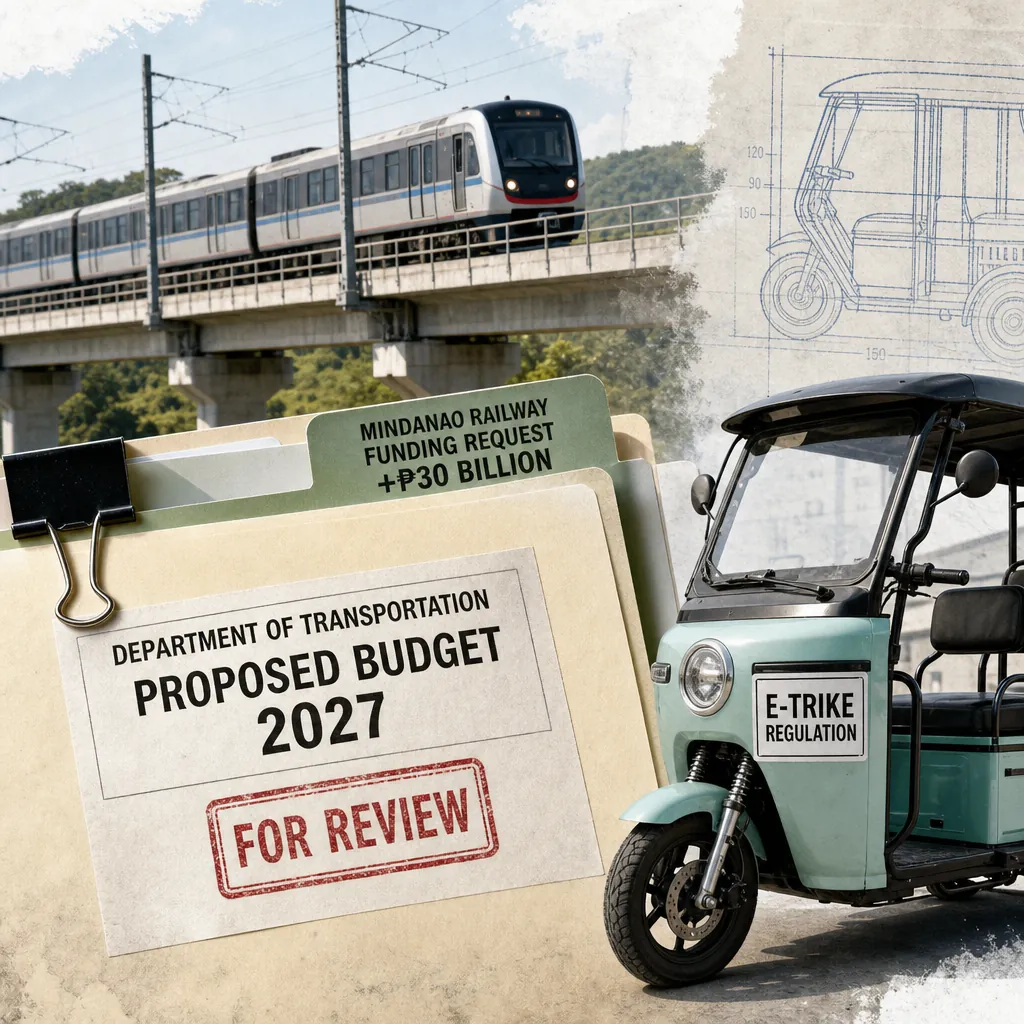
The DOTr's proposed 2027 budget of ₱300.96 billion represents a 52.52% increase from the 2026 National Expenditure Program of ₱197.331 billion.44 However, the agency disclosed that most of its proposed projects for next year were not allotted funds under the NEP.44 The DOTr shared that a huge chunk of its budget will be allocated for capital outlay worth ₱243.933 billion, followed by personnel services (₱35.350 billion), maintenance and other operating expenses (₱20.236 billion), special accounts (₱1.060 billion), retirement and life insurance premiums (₱374 million) and financial expenditures (₱7 million).44
During the House committee on appropriations briefing, Akbayan Party-list Rep. Percival Cendaña asked the House to restore the budget of the Edsa bus carousel system for 2027, pointing out that the service contracting program and fuel subsidy for the Edsa busway were not allotted funding.40 Transport Secretary Giovanni Lopez said the same programs under the Edsa busway system were also not given budget under the 2026 NEP, and were only allotted funding afterwards due to the crisis in the Middle East which affected many livelihoods of public utility vehicle drivers.40
Kamanggagawa Party-list Rep. Eli San Fernando raised concerns over what he described as delayed action by the DOTr on complaints involving officials of the Metro Rail Transit Line 3 (MRT-3) and the Land Transportation Franchising and Regulatory Board (LTFRB).75 San Fernando cited cases involving MRT-3 general manager Michael Capati and LTFRB Region 3 hearing officer Jennifer Rodriguez, alleging that Capati had repeatedly avoided inquiries into safety and labor issues involving MRT-3 that were first raised in February.75
The DOTr also committed to having 12 stations of the Metro Rail Transit Line 7 (MRT-7) operational by the second quarter of 2027, with plans to roll out safety barriers and other improvements at existing stations to prepare for the expected surge in passengers.7780 Transportation Secretary Giovanni Lopez said the 12 stations from Sacred Heart to the Quezon North Avenue Joint Station are on track to be operational by June 2027.77
For the automotive sector, the budget hearings signal the government's transport priorities and potential funding gaps that could affect infrastructure projects relevant to vehicle owners and commuters. The restoration of Edsa busway funding and fuel subsidies for public utility vehicles could influence public transportation usage and, indirectly, private vehicle ownership decisions.
Conversation trajectory
LTO decision on Muhlach case expected within days. The LTO announced it would issue its final decision on the Muhlach case within the week of September 2, based on the announced timeline.522 The ruling could include formal reckless driving charges or license cancellation, which would generate a fresh wave of commentary on celebrity accountability and enforcement consistency. Monitor the decision announcement window closely — likely within the current week based on stated timelines.5 The release of the ruling will carry substantial news weight given the LTO's statement that admissions carry no bearing on the final decision.4 Observation window: 3–7 days.
Anti-fixer operations to produce periodic arrest announcements through Q4 2026. The LTO's sustained enforcement campaign against fixers — 71 arrested since October 2025 — will continue to generate periodic enforcement announcements as the agency prepares year-end performance summaries.74 The LTO-7 order requiring timely release of license plates with warnings of dealer sanctions signals increasing dealer accountability pressures that could affect public perception of automotive brands during the critical fourth-quarter sales period.14 Observation window: through December 2026.
Ford V6 launch conversation to shift from spec sheets to real-world reviews. The rollout of full media reviews of the new V6 models is expected within 7–14 days based on standard embargo timelines following the Okada Manila launch event.30 These reviews will introduce performance metrics and driving dynamics data likely to shift conversation from spec sheets to real-world capability assessments. Monitor conversation sentiment shifts within the first 10 days post-launch, as the gap between marketing enthusiasm and consumer price acceptance will become apparent through comment sections on pricing-focused posts.28 Observation window: 7–14 days.
Nissan electrification announcements to create comparative pressure. Nissan's confirmation of the Navara Pro PHEV and Primera EV launches in November provides a counter-narrative that will increasingly invite direct comparisons against Ford's traditional powertrain strategy.3745 As the conversation evolves over the coming quarter, expect questions about electrified Ranger/Everest options to surface more frequently, particularly from fleet buyers and urban commuters attracted to hybrid fuel savings.35 The V6 performance narrative may need to coexist with growing EV-focused commentary as more brands announce 2027 electrification timelines.29 Observation window: through Q4 2026.
NLEX flooding to prompt regulatory review of toll road operations. The TRB's order for NLEX Corp. to explain the flooding and propose mitigation measures could lead to broader regulatory scrutiny of toll road operators' disaster preparedness and communication protocols.61 The DOTr's directive for NLEX to issue SMS flood warnings three hours before expected heavy rain sets a precedent for proactive communication that could extend to other expressways.118 Observation window: 2–4 weeks.
Motorcycle rider safety conversation likely to expand. The elevated engagement on rider safety posts relative to other regulatory content indicates strong audience resonance, with this sub-conversation likely expanding as more incident reports surface and advocacy groups amplify related cases.11 The convergence of National Crime Prevention Week (through September 7) with recent high-fatality incidents will likely prompt editorial content linking road safety to broader public security concerns.23 Observation window: through September.
Trigger events to watch: The LTO's formal decision on the Muhlach case (expected within days of September 2), which will likely generate a fresh wave of commentary on celebrity accountability and enforcement consistency.22 The ongoing LTO anti-fixer operations in Metro Manila will produce periodic arrest announcements that reinforce the documentation-integrity narrative.74 The scheduled delivery of initial V6 test units to media outlets will generate 2–3 weeks of sustained review content across multiple platforms.35 The upcoming year-end auto show season (typically October–November) will provide the next major platform for side-by-side competitor comparisons between the refreshed Ford lineup and other brands' 2027 models.35
Response guidance
Regulatory enforcement messaging: For automotive stakeholders with regulatory exposure, closely track public comment sentiment on LTO enforcement stories, particularly around the license plate release order, to gauge any emerging dealership frustration that might require preemptive communications.14 Prepare holding statements on vehicle safety features and driver responsibility, referencing the tragic multi-fatality van crash, as this could resurface in conversations about vehicle standards.18 When responding to inquiries about enforcement actions on high-profile cases, emphasize that "the regulatory process follows the same legal standards for all motorists. Actions taken in this case reflect the evidence gathered through the official investigation and applicable provisions of the law, without exception."5
Road safety education: Position road safety education as the primary public engagement theme. The Muhlach case, where the actor publicly acknowledged falling asleep and assuming responsibility, offers a teachable moment for promoting anti-fatigue driving campaigns.2 Organizations in the automotive sector can leverage this by emphasizing that no deadline or schedule justifies endangering others through drowsy driving.39 When addressing public concern about road safety following fatal accidents, note that "traffic enforcement agencies are actively conducting operations to address violations that contribute to road incidents, including apprehension of vehicles with outstanding violations and irregular documentation."16
Product launch amplification: For brands tracking the Ford launch, the next 14 days represent the optimal window to release comparative content addressing the V6 value proposition, particularly on fuel efficiency and maintenance costs where counter-narratives can still gain traction.27 The electrification comparison will become unavoidable as Nissan's PIMS announcements gain more coverage, so preparing preemptive messaging on hybrid versus diesel total cost of ownership will be valuable before that conversation matures beyond initial announcements.37 Engage with automotive media posts that shared detailed pricing and variant breakdowns, prioritizing responses to inquiries about the new 3.0L V6 diesel engine and its real-world fuel efficiency versus the previous 2.0L biturbo.36
Crisis communication for infrastructure disruptions: The NLEX flooding crisis underscores the importance of proactive communication during service disruptions. Toll road operators and automotive brands should prepare rapid-response protocols for weather-related incidents, including SMS alerts, alternative route information, and clear messaging about fee waivers or reimbursements. The DOTr's directive for NLEX to issue warnings three hours before expected heavy rain sets a benchmark for proactive communication that could extend to other transport infrastructure.118
Sensitive topics to navigate: Fatal road accidents generate intense public grief and anger, so communications should acknowledge the human toll and avoid appearing to prioritize regulatory process over the loss of life when incidents produce multiple casualties.18 The intersection of celebrity involvement and road safety violations invites perceptions of preferential treatment, requiring clear communication about the uniform application of enforcement actions regardless of public status.173 Police interactions with motorists, particularly incidents involving physical contact between officers and riders, can trigger broader conversations about law enforcement conduct that extend beyond the specific incident.1011 Avoid any language that suggests exceptional circumstances apply because of an individual's profession or status.
Platform-specific approaches: On Facebook, monitor mainstream news outlet pages carrying enforcement stories for high-engagement comment sections, and prepare messaging frameworks for responding to public criticism in comment threads where emotional reactions dominate.10 On Twitter/X, track posts from legitimate news agencies sharing LTO statements, and prepare short-form content that clarifies the LTO administrative process in plain language to interject into threads where users speculate about preferential treatment.24 On YouTube, track the comment sections of major newscast uploads, where viewers actively discuss both accidents and regulatory responses, and note the trend of declining viewership across subsequent video uploads, which suggests public interest peaks during initial accident reporting and wanes during procedural follow-ups.23
See the full picture behind today's signals.
This report draws from Media Meter's MediaWatch, our real-time monitoring engine tracking 2,470+ Philippine sources across print, broadcast, digital, and social. Explore how the platform turns raw coverage into decision-grade intelligence, then see how it's configured for teams like yours — whether you're in PR agencies, corporate comms, government, or marketing.
Want more? Browse our Report Library for sector and crisis intelligence, or request a demo and we'll have your brand set up before the call.
Want this kind of intelligence on your brand?
This brief is built on the same MediaWatch methodology that runs continuously across every brand we monitor. See your competitive landscape, Impact Score, and narrative trajectory in a 30-minute demo.