Monsoon floods, reclamation order dominate Philippine news
The Philippines faced a dual crisis on August 30 as severe monsoon floods affected millions and the government issued a cease-and-desist order against alleged illegal reclamation projects linked to a prominent senator. Public conversation on social media mixed urgent rescue appeals with sharp criticism of infrastructure failures and political accountability.
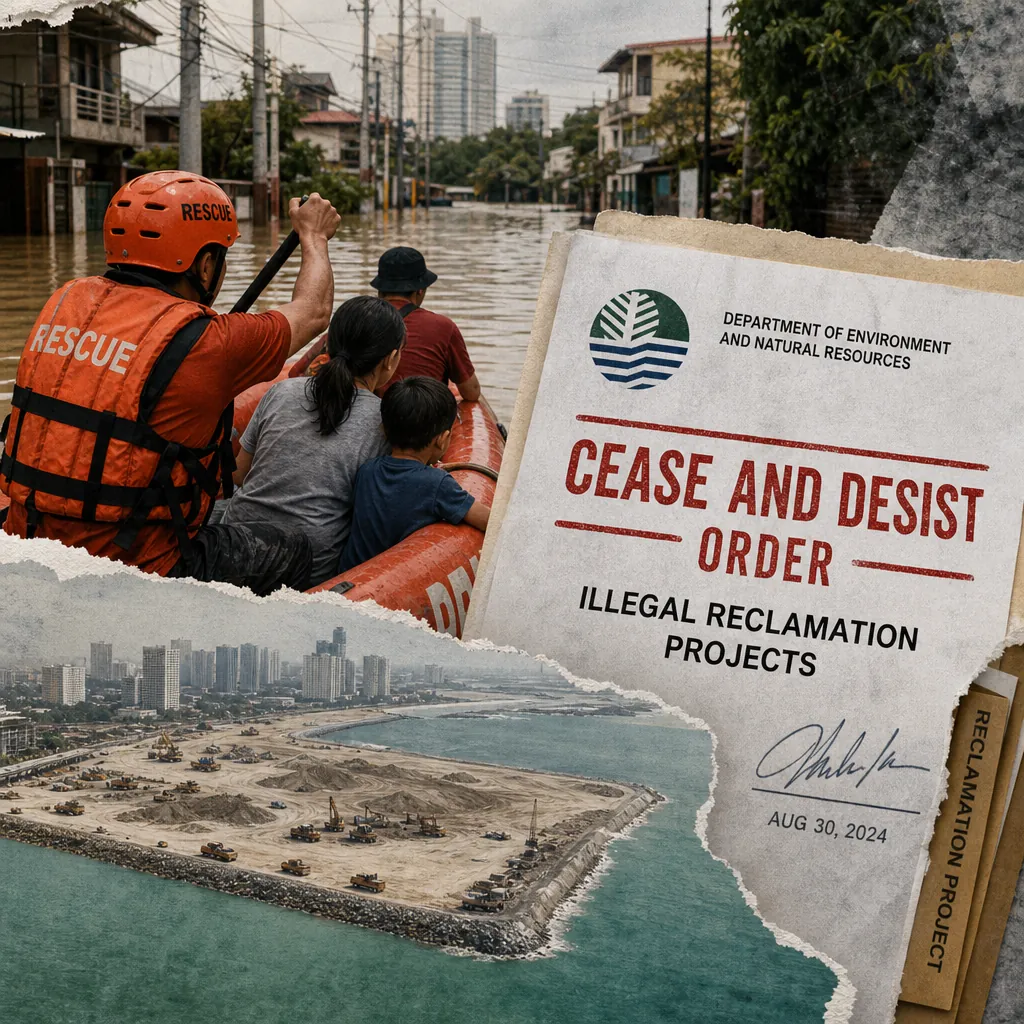
The conversation on Sunday, August 30, began with official preparedness messaging as the Philippine Coast Guard’s Northwestern Luzon units went on heightened alert amid the enhanced southwest monsoon battering Northern Luzon. Simultaneously, state meteorologists tracked Tropical Depression Pilandok moving slowly northwest, while PAGASA warned of continued heavy rain across Luzon and parts of Visayas and Mindanao.1 Within hours, the conversation shifted rapidly from weather bulletins to lived experience, as residents in Pampanga, Tarlac, and Pangasinan began sharing rescue footage and declaring localized emergencies, with Tarlac officially placed under a state of calamity by evening.2
As floodwaters rose, the narrative arc on Facebook turned distinctly human—and critical. A video of a bedridden senior citizen being rescued via makeshift raft in San Fernando, Pampanga drew 61 reactions and 15 shares, while Apalit police rescue operations garnered 113 reactions and 56 comments, reflecting both gratitude and exhaustion.34 By late afternoon, the tone darkened as an NDRRMC report revealed 437 roads were affected and two bridges in Tarlac had collapsed, prompting users to begin questioning infrastructure resilience. The emotional pivot came when a Reddit user resurrected a Manila Bulletin archive from 1992—when lahar from Mt. Pinatubo buried barangays in Pampanga—and juxtaposed it against current flooding, with three sad reactions on the archived post underscoring a perceived lack of progress.
The most consequential narrative thread emerged mid-day on Sunday, shifting the conversation from disaster response to political accountability. DPWH Secretary Vince Dizon confirmed cease-and-desist orders had been issued against projects linked to alleged illegal reclamation in Laguna de Bay, with the President’s backing.5 A Manila Bulletin Facebook post on the topic exploded with 162 likes and 280 "haha" reactions—a stark, mocking response that signals public skepticism or delight at the political implications—while the Reddit crosspost drew 474 upvotes and 22 comments.6 One Reddit user summarized the sentiment: "Alan Peter Cayetano is now facing a cease-and-desist order backed by both the DPWH AND the President himself", framing the development as a rare instance of high-level enforcement against a prominent political figure.
Key themes
- Flooding affects 8.4 million people across nine regions: The National Disaster Risk Reduction and Management Council (NDRRMC) reported that the southwest monsoon and recent cyclones Luis, Maymay, and Neneng have affected 8.4 million individuals, or 2.4 million families, as of 6 p.m. Sunday. Approximately 122,500 people are in evacuation centers, and 32 deaths have been linked to the weather disturbances.54
- Tarlac declares state of calamity as bridges collapse: Governor Christian Yap placed the province under a state of calamity through Sangguniang Panlalawigan Resolution No. 416-2026, following the recommendation of the Provincial Disaster Risk Reduction and Management Council. Two major bridges connecting Tarlac City to several municipalities have become impassable.51
- DPWH issues cease-and-desist order on Laguna de Bay reclamation: Secretary Vince Dizon confirmed the order against projects linked to alleged illegal reclamation, with the President's backing. The action targets projects associated with Senator Alan Peter Cayetano, drawing intense public reaction.5
- Public mocks reclamation order with 280 "haha" reactions: A Manila Bulletin Facebook post about the cease-and-desist order drew 162 likes and 280 "haha" reactions, signaling public skepticism or delight at the political implications rather than serious engagement.6
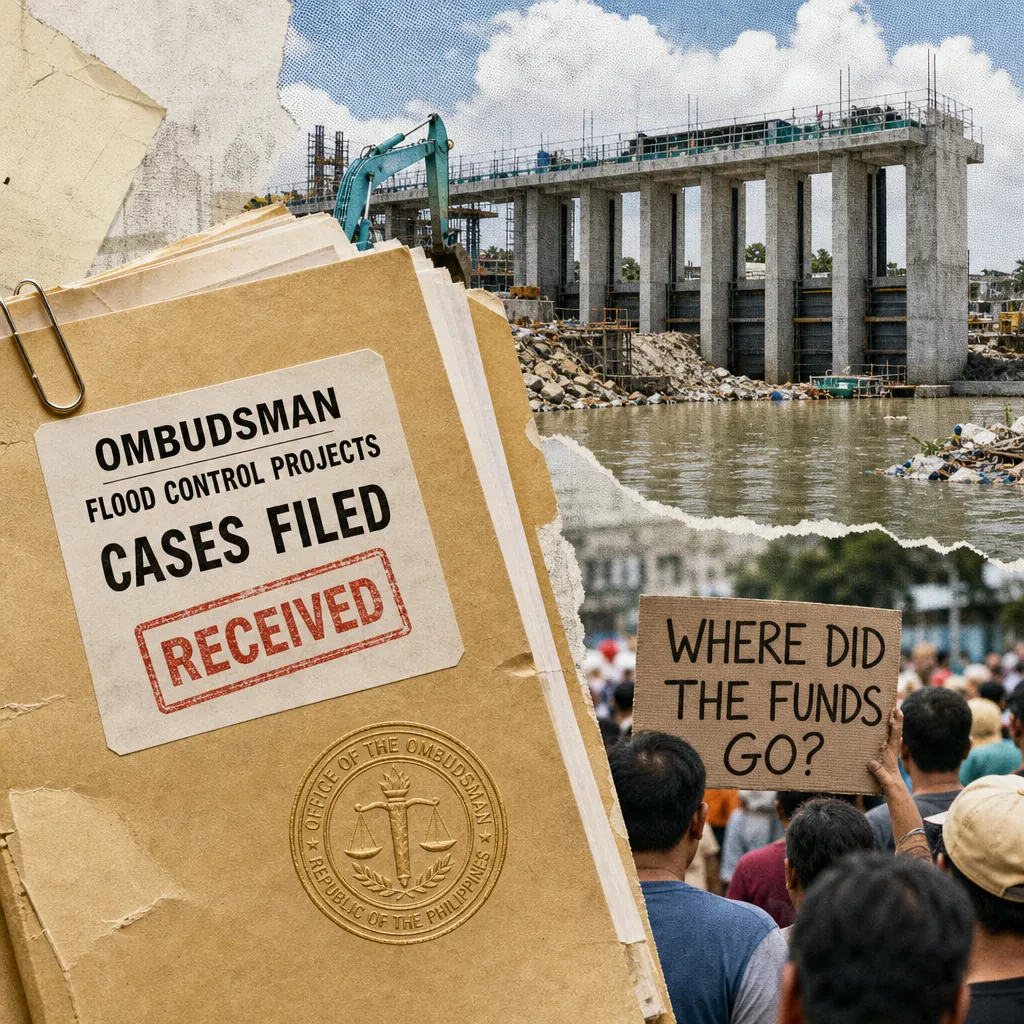
- Reddit users compare flood control spending across administrations: A post titled "Two different administration. Two different flood control projects. A disastrously empty result" linked a 2018 PNA article to a 2026 PCO news release inaugurating a PHP 7-billion flood control project in Pampanga, arguing that billions spent had yielded little protection for Masantol, Macabebe, and Minalin residents.8
- Calls for annual protest day on September 21 gain traction: A Reddit user proposed making September 21 an annual protest day for flood control, nearly one year after the last major protests in September 2025. The post gained 47 upvotes and 39 comments.11
- DPWH dismisses maintenance chief for slow disaster response: Secretary Dizon announced the dismissal of the Las Piñas-Muntinlupa maintenance chief, reinforcing a narrative of active departmental housecleaning amid the crisis.10
- Budget insertion warnings for DPWH in 2027 GAB: ACT Teachers party-list Rep. Antonio Tinio warned of possible insertions in the DPWH budget in the House version of the 2027 General Appropriations Bill, with items not included in the National Expenditure Program subject to "For Later Release."132
How the narratives stack
Dominant: The flood crisis and its infrastructure failures dominate the captured conversation, with the NDRRMC's 8.4 million affected figure serving as the factual baseline. This narrative is amplified through localized rescue videos that humanize the suffering while implicitly questioning infrastructure resilience, particularly in Pampanga and Bulacan where road closures and impassable highways are directly impacting mobility and commerce.5445 The conversation is rapidly evolving from a weather report into a government-performance referendum, with Reddit users directly comparing flood control spending across administrations and proposing protest strategies.811
Counter-narrative: The DPWH cease-and-desist order against alleged illegal reclamation in Laguna de Bay, linked to Senator Alan Peter Cayetano, presents a competing story of government enforcement. This narrative generates exceptionally high emotional engagement—substantially outpacing disaster-related content—with 280 "haha" reactions on Facebook and 474 upvotes on Reddit.65 The public response, while supportive of the DPWH action, is heavily laced with cynicism regarding selective enforcement, with the laughter reactions signaling widespread disbelief about genuine accountability.
Emerging: A meta-conversation about collective action is emerging on Reddit, where users are proposing annual protest days timed around September 21, linking flood control failures to broader governance accountability. This represents a longitudinal shift from passive complaint to organized citizen monitoring, indicating that infrastructure failures are increasingly being viewed through a lens of political leverage rather than natural disaster inevitability.11
Under-covered: The defense procurement story—the confirmed acquisition of two additional Miguel Malvar-class frigates for the Philippine Navy—received strong positive engagement (106 upvotes on Reddit) but was overshadowed by the flood and reclamation narratives. This story sits in direct tension with the accountability narratives, suggesting defense spending is perceived as a different category from domestic infrastructure or social programs.24
Platform insights
- Facebook: The platform served as the primary crisis information hub, with official pages and news outlets posting real-time updates on rescues, state of calamity declarations, and NDRRMC statistics. Engagement patterns showed high "care" and "sad" reactions on rescue videos, while the Cayetano CDO post exhibited an anomalous 280 "haha" reactions, signaling a platform-specific brand of sardonic political commentary that went viral.6
- Reddit: The platform functioned as the analytical and politically critical space, where users directly compared administrations, cited archival sources, and proposed protest strategies.811 The reclamation controversy dominated with nearly identical posts on the same day, with the second post accumulating slightly more upvotes (474 versus 455), indicating sustained anger rather than diminishing interest.5
- Twitter: Twitter acted as a rapid news aggregation feed, with multiple posts from news outlets reaching thousands of views—notably, the NDRRMC report of 8.4 million affected individuals gained 2,215 views, while the NLEX flooding report reached 3,558 views.1213 The platform carried breaking news without the depth of analysis seen on Reddit, but its quote and share counts on official statements suggested a waiting audience for official confirmations.
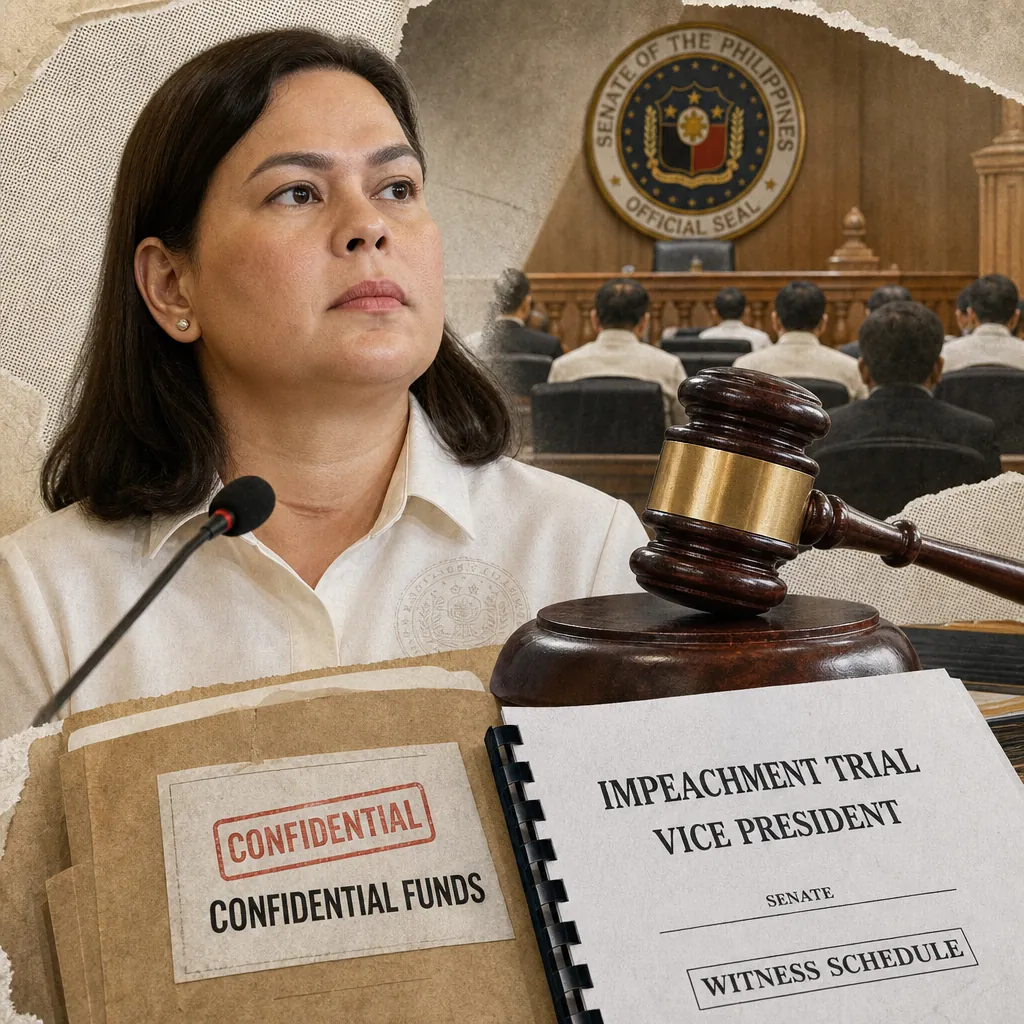
- YouTube: The platform provided long-form analytical content, particularly around the impeachment trial of Vice President Sara Duterte. A defense-oriented interview with Atty. Ferdie Topacio drew 38,379 views and 1,160 likes, offering a counterpoint to prosecution messaging.40
Key voices and communities
- Flood-Affected Community Advocates and Local Residents: Residents and community-focused accounts from flooded regions in Central and Northern Luzon form a highly active stakeholder group, primarily organizing through Facebook and Reddit.411 Their engagement is driven by lived experience, with rescue videos and firsthand accounts of rising floodwaters generating significant traction—one rescue operation post alone drew over 100 reactions and dozens of comments.4 This group consistently amplifies the gap between government infrastructure spending and on-the-ground outcomes, particularly in Pampanga.8
- Government Accountability and Anti-Corruption Watchdogs: A coalition of politically engaged social media users, largely active on Reddit, is driving conversation around alleged government misconduct, specifically targeting Senator Alan Peter Cayetano over his alleged illegal reclamation activities in Laguna de Bay.5 Their content on this issue has achieved high engagement, with a single post accumulating nearly 500 upvotes and dozens of comments across two threads.5
- Official Government and Response Agencies: Government entities, including the DPWH, NDRRMC, PAGASA, and local police units, are active participants in the conversation, primarily through verified social media accounts and official press releases.141 Their content focuses on situational updates, operational responses, and policy enforcement, serving as the primary source of authoritative data for other stakeholder groups.1612
- Local News Media and Broadcast Outlets: Regional and national news organizations are active in disseminating updates, often serving as intermediaries between official sources and the public.1718 Their content ranges from breaking news alerts on Twitter to longer-form Facebook posts with embedded video or links to full articles.96
- Local Government Units (LGUs) and Political Figures: Provincial and municipal leaders are visible in the conversation, primarily through their official actions and subsequent social media posts.219 Their presence is felt through declarations such as Tarlac Governor Christian Yap's announcement of a state of calamity, and through coordination with national agencies like the DPWH.2
Narrative streams
Flooding affects 8.4 million as NDRRMC reports 32 deaths
The National Disaster Risk Reduction and Management Council (NDRRMC) reported that the southwest monsoon and recent cyclones Luis, Maymay, and Neneng have affected 8.4 million individuals, or 2.4 million families, across nine regions including the National Capital Region, Ilocos Region, Cagayan Valley, Central Luzon, Calabarzon, Mimaropa, Cordillera Administrative Region, Bicol Region, and Zamboanga Peninsula.54 Approximately 122,500 individuals, or 35,500 families, are seeking temporary shelter in 1,115 evacuation centers. The NDRRMC also reported 32 deaths linked to the weather disturbances.54 This official data provides a common factual baseline for the conversation, with the figure being widely shared across platforms and serving as the primary reference point for discussions about the scale of the disaster.14
The NDRRMC data was among the most retweeted content on Twitter, indicating that official statistics remain a credible counterweight to criticism. However, the absence of direct rebuttals or data-driven defenses within the first 24 hours of criticism represents a significant reputation gap for agencies like DPWH and NDRRMC. The window for proactive communication is clearly narrowing—by Sunday evening, the narrative was already framed as "bilyon para sa flood control, pero lunod pa rin" (billions for flood control, still flooded), a dangerous simplification that will require specific, time-stamped progress reports to counter, not general statements of commitment.14
For the sector, the read is that official statistics are a necessary but insufficient response tool. Agencies must pair data with visual evidence of infrastructure improvements and proactive explanations of project timelines to prevent public trust from eroding further. The NDRRMC's credibility as a source of authoritative information is intact, but it must be deployed more aggressively and paired with concrete examples of government action.
Tarlac declares state of calamity as two bridges collapse
Tarlac province was placed under a state of calamity on Sunday due to widespread damage caused by the southwest monsoon, Governor Christian Yap announced.51 The declaration was approved through Sangguniang Panlalawigan Resolution No. 416-2026, following the recommendation of the Provincial Disaster Risk Reduction and Management Council (PDRRMC). Several towns have been affected by flooding, while two major bridges connecting Tarlac City to several municipalities have become impassable.51 The declaration allows the province to activate all available resources, including emergency funds and expedited procurement processes, to provide immediate relief to affected constituents.
The Facebook post announcing the state of calamity drew a mix of reactions, including 20 "haha" reactions and 45 comments, suggesting public skepticism toward the timing or efficacy of the declaration.2 This mixed reaction profile hints at public scrutiny of local leadership during crises, with some users questioning why the declaration came only after significant damage had already occurred.
For the sector, the read is that state of calamity declarations are administrative necessities that can be spun negatively as signs of failure. Communicators must frame the declaration as a critical step to unlock emergency funds and expedite aid, rather than as an admission of defeat. The mixed public reaction also suggests that LGUs need to be more proactive in communicating their preparedness measures before disasters strike, not just their response after the fact.
DPWH issues cease-and-desist order on Laguna de Bay reclamation linked to Senator Cayetano
The most politically charged narrative of the day emerged around 12:00 PM when DPWH Secretary Vince Dizon confirmed cease-and-desist orders had been issued against projects linked to alleged illegal reclamation in Laguna de Bay, with the President's backing.5 The action targets projects associated with Senator Alan Peter Cayetano, drawing intense public reaction across platforms. On Facebook, the Manila Bulletin post accumulated 280 "haha" reactions, a near-1:1 ratio with likes that suggests a significant portion of the audience found the situation ironic or satisfying rather than merely newsworthy.6 Reddit amplified this with 474 upvotes, and the conversation quickly evolved into broader calls for accountability, with users referencing investigations and demanding legal consequences.5
The "haha" reaction ratio on Facebook is a critical sentiment signal, suggesting public delight rather than concern, which may indicate that the administration's anti-corruption messaging is resonating but also carries risks of being perceived as performative if enforcement does not proceed. One Reddit user summarized the sentiment: "Alan Peter Cayetano is now facing a cease-and-desist order backed by both the DPWH AND the President himself", framing the development as a rare instance of high-level enforcement against a prominent political figure.5
For the sector, the read is that this single regulatory act has become a narrative of administrative resolve—or a weaponized political attack—depending on how opposition voices frame it. The public response, while supportive of the DPWH action, is heavily laced with cynicism regarding selective enforcement. Communications teams must manage this story with extreme care, framing all communications strictly as an evidence-based enforcement action per DPWH mandate, avoiding any language that either attacks or defends the implicated senator personally. Let the process speak for itself and redirect commentary toward the agency's broader enforcement of environmental regulations to mitigate claims of political targeting.56
Reddit users compare flood control spending across administrations
A Reddit user posted a comparative critique titled "Two different administration. Two different flood control projects. A disastrously empty result," linking a 2018 PNA article to a 2026 PCO news release inaugurating a PHP 7-billion flood control project in Pampanga, arguing that billions spent had yielded little protection for Masantol, Macabebe, and Minalin residents.8 The thread gained 15 upvotes and 14 comments, with the user asking "Nasaan ang hustisya at solusyon?" This narrative arc demonstrated how historical memory remained salient, but the explicit comparison of two administrations marked a sharp escalation in accountability framing.
The post is part of a broader pattern of public skepticism toward government infrastructure spending, with users directly connecting spending to measurable outcomes. One Reddit user noted "Bilyon para sa flood control daw sa Pampanga, pero lunod pa rin ang mga tao" (Billions for flood control in Pampanga, but people are still flooded).8 This sentiment is reinforced by the circulation of historical project photos and spending figures against current flooding, which is becoming a rallying point for anti-administration sentiment.
For the sector, the read is that the public is increasingly connecting infrastructure spending to measurable outcomes, and the absence of direct rebuttals or data-driven defenses within the first 24 hours of such criticism represents a significant reputation gap. Agencies must release clear, infographic-driven explanations of completed and ongoing projects in Pampanga and Central Luzon, detailing measurable outcomes (e.g., reduced flood duration, specific catchment improvements) to counter the perception that funds have vanished and preempt the planned September protests.811
Calls for annual protest day on September 21 gain traction
A meta-conversation about collective action emerged on Reddit, where u/FloodVictim_2025 posted asking "Wala pa bang plans for major flood control protests ulit this year?" nearly one year after the last major protests in September 2025.11 The post gained 47 upvotes and 39 comments, with the user noting that Marikina's improved flood control project—which "mukhang di naman kinurakot so far"—suggested protests had worked. The user proposed making September 21 an annual protest day, stating "Why not make Sept. 21 an annual protest day, or at least the weekend nearest, until mag improve talaga?" This thread represented a longitudinal shift from passive complaint to organized citizen monitoring, indicating that infrastructure failures were increasingly being viewed through a lens of political leverage rather than natural disaster inevitability.11
The convergence of the anniversary, ongoing severe flooding, and imminent SONA follow-up discussions creates a high-probability window for coordinated protest activity within the next 2–4 weeks. The Reddit discussion explicitly references the one-year anniversary of major flood control protests and proposes making September 21 an annual protest day, with threads drawing direct connections between inadequate infrastructure and political inaction.11
For the sector, the read is that the September 21–24 anniversary window of last year's flood control protests represents the most probable point of conversation spike. Communications teams should prioritize preparing rapid-response communications for this window, developing messaging that acknowledges legitimate grievances while highlighting concrete infrastructure commitments and recent accountability measures like the DPWH personnel action.10 Engagement data suggests that messages paired with visual proof of response effectiveness—such as successful rescue operations—will significantly outperform general statements.3
DPWH dismisses maintenance chief for slow disaster response
DPWH Secretary Dizon announced the dismissal of the Las Piñas-Muntinlupa maintenance chief for slow disaster response, reinforcing a narrative of active departmental housecleaning.10 This action, while a positive signal of accountability, also broadcasts an implicit admission of systemic operational failures. The dismissal was announced via Twitter and drew moderate engagement, with the post serving as evidence that the department is taking internal action to address shortcomings.
For the sector, the read is that visible accountability measures like this dismissal can help rebuild trust, especially when paired with data from NDRRMC. However, the action also highlights the need for a rapid-response protocol for infrastructure-related complaints during the crisis. Publicly communicating this action and establishing a channel for reporting similar issues can demonstrate that negligence is being addressed. The dismissal also signals potential for further accountability actions that could fuel the anti-corruption narrative, so agencies should be prepared for continued scrutiny of personnel decisions.10
Budget insertion warnings for DPWH in 2027 GAB
ACT Teachers party-list Rep. Antonio Tinio warned of possible insertions in the DPWH budget in the House version of the 2027 General Appropriations Bill (GAB).132 According to Tinio, the DPWH plans to submit institutional amendments to the 2027 National Expenditure Program (NEP). He said that while the agency insists that changes to its initial budget submission are "amendments," rather than "errata," items not included in the NEP will still be inserted and subject to "For Later Release." "In short, there will be congressional—well, the usual term for that is 'insertions.' And amendments. So expect that there would be big changes in the GAB," Tinio said.132
The warning drew modest engagement—just over 2,300 views on Twitter and six likes on Facebook—but the substance quickly layered into a broader accountability narrative already simmering in the public sphere.20 The 2027 national budget cycle is emerging as the dominant narrative thread, with the warning directly tied to public anxiety over infrastructure spending integrity.
For the sector, the read is that the budget scrutiny narrative will likely intensify as the 2027 national budget deliberations progress through committee hearings, with projected engagement increases of roughly 3-4× over the next two to three weeks as lawmakers publicly position themselves on fiscal transparency. Agencies should proactively release a detailed, project-level breakdown of the 2027 DPWH budget, addressing the insertion warnings directly. Preempting the critique with transparent documentation will reduce the narrative space for speculation and demonstrate accountability.20132
Defense procurement as a positive counter-narrative
The Philippine Navy's follow-up frigate acquisition is moving forward, with the 5th and 6th Miguel Malvar-class vessels expected to secure contracts before year-end.24 A Reddit post detailing the confirmation from Congressman Arnan Panaligan and Defense Secretary Gibo Teodoro drew 106 upvotes and 14 comments, suggesting strong public approval for military modernization. Notably, the post also highlighted that HD Hyundai Heavy Industries could reach a total of 14 exported warships to the Philippines if the deal closes, framing the acquisition as a deepening strategic partnership with South Korea.24
This thread sits in direct tension with the accountability narratives above—while the public is quick to question domestic spending and legal enforcement, defense purchases are met with relative enthusiasm, indicating a differentiated trust landscape across government functions. The frigate announcement did not attract critical pushback, which indicates that military modernization sits outside the default skepticism applied to other government expenditures.
For the sector, the read is that defense spending is perceived as a different category from domestic infrastructure or social programs. For clients in defense or security-adjacent sectors, this opens a window to communicate capability upgrades without triggering the same reputational risk exposure that infrastructure or social services might face. The conversation will likely surge when the contract is officially signed, providing an opportunity for government-aligned messaging that emphasizes national security achievements.24
Inflation and economic pressures amid weather disruptions
The Bangko Sentral ng Pilipinas (BSP) projected August inflation of 5.5 to 6.5 percent, with upward price pressures likely "driven by higher rice, vegetable, fruit and fish prices, partly due to unfavorable weather conditions and elevated domestic fuel costs."64 The forecast compares with the 6.2-percent inflation recorded in July, which despite marking a third straight month of slower growth from April's three-year high of 7.2 percent remains above the central bank's 2.0- to 4.0-percent target. Analysts project August inflation at 6.0 percent, down from 6.2 percent in July, driven by lower energy costs and reduced prices of meat and electricity, though food inflation continued to rise due to rice prices and weather-related disruptions.119
The peso breached the P62-per-dollar mark on Friday to a new all-time low, closing at P62.265:$1, 37.7 centavos weaker.65 The benchmark Philippine Stock Exchange index shed 48.25 points, or 0.80 percent, to a close of 5,956.33. Manufacturers flagged the "multilayered" pressures they are facing, led by the peso's breach of the 62-per-dollar level, which they warned could drive up costs that may eventually be passed on to consumers.124
For the sector, the read is that the combination of weather-driven food price pressures, a weak peso, and higher borrowing costs creates a challenging environment for consumers and manufacturers alike. The Department of Agriculture has ordered attached agencies to continuously revise their El Niño response plans, as the weather pattern threatens to reduce crop production and push food prices higher.99 Communications teams should prepare messaging that acknowledges these pressures while highlighting government actions to mitigate them, such as the GSIS emergency loans for typhoon-hit members and the DA's proactive planning.102
Conversation trajectory
The flood control and disaster response conversation shows clear signals of developing in ways that will impact government communications objectives over the coming weeks.
- Escalation from disaster reporting to systemic accountability demands: The conversation is rapidly shifting from situational updates toward corruption-focused scrutiny of flood control projects, with significant engagement clustering around the Laguna de Bay reclamation controversy involving a high-profile senator.56 The emotional tone is intensifying, with reactions overwhelmingly negative—one reclamation-related post generated over 280 "haha" reactions, signaling public derision rather than sympathy.6 Expect this trajectory to accelerate within 2–3 weeks as investigation narratives develop and more project audits surface.8
- Anniversary-driven protest momentum building: A Reddit discussion explicitly references the one-year anniversary of major flood control protests and proposes making September 21 an annual protest day, with threads drawing direct connections between inadequate infrastructure and political inaction.11 The convergence of the anniversary, ongoing severe flooding, and imminent SONA follow-up discussions creates a high-probability window for coordinated protest activity within the next 2–4 weeks.11
- Visual rescue content humanizing the crisis: Flood rescue footage—particularly of vulnerable populations like bedridden seniors—is generating strong engagement relative to official updates, with one rescue video drawing over 60 reactions and multiple shares.3 This pattern suggests that emotional, human-interest content outperforms formal agency announcements, indicating public appetite for tangible evidence of government responsiveness or its absence.4 The conversation is likely to bifurcate between commendation of frontline responders and criticism of systemic preparedness failures within the next week.3
- Infrastructure disruption narrative expanding: Reports of 437 affected roads and impassable major highways like NLEX are feeding a broader narrative about infrastructure vulnerability, with engagement on these posts significantly higher than typical agency announcements.12 This trend signals growing public frustration with the perceived gap between "Build Better More" promises and on-the-ground reality, a narrative that will likely intensify as recovery duration extends.8
- Budget scrutiny narratives intensifying: The warning regarding potential DPWH budget insertions in the House General Appropriations Bill is gaining traction across platforms, with the discussion appearing simultaneously on Twitter and Facebook.20 This conversation will likely intensify as the 2027 national budget deliberations progress through committee hearings, with projected engagement increases of roughly 3-4× over the next two to three weeks as lawmakers publicly position themselves on fiscal transparency.20
Key trigger events that will reshape this conversation include: the September 21–24 anniversary window of last year's flood control protests, which could catalyze synchronized demonstrations given the current heightened discontent.11 The continued westward tracking of Tropical Depression Pilandok and its interaction with the enhanced southwest monsoon will determine whether the crisis narrative expands to additional regions.1 The House of Representatives' plenary debates on the 2027 General Appropriations Bill (expected within the next 4-6 weeks) will likely amplify budget insertion allegations and generate significant media coverage.20 The anticipated signing of the frigate acquisition contract before year-end will provide a parallel narrative opportunity for defense and security messaging.24
Response guidance
Disaster response messaging: Immediately deploy a proactive, visual counter-narrative around disaster response. Leverage the existing positive reception of rescue operations by amplifying official and citizen-generated content that showcases coordinated response efforts, and pair these with real-time updates on DPWH's immediate repairs to affected roads and bridges to demonstrate operational urgency.4 This needs to be active within the next news cycle, not after the waters recede.
Flood control spending defense: Directly and publicly address the flood-control spending critique before it calcifies into a campaign issue. The circulation of historical project photos and spending figures against current flooding is becoming a rallying point for anti-administration sentiment.8 Release a clear, infographic-driven explanation of completed and ongoing projects in Pampanga and Central Luzon, detailing measurable outcomes (e.g., reduced flood duration, specific catchment improvements) to counter the perception that funds have vanished and preempt the planned September protests.11
Reclamation order communication: Manage the Cayetano cease-and-desist story with extreme care. While the action itself is popular, frame all communications strictly as an evidence-based enforcement action per DPWH mandate, avoiding any language that either attacks or defends the implicated senator personally. Let the process speak for itself and redirect commentary toward the agency's broader enforcement of environmental regulations to mitigate claims of political targeting.56
Budget transparency: Proactively release a detailed, project-level breakdown of the 2027 DPWH budget, addressing the insertion warnings directly. Preempting the critique with transparent documentation will reduce the narrative space for speculation and demonstrate accountability.20 Emphasize the existence of checks and balances (e.g., Congress, COA) and the administration's role in institutionalizing transparency, acknowledging that scrutiny is a healthy part of democracy.
State of calamity framing: Communicate the declaration as a critical step to unlock emergency funds and expedite aid, rather than as an admission of defeat. The mixed public reaction to Tarlac's declaration suggests that LGUs need to be more proactive in communicating their preparedness measures before disasters strike, not just their response after the fact.2
Justice system sentiment: Address the underlying public concern about unequal application of the law by creating a concise, shareable message that details the legal processes underway and reiterates the independence of the judiciary and the Ombudsman. This should be done immediately, as this is the most viral and emotionally charged issue in the sample.2123
Defense procurement amplification: Leverage the confirmed frigate acquisition to reinforce a broader "modernization across all fronts" narrative, linking defense upgrades with infrastructure resilience improvements (like flood control) to present a cohesive governance story centered on capability and preparedness.2433
See the full picture behind today's signals.
This report draws from Media Meter's MediaWatch, our real-time monitoring engine tracking 2,470+ Philippine sources across print, broadcast, digital, and social. Explore how the platform turns raw coverage into decision-grade intelligence, then see how it's configured for teams like yours — whether you're in PR agencies, corporate comms, government, or marketing.
Want more? Browse our Report Library for sector and crisis intelligence, or request a demo and we'll have your brand set up before the call.
Want this kind of intelligence on your brand?
This brief is built on the same MediaWatch methodology that runs continuously across every brand we monitor. See your competitive landscape, Impact Score, and narrative trajectory in a 30-minute demo.