Philippine Anti-Graft Cases Dominate July 31 News Cycle
A day of high-stakes legal and political developments in the Philippines, headlined by the Sandiganbayan granting bail to former senator Bong Revilla and the Ombudsman opening a probe into Senator Loren Legarda and her son over solar projects. The day also saw significant economic news, including a record national debt and a stock market decline.
The news cycle on July 31, 2026, was dominated by a cascade of anti-corruption and legal developments in the Philippines, painting a picture of a government and judiciary actively pursuing high-profile cases. The most prominent story was the Sandiganbayan's decision to grant bail to former senator Ramon "Bong" Revilla Jr., who had been detained for six months over an alleged ghost flood control project. This development was covered extensively across multiple outlets, including the Inquirer, Manila Bulletin, and Manila Times, and drew significant public attention. Simultaneously, the Office of the Ombudsman ordered a preliminary investigation into Senator Loren Legarda, her son Batangas Rep. Leandro Leviste, and former Energy Secretary Alfonso Cusi over alleged anomalies in solar energy projects worth over P10 billion. These stories, along with the ongoing fallout from the flood control scandal and the government's record-high debt, set a tone of heightened scrutiny on public officials and fiscal management.
Beyond the legal drama, the day's economic news was sobering. The Philippine Stock Exchange Index (PSEi) fell by 1.10 percent to close at 6,236.44, driven by investor concerns over the government's record P19.07 trillion debt and global uncertainties. Bank of the Philippine Islands (BPI) forecast that second-quarter GDP growth likely slowed to 1.9 percent, the weakest since 2009, citing a sharp contraction in public infrastructure spending. These figures underscored the economic challenges facing the Marcos administration as it navigates a complex political landscape.
The day also featured a mix of other significant stories, including the launch of the government's Electric Vehicle Incentive Strategy (EVIS) program, the Department of Transportation's filing of 105 expropriation cases for the North-South Commuter Railway, and the inauguration of the country's first energy museum. These developments, while less sensational than the corruption cases, highlighted the administration's efforts to push forward on infrastructure and industrial policy. The overall conversation, as captured in the monitored articles, reflects a nation grappling with issues of accountability, economic stability, and the balance between progress and public trust.
Key themes
- Anti-Corruption Drive Intensifies: The day's coverage was dominated by the Ombudsman's actions against high-profile figures, including the bail grant to Bong Revilla and the preliminary investigation into Loren Legarda and her son. This theme underscores the government's stated commitment to accountability, though it also raises questions about the politicization of such cases.
- Economic Headwinds and Fiscal Concerns: The stock market decline and the record national debt were central to the day's economic narrative. BPI's forecast of weak GDP growth added to concerns about the country's fiscal health, with public infrastructure spending contracting sharply.
- Infrastructure Push Continues: Despite economic challenges, the government advanced major infrastructure projects, including the North-South Commuter Railway and the Dasmariñas water system rehabilitation. These efforts are part of the administration's broader agenda to improve public services and stimulate growth.
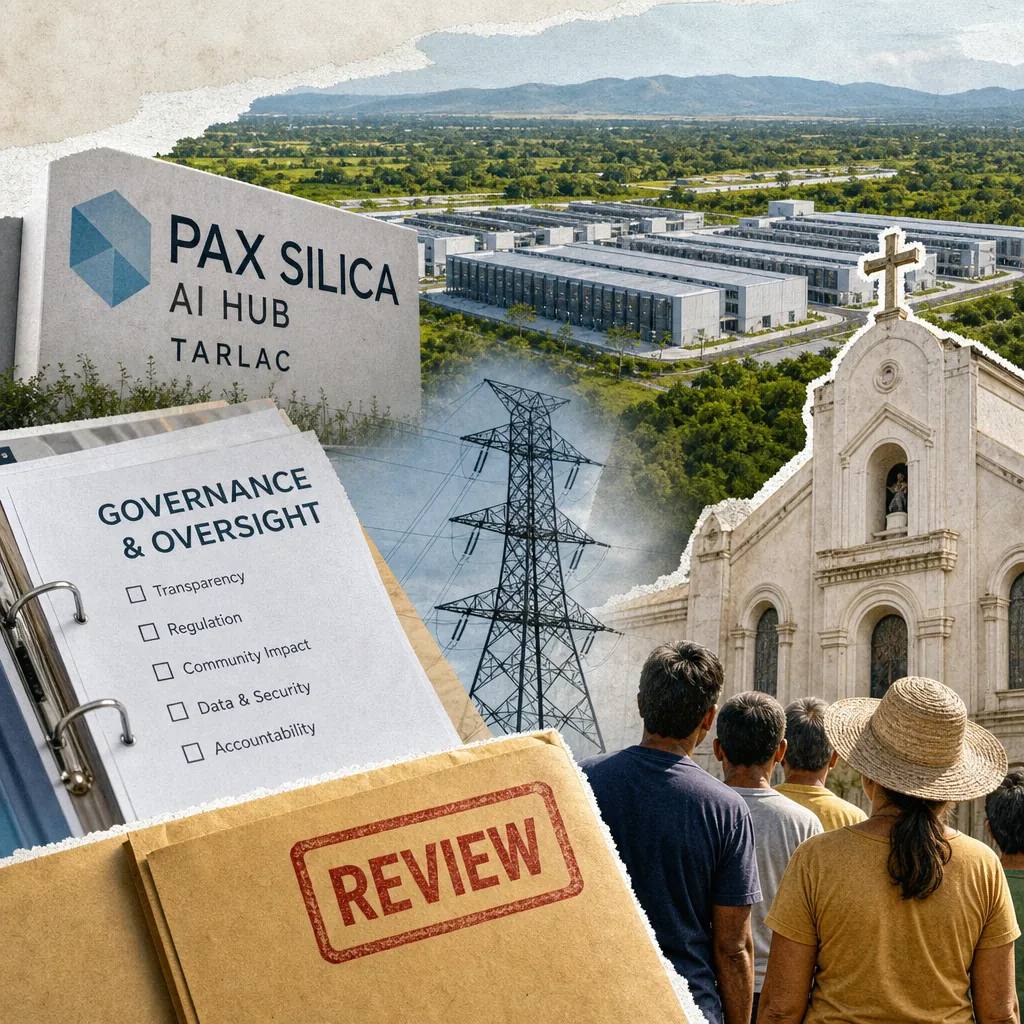
- Energy Transition and Industrial Policy: The launch of the EVIS program and the inauguration of the energy museum signaled a push toward electric vehicles and energy literacy. The Pax Silica AI hub also drew attention, with the government open to revising its provisions amid concerns over water and power resources.
- Public Trust and Institutional Integrity: The day's events, from the Comelec's defense of a donation to the MPBL's ban on game-fixing, highlighted ongoing debates about integrity in public and private institutions. The public's reaction, as seen in social media and online comments, reflects a mix of skepticism and hope.
- Regional and Global Context: The Philippines' role in regional diplomacy, such as hosting the ASEAN summit, and its engagement with global issues like the US-Iran conflict, were part of the broader conversation. These factors influence domestic economic and political dynamics.
- Water and Climate Resilience: The Stormwater Summit and the low-pressure area affecting the country brought attention to the need for proactive water management and disaster preparedness. These issues are increasingly relevant as extreme weather events become more frequent.
- Corporate and Business Developments: Several business stories, including DoubleDragon's Singapore REIT and Belle Corp.'s profit rise, provided a counterpoint to the political and economic gloom, showing that some sectors continue to perform well.
How the narratives stack
Dominant: The dominant narrative of the day was the anti-corruption campaign, specifically the legal proceedings against former senator Bong Revilla and the new probe into Senator Loren Legarda and her son. This narrative was driven by the sheer volume of coverage across major news outlets, including the Inquirer, Manila Bulletin, and Manila Times, and the public's intense interest in these high-profile cases. The Sandiganbayan's decision to grant Revilla bail, despite the non-bailable nature of the malversation charge, was a significant development that sparked debate about the strength of the evidence and the fairness of the judicial process. The Ombudsman's move against Legarda and Leviste added another layer, suggesting a widening net of investigations into political figures. This narrative dominated because it touches on core issues of governance, accountability, and public trust, which resonate deeply with Filipino audiences.
Counter-narrative: A counter-narrative emerged around the economic challenges facing the country, with the stock market decline and record national debt serving as a stark reminder of the fiscal pressures on the administration. While the anti-corruption stories dominated headlines, the economic news provided a sobering backdrop, suggesting that the government's focus on accountability may be coming at the expense of economic management. BPI's forecast of weak GDP growth, driven by a contraction in public infrastructure spending, directly challenged the administration's narrative of progress and development. This counter-narrative was present in business and financial news coverage, offering a more cautious perspective on the country's trajectory.
Emerging: An emerging narrative centered on the government's push for energy transition and industrial policy, particularly the launch of the EVIS program and the ongoing discussions around the Pax Silica AI hub. These stories, while not as prominent as the corruption cases, signaled a forward-looking agenda aimed at positioning the Philippines as a regional hub for electric vehicles and advanced technology. The government's willingness to revise Pax Silica's provisions in response to public concerns indicated a responsiveness to stakeholder input, though questions about environmental and resource impacts remained. This narrative is likely to grow in importance as these initiatives move from announcement to implementation.
Suppressed: A story that received relatively little attention in the monitored set was the ongoing issue of bomb threat hoaxes in Central Luzon schools. While the police reported 47 hoaxes since May, the coverage was limited to a single article in the Journal Daily News Online. This story is significant because it highlights the strain on public resources and the psychological impact on students and communities, yet it was overshadowed by the more sensational political and economic news. The lack of coverage may reflect a desensitization to such incidents or a media focus on more immediate political dramas, but it remains an important public safety concern that deserves more attention.
Platform insights
- Facebook: Facebook was a primary platform for public reaction to the day's biggest stories, particularly the bail grant to Bong Revilla. Revilla himself took to Facebook to post "Thank you Lord" shortly after the court's decision, a post that likely garnered significant engagement from his supporters. The platform also served as a space for political commentary, with pages like "Calabarzon Connect" criticizing the Comelec's acceptance of a P50-million donation from Dasmariñas City, calling it "legal bribery in broad daylight." This highlights Facebook's role as a battleground for political narratives and public sentiment.
- X (formerly Twitter): X was used by political figures to make statements and engage in public discourse. Senator Panfilo Lacson used the platform to reject an alleged "ceasefire" offer related to his exposé on Taguig flood control anomalies, employing colorful language to dismiss the offer. This demonstrates X's utility for direct, unfiltered communication from public officials, often bypassing traditional media. The platform also saw engagement from netizens discussing the day's events, with hashtags and trending topics likely reflecting the public's focus on the corruption cases.
- YouTube: YouTube served as a platform for news and commentary, with outlets like Abante News posting videos of flooding in Cebu City. The video, which showed residents wading through thigh-deep water, likely drew significant views and comments, highlighting the platform's role in disseminating visual evidence of events. YouTube also hosts longer-form discussions and analyses, which may have provided deeper dives into the day's political and economic developments.
- Reddit: While not explicitly mentioned in the monitoring writeup, Reddit likely hosted discussions on the day's events, particularly in subreddits focused on Philippine politics and news. The platform's upvote system allows for community-driven curation of stories, with the most significant developments rising to the top. Reddit users often engage in more detailed and nuanced discussions, providing a space for analysis and debate beyond the soundbites common on other platforms.
Key voices and communities
- Government Officials and Agencies: The Office of the Ombudsman, led by Jesus Crispin Remulla, was a central voice, announcing the preliminary investigation into Legarda and Leviste and the suspension of San Pablo City officials. The Sandiganbayan, as the anti-graft court, also played a key role in the Revilla bail decision. These institutions shape the narrative of accountability and are closely watched by the public and media.
- Political Figures and Their Camps: Former senator Bong Revilla and his legal counsel, Atty. Rean Balisi, were prominent voices, with Balisi issuing statements affirming Revilla's trust in the judicial system. Senator Loren Legarda and her son, Rep. Leandro Leviste, were also in the spotlight, though their responses were less prominent in the monitored set. Senator Panfilo Lacson used X to voice his rejection of a ceasefire offer, adding to the political drama.
- Media Outlets and Journalists: Major news organizations, including the Inquirer, Manila Bulletin, Manila Times, and Daily Tribune, drove the day's coverage. Their reporting set the agenda and provided the public with information on the day's events. Journalists and columnists also offered analysis, such as the Malaya Business Insight's column on Pax Silica, which framed the debate in terms of human ingenuity versus technological risk.
- Business and Economic Analysts: Economists like Emilio Neri Jr. of BPI provided critical analysis of the country's economic trajectory, forecasting weak GDP growth and highlighting the impact of reduced infrastructure spending. These voices are essential for understanding the economic context behind the political headlines and are often cited by media to provide depth to financial stories.
- Civil Society and Advocacy Groups: While not as prominent in the monitored set, groups like the Philippine Economic Zone Authority (PEZA) and the Philippine Electricity Market Corporation (PEMC) were active in promoting policy changes and research. Their voices represent the interests of specific industries and contribute to the broader policy discourse.
Narrative streams
The Revilla Bail Decision: A Test of Judicial Independence
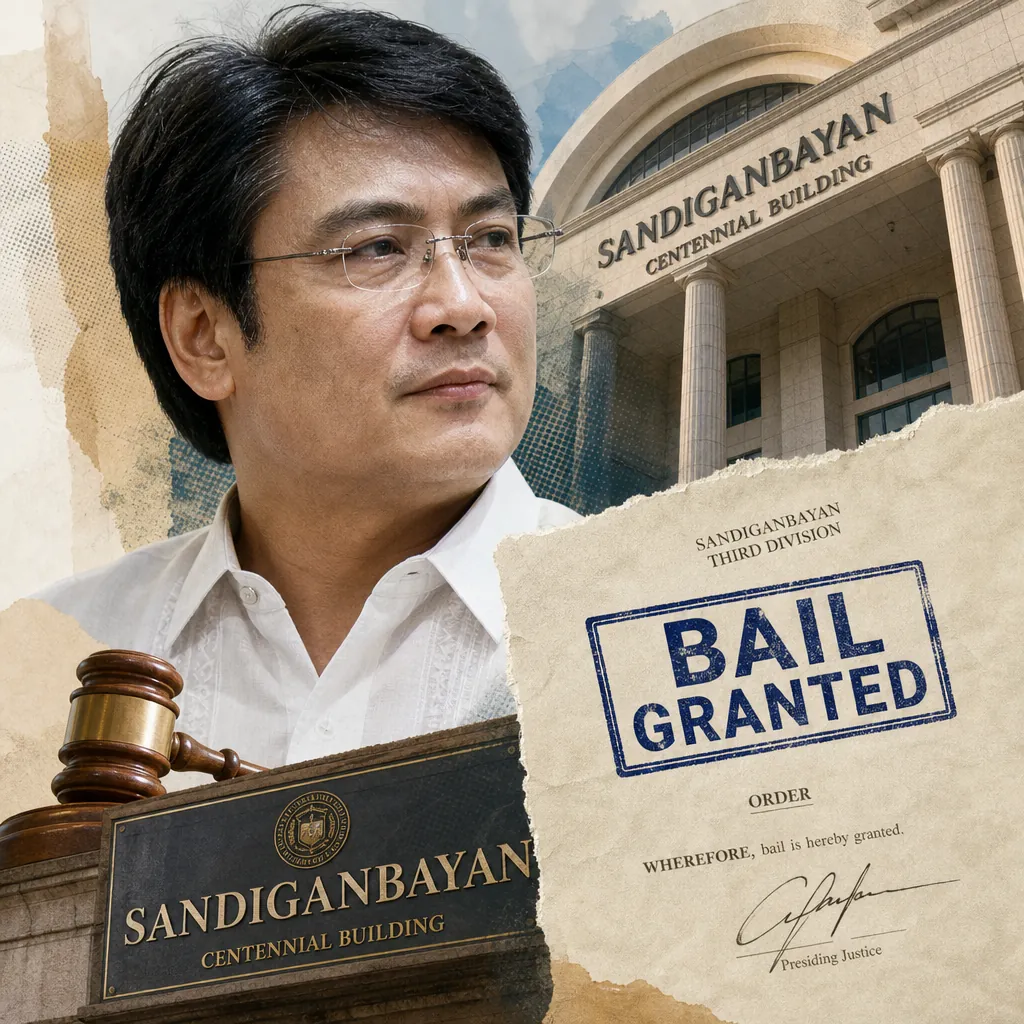
The Sandiganbayan's decision to grant bail to former senator Bong Revilla was the day's most significant legal development. Revilla had been detained since January 2026 on charges of malversation and graft related to an alleged ghost flood control project in Pandi, Bulacan, worth P92.8 million. The anti-graft court's Third Division ruled that the prosecution failed to establish strong evidence of guilt, a standard required to deny bail in non-bailable offenses. This decision was met with a mix of relief from Revilla's supporters and criticism from those who saw it as a setback in the fight against corruption.
Revilla's legal counsel, Atty. Rean Balisi, framed the decision as a vindication, stating, "From the beginning, former Sen. Bong Revilla placed his trust in the judicial system. This resolution of the Court to grant him bail affirms the truth that the evidence of guilt is not strong." Revilla himself posted "Thank you Lord" on Facebook, signaling his gratitude and relief. The decision also highlighted the court's role in protecting the rights of the accused, even in high-profile cases, and underscored the importance of evidence-based judgments.
However, the court denied bail to Revilla's six co-accused, all former officials of the Department of Public Works and Highways (DPWH), citing strong evidence of their guilt. This contrast raised questions about the strength of the case against Revilla versus his co-accused, and whether the decision was influenced by his political stature. The case is part of a broader scandal that President Marcos Jr. exposed in his 2025 State of the Nation Address, where he vowed to pursue corruption in the DPWH. The coverage of this story, which spanned multiple outlets and included detailed reporting on the court's reasoning, drew significant public attention, with the Inquirer's article alone carrying an estimated advertising-equivalent value of over P243,000.
The Legarda-Leviste Solar Probe: A New Front in the Anti-Corruption Campaign
The Office of the Ombudsman's decision to open a preliminary investigation into Senator Loren Legarda, her son Rep. Leandro Leviste, and former Energy Secretary Alfonso Cusi marked a significant expansion of the anti-corruption campaign. The case centers on the alleged "Legarda-Leviste Solar Energy Network," where the respondents allegedly conspired to secure exclusive government rights over the country's solar energy resources through legislative and regulatory maneuvering. The Ombudsman claims the scheme resulted in over P10.44 billion in unpaid debts after several projects were not developed as promised.
This case is notable for its political implications, as Legarda is a prominent senator and Leviste is a sitting congressman. The investigation was announced by Ombudsman Jesus Crispin Remulla, who signed the charge sheet for the preliminary investigation. The charges include non-bailable plunder and multiple violations of the Anti-Graft and Corrupt Practices Act. The case also involves allegations that Leviste's firm secured a 25-year legislative franchise to produce and sell solar energy but failed to deliver the power supply promised under the Philippine Energy Plan.
The coverage of this story was extensive, with the Manila Times' headline article carrying an estimated advertising-equivalent value of over P621,000, reflecting its prominence. The case adds to the narrative of a government actively pursuing corruption, but it also raises concerns about the potential for political motivations, given the respondents' ties to the opposition. The preliminary investigation will determine whether there is sufficient evidence to file formal charges, a process that could take months.
Economic Anxiety: Record Debt and Weak Growth Forecast
The day's economic news was dominated by two interrelated stories: the government's record-high debt and a weak GDP growth forecast. The national government's outstanding debt reached P19.07 trillion, a new record, according to data released by the Bureau of the Treasury. This figure, which represents the accumulation of borrowings to fund government operations and infrastructure projects, weighed on investor sentiment and contributed to the stock market's decline.
Bank of the Philippine Islands (BPI) lead economist Emilio Neri Jr. forecast that second-quarter GDP growth likely slowed to 1.9 percent, the weakest since 2009, excluding the pandemic years. Neri attributed this to a sharp contraction in public infrastructure spending, which fell by 43.4 percent year-on-year in the second quarter, following a 45.4 percent decline in the first quarter. He also cited softer household consumption and private investment amid an ongoing energy shock. This forecast, if accurate, would be a significant setback for the Marcos administration, which has prioritized infrastructure development as a key pillar of its economic agenda.
The stock market's decline, with the PSEi falling 1.10 percent to 6,236.44, reflected these concerns. Investors also weighed the impact of the US-Iran conflict and awaited key economic data releases, including July inflation and second-quarter GDP. The peso strengthened slightly to P61.24 against the US dollar, but foreign investors turned net sellers, with P1.04 billion in net outflows. These economic indicators paint a picture of an economy facing headwinds, with the government's fiscal position under strain.
Infrastructure and Energy: The Administration's Counter-Narrative
Amid the political and economic gloom, the administration pushed forward on several infrastructure and energy initiatives, offering a counter-narrative of progress and development. The Department of Transportation (DoTr) filed 105 expropriation cases to clear right-of-way bottlenecks for the North-South Commuter Railway (NSCR), a flagship rail project that aims to connect Metro Manila to nearby provinces. Transportation Secretary Giovanni Lopez emphasized the project's importance, stating, "The President has directed us to speed up the completion of vital projects such as the North-South Commuter Railway. We will ensure that the project stays on schedule so passengers can begin using it as planned because it will provide significant benefits to our commuters."
In the energy sector, President Marcos Jr. signed Executive Order No. 121, creating the Electric Vehicle Incentive Strategy (EVIS) Program, a P60-billion initiative to encourage the local manufacture of electric and hybrid vehicles. The program provides fiscal incentives to manufacturers, aiming to expand domestic EV production, create jobs, and reduce dependence on imported fossil fuels. The order operationalizes the Electric Vehicle Industry Development Act (EVIDA), which was passed in 2022. The launch of the EVIS program was covered by blogs and online news, with the Astig Ph Online article carrying an estimated advertising-equivalent value of over P429,000.
The government also inaugurated the country's first energy museum at the Department of Energy headquarters, an interactive facility designed to educate the public about the power sector. Energy Secretary Sharon Garin called it "the first milestone in the Department of Energy's vision of investing in people, knowledge and innovation." These initiatives, while not as attention-grabbing as the corruption cases, demonstrate the administration's efforts to advance its policy agenda despite the challenges.
Water and Climate Resilience: A Growing Concern
The 2026 Stormwater Summit, held on July 21, brought attention to the need for proactive water management in the face of increasingly extreme weather events. The summit, which was covered by the Manila Times and Head Topics, highlighted the shift from reactionary disaster relief to watershed-based planning. Secretary Christina Garcia Frasco, presidential adviser for sustainable and resilient communities, emphasized the importance of "reducing risks before it becomes a crisis, strengthening preparedness and creating conditions for sustainable development to endure despite increasingly complex challenges."
This theme was reinforced by the day's weather news, as a low-pressure area entered the Philippine Area of Responsibility, bringing scattered rains across the Visayas, Mindanao, and parts of Luzon. The Philippine Atmospheric, Geophysical, and Astronomical Services Administration (PAGASA) reported that the system, while far from the archipelago, could enhance the monsoon, potentially leading to more rainfall. The flooding in Cebu City, captured in a video by Abante News, served as a stark reminder of the vulnerabilities that the summit sought to address.
The water sector also saw positive developments, with Manila Water completing a meter individualization project in Mandaluyong City, benefiting 50 families, and Hiraya Water Corp. launching a P600-million rehabilitation program in Dasmariñas City. These projects, while small in scale, reflect ongoing efforts to improve water services and resilience.
Conversation trajectory
Over the next 4-6 weeks, the conversation is likely to be shaped by several key developments. The preliminary investigation into Senator Loren Legarda and her son will continue, with the Ombudsman expected to gather evidence and hear testimonies. The outcome of this investigation could lead to formal charges, which would further intensify the political drama. Similarly, the trial of Bong Revilla will proceed, with the bail decision allowing him to prepare his defense while free. The public will be watching to see if the prosecution can strengthen its case.
Economically, the release of second-quarter GDP data, scheduled for next week, will be a critical moment. If the forecast of 1.9 percent growth materializes, it could trigger a broader debate about the administration's economic management and the impact of reduced infrastructure spending. The government's response, including any adjustments to its spending plans, will be closely scrutinized. The stock market's reaction to these data releases will also be a key indicator of investor confidence.
The implementation of the EVIS program will be another area to watch, as the government begins to accept applications from manufacturers. The program's success in attracting investment will depend on the clarity of its incentives and the ease of doing business. Similarly, the Pax Silica project will continue to generate debate, with the government open to revising its provisions. Public consultations and environmental assessments could shape the project's final form.
Trigger events to monitor include: the Ombudsman's decision on whether to file formal charges against Legarda and Leviste; the release of second-quarter GDP data; the first approvals under the EVIS program; and any major weather events that could test the country's water management systems. These events will likely dominate the news cycle and shape the public conversation in the coming weeks.
Response guidance
For communicators in the public sector and related industries, the day's events underscore the importance of transparency and proactive communication. The anti-corruption narrative is powerful, and organizations should be prepared to address questions about their own integrity and accountability. Key messages should emphasize a commitment to ethical practices, compliance with laws, and responsiveness to public concerns.
On the economic front, communicators should be prepared to explain the factors behind weak growth and high debt, while highlighting the administration's efforts to address these challenges. Clear, data-driven messaging can help manage public expectations and maintain confidence in the government's economic management. It is also important to communicate the long-term benefits of infrastructure projects, even as short-term spending constraints are acknowledged.
For energy and infrastructure projects, engaging with local communities and addressing environmental concerns is crucial. The Pax Silica debate shows that public skepticism can be significant, and proactive engagement can help build trust. Communicators should provide clear information about the benefits and risks of projects, and be open to feedback and adjustments.
Finally, in times of crisis, such as flooding or other natural disasters, timely and accurate information is essential. The public relies on official sources for guidance, and communicators should ensure that information is accessible and actionable. Building resilience through proactive communication can help mitigate the impact of such events and strengthen public trust.
See the full picture behind today's signals.
This report draws from Media Meter's MediaWatch, our real-time monitoring engine tracking 2,470+ Philippine sources across print, broadcast, digital, and social. Explore how the platform turns raw coverage into decision-grade intelligence, then see how it's configured for teams like yours — whether you're in PR agencies, corporate comms, government, or marketing.
Want more? Browse our Report Library for sector and crisis intelligence, or request a demo and we'll have your brand set up before the call.
Want this kind of intelligence on your brand?
This brief is built on the same MediaWatch methodology that runs continuously across every brand we monitor. See your competitive landscape, Impact Score, and narrative trajectory in a 30-minute demo.