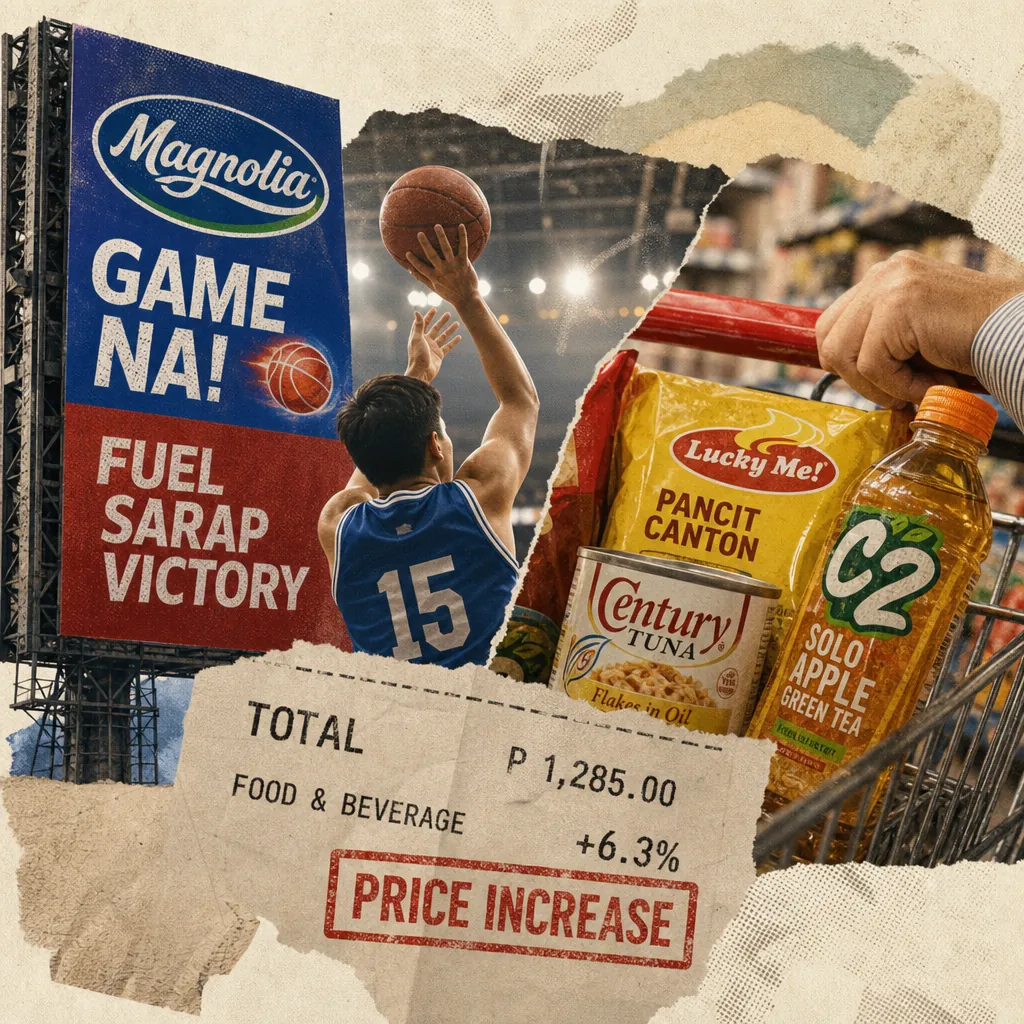
Philippine food sector faces price volatility, ASF threat, and regulatory scrutiny
This snapshot covers the June 14-15 conversation around Philippine food prices, African Swine Fever, animal vaccine development, and regulatory oversight, highlighting consumer anxiety, government response, and industry implications.
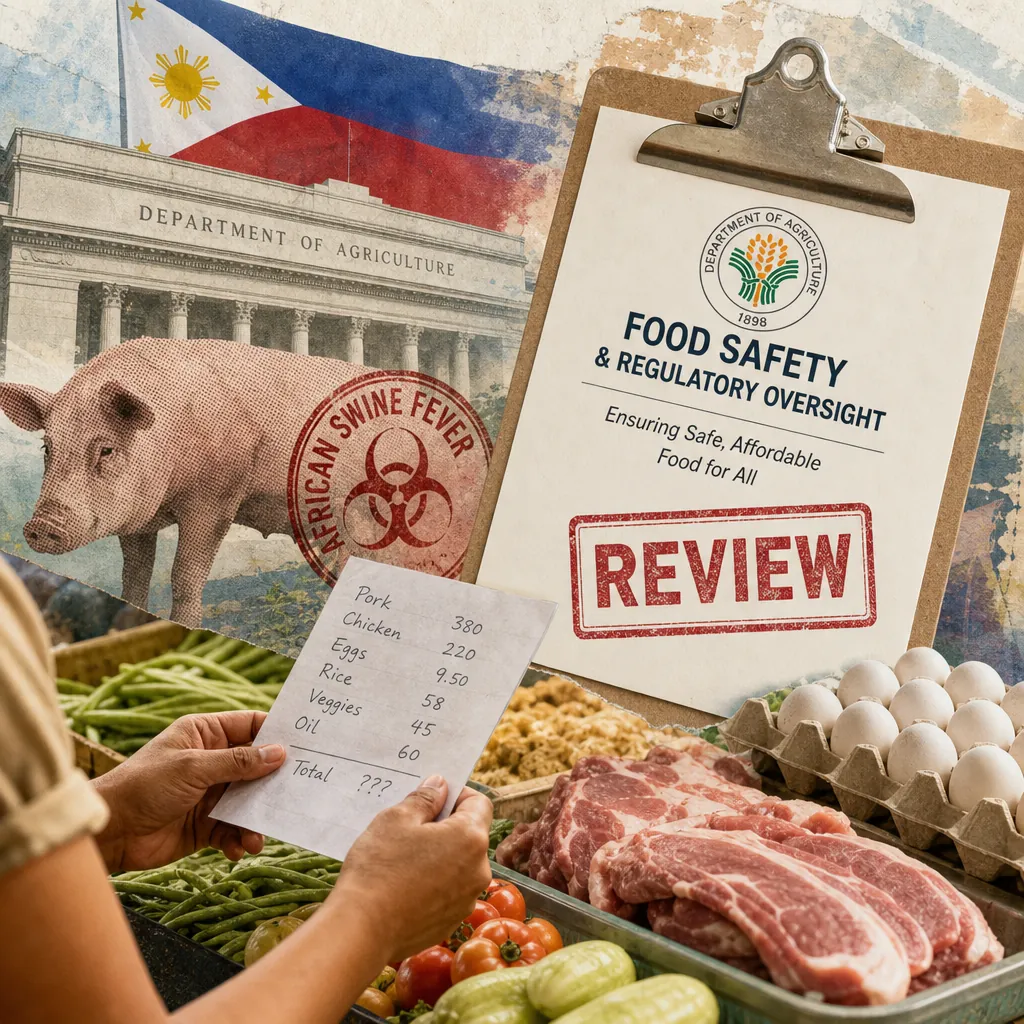
The conversation around food in the Philippines on June 14 and 15, 2026, was shaped by three distinct but interconnected threads: volatile retail prices for meat and fish at public markets, the government's intensified response to African Swine Fever (ASF) and other livestock diseases, and a broader regulatory backdrop involving the Department of Trade and Industry (DTI) price monitoring and consumer protection. While no single viral moment dominated, the cumulative signal was one of quiet consumer anxiety and proactive government action, with implications for food companies, retailers, and policymakers.
On Sunday, June 14, RMN Manila's dzxlnews posted its "Palengke Watch" report detailing pork, chicken, beef, and fish prices at San Andres Market in Manila. The post highlighted a notable divergence: pork cuts like liempo remained high at P430 per kilogram while some items like frozen pork were slightly cheaper. Engagement was low—only 5 likes and 1 care reaction—indicating this was a factual update rather than a spark for widespread debate. However, the single "care" reaction suggests that budget-conscious consumers were closely monitoring these figures. The following morning on Monday, June 15, GMA News' Unang Balita segment released a YouTube video titled "Presyo ng baboy at hipon sa San Andres Market, bumaba; presyo ng isda, manok, at..." which reported a contrasting trend: pork and shrimp prices had dropped, while fish, chicken, and beef saw increases. This immediate counter-narrative—from the same market yet showing opposite movements—created a subtle tension in the evolving discussion, though the video's modest 519 views and 7 likes suggest the conversation stayed within niche audience circles rather than going viral.
Meanwhile, the Department of Agriculture (DA) made several announcements that dominated the food policy conversation. On June 15, Agriculture Secretary Francisco Tiu Laurel Jr. launched the Animal Vaccine Development Program (AVDP), a P140.9-million initiative to develop locally produced vaccines for African Swine Fever (ASF) and foot-and-mouth disease (FMD). The program, a collaboration among the DA's National Livestock Program, the Bureau of Animal Industry (BAI), the Philippine Carabao Center (PCC), and Central Luzon State University (CLSU), aims to strengthen the country's long-term disease defenses and reduce reliance on imported vaccines. The DA also announced intensified efforts to rebuild the country's hog population, which has yet to recover from ASF—from an estimated 13 million heads in 2019 to just 8.75 million in 2025. These announcements were covered by multiple news outlets, including BusinessWorld, Malaya Business Insight, SunStar, and the Daily Tribune, indicating a coordinated government communications push.
Adding to the regulatory landscape, a legal commentator and consumer advocate posted about DTI permit requirements for social media boosting, generating over 20,000 likes and 2,100 comments. While not directly about food, this post signals heightened public interest in DTI's consumer protection role, which could extend to food labeling and pricing oversight. Separately, the DTI itself promoted a price guide for school supplies, reinforcing its commitment to affordability.
Conversation snapshot. The food price conversation was driven by two news posts: a Facebook post from dzxlnews on June 14 with 5 likes and 1 care reaction, and a YouTube video from GMA News on June 15 with 519 views and 7 likes. The DTI permit post by a legal commentator received over 20,000 likes and 2,100 comments, making it the highest-engagement post in the dataset. The DTI school supplies price guide post received 12 likes and 2 shares. The DA's animal vaccine program was covered by at least six news outlets, with articles from BusinessWorld, Malaya Business Insight, SunStar, Daily Tribune, Manila Bulletin, and Context.ph. The hog repopulation story was covered by the Daily Tribune, Context.ph, and Malaya Business Insight.
Key themes
- Volatile meat and fish prices at public markets – Two consecutive reports from San Andres Market showed conflicting price movements: pork and shrimp falling, while chicken, fish, and beef rose. This inconsistency suggests high volatility and potential consumer confusion.
- Government launches P140.9-million animal vaccine program – The DA's AVDP aims to develop local vaccines for ASF and FMD, with a Biosafety Level 3 facility to handle high-risk pathogens. The program is funded over three years: P77.6 million in 2026, P30.6 million in 2027, and P32.7 million in 2028.
- Hog repopulation efforts intensify amid ASF – The DA is accelerating repopulation in ASF-free areas through biosecurity measures and science-based programs, with the hog population still far below pre-ASF levels.
- DTI regulatory scrutiny gains public attention – A post questioning DTI permits for social media boosting attracted massive engagement, indicating consumer interest in regulatory oversight.
- Price freeze in earthquake-affected areas – Following the magnitude 7.8 earthquake in Mindanao, 14 local government units declared a state of calamity, triggering a price freeze on basic goods.
- Fuel price rollback offers mixed relief – Diesel prices dropped by P3.71 per liter, but gasoline rose by P1.68 per liter, creating a mixed impact on food transport costs.
- Sugarcane pest infestation spreads – The red-striped soft scale insect (RSSI) has infested over 2,200 hectares in the Visayas, with the Sugar Regulatory Administration (SRA) deploying drones for insecticide spraying.
How the narratives stack
Dominant narrative – The dominant story is the Philippine government's multi-pronged effort to secure food supply and stabilize prices. The DA's vaccine program and hog repopulation push, combined with DTI price monitoring and the price freeze in calamity areas, paint a picture of a government actively managing food security risks. This narrative is reinforced by consistent coverage across major news outlets.
Counter-narrative – The volatile and sometimes contradictory price reports from public markets suggest that government efforts have not yet translated into stable retail prices for consumers. The conflicting data from San Andres Market—pork prices both high and falling within 24 hours—undermines confidence in price stability and highlights the gap between policy and market reality.
Emerging narrative – Consumer advocacy and regulatory compliance are gaining traction. The high engagement on the DTI permit post indicates that Filipinos are increasingly scrutinizing government oversight of business practices. This could evolve into broader demands for transparency in food labeling, pricing, and advertising.
Suppressed narrative – The ongoing impact of ASF on smallholder farmers and consumers is under-covered relative to its significance. While the DA's vaccine program is a positive step, the hog population has dropped by over 30% since 2019, and 23 new ASF cases were reported in Nueva Vizcaya alone. The human cost—lost livelihoods, higher pork prices—is not reflected in the day's conversation.
Platform insights
Facebook – Facebook was the primary platform for both news dissemination and public engagement. The dzxlnews price post received minimal engagement (5 likes), but the DTI permit post by a legal commentator exploded with over 20,000 likes and 2,100 comments, demonstrating that regulatory topics can generate significant discussion. The DTI's own post received modest engagement (12 likes), suggesting that official accounts may need more compelling content to drive interaction.
YouTube – The GMA News video on market prices received 519 views and 7 likes, indicating a modest but interested audience for detailed price reporting. The platform serves as a secondary channel for news consumption, with lower engagement than Facebook but potential for deeper content.
News websites – The DA's announcements were covered extensively by online news outlets, with at least six different publications running articles. This suggests that traditional media remains the primary channel for policy communication, with social media serving as a distribution and discussion layer.
Key voices and communities
Government agencies (DA, DTI, SRA) – The Department of Agriculture, Department of Trade and Industry, and Sugar Regulatory Administration are the primary institutional voices, issuing statements and launching programs. Their messaging is factual and policy-oriented, with moderate social engagement but high credibility.
Legal and consumer rights advocates – A legal commentator's post about DTI permits generated the highest engagement in the dataset, indicating a vocal community interested in regulatory compliance and consumer protection. This group can amplify or challenge government messaging.
Price-sensitive consumers – The audience engaging with palengke price posts represents a broad, cost-conscious segment that actively monitors food inflation. Their reactions—primarily likes, shares, and occasional "care" responses—indicate emotional investment in affordability, though they generate minimal original content.
News media (RMN, GMA, BusinessWorld, etc.) – Traditional and online news outlets are the primary drivers of structured information about food prices and policy. Their content is factual and neutral, serving as intermediaries between government and the public.
Agricultural stakeholders (farmers, hog raisers, sugar planters) – While not directly posting in this dataset, these groups are implied by the DA's announcements and the RSSI infestation reports. Their concerns about ASF, pest outbreaks, and market prices shape the policy response.
Narrative streams
Volatile market prices and consumer anxiety
Two consecutive reports from San Andres Market in Manila illustrate the volatility of retail food prices. On June 14, dzxlnews reported pork liempo at P430/kg, kasim at P350/kg, whole chicken at P190/kg, and beef at P480/kg. The next day, GMA News reported that pork and shrimp prices had dropped, but fish, chicken, and beef had increased. This apparent contradiction—from the same market—suggests that prices are highly sensitive to daily supply and demand, and that consumers cannot rely on a single snapshot. The low engagement on both posts (5 likes and 519 views respectively) indicates that while price information is being shared, the public is not yet mobilizing outrage or boycott discussions. This quiet concern could later erupt if prices continue to climb, especially as the back-to-school season strains household budgets.
Government's animal vaccine program and ASF response
The DA's launch of the Animal Vaccine Development Program (AVDP) on June 15 marks a significant step in the country's fight against ASF and other livestock diseases. The P140.9-million program, funded over three years, aims to develop vaccines tailored to local virus strains, which could be more effective than imported alternatives. A key component is the establishment of a Biosafety Level 3 facility, which will allow scientists to safely handle high-risk animal pathogens and accelerate vaccine development. The program targets ASF and foot-and-mouth disease (FMD), both of which have devastated the livestock sector. ASF alone has reduced the hog population from 13 million heads in 2019 to 8.75 million in 2025, with slaughter volume dropping from 25.36 million heads in 2020 to 20.74 million in 2025. The DA's intensified hog repopulation efforts, including stronger biosecurity measures and science-based programs, aim to rebuild the sector while keeping pork supplies stable and prices affordable. However, 23 new ASF cases were reported in Nueva Vizcaya, indicating that the virus remains a persistent threat.
DTI regulatory oversight and consumer protection
A post by a legal commentator questioning the need for DTI permits for social media "boosting" attracted over 20,000 likes and 2,100 comments, making it the highest-engagement post in the dataset. This signals strong public interest in DTI's role as a consumer protection gatekeeper. While the post is not directly about food, it reflects a broader sentiment that regulatory compliance matters to consumers. The DTI itself posted about its school supplies price guide, reinforcing its commitment to affordability. For food companies, this regulatory scrutiny could extend to labeling, pricing, and advertising practices. The DTI's active price monitoring framework, currently applied to school supplies, could be extended to food commodities if public pressure increases.
Sugarcane pest infestation and SRA response
The Sugar Regulatory Administration (SRA) reported that the red-striped soft scale insect (RSSI) has infested over 2,200 hectares of sugarcane in the Visayas, affecting 1,108 farmers in 195 barangays. Negros Occidental is the hardest-hit province, with over 2,000 hectares infested. The SRA has deployed drones to spray insecticides, using a combination of contact and systemic chemicals. The infestation, first detected in May 2025, is expanding rapidly, with affected area increasing by approximately 460 hectares in one week. This poses a significant threat to sugar production and farmer livelihoods.
Conversation trajectory
Next 1-2 weeks: Fuel rollback effect on food prices – The diesel price rollback of P3.71 per liter, effective June 16, may lead to lower transport costs for food. Consumers will likely ask whether this translates to lower palengke prices. If prices do not drop, frustration could mount. Brands and retailers should prepare to explain the lag between fuel costs and retail prices.
Next 4-6 weeks: Back-to-school season and household budgets – As the school year approaches, household budgets will be strained, making food price sensitivity even more acute. The DTI's school supplies price monitoring could serve as a template for food price monitoring. Expect increased conversation around value meals and budget-friendly options.
Next 2-3 months: Q2 earnings and ASF vaccine progress – The DA's vaccine program will take time to yield results, but any progress updates will be closely watched. Meanwhile, Q2 earnings for food companies like Jollibee will be scrutinized for margin pressure and pricing strategies.
Trigger events to watch – The official DOE announcement of final fuel price adjustments; the release of the weekly food price index by DTI or PSA; any new ASF outbreaks or contamination reports; the inauguration of the Maragondon Jollibee branch; and the Q2 earnings release for Jollibee Foods Corporation.
Response guidance
Platform approaches – On Facebook, share practical budget meal tips that reference current market prices, positioning the brand as empathetic to consumer cost concerns. On YouTube, produce short "Price Check" videos contrasting raw ingredient costs with prepared meal prices. On Twitter, post infographics showing that despite price upticks, certain menu items have remained at the same price point.
Key messages – "We see the same market numbers you do—pork at P350/kg and chicken at P190/kg—and we are committed to keeping our meals accessible without reducing quality." "Our menu prices are based on long-term sourcing agreements, not short-term market spikes." "With fuel costs easing, we are reviewing logistics savings to pass on where possible."
Sensitive topics to navigate – Avoid trivializing consumer pain. Do not overstate the fuel rollback as major cost relief. Be transparent about any portion changes or price adjustments to avoid shrinkflation accusations.
See the full picture behind today's signals.
This report draws from Media Meter's MediaWatch, our real-time monitoring engine tracking 2,470+ Philippine sources across print, broadcast, digital, and social. Explore how the platform turns raw coverage into decision-grade intelligence, then see how it's configured for teams like yours — whether you're in PR agencies, corporate comms, government, or marketing.
Want more? Browse our Report Library for sector and crisis intelligence, or request a demo and we'll have your brand set up before the call.
Want this kind of intelligence on your brand?
This brief is built on the same MediaWatch methodology that runs continuously across every brand we monitor. See your competitive landscape, Impact Score, and narrative trajectory in a 30-minute demo.