Philippine school violence crisis spurs policy debate and safety measures
A wave of school shootings and stabbings in the Philippines has triggered public grief, political debate over juvenile justice reform, and government safety responses, with implications for community trust and real estate sentiment in affected areas.
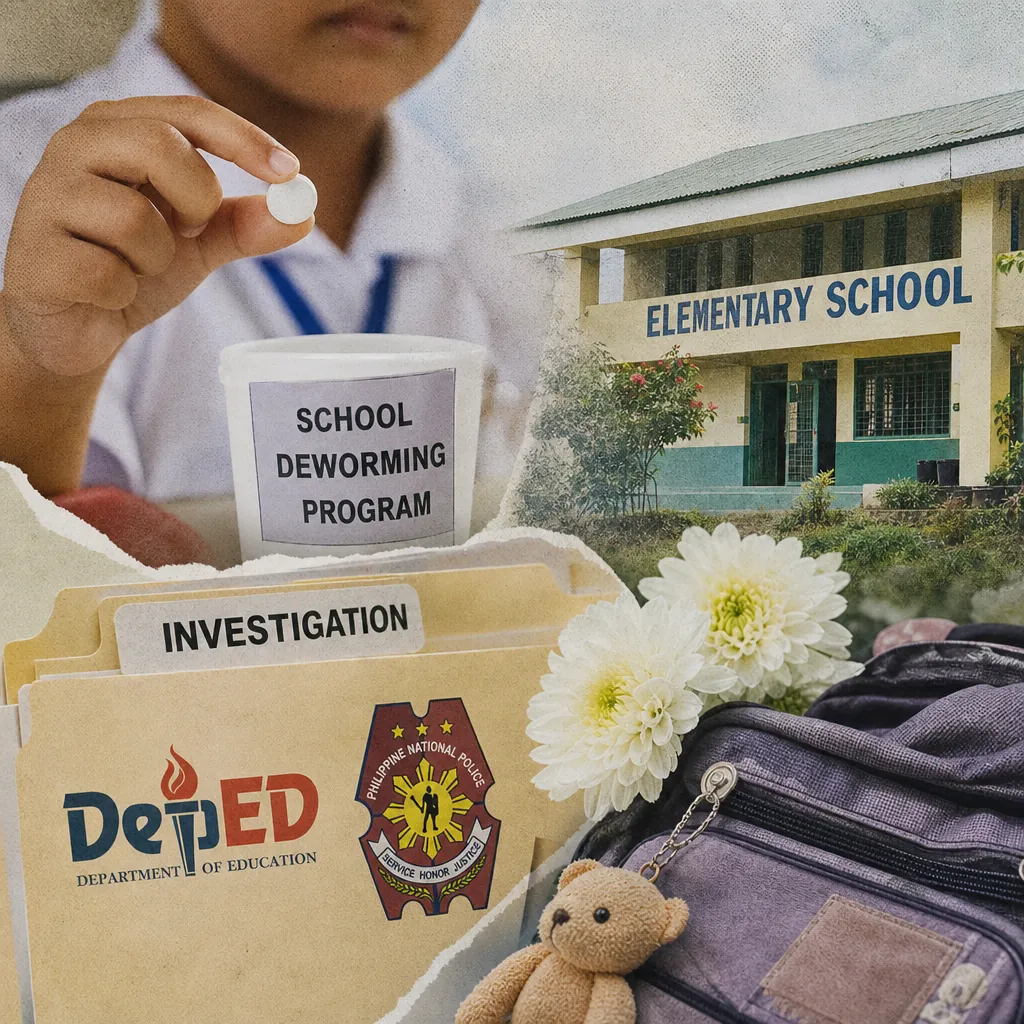
The conversation erupted on June 22 when phemergencyalerts reported a school shooting at San Jose National High School in Tacloban City, killing three students and injuring 13 others, with suspects identified as Grade 9 schoolmates. This post, accumulating 1,954 likes and 8,874 shares within hours, immediately triggered a wave of shock and grief across Facebook, as indicated by 8,340 sad reactions and 157 angry reactions. The post also contextualized two prior stabbings in Cavite: a June 16 incident at a private school in General Trias where a Grade 8 student injured seven Grade 5 pupils, and a June 19 stabbing at Cavite National High School injuring a Grade 11 student. By the next day, June 23, worthsharingmedia amplified the narrative by describing the June 16 attack as "a classroom turned into a scene of panic," citing CCTV footage of the female suspect entering the classroom and stabbing seven younger students, with two requiring surgery. This post drew 3,460 sad reactions and 1,015 angry reactions, underscoring growing public outrage. At around the same time, pnp.pio released an official statement on June 23 assuring the public that the Philippine National Police (PNP) was investigating and coordinating with the Department of Education (DepEd), with PNP Chief Nartatez extending condolences and urging calm—the post earned 10,756 likes and 6,122 comments, reflecting both approval and demand for action.
By mid-week, the conversation shifted from raw grief to institutional responses and controversies. On June 23, the Commission on Human Rights (CHR) announced a motu proprio investigation into all three incidents, with CHR emphasizing that school violence is a "direct assault on the fundamental rights of children." The same day, Liga ng mga Barangay President issued a statement linking the tragedies to the "Magalang na Pinoy" values revival movement, calling on barangay leaders to engage youth in positive activities—though this post received only 14 likes, indicating limited grassroots traction. Meanwhile, phbiblesociety posted a prayer for the victims, accumulating 907 likes and 466 love reactions, showing that spiritual coping was a significant parallel narrative. A critical turning point came on June 24 when tribunephl published an opinion piece challenging Senator Robin Padilla's characterization of youth as "weak" and his renewed call to lower the criminal liability age. The post argued that "these incidents suggest that many are angry, troubled, neglected or failed by the adults around them," sparking a debate that pitted punitive measures against systemic mental health interventions. Simultaneously, Brigada News FM reported that Senate President Win Gatchalian would file a resolution declaring a "crisis" of school violence, seeking to assess the problem's severity and identify solutions. The PNP also escalated its response on June 24, directing the Anti-Cybercrime Group to coordinate with social media platforms to remove graphic videos of the incidents, with multiple news outlets—manilabulletin, inquirerdotnet, and sunstarcebu—reporting the appeal to stop sharing sensitive content. This created a secondary conversation about digital ethics, trauma, and the right to information.
On Reddit, the narrative evolved more slowly but with analytical depth. On June 23, abantenewsph shared a Tagalog report of the Cavite stabbing, garnering 345 likes and 51 comments—a relatively moderate engagement but a higher comment-to-upvote ratio, suggesting substantive discussion. The same day, gmaintegratednews posted CHR's statement on Reddit, though it received only 3 upvotes and no comments, indicating that Reddit's audience was less engaged with official responses compared to Facebook's broad reach. By June 24, three Twitter threads from major outlets—manilabulletin, inquirerdotnet—amplified the PNP's plea to stop sharing footage, with each tweet collecting only 1–2 likes but view counts around 1,200 to 1,600, showing passive consumption rather than active discussion. On Facebook, several smaller accounts like mylenepearl04catolico posted the CCTV footage itself, accumulating 296 likes but 131 comments—many likely debating the ethics of sharing. The Teachers' Dignity Coalition also expressed alarm on June 24, though their post received minimal engagement (2 likes, 1 comment), suggesting that educator voices were underrepresented in the broader public conversation.
Key themes
- Immediate shock and grief – The earliest posts focused on raw emotional reactions, with phemergencyalerts' breaking news receiving 8,874 shares and 8,340 sad reactions, signaling a massive wave of collective mourning. Worthsharingmedia's detailed retelling of the June 16 Cavite attack deepened the sense of betrayal, as the classroom was described as a place "where children are expected to be safe." This theme dominated the first 24 hours, with no critical analysis yet, only shared grief and anger.
- Calls for accountability and institutional response – Following the initial shock, official statements from the PNP, CHR, and Liga ng mga Barangay poured in on June 23. The PNP's post gained 10,756 likes and 6,122 comments, the highest engagement of any official communication, indicating public appetite for government action but also intense scrutiny in comments. By June 24, Senator Gatchalian declared a "crisis" and promised a resolution, while the CHR launched a motu proprio investigation—these moves were largely welcomed but also prompted skepticism, as evidenced by the 24 haha reactions on Gatchalian's coverage, possibly mocking political posturing.
- Debate on youth criminal liability vs. mental health – The most contentious narrative thread emerged on June 24 when tribunephl directly challenged Senator Padilla's framing of youth as "weak" and his push to lower the age of criminal liability. The post argued that "if children are committing increasingly violent acts, perhaps lawmakers should first ask why schools lack enough counselors." This triggered a polarized online debate: comments on the post (15 comments) and the 12 haha reactions suggest both amusement and derision toward Padilla, while the 5 shares indicate limited viral spread but high emotional charge. This thread connected the school violence to deeper issues of mental health neglect and bullying, a shift from mere tragedy to systemic critique.
- Concerns over graphic content and digital ethics – By mid-week, the PNP's appeal to stop sharing violent videos became a major secondary theme. Multiple outlets reported the directive, and the Anti-Cybercrime Group was tasked with content removal. However, some individual accounts had already posted the CCTV footage, such as mylenepearl04catolico, whose post garnered 84 angry reactions and 131 comments, indicating that while many condemned sharing, the act itself generated further engagement. This created a tension between the public's right to know and the harmful re-traumatization of victims.
- Spiritual and values-based framing – A quieter but persistent thread came from religious and civic groups. phbiblesociety's prayer post received 466 love reactions and 907 likes, showing that many users sought comfort in faith. The Liga ng mga Barangay's "Magalang na Pinoy" call, though low-engagement, represented an attempt to frame the solution in terms of traditional Filipino values. This theme did not generate debate but instead offered a parallel coping mechanism, visible most strongly on Facebook where communities often share religious content.
- Political blame-shifting – A distinct thread emerged on June 23 when Barzaga sarcastically asked when Usec. Claire Castro would "blame Duterte" for the school shooting, a post that received zero engagement but was picked up by the page masangpilipinoph. Simultaneously, a separate political feud between Mike Defensor and NBI Director Matibag—over a ₱1.2-billion flood control project in Cavite—captured 953 likes and 80 haha reactions, diverting attention from the violence toward corruption narratives.
- School safety and government accountability – On June 23, the Liga ng mga Barangay's official statement struck a somber tone, garnering only 14 likes but 7 sad reactions, reflecting genuine public mourning. By June 24, the media platform pnagovph posted photos of SWAT personnel guarding Araullo High School in Manila, signaling a concrete security response that received 20 likes and 4 shares. However, the Reddit post questioning Remulla's data showed that trust in authorities had already eroded.
- Calls for juvenile justice reform – This theme emerged on June 23 when Barzaga first linked the Tacloban shooting to weaknesses in the Juvenile Justice and Welfare Act. By June 24, his "bulletproof vest" joke went viral, drawing 829 haha reactions and 80 comments, with supporters amplifying his demand to lower the age of criminal liability. The PNP's appeal to stop circulating violent videos, posted later that day, was overshadowed by this heated legislative debate.
How the narratives stack
- Dominant narrative – The story most readers would recognize is that a shocking wave of school violence—a shooting in Tacloban and stabbings in Cavite—has exposed deep failures in child protection and school safety. Public grief is intense, and the dominant demand is for immediate government action, whether through stricter laws, better security, or mental health support. The PNP and DepEd are seen as the primary responders, but their efforts are met with both approval and skepticism.
- Counter-narrative – A significant counter-narrative, driven by former Congressman Kiko Barzaga and amplified by his viral posts, argues that the root cause is the Juvenile Justice and Welfare Act, which he claims protects young offenders from accountability. His sarcastic suggestion to give bulletproof vests instead of school bags resonated with many, drawing 829 haha reactions. This narrative pushes for lowering the age of criminal liability, pitting punitive measures against calls for mental health interventions. The Reddit post questioning Secretary Remulla's safety claims further fuels skepticism toward official data.
- Emerging narrative – A growing thread, led by the Commission on Human Rights and opinion pieces like tribunephl's, frames the violence as a symptom of systemic neglect—lack of school counselors, bullying, and failure of adults to address troubled youth. This narrative is gaining traction among more analytical audiences, particularly on Reddit, and could shift the conversation from punishment to prevention. The CHR's motu proprio investigation signals that this perspective is being taken seriously at the institutional level.
- Suppressed narrative – The voices of educators and mental health professionals are notably absent from the mainstream conversation. The Teachers' Dignity Coalition's post received only 2 likes and 1 comment, suggesting that teacher perspectives are being drowned out by political and emotional reactions. Similarly, the Liga ng mga Barangay's values-based approach, which emphasizes community and family, received minimal engagement (14 likes), indicating that softer, preventive solutions are not capturing public attention. This suppression of educator and community voices means that practical, on-the-ground solutions may be overlooked in favor of punitive or political responses.
Platform insights
- Facebook – The dominant platform for emotional expression and rapid dissemination. The breaking news from phemergencyalerts on June 22 set the tone, and official responses from pnp.pio on June 23 generated the highest comment count (6,122), indicating public demand for dialogue with authorities. By June 24, smaller influencers like mylenepearl04catolico kept the graphic content alive, while news pages like inquirerdotnet and manilabulletin drove the "stop sharing" narrative, albeit with lower engagement (1–2 likes each) because the call-to-action was passive. Facebook's algorithm amplified emotionally charged content, with sad and angry reactions dominating.
- Twitter – Used primarily by news outlets to link to longer articles, with manilabulletin and inquirerdotnet posting one-sentence alerts on June 24. Engagement was minimal—likes rarely exceeded 2—but view counts ranged from 1,194 to 1,642, suggesting that Twitter served more as a headline aggregator than a discussion space for this topic. No user-generated debate was evident in the provided data.
- Reddit – Conversations started a day later (June 23) and were more text-heavy but lower in volume. abantenewsph's Tagalog report of the Cavite stabbing attracted 51 comments, many likely in Filipino, making it the most comment-rich Reddit post. The gmaintegratednews post of the CHR statement received zero comments, indicating that Reddit users preferred original reporting over reposted official statements. Overall, Reddit functioned as a niche platform for deeper dives rather than viral spread.
Key voices and communities
- Government and law enforcement agencies – Official accounts from the PNP, DepEd, and the Council for the Welfare of Children dominate the conversation with coordinated messaging around school safety and child protection. Their content receives moderate engagement but carries institutional authority, with the PNP's rescue operation post reaching over 5,300 likes and 3,000 comments. Their primary framing focuses on operational response, victim protection, and appeals to avoid sharing graphic content.
- Political figures and former legislators – Former Cavite Representative Kiko Barzaga appears prominently across multiple posts, using provocative humor and direct calls to amend the Juvenile Justice Law in response to school shootings. His posts generate high engagement (over 800 "haha" reactions on a single post) and are amplified by media outlets. Another political figure, former QC Representative Mike Defensor, redirects attention to corruption allegations against NBI leadership.
- Media and news aggregators – Traditional news outlets (GMA News, PNA, DWIZ) and alternative media pages (Balitang Ayon, Saksing Ayon, Archlight News) form a dense ecosystem that amplifies official statements and political remarks. Their posts typically receive low direct engagement (under 100 reactions) but serve as primary information nodes that shape public understanding of events.
- Civil society and advocacy groups – The Liga ng mga Barangay sa Pilipinas and the Council for the Welfare of Children introduced a values-based, community-oriented narrative focused on prevention and rehabilitation rather than punitive measures. These posts receive lower engagement (under 100 reactions) but carry moral authority and represent organized civil society voices.
- General public and commenting communities – Reddit users and Facebook commenters form a reactive stakeholder group that questions official narratives and political statements. One Reddit post explicitly challenged Secretary Remulla's claim that the Philippines is safer, using the recent incidents as counter-evidence. This post received 32 upvotes and 13 comments, indicating a small but engaged audience that amplifies skepticism.
Narrative streams
The Tacloban shooting and Cavite stabbings
The immediate trigger for the conversation was the June 22 shooting at San Jose National High School in Tacloban City, where two Grade 9 students opened fire, killing three and injuring 13. This was preceded by two stabbing incidents in Cavite: on June 16, a Grade 8 student at a private school in General Trias injured seven Grade 5 pupils, and on June 19, a Grade 11 student was stabbed at Cavite National High School. The clustering of these events within a week created a sense of crisis, with the Liga ng mga Barangay later chronicling five separate incidents from June 12 to June 22, including a teacher killed in Bacolod. The framing shifted from isolated tragedies to a pattern of school violence, prompting widespread calls for action.
The juvenile justice reform debate
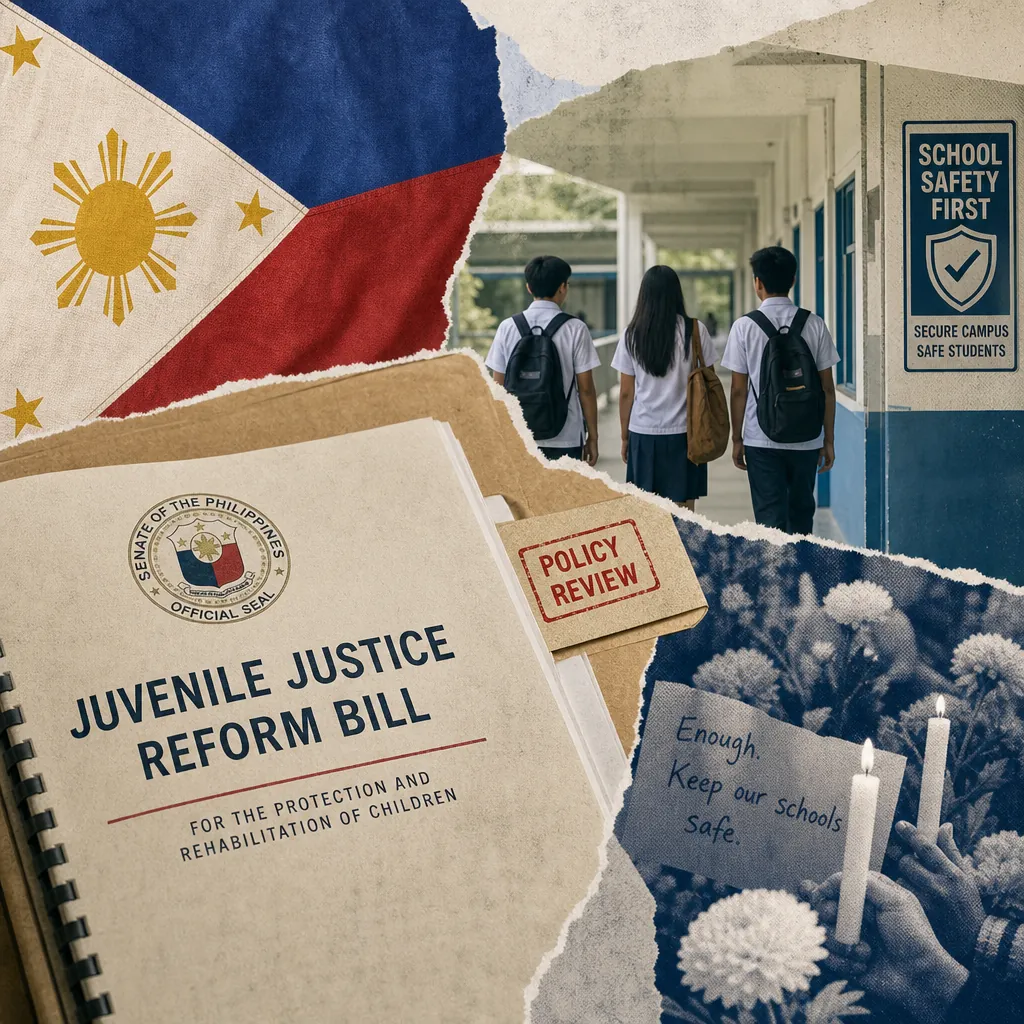
Former Congressman Kiko Barzaga emerged as a key voice linking the violence to the Juvenile Justice and Welfare Act, which he argues is too lenient on young offenders. His June 23 post stating "Children who became drug dependents before are now becoming school shooters" ignited debate, and his June 24 sarcastic post about giving bulletproof vests instead of school bags drew 829 haha reactions, indicating a mix of grim humor and frustration. This narrative pushes for lowering the age of criminal liability, a position that has gained traction among some segments of the public but is countered by the CHR and opinion writers who argue for mental health interventions.
Government response and security measures
The PNP and DepEd have responded with increased security measures, including SWAT deployments at schools and stricter bag inspections. The PNP also appealed to the public to stop sharing graphic videos of the incidents, directing the Anti-Cybercrime Group to coordinate with social media platforms for content removal. Senator Gatchalian filed a resolution declaring a "crisis" of school violence, and the House of Representatives launched an investigation. These moves signal a coordinated institutional response, but public trust remains fragile, as evidenced by the Reddit post questioning official safety data.
Broader context: community safety and real estate implications
While the conversation is primarily about school violence, it has indirect implications for the real estate sector, particularly in areas like Cavite and Tacloban where incidents occurred. These are key growth corridors for housing developments, and the narrative of unsafe schools could influence family-oriented homebuyer sentiment. Developers with projects in these areas may face increased scrutiny of community safety features, such as gated access, CCTV, and proximity to emergency services. The PNP's focus on mental health and community values, as well as the Liga ng mga Barangay's "Magalang na Pinoy" movement, suggests that preventive, community-based solutions are being considered, which could align with developer branding around "liveable townships." However, no developer-linked voices have entered the conversation to reassure buyers about local safety infrastructure, representing a potential gap in crisis communication.
Conversation trajectory
- Next 2–4 weeks: Intensified policy debate and legislative action – The House investigation and Senate resolution will likely dominate the conversation, with hearings and proposed amendments to the Juvenile Justice and Welfare Act. Expect increased polarization between punitive and preventive camps, with Barzaga and Padilla pushing for lower criminal liability age, while CHR and civil society groups advocate for mental health funding. Developers should monitor for any proposed zoning or building code changes related to school safety.
- Next 4–6 weeks: School reopening and safety concerns – As the new school year approaches, parental anxiety will peak, and media coverage will likely focus on school security measures. This could lead to increased demand for residential properties in areas perceived as safe, with gated communities and subdivisions with strong security features gaining preference. Developers in Cavite and Tacloban should prepare to address safety concerns proactively.
- Next 2–3 months: Potential for narrative shift to broader community safety – If the violence continues or if investigations reveal systemic failures, the conversation could expand to include broader community safety issues, such as flooding, crime, and infrastructure. The Bulacan flooding narrative, which has already surfaced in connection with real estate, could merge with the school violence story to create a broader perception of unsafe living conditions in certain areas. Developers should be prepared to communicate their investments in drainage, flood control, and community security.
- Trigger events that would reshape the conversation – Any new violent incident, especially in a different region, would reignite the crisis narrative. A major policy announcement, such as a presidential directive on school safety or a Supreme Court ruling on juvenile justice, could shift the debate. Additionally, the onset of the rainy season and potential flooding in Bulacan and Cavite could merge the school violence and infrastructure narratives, amplifying concerns about overall community safety.
Response guidance
Platform-specific approaches
- Facebook – Deploy localized, factual posts addressing safety concerns in affected areas by highlighting community security features (e.g., gated access, CCTV, 24-hour security). Use community engagement posts that invite residents to share their safety experiences, then respond with transparent site-level data. Share third-party certifications or endorsements from security experts to counter negative narratives. Avoid direct commentary on school violence unless the developer operates properties adjacent to affected schools; if so, focus on safety infrastructure contributions without politicizing the tragedy.
- Twitter – Engage with official announcements from the PNP, DepEd, and local government units by retweeting and adding concise proactive updates about how your communities integrate with these programs. Create a thread titled "Community Safety: What We Do Beyond Compliance" that explains security protocols and partnerships with local law enforcement. Monitor and respond to tweets using keywords like "Cavite safety" or "school violence" with a short, empathetic acknowledgment followed by a link to a detailed FAQ page.
- Reddit – If threads appear on r/Philippines or r/phinvest discussing safety in relation to location (e.g., "Is Cavite safe now?"), provide factual, non-political responses that mention property-related factors such as gated access, guard services, and proximity to emergency services. Do not directly rebut users who criticize government safety data.
Key messages
- "Our developments are designed with secure perimeters, 24-hour surveillance, and designated play areas that promote a safe environment for children and families."
- "We comply with all DHSUD, Pag-IBIG, and local building permit requirements to ensure that every unit meets structural and safety standards before turnover."
- "Community partnerships with barangay officials and local police help maintain peace of mind for homeowners—this is part of our long-term commitment to responsible township development."
- "Recent events remind us that safety starts at home; we regularly review and upgrade our security protocols to adapt to evolving community needs."
Sensitive topics to navigate
- School violence and youth crime – Avoid any commentary linking these incidents to specific locations where projects are sited. Do not use tragedies to market "security" features. Instead, focus on general well-being and community design.
- Political statements by local figures (e.g., Barzaga, Defensor) – Do not reference or endorse any politician's position on juvenile justice or flood control, as these are polarizing topics that can distract from real estate messaging.
- Agrarian reform and land conversion – If discussions arise about land titles or DAR conversion, respond only with factual references to clean titles and CLUP compliance, without venturing into agrarian politics.
Response priorities
- Proactively publish content on safety infrastructure across owned channels (website, Facebook page) within the next week. Use this to occupy positive search real estate before negative narratives solidify.
- Monitor geo-specific conversations around Cavite, Laguna, and Bulacan for any real estate–related concerns (flooding, construction defects). Deploy a rapid-response template for factual corrections.
- Train community managers to recognize and disengage from political baiting. All replies should redirect to property-specific questions (e.g., "How can I learn more about your security features?").
Example language for common scenarios
- When a user raises safety concerns in a project location: "We understand that safety is a top priority. Every community is designed with controlled access, 24-hour security, and well-lit public spaces. You can view our security features on our project page or schedule a site visit to see them firsthand."
- When a user mentions recent school violence in a nearby area: "Our thoughts are with those affected. We continuously work with local authorities to ensure that our communities remain safe, secure environments for families. For details on our security measures, please check our FAQ section."
- When a user asks about delayed turnover or possible flooding: "We take all construction and site conditions seriously. All our projects comply with DHSUD standards and have proper drainage and elevation studies. For any turnover concerns, please contact our customer service team directly so we can assist you promptly."
Want this kind of intelligence on your brand?
This brief is built on the same MediaWatch methodology that runs continuously across every brand we monitor. See your competitive landscape, Impact Score, and narrative trajectory in a 30-minute demo.