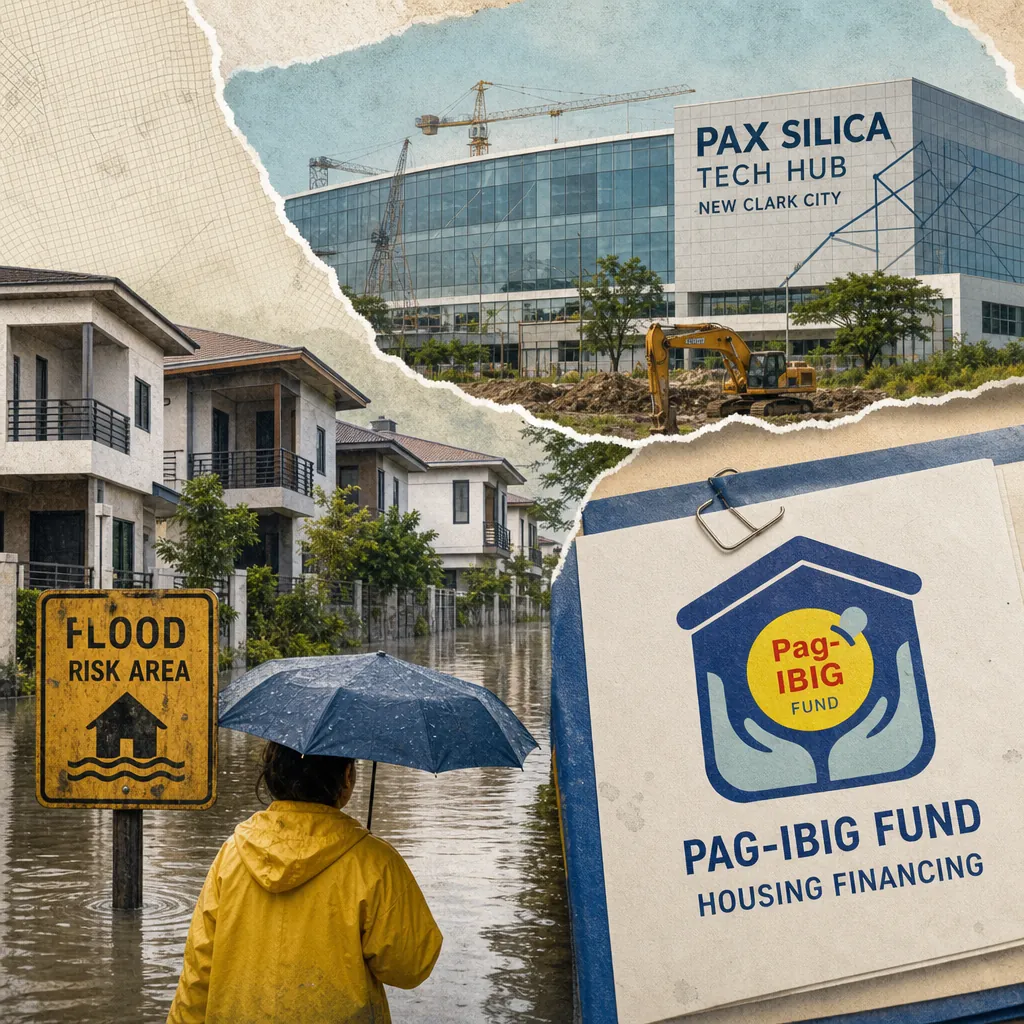
SEA Games probe overshadows housing wins, ecozone push
The NBI investigation into alleged irregularities in the New Clark City sports complex dominates conversation, while Pag-IBIG loan reforms and ecozone expansions offer a counter-narrative of government progress.

The conversation across social media and news from July 12 to 14, 2026, reveals a real estate sector caught between two powerful currents: a wave of government housing and infrastructure announcements, and a corruption investigation that threatens to undermine public trust in those very projects. The dominant story by far is the National Bureau of Investigation's (NBI) probe into alleged irregularities involving billions of pesos in funds for the New Clark City sports complex, built for the 2019 Southeast Asian Games. This development generated engagement levels that dwarfed all other topics, with a single Twitter post amassing over 72,000 views and 1,600 likes, and a Facebook post drawing nearly 4,636 "haha" reactions and 704 "angry" reactions—a clear signal of public cynicism and outrage. At the same time, President Ferdinand Marcos Jr. approved ecozone expansions in Cavite and Batangas, a new IT park in Dumaguete, and Pag-IBIG Fund announced housing loan reforms including promotional interest rates as low as 4.5% for economic housing. These policy moves received positive but more modest engagement, with one post garnering 92 likes and 33 "love" reactions. The tension between developmental ambition and governance concerns forms the central narrative of this period.
Key themes
- NBI investigation into New Clark City irregularities dominates public attention. The NBI confirmed it is investigating alleged irregularities in the funding of the New Clark City sports complex used for the 2019 SEA Games. Reports indicate billions of pesos remain unliquidated, and a private company allegedly received approximately ₱10 billion without competitive bidding through congressional insertions. The story spread rapidly across platforms, with combined Twitter and Facebook posts exceeding 150,000 views and 6,000 reactions. The high number of "haha" reactions (4,636 on one post) suggests widespread mockery and distrust of government accountability.
- Pag-IBIG loan reforms generate cautious optimism among first-time buyers. Pag-IBIG Fund announced promotional interest rates as low as 4.5% for economic housing, raised the maximum loan amount to ₱10 million, and allowed up to three borrowers to combine their incomes. These reforms received official backing from the Department of Human Settlements and Urban Development (DHSUD). On Reddit, first-time homebuyers expressed hope but also confusion about eligibility and application processes, indicating a need for clearer communication.
- Ecozone expansions and infrastructure projects signal regional development push. President Marcos approved the expansion of ecozones in Tanza, Cavite (331,348 sqm) and Malvar, Batangas (308,065 sqm), along with a new 60,000-sqm Robinsons Dumaguete IT Park. These moves are part of the administration's strategy to attract investment and create jobs outside Metro Manila. The Clark AeroDistrict, a 759-hectare airport city development, was also unveiled, positioning Clark as a future-ready economic hub.
- "Pasalo" (assume balance) market signals buyer distress and secondary market growth. Multiple posts on Facebook and Reddit offered to transfer ownership of pre-selling or financed properties, often with accumulated arrears. Sellers cited migration, financial strain, or inability to continue payments. This trend indicates growing liquidity constraints among original buyers and a burgeoning secondary market that could affect bank loan portfolios and developer policies.
- Affordability crisis persists despite policy interventions. Former lawmaker Joey Salceda published a commentary arguing that the government should focus on "producing homebuyers" rather than just houses. He noted that townhouse prices are 33.4 times median household income and Metro Manila rent is 141% of median income. First-time buyers on Reddit consistently sought affordable options, with one user asking about CALABARZON areas with a ₱3 million budget, drawing 26 comments.
- Luxury market remains active, particularly near Clark and in Pampanga. High-end property listings—villas priced from ₱15 million to ₱40 million near Clark Freeport Zone—continued to appear on YouTube and Facebook, targeting OFWs and expatriates. A YouTube tour of a ₱17.9 million tropical villa near Clark garnered 2,091 views, indicating sustained demand in premium segments.
- Infrastructure improvements like CALAX drive interest in provincial living. The opening of the CALAX expressway reduced travel time between Biñan and General Trias from one hour to 26 minutes, making peripheral areas more accessible. This, combined with ecozone expansions, is shifting buyer interest toward lot-only and farm retreat properties in Bulacan, Cavite, and Batangas.
How the narratives stack
Dominant: The NBI investigation into New Clark City irregularities is the dominant narrative within the captured set, based on engagement metrics and the number of items covering it. The story generated the highest engagement across all platforms—over 150,000 views and 6,000 reactions combined—and was picked up by multiple news outlets. The investigation's focus on billions in unliquidated funds and alleged no-bid contracts taps into deep public distrust of large infrastructure projects, threatening to overshadow the administration's positive housing and ecozone announcements.
Counter-narrative: The Pag-IBIG loan reforms and ecozone expansions provide a counter-narrative of government progress and commitment to affordable housing and regional development. These stories received positive but more modest engagement, with official posts garnering likes and love reactions. The counter-narrative is amplified by the President's visit to the National Academy of Sports (NAS) in New Clark City, where he directed the Department of Education to strengthen sports development—a move that highlights the operational success of the facility even as the investigation looms.
Emerging: The "pasalo" (assume balance) market is an emerging narrative that signals potential stress in the housing market. Multiple posts offering to transfer ownership of units with arrears indicate that some buyers are struggling to keep up with payments. This trend could grow as more pre-selling buyers face financial pressure, affecting developers, banks, and Pag-IBIG loan performance. The conversation is currently concentrated in mid-range condo and townhouse segments.
Suppressed: The story of the Clark AeroDistrict—a 759-hectare airport city development—received limited coverage compared to its potential significance. While it represents a major infrastructure investment that could transform Clark into a global economic hub, the narrative was largely confined to a single news article and did not generate significant social media discussion. This may be due to the overshadowing effect of the NBI investigation and the lack of a compelling human-interest angle.
Platform insights
- Facebook: Facebook was the primary platform for both promotional content and high-engagement news. Real estate agents dominated with listings of luxury homes and pasalo opportunities, using uniform hashtags and contact details. The most engaging post was about the NBI investigation, which received 4,636 "haha" reactions and 704 "angry" reactions—indicating a mix of mockery and outrage. Government announcements (ecozone expansions, Pag-IBIG reforms) received moderate positive reactions (92 likes, 33 loves) but were far outshone by the scandal. The platform's algorithm appears to favor emotionally charged content, making it a double-edged sword for official communications.
- Twitter (X): Twitter served as a rapid dissemination channel for breaking news. The NBI investigation tweet garnered 72,337 views and 1,631 likes within hours, while Pag-IBIG reform updates received minimal traction (219 views). The platform's real-time nature makes it ideal for crisis monitoring and rapid response, but the low engagement on policy news suggests that official accounts need to adopt more engaging formats (e.g., threads, infographics) to compete with scandal-driven content.
- Reddit: Reddit was the primary venue for buyer inquiries and technical discussions. Subreddits like r/phinvest and r/Philippines hosted detailed threads on Pag-IBIG loan eligibility, pasalo mechanics, and developer policies. A post from a first-time homebuyer seeking CALABARZON options with a ₱3 million budget garnered 14 upvotes and 26 comments, reflecting genuine demand for affordable housing information. The platform's community-driven nature makes it a valuable source of unfiltered consumer sentiment, but its influence is limited to a niche audience.
- YouTube: YouTube hosted official event coverage (MTerra Solar inauguration with 4,007 views, NAS inspection with 1,765 views) alongside numerous house tour videos targeting luxury buyers. Listings in Angeles City and Pampanga garnered up to 2,675 views, indicating sustained interest in premium properties near Clark. The platform is effective for visual storytelling but less suited for real-time news dissemination.
Key voices and communities
- Aspiring homebuyers and first-time property seekers: This group is active on Reddit and Facebook, driving conversation through practical questions about financing, property types, and developer reliability. They represent real demand signals and are directly affected by Pag-IBIG reforms and affordability challenges. Their skepticism toward rent-to-own schemes and interest in pasalo properties highlight trust issues in the market.
- Real estate brokers and property agents: A highly active commercial presence across YouTube, Facebook, and Reddit, these professionals list properties ranging from luxury villas to affordable lots. They dominate volume through repetitive posting and serve as gatekeepers to inventory. Their messaging is relentlessly promotional, emphasizing "move-in ready," "zero downpayment," and "Pag-IBIG financing." They are both partners and competitors for developers and government communicators.
- Government agencies and policy announcement channels: Official accounts and news outlets disseminating executive orders, housing loan reforms, and infrastructure developments form a highly credible stakeholder cluster. They generate modest engagement but carry outsized authority in shaping the narrative around housing affordability and regional development. Their content is widely reposted by brokers and media.
- Watchdog media and investigative accounts: A smaller but highly engaged cluster focused on alleged irregularities in the New Clark City sports complex. They operate across Twitter, Facebook, and Reddit, generating massive engagement by tapping into public distrust of large infrastructure spending. Their framing of corruption and lack of transparency poses reputational risks for government and developer clients.
Narrative streams
NBI investigation into New Clark City irregularities
The most explosive development of the period, the NBI investigation into alleged irregularities in the New Clark City sports complex, erupted on July 14. NBI Director Melvin Matibag stated that billions of pesos remained unliquidated, and a private company allegedly received approximately ₱10 billion without competitive bidding through congressional insertions. The story spread rapidly: a Twitter post garnered 72,337 views and 1,631 likes within hours, while a Reddit thread accumulated 596 upvotes and 85 comments. On Facebook, one post received an extraordinary 4,636 "haha" reactions alongside 704 "angry" reactions, reflecting a mix of mockery and outrage. The discussion quickly linked back to the controversial SEA Games cauldron, reported to have cost over ₱50 million, which the NBI said it would re-examine. Users across platforms expressed frustration with the lack of accountability, with one Facebook post framing the investigation as a necessary step: "An investigation is not a judgment—it is a process to uncover the facts. If mistakes or wrongdoing occurred, those responsible should answer before the law." The timing of this investigation—coinciding with the administration's housing and ecozone announcements—created a dual narrative of developmental ambition undercut by governance concerns. The story's engagement metrics dwarfed all other conversations, with the combined Twitter and Facebook posts on this topic exceeding 150,000 views and 6,000 reactions. For the real estate sector, this investigation threatens to erode public trust in government-led infrastructure and housing projects, including the 4PH program. The massive "haha" reaction count indicates deep cynicism that could spill over into negative perceptions of any government-backed housing initiative. The coverage of this story in the captured set was worth an estimated ₱161,410 in advertising-equivalent value for a single broadsheet article, but the social media engagement far exceeds that in terms of public attention.
Pag-IBIG loan reforms and housing policy push
On July 14, Pag-IBIG Fund announced significant housing loan reforms: promotional interest rates as low as 4.5% for economic housing, a maximum loan amount raised to ₱10 million, and the ability to combine up to three borrowers' incomes. These reforms received official backing from DHSUD and were widely reported in the media. The discussion deepened when former lawmaker Joey Salceda published a commentary arguing that the "next phase should be about producing homebuyers," proposing a unified national home-finance window to streamline loan applications across Pag-IBIG, SSS, GSIS, and private lenders. His data showing townhouse prices at 33.4 times median household income and Metro Manila rent at 141% of median income underscored the affordability crisis that the reforms aim to address. While the official announcements were met with positive engagement—one post garnered 92 likes and 33 "love" reactions—the "haha" responses on some posts (e.g., 12 on one) suggest a degree of public skepticism about implementation. On Reddit, first-time homebuyers expressed hope but also confusion about eligibility and application processes. A user asked about bank loan pre-approval before downpayment, while another sought house/lot in Bataan/Pampanga/Tarlac with Pag-IBIG or bank financing, expressing doubt about rent-to-own schemes. The reforms generated significant interest among aspiring homebuyers, but the lack of detailed implementation guidance left many questioning eligibility. For banking clients like BPI, the demand for clear, step-by-step financing information presents an opportunity to position themselves as trusted advisors in the home loan space. The coverage of these reforms in the captured set included multiple broadsheet articles with a combined advertising-equivalent value of over ₱1 million, reflecting the administration's communication priority.
Ecozone expansions and regional development
President Marcos Jr. approved the expansion of ecozones in Tanza, Cavite (331,348 sqm) and Malvar, Batangas (308,065 sqm), along with the creation of a 60,000-sqm Robinsons Dumaguete IT Park. These moves were framed as part of the administration's push to attract investment and create jobs outside Metro Manila. Concurrently, the BuCor-Pag-IBIG Fund meeting on July 13 explored housing initiatives for corrections personnel under the Expanded 4PH program, with proposals to develop housing on BuCor properties and extend rental housing options. The Clark AeroDistrict, a 759-hectare airport city development anchored by Clark International Airport, was unveiled by LIPAD Corp. The project aims to transform Clark into a leading hub for aviation, logistics, business, and investment. Global infrastructure consulting firm AECOM masterplanned the development. These announcements received broad publication across news outlets, with one post gathering 92 likes and 33 "love" reactions, suggesting public appetite for regional development. The ecozone expansions are expected to drive residential demand in Cavite, Batangas, and Negros Oriental, areas where PLDT and Smart could leverage connectivity as a selling point. The coverage of these developments in the captured set included several broadsheet articles with a combined advertising-equivalent value of over ₱500,000.
The "pasalo" market and buyer distress
Parallel to the policy and scandal narratives, a vibrant secondary conversation unfolded around actual property transactions, buyer questions, and the "pasalo" (assume balance) market. From July 12 to 14, Reddit and Facebook saw a flood of listings: residential lots in Norzagaray, Bulacan at ₱4,500/sqm; a luxury 1BR condo in Ortigas East for ₱57,000/month; and numerous high-end homes in Pampanga and Angeles City near Clark Freeport Zone priced from ₱15 million to ₱40 million. The pasalo market was particularly active, with multiple posts offering to transfer ownership of units with outstanding balances. On July 14, a Reddit user asked, "Papayagan ba ng developer ang Transfer of Rights habang may arrears, o kailangan zero-out muna ang utang?" Other pasalo listings featured units in Urban Deca Homes Ortigas, Bria Norzagaray, and Amaia Series Novaliches, with sellers emphasizing "updated payments" and "clean takeover" to attract buyers. Buyer anxieties surfaced consistently: on July 13, a user asked about Pag-IBIG foreclosed properties, while another sought house/lot in Bataan/Pampanga/Tarlac with Pag-IBIG or bank financing, expressing doubt about rent-to-own schemes. A July 14 post from a first-time homebuyer in BGC asking about CALABARZON areas with a ₱3 million budget garnered 14 upvotes and 26 comments, reflecting the widespread search for affordable options outside Metro Manila. The dual themes of luxury listings and affordability struggles coexisted, revealing a bifurcated market where high-end properties near Clark and BGC dominated promotional content while average buyers wrestled with financing and trust issues. The pasalo market's prominence signals a growing secondary market driven by buyers' cash flow constraints and sellers' need to exit. For PLDT and Smart, monitoring these discussions can help anticipate areas with high subscriber churn or service demand, as pasalo properties often involve utility transfers and connectivity needs.
Infrastructure improvements driving provincial migration
The opening of the CALAX expressway reduced travel time between Biñan and General Trias from one hour to 26 minutes, making peripheral areas more accessible. This, combined with ecozone expansions in Cavite and Batangas, is shifting buyer interest toward lot-only and farm retreat properties in Bulacan, Cavite, and Batangas. A notable uptick in posts offering residential lots in peripheral areas—Norzagaray, Bulacan (₱1,950/sqm) and similar outlying zones—indicates growing interest in self-build options as an alternative to developer housing. These listings emphasize flexible payment terms (zero interest over 3 years) and proximity to future infrastructure like bypass roads. The conversation is shifting from "ready-for-occupancy" to "land as investment," particularly among first-time buyers and those seeking escape from Metro Manila's congestion. This trend will likely accelerate as CALAX and other expressway extensions reduce travel times, making distant lots more viable. For clients like BPI monitoring lending risk, this creates both opportunity (new loan segments) and caution (speculative purchases).
Conversation trajectory
Over the next 1-2 weeks, the NBI investigation into New Clark City irregularities will likely dominate the conversation, with negative sentiment spilling over into discussions about BCDA-led developments and the 4PH housing program. The investigation's momentum shows no signs of abating, with multiple media outlets picking up the story. Expect increased scrutiny of government procurement processes and potential calls for transparency in infrastructure spending. The Pag-IBIG loan reforms will continue to generate interest among first-time buyers, but the lack of detailed implementation guidance may lead to frustration if not addressed. Over the next 2-3 months, the "pasalo" market is expected to grow as more pre-selling buyers face financial pressure, potentially affecting bank loan portfolios and developer policies. The ecozone expansions and infrastructure projects will drive sustained interest in provincial living, particularly in CALABARZON and Pampanga/Clark. Key trigger events include: the NBI's formal filing of charges or recommendations in the New Clark City case (projected within 30-60 days), which could trigger a broader media cycle on government procurement; the next Pag-IBIG housing loan application period (typically quarterly) when reforms take effect, likely intensifying loan-related queries and comparisons; and any developer earnings reports or announcements of turnover delays, especially from major players like SMDC and DMCI Homes, which could amplify "pasalo" and buyer protection discussions.
Response guidance
For communicators in the real estate sector, the immediate priority is to address the New Clark City investigation head-on. Avoid dismissing allegations outright; instead, acknowledge the NBI's role in due process, emphasize that sports facilities are now operational and producing medal-winning athletes, and highlight that BCDA has previously addressed audit findings. Use the President's visit to the NAS as a positive counterpoint. For Pag-IBIG loan reforms, publish simplified infographics on social media showing sample computations for a ₱3 million home under the new 4.5% rate vs. previous terms. Target first-time buyer communities on Reddit and Facebook with clear, step-by-step guides on eligibility and application. For the "pasalo" market, provide neutral, factual guidance on legal protections (Maceda Law) and available government mediation, rather than taking sides between buyers and developers. Amplify ecozone expansion announcements to redirect attention from negative SEA Games coverage toward positive economic development stories. Coordinate with PEZA and local government units to share developer testimonials. On sensitive topics like the affordability gap, acknowledge the challenge and frame 4PH and socialized housing as targeted solutions, rather than claiming universal affordability. Key messages should emphasize that government housing programs, combined with Pag-IBIG's reduced interest rates and higher loan ceilings, make homeownership more attainable; that ecozone expansions create jobs and drive residential demand; and that the NBI investigation is a routine transparency measure, not a predetermined conclusion.
See the full picture behind today's signals.
This report draws from Media Meter's MediaWatch, our real-time monitoring engine tracking 2,470+ Philippine sources across print, broadcast, digital, and social. Explore how the platform turns raw coverage into decision-grade intelligence, then see how it's configured for teams like yours — whether you're in PR agencies, corporate comms, government, or marketing.
Want more? Browse our Report Library for sector and crisis intelligence, or request a demo and we'll have your brand set up before the call.
Want this kind of intelligence on your brand?
This brief is built on the same MediaWatch methodology that runs continuously across every brand we monitor. See your competitive landscape, Impact Score, and narrative trajectory in a 30-minute demo.