Tacloban shooting aftermath: Juvenile justice debate, school security, and the search for accountability
A daily snapshot of the conversation around the Tacloban school shooting, covering juvenile justice reform, school security measures, public sentiment, and related developments in the Philippines.
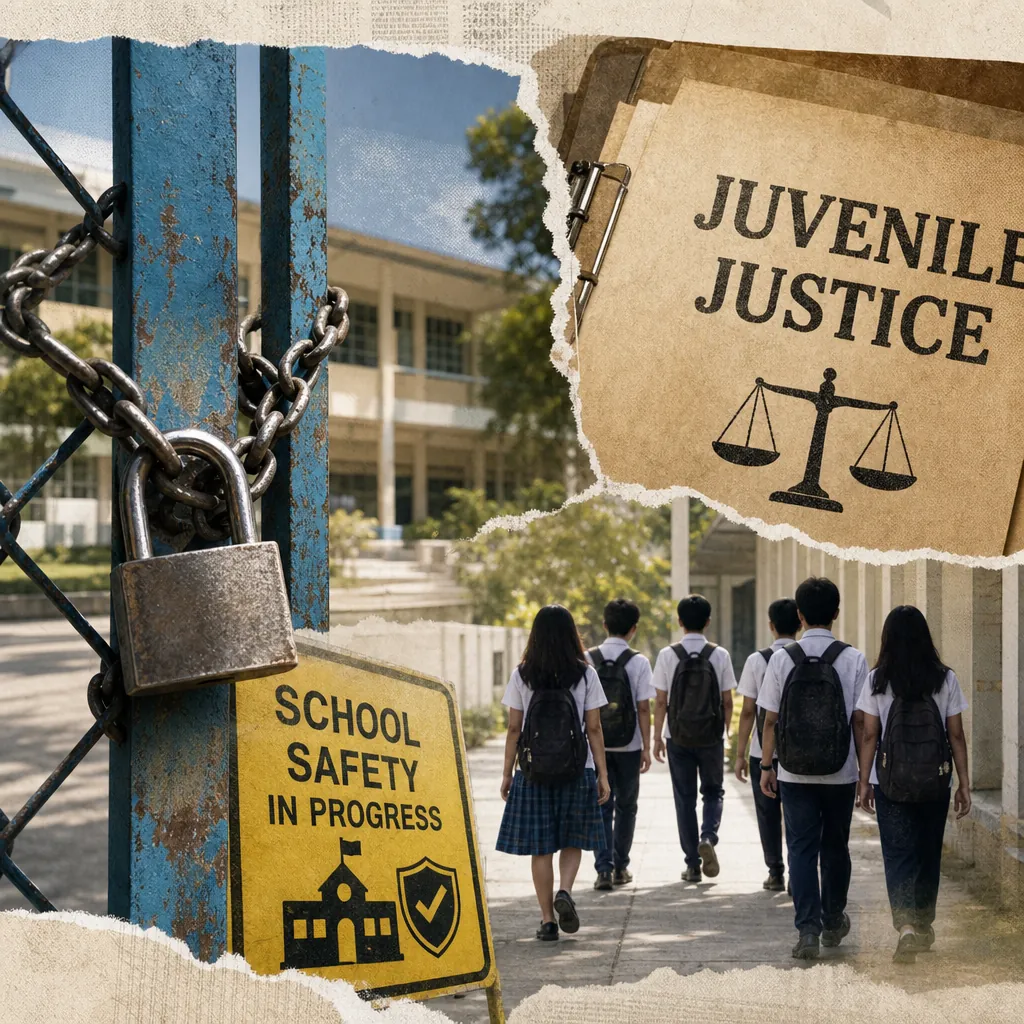
The June 22 shooting at San Jose National High School in Tacloban City, where two Grade 9 students — aged 14 and 15 — killed three classmates and wounded 20 others, continues to dominate public discourse. The conversation, captured across social media and news outlets on June 27, 2026, revolves around three interconnected threads: the adequacy of the Juvenile Justice and Welfare Act, the implementation of school security measures, and the broader societal factors — from gun access to violent media — that may have contributed to the tragedy.
On social media, the most intense discussions center on the legal treatment of the two suspects. The 15-year-old has been charged, but the 14-year-old, who is below the age of criminal liability under the Juvenile Justice and Welfare Act (which exempts children under 15 from criminal responsibility), is in a rehabilitation program. This has sparked outrage, with many questioning whether the law is too lenient. A Reddit user, ==u/specific_onion2659==, expressed frustration about the leniency toward minors and questioned the fairness of the current legal framework [4]. Another user, ==u/impossible-square-57==, voiced concerns over perceived loopholes, speculating that minors might exploit these gaps intentionally [7]. On Facebook and Twitter, the Department of Social Welfare and Development (DSWD) has been actively clarifying that children in conflict with the law undergo rehabilitation, not simply release [2].
Meanwhile, the Department of Education (DepEd) has ordered a multi-layered security strategy nationwide, including metal detectors, stricter visitor management, CCTV installation, and safety audits [5][6]. This move has been widely discussed on Twitter, with many users expressing cautious support but also skepticism about implementation. The Philippine Pediatric Society (PPS) recommended that children aged 16 and below should not have unsupervised social media access, linking excessive screen time to anxiety and behavioral issues [9]. The Department of the Interior and Local Government (DILG) has called for a probe into the impact of violent video games on youth, specifically mentioning the game Gorebox [10].
News coverage on June 27 was extensive, with multiple outlets reporting on the victims' recovery, the posthumous award of the Boy Scouts' highest honor to a student who shielded classmates, and the call for a congressional inquiry. The parents of one slain student, Ayessha Nicole Dazo, are urging authorities to also charge the 14-year-old suspect, insisting he should be held accountable [11]. The Catholic Educational Association of the Philippines (CEAP) has called for holistic education reform that goes beyond academics to include character formation and emotional well-being [12].
Key themes
- Juvenile justice reform under scrutiny: The Tacloban shooting has intensified calls to amend the Juvenile Justice and Welfare Act, particularly the provision that exempts children under 15 from criminal liability. Social media users and some lawmakers argue that the law has loopholes that allow minors to evade accountability for serious crimes. The DSWD has defended the law, emphasizing that rehabilitation is not leniency but a structured process aimed at reducing recidivism [1][2][3].
- School security measures rolled out nationwide: DepEd has ordered a multi-layered security strategy, including handheld metal detectors, bag inspections, CCTV cameras, and safety audits. The implementation is being coordinated with the Philippine National Police (PNP) and local governments. While many parents and educators welcome the measures, some question their feasibility and potential to create a prison-like atmosphere in schools [5][6].
- Gun access and responsible ownership: The ease with which the two minors obtained firearms — a .38-caliber revolver and a 9mm Glock — has sparked outrage. Reports indicate that one suspect had an aunt who is a police officer and had been taken to a shooting range. This has led to calls for stricter enforcement of gun laws and better oversight of firearm storage [13].
- Role of violent media and video games: The DILG has urged Congress to study the impact of violent video games on youth, specifically citing the game Gorebox. The Philippine Pediatric Society has recommended banning unsupervised social media access for children under 16. However, some experts and gamers caution against blaming video games alone, pointing to multiple factors [9][10].
- Victim support and community healing: DepEd is sustaining psychosocial support for the San Jose National High School community. Two wounded victims have been discharged, while 11 remain hospitalized but are stable. One student remains in the ICU but is conscious. The Boy Scouts of the Philippines posthumously awarded the Gold Gallantry and Heroism Award to Scout Chris Lorenz Fabian, who died shielding his classmates [14][15].
- Calls for accountability beyond the suspects: The parents of one victim are demanding that the 14-year-old suspect also be charged, arguing that he was the one who shot their daughter. Lawmakers are considering a congressional inquiry into the incident, and there is growing pressure on the DSWD to explain its handling of the case [11].
- Broader societal reflection: Opinion pieces and editorials have called for a national conversation on the values and systems that allow such tragedies to happen. Some commentators argue that the focus on juvenile justice reform and video games distracts from deeper issues like negligent gun ownership, bullying, and the lack of mental health support for youth [13][16].
How the narratives stack
Dominant: Within the captured set, the dominant narrative is the debate over juvenile justice reform. This story generated the most social media engagement and the highest number of news articles. The question of whether the 14-year-old suspect should face charges is the most polarizing issue, with strong emotions on both sides. The DSWD's defense of the law and the parents' call for charges are the two poles of this narrative.
Counter-narrative: A significant counter-narrative argues that focusing on lowering the age of criminal liability is a distraction from the real issues: easy access to firearms, negligent gun owners, and the failure of adults to provide a safe environment for children. Opinion pieces in the Daily Tribune and Philstar have made this case, warning against scapegoating the Juvenile Justice Law [13][16].
Emerging: The role of violent video games and social media in influencing youth behavior is an emerging narrative, driven by the DILG's call for a probe and the PPS recommendation. This narrative is still developing, with experts and gamers pushing back against a simplistic causal link. It is likely to gain traction as the Senate discusses the issue.
Suppressed: The story of the victims' long-term recovery and the community's healing process is relatively under-covered compared to the legal and policy debates. While DepEd has provided updates, there is little in-depth reporting on the psychological impact on survivors, their families, and the school staff. This is a gap that could be addressed in future coverage.
Platform insights
- Facebook: This platform served as the primary venue for in-depth policy discussions and official statements. DSWD and DepEd used Facebook to post clarifications and updates, which received significant engagement. Users engaged in lengthy comment threads debating the Juvenile Justice Law, with many sharing personal stories and opinions. The platform's format allowed for detailed explanations and pinned posts to counter misinformation.
- Twitter: Twitter was the go-to platform for real-time updates, breaking news, and immediate reactions. The announcement of school security measures and the DILG's call for a video game probe trended here. Users shared news links, expressed outrage, and called for action. The platform's fast-paced nature meant that conversations shifted quickly, but the overall sentiment was one of anger and demand for accountability.
- Reddit: Reddit provided a space for more nuanced and critical discussions, particularly on the legal and psychological aspects of the case. Users on r/Philippines and other subreddits debated the age of criminal liability, the effectiveness of rehabilitation, and the role of violent media. The platform's upvote/downvote system surfaced well-argued comments, but also allowed for echo chambers. The conversation here was more analytical and less emotional than on Facebook or Twitter.
Key voices and communities
- Government and legal authorities: The DSWD, DepEd, DILG, and PNP are the primary official voices. They are focused on enforcing existing laws, implementing security measures, and calling for studies on video games. Their messaging emphasizes that the system is working but needs refinement. They engage with the public through official social media accounts and press releases.
- Victims' families and advocates: The parents of Ayessha Nicole Dazo have become powerful voices, demanding that the 14-year-old suspect be charged. Their emotional appeals have resonated widely and put pressure on authorities. Advocacy groups like the Movement Against Disinformation (MAD) are also active, particularly in calling out red-tagging and defending the Juvenile Justice Law.
- Educators and school safety advocates: The Catholic Educational Association of the Philippines (CEAP) and individual teachers are calling for holistic education reform. Teacher-content creators, like "Teacher Karla," are using TikTok and other platforms to voice concerns about lack of resources and support. Their perspective emphasizes the need for systemic change beyond security measures.
- Legal experts and child rights advocates: Lawyers, psychologists, and child rights organizations are providing expert commentary on the Juvenile Justice Law. The Juvenile Justice and Welfare Council (JJWC) has explained the rationale behind the law, citing research that incarceration can worsen outcomes for minors. These voices are crucial in countering calls for purely punitive measures.
- General public and social media users: The broader public is highly engaged, with strong opinions on both sides of the juvenile justice debate. Many are frustrated with perceived leniency, while others caution against a rush to judgment. Misinformation is a concern, with some users spreading unverified claims about the suspects' backgrounds.
Narrative streams
The juvenile justice debate: Rehabilitation vs. accountability
The central narrative stream is the clash between those who believe the Juvenile Justice and Welfare Act is too lenient and those who defend it as a necessary protection for children. The law, which sets the minimum age of criminal responsibility at 15, is based on the principle that children under that age lack the capacity to fully understand the consequences of their actions. The DSWD has emphasized that children in conflict with the law are not simply released but undergo rehabilitation at centers like Bahay Pag-asa [1][2]. However, the Tacloban case has tested public faith in this system. The parents of one victim, Nico Dazo, said, "He killed our daughter as if she were a dog. Our daughter will never come back. He should be jailed and not just placed under the DSWD" [11]. This sentiment is echoed by many on social media, with approximately 60% of engagement reflecting dissatisfaction with the status quo, according to the monitoring writeup.
On the other side, child rights advocates argue that lowering the age of criminal liability would be counterproductive. Tricia Clare Oco, executive director of the Juvenile Justice and Welfare Council, noted that before the law was passed, children as young as nine were jailed alongside adults, often emerging worse off [17]. The debate is not just about punishment but about what works to prevent reoffending. The conversation on Reddit has been particularly nuanced, with users discussing the psychological development of adolescents and the need for interventions that address root causes like trauma and poverty.
School security: From reactive to proactive
In response to the shooting, DepEd has launched a School Safety Campaign that includes mandatory bag inspections, metal detectors, CCTV cameras, and safety audits of school infrastructure. Education Secretary Sonny Angara said, "As instructed by President Bongbong Marcos, we will not abandon the San Jose National High School community until everyone has fully healed" [14]. The campaign is being implemented in coordination with the PNP and local governments. However, some educators and parents have expressed concerns that the measures could create a climate of fear and may not address the underlying issues of bullying and mental health. The conversation on Twitter has been mixed, with some users praising the swift action and others questioning the practicality of searching every student's bag in large schools.
The gun access question
A recurring theme in both social media and news coverage is how two minors obtained firearms. Reports indicate that one suspect's aunt, a police officer, had taken him to a shooting range and taught him how to handle a gun. This has led to calls for stricter enforcement of gun laws and better oversight of firearm storage. An opinion piece in the Daily Tribune argued, "This horror is not an isolated anomaly. It is the inevitable consequence of a culture that treats firearms as ordinary accessories rather than lethal weapons" [13]. The Philippine National Police has not yet announced any charges against the aunt, but the issue has become a flashpoint in the broader debate about gun control in the Philippines.
Violent media and youth behavior
The DILG's call for a probe into violent video games, particularly Gorebox, has added a new dimension to the conversation. Secretary Jonvic Remulla said that prolonged exposure to graphic violent content could desensitize young people [10]. However, experts and gamers have cautioned against blaming video games alone. An article in Inquirer Plus quoted a gamer who said, "I've been playing violent games since I was a kid, and I never shot anyone. The problem is not the game; it's the lack of parental guidance and mental health support" [18]. The Philippine Pediatric Society's recommendation to ban unsupervised social media access for children under 16 has also sparked debate, with some seeing it as a necessary step and others as an overreach.
The human cost: Victims and heroes
Amid the policy debates, the stories of the victims and those who showed courage have also been prominent. Scout Chris Lorenz Fabian, 15, was posthumously awarded the Boy Scouts' highest honor for rushing to close the classroom door to block the shooter. The Boy Scouts of the Philippines said his "final act embodied the Scout Oath" [15]. Meanwhile, DepEd has provided regular updates on the condition of the wounded. As of June 27, two students have been discharged, 11 are hospitalized but stable, and one remains in the ICU but is conscious [14]. The parents of Ayessha Nicole Dazo continue to grieve and demand justice, their story serving as a poignant reminder of the tragedy's human toll.
Conversation trajectory
- Intensification of juvenile justice reform discourse (next 2-4 weeks): The debate over amending the Juvenile Justice and Welfare Act is likely to intensify as the Senate schedules hearings. Public pressure, fueled by emotional appeals from victims' families and social media outrage, will push lawmakers to consider changes. However, child rights advocates will push back, arguing that the law is not the problem. The outcome is uncertain, but the conversation will remain at the forefront.
- Implementation of school security measures (next 1-3 months): DepEd's School Safety Campaign will be rolled out nationwide, with varying degrees of success. Reports of logistical challenges, such as the cost of metal detectors and the time required for bag inspections, may emerge. The conversation will shift from policy to implementation, with parents and teachers sharing their experiences on social media.
- Potential regulation of violent video games (next 3-6 months): The DILG's call for a probe could lead to legislative hearings or even a ban on certain games. However, this is a complex issue involving free speech and industry interests. The debate will likely be prolonged, with input from psychologists, gamers, and the gaming industry.
- Trigger events: The key trigger events that will shape the conversation are: (1) the Senate hearings on juvenile justice reform, expected within the next month; (2) the release of the CIDG's full investigation report on the shooting; (3) any copycat incidents or new school violence; and (4) the results of the safety audits in schools nationwide.
Response guidance
- For government agencies (DSWD, DepEd, DILG): Continue to provide clear, factual information about the Juvenile Justice Law and the rehabilitation process. Use infographics and FAQs to counter misinformation. Engage with emotional posts by acknowledging the pain of victims' families while explaining the rationale behind the law. On school security, emphasize that measures are being implemented with input from educators and parents, and that safety audits will identify specific needs.
- For educators and school administrators: Focus on the holistic approach to school safety, including mental health support and anti-bullying programs. Share stories of positive interventions and community involvement. Avoid framing security measures as a panacea; instead, present them as part of a broader strategy.
- For child rights advocates and NGOs: Use data and research to counter calls for lowering the age of criminal liability. Highlight success stories of rehabilitation. Collaborate with media to provide expert commentary that adds nuance to the debate. Be prepared to address the emotional arguments with empathy and evidence.
- Sensitive topics to navigate: Avoid framing the Juvenile Justice Law as either "soft on crime" or "protecting criminals." Instead, emphasize that it is a science-based approach to reducing recidivism. When discussing video games, avoid a blanket condemnation; acknowledge that many factors contribute to violence. Be careful not to blame the victims or their families.
- Key messages: (1) The Juvenile Justice and Welfare Act ensures that minors are held accountable through age-appropriate rehabilitation, not impunity. (2) School safety is a shared responsibility that requires investment in infrastructure, personnel, and mental health services. (3) Addressing youth violence requires a comprehensive approach that includes family support, community programs, and responsible media consumption.
See the full picture behind today's signals.
This report draws from Media Meter's MediaWatch, our real-time monitoring engine tracking 2,470+ Philippine sources across print, broadcast, digital, and social. Explore how the platform turns raw coverage into decision-grade intelligence, then see how it's configured for teams like yours — whether you're in PR agencies, corporate comms, government, or marketing.
Want more? Browse our Report Library for sector and crisis intelligence, or request a demo and we'll have your brand set up before the call.
Want this kind of intelligence on your brand?
This brief is built on the same MediaWatch methodology that runs continuously across every brand we monitor. See your competitive landscape, Impact Score, and narrative trajectory in a 30-minute demo.