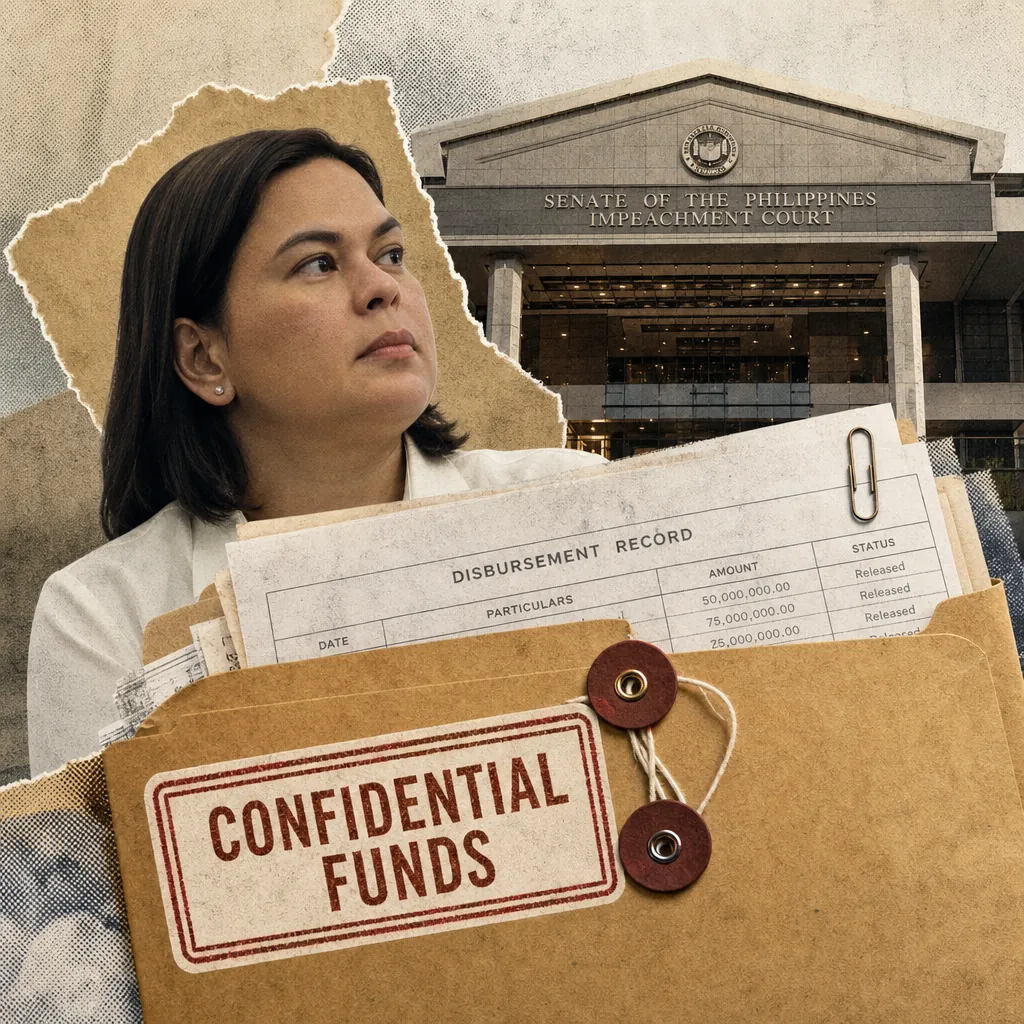
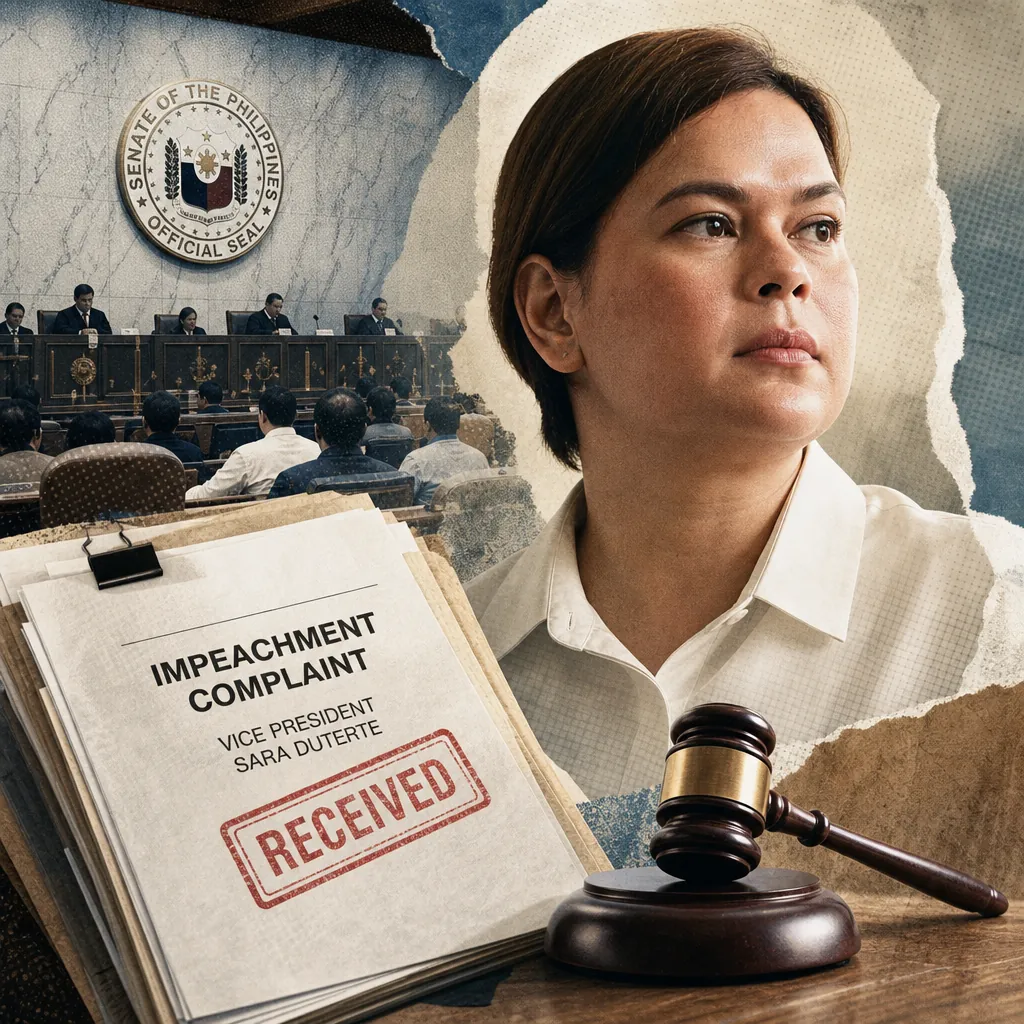
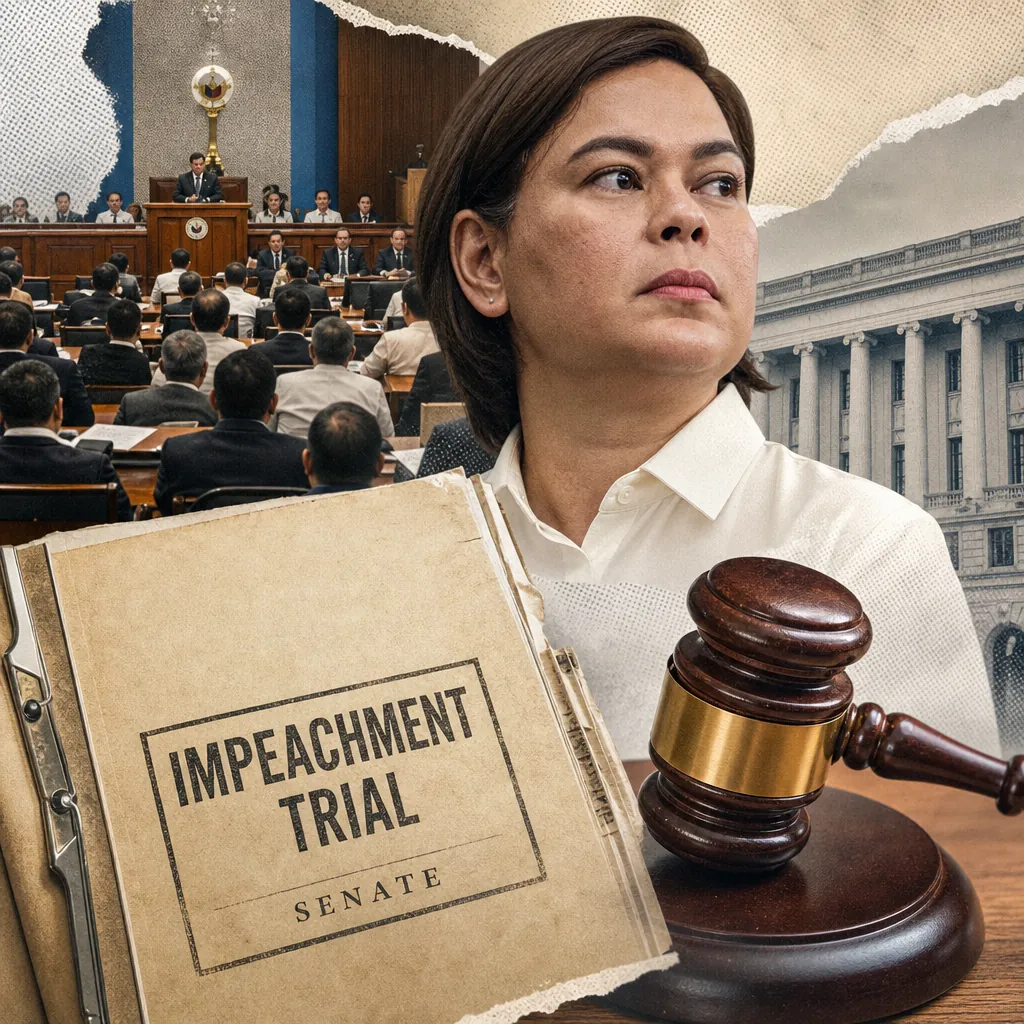
Impeachment Trial Dominates as NBI Testimony Reveals Procedural Flaws; LRT-2 Cashless Launch Offers Counter-Narrative
The impeachment trial of Vice President Sara Duterte enters its second week with NBI testimony confirming grave threats but exposing typographical errors, while the LRT-2 cashless payment system launch provides a positive government modernization story. Other developments include a student death after deworming, Mayon Volcano unrest, and the 10th anniversary of the West Philippine Sea arbitral award.
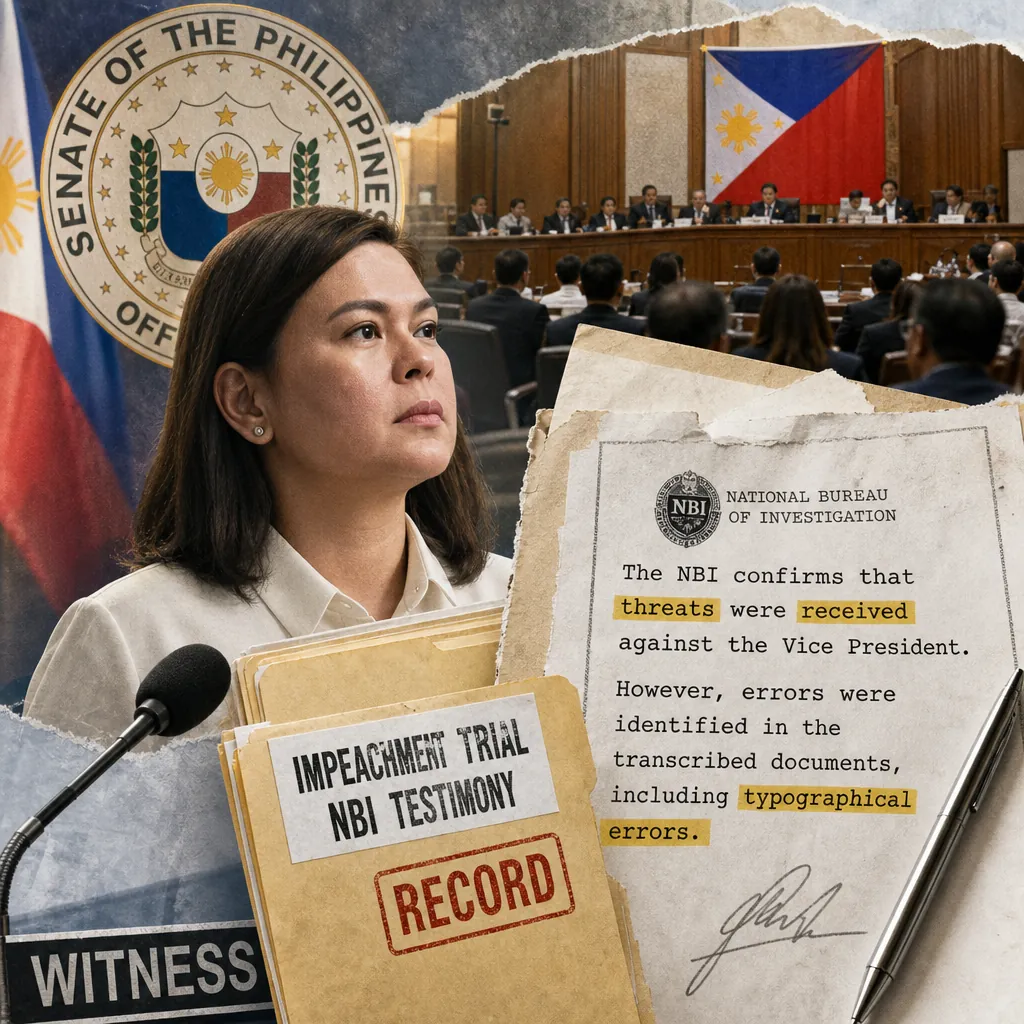
The conversation on July 13, 2026, was dominated by two major national narratives: the impeachment trial of Vice President Sara Duterte and the launch of cashless payments on the LRT-2 rail line. The trial, now in its second week, drew intense public attention as NBI Regional Director Jeremy Lotoc testified that the Vice President's alleged assassination threats against President Ferdinand Marcos Jr., First Lady Liza Araneta-Marcos, and House Speaker Martin Romualdez were "serious and real" and not protected by free speech. However, the defense successfully highlighted procedural errors in NBI documents, including typographical mistakes on subpoena dates, which Senator-judge Francis Escudero pointedly questioned: "Typo na 'yung affidavit mo, typo pa 'yung subpoena?" This exchange resonated widely across social media, shifting some public focus from the substance of the threats to the credibility of the investigation. Meanwhile, the LRT-2 cashless payment launch generated positive engagement, with commuters and officials celebrating the convenience of using credit cards, debit cards, and QR codes. The Department of Transportation's event at Legarda Station was covered by multiple news outlets, and RCBC's promotional "Piso Fare" offer for cardholders drew hundreds of reactions. These two streams—one deeply polarizing and legalistic, the other broadly popular and modernizing—defined the day's public discourse, with the trial commanding the larger share of attention but the transport story offering a rare moment of unified positive sentiment.
Key themes
- Impeachment trial: NBI confirms grave threats but faces credibility questions – NBI Regional Director Jeremy Lotoc testified that the bureau found prima facie evidence to support criminal complaints against Vice President Sara Duterte for grave threats and inciting to sedition, based on her November 2024 online press conference where she stated she had contacted someone to kill the President and other officials. However, under cross-examination, Lotoc admitted to typographical errors in NBI documents—including an incorrect date on a subpoena—which the defense used to question the investigation's thoroughness. Senator-judge Imee Marcos and Alan Peter Cayetano flagged these inconsistencies, and Senator Escudero's remark about the errors became a widely shared moment on social media. The prosecution maintained that the errors did not change the substance of the threat, but the defense's focus on procedure created a parallel narrative about investigative integrity.
- LRT-2 cashless payment launch draws positive public response – The Department of Transportation officially launched an automated fare collection system on LRT-2, allowing commuters to pay using contactless Visa, Mastercard, GCash QR, Google Pay, and other cards. The event at Legarda Station was covered by PTV, GMA News, ABS-CBN, and other outlets, with official posts receiving hundreds of likes and shares. RCBC's promotional "Piso Fare" for cardholders (July 13–31) generated particularly high engagement, with 62 likes and 35 love reactions on Facebook. Commuters on Reddit expressed excitement about the convenience, though some asked practical questions about card compatibility and fare caps. The launch was framed as part of the Marcos administration's "Bagong Pilipinas" digital agenda, with plans to extend the system to LRT-1 before the end of 2026.
- Student death after deworming activity sparks investigation – A Grade 4 student in Trece Martires, Cavite, died after participating in a school deworming activity on July 2. The child experienced fever, vomiting, and septic shock, and died the following day. The Department of Education (DepEd) expressed condolences and launched a joint investigation with the Philippine National Police (PNP). The parents have sought help from the National Bureau of Investigation (NBI) for an independent autopsy. Six other students also experienced adverse effects but have since recovered. DepEd clarified that the teacher administered the correct dosage of an FDA-approved medication, but the incident has raised public concern about school health protocols. The story received extensive broadcast coverage, with GMA 7's report carrying an estimated advertising-equivalent value of over ₱860,000.
- Mayon Volcano continues unrest; ashfall affects Albay towns – PHIVOLCS reported ongoing strombolian activity at Mayon Volcano, with 285 rockfall events and 17 pyroclastic density currents in the past 24 hours. Sulfur dioxide emissions reached 3,680 tonnes per day. Alert Level 3 remains in effect. Ashfall has affected the towns of Malilipot, Bacacay, and Santo Domingo in Albay. The Philippine Red Cross deployed response teams and distributed 1,200 face masks. PHIVOLCS Director Teresito Bacolcol advised the public to properly dispose of ash to avoid drainage blockage and roof collapse. The story received significant broadcast coverage, with PTV4's interview with Bacolcol valued at over ₱933,000 in advertising-equivalent terms.
- West Philippine Sea arbitral award 10th anniversary commemorated – The 10th anniversary of the 2016 Arbitral Award on the West Philippine Sea was marked by government-led activities, including a National Peace Walk, the unveiling of a fisherfolk monument at Quezon Memorial Circle, and a joint statement from 14 nations and the European Union reaffirming that China's claims have "no legal basis." The Philippine Coast Guard spokesperson's confrontational style resonated on social media, with one post drawing over 366,000 reactions on Facebook. The Department of Justice also announced the establishment of a maritime law center. The anniversary provided a unifying patriotic narrative that contrasted with the divisive impeachment trial.
- Senator Marcoleta's health and legal status – Senator Rodante Marcoleta, who was arrested on plunder charges and is detained at the PNP General Hospital, was declared fit to travel by his doctors. The Sandiganbayan ordered him transferred to the Philippine General Hospital for an independent medical examination. Malacañang emphasized that his health should be prioritized and denied any special treatment. Vice President Sara Duterte and Senator Robin Padilla visited him, drawing attention to his case.
- New DOH Secretary appointed – President Marcos appointed Dr. Jose Pujalte Jr., an orthopedic surgeon and former chief of the Philippine Orthopedic Center, as the new Secretary of Health, replacing Dr. Ted Herbosa, who resigned to undergo physical therapy after knee replacement surgery. House Deputy Speaker Janette Garin expressed confidence in Pujalte's leadership, citing his professionalism and public service experience.
- SSS to launch solar panel loan program – The Social Security System (SSS) announced plans to launch an Energy Sustainability Loan for residential solar panel installations before the end of 2026 or early 2027. Members can borrow up to ₱400,000, payable over 4 to 7 years. The SSS aims to reach 100,000 beneficiaries and has allocated ₱40 billion for the program. The announcement was covered by Radyo5 and One PH.
How the narratives stack
Dominant – Within the captured set, the impeachment trial of Vice President Sara Duterte is the dominant narrative, commanding the highest volume of coverage and engagement. The trial's second week featured NBI testimony that confirmed the seriousness of the alleged threats but also exposed procedural flaws, creating a complex legal drama that dominated broadcast news and social media. Live streams of the proceedings on YouTube and Facebook drew tens of thousands of views, and every major news network—GMA 7, ABS-CBN, PTV, UNTV, DZMM—provided extensive coverage. The defense's focus on typographical errors in NBI documents generated significant online discussion, with Senator Escudero's pointed questioning becoming a viral moment. The prosecution's evidence, including video clips of Vice President Duterte cursing and threatening officials, reinforced the gravity of the charges but was partially overshadowed by the procedural debate.
Counter-narrative – The LRT-2 cashless payment launch provided a positive counter-narrative focused on modernization and convenience. This story received broad coverage across television, radio, and social media, with official government posts and news reports highlighting the ease of tap-and-go payments. RCBC's promotional "Piso Fare" offer generated enthusiastic responses, and commuters on Reddit expressed excitement. While the impeachment trial dominated in volume and emotional intensity, the LRT-2 story offered a rare moment of unified positive sentiment about government action, directly supporting the administration's digitalization agenda.
Emerging – The death of a Grade 4 student after a school deworming activity is an emerging narrative with significant reputational risk for the Department of Education. The story received extensive broadcast coverage on July 13, with GMA 7, DZMM Teleradyo, and other outlets reporting on the incident. The parents' decision to seek an NBI investigation and the PNP's involvement suggest the story will continue to develop. Public reaction on social media included high "sad" and "angry" reactions, indicating strong emotional response. This incident could erode trust in school health programs if not handled transparently.
Suppressed – The 10th anniversary of the West Philippine Sea arbitral award, while generating significant coverage and patriotic sentiment, was largely overshadowed by the impeachment trial in terms of sustained public attention. The anniversary events—including the National Peace Walk, monument unveiling, and international joint statement—received coverage but did not achieve the same level of engagement as trial-related content. This represents a missed opportunity for the administration to amplify a unifying national narrative that could counterbalance the divisive impeachment proceedings.
Platform insights
- Facebook – Facebook served as the primary battleground for emotional and partisan engagement on the impeachment trial. Posts from major news pages like GMA News and ABS-CBN News generated thousands of reactions, with high numbers of "haha" and "angry" responses indicating polarized sentiment. A post about Vice President Duterte being "furious and fuming mad" received over 1,291 "haha" reactions and 414 comments. The platform also amplified positive content about the LRT-2 launch, with official government posts and bank promotions receiving hundreds of likes and shares. The DSWD's relief updates also performed well, with a guide on guarantee letter requirements receiving 708 likes and 762 shares, showing strong public demand for practical assistance information.
- YouTube – YouTube was the primary platform for long-form, official coverage of the impeachment trial. Major networks like ABS-CBN, GMA News, and NET25 streamed full trial days, with NET25's July 5 preview drawing 309,919 views and ABS-CBN's July 13 coverage reaching 35,511 views. The platform allowed audiences to watch unmediated proceedings, but comment sections often devolved into partisan arguments. PTV's coverage of the LRT-2 launch and Mayon Volcano updates also attracted moderate viewership. The platform's role as a source of authoritative, unfiltered content made it crucial for both prosecution and defense narratives.
- Twitter/X – Twitter emerged as the most dynamic platform for real-time political commentary and rapid narrative shaping during the impeachment trial. News outlets, politicians, and journalists posted minute-by-minute updates from inside the Senate. Senator Imee Marcos's cross-examination moments were particularly amplified, with one tweet about her courtroom performance reaching 89,970 views and 1,149 likes. The platform enabled rapid sharing of key quotes, such as Senator Escudero's "typo" remark, which became a widely circulated soundbite. Official government accounts also used Twitter to announce the LRT-2 launch and other initiatives, though these posts generally received lower engagement than trial-related content.
- Reddit – Reddit served as a space for more detailed, analytical discussion of the impeachment trial and the LRT-2 launch. A dedicated megathread for Day 4 of the trial curated news articles and user commentary, showing a shift from raw sentiment to moderated information-sharing. Posts about the LRT-2 cashless system received modest but positive engagement, with users asking practical questions about card compatibility and fare caps. The platform's user base tended to focus on procedural and technical aspects rather than emotional reactions, making it a valuable source for understanding public concerns about implementation details.
Key voices and communities
- Government and law enforcement officials – NBI Regional Director Jeremy Lotoc, NBI Director Melvin Matibag, and Senator-judges like Imee Marcos, Alan Peter Cayetano, and Francis Escudero are central voices in the impeachment trial. Their statements, testimonies, and procedural moves are extensively quoted and shared across platforms. Lotoc's testimony that the threats were "serious and real" and that the NBI found prima facie evidence for grave threats became a key talking point. Senator-judges' questioning of procedural errors introduced a sub-narrative about investigative thoroughness. For clients monitoring political risk, these individuals are authoritative sources whose interactions signal the strength of the case and the dynamics within the Senate.
- Media and news broadcasters – Major networks—GMA 7, ABS-CBN, PTV, UNTV, DZMM, Net 25—dominate coverage of both the impeachment trial and other stories. Their live trial streams attract tens of thousands of viewers, and their news reports set the agenda for public discussion. GMA 7's coverage of the NBI testimony and the deworming death carried high advertising-equivalent values (over ₱9 million and ₱860,000 respectively), indicating significant investment in these stories. These outlets serve as intermediaries between official sources and the public, and their framing—whether neutral or leaning toward prosecution or defense—shapes public perception.
- Commuter and consumer communities – Reddit and Facebook users reacting to the LRT-2 cashless launch form a smaller but engaged audience. A Reddit post announcing the new turnstiles at Legarda Station received 23 likes, while another detailing payment options got 45 likes and 9 comments. Facebook comments on news articles show a mix of excitement and practical questions. Overall sentiment is positive but low in volume, indicating the launch has not yet sparked widespread debate. Separately, DSWD relief posts generated massive engagement from affected communities, with over 708 likes and 762 shares on a guarantee letter requirements post, reflecting high interest in social welfare aid.
- Political supporter and opposition networks – Anonymous commenters and visible social media users form two polarized camps: those supporting Vice President Sara Duterte and those demanding her conviction. This group is most visible in Facebook reactions and comments sections, where emotional responses—especially laughter and anger—dominate. A single Facebook post by GMA News about VP Sara's "furious and fuming mad" state accumulated over 1,291 "haha" reactions and 414 comments, indicating a predominantly critical or mocking sentiment toward her. Pro-Duterte accounts frame the trial as politically motivated, while anti-Duterte accounts amplify the NBI's findings and express support for conviction.
- Civil society and advocacy groups – Coalitions like Atin Ito and local fisherfolk organizations anchor the conversation around the West Philippine Sea arbitral award anniversary, staging symbolic actions that generate high-visibility content. The unveiling of the WPS Fisherfolk Monument at Quezon Memorial Circle received widespread media pickup and social media shares. These groups frame the issue as a matter of national sovereignty and fisherfolk livelihood, using the phrase "Atin Ito" (This is Ours) to assert ownership. Their messaging provides a unifying patriotic narrative that contrasts with the divisive impeachment trial.
Narrative streams
The impeachment trial: NBI testimony and procedural scrutiny
The impeachment trial of Vice President Sara Duterte entered its second week on July 13, with the prosecution presenting its second witness: NBI Regional Director Jeremy Lotoc. Lotoc, who headed the NBI's Cybercrime Division during the investigation, testified that the bureau found "prima facie evidence to support filing criminal complaints against Vice President Sara Duterte for grave threats and inciting to sedition" based on her November 23, 2024, online press conference. In that press conference, the Vice President stated she had contacted someone to kill President Ferdinand Marcos Jr., First Lady Liza Araneta-Marcos, and House Speaker Martin Romualdez if she herself were killed. Lotoc emphasized that the threats were "serious and real" and not protected by freedom of expression, as they contained elements of a criminal offense. He also noted that the NBI investigated the Vice President's intent, motive, and capability to carry out the threats, concluding that her position as the second-highest official of the land gave weight to her words.
However, the defense, led by Atty. Mark Vinluan, focused on exposing procedural flaws in the NBI investigation. Under cross-examination, Lotoc admitted to typographical errors in official documents: an affidavit was dated February 3, 2025, while the Department of Justice's certification requiring case buildup was issued on February 5, 2025—suggesting the investigation may have preceded the official authorization. Additionally, a subpoena to ABS-CBN for video footage bore an incorrect date (November 6, 2024, instead of December 11, 2024). Senator-judge Francis Escudero seized on these errors, asking Lotoc: "Typo na 'yung affidavit mo, typo pa 'yung subpoena?" This exchange became a widely shared moment on social media, with many users interpreting it as evidence of investigative sloppiness. Senator Imee Marcos and Alan Peter Cayetano also flagged the inconsistencies, with Cayetano noting that the errors could undermine the prosecution's case.
The prosecution maintained that the typographical errors did not change the substance of the threat. House Prosecution Team Legal Spokesperson Benjamin J. Jr. stated that the testimony remained credible because "walang nagbago sa pagbabanta ni VP Sara" (nothing changed about VP Sara's threat). Senator Risa Hontiveros asked Lotoc whether the errors affected the investigation's conclusions, and Lotoc replied that they did not. Nevertheless, the defense's focus on procedure created a parallel narrative about the NBI's credibility, which resonated with audiences already skeptical of the trial's motivations.
Meanwhile, the defense signaled its intention to present witnesses to support its claim of an "Operation Romanov"—an alleged plot against Vice President Duterte's life. Defense counsel Mark Vinluan stated that they would present a blogger named Princess Maui, who had mentioned Operation Romanov during the Vice President's November 2024 press conference. Senator Raffy Tulfo questioned why Princess Maui was not on the pre-trial witness list, but Vinluan indicated that additional witnesses would be presented as the trial progresses. This counter-narrative seeks to reframe the Vice President's threats as reactive rather than proactive, potentially complicating the prosecution's case.
The trial's coverage was extensive across all platforms. GMA 7's report on Lotoc's testimony carried an estimated advertising-equivalent value of over ₱9 million, reflecting the story's prominence. Live streams on YouTube and Facebook drew tens of thousands of viewers, and Twitter saw rapid sharing of key moments. The procedural angle, in particular, generated high engagement, with posts about the typographical errors receiving hundreds of comments and reactions.
LRT-2 cashless payment launch: a modernization milestone
On July 13, the Department of Transportation (DOTr) officially launched an automated fare collection system on LRT-2, allowing commuters to pay using contactless credit cards, debit cards, GCash QR codes, Google Pay, and other payment methods. The ceremonial event at Legarda Station was attended by DOTr Secretary Frederick Go, DICT Secretary Henry Aguda, and officials from partner banks including RCBC, LANDBANK, and BSP. The system is part of the Marcos administration's "Bagong Pilipinas" digital agenda, aimed at modernizing public transport and promoting cashless transactions. Similar systems are already in place on MRT-3, and plans are underway to extend the system to LRT-1 before the end of 2026.
The launch generated positive coverage across television, radio, and social media. PTV, GMA News, ABS-CBN, and other outlets reported on the event, with headlines emphasizing convenience and modernization. RCBC's promotional "Piso Fare" offer—where cardholders can get a cashback of up to ₱300, effectively paying only ₱1 per ride from July 13 to 31—generated particularly high engagement. A Facebook post by RCBC received 62 likes and 35 love reactions, while LANDBANK's launch post garnered 565 likes and 35 shares. Commuters on Reddit expressed excitement, with one user writing, "Tap, ride, repeat! LRT-2 just made commuting so much easier… No more falling in line just to reload a card." However, some users asked practical questions about card compatibility and whether Beep cards would still be accepted (they will).
The launch also provided an opportunity for banks to promote their digital payment products. BPI's VYBE cashback promo and Chatime deal, while not directly tied to LRT-2, benefited from the broader conversation about cashless payments. Security Bank's Gold Circle offer also appeared in the same time window. For telecommunications companies like PLDT and Smart, the underlying connectivity demand is evident—every cashless transaction depends on reliable mobile and data networks—though no posts directly mentioned telco performance during the launch.
The LRT-2 story stands in stark contrast to the impeachment trial in terms of public sentiment. While the trial is polarizing and emotionally charged, the transport launch is broadly popular and non-controversial. This makes it a valuable counter-narrative for the administration, allowing it to showcase tangible achievements in infrastructure and digitalization amid the political turmoil.
Student death after deworming: a growing reputational risk for DepEd
The death of a Grade 4 student in Trece Martires, Cavite, following a school deworming activity has become a significant story with potential reputational consequences for the Department of Education (DepEd). The student, identified as Rex Mission Galero, participated in the deworming activity on July 2 at Yugo Perez Elementary School. After taking the medication, he experienced fever, vomiting, and nosebleeding, and was rushed to the hospital where he died the next day due to septic shock caused by an infection. Six other students also experienced adverse effects but have since recovered.
The parents have sought assistance from the National Bureau of Investigation (NBI) for an independent autopsy, and the Philippine National Police (PNP) has launched a joint investigation with DepEd. DepEd has expressed condolences and committed to providing emotional, psychological, and logistical support to the family. The department clarified that the teacher administered the correct dosage of an FDA-approved medication and that the activity was coordinated with the City Health Office. However, the incident has raised public concern about school health protocols, particularly during National Deworming Month.
Broadcast coverage of the story was extensive. GMA 7's report carried an estimated advertising-equivalent value of over ₱860,000, while DZMM Teleradyo's coverage was valued at over ₱398,000. The story also received attention on social media, with Facebook posts showing high "sad" and "angry" reactions. The parents' decision to involve the NBI suggests that the investigation may take on a more adversarial tone, potentially increasing pressure on DepEd to demonstrate transparency and accountability.
For the administration, this incident poses a reputational risk, as it connects to broader concerns about school safety and government competence. The Tacloban school shooting earlier in the year, which resulted in three student fatalities, has already heightened public sensitivity to school-related tragedies. The deworming death, while different in nature, adds to a growing perception that schools may not be safe environments. DepEd's response—emphasizing that the teacher followed proper procedures—may not be sufficient to allay public fears, especially if the NBI investigation uncovers any lapses.
Mayon Volcano unrest and disaster response
Mayon Volcano in Albay province continues to show heightened activity, with PHIVOLCS reporting 285 rockfall events, 17 pyroclastic density currents, and ongoing strombolian eruptions in the past 24 hours. Sulfur dioxide emissions reached 3,680 tonnes per day, equivalent to 7.08 million 10-wheeler trucks. Alert Level 3 remains in effect, indicating a relatively high level of unrest. Ashfall has affected the towns of Malilipot, Bacacay, and Santo Domingo, prompting the Philippine Red Cross to deploy response teams and distribute 1,200 face masks. PHIVOLCS Director Teresito Bacolcol advised the public to properly dispose of ash to avoid drainage blockage and roof collapse.
The story received significant broadcast coverage, with PTV4's interview with Bacolcol valued at over ₱933,000 in advertising-equivalent terms. The Office of Civil Defense (OCD) also provided updates on the broader disaster response, including the impact of Typhoon Inday and the southwest monsoon (Habagat), which have affected over 21,000 people in evacuation centers. The DSWD reported distributing over ₱45 million in humanitarian assistance, including family food packs, ready-to-eat food boxes, and financial aid under the Assistance to Individuals in Crisis Situation (AICS) program.
For the administration, the disaster response narrative offers an opportunity to demonstrate competence and compassion, particularly in contrast to the divisive impeachment trial. The DSWD's relief posts on Facebook received high engagement, with a guide on AICS guarantee letter requirements garnering 708 likes and 762 shares. However, the ongoing Mayon unrest and the approaching typhoon season mean that disaster response will remain a recurring theme, and any perceived failures could quickly erode public trust.
West Philippine Sea anniversary: a unifying patriotic narrative
The 10th anniversary of the 2016 Arbitral Award on the West Philippine Sea was commemorated on July 12 with a series of government-led activities. The National Peace Walk drew multi-agency participation, including the Armed Forces of the Philippines (AFP) and the Department of National Defense (DND). A fisherfolk monument was unveiled at the Quezon Memorial Circle, symbolizing the connection between the arbitral victory and the livelihoods of coastal communities. The Department of Justice announced the establishment of a maritime law center to strengthen legal capacity in defending Philippine sovereign rights.
Internationally, 14 nations and the European Union issued a joint statement reaffirming that China's claims in the South China Sea have "no legal basis" and calling for compliance with the arbitral ruling. This statement was widely shared on social media, with a Facebook post receiving over 2,700 reactions and 330 shares. The Philippine Coast Guard spokesperson, Commodore Jay Tarriela, adopted a confrontational tone, sarcastically greeting the Chinese Embassy on the anniversary, which resonated strongly with nationalist sentiment.
The anniversary provided a rare moment of cross-societal unity, contrasting sharply with the polarized impeachment trial. For the administration, this narrative offers a valuable tool for reinforcing patriotic messaging and international legal legitimacy. However, the risk of escalation with China remains, and any new maritime incident could quickly shift the conversation from celebration to confrontation.
Conversation trajectory
- Impeachment trial intensification with procedural scrutiny – The trial's second week has established a pattern of prosecution evidence followed by defense attacks on procedural integrity. The NBI's typographical errors have become a central talking point, and the defense's planned presentation of an "Operation Romanov" witness could further complicate the narrative. Expect the trial to dominate headlines for at least the next 4–6 weeks, with each witness testimony generating new waves of engagement. The prosecution's next major witness, NBI Director Melvin Matibag, is scheduled to testify on July 20, which could provide stronger evidence linking the alleged threat to an actual investigation timeline. However, the defense's focus on procedural flaws may continue to erode public confidence in the investigation's credibility.
- LRT-2 cashless system as a template for future rollouts – The successful launch of cashless payments on LRT-2 is likely to accelerate plans for similar systems on LRT-1 and other rail lines. The positive public response, particularly to RCBC's promotional fare, suggests that tangible consumer benefits drive strong engagement. Expect partner banks to continue leveraging this narrative through targeted promotions, and for the DOTr to announce timelines for LRT-1 implementation within the next quarter. This story provides a sustained positive narrative for the administration's digitalization agenda.
- School safety and health protocols under scrutiny – The deworming death in Cavite is likely to trigger a broader public debate about school health programs and safety protocols. The involvement of the NBI and PNP in the investigation suggests that the story will continue to develop over the next several weeks. DepEd may face pressure to review and revise its health and safety guidelines, particularly for medical activities administered in schools. Any additional incidents—whether related to deworming, violence, or other health issues—could amplify public concern and damage institutional credibility.
- Disaster response as a proxy for government competence – With Mayon Volcano's ongoing unrest and the approaching typhoon season, disaster response will remain a recurring theme. The DSWD's relief efforts have generated positive engagement, but any perceived delays or inadequacies could quickly shift public sentiment. The administration's ability to demonstrate efficient and transparent aid distribution will be critical for maintaining trust, especially as the impeachment trial continues to dominate political discourse.
Key trigger events that will reshape this conversation include: NBI Director Melvin Matibag's testimony on July 20, which could provide the prosecution's strongest evidence; the defense's presentation of the "Operation Romanov" witness, which could reframe the narrative around alleged threats against Vice President Duterte; the next Philippine CPI inflation data release, which will test the government's economic messaging; and any new maritime incident in the West Philippine Sea, which could escalate tensions and shift public attention.
Response guidance
For communicators in the government and public sector, the immediate priority is to manage the impeachment trial narrative while reinforcing positive stories about modernization and disaster response. The trial's procedural scrutiny presents a risk to institutional credibility, particularly for law enforcement agencies like the NBI. Proactive clarification of the typographical errors—acknowledging them as administrative mistakes while reaffirming the substance of the investigation—can help mitigate damage. At the same time, amplifying the LRT-2 cashless launch and the West Philippine Sea anniversary provides a counterbalance of positive, unifying messaging.
On social media, Facebook and YouTube are the primary platforms for reaching broad audiences with trial-related content. Official accounts should post factual, day-in-the-trial summaries to counter misinformation and clarify legal procedures. Twitter is best suited for real-time updates and rapid response to viral claims. Reddit requires a more analytical approach, with well-sourced comments addressing specific factual errors. For the LRT-2 story, Facebook and Twitter are ideal for sharing user testimonials and promotional offers, while YouTube can host explainer videos about the new payment system.
Key messages should emphasize due process and the rule of law for the impeachment trial, while highlighting tangible benefits for the LRT-2 launch and disaster response. Sensitive topics include the deworming death, where communicators should express condolence without admitting liability, and the West Philippine Sea, where messaging should balance firmness with a commitment to peaceful diplomacy. The polarized political environment requires careful navigation: avoid engaging with accusations of political persecution or bias, and consistently frame the trial as a constitutional process.
See the full picture behind today's signals.
This report draws from Media Meter's MediaWatch, our real-time monitoring engine tracking 2,470+ Philippine sources across print, broadcast, digital, and social. Explore how the platform turns raw coverage into decision-grade intelligence, then see how it's configured for teams like yours — whether you're in PR agencies, corporate comms, government, or marketing.
Want more? Browse our Report Library for sector and crisis intelligence, or request a demo and we'll have your brand set up before the call.
Want this kind of intelligence on your brand?
This brief is built on the same MediaWatch methodology that runs continuously across every brand we monitor. See your competitive landscape, Impact Score, and narrative trajectory in a 30-minute demo.