Telcos block 100+ violent sites after school shooting
PLDT, Smart, and Globe moved to block over 100 websites hosting school shooting and violent content following the Ateneo de Zamboanga shooting. The decision sparked debate over who decides what gets blocked, with a former solicitor general questioning the lack of court oversight.
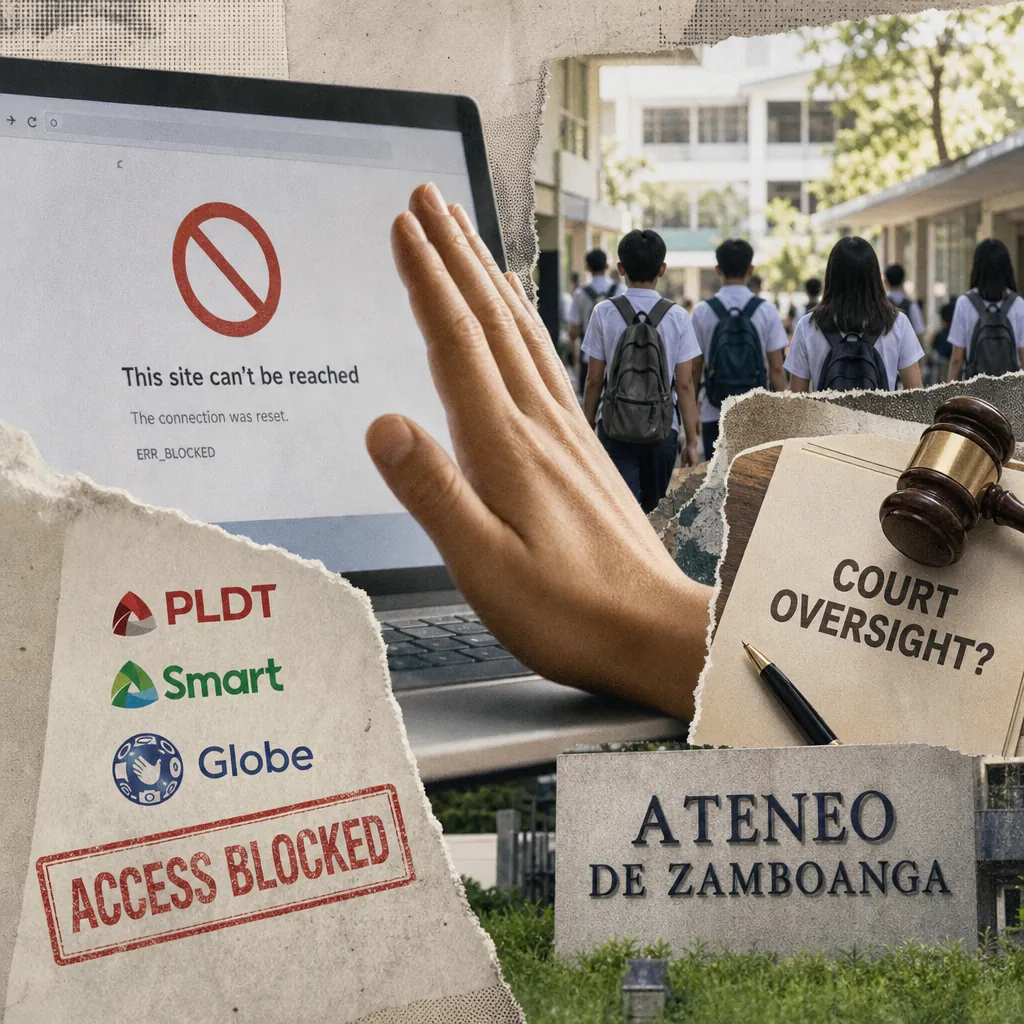
The day's conversation centered on the telecommunications industry's response to the recent school shooting at Ateneo de Zamboanga University. On Friday, August 21, PLDT and Smart announced they were blocking more than 100 websites found streaming or hosting videos of school shootings and other extreme violence. Globe Telecom joined the initiative. The blocking happens at the network level, meaning the sites go dark for every PLDT, Smart, and Globe subscriber. PLDT Chief Operating Officer Butch Jimenez said, "This is something we do not tolerate… Our networks will not be used as a channel for content that glorifies violence and puts our communities, especially our children, at risk."
The move drew immediate reaction. A blog post by Astig Ph Online highlighted the tension between PLDT's stance and legal concerns raised by former Solicitor General Florin Hilbay. Hilbay pointed out that the supreme courts of the US and the Philippines never banned "content that glorifies violence," questioning what makes a telco wiser than the courts. The block page arrives without a trial, no court order, and no published list, raising questions about who gets to decide what content is blocked.
Beyond the telco block, the day's coverage included a range of other stories. The Philippine Postal Corporation (PHLPost) warned the public against "smishing" scams using its name to extract personal and financial information. The MMDA announced a new search option on its MayHuliKa portal starting August 24, allowing motorists to check all violation records of a vehicle under the No Contact Apprehension Policy. The Department of Public Works and Highways (DPWH) is eyeing solutions to Bulacan flooding through the Pampanga River Basin Master Plan and a planned Manila Bay project.
The conversation also touched on the passing of BPO stalwart Mitch Locsin, who died at 55. Locsin was chairman of the Customer Xperience Association of the Philippines (CXAP) since 2023 and led the transformation of the Contact Center Association of the Philippines into CXAP. The CXAP mourned his passing, calling him "more than a leader. He was a colleague, mentor, and friend whose warmth, dedication, and genuine care for people touched many lives."
Key themes
- Telcos block 100+ violent websites after school shooting — PLDT, Smart, and Globe moved to block websites hosting school shooting and violent content following the Ateneo de Zamboanga shooting. The blocking happens at the network level, affecting all subscribers.
- Legal questions over who decides what gets blocked — Former Solicitor General Florin Hilbay questioned the lack of court oversight in the telcos' decision. The block page arrives without a trial, no court order, and no published list.
- PHLPost warns public against smishing scams — The Philippine Postal Corporation cautioned against fraudulent text messages using its name to extract personal and financial information. Scammers send messages with suspicious links claiming parcel delivery problems or demanding "redelivery fees."
- MMDA launches new search option on MayHuliKa portal — Starting August 24, motorists can check all violation records of a vehicle under the No Contact Apprehension Policy using either plate number and ticket number, or plate number and motor vehicle file number.
- DPWH eyes solutions to Bulacan flooding — The Department of Public Works and Highways is considering the Pampanga River Basin Master Plan and a planned Manila Bay project to ease flooding in Bulacan. DPWH Secretary Vince Dizon noted the province is surrounded by bodies of water.
- BPO stalwart Mitch Locsin dies at 55 — Locsin, chairman of the Customer Xperience Association of the Philippines, died on Wednesday. He led the transformation of the Contact Center Association of the Philippines into CXAP.
- Smart engineers restore connectivity to Balut Island after earthquake — Engineers from Smart Communications reconnected the island after a magnitude 7.8 earthquake cut off cellular connectivity. The team activated an Incident Command Center in Davao City and coordinated restoration efforts.
- Government digitalization efforts highlighted — The Philippines improved its classification from "high" to "very high" in the UN E-Government Development Index, climbing from 89th to 73rd. The country was one of only 12 cited for progress in e-participation.
How the narratives stack
Dominant — The telco block of violent websites is the dominant narrative in the captured set. Multiple articles covered the announcement, including Philstar Online's two pieces and the Astig Ph Online blog post. The story ties directly to the school shooting at Ateneo de Zamboanga University, which has heightened security concerns across the country. The coverage value of these items within the set is substantial, with the Philstar articles carrying an estimated advertising-equivalent value of over ₱700,000 combined.
Counter-narrative — The legal and procedural questions raised by former Solicitor General Florin Hilbay form a counter-narrative. While PLDT COO Butch Jimenez says there is "no debate to be had here," Hilbay argues that the supreme courts of the US and the Philippines never banned "content that glorifies violence," questioning what makes a telco wiser. This tension between corporate action and legal process is a genuine point of contention.
Emerging — The government's digitalization efforts are an emerging narrative. The Philippines' improvement in the UN E-Government Development Index and the MMDA's new search option on the MayHuliKa portal both point to a broader push toward digital government services. The UN award and the portal launch suggest this is a story that will continue to develop.
Under-covered — The Smart Communications engineers' restoration of connectivity to Balut Island after the earthquake received coverage but did not draw the same attention as the telco block. The story of engineers going on a precarious mission to reconnect an island after a disaster is a significant human-interest angle that deserves more attention.
Platform insights
- Facebook — The telco block story generated discussion on Facebook, with users debating the merits of blocking violent content versus concerns about censorship. The Astig Ph Online blog post, which framed the issue as a "very public fight over who gets to decide," likely drove engagement on the platform.
- X (formerly Twitter) — The PVL On Tour coverage, particularly Jaja Santiago's homecoming debut for Creamline, drew attention on X. The Inquirer Online articles included tweets from reporters covering the event, suggesting real-time engagement during the matches.
- YouTube — No significant YouTube activity was captured in the set. The telco block and other stories did not appear to generate video content within the monitored window.
- Reddit — No significant Reddit activity was captured in the set. The stories covered did not appear to generate discussion on the platform within the monitored window.
Key voices and communities
- PLDT and Smart leadership — PLDT COO Butch Jimenez is the primary voice defending the block, stating there is "no debate to be had here." The company's stance is that its networks will not be used as a channel for content that glorifies violence.
- Former Solicitor General Florin Hilbay — Hilbay represents the legal counterpoint, questioning the lack of court oversight in the telcos' decision. His position is that the supreme courts of the US and the Philippines never banned "content that glorifies violence."
- The Customer Xperience Association of the Philippines (CXAP) — The association mourned the passing of its chairman, Mitch Locsin, highlighting his contributions to the BPO industry. CXAP's statement emphasized Locsin's role in transforming the Contact Center Association of the Philippines into CXAP.
- DPWH Secretary Vince Dizon — Dizon is the voice behind the Bulacan flooding solutions, explaining the Pampanga River Basin Master Plan and the planned Manila Bay project. His inspection of the province and his comments on the "sandwich" position of the towns between river and sea water drove the coverage.
- MMDA — The Metropolitan Manila Development Authority announced the new search option on the MayHuliKa portal, positioning itself as a facilitator of easier traffic violation verification for motorists.
Narrative streams
Telcos block 100+ violent websites after school shooting
PLDT, Smart, and Globe moved to block more than 100 websites found streaming or hosting videos of school shootings and other extreme violence. The announcement came on Friday, August 21, following the shooting at Ateneo de Zamboanga University that killed two students, including the shooter who killed himself. The blocking happens at the network level, meaning the sites go dark for every subscriber of these telcos.
PLDT COO Butch Jimenez said, "This is something we do not tolerate… Our networks will not be used as a channel for content that glorifies violence and puts our communities, especially our children, at risk." The move covers PLDT's wireless arm Smart, so Smart subscribers also lose access to these sites.
The decision drew immediate legal questions. Former Solicitor General Florin Hilbay pointed out that the supreme courts of the US and the Philippines never banned "content that glorifies violence," questioning what makes a telco wiser than the courts. The block page arrives without a trial, no court order, and no published list, raising concerns about who gets to decide what content is blocked.
The read for the sector is that telcos are now taking an active role in content moderation, a role that traditionally belonged to government and courts. This shift raises questions about corporate power over information access and the need for clear legal frameworks to guide such decisions. The sector must navigate the tension between protecting communities and respecting due process.
Legal questions over the telco block
The Astig Ph Online blog post framed the telco block as a "very public fight over who gets to decide." The block page arrives without a trial, no court order, and no published list. PLDT COO Butch Jimenez says there is "no debate to be had here," but former Solicitor General Florin Hilbay disagrees.
Hilbay's position is that the supreme courts of the US and the Philippines never dared ban "content that glorifies violence," so what exactly makes a telco wiser? This question sits between the two positions and is one every PLDT, Smart, and Globe subscriber should be asking.
The read for the sector is that the legal framework for content moderation by private companies is unclear. Telcos are acting in response to a public tragedy, but their authority to do so without court oversight is questionable. The sector needs clearer guidelines on what constitutes acceptable content blocking and who has the authority to decide.
PHLPost warns public against smishing scams
The Philippine Postal Corporation (PHLPost) warned the public against fraudulent text messages using its name to extract personal and financial information. Scammers send messages with suspicious links claiming parcel delivery problems or demanding "redelivery fees" using credit or debit cards.
PHLPost clarified that it does not send such messages and does not ask for sensitive information like bank details, card information, passwords, or One-Time Passwords (OTPs) via text. The agency advised the public not to click suspicious links, not to provide personal or banking information, and not to make online payments to websites that are not official.
The read for the sector is that smishing scams are a growing threat to consumer trust in legitimate institutions. PHLPost's proactive warning is a model for other organizations to follow, but the sector must also work on educating the public about these scams and providing clear channels for reporting suspicious messages.
MMDA launches new search option on MayHuliKa portal
The Metropolitan Manila Development Authority (MMDA) announced a new search option on its MayHuliKa portal starting August 24. The option allows motorists to check all violation records of a vehicle under the No Contact Apprehension Policy (NCAP).
Motorists can search using either plate number and ticket number, or plate number and motor vehicle file number. The first option is for those who have received a notice of violation or traffic ticket, while the second allows users to see all NCAP violation records of a vehicle. The evidence of violations can only be seen on the web portal mayhulika.mmda.gov.ph or through the eGovPH app.
The read for the sector is that the MMDA is making it easier for motorists to verify their traffic violations, which could reduce disputes and improve compliance. The integration with the eGovPH app also signals a broader push toward digital government services, a trend that is likely to continue.
DPWH eyes solutions to Bulacan flooding
The Department of Public Works and Highways (DPWH) is considering the Pampanga River Basin Master Plan and a planned Manila Bay project to ease flooding in Bulacan. After an inspection in Bulacan on Saturday, DPWH Secretary Vince Dizon noted that the province is surrounded by bodies of water, which contribute to flooding.
Dizon explained that under the Pampanga River Basin Master Plan, mega dikes will be built to prevent waters from reaching Bulacan. "Ang tubig po na nagbabaha ng Hagonoy at Paombong [sa Bulacan] ay nanggagaling sa taas—mula Nueva Ecija pa ho 'yan—pababa ng Pampanga River [tapos] bumabagsak po ang tubig kasama na rin po diyan ang mga bayan ng Calumpit at iba pang mga bayan ng Bulacan," Dizon said.
The read for the sector is that infrastructure projects like the Pampanga River Basin Master Plan are critical to addressing flooding, which affects millions of residents and the economy. The DPWH's focus on this issue signals a commitment to long-term solutions, but the sector must also address the immediate needs of affected communities.
BPO stalwart Mitch Locsin dies at 55
Albert Mitchell "Mitch" Locsin, known as a longtime advocate and stalwart of the Philippine business process outsourcing (BPO) industry, died on Wednesday. He was 55. The cause of death was not disclosed.
The Customer Xperience Association of the Philippines (CXAP), where he served as chairman since 2023, mourned his passing. "Mitch was more than a leader. He was a colleague, mentor, and friend whose warmth, dedication, and genuine care for people touched many lives. For nearly two decades, he served the Association in various capacities—as Board Director, President, and Chairman—giving his time, heart, and leadership to the community he deeply believed in," CXAP said.
One of Locsin's most significant contributions was leading the transformation of the Contact Center Association of the Philippines (CCAP) into the Customer Xperience Association of the Philippines. He believed in the need for the Association to evolve with the industry and carried that vision forward.
The read for the sector is that Locsin's passing is a significant loss for the BPO industry, which is a major contributor to the Philippine economy. His leadership in transforming CCAP into CXAP reflects the industry's evolution from contact centers to a broader customer experience focus. The sector must continue to build on his legacy.
Smart engineers restore connectivity to Balut Island after earthquake
Residents of Balut Island, south of the tip of Davao Occidental in Mindanao, are reaping the fruits of the quiet heroism of a group of engineers who went on a precarious mission to reconnect the island after a disaster cut it off from the cellular grid. When a magnitude 7.8 earthquake rocked Southern Mindanao in early June, one of the first casualties was communication. Cell sites were damaged, and communities were cut off. On remote Balut Island, mobile connectivity was completely lost.
For engineers of Smart Communications, losing contact with the island was never an option. "Even as emergency responders assessed the destruction, we immediately activated our Incident Command Center in Davao City, and we coordinated teams so we could restore the network as quickly and safely as possible," said Harvy Calceña, a senior supervisor in Smart's Network Service Operations team in Mindanao.
The read for the sector is that network resilience is critical in disaster-prone areas like the Philippines. Smart's response demonstrates the importance of having robust disaster recovery plans and the willingness of engineers to go to great lengths to restore connectivity. The sector must continue to invest in resilient infrastructure and rapid response capabilities.
Government digitalization efforts highlighted
The Philippines improved its classification from "high" to "very high" in the UN E-Government Development Index (EGDI), rose more than 15 places in the EGDI global ranking, and moved from "high" to "very high" in the Online Service Index (OSI) after increasing by over 15 percent between 2022 and 2024. The Philippines climbed from 89th to 73rd in the EGDI and from 80th to 49th in e-participation—one of only 12 countries cited for progress.
According to DICT Undersecretary for e-Government David Almirol Jr., these milestones reflect the government's sustained efforts to digitalize public services. The UN E-Government Award was conferred to the Philippines by the UN Department of Economic and Social Affairs for its significant progress in digital government.
The read for the sector is that the Philippines is making significant strides in digital government, which could attract more investment and improve public service delivery. The sector must continue to build on this momentum, ensuring that digital services are accessible to all citizens and that the infrastructure supporting them is robust.
Conversation trajectory
- Telco block of violent websites — The block is in effect now, but the legal questions raised by Hilbay are likely to persist. Over the next 4–6 weeks, expect further debate on the authority of telcos to block content without court oversight. Watch for any legal challenges or government statements on the matter.
- MMDA MayHuliKa portal — The new search option starts August 24. Over the next 2–4 weeks, monitor how motorists use the portal and whether it reduces disputes over traffic violations. The integration with the eGovPH app could also drive more users to the platform.
- Bulacan flooding solutions — The DPWH's plans are in the early stages. Over the next 3–6 months, watch for progress on the Pampanga River Basin Master Plan and the Manila Bay project. The next monsoon season will test the effectiveness of any interim measures.
- Government digitalization — The UN award and the MMDA portal launch signal a broader push toward digital government. Over the next 6–12 months, expect more agencies to launch digital services. Watch for the DICT's next initiatives and how they are received by the public.
- Trigger events — The next major trigger would be another school shooting or violent incident that prompts further telco action. Also watch for any legal challenges to the block, which could set a precedent for content moderation by private companies.
Response guidance
- Content moderation policies — Telcos should clearly communicate their content moderation policies to the public, including the criteria for blocking and the process for appealing a block. Transparency will help address concerns about censorship and build trust.
- Legal frameworks — The sector should engage with lawmakers and regulators to develop clear legal frameworks for content moderation by private companies. This will provide guidance for future decisions and reduce the risk of legal challenges.
- Consumer education — Organizations like PHLPost should continue to educate the public about scams like smishing. Clear communication about what the organization does and does not do can help consumers avoid falling victim to fraud.
- Digital services — Government agencies should continue to expand digital services, but must ensure they are accessible to all citizens, including those without internet access or digital literacy. The MMDA's MayHuliKa portal is a good example, but more needs to be done.
- Disaster resilience — Telcos should highlight their disaster response efforts, like Smart's restoration of connectivity to Balut Island. These stories build public trust and demonstrate the sector's commitment to serving communities in times of crisis.
See the full picture behind today's signals.
This report draws from Media Meter's MediaWatch, our real-time monitoring engine tracking 2,470+ Philippine sources across print, broadcast, digital, and social. Explore how the platform turns raw coverage into decision-grade intelligence, then see how it's configured for teams like yours — whether you're in PR agencies, corporate comms, government, or marketing.
Want more? Browse our Report Library for sector and crisis intelligence, or request a demo and we'll have your brand set up before the call.
Want this kind of intelligence on your brand?
This brief is built on the same MediaWatch methodology that runs continuously across every brand we monitor. See your competitive landscape, Impact Score, and narrative trajectory in a 30-minute demo.