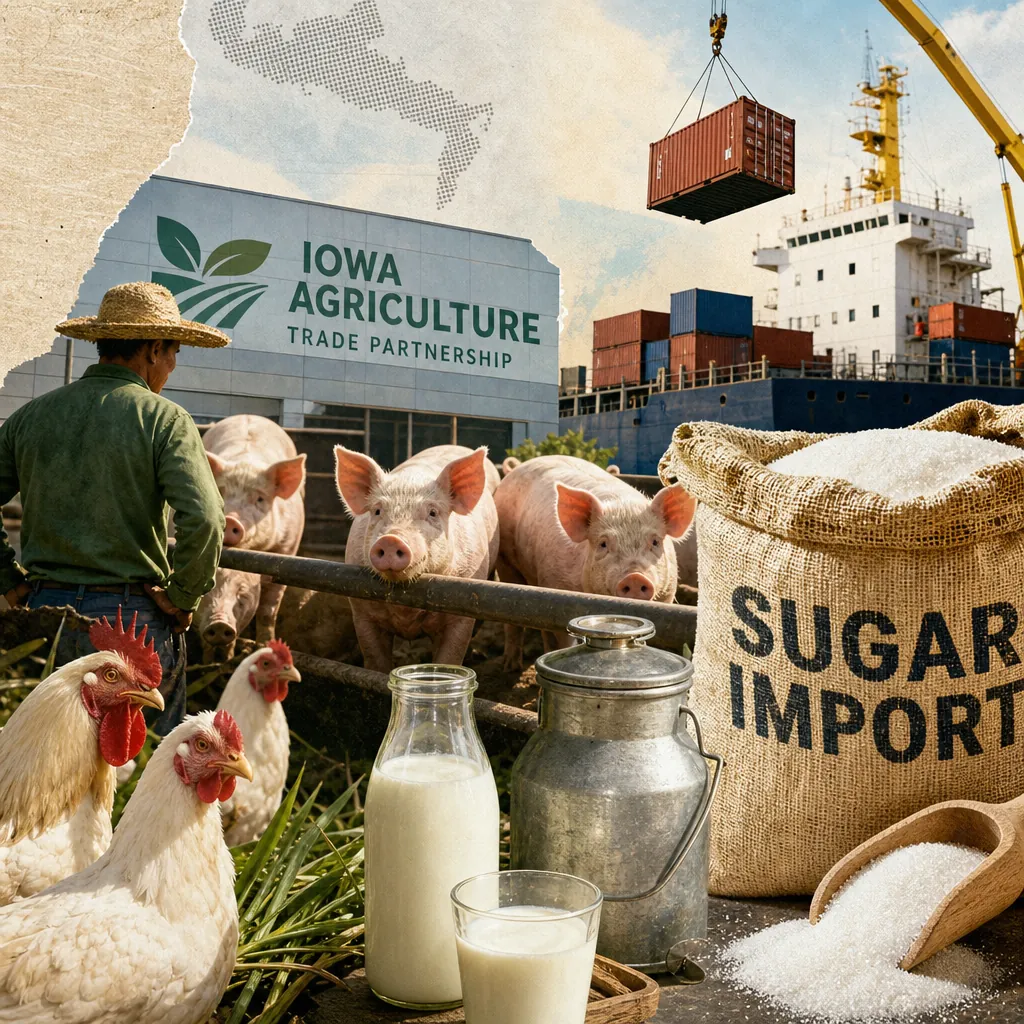
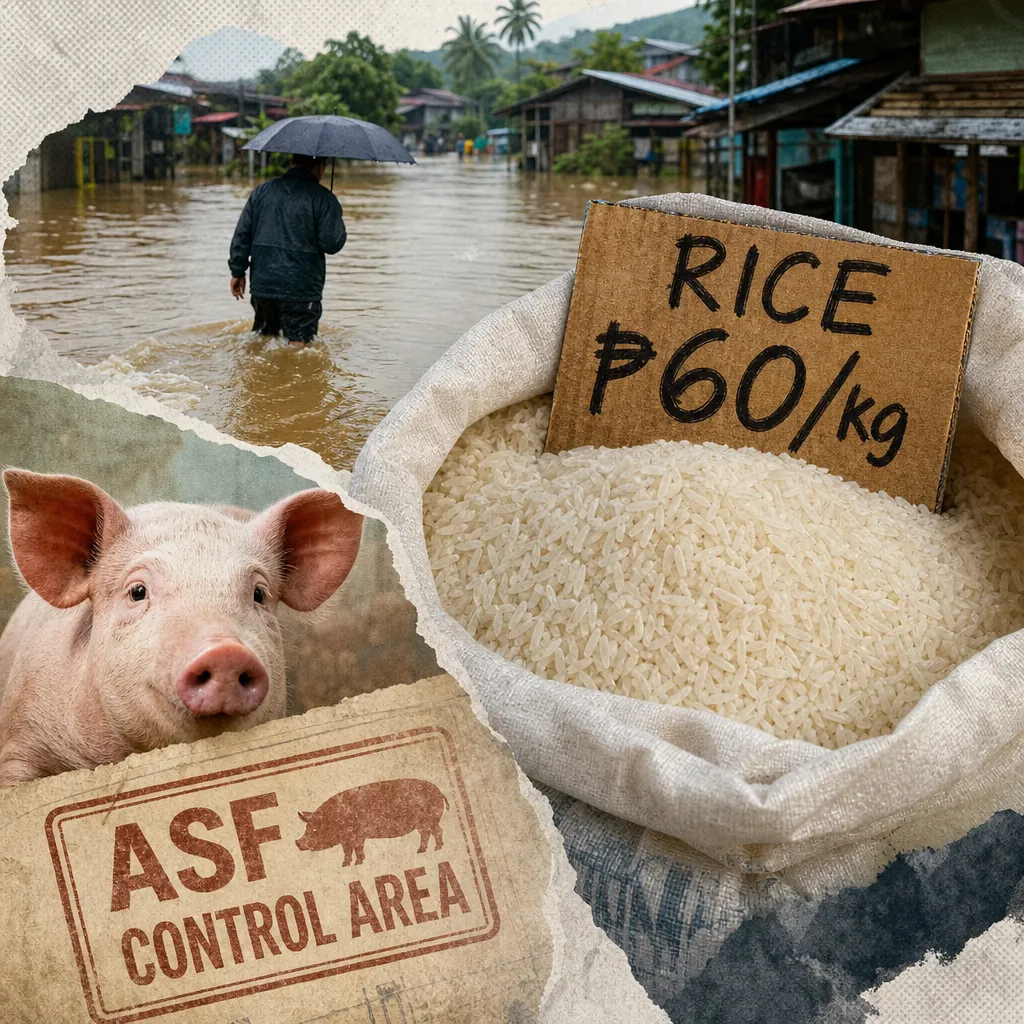
ASF outbreaks spread in Benguet, Zamboanga; hog prices set
African swine fever outbreaks in Benguet and Zamboanga del Sur prompt culling, indemnification, and floor prices for hogs, while rice prices surge ahead of a weak harvest.
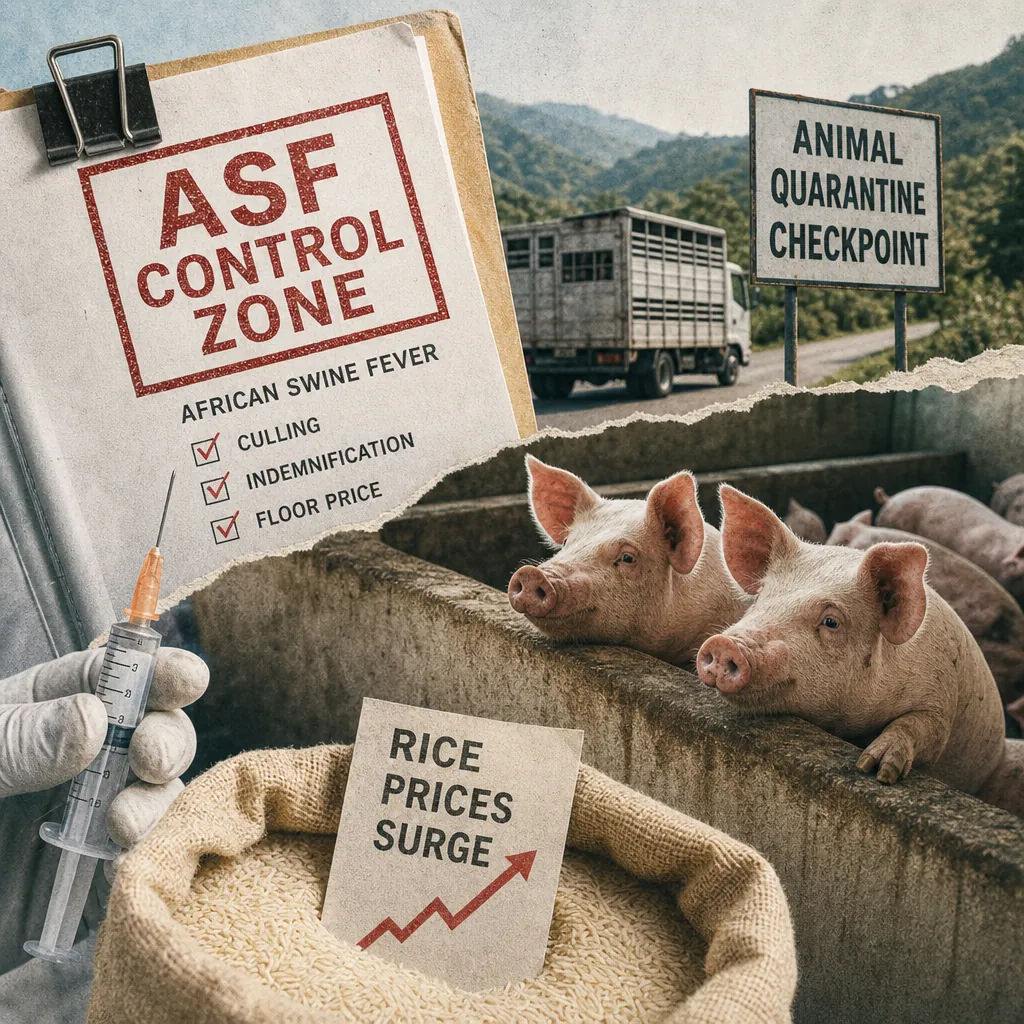
African swine fever (ASF) is tightening its grip on Philippine hog farming, with new outbreaks in Benguet and Zamboanga del Sur prompting culls, indemnification funds, and government-imposed floor prices to protect growers. The developments come as rice prices climb 22% ahead of a forecast weak harvest, signaling a broader agricultural squeeze.
In Benguet, provincial veterinarians reported that 380 pigs have been lost to culling and disease in 2026, with damages estimated at P7.77 million across the municipalities of Itogon, La Trinidad, and Sablan. Provincial Veterinarian Dr. Purita Lesing said Itogon recorded the highest concentration with 21 cases, followed by La Trinidad with 10 and Sablan with two. Local officials have allocated about P2 million for farmer indemnification but plan to request additional relief from the Department of Agriculture's Cordillera regional office. Lesing urged farmers to report dead pigs immediately and to stop dumping carcasses in waterways, advising proper burial instead.
Meanwhile, Zamboanga del Sur Governor Divina Grace Yu signed Executive Order No. 12-A on August 17, setting a floor price for live hogs at P150–P180 per kilo and pork meat at P260–P290 per kilo. The order bars traders, vendors, and slaughterhouse operators from transacting below these thresholds, a measure crafted after consultations with hog raisers to shield them from low farmgate prices amid ASF threats.
These outbreaks are part of a recurring pattern. ASF, a viral disease fatal to pigs but harmless to humans, has periodically hit Philippine hog farms since 2019, causing massive culls and disrupting pork supply. The current flare-ups in Benguet and Zamboanga del Sur echo earlier outbreaks in other provinces, prompting similar responses. The floor price in Zamboanga del Sur mirrors a similar measure in Negros Occidental, indicating a regional trend of government intervention to stabilize the industry.
On the rice front, the Philippine Statistics Authority (PSA) reported that regular milled rice averaged P49.61 per kilogram from August 1 to 5, up 22.16% from P40.61/kg during the same period in 2025. This is slightly higher than the P49.32/kg recorded in early July. The increase comes as the Department of Agriculture braces for a weaker third-quarter palay (unmilled rice) harvest, projected to fall 13.3% to 3.25 million metric tons due to El Niño. In contrast, second-quarter palay output grew 5.7% to 4.63 million metric tons.
These agricultural pressures are unfolding against a backdrop of broader economic concerns. A BusinessMirror editorial highlighted that nearly two-thirds of Filipino households cannot afford a P10,000 hospital bill, framing illness as an economic catastrophe that erases savings and futures. While not directly about agriculture, it underscores the fragility of rural livelihoods, where a failed harvest or a sick pig can push families into ruin.
In the corporate sphere, Mitsubishi Motors Philippines introduced its first plug-in hybrid electric vehicle, the Outlander PHEV, signaling a shift toward electrification in the automotive sector. This development, while unrelated to agriculture, reflects the country's gradual adoption of cleaner technologies, which could have long-term implications for fuel and energy demand.
On the technology front, the Department of Trade and Industry (DTI) and Converge ICT Solutions inaugurated an AI and Scale-Up Center in Makati to help micro, small, and medium enterprises (MSMEs) harness artificial intelligence. The 380-square-meter facility offers free training and accelerator pods for startups, aiming to keep small businesses competitive in the digital age.
These stories, while diverse, share a common thread: the intersection of policy, economic pressure, and resilience. For the agriculture sector, the immediate concern remains ASF containment and rice price stability, as these directly affect food security and farmer incomes.
Key themes
- ASF outbreaks in Benguet and Zamboanga del Sur prompt culls and indemnification — In Benguet, 380 pigs have been lost to culling and disease, with P7.77 million in damages. Zamboanga del Sur has set floor prices for hogs and pork to protect growers.
- Government intervention through floor prices and indemnification — Zamboanga del Sur's Executive Order No. 12-A sets minimum buying prices for live hogs and pork. Benguet has allocated P2 million for farmer indemnification and seeks additional funds.
- Rice prices surge 22% ahead of weak harvest — Regular milled rice averaged P49.61/kg in early August, up 22.16% year-on-year. The PSA projects a 13.3% drop in third-quarter palay output due to El Niño.
- El Niño threatens agricultural production — The anticipated dry spell is expected to reduce palay harvest, contributing to higher rice prices.
- Biosecurity measures and farmer education — Benguet veterinarians are tightening biosecurity, urging farmers to report dead pigs and avoid dumping carcasses in waterways.
- Economic fragility of rural households — A BusinessMirror editorial highlights that illness can be economically ruinous for poor families, with nearly two-thirds unable to afford a P10,000 hospital bill.
- Corporate and tech developments offer contrast — Mitsubishi's PHEV launch and the DTI-Converge AI center show other sectors advancing, but agriculture remains burdened by disease and price volatility.
How the narratives stack
Dominant — The dominant narrative in the captured set is the ASF crisis, with two separate stories detailing outbreaks and government responses. The Benguet story provides specific figures on pig losses and damages, while the Zamboanga del Sur story introduces a policy intervention. Together, they paint a picture of a sector under siege, with authorities scrambling to contain the disease and mitigate economic fallout. This dominance is within the monitored sample, which may be weighted toward agricultural news, but the depth of detail suggests genuine significance.
Counter-narrative — A counter-narrative emerges from the rice price story, which shifts focus from livestock to staple crops. While ASF affects pork supply and farmer incomes, rice price hikes hit every Filipino consumer. The PSA data shows a 22% year-on-year increase, driven by El Niño-related production shortfalls. This narrative complicates the picture: even as authorities address ASF, they face a parallel crisis in rice affordability.
Emerging — An emerging narrative is the role of technology and corporate investment in economic resilience. The DTI-Converge AI center and Mitsubishi's PHEV launch suggest a forward-looking approach to growth, but they also highlight a divide: while some sectors modernize, agriculture remains vulnerable to disease and climate shocks. This contrast may shape future policy discussions on rural development and diversification.
Under-covered — The BusinessMirror editorial on illness as economic ruin is under-covered in the sense that it addresses a systemic issue—healthcare costs—that intersects with agriculture but receives less attention than immediate crises. The editorial argues that a single hospitalization can devastate a family, a reality that likely applies to many farming households. This story deserves more coverage as it connects health, poverty, and agricultural livelihoods.
Platform insights
- Facebook — Facebook likely served as the primary platform for sharing news articles about ASF and rice prices, given its widespread use in the Philippines. Community groups and local government pages may have amplified the Benguet and Zamboanga del Sur stories, with users expressing concern and sharing information about affected areas. Engagement likely included comments from farmers and consumers, though specific figures are not available.
- X (formerly Twitter) — X may have seen shorter, real-time updates from journalists and government agencies, such as the PSA's rice price report. Hashtags like #ASF and #RicePrices could have trended, but without engagement data, this remains speculative. The platform's role in disseminating official statistics and breaking news is plausible.
- YouTube — YouTube might have hosted video reports from local news outlets like Bombo Radyo, which covered the ISELCO 1 electricity rate increase—a related cost pressure on households. Videos could include interviews with officials, providing a visual dimension to the agricultural and economic stories.
- Reddit — Reddit's role appears minimal in the captured set, with no direct posts on ASF or rice. However, general food-related threads, such as the one on dietary restrictions, suggest that food topics do surface, but not necessarily agricultural policy.
Key voices and communities
- Provincial veterinarians and local government officials — Dr. Purita Lesing of Benguet and Governor Divina Grace Yu of Zamboanga del Sur are central figures, providing official data and policy responses. Their statements shape the narrative of government action and farmer support.
- Farmers and hog raisers — The affected communities are the primary stakeholders, facing direct losses from culling and price drops. Their voices, while not directly quoted, are implied in the indemnification requests and floor price consultations.
- Department of Agriculture (DA) — The DA is involved in both ASF response and rice price management, with regional offices coordinating relief. Its role is critical in allocating funds and implementing biosecurity measures.
- Philippine Statistics Authority (PSA) — The PSA provides the data on rice prices and palay production, serving as the authoritative source for economic indicators. Its reports drive media coverage and policy discussions.
- BusinessMirror editorial board — The editorial on illness as economic ruin represents a broader advocacy voice, linking health and poverty. This perspective adds a human dimension to the economic challenges facing rural families.
Narrative streams
ASF outbreaks in Benguet and Zamboanga del Sur
The African swine fever outbreaks in Benguet and Zamboanga del Sur are the most concrete developments in the captured set. In Benguet, the Provincial Veterinary Office reported 380 pigs lost to culling and disease, with damages estimated at P7.77 million. The outbreak has affected Itogon (21 cases), La Trinidad (10), and Sablan (2). Provincial Veterinarian Dr. Purita Lesing emphasized the need for farmers to report dead pigs and avoid dumping carcasses in waterways, as improper disposal can spread the virus.
In Zamboanga del Sur, Governor Divina Grace Yu signed Executive Order No. 12-A on August 17, setting floor prices for live hogs (P150–P180/kg) and pork meat (P260–P290/kg). The order aims to protect growers from low farmgate prices amid ASF threats, following consultations with industry players. This measure mirrors a similar policy in Negros Occidental, indicating a coordinated regional approach.
ASF is a highly contagious viral disease affecting pigs, with no cure or vaccine. It does not infect humans but causes severe economic losses. The Philippines has battled ASF since 2019, with outbreaks leading to mass culls and pork shortages. The current flare-ups suggest the disease remains endemic, requiring ongoing vigilance.
Read for the sector: Hog farmers in affected areas face immediate income losses, but government interventions like floor prices and indemnification provide a safety net. However, the recurrence of ASF highlights the need for stronger biosecurity and possibly a shift toward more resilient farming practices. The sector must adapt to a reality where ASF is a persistent threat, not a one-time crisis.
Rice prices surge 22% ahead of weak harvest
The Philippine Statistics Authority reported that regular milled rice averaged P49.61 per kilogram from August 1 to 5, up 22.16% from P40.61/kg in the same period last year. This is slightly higher than the P49.32/kg recorded in early July. The increase is attributed to a projected 13.3% drop in third-quarter palay production, expected to fall to 3.25 million metric tons due to El Niño. In contrast, second-quarter output grew 5.7% to 4.63 million metric tons.
El Niño, a climate pattern characterized by warmer ocean temperatures, typically brings drier conditions to the Philippines, reducing agricultural yields. The Department of Agriculture is bracing for a weaker harvest, which could further strain rice supplies and push prices higher.
Read for the sector: Rice is a staple food, and price increases directly affect consumers, especially low-income households. For farmers, a weak harvest means lower incomes, but higher prices may offset some losses. The government may need to consider importation or other measures to stabilize supply and prices. The sector faces a dual challenge: managing climate risks and ensuring food affordability.
Government intervention and economic fragility
The ASF and rice price stories both highlight the role of government intervention in stabilizing agricultural markets. In Zamboanga del Sur, the floor price is a direct intervention to protect farmers. In Benguet, indemnification funds provide compensation for culled pigs. These measures are reactive, addressing immediate crises rather than preventing them.
The BusinessMirror editorial on illness as economic ruin adds a broader context. It argues that a single hospitalization can devastate a family, with nearly two-thirds of households unable to afford a P10,000 hospital bill. This fragility is likely exacerbated in rural areas where farming is the primary livelihood. A sick pig or a failed harvest can push families into poverty, making them more vulnerable to health shocks.
Read for the sector: Agricultural policies must consider the holistic well-being of farming families, not just production metrics. Social safety nets, such as health insurance and emergency funds, are crucial to buffer against shocks. The sector's resilience depends on addressing these underlying vulnerabilities.
Corporate and tech developments as a contrast
While agriculture faces crises, other sectors are advancing. Mitsubishi Motors Philippines introduced the Outlander PHEV, its first plug-in hybrid electric vehicle, signaling a shift toward electrification. The Department of Trade and Industry and Converge ICT Solutions inaugurated an AI and Scale-Up Center to help MSMEs adopt artificial intelligence. These developments reflect a modernizing economy, but they also highlight a divide: while some sectors embrace innovation, agriculture remains burdened by disease and climate risks.
Read for the sector: The contrast suggests that economic growth is uneven, with agriculture lagging behind. To bridge this gap, investments in agricultural technology and infrastructure are needed. The AI center, for instance, could potentially be used to help farmers access market information or adopt precision farming, but such applications are not yet widespread.
Conversation trajectory
- ASF containment and spread (observation window: next 4–6 weeks) — The Benguet and Zamboanga del Sur outbreaks may spread to neighboring provinces if biosecurity measures fail. Monitoring reports from the Department of Agriculture and provincial veterinary offices will indicate whether the disease is contained or expanding. Trigger events: new outbreak reports, additional culls, or changes in quarantine protocols.
- Rice prices and harvest (observation window: next 2–3 months) — The third-quarter palay harvest, expected in September, will be a critical indicator. If production falls as projected, rice prices may continue to rise, prompting government action such as importation or price controls. Trigger events: PSA's next agricultural price report, DA's harvest assessment, and any policy announcements.
- Government policy responses (observation window: next 1–2 months) — The floor price in Zamboanga del Sur may be replicated in other provinces if ASF pressures persist. Indemnification requests from Benguet could lead to additional funding from the DA. Trigger events: new executive orders, budget allocations, or statements from the DA.
- El Niño impact (observation window: ongoing) — The full effects of El Niño on agriculture will unfold over the coming months. Beyond rice, other crops may be affected, potentially leading to broader food price inflation. Trigger events: weather forecasts, crop damage reports, and adjustments to agricultural production targets.
Response guidance
- For agricultural communicators: Emphasize biosecurity measures and proper carcass disposal to prevent ASF spread. Provide clear, actionable guidance to farmers on reporting sick pigs and complying with quarantine protocols. Use local languages and channels to reach rural communities.
- For government agencies: Communicate the rationale behind floor prices and indemnification programs, ensuring farmers understand how to access support. Highlight the government's commitment to protecting livelihoods while managing disease risks. Be transparent about the extent of outbreaks and the steps being taken.
- For consumer-facing communicators: Address rice price increases by explaining the causes (El Niño, supply chain) and any government measures to stabilize prices. Provide practical tips for consumers to manage food costs, such as buying in bulk or exploring alternative staples.
- For corporate entities: When announcing innovations like PHEVs or AI centers, acknowledge the broader economic context, including challenges in agriculture. Position these developments as part of a national effort to modernize and build resilience, rather than as isolated corporate achievements.
- Sensitive topics: Avoid downplaying the severity of ASF or rice price hikes. Be factual and empathetic, recognizing the real hardships faced by farmers and consumers. Do not speculate on future outbreaks or price movements without evidence.
See the full picture behind today's signals.
This report draws from Media Meter's MediaWatch, our real-time monitoring engine tracking 2,470+ Philippine sources across print, broadcast, digital, and social. Explore how the platform turns raw coverage into decision-grade intelligence, then see how it's configured for teams like yours — whether you're in PR agencies, corporate comms, government, or marketing.
Want more? Browse our Report Library for sector and crisis intelligence, or request a demo and we'll have your brand set up before the call.
Want this kind of intelligence on your brand?
This brief is built on the same MediaWatch methodology that runs continuously across every brand we monitor. See your competitive landscape, Impact Score, and narrative trajectory in a 30-minute demo.