PH Agri Output Rises; Sugar Imports Eyed for Stability
The Philippines reports higher Q2 hog, dairy, and chicken output, while the agriculture chief defends sugar imports as a market-stabilizing measure. Iowa seeks expanded farm trade with the country.
The Philippines' agriculture sector posted mixed signals on Friday, August 21, 2026, with government data showing higher second-quarter output for hogs, dairy, and chicken, even as the agriculture chief defended sugar imports as a tool for market stability and a US state signaled interest in expanding farm trade with the country. The day's coverage, captured across online news and blogs, also touched on flood-related waste management in Thailand, a US food recall surge, and a Filipino brand's US expansion, but the core agriculture stories centered on domestic production gains and trade policy.
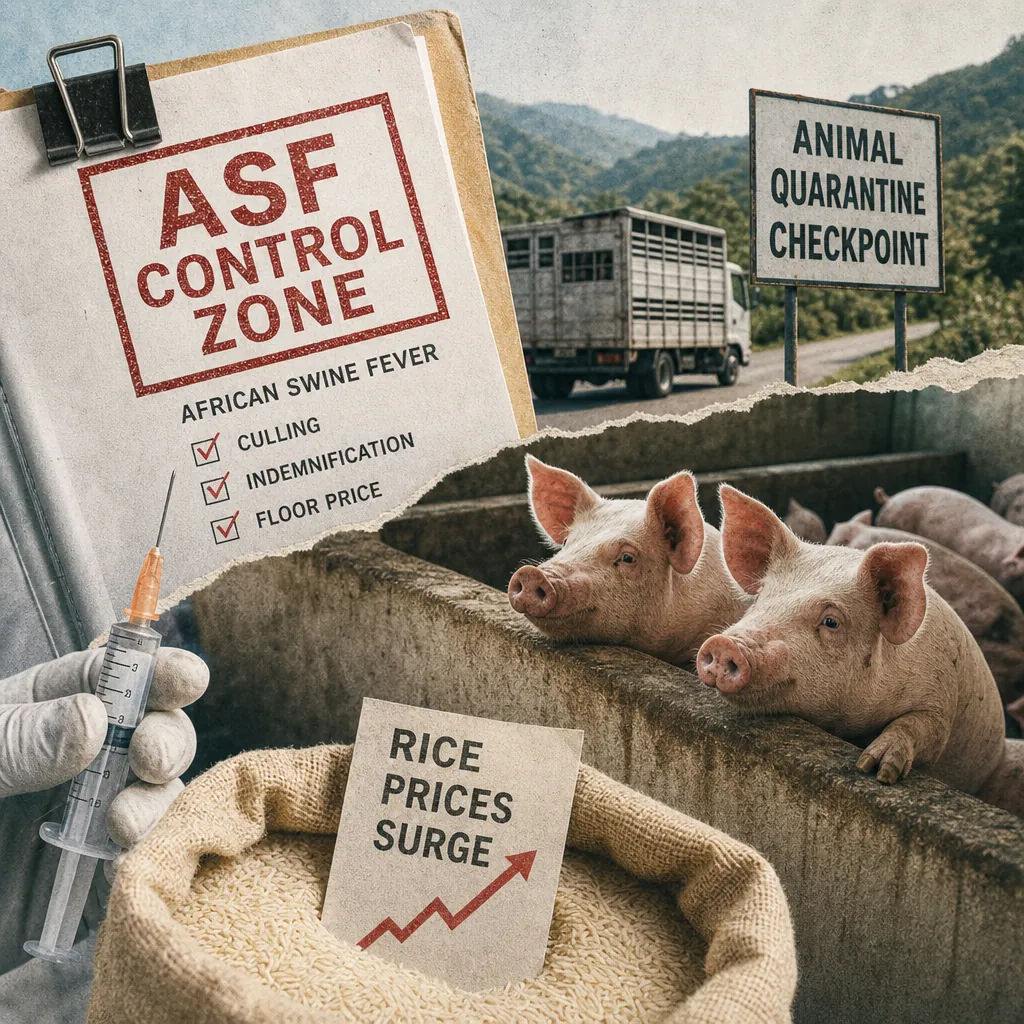
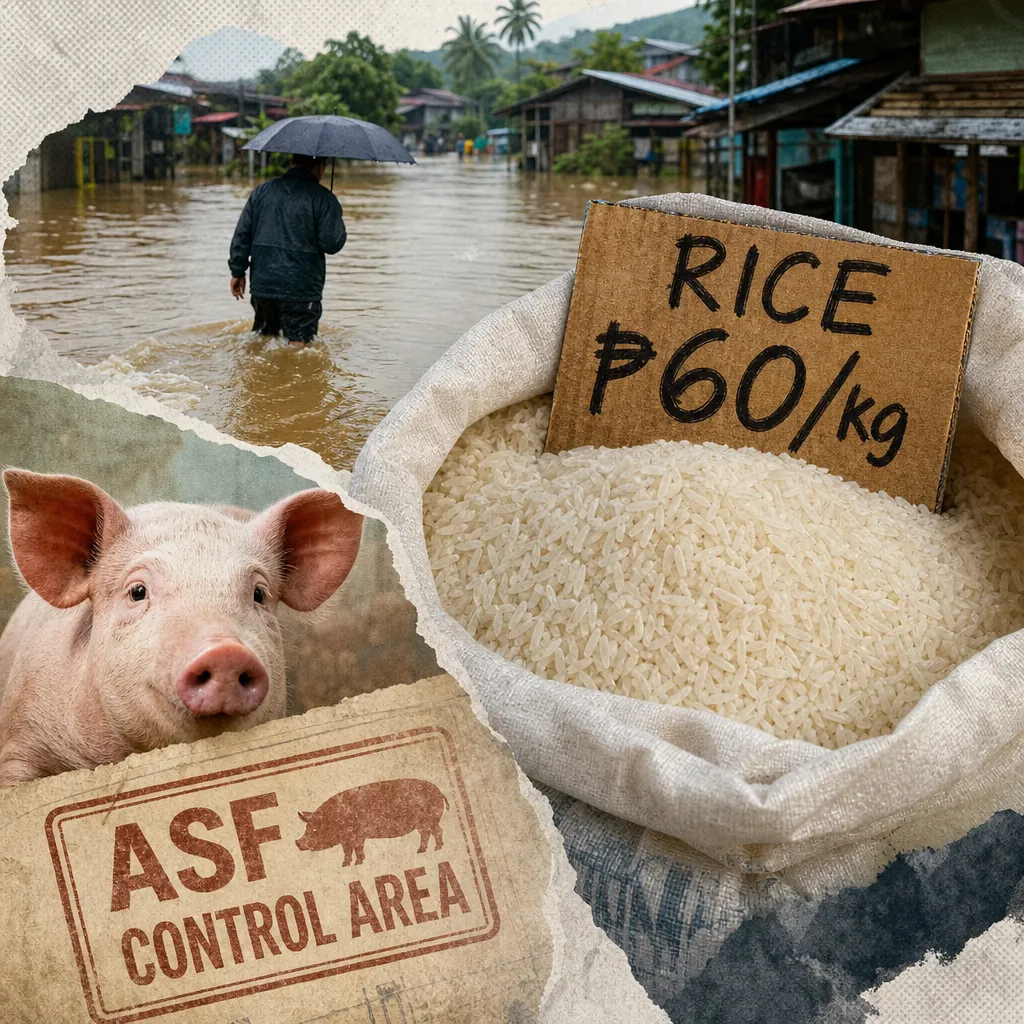
Hog production rose 5.6 percent to 412,280 metric tons (MT) liveweight in the second quarter, up from 390,490 MT in the same period last year, according to the Philippine Statistics Authority. Dairy output jumped 37.8 percent to 13,580 MT from 9,860 MT a year earlier, while chicken production also increased. These figures, reported by the Manila Times, indicate a robust recovery in livestock and dairy, though hog inventory declined 1 percent to 8.93 million heads as of June 30, suggesting farmers are culling herds amid lower prices. The average farmgate price of hogs for slaughter fell 18.6 percent to P172.44 per kilogram from P211.91 a year earlier, a significant drop that could squeeze farmer incomes despite higher volumes.
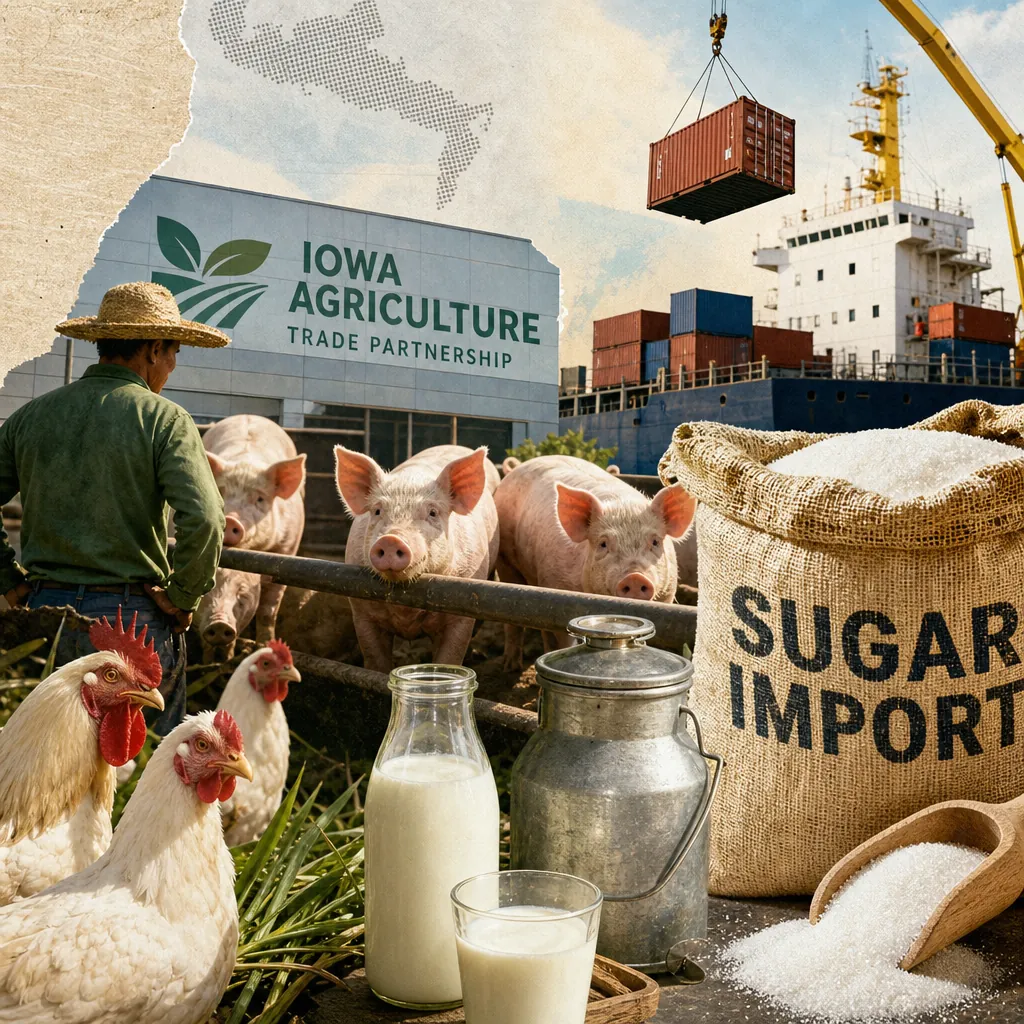
Agriculture Secretary Francisco Tiu Laurel Jr. reiterated that sugar imports are intended only for market stability, not to undermine local producers. He said the government is refining guidelines for future imports and will consult industry stakeholders. "Our fundamental policy remains clear. We want a Philippine sugar industry that is stronger, more productive, more competitive, and more self-reliant," Tiu Laurel said. He cited challenges including the red-striped soft scale insect (RSSI), high production costs, labor shortages, and limited access to technology and financing. The statement follows a visit by First Lady Liza Araneta Marcos to Negros, a major sugar-producing region, where officials and stakeholders agreed on the need for a balanced approach.
Meanwhile, Iowa Agriculture Secretary Mike Naig, speaking on the sidelines of the Iowa State Fair, said there is "a very compatible opportunity" for agricultural trade between the Philippines and Iowa, citing the country's growing economy and population. Naig noted that Iowa is exploring ways to export more agricultural products, including pork, corn, and soybeans, to the Philippines. This comes as the Philippines balances domestic production with imports to meet food demand.
The day's coverage also included a feature on women-led enterprises scaling up at a trade fair, a story on Filipino fishermen in Candaba, Pampanga, who catch tons of fish during the rainy season, and a recall of Walmart tomato soup kits in the US over Listeria risk. These stories, while not directly about Philippine agriculture, reflect broader food system issues.
Key themes
- Hog output up 5.6% in Q2, but farmgate prices fall 18.6% — The Philippines' hog production rose to 412,280 metric tons in the second quarter, but the average farmgate price dropped to P172.44 per kilogram, squeezing farmer margins. This suggests higher volumes are not translating into higher incomes.
- Dairy production surges 37.8% — Dairy output jumped to 13,580 metric tons in Q2, with the dairy animal inventory growing 6.6% to 165,860 heads. This indicates a strong push for local dairy self-sufficiency.
- Sugar imports framed as market stabilizer — Agriculture Secretary Francisco Tiu Laurel Jr. defended sugar imports as a tool to keep prices stable, while committing to consultations with stakeholders. The policy aims to balance consumer protection with producer competitiveness.
- Iowa eyes expanded farm trade with PH — Iowa Agriculture Secretary Mike Naig sees "a very compatible opportunity" for agricultural trade, citing the Philippines' growing economy and population. This could open new export markets for US agricultural products.
- US food recall surge sparks consumer concern — Over 160 food recalls have been issued in the US in 2026, including recent cyclospora, salmonella, and listeria outbreaks. Social media posts listing simultaneous recalls are going viral, raising questions about food safety.
- Flood waste management in Thailand — Thailand's Pua district faces 3,800 tonnes of flood waste, prompting the establishment of a pollution response center. This highlights the environmental challenges of natural disasters.
- Women-led enterprises scale up at trade fair — The Women Strong Network Hybrid Trade Fair showcased women-led businesses transitioning from local projects to mainstream retail, supporting localized economic growth.
- Filipino fishermen thrive during rainy season — In Candaba, Pampanga, fishermen catch tons of fish in the Pampanga River during the rainy season, a unique adaptation to seasonal changes.
How the narratives stack
Dominant — The dominant narrative in the captured set is the Philippine agriculture sector's production gains and policy responses. The Manila Times articles on hog, dairy, and chicken output, along with the sugar import statement, anchor this narrative. These stories are significant because they directly affect food supply and farmer livelihoods. The coverage value of these items is notable, with the hog/dairy article carrying an estimated advertising-equivalent value of ₱276,800 and the sugar article ₱258,116, indicating substantial media attention.
Counter-narrative — A counter-narrative emerges from the US food recall surge, which contrasts with the positive production story. Articles on the alfalfa sprout outbreak, Walmart tomato soup recall, and the broader recall list suggest that food safety remains a pressing concern, even as production increases. This narrative is driven by consumer anxiety and viral social media posts, as seen in the Yahoo Philippines article on social media keeping score of recalls.
Emerging — An emerging narrative is the expansion of Philippine agricultural exports and trade partnerships. The Iowa trade story and the Mega Sardines US expansion (though not strictly agriculture) point to a growing internationalization of Philippine food products. This could be a significant trend for the sector, offering new revenue streams.
Under-covered — The story of women-led enterprises scaling up at the trade fair received relatively little coverage compared to its potential significance. This story highlights the role of women in agriculture and food production, and the importance of MSMEs in the sector. It was covered by the Daily Tribune but did not generate the same level of attention as the production data or trade stories.
Platform insights
- Facebook — Facebook likely saw high engagement on posts about food recalls, as users share warnings with family and friends. The viral nature of recall lists suggests that Facebook is a primary platform for disseminating food safety alerts. Posts from official pages like the FDA or news outlets may have received significant shares and comments.
- X (formerly Twitter) — X was likely active with discussions on the US-Iran conflict's impact on oil prices, which indirectly affects agriculture through fuel costs. Journalists and analysts may have posted updates on the Iowa trade story, using hashtags like #agriPH or #trade. The platform's real-time nature makes it ideal for breaking news on recalls and policy statements.
- Reddit — Reddit threads, such as the one on Trader Joe's discontinued dip, show consumer engagement with food products. While not directly about Philippine agriculture, these discussions reflect broader food trends that could influence consumer preferences. The Neutrogena boycott thread, though unrelated, demonstrates Reddit's power in amplifying consumer grievances.
- YouTube — YouTube may have seen content from shows like "Pinas Sarap," which featured the Candaba fishermen. Such programs highlight local food sources and agricultural practices, potentially driving interest in sustainable fishing and local produce. The engagement on these videos could be measured in views and comments, though specific figures are not available in the captured set.
Key voices and communities
- Government officials — Agriculture Secretary Francisco Tiu Laurel Jr. and Iowa Agriculture Secretary Mike Naig are key voices shaping the trade and policy narrative. Their statements provide official positions on sugar imports and trade opportunities.
- Farmers and fisherfolk — The fishermen of Candaba, featured in "Pinas Sarap," represent the grassroots perspective. Their story humanizes the sector and highlights the resilience of rural communities.
- Women entrepreneurs — The women-led enterprises at the trade fair, such as Ma. Cecilia Mina of Tinguian Ethnic Art Handloom Woven Products, are emerging voices in the sector. They demonstrate the potential of MSMEs to scale up and contribute to economic growth.
- Consumer advocates and health officials — In the US, the CDC and FDA are key voices on food recalls, while social media influencers like @jrmilks amplify consumer concerns. These voices shape the food safety narrative.
- Industry analysts — Analysts like Leo Bellas of Jetti Petroleum provide insights on fuel price movements, which affect agricultural production costs. Their commentary is crucial for understanding the economic pressures on farmers.
Narrative streams
Philippine livestock and dairy output rises in Q2, but price drops worry farmers
The Philippine Statistics Authority reported that hog production rose 5.6 percent to 412,280 metric tons (MT) liveweight in the second quarter of 2026, compared to 390,490 MT in the same period last year. Dairy production jumped 37.8 percent to 13,580 MT from 9,860 MT, and chicken output also increased. These figures, published by the Manila Times, indicate a robust recovery in the livestock sector. However, the average farmgate price of hogs for slaughter fell 18.6 percent to P172.44 per kilogram from P211.91 a year earlier, a significant drop that could squeeze farmer incomes despite higher volumes. The hog inventory as of June 30 declined 1 percent to 8.93 million heads, suggesting farmers are culling herds amid lower prices. Central Luzon was the largest hog-producing region, accounting for 58,450 MT, or 14.2 percent of total output, followed by Calabarzon, Northern Mindanao, Central Visayas, and Davao. The dairy animal inventory grew 6.6 percent to 165,860 heads, indicating a strong push for local dairy self-sufficiency. The read for the sector is that while production is up, farmers face a cost-price squeeze, which could lead to further herd reductions and potential supply shortages in the future. The government may need to intervene to support farmgate prices or provide subsidies to maintain production levels.
Sugar imports: a balancing act for market stability
Agriculture Secretary Francisco Tiu Laurel Jr. defended the government's sugar import policy, stating that imports are only for market stability and not to undermine local producers. He said the government is refining guidelines for future imports and will present them to industry stakeholders for consultation. "Our fundamental policy remains clear. We want a Philippine sugar industry that is stronger, more productive, more competitive, and more self-reliant," Tiu Laurel said. He cited challenges including the red-striped soft scale insect (RSSI), high production and input costs, labor shortages, and limited access to technology and financing. The statement follows a visit by First Lady Liza Araneta Marcos to Negros, a major sugar-producing region, where officials and stakeholders agreed on the need for a balanced approach. The read for the sector is that sugar imports will continue as a tool to manage prices, but the government is committed to consulting stakeholders and supporting local producers. The challenge is to balance consumer protection with producer competitiveness, especially given the industry's structural issues.
Iowa sees trade potential in the Philippines
Iowa Agriculture Secretary Mike Naig, speaking on the sidelines of the Iowa State Fair, said there is "a very compatible opportunity" for agricultural trade between the Philippines and Iowa, citing the country's growing economy and population. "I think really across the board, there's really a range of opportunities," Naig said without providing specific projections. "What I witnessed was a growing economy, a growing culture, and a growing population, and one that needs a lot of things." Iowa is exploring ways to export more agricultural products, including pork, corn, and soybeans, to the Philippines. This comes as the Philippines balances domestic production with imports to meet food demand. The read for the sector is that increased trade with Iowa could provide new market access for Philippine agricultural products, but also increase competition for local farmers. The government will need to ensure that trade agreements benefit domestic producers while meeting consumer needs.
US food recall surge: a cautionary tale for food safety
The US has seen over 160 food recalls in 2026, according to data from the FDA and USDA, with recent outbreaks of cyclospora, salmonella, and listeria. Social media posts listing simultaneous recalls are going viral, raising consumer concerns. The Yahoo Philippines article "Social media is keeping score of every food recall this summer" highlights two Threads posts that list seven simultaneous food contamination situations, including cyclospora in iceberg lettuce, salmonella in eggs, and listeria in soft cheese. The article notes that the lists are largely accurate, but the total number of recalls in 2026 is not pacing to be higher than 2025, which saw 320 recalls. The read for the sector is that food safety remains a critical issue, and companies must prioritize prevention and transparency to maintain consumer trust. The viral nature of recall lists underscores the power of social media in shaping public perception.
Flood waste management in Thailand: environmental challenges
Thailand's Pua district is preparing to manage about 3,800 tonnes of flood waste after flood conditions returned to normal. The province is preparing a 4-hectare site to accommodate the debris. Natural Resources and Environment Minister Suchart Chomklin ordered the Pollution Control Department to establish the "Nan River Basin Flood Pollution Response and Mitigation Operations Centre" to monitor, prevent, and reduce pollution and environmental impacts from flooding. The read for the sector is that natural disasters pose significant environmental challenges, and proactive waste management is essential to mitigate long-term impacts. This story, while not directly about Philippine agriculture, highlights the importance of disaster preparedness in the region.
Women-led enterprises scale up: a model for inclusive growth
The Women Strong Network Hybrid Trade Fair 2026 showcased women-led enterprises transitioning from local community projects to mainstream retail success. Organized by WomenBizPH in partnership with SM Supermalls' SM for MSMEs program, the event featured regional delicacies, handcrafted accessories, and sustainable fashion. Ma. Cecilia Mina of Tinguian Ethnic Art Handloom Woven Products traveled from Apayao to highlight her business model's evolution from door-to-door sales to a stable platform through trade fairs. The read for the sector is that supporting women-led MSMEs can drive localized economic growth and preserve cultural heritage. This story underscores the importance of inclusive business models in the agriculture and food sector.
Conversation trajectory
- Over the next 4–6 weeks — Watch for the release of the third-quarter agriculture production data, which will indicate whether the Q2 gains are sustained. Also monitor the implementation of sugar import guidelines and any stakeholder consultations. The outcome of US-Canada trade talks could affect global agricultural prices, indirectly impacting Philippine imports and exports.
- Over the next 2–3 months — The Philippine government's 2027 budget deliberations will reveal the level of support for agriculture, particularly infrastructure and flood control projects. The S&P Global outlook downgrade to 4.1% for 2026 highlights the need for sustained public investment. Trade missions, such as Iowa's, may lead to concrete agreements.
- Trigger events — A significant drop in hog farmgate prices could trigger farmer protests and government intervention. A major food recall in the Philippines could spark consumer panic and regulatory scrutiny. The expiration of the US-Iran MOU and its impact on oil prices could raise production costs for farmers.
Response guidance
- For agriculture producers — Monitor farmgate prices and adjust production plans accordingly. Consider diversifying into dairy or other livestock to mitigate price risks. Engage with government consultations on sugar imports to ensure your voice is heard.
- For food companies — Prioritize food safety and transparency. In light of the US recall surge, ensure robust quality control and recall procedures. Use social media to communicate proactively with consumers about safety measures.
- For trade associations — Facilitate dialogue between local producers and international partners like Iowa. Highlight success stories like Mega Sardines to inspire other brands to expand globally. Advocate for policies that balance market stability with producer support.
- For communicators — When discussing production data, provide context on price trends and their impact on farmers. Avoid alarmist language about recalls; instead, focus on factual information and prevention. Emphasize the resilience of local communities, as seen in the Candaba fishermen story.
See the full picture behind today's signals.
This report draws from Media Meter's MediaWatch, our real-time monitoring engine tracking 2,470+ Philippine sources across print, broadcast, digital, and social. Explore how the platform turns raw coverage into decision-grade intelligence, then see how it's configured for teams like yours — whether you're in PR agencies, corporate comms, government, or marketing.
Want more? Browse our Report Library for sector and crisis intelligence, or request a demo and we'll have your brand set up before the call.
Want this kind of intelligence on your brand?
This brief is built on the same MediaWatch methodology that runs continuously across every brand we monitor. See your competitive landscape, Impact Score, and narrative trajectory in a 30-minute demo.