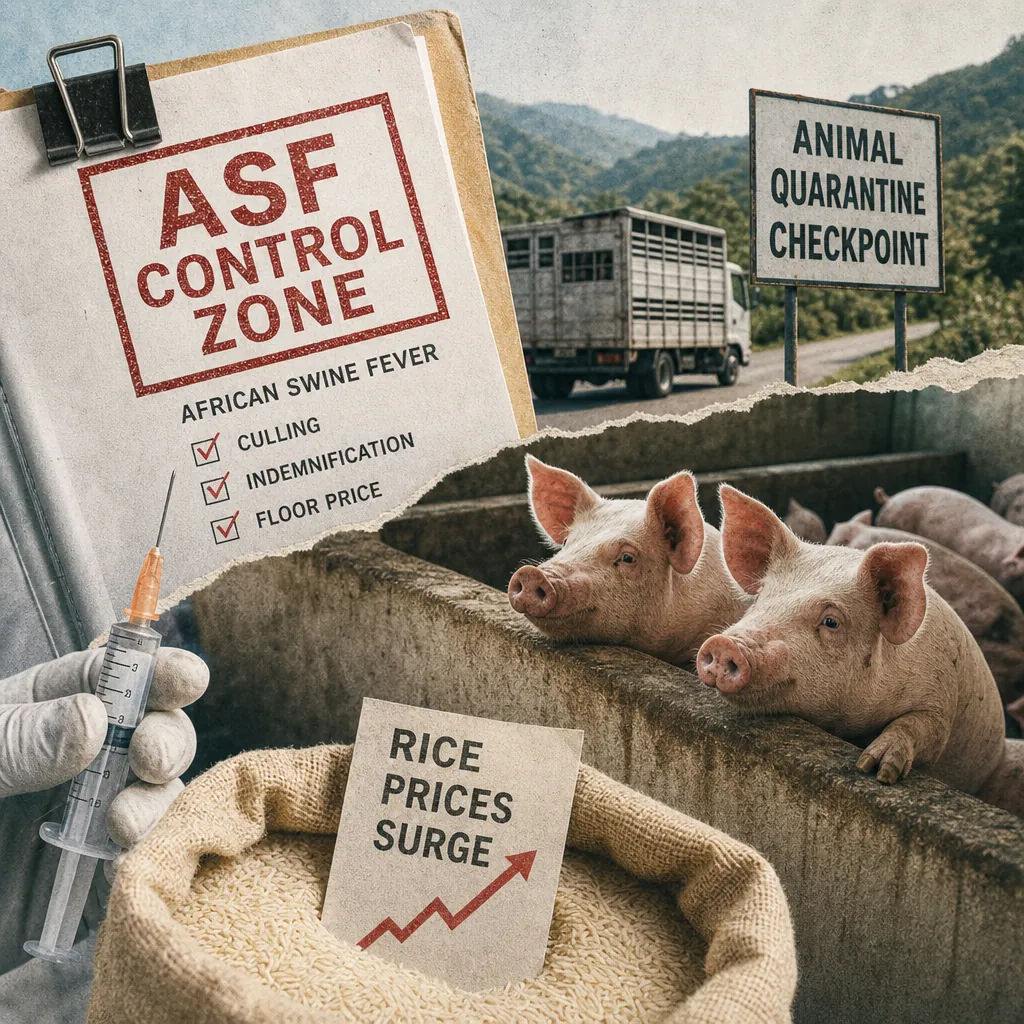
Monsoon floods, rice prices, ASF dominate PH business news
The day's coverage centered on the economic impact of prolonged monsoon rains, rising rice prices, and an African swine fever outbreak, alongside corporate moves by Jollibee and others.
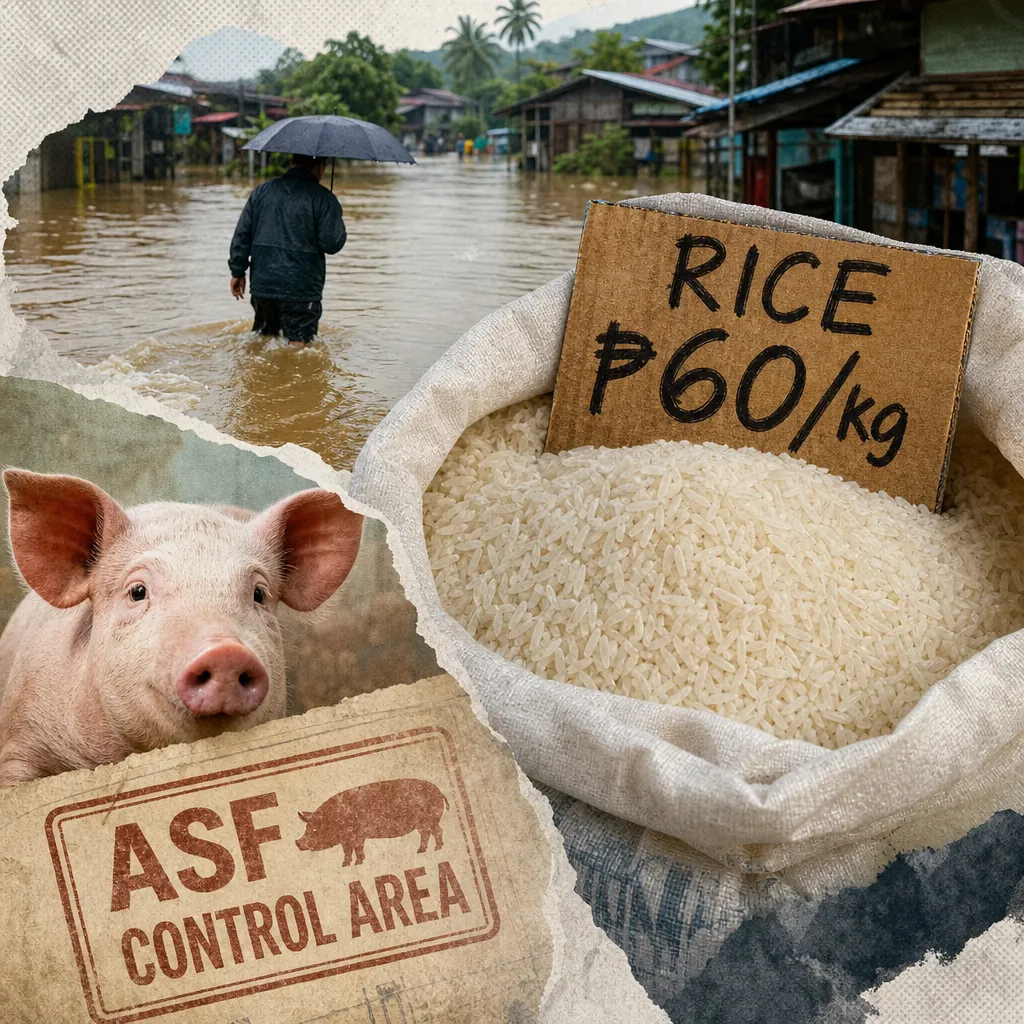
The day's business conversation was dominated by the tangible effects of the southwest monsoon, which has submerged parts of Metro Manila and Luzon, and the related economic pressures of rising rice prices and a new African swine fever (ASF) outbreak. These stories, which blend immediate human impact with longer-term economic consequences, were the focus of the most substantial news coverage. Alongside these, corporate developments—notably Jollibee Foods Corp.'s move to take full control of its Tim Ho Wan brand in North America—provided a counterpoint of strategic business activity. The conversation across news media and social platforms reflected a public grappling with the immediate costs of weather-related disruption and the government's preparedness for recurring crises.
A significant portion of the day's reporting centered on the economic fallout from the monsoon. BusinessWorld Online reported that analysts expect the prolonged rains to weigh on the third-quarter operations of consumer-facing and construction companies, while logistics and mining firms could face higher costs and delays. This was contextualized by a separate BusinessWorld piece that highlighted the government's struggle with flood control spending, as lawmakers questioned the return of over P100 billion in flood control funding under the 2027 national budget. The human cost was captured in a Facebook post showing severe flooding on España Boulevard in Manila, with residents wading through chest-deep water. The Department of Trade and Industry (DTI) also reminded retailers and consumers that a price freeze on basic necessities remains in effect in flood-affected areas of Bulacan, Pampanga, and Zambales, which are under a state of calamity.
The economic strain was further underscored by new data on rice prices. The Philippine Statistics Authority (PSA) reported that the average retail price of regular milled rice nationwide rose to P49.61 per kilogram in early August, a 22.16 percent increase from P40.61/kg during the same period in 2025. This price surge comes as the Department of Agriculture (DA) braces for a weaker third-quarter palay (unmilled rice) harvest, projected to fall 13.3 percent to 3.25 million metric tons, due to the anticipated effects of El Niño. A congressional think tank also warned that inflation could stay above 6 percent until the end of 2026, citing potential weak harvests and the ongoing Middle East conflict as threats to the supply of basic goods.
In the agricultural sector, the provincial government of Catanduanes banned the entry of live pigs and pork products after African swine fever (ASF) cases were confirmed in three areas of mainland Camarines Sur. Governor Patrick Alain T. Azanza issued Executive Order No. 59, citing confirmed cases in Iriga City, Naga City, and Nabua, to prevent the disease from reaching the island province and threatening the livelihood of local hog raisers. This follows a separate report of ASF hitting two cities and a town in Camarines Sur.
Amidst these challenges, the corporate news was led by Jollibee Foods Corp.'s (JFC) announcement that its Tim Ho Wan brand would acquire WDI Corp.'s 30-percent interest in their North American master franchise joint venture for about $5.05 million. This move gives Tim Ho Wan full ownership and operational control of its North American platform, which currently has five stores in the US, and positions it to quadruple its footprint to 20 stores by 2028. In a related transaction, WDI will acquire Tim Ho Wan's 30% stake in their Japan joint venture for about ¥166.1 million (approximately $1 million). The deals are expected to be completed in the third quarter of 2026.
Other corporate and consumer stories included the Philippine hotel industry's commitment to plant-based dining, with major groups like Shangri-La, Bellevue, Dusit, and Megaworld setting targets for plant-based menu offerings. Jollibee also launched its Spicy Chickenjoy, framing spiciness as an enjoyable flavor layer rather than a test of endurance. The day's coverage also touched on international retail trends, including a report on which major US retailers are collecting biometric data and an analysis of Walmart's expected sales growth slowdown.
Key themes
- Monsoon rains threaten Q3 corporate earnings: Analysts expect the prolonged southwest monsoon to create a modest but noticeable drag on third-quarter corporate activity, particularly for retailers, mall operators, restaurants, and construction firms, while logistics and mining companies face higher costs and delays.
- Flood control spending questioned as Metro Manila submerges: The flooding has reignited a debate over the government's flood control spending, with lawmakers questioning the return of over P100 billion in funding under the 2027 national budget and the public demanding accountability.
- Rice prices surge 22% year-on-year: The average retail price of regular milled rice rose to P49.61 per kilogram in early August, up 22.16 percent from the same period in 2025, driven by a projected weaker harvest due to El Niño.
- Inflation expected to stay above 6%: A congressional think tank projects inflation will remain above 6 percent until the end of 2026, citing potential weak harvests and the Middle East conflict as threats to the supply of basic goods.
- African swine fever spreads, prompting pork ban: Catanduanes banned the entry of live pigs and pork products after ASF cases were confirmed in three areas of Camarines Sur, threatening the livelihood of local hog raisers.
- Jollibee takes full control of Tim Ho Wan in North America: JFC's Tim Ho Wan brand will acquire WDI Corp.'s 30% stake in their North American joint venture for $5.05 million, giving it full ownership and control to expand to 20 US stores by 2028.
- Philippine hotels commit to plant-based dining: Major hotel groups, including Shangri-La, Bellevue, Dusit, and Megaworld, have set targets for plant-based menu offerings, signaling a broader shift toward sustainability and wellness in the industry.
- Price freeze remains in flood-hit provinces: The DTI reminded retailers and consumers that a price freeze on basic necessities remains in effect in areas of Bulacan, Pampanga, and Zambales under a state of calamity.
How the narratives stack
- Dominant: The dominant narrative of the day was the economic impact of the monsoon rains and the related issues of rice prices and inflation. This was the most heavily covered story, with multiple articles from BusinessWorld, Inquirer, and Philstar, and it drew significant public engagement through social media posts showing the flooding. The story's dominance reflects its immediate human impact and its broader implications for the economy, making it the most consequential development of the day.
- Counter-narrative: The corporate news, led by Jollibee's Tim Ho Wan acquisition, provided a counter-narrative of strategic business expansion and confidence. While the monsoon and inflation stories focused on challenges and government response, the Jollibee story highlighted a Philippine company's proactive growth in an international market, offering a more optimistic view of the business environment.
- Emerging: The Philippine hotel industry's commitment to plant-based dining is an emerging narrative that signals a shift in consumer preferences and industry sustainability practices. While not as heavily covered as the monsoon or corporate news, it represents a longer-term trend that could reshape the hospitality sector's offerings.
- Under-covered: The story of the New Jersey family facing a potential $100,000 cleanup bill after accepting "free clean dirt" from Facebook Marketplace received coverage but was not a major focus of the day's business conversation. This story highlights the risks of informal online transactions and could have broader implications for consumer protection, but it was overshadowed by the more immediate domestic issues.
Platform insights
- Facebook: Facebook was the primary platform for sharing the human impact of the monsoon flooding. A post showing severe flooding on España Boulevard in Manila, with residents wading through chest-deep water, captured the chaos and drew significant engagement. This platform served as a real-time documentation of the crisis, with users sharing videos and photos of submerged roads and stranded commuters.
- X (formerly Twitter): X was likely a hub for real-time updates on class suspensions, flood warnings, and government announcements. The platform's fast-paced nature makes it ideal for disseminating urgent information, and it was probably used by official accounts and news outlets to share updates on the flooding and the price freeze.
- Reddit: Reddit was the platform where the New Jersey "clean dirt" story originated, with the family posting to the r/LegalAdvice community. This highlights Reddit's role as a space for seeking advice and sharing personal experiences, particularly on legal and consumer issues.
- YouTube: YouTube likely hosted video content of the flooding, with users uploading footage of submerged roads and the chaotic scenes in warehouses and streets. This platform provides a visual record of the events and can amplify the emotional impact of the crisis.
Key voices and communities
- Government agencies and officials: The Department of Trade and Industry (DTI), the Philippine Statistics Authority (PSA), and the Department of Agriculture (DA) were key voices, providing official data on price freezes, rice prices, and harvest projections. Their statements set the factual basis for much of the day's reporting.
- Analysts and economists: Analysts from securities firms like Globalinks Securities and Stocks provided expert commentary on the expected impact of the monsoon rains on corporate earnings. Their insights helped frame the economic consequences of the weather.
- Business leaders and corporations: Jollibee Foods Corp. was a prominent voice, announcing its strategic move to take full control of Tim Ho Wan in North America. This corporate news provided a contrast to the weather-related challenges and highlighted the ongoing expansion of Philippine businesses.
- Local government officials: Governor Patrick Alain T. Azanza of Catanduanes was a key voice in the ASF story, issuing an executive order to ban pork products and protect local hog raisers. His actions demonstrated the local government's response to the outbreak.
- Consumers and residents: The public, particularly those affected by the flooding, were key voices on social media, sharing their experiences and demanding accountability from the government. Their posts on Facebook and other platforms brought the human cost of the crisis to the forefront.
Narrative streams
Monsoon rains and the economic drag on Q3
The prolonged southwest monsoon rains are expected to create a modest but noticeable drag on third-quarter corporate activity, according to Toby Allan C. Arce, head of sales trading at Globalinks Securities and Stocks, Inc.. The impact will vary across industries, with retailers, mall operators, and restaurants likely to experience weaker customer traffic as travel becomes more difficult, while logistics and mining firms could face higher costs and delays. This analysis, reported by BusinessWorld, provides a clear picture of how the weather is translating into economic consequences for businesses. The read for the sector is that companies with exposure to consumer foot traffic and supply chains should prepare for a softer quarter, potentially adjusting inventory and marketing strategies to mitigate the impact of reduced customer visits.
Flood control spending under scrutiny
The flooding in Metro Manila has reignited a debate over the government's flood control spending. At a House of Representatives budget hearing, lawmakers questioned the proposed return of more than P100 billion in flood control funding under the 2027 national budget. The public, as seen in social media posts, is demanding accountability, asking why the capital remains vulnerable to flooding despite billions spent on infrastructure. This narrative stream highlights the gap between government spending and tangible results, a recurring theme in Philippine public discourse. The read for the sector is that infrastructure and construction firms should monitor the budget deliberations closely, as the outcome will determine the pipeline of flood control projects and related contracts.
Rice prices and the El Niño threat
The Philippine Statistics Authority (PSA) reported that the average retail price of regular milled rice rose to P49.61 per kilogram in early August, a 22.16 percent increase from the same period in 2025. This price surge comes as the Department of Agriculture (DA) braces for a weaker third-quarter palay harvest, projected to fall 13.3 percent to 3.25 million metric tons, due to the anticipated effects of El Niño. The higher prices are a direct burden on consumers, who are already facing elevated inflation. A congressional think tank warned that inflation could stay above 6 percent until the end of 2026, citing potential weak harvests and the Middle East conflict as threats to the supply of basic goods. The read for the sector is that food producers and retailers should anticipate continued upward pressure on input costs and consumer prices, and may need to explore alternative sourcing or hedging strategies to manage margins.
African swine fever spreads to Camarines Sur
The provincial government of Catanduanes has banned the entry of live pigs and pork products after African swine fever (ASF) cases were confirmed in three areas of mainland Camarines Sur. Governor Patrick Alain T. Azanza issued Executive Order No. 59, citing confirmed cases in Iriga City on July 28, Naga City on Aug. 5, and Nabua on Aug. 7. The ban is intended to prevent the disease from reaching the island province and threatening the livelihood of local hog raisers. This outbreak is a significant concern for the pork industry, as ASF can devastate hog populations and disrupt supply chains. The read for the sector is that hog raisers and pork distributors should intensify biosecurity measures and monitor the situation closely, as further spread could lead to supply shortages and price increases.
Jollibee's Tim Ho Wan expansion in North America
Jollibee Foods Corp. (JFC) announced that its Tim Ho Wan brand will acquire WDI Corp.'s 30-percent interest in their North American master franchise joint venture for about $5.05 million. This transaction gives Tim Ho Wan full ownership and operational control of its North American platform, which currently has five stores in the US. The company plans to quadruple its US business to 20 stores by 2028, seeking a bigger slice of the country's Chinese restaurant market. In a related transaction, WDI will acquire Tim Ho Wan's 30% stake in their Japan joint venture for about ¥166.1 million (approximately $1 million). The deals are expected to be completed in the third quarter of 2026. The read for the sector is that JFC's aggressive international expansion strategy is continuing, and its success in North America could serve as a model for other Philippine food companies looking to grow overseas.
Philippine hotels embrace plant-based dining
Plant-based dining is gaining ground in Philippine hotels as major hospitality groups commit to increasing plant-forward options across their properties. Shangri-La Hotels and Resorts has committed to making at least 30% of its food and beverage offerings plant-based by 2028, while Bellevue Hotels and Resorts is targeting at least 25% by the end of 2026. Dusit Hotels and Resorts has set a 30% target across its five major Philippine properties, and Megaworld Hotels and Resorts aims for 20% by 2028. These commitments reflect a growing trend toward sustainability and wellness in the hospitality industry, driven by changing consumer preferences. The read for the sector is that hotels and restaurants should invest in developing appealing plant-based menu options to cater to this growing demand, which could also enhance their brand image and attract environmentally conscious guests.
Conversation trajectory
- Monsoon impact on Q3 earnings (observation window: next 4-6 weeks): The full impact of the monsoon rains on corporate earnings will become clearer as companies report their third-quarter results. Analysts expect a modest but noticeable drag, and investors should watch for guidance from consumer-facing and construction companies. Trigger events: Q3 earnings reports from major retailers and construction firms.
- Rice prices and inflation (observation window: next 3 months): Rice prices are expected to remain elevated as the El Niño-affected harvest comes in. The PSA's next agricultural price report and the DA's harvest data will be key indicators. Inflation is projected to stay above 6% until the end of 2026. Trigger events: PSA's monthly inflation report, DA's palay production estimates.
- ASF outbreak containment (observation window: next 4-8 weeks): The spread of ASF in Camarines Sur and the effectiveness of the Catanduanes ban will be monitored. Further outbreaks could lead to more provincial bans and disrupt pork supply. Trigger events: Confirmation of new ASF cases, additional provincial executive orders.
- Jollibee's Tim Ho Wan expansion (observation window: next 6-12 months): The completion of the North America and Japan transactions in Q3 2026 will be a near-term milestone. The company's progress toward its 20-store target in the US by 2028 will be a longer-term indicator of its international strategy's success. Trigger events: Regulatory approvals for the transactions, announcements of new US store openings.
- Flood control budget deliberations (observation window: next 2-3 months): The House of Representatives budget hearings will determine the fate of the P100 billion flood control funding. The outcome will signal the government's commitment to addressing the capital's vulnerability to flooding. Trigger events: Passage of the 2027 national budget, specific allocations for flood control projects.
Response guidance
- For companies in consumer-facing sectors: Acknowledge the impact of the monsoon on operations and customer traffic. Communicate any adjustments to hours, delivery services, or promotions clearly and empathetically. Highlight any efforts to ensure safety and convenience for customers during the flooding.
- For food and agriculture businesses: Address the rice price surge and ASF outbreak directly. Provide transparent information about supply chain challenges and any steps being taken to ensure availability and affordability. Avoid speculation and focus on factual updates.
- For hospitality and tourism businesses: Emphasize the industry's commitment to sustainability and wellness, as seen in the plant-based dining trend. Showcase any new initiatives or menu offerings that cater to these preferences, and position the brand as forward-thinking and responsible.
- For companies with international operations: Highlight strategic moves like Jollibee's Tim Ho Wan acquisition as evidence of growth and ambition. Communicate the long-term vision and the benefits of such expansions to stakeholders, reinforcing confidence in the brand's direction.
- For all communicators: Be mindful of the public's heightened sensitivity to government accountability and corporate responsibility. Avoid tone-deaf messaging that ignores the hardships caused by the flooding and rising prices. Instead, demonstrate understanding and a commitment to supporting customers and communities during this challenging period.
See the full picture behind today's signals.
This report draws from Media Meter's MediaWatch, our real-time monitoring engine tracking 2,470+ Philippine sources across print, broadcast, digital, and social. Explore how the platform turns raw coverage into decision-grade intelligence, then see how it's configured for teams like yours — whether you're in PR agencies, corporate comms, government, or marketing.
Want more? Browse our Report Library for sector and crisis intelligence, or request a demo and we'll have your brand set up before the call.
Want this kind of intelligence on your brand?
This brief is built on the same MediaWatch methodology that runs continuously across every brand we monitor. See your competitive landscape, Impact Score, and narrative trajectory in a 30-minute demo.