Bulacan NLEX shootout and school violence dominate public discourse on safety and governance
A police encounter with robbery suspects on NLEX and a series of violent incidents in schools, including a shooting in Tacloban, drive intense public conversation about safety, law enforcement, and youth protection in the Philippines.
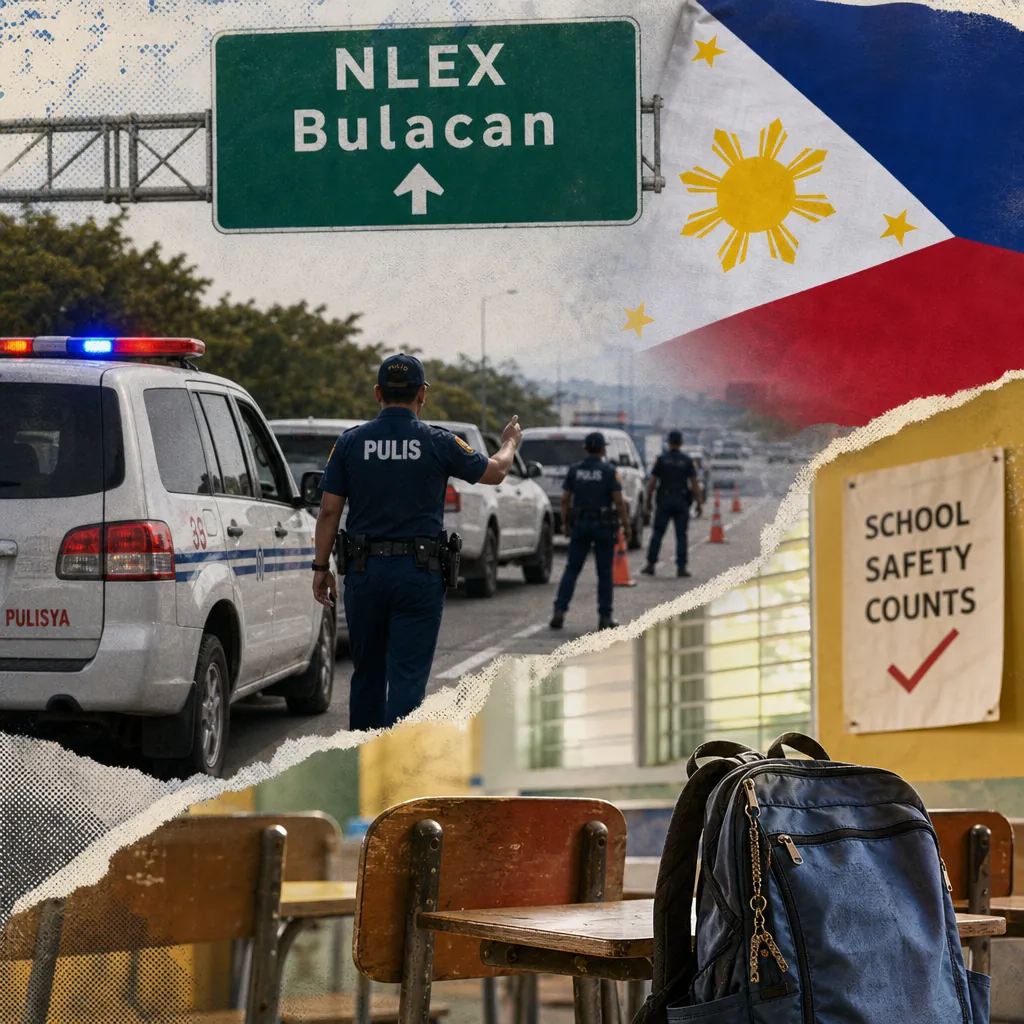
A police shootout with robbery suspects on the North Luzon Expressway (NLEX) in Bulacan and a wave of school violence, including a fatal classroom shooting in Tacloban, dominated public conversation on June 27, 2026. The two storylines, though distinct, converged on a single theme: safety — on the roads, in schools, and in communities. Social media engagement was high, with GMA News’s Facebook post on the NLEX encounter drawing 957 likes and 97 shares [1], while President Marcos’s video message on protecting the youth generated widespread attention across platforms [2]. The day’s coverage also included a separate controversy over the alleged misuse of an ambulance by barangay officials in Bocaue, adding a governance dimension to the safety narrative [3].
On the news side, the NLEX shootout was covered by Philstar Online, which reported that three suspects were wounded in an alleged shootout with police at the Bocaue toll plaza [4]. The suspects were linked to a series of robberies across Ilocos, Central Luzon, Calabarzon, and Metro Manila. Meanwhile, the school violence story drew extensive coverage: Philstar Online, Manila Bulletin Online, and Daily Tribune Online all reported on President Marcos’s call for a whole-of-community approach to protect children [2, 5, 6]. The Catholic Educational Association of the Philippines (CEAP) pushed for holistic education reform, emphasizing character formation and emotional well-being [7]. A separate opinion piece in the Daily Tribune described the Tacloban shooting as a “punch to the gut” and argued that schools are no longer safe [8].
The conversation also touched on real estate indirectly. The NLEX incident raised concerns about travel safety along a major artery connecting Metro Manila to Central and Northern Luzon — regions where suburban residential development is growing. The ambulance misuse story in Bocaue, a town in Bulacan, highlighted governance issues that could affect local property values and investor confidence. However, no direct real estate keywords appeared in the monitored posts, limiting the direct relevance to the sector.
Key themes
- Public safety on major roads: The NLEX shootout sparked discussions about security along expressways, with users expressing concern over travel safety. The incident involved a robbery group that had been active across multiple regions, amplifying fears about organized crime [1, 4].
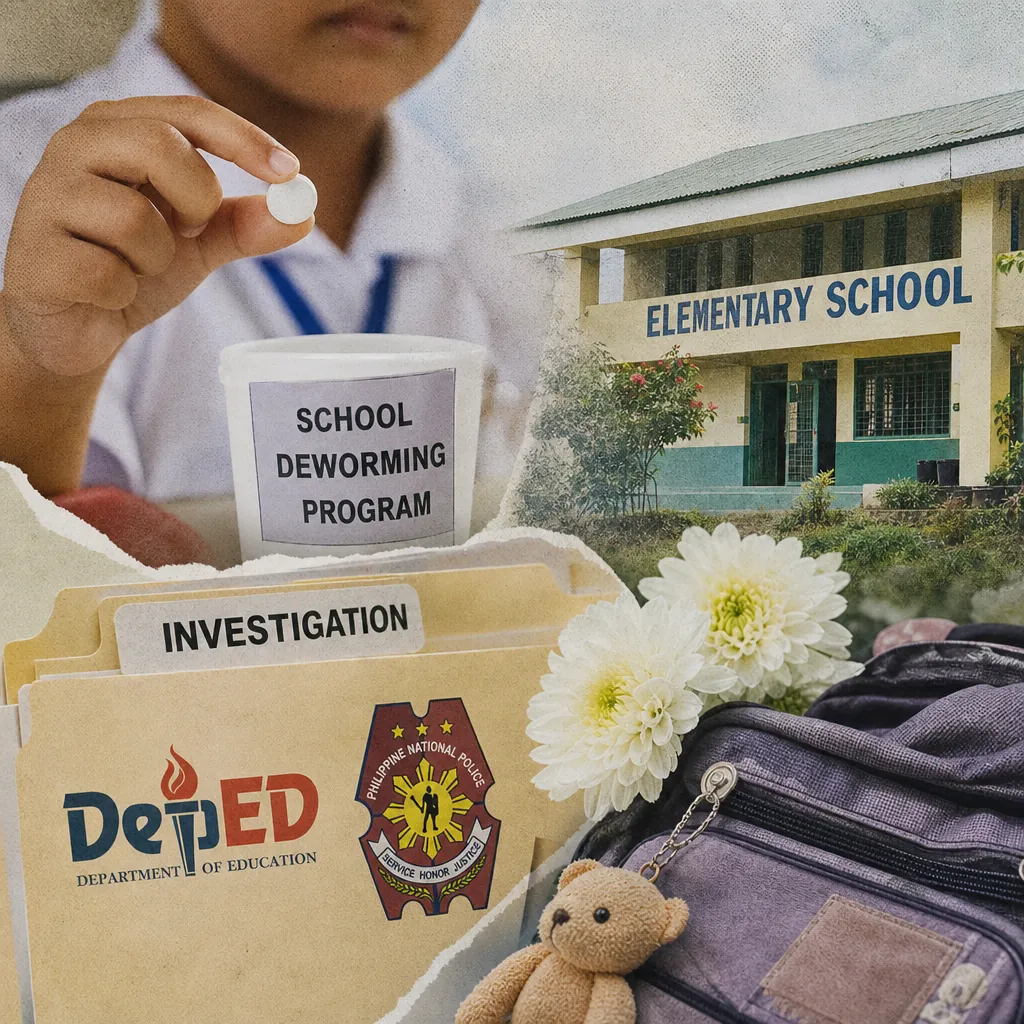
- School violence and youth protection: A series of violent incidents in schools — a shooting in Tacloban, a knife attack in Cavite, and foiled mass casualty plots — prompted President Marcos to call for coordinated action from the Department of Education (DepEd), Philippine National Police (PNP), and local governments [2, 5, 6]. The CEAP urged holistic education reform [7].
- Governance and resource misuse: The alleged misuse of an ambulance by barangay officials in Bocaue for personal leisure drew public scrutiny, with viral posts questioning accountability and transparency in local governance [3].
- Law enforcement effectiveness: The police operation that led to the shootout was praised by some as effective, but others questioned the tactics used. The incident highlighted the ongoing challenge of balancing aggressive policing with public safety [1, 4].
- Community resilience and vigilance: The rapid spread of information about both the NLEX incident and the ambulance misuse showed a public that is increasingly vigilant and willing to hold authorities accountable [1, 3].
- Economic implications of safety perceptions: While not explicitly discussed, the safety concerns raised could influence property market perceptions in areas like Bulacan and CALABARZON, where suburban developments are marketed to families seeking safer environments [1, 4].
- Mental health and emotional well-being: The school violence discussion included calls for better mental health support for students, with CEAP emphasizing emotional well-being as part of education reform [7].
How the narratives stack
Dominant: The dominant narrative in the captured set is the school violence crisis, driven by President Marcos’s direct intervention and the emotional weight of the Tacloban shooting. This story generated the most news articles (at least five) and a high level of social media engagement, including the President’s vlog. The narrative frames the issue as a national emergency requiring a whole-of-community response, with DepEd, PNP, and LGUs mobilized [2, 5, 6, 7, 8].
Counter-narrative: A counter-narrative, though less prominent, questions the effectiveness of law enforcement and governance. The NLEX shootout, while presented as a police success, also raised concerns about the prevalence of armed robbery groups and the risks faced by ordinary citizens. The ambulance misuse story directly challenges the integrity of local officials, suggesting that governance failures undermine public trust [3, 4].
Emerging: An emerging narrative links safety to broader societal issues, including mental health, bullying, and the influence of violent online subcultures like the GoreBox game mentioned in the Daily Tribune opinion piece [8]. This narrative calls for holistic reforms that go beyond policing to address root causes.
Suppressed: A suppressed story within the captured set is the positive economic news — such as the Philippines being ranked the second preferred investment market for Swedish firms [9] and the Department of Tourism’s “Discover More to Love” campaign [10] — which received coverage but was overshadowed by the safety and violence narratives. These stories could have balanced the day’s conversation but were largely drowned out.
Platform insights
- Facebook: The primary platform for engagement on the NLEX shootout, with GMA News’s post receiving 957 likes and 97 shares [1]. The platform was also used to spread the ambulance misuse story, which went viral. Facebook’s algorithm favored emotionally charged content, amplifying both the safety and governance narratives.
- Twitter: Used for real-time updates and video content. GMA News’s tweet on the NLEX encounter garnered over 10,000 views [11]. Twitter also served as a venue for policy announcements, such as President Marcos’s video message, which was shared widely. The platform’s hashtag culture helped surface related stories, including the school violence incidents.
- Reddit: A post on a property sale in Bulacan drew moderate interaction, but the platform was not a major driver of the day’s dominant narratives [12]. Reddit’s role was more niche, focusing on real estate market discussions rather than breaking news.
- YouTube: President Marcos’s vlog on youth protection was posted on YouTube, reaching a broad audience [2]. The platform is increasingly used for official government communications, allowing for longer-form messages.
Key voices and communities
- Local news outlets (GMA News, Philstar, Manila Bulletin, Daily Tribune): These organizations were the primary sources of information on both the NLEX shootout and school violence. Their Facebook and Twitter posts drove engagement, and their articles provided the factual backbone of the conversation [1, 2, 4, 5, 6, 8].
- President Ferdinand Marcos Jr.: His video message calling for action to protect the youth was a key voice, framing the issue as a national priority. His role as both President and a father added emotional weight [2, 5].
- Catholic Educational Association of the Philippines (CEAP): The association’s call for holistic education reform added a moral and institutional perspective, urging the government to prioritize character formation and emotional well-being [7].
- Community watchdog groups: These groups amplified the ambulance misuse story, holding local officials accountable. Their posts went viral, indicating strong public interest in governance issues [3].
- Public safety advocates: On Twitter, these users shared updates on the NLEX shootout and broader crime trends, emphasizing the need for effective law enforcement [11].
Narrative streams
NLEX shootout: A test of police effectiveness
The NLEX shootout on June 26 involved police engaging a robbery group at the Bocaue toll plaza. Three suspects were wounded and arrested. Philstar Online reported that the group was behind a series of robberies across multiple regions [4]. The incident was covered by GMA News on Facebook and Twitter, with the Facebook post receiving 957 likes and 97 shares [1]. The conversation on social media was mixed: some users praised the police for their swift action, while others questioned the use of force and the circumstances of the shootout. The story also raised concerns about safety on major highways, which are critical for commuting and logistics. For the real estate sector, this narrative is relevant because NLEX is a key artery connecting Metro Manila to suburban developments in Bulacan, Pampanga, and beyond. Perceptions of insecurity along the expressway could affect the attractiveness of these areas for residential and commercial investments. The coverage value of the Philstar article was estimated at ₱136,103.60 in advertising-equivalent value [4].
School violence: A national crisis
The school violence narrative was the most prominent in the captured set, driven by a series of incidents: a shooting at San Jose National High School in Tacloban that left three students dead, a knife attack by a 14-year-old in General Trias, Cavite, and foiled mass casualty plots linked to violent online games. President Marcos released a video message on June 27, speaking “not only as President but also as a father,” and directed DepEd, PNP, and LGUs to strengthen safety measures [2, 5]. The CEAP issued a statement calling for holistic education reform that goes beyond academics to include character formation and emotional well-being [7]. The Daily Tribune published an opinion piece titled “When classrooms turn into battlegrounds,” which described the incidents as a “punch to the gut” and argued that schools are no longer safe [8]. The coverage value of the Philstar article on Marcos’s call was ₱242,588.80 [2], while the Manila Bulletin article was ₱203,496 [5]. This narrative has direct implications for real estate: school safety is a key factor for families choosing where to live. Developments near schools perceived as unsafe may see reduced demand, while those in areas with strong security measures could become more attractive.
Ambulance misuse: Governance under scrutiny
A separate controversy emerged in Bocaue, Bulacan, where barangay officials were accused of misusing an ambulance for personal leisure. The story went viral on social media, with posts questioning the accountability of local leaders [3]. Officials countered that the ambulance was used to transport a patient, but the public remained skeptical. This narrative intersects with the safety theme by highlighting governance failures that can erode trust in institutions. For real estate, local governance quality is a factor in property values; areas with perceived corruption or mismanagement may struggle to attract investment. The story also underscores the importance of transparency in public resource management.
Positive economic news: A quieter stream
Amid the safety and governance narratives, positive economic stories received coverage but less attention. The Philippines was ranked the second preferred investment market for Swedish firms, with 63% of Swedish companies planning to increase investments [9]. The Department of Tourism launched the “Discover More to Love” campaign, offering over 3,000 discounted travel deals to boost domestic tourism [10]. These stories could have balanced the day’s conversation but were overshadowed by the more dramatic safety incidents. For real estate, the Swedish investment news is a positive signal for the overall business climate, while the tourism campaign could benefit hospitality and leisure properties.
Conversation trajectory
Over the next 4–6 weeks, the school violence narrative is likely to intensify as the new school year begins and more incidents may come to light. The government’s response, including any policy changes or increased security measures, will be closely watched. The NLEX shootout may fade from public view unless new details emerge or similar incidents occur. The ambulance misuse story could lead to local investigations or reforms, but its impact may be limited to Bulacan. The positive economic news may regain attention if no new crises emerge. Key trigger events include: the release of DepEd’s safety guidelines (expected soon), any new school violence incidents, and the start of the rainy season, which could shift focus to flood mitigation and infrastructure. For real estate, the trajectory suggests that safety perceptions will remain a key factor in buyer decisions, particularly in suburban areas like Bulacan and CALABARZON.
Response guidance
For communicators in the real estate sector, the day’s conversation underscores the importance of addressing safety and governance in messaging. Developers should highlight security features in their projects, such as gated communities, CCTV, and partnerships with local law enforcement. Transparency about community governance and resource management can help counter negative perceptions. On social media, Facebook and Twitter are the key platforms for engaging with safety narratives; sharing positive stories about community safety initiatives can build trust. Sensitive topics to navigate include school violence (avoid appearing to exploit tragedy) and local governance failures (focus on constructive solutions rather than criticism). Key messages could include: “Your family’s safety is our priority,” and “We work with local authorities to ensure secure communities.” Timing: the start of the school year is an opportune moment to emphasize safety in family-oriented developments.
See the full picture behind today's signals.
This report draws from Media Meter's MediaWatch, our real-time monitoring engine tracking 2,470+ Philippine sources across print, broadcast, digital, and social. Explore how the platform turns raw coverage into decision-grade intelligence, then see how it's configured for teams like yours — whether you're in PR agencies, corporate comms, government, or marketing.
Want more? Browse our Report Library for sector and crisis intelligence, or request a demo and we'll have your brand set up before the call.
Want this kind of intelligence on your brand?
This brief is built on the same MediaWatch methodology that runs continuously across every brand we monitor. See your competitive landscape, Impact Score, and narrative trajectory in a 30-minute demo.