Digital transfers hit P22.1T as BOP gap widens
Filipinos moved a record P22.1 trillion through InstaPay and PESONet in eight months as fees fell, while the country's balance-of-payments deficit for January to August exceeded the whole of 2025 and borrowing costs rose faster than anywhere else in Asia.
The Conversation
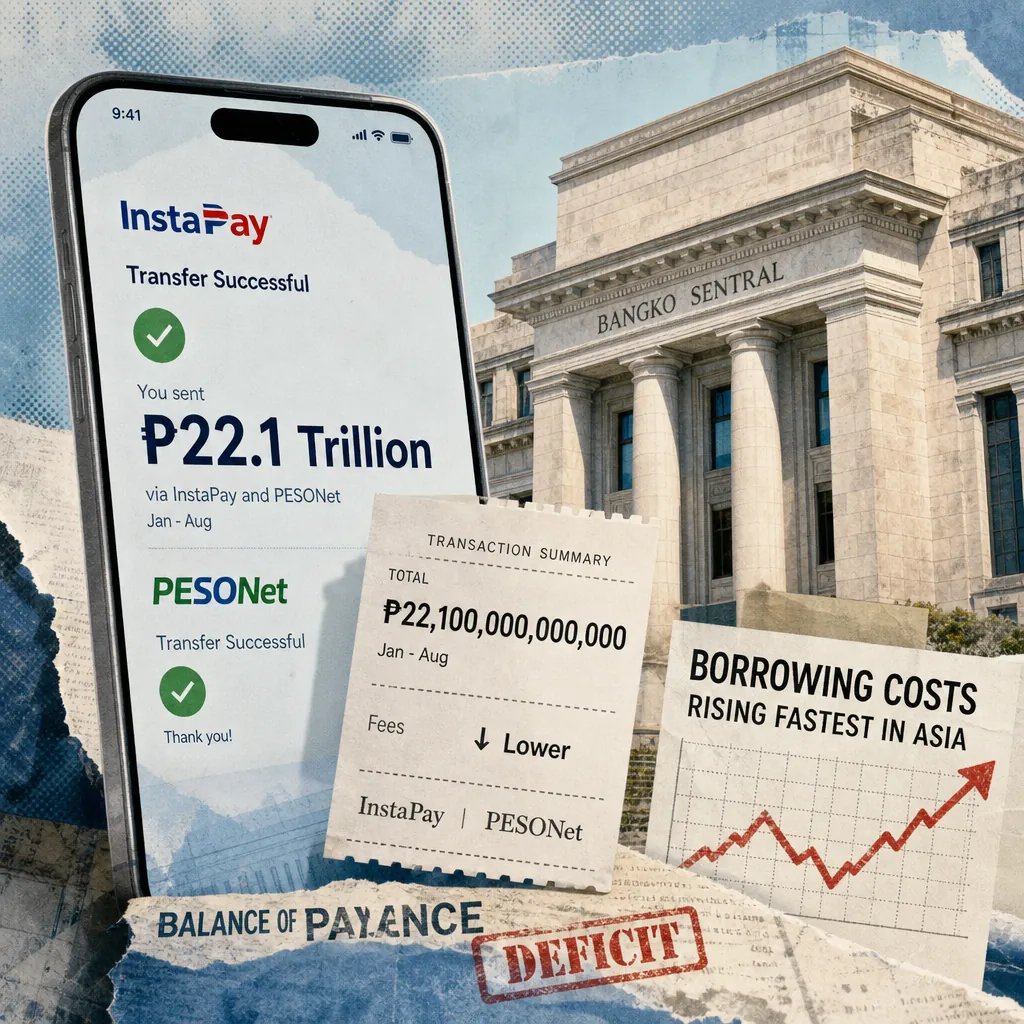
Filipinos moved ₱22.1 trillion through the country's two electronic fund-transfer networks between January and August 2026, a 44 percent increase over the same eight months of 2025, and the number of individual transfers more than doubled to 5.8 billion, according to data from the Bangko Sentral ng Pilipinas (BSP), the country's central bank.2331 The figure was carried by at least five separate outlets in the items reviewed here — Inquirer Online, Inquirer Plus, Manila Bulletin Online, and the blog Astig Ph — which is the clearest sign that a single statistic dominated the day's business conversation.232531
Running alongside it was a second, less cheerful set of central bank numbers. The Philippines' balance of payments (BOP) — a broad tally of all money entering and leaving the country, from export earnings and remittances to import payments and foreign investment flows — recorded a $596-million deficit in August, narrower than July's $1.47-billion shortfall but a reversal from the $359-million surplus in August 2025.42032 Cumulatively, the January-to-August gap reached $5.94 billion, already larger than the $5.66-billion deficit for the entire 2025.20 That story ran across Inquirer Online, Inquirer Plus, Manila Bulletin Online, Business Mirror Online, and News Central.4242832
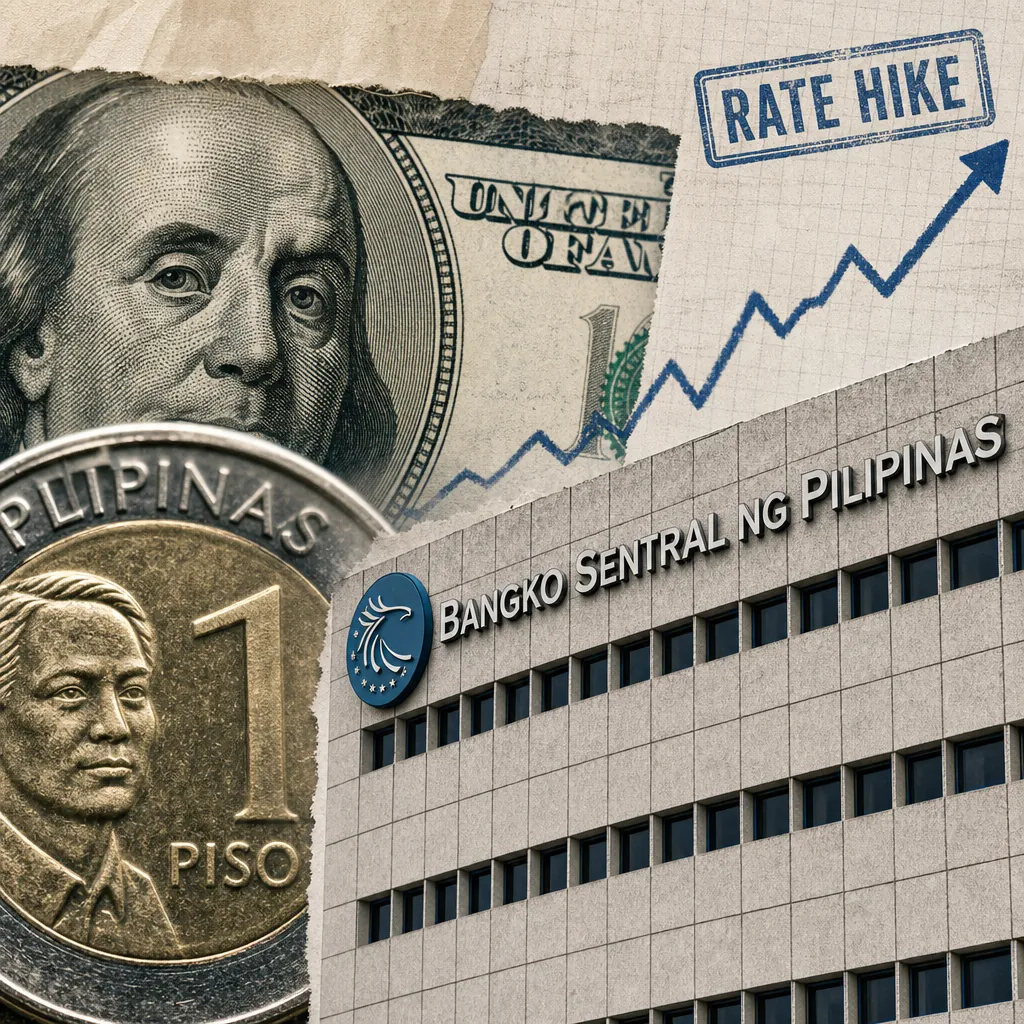
A third thread tied the two together: the cost of government borrowing. The gap between Philippine and United States (US) interest rates on 10-year government bonds widened by 26 basis points in a week to 272 basis points, the largest such move among longer-dated Asian securities, according to Tokyo-based MUFG Bank.30 A basis point is one-hundredth of a percentage point. Philippine 10-year benchmark yields rose to 7.66 percent from 7.43 percent the previous week, while US Treasury yields edged down — meaning the government, and by extension the banks and companies that price their own loans off that benchmark, is paying more to borrow relative to its neighbours.30
Key themes
- Digital transfers reached ₱22.1 trillion in eight months, up 44 percent. The combined value moved through InstaPay and PESONet from January to August 2026 rose 44 percent year on year, while transaction volume climbed 142 percent to 5.8 billion transfers.2331 The gap between the two growth rates — value up 44 percent, volume up 142 percent — means the average transfer is getting smaller, which points to retail and small-business use rather than large corporate movements.
- InstaPay carried almost all the volume growth. InstaPay, the real-time rail for transfers of up to ₱50,000, handled ₱11.1 trillion across 5.7 billion transfers, with value up 61 percent and volume up 148 percent.2 PESONet, the batch system used for larger and scheduled payments, moved ₱11 trillion across 87.1 million transfers, up 31 percent in value and 15 percent in volume.231
- The BSP attributes the shift partly to lower fees. The central bank has pushed banks to cut the cost of off-network transfers — payments sent to an account at a different bank — and held a forum on the subject on Aug. 19 at its Manila head office, led by Assistant Governor Redentor Bancod.17 Lower pricing is the mechanism the BSP believes keeps users active in the formal financial system rather than drifting back to cash.17
- The eight-month BOP deficit already exceeds the whole of 2025. At $5.94 billion for January to August, the gap has passed the $5.66-billion full-year deficit recorded in 2025, and is more than half the central bank's own $10.7-billion projection for 2026, which equals 2.1 percent of gross domestic product.2024
- August's improvement came from remittances, not from trade. The month-on-month narrowing to $596 million from July's $1.47 billion was helped by resilient inflows such as remittances offsetting outflows, but the underlying drivers — a persistent trade-in-goods deficit and net outflows of foreign portfolio investment — were unchanged.42032
- Philippine borrowing costs rose faster than any comparable Asian market. The 10-year yield spread over US Treasuries widened 26 basis points in a week to 272 basis points, the region's largest increase, as domestic yields climbed 23 basis points to 7.66 percent.30
- Barclays expects another BSP rate hike in October. The British bank forecasts a 25-basis-point increase to 5.25 percent, which would be the fourth consecutive hike since April and a cumulative 100 basis points of tightening, driven by high oil prices and a peso that touched a record low of 62.86 to the dollar.2336
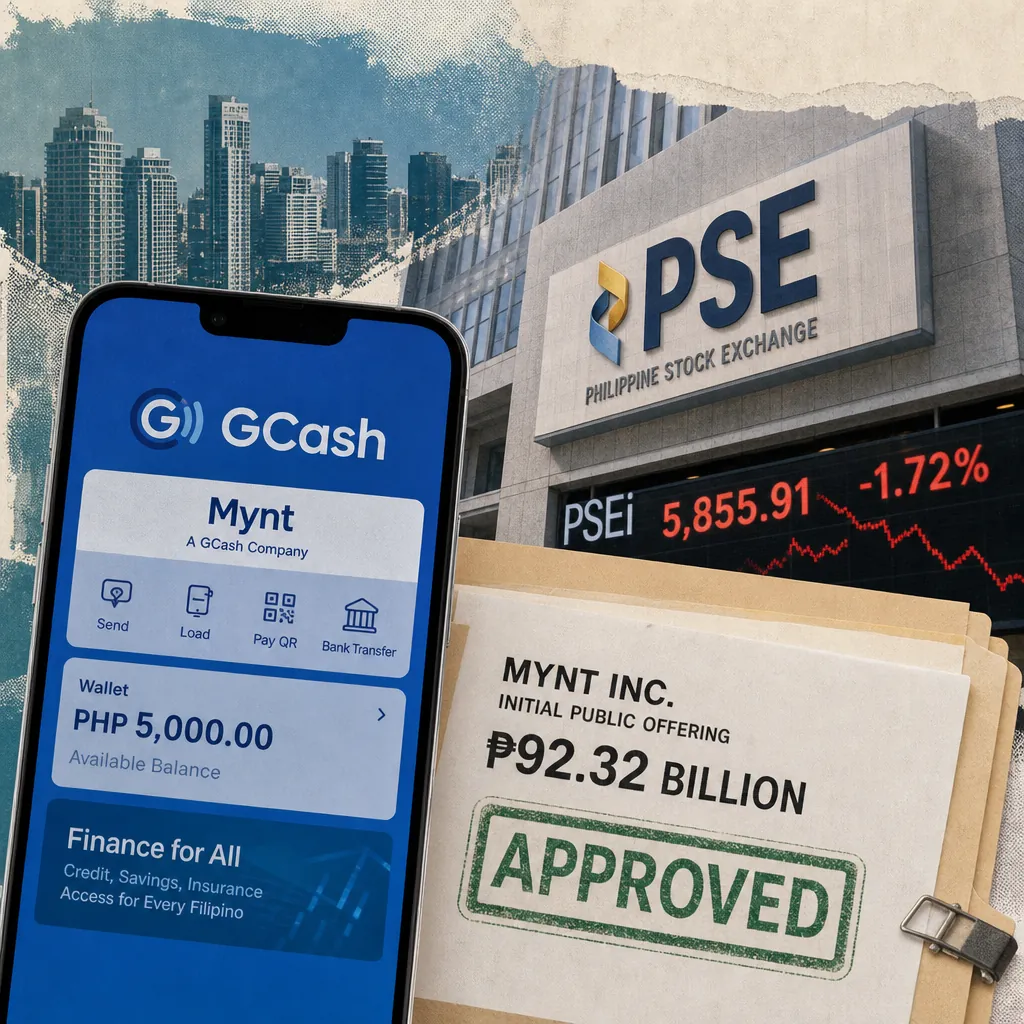
- Two large share sales are set to absorb cash from the stock market. The roughly ₱24-billion initial public offering (IPO) of Vitro REIT and the Mynt/GCash listing — at nearly ₱92 billion, the largest offering in Philippine Stock Exchange history — are expected to pull investible money out of secondary trading in the early fourth quarter.33
How the narratives stack
Dominant. The ₱22.1-trillion digital transfer figure is the day's most widely reproduced number, appearing in at least five of the items reviewed here across four outlets and one blog.232531 Its dominance rests on breadth of pickup within this captured set rather than on any single outlet's prominence. The story's appeal is that it is unambiguous good news with a clear cause: regulators pushed fees down, and usage went up. The BSP's own framing supports that reading — InstaPay has exceeded automated teller machine (ATM) withdrawals in both volume and value since 2020, when pandemic restrictions pushed Filipinos away from cash.325
Counter-narrative. The BOP data, released Friday night, Sept. 18, and reported the following day, tells the opposite story about the country's external position.32 The August deficit narrowed month on month but flipped from a surplus a year earlier, and the cumulative eight-month gap has already surpassed all of 2025.20 Economists quoted in the coverage warn of further pressure: higher oil prices inflate the import bill, and financial-market volatility drives portfolio investment away and weakens the peso, leaving remittances, business-process outsourcing revenue, and investment inflows to cushion the effect.28 This is not a contradiction of the digital-payments story — domestic transfers and cross-border flows are different things — but the two ran side by side in the same business pages, and readers would have seen both.
Emerging. The cost of government credit is the thread that connects the two. The 26-basis-point widening in the 10-year spread over US Treasuries was the largest in the region, and domestic yields at 7.66 percent are now high enough that fixed-income instruments compete directly with equities for investor money.3033 Barclays' forecast of a fourth straight BSP hike in October, to 5.25 percent, would extend that pressure.36 The peso's slide to a record 62.86 against the dollar is the transmission channel: a weaker currency makes imports dearer, which feeds inflation, which invites tighter policy.23
Under-covered. Two stories in the set drew little attention relative to their substance. The first is the quiet leadership change at Sun Life Investment Management and Trust Corp. (SLIMTC), where president and chief investment officer Michael Gerard Enriquez resigned with no disclosed reason, no public announcement of a permanent replacement, and Ritchie Ryan Teo listed on the company website as interim president and chief investment officer.527 The second is the Philippine Deposit Insurance Corp.'s (PDIC) scheduled electronic auction of 76 residential, agricultural, and mixed-use properties in Luzon on Oct. 21–22, part of its mandate to liquidate assets from closed banks and recover funds for creditors and depositors with uninsured deposits.16 Both are consequential for specific audiences — institutional investors in the first case, distressed-asset buyers and depositors in closed banks in the second — and both placed low in the day's coverage.
Platform insights
- Facebook. The day's most shareable business content was the digital-payments milestone, because it translates into a personal experience: cheaper transfers. Posts framing the ₱22.1-trillion figure as "your bank transfers got cheaper this year" — the framing used by the blog Astig Ph — are built for sharing among ordinary users rather than finance professionals.2 The BOP and bond-yield stories, by contrast, require readers to hold several concepts at once and travel less well on the platform.
- X. The impeachment trial of Vice President Sara Duterte generated the day's most argumentative traffic, with the dispute over the vote threshold — whether 16 of 24 senators or the full chamber forms the denominator — producing the kind of procedural conflict that drives quote-posts and replies.1 Financial stories on the platform clustered around the peso's record low and the Barclays rate-hike forecast, both of which invite immediate commentary on household costs.2336
- Reddit. Discussion in Philippine finance and personal-finance communities tends to focus on practical consequences: whether to lock in fixed-income instruments at current yields, and what the GCash listing means for retail investors who already use the app. The ₱92-billion Mynt/GCash offering is the single most-discussed market event in the set because it involves a product millions of Filipinos already have on their phones.33
- YouTube. Business-channel explainers on the BOP deficit and the peso's slide drew the kind of long-form commentary that the topic rewards, since the causal chain — oil prices, import bill, currency, inflation, interest rates — takes several minutes to lay out. The digital-payments story performs better in short-form video, where a single number and a single consequence fit in under a minute.228
Key voices and communities
The Bangko Sentral ng Pilipinas. The central bank supplied the data behind both lead stories and framed the digital-payments growth as a policy success, linking lower off-network transfer fees to sustained account usage and financial inclusion.17 Its Report on Economic and Financial Developments for the second quarter of 2026 acknowledged continued pressure from geopolitical tension, volatile global financial markets, and subdued domestic demand, and called on the national government to strengthen efforts supporting recovery.21
Sell-side economists and research desks. Michael Ricafort, chief economist at Rizal Commercial Banking Corp. (RCBC), attributed the year-on-year BOP reversal largely to the trade deficit inflated by elevated crude oil prices.32 Barclays provided the most specific forward call, forecasting a 25-basis-point BSP hike in October to 5.25 percent.36 F. Yap Securities and the online brokerage 2TradeAsia.com both published weekly outlooks warning that oil prices, the weak peso, and tighter liquidity would keep the market under pressure.2333
The Senate impeachment court. The trial of Vice President Sara Duterte entered its eleventh week with three retired chief justices arguing that the two-thirds threshold for conviction need not be fixed at 16 votes, since senators legally or physically unable to participate should not necessarily count in the denominator. Retired Associate Justice Adolfo Azcuna disagreed, saying "all means all" and that the full 24-member Senate should remain the basis.1 Prosecutors presented evidence from Duterte's own Statements of Assets, Liabilities and Net Worth (SALNs) showing her declared net worth rose by ₱91.4 million, or 1,260.7 percent, between 2007 and 2025.1
Corporate and development-sector communicators. Aboitiz Foundation's CarbonPH program, a 40-year forest and watershed restoration commitment in Cebu formalized in August 2024, and Security Bank's Project MITHI, which targets 7,500 mangrove seedlings in its second year, both placed corporate sustainability work into the day's mix.629 Palawan Group's two Gold awards at the MARKETECH APAC NEXT Awards Philippines 2026 for remittance and insurance campaigns show how financial institutions are marketing accessibility to consumers.26
Narrative streams
Digital transfers reach ₱22.1 trillion as fees fall
The BSP data covers InstaPay and PESONet, the two automated clearing houses that now carry most of the country's electronic fund transfers. InstaPay processes real-time payments of up to ₱50,000 and is used for retail purchases, toll and ticket payments, and e-commerce, which makes it the rail that matters most to micro, small, and medium enterprises. PESONet handles larger and scheduled transfers in batches.325 Between January and August, InstaPay moved ₱11.1 trillion across 5.7 billion transfers — value up 61 percent, volume up 148 percent — while PESONet moved ₱11 trillion across 87.1 million transfers, up 31 percent in value and 15 percent in volume.2 The combined volume of 5.77 billion transfers more than doubled from the 2.38 billion logged in the same period last year.31
The BSP has spent the past year pressing banks to lower the cost of sending money to an account at another bank. At a forum on Aug. 19 at its Manila head office, Assistant Governor Redentor Bancod led a discussion titled "Pricing of Retail Off-Net Payments: Evidence and Insights," joined by University of Sydney Associate Professor Russell Toth, RCBC Executive Vice President and Chief Innovation and Inclusion Officer Lito Villanueva, and Better than Cash Alliance Asia-Pacific Lead Isvary Sivalingam, with Innovations for Poverty Action Financial Inclusion Program Director Paul Adams moderating.17 The forum's premise was that transaction pricing determines whether consumers adopt digital payments and stay active in the formal financial system.17
For banks, the read is that the retail transfer business is now a volume game. When the average transfer shrinks while the count more than doubles, revenue per transaction falls and the institutions that profit are those that can process cheaply at scale. For the BSP, the read is that fee caps work as an adoption lever, which gives it a template for other retail financial services. For small merchants, the read is that accepting digital payment is no longer a differentiator but a baseline expectation — InstaPay has outpaced ATM withdrawals in both volume and value since 2020.325
The BOP deficit passes the whole of 2025 in eight months
The balance of payments measures every transaction between Philippine residents and the rest of the world. A deficit means more money left the country than entered it. August's $596-million shortfall was an improvement on July's $1.47 billion but a reversal from the $359-million surplus in August 2025, and it brought the January-to-August position to a $5.94-billion deficit — larger than the $5.66-billion gap for all of 2025 and more than half the BSP's $10.7-billion full-year projection, equivalent to 2.1 percent of gross domestic product.42024
The BSP attributed the cumulative position to "the continued trade-in-goods deficit and net outflows from foreign portfolio investments."20 In plain terms: the country buys more goods from abroad than it sells, and foreign investors are pulling money out of Philippine financial assets. Ricafort said the year-on-year reversal was largely due to the trade deficit inflated by elevated crude oil prices, with Brent crude hovering above $100 a barrel as the US-Iran conflict re-escalated.32 Economists quoted by News Central warned that higher oil costs could further inflate the import bill while market volatility drives away portfolio investment and weakens the peso, leaving remittances, business-process outsourcing revenue, and investment inflows to cushion the effect.28
For the government, the read is that external financing gets more expensive precisely when the deficit makes it more necessary. For importers and manufacturers, the read is that input costs stay elevated as long as oil does. For households, the read is indirect but real: a persistent BOP gap pressures the peso, which raises the price of imported food and fuel, which is the channel through which an external-accounts statistic becomes a grocery bill.
Borrowing costs rise faster than anywhere else in Asia
The gap between Philippine and US 10-year bond yields widened by 26 basis points in a week to 272 basis points, the largest increase among longer-dated Asian securities, according to MUFG Bank. Philippine 10-year benchmark yields rose 23 basis points to 7.66 percent from 7.43 percent, while US Treasury yields declined.30 Malaysia posted the sharpest narrowing, with its spread dropping 20 basis points to -99 basis points, and India recorded the largest two-year spread increase, up nine basis points to 179.30
The proximate causes are the same ones driving the BOP story. The peso briefly touched a record low of 62.86 against the dollar amid a widening oil import bill and a hawkish US Federal Reserve, which raised its benchmark rate by 25 basis points and signalled another increase before year-end.23 Barclays now expects the BSP to raise its policy rate by another 25 basis points to 5.25 percent in October, which would be the fourth consecutive increase since April and 100 basis points of cumulative tightening.36 The BSP raised the rate to 5 percent in August.36
For the national government, the read is a higher interest bill on new borrowing and on refinancing. For banks, the read is that lending margins may widen but loan demand weakens as corporate borrowers defer projects. For retail investors, the read is that Treasury bonds and bills now offer yields high enough to compete with equities — 2TradeAsia.com noted that fixed-income offerings provide a "genuinely" attractive alternative, which is one reason the stock market is expected to stay cautious.33 The Philippine Stock Exchange index fell to 5,855.91, down 3.40 percent week on week, and 2TradeAsia.com said sentiment would remain volatile pending geopolitical progress on Saudi Arabian crude supply and the impeachment verdict.35
Two large share sales will absorb market cash
The Vitro REIT initial public offering, worth roughly ₱24 billion, and the Mynt/GCash listing, at nearly ₱92 billion the largest offering in Philippine Stock Exchange history, are expected to pull a meaningful amount of investible cash out of secondary market trading in the early fourth quarter.33 A real estate investment trust (REIT) is a listed vehicle that owns income-producing property and distributes most of its earnings to shareholders as dividends. GCash is the country's largest mobile wallet, and its listing would put a consumer payments business directly in the stock market for the first time at scale.
For the exchange, the read is that the two offerings demonstrate the market can absorb large deals, but the short-term cost is liquidity drained from existing stocks. For retail investors who already use GCash, the read is that a product they know becomes an investable asset, which tends to broaden participation. For the BSP, the read is that the listing creates a new publicly traded entity inside the payments system it regulates, adding a disclosure dimension to oversight that previously ran through bank and e-money licensing.
The impeachment trial's vote-threshold dispute
The Senate impeachment court, sitting as the body that tries the Vice President, heard three retired chief justices argue that the two-thirds threshold required to convict need not be fixed at 16 votes, on the reasoning that senators legally or physically unable to participate should not necessarily be counted in the denominator. Retired Associate Justice Adolfo Azcuna took the opposite view, saying "all means all" and that the full 24-member Senate should remain the basis for the computation.1 Prosecutors continued building their Article II case on alleged unexplained wealth, presenting evidence from Duterte's own Statements of Assets, Liabilities and Net Worth showing her declared net worth rose by ₱91.4 million, or 1,260.7 percent, between 2007 and 2025, and securing subpoenas to compare those declarations against corporate, procurement, and financial records.1
For financial institutions, the read is that the trial's outcome carries market consequences independent of its legal merits. 2TradeAsia.com explicitly listed the impeachment verdict among the factors keeping local sentiment volatile this week, alongside oil prices and the peso.35 A conviction or acquittal would remove one source of political uncertainty from the pricing of Philippine assets; a prolonged proceeding keeps it in place. For companies with government contracts or regulatory exposure, the read is that the subpoenaed corporate and procurement records widen the set of private-sector documents that may enter a public proceeding.
Corporate sustainability and financial-literacy programs
Aboitiz Foundation's CarbonPH began nearly three years ago as an idea developed through Voyage, an internal Aboitiz initiative that let teams pitch new ideas, and became a 40-year forest and ecosystem restoration commitment in Cebu, formalized in August 2024 through an agreement signed by Aboitiz Group president and chief executive Sabin Aboitiz with the Cebu provincial government.6 Security Bank's Project MITHI entered its second year targeting 7,500 mangrove seedlings, with nearly 500 planted in Barangay Bungro, Luna, La Union, alongside environmental education for children and financial literacy workshops for adults. Sustainability head Nikki Lizares said the program is "about creating impact that lasts beyond a single activity."29
Palawan Group of Companies won two Gold awards at the MARKETECH APAC NEXT Awards Philippines 2026, for a remittance campaign built around the expression "There na!" and featuring brand ambassador Marian Rivera, and for an insurance campaign using a sachet metaphor. Both were developed with GIGIL Advertising Group.26 For banks and financial institutions, the read is that sustainability and financial-literacy spending is now judged on continuity rather than one-off events, and that marketing financial services to lower-income consumers works best when it borrows the vocabulary of everyday Filipino life — the sachet, the remittance message, the familiar phrase.
Institutional and regulatory housekeeping
BPI became the first universal bank in the Philippines to hold both ISO/IEC 27001:2022 certification for information security management and ISO/IEC 27701:2019 certification for privacy information management, awarded by the British Standards Institution, covering online and mobile banking platform management, inward and outward remittances, transaction banking cash management, and contact center operations.9 The certifications are third-party audits of how a bank manages data security and privacy, and they matter to corporate clients and regulators assessing operational risk.
LANDBANK extended ₱12.6 million in assistance to local government units in Central Luzon affected by Typhoon Neneng and the enhanced southwest monsoon, with ₱11.6 million in cash to 46 provincial, city, and municipal governments across Bataan, Bulacan, Tarlac, Nueva Ecija, Zambales, and Pampanga, and ₱1 million for relief operations in Pampanga. Employees contributed at least one hour of salary each.18 The PDIC will offer 76 residential, agricultural, and mixed-use properties in Luzon through electronic public bidding on Oct. 21–22, with bids accepted through its Assets for Sale portal from 9 a.m. on Oct. 21 until 1 p.m. on Oct. 22 and opening at 2 p.m. on Oct. 22. Proceeds settle creditors' claims, including those of depositors with uninsured deposits.16 EastWest Bank launched a Foodpanda Visa credit card offering up to 10 percent cashback on Foodpanda purchases, credited weekly to a PandaPay wallet, with 1 percent cashback on international purchases and 0.3 percent on groceries, fuel, transportation, and shopping. Foodpanda said burgers account for 25.3 percent of deliveries between 11 p.m. and 4 a.m., orders peak around 11 a.m. and 6 p.m., Saturday is the busiest day, and online payments already make up 49 percent of orders.22
Conversation trajectory
Watch the September inflation print, due in early October. The BSP's next consumer price index release will show whether oil above $90 a barrel and the peso near 62.86 to the dollar have fed through to consumer prices. Barclays' October rate-hike call rests on that transmission, and a soft print would make the hike a closer call than the bank's own language suggests.2336
Watch the BSP's October policy meeting. If Barclays is right, the policy rate rises to 5.25 percent, the fourth consecutive 25-basis-point increase since April. The signal to watch is the accompanying language on whether the tightening cycle has peaked; a fifth hike would change the borrowing calculus for every corporate borrower in the country.36
Watch the Vitro REIT and Mynt/GCash offerings in the early fourth quarter. The combined roughly ₱116 billion in share sales will test both investor appetite and secondary-market liquidity. The GCash listing in particular will be the first time a mass-market mobile wallet trades publicly, and its reception will indicate how investors value Philippine consumer payments businesses.33
Watch the Senate impeachment court's ruling on the vote threshold. The dispute between the retired chief justices who argue the denominator can exclude unable senators and Azcuna's "all means all" position must be resolved before any conviction vote. The ruling determines how many senators prosecutors need, and 2TradeAsia.com has already flagged the verdict as a market-sentiment factor.135
Watch the PDIC auction on Oct. 21–22. The 76-property sale, including 14 residential assets in Laguna, will show how much demand exists for distressed bank-owned real estate and how quickly the deposit insurer can convert closed-bank assets into cash for creditors.16
Trigger events. A fresh escalation around the Strait of Hormuz would push oil higher and worsen both the trade balance and the inflation outlook. A BSP decision to hold rather than hike in October would signal the tightening cycle has ended. Any announcement of a permanent SLIMTC president would close an open question about leadership at a major trust business.52733
Response guidance
Lead with the household consequence on digital payments. The ₱22.1-trillion figure is abstract; the fee reduction is not. Communications on this topic should connect the aggregate to what a user pays to send money to another bank, because that is the part of the story the audience can verify from their own transaction history.217
Separate domestic payments from external accounts when briefing non-specialist audiences. The digital-transfer milestone and the BOP deficit are unrelated in mechanism and opposite in direction. Presenting them together without that distinction invites the misreading that the payments system is somehow implicated in the external shortfall.220
Prepare for rate-sensitive questions from corporate and retail clients. With a fourth consecutive BSP hike forecast for October and 10-year yields at 7.66 percent, borrowers will ask about refinancing costs and depositors will ask about fixed-income alternatives. Have the numbers ready rather than the general outlook.3036
Treat the peso's record low as a household topic, not a markets topic. At 62.86 to the dollar, the currency's effect on imported food and fuel prices is the part of the story that reaches the widest audience. Explain the chain — weaker peso, dearer imports, higher inflation, tighter policy — in that order.23
On the impeachment trial, avoid predicting the outcome. The vote-threshold question is unresolved and the two positions are both held by retired Supreme Court justices. Institutions with government exposure should describe their contingency planning in terms of process continuity rather than expected results.1
On sustainability programs, report continuity and measurement. CarbonPH's 40-year horizon and Project MITHI's second-year target of 7,500 seedlings are the details that distinguish long-term commitments from one-off events, and audiences increasingly ask for the former.629
On leadership changes, expect the question before it is asked. The SLIMTC resignation was disclosed without a stated reason and with only an interim replacement named. Institutions in similar positions should decide in advance what they will say about succession and continuity, because silence on a president-level departure invites speculation.527
On the GCash listing, prepare for retail-investor questions. A mass-market wallet becoming a publicly traded company will draw interest from users who have never bought a stock. Guidance should cover how to participate, what the shares represent, and the difference between using a product and owning part of the company.33
See the full picture behind today's signals.
This report draws from Media Meter's MediaWatch, our real-time monitoring engine tracking 2,470+ Philippine sources across print, broadcast, digital, and social. Explore how the platform turns raw coverage into decision-grade intelligence, then see how it's configured for teams like yours — whether you're in PR agencies, corporate comms, government, or marketing.
Want more? Browse our Report Library for sector and crisis intelligence, or request a demo and we'll have your brand set up before the call.
Want this kind of intelligence on your brand?
This brief is built on the same MediaWatch methodology that runs continuously across every brand we monitor. See your competitive landscape, Impact Score, and narrative trajectory in a 30-minute demo.