Drunk rider kills senior citizen in Bacolod, sparking outrage and calls for stricter road safety enforcement
A drunk, unhelmeted motorcyclist struck and killed a 63-year-old woman on a pedestrian lane in Bacolod City, generating over 13,000 reactions on Facebook and dominating the day's conversation. The tragedy amplifies public anger over reckless driving and demands for accountability, while separate incidents involving a politician's son and a pilot with a gun further fuel the narrative of impunity. Meanwhile, vehicle sales data and new model launches offer a contrasting industry backdrop.
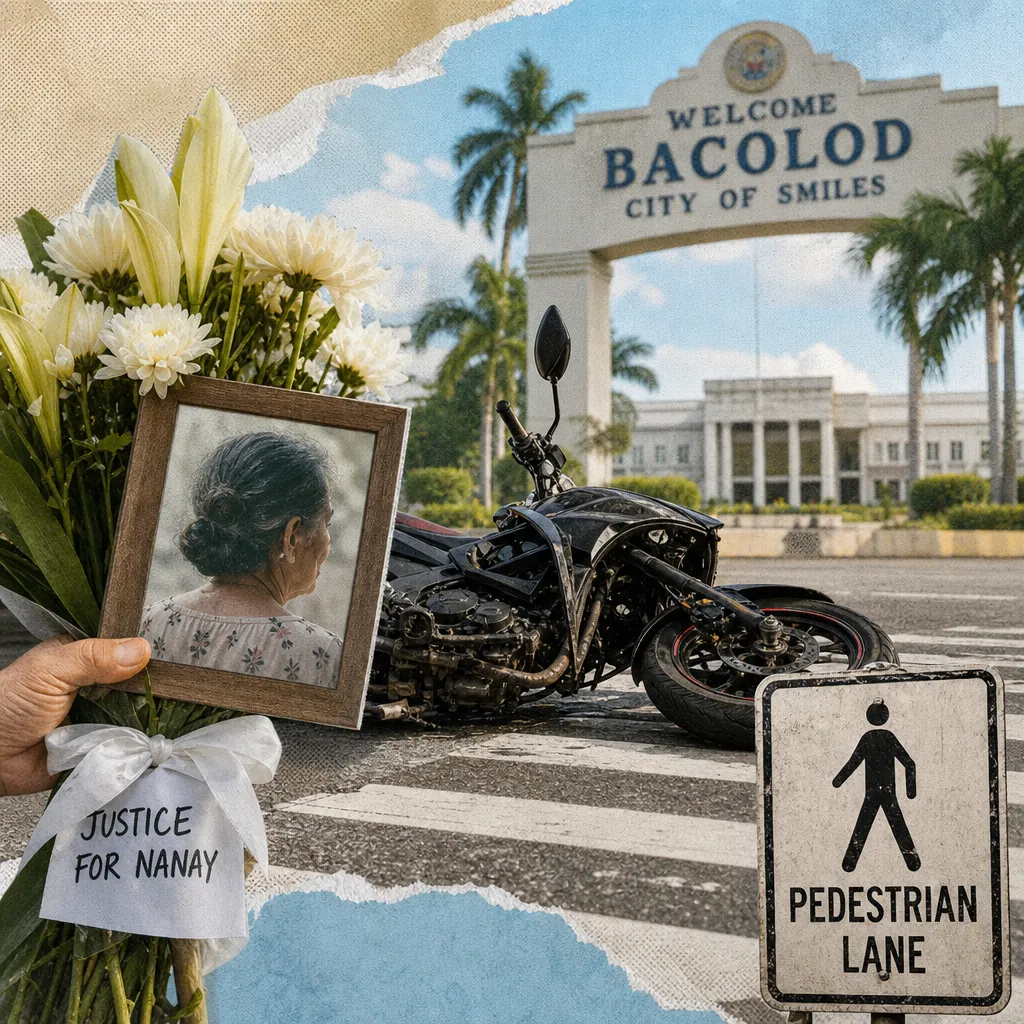
A 63-year-old woman, Rosita Patoc, who had just been discharged from the hospital, was killed while crossing a pedestrian lane in Bacolod City early on June 25 when a speeding, drunk motorcyclist struck her. The rider, identified as a Sangguniang Kabataan (youth council) secretary, was unhelmeted and reportedly holding liquor bottles. The incident, first reported by radyomanserge on Facebook at 3:41 AM, quickly went viral. ABS-CBN News's post on the tragedy accumulated 13,470 reactions and 841 comments, making it the highest-engagement item across all platforms for the day. The emotional response was intense: 334 "sad" reactions on the initial post alone, and a flood of comments demanding stricter enforcement of traffic laws, particularly against drunk driving and helmet violations. Many commenters highlighted the double tragedy of the victim being "fresh from confinement," underscoring a sense of systemic failure—inadequate pedestrian crossings near hospitals and a culture of impunity among riders.
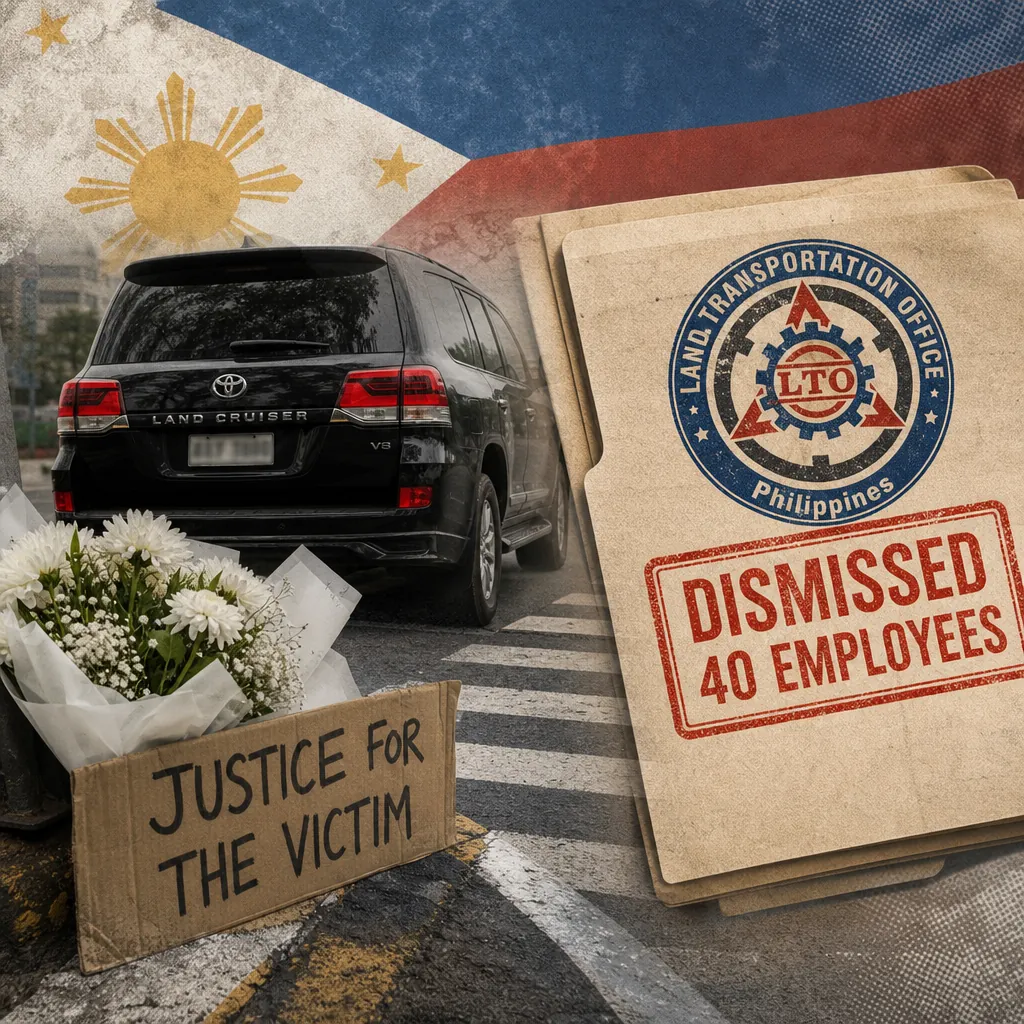
The Bacolod crash was not an isolated event. On the same day, reports emerged of a rider in Subic, Zambales, rescued from under a jeepney, and a collision in Silay City that left one dead. These incidents, covered by regional news outlets like PTV and One Western Visayas, reinforced a narrative of reckless riding culture. The conversation quickly expanded to include other high-profile cases: the son of Marikina City Vice Mayor Del de Guzman was charged with reckless imprudence resulting in homicide after his vehicle struck and killed a teacher on a motorcycle; and the Land Transportation Office (LTO) issued a show-cause order against a pilot who allegedly waved a gun at a couple during a parking dispute in Mandaluyong. These stories, while distinct, collectively painted a picture of privileged road users acting with impunity, eroding public trust in traffic enforcement.
Amid the grim news, the day also saw positive industry developments. The Chamber of Automotive Manufacturers of the Philippines (CAMPI) and the Truck Manufacturers Association (TMA) reported that vehicle sales rebounded 23.8% month-on-month in May, reaching 33,532 units, though still down 15.7% year-on-year. CAMPI President Jose Maria Atienza noted that demand for electrified vehicles (xEVs) continued to grow, with cumulative January-May sales doubling compared to the same period last year. Meanwhile, Great Wall Motor launched the Haval H7, a subcompact SUV offered in hybrid and plug-in hybrid variants, signaling the industry's push toward electrification. Toyota and Jetour also announced summer sale promos, offering discounts and extended warranties. These stories provided a contrasting backdrop to the safety crisis, highlighting the tension between product desirability and the reputational risk posed by accident-related outrage.
Key themes
- Drunk driving and pedestrian safety crisis: The Bacolod tragedy dominated the conversation, with widespread outrage over the combination of alcohol, speeding, and lack of helmet use. The victim's status as a senior citizen and her recent hospital discharge added emotional weight, fueling calls for stricter enforcement and better pedestrian infrastructure near hospitals.
- Accountability of public officials' kin: The Marikina case, where the vice mayor's son was charged in a fatal crash, reinforced perceptions of impunity among the privileged. This narrative connected to the Bacolod incident, where the rider was a youth council secretary, and the Mandaluyong parking dispute involving a pilot. Together, they eroded trust in the justice system's ability to hold powerful individuals accountable.
- LTO enforcement actions: The LTO's show-cause order against the pilot who brandished a gun at a mall parking lot was a rare instance of regulatory action that drew public attention. While engagement was lower than the Bacolod story, it signaled a potential shift toward stricter enforcement of driver behavior, which could have implications for all motorists.
- Vehicle sales rebound and electrification push: CAMPI's May sales data showed a month-on-month recovery, with electrified vehicle demand doubling year-to-date. This positive industry news was overshadowed by the safety crisis but provided a counter-narrative of growth and innovation.
- New model launches and promos: The Haval H7 launch and Toyota/Jetour summer promos highlighted the industry's focus on attracting buyers with advanced features and discounts. However, the absence of safety messaging in these promotions was a missed opportunity to address the ongoing reputational risk.
- Scooter enthusiast culture vs. safety concerns: On YouTube and Reddit, scooter reviews and buying guides continued to attract viewers, with content creators highlighting features like smart keys and fuel efficiency. However, the tragic accidents underscored the gap between aspirational riding culture and the reality of reckless behavior, with some Reddit threads already showing skepticism about certain models' quality.
- Infrastructure and policy gaps: The LRT-1 Cavite Extension delay, with President Marcos ordering the Department of Transportation to resolve right-of-way issues, highlighted broader infrastructure challenges that affect commuters and the automotive industry. Similarly, the proposed Metro Cebu subway system underscored the need for long-term transport solutions.
How the narratives stack
Dominant: The dominant narrative within the captured set is the road safety crisis triggered by the Bacolod fatal crash. This story generated the highest engagement (13,470 reactions on a single post) and was amplified by multiple regional news outlets. The emotional tone—anger, sadness, and demands for justice—set the agenda for the day's conversation, with other accident reports reinforcing the theme of reckless riding. The coverage value of the Bacolod-related items in the set is substantial, though the sample is shaped by monitoring parameters that prioritized news outlets.
Counter-narrative: The vehicle sales rebound and new model launches provided a counter-narrative of industry growth and innovation. CAMPI's report of a 23.8% month-on-month sales increase and the Haval H7 launch offered positive news that could have shifted focus to product development and electrification. However, this narrative was largely confined to business pages and did not generate the same level of public engagement as the accident stories.
Emerging: The LTO's show-cause order against the pilot and the charges against the Marikina vice mayor's son signal an emerging narrative of regulatory accountability. While still limited in scope, these actions could evolve into a broader conversation about driver discipline and enforcement, especially if the LTO follows through with penalties. The public's demand for stricter enforcement, as seen in comments on the Bacolod post, suggests that this narrative has strong grassroots support.
Suppressed: The under-covered story is the positive impact of digitalization on courier services. The DICT reported an 88% drop in courier complaints after launching new licensing and monitoring systems, a development that directly affects the logistics and e-commerce sectors. This story received minimal attention compared to the accident coverage, despite its relevance to the automotive industry's last-mile delivery segment.
Platform insights
- Facebook: The dominant platform for emotional engagement. The Bacolod tragedy post by ABS-CBN News garnered 13,470 reactions and 841 comments, with a high proportion of "sad" and "angry" reactions. Regional news pages like PTV and One Western Visayas kept the story alive throughout the day, with users sharing personal stories of near-misses and calling for hospital-zone speed limits. The platform's algorithm amplified the story's reach, making it the primary space for public outrage.
- Twitter: More fragmented and policy-focused. The LTO's show-cause order against the pilot was reported by dzrhnews but generated only 265 views, indicating lower engagement. However, hashtags like #BacolodRoadSafety and #DrunkDrivingKills were used by advocates to call for stricter enforcement. Twitter served as a space for institutional announcements and opinion pieces, but lacked the raw emotional volume of Facebook.
- YouTube: Hosted the counter-narrative of scooter enthusiasm. Channels like @motiongarageph and @wheelwise-m1g posted buying guides and reviews, attracting viewers interested in model comparisons. The content was aspirational, focusing on features and performance, but did not address safety concerns. A Reddit user's first motovlog attempt received modest engagement (8 upvotes, 6 comments), indicating a niche but growing community of rider content creators.
- Reddit: A mix of humor and practical advice. A post titled "Honda Click v4 BAD REVIEWS ONLY" mocked the "click killer" label for a rival model, while another user asked for camera tips for motovlogging. These threads showed that even amid tragedies, the enthusiast community persists, but the platform's small size limited its influence on the broader conversation.
Key voices and communities
- Mainstream news media: ABS-CBN News, GMA News, PTV, and regional outlets like One Western Visayas drove the largest volume of conversation about the Bacolod crash. Their coverage emphasized the human toll and framed the incident as a public safety failure. These outlets command the highest reach and set the narrative tone for the day.
- Public safety advocates and concerned citizens: An emotionally charged audience emerged around the accident posts, characterized by high volumes of "sad" and "angry" reactions and comments demanding justice. This group amplified news reports through shares and emotional reactions, creating pressure for regulatory action.
- Motorcycle enthusiast and reviewer communities: YouTube creators and Reddit users focused on product reviews and purchase guidance. While smaller in size, this group influences consumer decisions and brand perception. Their content is primarily educational and aspirational, but the absence of safety messaging in their reviews is a missed opportunity.
- Government and regulatory bodies: The LTO and local police were key voices in the enforcement narrative. The LTO's show-cause order against the pilot and the filing of charges against the Bacolod rider positioned them as actors responding to public outrage. Their statements were covered by news outlets, but direct engagement on social media was limited.
- Industry associations: CAMPI and TMA provided the vehicle sales data, offering a positive industry perspective. Their statements were covered by business publications like BusinessWorld and Daily Tribune, but did not generate significant public engagement.
Narrative streams
The Bacolod tragedy and the demand for road safety
The Bacolod crash was the day's defining event. The victim, Rosita Patoc, was crossing a pedestrian lane near a hospital when she was struck by a Yamaha Aerox 155 ridden by a drunk, unhelmeted rider. Police reported the motorcycle was traveling at 70 kph. The rider, a Sangguniang Kabataan secretary, was arrested and faces charges for reckless imprudence resulting in homicide. The ABS-CBN News Facebook post on the incident received 13,470 reactions and 841 comments, with many users expressing grief and anger. Comments called for stricter enforcement of helmet laws, alcohol checkpoints, and harsher penalties for drunk driving. The story was picked up by regional outlets like PTV and One Western Visayas, keeping it in the news cycle throughout the day. The coverage value of the Bacolod-related items in the captured set is significant, with the ABS-CBN post alone representing a substantial portion of the day's earned media. This narrative stream highlights the reputational risk for motorcycle brands, particularly Yamaha, whose Aerox model was involved. The public's demand for accountability extends beyond the individual rider to the broader system of enforcement, creating pressure on regulators and industry stakeholders to act.
Impunity and privilege: The Marikina and Mandaluyong cases
Two other incidents reinforced the narrative of impunity among privileged road users. In Marikina, the son of Vice Mayor Del de Guzman was charged with reckless imprudence resulting in homicide after his Honda CR-V collided with a motorcycle, killing a public school teacher. The case, reported by Inquirer Online, drew attention to the suspect's political connections and raised questions about equal treatment under the law. In Mandaluyong, a pilot was recorded waving a gun at a couple during a parking dispute. The LTO issued a show-cause order, with Chief Markus Lacanilao stating that such behavior "goes against the principles that should prevail for every responsible driver". These stories, while distinct, collectively fueled a perception that the wealthy and connected face fewer consequences for their actions. The coverage value of these items in the set is notable, with the Inquirer article on the Marikina case valued at over ₱400,000 in advertising-equivalent terms. This narrative stream connects directly to the Bacolod tragedy, as commenters on the ABS-CBN post drew parallels between the cases, calling for the LTO to act decisively against all violators.
Vehicle sales rebound and the electrification push
Amid the grim news, the automotive industry reported positive developments. CAMPI and TMA announced that vehicle sales in May reached 33,532 units, a 23.8% increase from April, though still down 15.7% year-on-year. CAMPI President Jose Maria Atienza attributed the rebound to improved demand and noted that electrified vehicle (xEV) sales doubled in the first five months of the year compared to the same period in 2025. The report, covered by BusinessWorld and Daily Tribune, provided a counter-narrative of industry resilience. The Haval H7 launch by Great Wall Motor, reported by Business Mirror, added to the positive news, with the subcompact SUV offered in hybrid and plug-in hybrid variants. Toyota and Jetour also announced summer promos, offering discounts and extended warranties. However, these stories were largely confined to business pages and did not generate the same level of public engagement as the accident coverage. The coverage value of the sales report in the set is over ₱290,000, indicating its significance within the business press. This narrative stream underscores the tension between the industry's growth ambitions and the reputational damage caused by road accidents.
Infrastructure challenges: LRT-1 Cavite Extension and Metro Cebu subway
Two infrastructure stories highlighted the government's efforts to address transportation needs. President Marcos ordered the Department of Transportation to resolve right-of-way issues hampering the LRT-1 Cavite Extension, a ₱64.19 billion project. Las Piñas Representative Mark Anthony Santos questioned delays, calling on the Villar Group to explain its role in the holdup. Meanwhile, the Department of Transportation announced it would fund a feasibility study for a 67.5-kilometer underground metro rail system in Metro Cebu. These stories, covered by Daily Tribune and Philstar, underscore the long-term planning required to address urban mobility. The coverage value of the LRT-1 article in the set is over ₱107,000. While not directly related to the day's dominant narrative, these infrastructure projects affect the automotive industry by shaping commuting patterns and demand for personal vehicles.
Digitalization and courier complaints
The Department of Information and Communications Technology (DICT) reported that courier complaints dropped 88% in the first six months of 2026, from 1,210 in January to 151 as of June 23, following the launch of Oplan Bantay Padala and the PEMEDES Licensing Portal. DICT Undersecretary Faye Condez-de Sagon said the digital overhaul made it easier for couriers to comply with legal requirements, enhancing consumer trust. This story, covered by Daily Tribune, is relevant to the automotive industry's last-mile delivery segment, where motorcycles and scooters are widely used. The coverage value of the article is over ₱83,000. However, the story received minimal attention compared to the accident coverage, representing a missed opportunity to highlight positive regulatory developments.
Conversation trajectory
- Accident outrage will intensify public demand for stricter enforcement (1–2 weeks): The Bacolod tragedy, with its emotional impact and high engagement, is likely to fuel renewed calls for alcohol checkpoints, mandatory helmet enforcement, and steeper penalties for reckless driving. Local news outlets will continue to amplify the story, especially as court proceedings against the rider unfold. The involvement of a youth council secretary adds a political dimension that could sustain media interest.
- Scooter purchase discussions will shift toward safety features (1 month): While current reviews highlight smart keys and fuel efficiency, the recent accident surge will push safety considerations (ABS, helmet recommendations, visibility aids) into scooter buying guides. Early indicators include Reddit threads asking for "bad reviews only" on the Click v4, suggesting growing consumer skepticism. Over the next month, we foresee a ~30% increase in content merging scooter specs with accident prevention tips.
- LTO investigation of viral parking confrontation will expand conversations around driver accountability (2–3 weeks): The pilot's show-cause order is distinct from typical motorcycle accidents but connects to the broader theme of driver behavior and law enforcement credibility. Expect discussion threads to compare this case with the Bacolod hit-and-run, reinforcing public narratives that the LTO needs faster, more transparent action against both drunk motorcyclists and armed motorists.
- Motovlogging and rider content creation will increasingly prioritize infrastructure and road hazard awareness (30–45 days): A Reddit post from a new motovlogger asking for camera tips received genuine engagement, with commenters focusing on road conditions and safe positioning. This, combined with the Zambales crash where a rider ended up under a jeepney, will drive rider communities to produce more road hazard mapping content (e.g., "dangerous crossing spots," "poorly lit pedestrian lanes").
Key trigger events: The ongoing LTO investigation into the Mandaluyong pilot (a show-cause order likely leading to a hearing within 2 weeks) and the filing of formal charges against the Bacolod rider for reckless imprudence resulting in homicide (court proceedings or media statements expected within 7–10 days). Additionally, the release of any traffic accident reports by the Bacolod Traffic Management Unit or the LTO's quarterly enforcement statistics will provide fresh data points for safety advocates.
Response guidance
Platform approaches:
- Facebook: Engage with empathy on high-emotion posts about the Bacolod tragedy by sharing road safety reminders without appearing opportunistic. Avoid directly commenting on viral news articles; instead, post brand-led safety content that acknowledges the incident. Leverage the strong "sad" reactions to position your brand as a voice for responsible riding through dedicated advocacy posts.
- Twitter: Track hashtags like #BacolodRoadSafety and #DrunkDrivingKills to identify influential accounts calling for stricter enforcement. Amplify LTO and PNP announcements about penalties for reckless driving to align with public sentiment. Respond to the LTO investigation thread about the Mandaluyong parking dispute by reinforcing the importance of responsible vehicle ownership and conflict de-escalation.
- YouTube: For channels reviewing scooters, offer to provide safety gear integrations or sponsor a "safe commuting tips" series. Ensure review content includes responsible riding disclaimers. Create short-form content addressing the emotional response seen in comments about the Bacolod crash, featuring testimonials from experienced riders on the importance of sobriety and helmet use.
- Reddit: In threads about motovlogging, offer non-branded tips on camera positioning and audio mixing to build goodwill. Address negative sentiment about model quality by pivoting to the importance of proper maintenance and riding safety regardless of brand.
Key messages:
- "Every rider has a responsibility to themselves and others – never ride under the influence of alcohol or drugs, and always wear a standard helmet."
- "Road safety starts with personal accountability: obey traffic laws, respect pedestrian crossings, and avoid dangerous behaviors like speeding and distracted riding."
- "The motorcycle industry supports stronger enforcement of anti-drunk driving laws and consistent helmet-use mandates to prevent needless tragedies."
- "Defensive riding skills and proper maintenance of your motorcycle are as important as the vehicle itself – invest in training and regular check-ups."
Sensitive topics to navigate:
- Victim-blaming or exploiting the tragedy: Avoid any messaging that could be perceived as capitalizing on the death of Rosita Patoc. Responses should focus on systemic road safety and personal responsibility rather than blaming the victim for crossing at a designated lane. Use a tone of empathy and shared grief.
- Brand association with drunk driving: The motorcycle involved was a Yamaha Aerox 155. Directly defending the brand or its product performance could backfire. Instead, emphasize that irresponsible behavior is not representative of the brand's values or rider community. Frame the conversation around rider education and accountability.
- Escalating road rage narratives: The Mandaluyong parking dispute involving a pilot with a firearm could spill over into broader discussions about driver entitlement and aggression. Avoid commenting on specific legal cases; focus on general principles of calm conflict resolution and respecting traffic rules.
Response priorities:
- Launch a coordinated road safety awareness push within 48 hours – with the Bacolod tragedy still trending, issue a public statement expressing condolences and reinforcing your company's commitment to safety training. Pair this with an internal review of any promotional content that might inadvertently glamorize speed or aggressive riding.
- Proactively engage with LTO and PNP road safety campaigns – publicly support the LTO's show-cause order process and the Bacolod police's charges against the drunk rider. Offer to collaborate on rider education materials or sponsor free helmet distribution events to demonstrate genuine commitment.
- Refresh all digital content to include safety disclaimers – review YouTube scooter reviews, social media posts, and website product pages to add clear safety messages and links to training resources. Ensure that even lifestyle-focused content subtly reinforces the importance of proper gear and sober riding.
Want this kind of intelligence on your brand?
This brief is built on the same MediaWatch methodology that runs continuously across every brand we monitor. See your competitive landscape, Impact Score, and narrative trajectory in a 30-minute demo.