LRT-2 Cashless Payments, NSCR Bidding, and Port Upgrades Lead Transport News as Fuel Prices Loom
The launch of open-loop fare payments on LRT-2, the upcoming bidding for the North-South Commuter Railway operations contract, and President Marcos's inauguration of port facilities in Camiguin dominated transport coverage on July 13, while fuel price concerns and road safety incidents also drew attention.
The day's conversation around transportation in the Philippines was anchored by three major developments: the rollout of cashless fare payments on LRT-2, the approaching bid deadline for the operations contract of the North-South Commuter Railway (NSCR), and President Ferdinand Marcos Jr.'s inauguration of new port facilities in Camiguin. These stories, covered across broadsheets, television, radio, and online news, signal a government push toward modernizing public transport infrastructure and digitizing fare collection. At the same time, fuel price volatility, road safety incidents, and regulatory actions against colorum vehicles and corrupt LTO personnel provided counterpoints, reminding the public that modernization efforts coexist with persistent challenges.
Key themes
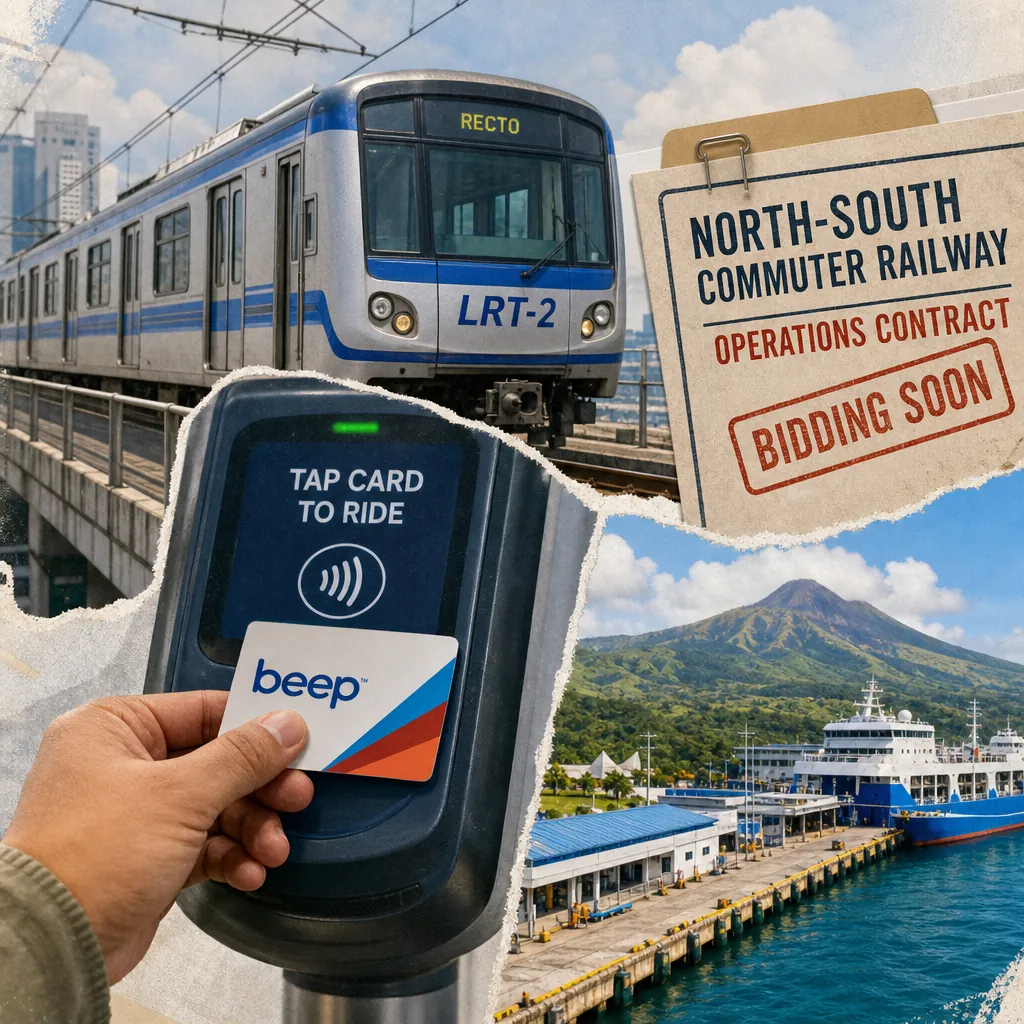
- LRT-2 launches open-loop fare payments Commuters on the Light Rail Transit Line 2 (LRT-2) can now pay fares using Visa or Mastercard debit, credit, or prepaid cards, NFC-enabled mobile wallets like Google Pay, or GCash QR codes. The system, launched by the Department of Transportation (DOTr), the Light Rail Transit Authority (LRTA), Rizal Commercial Banking Corp. (RCBC), and Visa, is the country's first rail-based automated fare collection system integrating open-loop EMV payments, mobile NFC, and QR transactions on a single platform. It eliminates the need for a dedicated transit card and is designed to be bank-agnostic, accepting payment instruments from participating banks and fintech providers. Authorities said the platform could streamline travel for LRT-2's more than 58.7 million annual passengers while supporting the government's push to modernize public transportation and reduce cash handling. The system was previously implemented on MRT-3, and plans are underway to launch it on LRT-1 before the end of the year. A promotional cashback offer from a bank for customers using their accounts to pay for LRT-2 fares runs until the end of July.
- NSCR operations contract bidding set for September The DOTr expects to receive bids for the P229.32-billion operations and maintenance (O&M) contract of the North-South Commuter Railway (NSCR) by end-September. Transportation Undersecretary for Railways Timothy John Batan said the agency is continuing one-on-one discussions with prospective bidders, focusing on technical issues given the scale and complexity of the project. At least 10 companies from the Philippines, France, and Japan have expressed interest, including Tokyo Metro Co., Ltd., which operates Japan's first subway and the Shinkansen bullet train. The NSCR will span 147 kilometers from Clark International Airport in Pampanga to Calamba, Laguna, making it one of the largest metro rail systems in the region once fully operational. The bidding was initially set for July 29 but was moved to September to allow more time for technical consultations.
- President Marcos inaugurates new port facilities in Camiguin President Ferdinand Marcos Jr. led the inauguration of the P86.9-million Benoni Port Light Craft Landing Station and inspected the P171.3-million Benoni Port Operations Building on July 13. The facilities aim to improve passenger mobility, strengthen trade and tourism, and support economic growth in Camiguin and the surrounding regions. Marcos emphasized the importance of modern and efficient ports, noting that the new infrastructure would serve as a vital link for people, goods, and services. He also cited recurring issues during peak season, such as unauthorized ticket processors and fixers taking advantage of tourists. The President directed the DOTr to find ways to improve passenger flow and travel in other parts of the country. The Port of Benoni is Camiguin's primary maritime gateway to mainland Mindanao and Bohol through the ports of Balingoan and Jagna along the Central Nautical Highway. The new light craft landing station doubles vessel berthing capacity from 200 to 400, and passenger traffic is expected to reach 955,327 by 2030.
- Fuel price hikes loom amid Middle East tensions The Department of Energy (DOE) announced plans to reinstate stricter fuel price regulations, including capping price hikes and mandating minimum rollbacks, to prevent "abusive" pricing by oil companies amid renewed escalation in the Middle East conflict. Energy Secretary Sharon Garin said that if volatility continues, the DOE will impose indefinite maximum or minimum adjustments rather than prescribing a price range. Motorists are bracing for another round of fuel price adjustments, with diesel expected to increase by P2.62 to P4.62 per liter and kerosene by P2.22 to P4.22 per liter. Gasoline prices could either increase or decrease by as much as P1 per liter. The DOE continues to coordinate with oil companies to maintain and expand fuel discount programs for public utility vehicle drivers, TNVS drivers, delivery riders, and other motorists. Participating companies include Petron, Caltex, Shell, UniOil, and Seaoil.
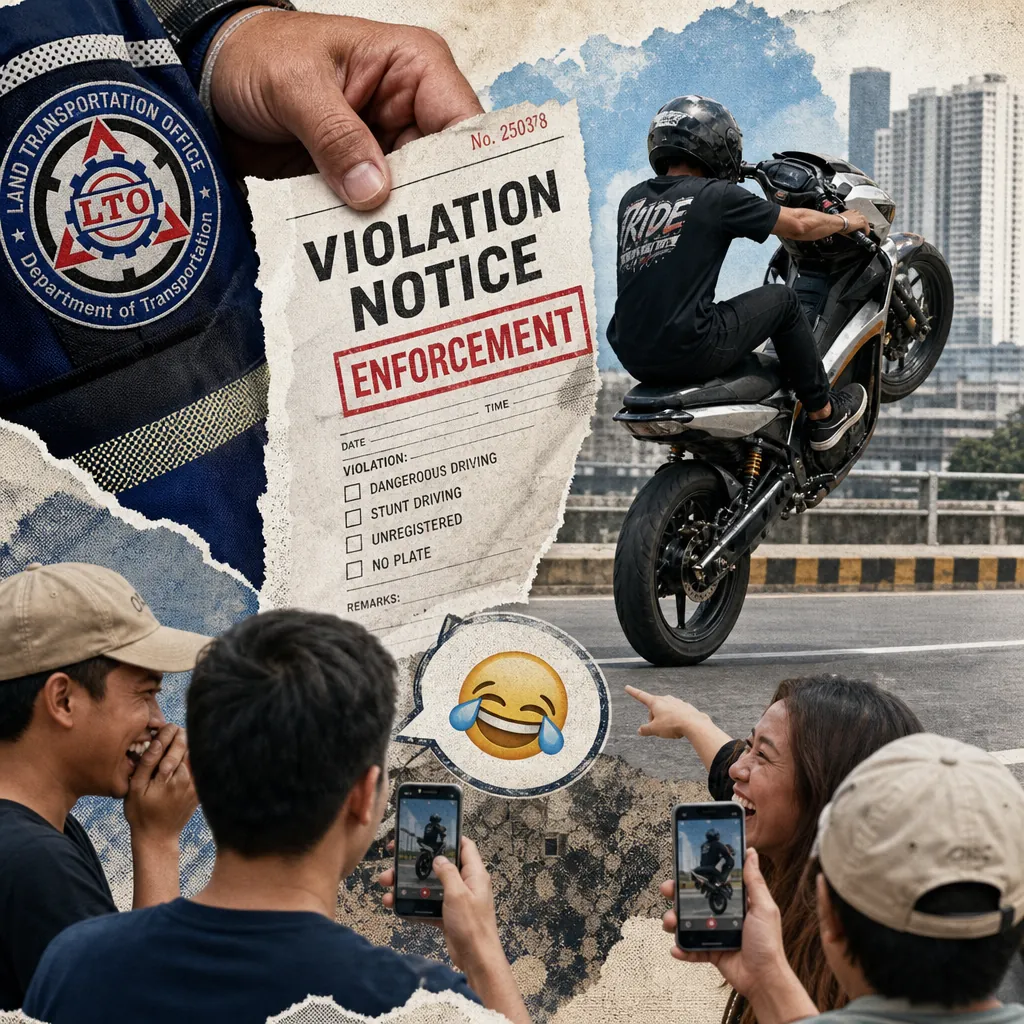
- Road safety incidents and enforcement actions Several road safety incidents made headlines. A fatal hit-and-run in Mandaluyong City involving a Toyota Land Cruiser with a House of Representatives sticker sparked social media backlash. The House clarified that the registered owner is not a member of Congress, and the vehicle was never issued an official pass for the 19th or 20th Congress. The driver, a 20-year-old, had his license suspended for 90 days by the Land Transportation Office (LTO). In Calamba, Laguna, the LTO issued a show-cause order to a councilor allegedly involved in reckless driving, counterflowing, and using a siren on a public road, as captured in a viral video. In Cagayan de Oro, a pickup truck counterflowing narrowly missed two motorcycles, with the incident caught on dashcam. Meanwhile, the LTO in Central Visayas (LTO-7) intensified its campaign against colorum vehicles, apprehending five unauthorized public transport vehicles in Metro Cebu. The agency also terminated around 40 personnel for corruption, including collecting unauthorized fees and fixing documents.
- Police officer arrested for smuggling cigarettes A police officer assigned to Camp Crame was arrested at a checkpoint in Pagadian City, Zamboanga del Sur, after being found with 251 reams of smuggled cigarettes worth P1.285 million. The officer attempted to evade the checkpoint but was stopped. PNP Chief General Jose Melencio Nartatez Jr. ordered the filing of criminal and administrative cases, emphasizing that the investigation would be thorough and fair. The smuggled cigarettes were turned over to the Bureau of Customs. The incident highlights ongoing issues with smuggling and corruption within law enforcement.
- DOTr eyes longer runways to lower airfares The DOTr is banking on longer airport runways and expanded regional airport capacity to help bring down domestic airfares. Civil Aeronautics Board (CAB) Executive Director Atty. Carmelo Arcilla said the government is requiring existing and future airports to have runways of at least 2,100 meters to accommodate larger jet aircraft instead of smaller turboprops. Operating larger aircraft can lower airlines' unit cost per passenger by spreading operating expenses across more seats. Many airports outside Manila currently have runways of only 1,000 to 1,500 meters, limiting them to turboprop aircraft like the ATR, which carries around 72 passengers. The initiative is part of broader efforts to improve air connectivity and reduce travel costs.
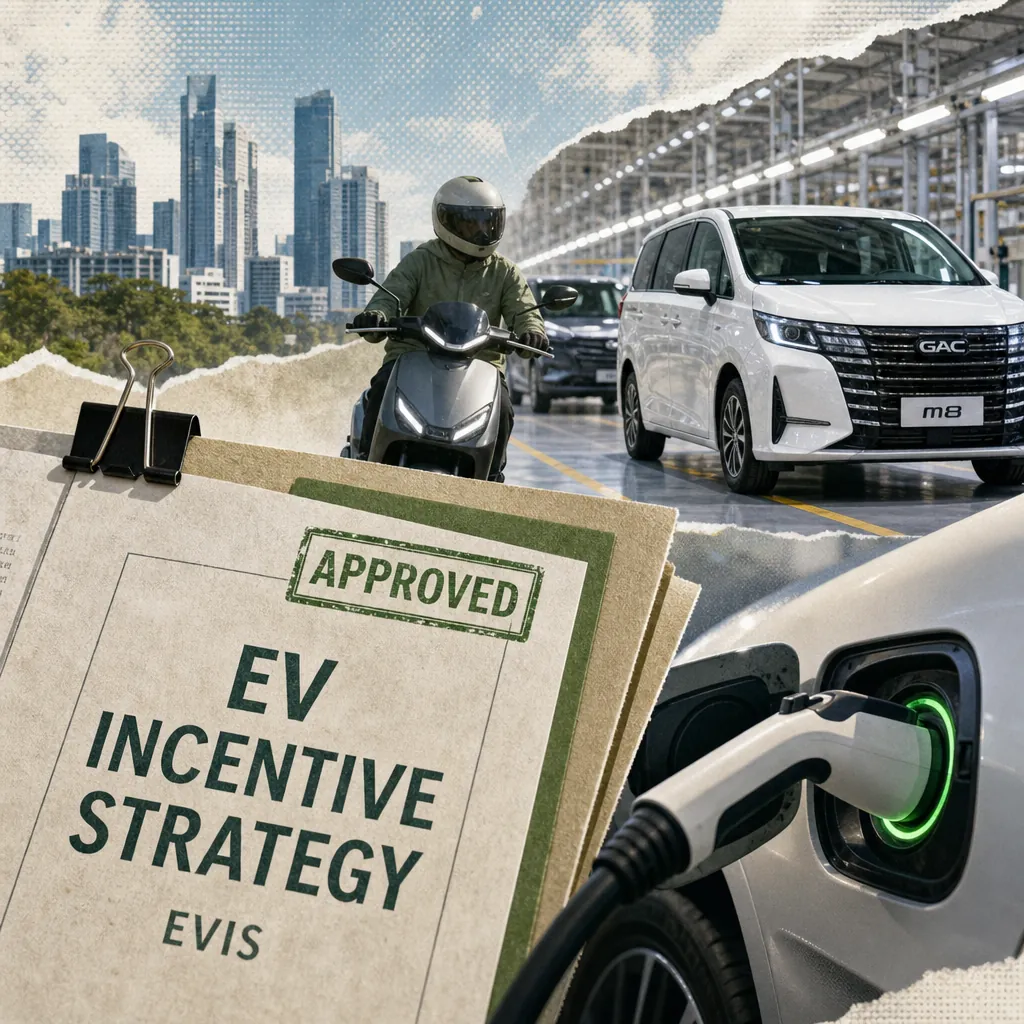
- Dual-track incentive strategy for auto sector gains traction The government is advancing a dual-track incentive strategy for the automotive industry, proposing a scaled-down revival of its vehicle manufacturing incentive program (RACE) while simultaneously pushing incentives for electric vehicle (EV) production. Department of Finance (DOF) Secretary Frederick Go said the proposals are moving through the approval process, with the Fiscal Incentives Review Board (FIRB) and the Office of the Executive Secretary reviewing them. The Department of Trade and Industry (DTI) is positioning RACE as a transition program between the expiring Comprehensive Automotive Resurgence Strategy (CARS) Program and the future Electric Vehicle Incentive Strategy (EVIS). This dual approach aims to support both traditional internal combustion engine vehicles and the growing EV sector.
How the narratives stack
Dominant — Within the captured set, the LRT-2 cashless payment launch and the NSCR bidding process received the most extensive coverage across multiple mediums, including broadsheets (Malaya Business Insight, Philippine Daily Inquirer, BusinessWorld, The Philippine Star), television (GMA 7, Net 25, UN TV), and radio (Radyo5, DZRB). The combined advertising-equivalent value (AVE) for these stories exceeded P2 million, reflecting heavy editorial attention. The government's push for transport modernization through digital payments and large-scale rail infrastructure dominated the day's transport narrative.
Counter-narrative — The fuel price hike announcement and the DOE's plan to reinstate stricter price regulations provided a counterpoint to the modernization narrative. While the government showcased new infrastructure and digital systems, the reality of rising fuel costs—driven by global tensions—underscored the ongoing financial burden on commuters and transport operators. Coverage of fuel discounts and DOE interventions attempted to balance the narrative, but the price increases themselves remained a concern.
Emerging — The dual-track incentive strategy for the automotive sector (RACE and EVIS) is an emerging story that could reshape the industry. While coverage was limited to one broadsheet (Business Mirror), the policy direction signals a potential shift in how the government supports vehicle manufacturing and EV adoption. If approved, these incentives could attract investment and influence consumer choices.
Suppressed — The story of the police officer arrested for smuggling cigarettes received coverage in tabloids and radio but was largely absent from major broadsheets. Given the implications for law enforcement integrity and the smuggling trade, the limited attention in mainstream media is notable. Similarly, the LTO-7 corruption dismissals (40 personnel terminated) were covered mainly in provincial and tabloid outlets, not in national broadsheets.
Platform insights
- Facebook: The LRT-2 cashless payment launch generated significant engagement on the DOTr and LRTA official pages, with commuters sharing the news and asking questions about which cards are accepted. Posts about the fatal hit-and-run in Mandaluyong also drew heavy comments, with many users expressing outrage and demanding accountability. The House of Representatives' clarification that the SUV owner was not a solon was shared widely, but skepticism remained in comment threads.
- X (formerly Twitter): The hashtag #LRT2Cashless trended briefly as commuters posted photos of themselves tapping cards at turnstiles. The hit-and-run incident also trended, with users calling for stricter enforcement and questioning the use of congressional stickers. The MMDA's response to illegally parked buses during an INC rally was also discussed, with some users criticizing selective towing.
- YouTube: News channels like GMA News and PTV uploaded videos of the LRT-2 launch and the Camiguin port inauguration. The dashcam footage of the counterflowing pickup in Cagayan de Oro was shared on several channels, drawing comments about road discipline and the need for stricter enforcement.
- Reddit: The r/Philippines subreddit had threads discussing the LRT-2 cashless system, with users comparing it to systems in other Asian countries and noting that the Philippines is late to adopt open-loop payments. The hit-and-run incident also sparked discussions about road safety and the privileges of government officials.
Key voices and communities
- Government officials and agencies — The DOTr, LRTA, LTO, DOE, and PNP were central to the day's narratives. Transportation Undersecretary Timothy John Batan provided details on the NSCR bidding, while Energy Secretary Sharon Garin announced fuel price regulations. PNP Chief Nartatez ordered charges against the arrested police officer. Their statements were widely quoted across media.
- Consumer and commuter groups — The group Motorista Laban sa Anomalya (MLA) raised concerns about the P60 fee for certificate of validation of insurance during LTO registration, claiming it lacks a receipt and is an additional burden on motorists. Lawyers for Commuter Safety and Protection (LCSP) represented a student who alleged sexual assault by a TNVS driver, filing criminal and administrative cases.
- Media outlets — Broadsheets like the Philippine Daily Inquirer, BusinessWorld, Manila Times, and Daily Tribune provided in-depth coverage of the NSCR bidding and LRT-2 launch. Tabloids like Remate, Abante, and Police Files Tonite focused on road safety incidents, corruption, and crime. Provincial outlets like Sun Star Cebu and Super Balita covered LTO-7 operations and local enforcement.
- Private sector partners — RCBC and Visa were key partners in the LRT-2 cashless system, with RCBC President and CEO highlighting the bank's role in digital transformation. Tokyo Metro and other Japanese, French, and Filipino companies were mentioned as prospective bidders for the NSCR contract.
- Celebrity and influencer voices — Actor Eppie Quizon praised a Grab driver who returned a lost phone, highlighting honesty in the transport sector. Actress Jasmine Curtis-Smith criticized the MMDA for not towing illegally parked buses during an INC rally, sparking online discussion about selective enforcement.
Narrative streams
LRT-2 cashless payment system: A step toward modernized commuting
The launch of the automated fare collection system on LRT-2 on July 13 marks a significant milestone in the government's push for digital transformation in public transportation. The system allows commuters to pay fares using Visa or Mastercard debit, credit, or prepaid cards, NFC-enabled mobile wallets like Google Pay, or GCash QR codes. Unlike traditional transit cards that require separate purchase and reloading, this open-loop system is bank-agnostic, meaning it accepts payment instruments from any participating bank or fintech provider. The DOTr, LRTA, RCBC, and Visa jointly launched the system, which is the first rail-based implementation of its kind in the country. The LRT-2 line serves 13 stations from Recto in Manila to Antipolo City, carrying over 58.7 million passengers annually. The system was previously rolled out on MRT-3, and plans are underway to extend it to LRT-1 before the end of the year. A promotional cashback offer from a bank for customers using their accounts to pay for LRT-2 fares runs until the end of July. The coverage of this launch was extensive, with broadsheets like Malaya Business Insight, Philippine Daily Inquirer, BusinessWorld, and The Philippine Star all carrying the story, along with television reports on GMA 7 and radio broadcasts on Radyo5 and DZRB. The combined AVE for these items exceeded P1.5 million, reflecting the story's prominence. For commuters, the system promises faster boarding and reduced queues at ticket booths, though some may need time to adapt to the new payment methods.
NSCR bidding: The race to operate the country's largest railway
The North-South Commuter Railway (NSCR) is the Philippines' largest infrastructure project, a 147-kilometer rail line connecting Clark International Airport in Pampanga to Calamba, Laguna. The DOTr is seeking a private operator for the P229.32-billion operations and maintenance (O&M) contract, with bid submission now set for September. Transportation Undersecretary Timothy John Batan said at least 10 companies from the Philippines, France, and Japan have expressed interest, including Tokyo Metro Co., Ltd., which operates Japan's first subway and the Shinkansen bullet train. The one-on-one technical discussions with prospective bidders are ongoing, focusing on the complexity of operating one of the largest metro rail systems in the region. The NSCR is expected to significantly reduce travel time between Clark and Calamba, easing congestion on major highways and providing a modern alternative for commuters. The bidding process has attracted attention from both local and international media, with broadsheets like Daily Tribune, BusinessWorld, The Philippine Star, and Philstar Online covering the story. The combined AVE for NSCR-related articles was over P2 million, making it one of the most covered topics of the day. The awarding of the contract is expected to be a major milestone for the DOTr and the country's railway development.
Camiguin port upgrades: Boosting tourism and inter-island connectivity
President Ferdinand Marcos Jr. inaugurated the P86.9-million Benoni Port Light Craft Landing Station and inspected the P171.3-million Benoni Port Operations Building on July 13. The facilities are designed to improve passenger mobility, strengthen trade and tourism, and support economic growth in Camiguin and the surrounding regions. The Port of Benoni is Camiguin's primary maritime gateway to mainland Mindanao and Bohol through the ports of Balingoan and Jagna along the Central Nautical Highway. The new light craft landing station doubles vessel berthing capacity from 200 to 400, and passenger traffic is expected to reach 955,327 by 2030. Marcos emphasized the importance of modern and efficient ports, noting that they serve as vital links for people, goods, and services. He also cited recurring issues during peak season, such as unauthorized ticket processors and fixers taking advantage of tourists. The President directed the DOTr to find ways to improve passenger flow and travel in other parts of the country. The story was covered by television (PTV4, UN TV, One PH), radio (Radyo5), and broadsheets (Manila Bulletin, Malaya Business Insight), with a combined AVE of over P1 million. The upgrades are expected to boost tourism in Camiguin, an island known for its natural attractions, and improve the efficiency of inter-island transport.
Fuel price volatility and DOE intervention
The Department of Energy (DOE) announced plans to reinstate stricter fuel price regulations, including capping price hikes and mandating minimum rollbacks, to prevent "abusive" pricing by oil companies amid renewed escalation in the Middle East conflict. Energy Secretary Sharon Garin said that if volatility continues, the DOE will impose indefinite maximum or minimum adjustments rather than prescribing a price range. Motorists are bracing for another round of fuel price adjustments, with diesel expected to increase by P2.62 to P4.62 per liter and kerosene by P2.22 to P4.22 per liter. Gasoline prices could either increase or decrease by as much as P1 per liter. The DOE continues to coordinate with oil companies to maintain and expand fuel discount programs for public utility vehicle drivers, TNVS drivers, delivery riders, and other motorists. Participating companies include Petron, Caltex, Shell, UniOil, and Seaoil. The story was covered by broadsheets (The Philippine Star) and radio (DZRB), with a combined AVE of over P270,000. The price hikes are expected to impact transportation costs and consumer goods, adding to the financial burden on Filipinos.
Road safety and enforcement: Hit-and-run, counterflow, and colorum operations
Several road safety incidents dominated tabloid and provincial coverage. A fatal hit-and-run in Mandaluyong City involving a Toyota Land Cruiser with a House of Representatives sticker sparked social media backlash. The House clarified that the registered owner is not a member of Congress, and the vehicle was never issued an official pass for the 19th or 20th Congress. The driver, a 20-year-old, had his license suspended for 90 days by the LTO. In Calamba, Laguna, the LTO issued a show-cause order to a councilor allegedly involved in reckless driving, counterflowing, and using a siren on a public road, as captured in a viral video. In Cagayan de Oro, a pickup truck counterflowing narrowly missed two motorcycles, with the incident caught on dashcam. Meanwhile, the LTO in Central Visayas (LTO-7) intensified its campaign against colorum vehicles, apprehending five unauthorized public transport vehicles in Metro Cebu. The agency also terminated around 40 personnel for corruption, including collecting unauthorized fees and fixing documents. These stories highlight ongoing challenges in road safety and enforcement, with the LTO taking action against both violators and corrupt employees. The combined AVE for these items was over P1 million, reflecting significant tabloid and provincial coverage.
Police officer arrested for smuggling cigarettes
A police officer assigned to Camp Crame was arrested at a checkpoint in Pagadian City, Zamboanga del Sur, after being found with 251 reams of smuggled cigarettes worth P1.285 million. The officer attempted to evade the checkpoint but was stopped. PNP Chief General Jose Melencio Nartatez Jr. ordered the filing of criminal and administrative cases, emphasizing that the investigation would be thorough and fair. The smuggled cigarettes were turned over to the Bureau of Customs. The incident was covered by tabloids (Abante Tonite, Police Files Tonite) and radio (DZMM, DZRH), with a combined AVE of over P200,000. The case underscores ongoing issues with smuggling and corruption within law enforcement, and the PNP's swift response signals a commitment to accountability.
Conversation trajectory
- Over the next 1–2 weeks: The LRT-2 cashless payment system will likely see increased usage as commuters become more familiar with the technology. The DOTr may announce additional participating banks or fintech providers. The NSCR bidding process will continue with one-on-one technical discussions, and the list of confirmed bidders may be released. Fuel price adjustments will take effect, and the DOE may announce specific price caps or minimum rollbacks if volatility persists.
- Over the next 1–3 months: The NSCR O&M contract is expected to be awarded by end-September or early October, with the winning bidder announced. The LRT-1 cashless payment system may be launched before the end of the year, as planned. The dual-track incentive strategy for the automotive sector (RACE and EVIS) may receive FIRB approval, potentially attracting new investments. The LTO's anti-colorum campaign and corruption crackdown are likely to continue, with more apprehensions and dismissals expected.
- Trigger events to watch: Escalation of the Middle East conflict could lead to further fuel price spikes, prompting stronger DOE intervention. The NSCR bid submission and awarding will be a major milestone for Philippine rail transport. Any major road safety incident involving a government official could reignite public debate on accountability and enforcement. The approval of RACE and EVIS incentives could reshape the automotive industry landscape.
Response guidance
- For transport agencies: Emphasize the benefits of digital payments and modern infrastructure in public communications. Highlight convenience, time savings, and security. Address commuter concerns about data privacy and system reliability. Use social media to provide tutorials and FAQs for the LRT-2 cashless system.
- For oil companies: Proactively communicate fuel price adjustments and discount programs. Engage with the DOE on price regulation discussions to ensure fair implementation. Highlight corporate social responsibility initiatives that support public transport drivers and commuters.
- For law enforcement: Maintain transparency in handling high-profile cases like the hit-and-run and the police smuggling arrest. Use these incidents to demonstrate commitment to accountability. Continue public information campaigns on road safety and the dangers of colorum vehicles.
- For automotive industry stakeholders: Monitor the progress of RACE and EVIS incentives. Prepare to align business strategies with potential policy shifts. Engage with government consultations to ensure the incentives are attractive and effective.
- Sensitive topics: Avoid downplaying fuel price hikes or appearing insensitive to commuter struggles. When discussing road safety incidents, be respectful of victims and avoid speculation. In coverage of corruption cases, emphasize due process and the presumption of innocence until proven guilty.
See the full picture behind today's signals.
This report draws from Media Meter's MediaWatch, our real-time monitoring engine tracking 2,470+ Philippine sources across print, broadcast, digital, and social. Explore how the platform turns raw coverage into decision-grade intelligence, then see how it's configured for teams like yours — whether you're in PR agencies, corporate comms, government, or marketing.
Want more? Browse our Report Library for sector and crisis intelligence, or request a demo and we'll have your brand set up before the call.
Want this kind of intelligence on your brand?
This brief is built on the same MediaWatch methodology that runs continuously across every brand we monitor. See your competitive landscape, Impact Score, and narrative trajectory in a 30-minute demo.