Hit-and-run outrage, EV incentives, and LTO corruption: A divided day in Philippine auto conversation
A fatal hit-and-run involving a Toyota Land Cruiser dominates public outrage and raises questions of privilege, while the government advances EV incentive programs and LTO-7 sacks 40 workers for corruption. The day's conversation spans accountability, enforcement disparities, and industry policy signals.
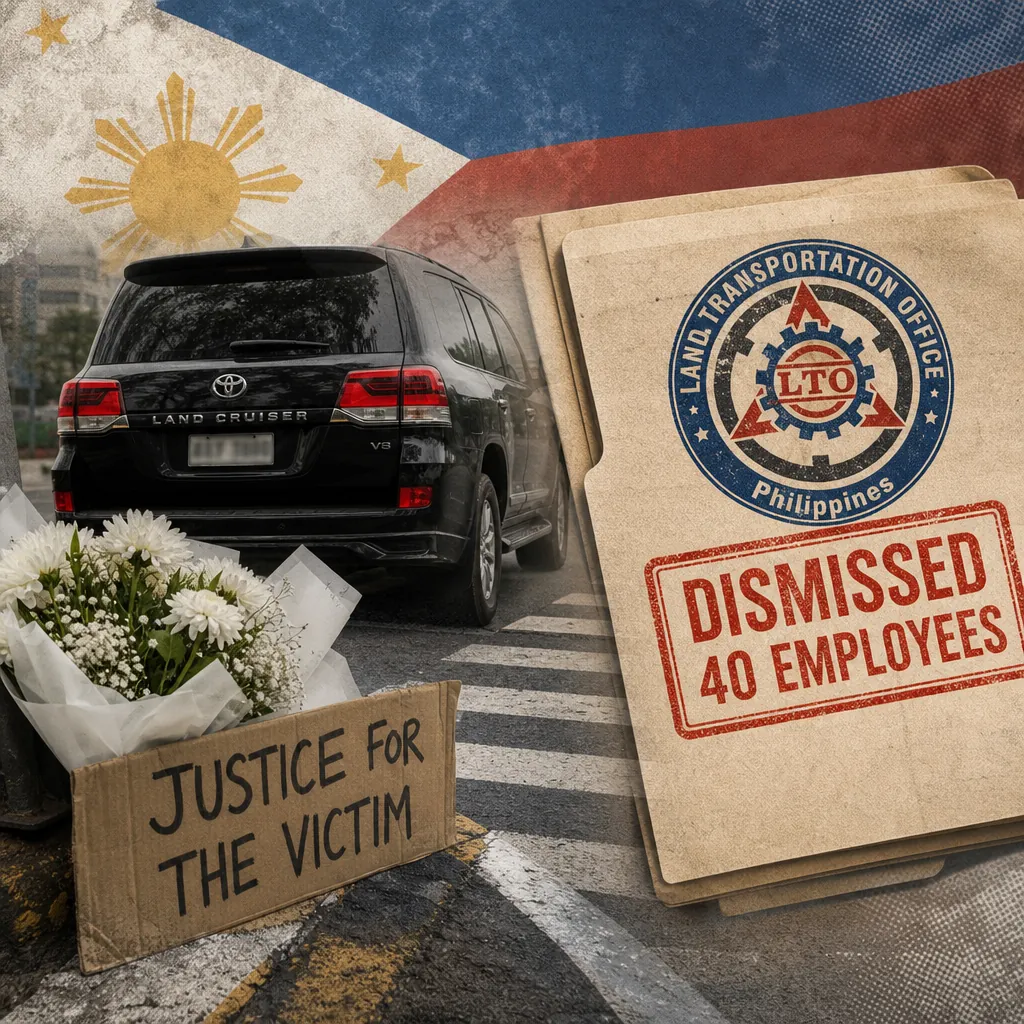
A single white Toyota Land Cruiser has become the focus of a national conversation about privilege, accountability, and road safety. On July 12, 2026, a fatal hit-and-run along Ortigas Avenue in Mandaluyong City killed a 41-year-old female motorcycle passenger and injured a TNVS rider. The suspected vehicle, a white Land Cruiser with plate number SSS-11, was reportedly driven by the 20-year-old son of its registered owner. Within hours, the story exploded across social media and news platforms, drawing over 19,000 views on a single Twitter thread and hundreds of emotional reactions on Facebook. The public's anger was amplified by reports that the owner attempted an "amicable settlement" or areglo, and by the Land Transportation Office's (LTO) swift action on a separate case involving unauthorized use of red and blue blinkers on a similar vehicle—a contrast that many saw as evidence of selective enforcement.
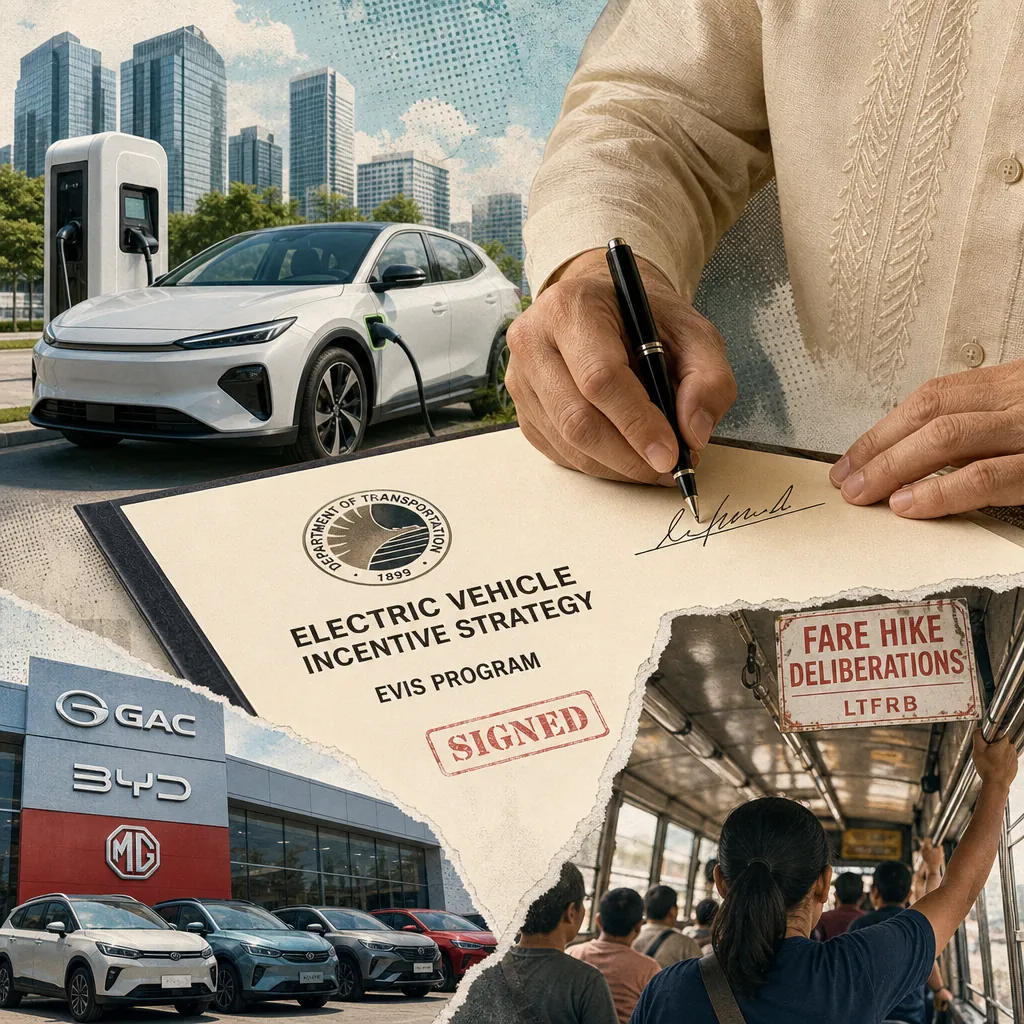
But the hit-and-run was not the only automotive story of the day. The government announced progress on two major incentive programs for vehicle manufacturing: the Electric Vehicle Incentive Strategy (EVIS), with a proposed P60-billion budget for up to four EV makers, and the revived Revitalizing the Automotive Industry for Competitiveness Enhancement (RACE) program, with P9 billion for three internal combustion engine (ICE) manufacturers. Trade officials expressed confidence that the EVIS executive order would be signed before President Ferdinand Marcos Jr.'s State of the Nation Address (SONA) on July 27. Meanwhile, LTO-7 in Central Visayas terminated 40 personnel over alleged corruption, including extortion and illegal plate fees, adding a layer of institutional scandal to the day's regulatory narrative.
These threads—public outrage over a privileged driver, government efforts to reshape the industry through incentives, and internal corruption within the enforcement agency—painted a complex picture of an automotive sector grappling with both crisis and opportunity. The conversation was not confined to any single platform: Facebook hosted long-form outrage and official statements, Twitter served as a real-time amplifier for calls for justice, and YouTube provided visual evidence that fueled cross-platform sharing. The day's events also resurrected older grievances about road safety on Ortigas Avenue, bureaucratic corruption in vehicle registration, and the persistent vulnerability of motorcycle riders.
Key themes
- Privilege and accountability in the hit-and-run case — The dominant thread of the day centered on the fatal crash and the suspicion that the vehicle's owner or driver enjoyed political protection. House Secretary General Cheloy Garafil confirmed that the registered owner was not a member of the House of Representatives, and that the vehicle had no record of a congressional vehicle pass. But the clarification did little to quell public anger, as many users questioned why the driver was not immediately arrested and why the LTO had only issued a show-cause order. A Facebook post by Dr. Tony Leachon, accumulating 515 likes and 63 comments, crystallized sentiment: "No Sacred Cows. Justice Now."
- LTO enforcement disparity: blinkers vs. fatalities — The LTO's rapid response to a viral video of a Toyota LC300 using unauthorized red and blue blinkers on an expressway—issuing a show-cause order and a 90-day preventive suspension—was contrasted with the perceived sluggishness of the hit-and-run investigation. A Facebook user wrote: "Bakit show cause order lang sa LTO? Bakit hindi hulihin ng pulis e hit and run nga. May namatay literal. Dahil makapangyarihan?" This comparison fueled a narrative that the system acts decisively on minor violations but hesitates when the powerful are involved.
- Road safety crisis on Ortigas Avenue — The hit-and-run was not an isolated incident. Earlier accidents on the same road were resurrected in the conversation, including a February 2026 crash where a rider died after hitting a tree, and a May 2025 hit-and-run involving a van. Commenters on a TV Patrol video (1,287 views) noted the pattern, with one user writing: "Ilang beses na ito sa Ortigas, wala pa ring aksyon ang LGU." This thread demonstrated that the July 12 incident was part of a broader safety crisis demanding infrastructure and enforcement changes.
- Government pushes EV and ICE manufacturing incentives — The Department of Trade and Industry (DTI) announced that the Electric Vehicle Incentive Strategy (EVIS) program, with a P60-billion budget for up to four manufacturers, is awaiting President Marcos's signature. The revived Revitalizing the Automotive Industry for Competitiveness Enhancement (RACE) program, with P9 billion for three ICE manufacturers, is also being finalized. Trade Undersecretary Ceferino Rodolfo expressed confidence that the EVIS executive order would be issued before the SONA. Two companies have already expressed interest in EVIS, including Mitsubishi Motors Philippines, which plans to produce hybrid EVs at its Laguna plant by 2028.
- LTO-7 corruption purge — The Land Transportation Office in Central Visayas (LTO-7) terminated 40 personnel over alleged corruption, including extortion during roadside operations, illegal collection of fees for license plates, and fixing activities. Regional Director Atty. Wendell Dinglasan said those removed included law enforcers, plate hub workers, and district office personnel. Some were allegedly charging motorists P2,000 to P2,500 for license plates that should have been free. This development added a layer of institutional scandal to the day's regulatory narrative, reinforcing public distrust in the agency.
- Toyota's biofuel push amid oil supply fears — Toyota Motor Philippines (TMP) President Masando Hashimoto announced that the company aims to revive interest in biofuels through closer collaboration with government agencies. Speaking at a press briefing, Hashimoto recalled that the company's manufacturing plant in Santa Rosa, Laguna, nearly ran short of liquefied petroleum gas (LPG) in late March after its supplier could no longer guarantee deliveries. The incident highlighted the country's vulnerability to imported fuel supply disruptions, particularly from geopolitical tensions in the Middle East.
- Ford expands reach with mobile showroom and Raptor success — Ford Philippines launched a mobile showroom in Southern Cebu, allowing residents to explore vehicles, consult with specialists, and book test drives without visiting a traditional dealership. Separately, the company announced that the Philippines has become one of the three biggest export markets for the Ford Ranger Raptor, alongside Australia and South Africa. The performance pickup has reached more than 215,000 units worldwide since 2018.
- Honda extends hybrid promotions — Honda Cars Philippines extended its "Hybrid Power, Honda Trust" campaign until July 31, offering financing options across its hybrid and gasoline-powered range. The offer covers the 2026 Honda HR-V RS e:HEV, Civic RS e:HEV, and CR-V RS e:HEV AWD, with monthly payments starting at P29,196 for the HR-V hybrid. Discounts of up to P150,000 are available on selected models.
How the narratives stack
Dominant — Within the captured set, the fatal hit-and-run and the associated privilege-and-accountability narrative dominated both social media engagement and news coverage. The story generated the highest emotional intensity on Facebook (515 likes, 104 angry, 105 sad on one post) and the highest view count on Twitter (19,199 views on a single thread). News outlets including Inquirer, GMA News Online, and Philstar all carried the story, with the House Secretary General's denial of congressional ownership receiving widespread pickup. The advertising-equivalent value of the coverage in this set was substantial, with the Inquirer article alone valued at P185,120 and the GMA article at P156,240. The narrative's dominance was reinforced by the contrast with the LTO's swift action on the blinker case, which amplified public perception of selective enforcement.
Counter-narrative — The government's announcement of EV and ICE manufacturing incentives provided a positive, forward-looking counterpoint to the day's crisis-driven stories. Trade officials' confidence that the EVIS executive order would be signed before the SONA signaled policy momentum. This narrative was carried by Inquirer (P316,840), Manila Bulletin (P265,212), and Manila Times (P124,320), and it offered a vision of industrial transformation that could appeal to business audiences and investors. However, its engagement on social media was minimal compared to the hit-and-run story, suggesting that the public's attention was firmly fixed on the tragedy.
Emerging — The LTO-7 corruption purge, with 40 personnel terminated, is an emerging narrative that could reshape public trust in the agency. The story, carried by Philstar (P358,946.80), detailed specific allegations of extortion and illegal plate fees. This development, combined with the enforcement disparity highlighted in the hit-and-run case, could fuel broader calls for institutional reform within the LTO. The narrative is still in its early stages, but it has the potential to become a major story if further details emerge or if similar purges occur in other regions.
Suppressed — The story of platform workers' vulnerability to climate change and economic shocks, as detailed in a De La Salle University report, received coverage in Business Mirror (P280,800) but was largely absent from the broader conversation. The report highlighted how ride-hailing drivers and delivery riders bear the brunt of extreme weather and systemic risks, but this narrative was overshadowed by the hit-and-run and incentive stories. Given the growing importance of the platform economy, this under-covered story represents a missed opportunity for stakeholders to address worker welfare and resilience.
Platform insights
- Facebook — The platform dominated with long-form outrage and official statements. Dr. Tony Leachon's post saw the highest emotional intensity—515 likes, 104 angry, 105 sad—and served as a rallying point for demands for justice. The LTO's show-cause order explainers also appeared on Facebook, accumulating 49 likes and 6 comments, indicating an audience seeking both information and emotional catharsis. The platform's algorithm appeared to favor content that combined grief with calls for accountability, as posts with sad and angry reactions received higher engagement.
- Twitter — Served as the real-time amplifier for calls for justice. The initial tweet by @tonyleachon garnered 19,199 views and 156 likes, quickly becoming a top trending topic within the auto-PH community. Twitter users also criticized the LTO's show-cause order as inadequate, with one post receiving 22 views but strong engagement through direct replies. The platform's brevity and hashtag culture allowed the "No Sacred Cows" message to spread rapidly, but the conversation remained largely within the automotive and political communities rather than reaching a broader public.
- YouTube — ABS-CBN and GMA news reports on the hit-and-run and motorcycle accidents drove the narrative timeline. The TV Patrol episode (1,287 views) and a GMA van hit-and-run report (64,260 views) provided visual evidence that fueled cross-platform sharing. Comments often referenced the "white SUV" and questioned why the driver was not immediately arrested. YouTube's longer-form content allowed for more detailed reporting, but the platform's comment sections were less active than Facebook's, suggesting that viewers used YouTube primarily for information rather than discussion.
- Reddit — An older post from July 2024 on r/PHMotorcycles resurfaced, detailing frustrations with the LTO's transfer-of-ownership process and alleged corruption by PNP-HPG personnel. The post, by a deleted user, read: "Sobrang gastos at hassle kasi ng proseso. Pati yung PNP-HPG npaka kurakot." This thread demonstrated that bureaucratic grievances are long-standing and unresolved, and that Reddit serves as a repository for detailed, personal accounts of systemic failures. The platform's upvote system allowed this older post to gain new visibility in the context of the day's events.
Key voices and communities
- Government regulatory and enforcement agencies — The Land Transportation Office (LTO) and Philippine National Police-Highway Patrol Group (PNP-HPG) are the most authoritative institutional voices. LTO Chief Assistant Secretary Markus V. Lacanilao personally directed show-cause orders and preventive license suspensions. PNP-HPG Director PBGEN ROMMEL S BATANGAN issued multiple clarifications and operational reports. Their primary narrative emphasizes swift enforcement, rule of law, and public accountability. However, the LTO's credibility was undermined by the corruption purge in LTO-7 and the perceived disparity in enforcement between the blinker case and the hit-and-run.
- Mainstream broadcast and digital news outlets — ABS-CBN News, GMA Integrated News, Inquirer, Philstar, and Daily Tribune dominate coverage with high-view-count video reports and recurring bulletins. These outlets generate the largest reach, with individual reports on vehicular accidents accumulating tens of thousands of views. Their editorial framing shapes public perception of road safety and vehicle-related controversies. In this set, Inquirer and GMA carried the hit-and-run story with high advertising-equivalent value, while Business Mirror and Manila Bulletin covered the incentive programs.
- Engaged citizenry and social media commentators — Individual users on Facebook, Twitter, and Reddit form a highly reactive community that drives viral spread and demands justice. The fatal hit-and-run generated over 19,000 views on a single tweet and hundreds of emotional reactions on Facebook. A recurring theme is distrust of power and privilege: citizens question why a hit-and-run SUV owner was only issued a show-cause order instead of being arrested, implying elite impunity. This group directly impacts brand reputation for automotive marques like Toyota, as public anger links the vehicle brand to negative incidents.
- Political actors and legislative figures — House Secretary General Cheloy Garafil and House Transportation Committee Chair Franz Pumaren actively entered the conversation to clarify ownership of the SUV. Garafil stated that the registered owner is not a member of the House, while Pumaren urged verification of congressional stickers, noting that imitation stickers can be bought online. Their statements shape the narrative around whether a lawmaker or a relative is implicated, directly influencing public trust in government accountability.
- Vehicle owners and rider communities — Motorcycle riders, TNVS drivers, and ordinary vehicle owners appear as both victims and narrators of their own experiences. Two separate motorcycle fatalities on Ortigas Avenue highlight the vulnerability of two-wheeled road users. Their stories are amplified by news media and generate sympathetic public response. This group's concerns about road safety and enforcement are central to the day's conversation, and their voices underscore the demand for safer roads and stricter penalties for hit-and-run offenders.
Narrative streams
The hit-and-run and the privilege question
The July 12 fatal hit-and-run on Ortigas Avenue was the day's most consequential story, drawing intense public scrutiny and raising questions about privilege, enforcement, and accountability. The incident occurred when a white Toyota Land Cruiser (plate number SSS-11) struck a motorcycle, killing a 41-year-old female passenger and injuring the rider. The driver fled the scene but was later apprehended by San Juan police after a brief chase. The vehicle's registered owner was identified, and reports quickly emerged that the owner attempted an "amicable settlement" or areglo—a term that in the Philippine context implies a private compromise to avoid criminal prosecution. This allegation, though unverified, triggered a wave of public outrage, as many saw it as evidence of elite impunity.
The conversation escalated when House Secretary General Cheloy Garafil confirmed that the registered owner was not a member of the House of Representatives, and that the vehicle had no record of a congressional vehicle pass. House Transportation Committee Chair Franz Pumaren also urged verification, noting that imitation House stickers can be bought online. Despite these clarifications, public suspicion remained high. A Facebook post by Dr. Tony Leachon, a prominent public health advocate, accumulated 515 likes, 104 angry reactions, and 105 sad reactions, with the caption: "No Sacred Cows. Justice Now." The post became a rallying point for those demanding equal application of the law.
The LTO's response to the incident—issuing a show-cause order and placing the vehicle on alarm status—was seen by many as insufficient. A Twitter user wrote: "Bakit show cause order lang sa LTO? Bakit hindi hulihin ng pulis e hit and run nga. May namatay literal. Dahil makapangyarihan?" This sentiment was echoed across platforms, with users contrasting the LTO's swift action on a separate blinker violation case with the perceived sluggishness of the hit-and-run investigation. The advertising-equivalent value of the coverage in this set was significant: Inquirer's article was valued at P185,120, GMA News Online's at P156,240, and Philstar's at P222,138. The story also generated high engagement on social media, with the TV Patrol video on YouTube accumulating 1,287 views.
For the automotive industry, the incident poses a reputational risk for Toyota Philippines, as the Land Cruiser model is explicitly named in multiple high-engagement posts. The association between a luxury SUV and reckless, privileged behavior could erode consumer trust in premium models, especially among younger, social-media-active demographics. The incident also underscores the importance of proactive communication: automotive brands should express condolences, emphasize cooperation with authorities, and reinforce commitment to road safety. The "No Sacred Cows" narrative is a powerful demand that no client—whether in automotive, banking, or government—can afford to ignore.
Government incentives for EV and ICE manufacturing
In a separate but significant development, the government announced progress on two flagship incentive programs aimed at boosting local vehicle manufacturing. The Electric Vehicle Incentive Strategy (EVIS) program, with a proposed P60-billion budget for up to four manufacturers, is awaiting President Ferdinand Marcos Jr.'s signature. Trade Undersecretary Ceferino Rodolfo expressed confidence that the executive order would be issued before the State of the Nation Address (SONA) on July 27. Each eligible manufacturer could receive up to P15 billion in incentives. By comparison, the revived Revitalizing the Automotive Industry for Competitiveness Enhancement (RACE) program is designed with a P9-billion budget for three internal combustion engine (ICE) manufacturers, or P3 billion each over three years.
Finance Secretary Frederick Go confirmed that the government intends to implement both programs simultaneously. The EVIS program was approved by the Fiscal Incentives Review Board (FIRB) in May and is now with the Office of the Executive Secretary. Board of Investments (BOI) Executive Director Ma. Corazon Dichosa said two companies have expressed interest in joining EVIS, including Mitsubishi Motors Philippines, which plans to produce hybrid EVs at its Laguna plant by 2028, subject to approval of its EVIS entry.
The incentive programs represent a significant policy shift toward promoting electric vehicle production in the Philippines. If approved, EVIS would become the country's largest incentive package for vehicle manufacturing, surpassing the P27-billion Comprehensive Automotive Resurgence Strategy (CARS) program. The programs are designed to attract foreign investment, reduce reliance on imported vehicles, and position the Philippines as a regional manufacturing hub. However, the success of EVIS will depend on the government's ability to implement the program transparently and efficiently, and on the willingness of manufacturers to commit to local production.
The coverage of this story was carried by Inquirer (P316,840), Manila Bulletin (P265,212), and Manila Times (P124,320), among others. The narrative is positive and forward-looking, offering a counterpoint to the day's crisis-driven stories. For industry stakeholders, the incentive programs present an opportunity to engage with government on policy design and to position themselves as partners in the country's industrial transformation.
LTO-7 corruption purge
The Land Transportation Office in Central Visayas (LTO-7) terminated 40 personnel over alleged corruption, including extortion during roadside operations, illegal collection of fees for license plates, and fixing activities. Regional Director Atty. Wendell Dinglasan said those removed included law enforcers, plate hub workers, and district office personnel. Some were allegedly charging motorists P2,000 to P2,500 for license plates that should have been free, as the fees had already been paid during vehicle registration. Dinglasan said around three to five of those removed were allegedly involved in fixing activities.
This development adds a layer of institutional scandal to the day's regulatory narrative. The LTO, already under scrutiny for its handling of the hit-and-run case, now faces questions about internal corruption. The purge in Central Visayas may signal a broader crackdown, but it also raises concerns about the depth of corruption within the agency. For the public, the news reinforces a perception that the LTO is plagued by systemic problems that undermine its enforcement credibility.
The story was carried by Philstar (P358,946.80) and generated modest engagement on social media. However, its significance extends beyond the immediate news: it provides context for the public's frustration with the LTO's enforcement disparity in the hit-and-run case. If the agency cannot police its own personnel, how can it be trusted to enforce traffic laws impartially? This narrative could fuel calls for institutional reform and greater transparency in the LTO's operations.
Toyota's biofuel push amid oil supply fears
Toyota Motor Philippines (TMP) President Masando Hashimoto announced that the company aims to revive interest in biofuels through closer collaboration with government agencies. Speaking during a press briefing in Clark, Pampanga, Hashimoto said the Philippines remains dependent on imported petroleum products, which exposes the country to supply risks whenever geopolitical tensions disrupt global trade routes. He recalled that at end-March and the beginning of April, the company's manufacturing plant in Santa Rosa, Laguna, nearly ran short of liquefied petroleum gas (LPG) used to operate its paint ovens after its supplier could no longer guarantee deliveries for the following week. The incident made him realize that supply disruptions affecting petroleum-based products could eventually impact vehicle production.
Hashimoto's comments highlight the vulnerability of the Philippine automotive industry to global oil price shocks and supply chain disruptions. Biofuels, which can be produced locally from agricultural feedstocks, offer a potential alternative that could reduce dependence on imports, lower carbon emissions, and boost the local agricultural sector. However, previous efforts to promote biofuels in the Philippines have faced challenges, including high production costs and competition with food crops. Toyota's push for biofuels signals a renewed interest in this area, but its success will depend on government support and private sector investment.
The story was carried by Business Mirror (P250,800) and adds to the day's narrative of industry adaptation to external pressures. For stakeholders, it underscores the importance of diversifying energy sources and investing in sustainable technologies.
Ford's mobile showroom and Raptor success
Ford Philippines is expanding its reach in Cebu by bringing its mobile showroom to Southern Cebu, giving residents easier access to the brand's vehicles and dealership services without having to visit a traditional showroom. The initiative is part of Ford's efforts to connect with more customers by taking the dealership experience directly to communities beyond its existing retail network. The mobile showroom allows visitors to explore Ford's latest models, consult with product specialists, book test drives, and take advantage of exclusive promotions.
Separately, Ford announced that the Philippines has become one of the three biggest export markets for the Ford Ranger Raptor, alongside Australia and South Africa. The performance pickup has reached more than 215,000 units worldwide since its introduction in 2018. The Ranger Raptor was developed by Ford teams in Australia, and global production began at the Ford Thailand Manufacturing plant in Rayong. The Philippines' strong demand for the model has placed the country among its leading overseas destinations.
These stories, carried by Business Mirror (P163,600) and Daily Tribune (P105,456), respectively, highlight Ford's strategic focus on expanding its presence in the Philippines and capitalizing on the growing demand for performance vehicles. The mobile showroom initiative is particularly innovative, as it allows Ford to reach customers in areas where traditional dealerships may not be economically viable. For the industry, this model could serve as a template for other manufacturers looking to expand their reach in a cost-effective manner.
Honda extends hybrid promotions
Honda Cars Philippines extended its "Hybrid Power, Honda Trust" campaign until July 31, giving buyers more financing options across its hybrid and gasoline-powered range. The offer covers the 2026 Honda HR-V RS e:HEV, Civic RS e:HEV, and CR-V RS e:HEV AWD. Buyers may get the HR-V hybrid with monthly payments starting at P29,196, while the Civic hybrid starts at P32,296 per month. The CR-V RS e:HEV AWD is available with an all-in down payment starting at P106,000. Honda is also offering discounts of up to P150,000 on selected models and variants during the month.
The extension of the campaign reflects Honda's commitment to promoting its hybrid technology in the Philippine market. Hybrids offer a middle ground between traditional internal combustion engines and fully electric vehicles, providing improved fuel efficiency without the range anxiety associated with EVs. As the government pushes for EV adoption through incentives, Honda's focus on hybrids may position it well for the transition, especially if consumers are hesitant to switch to fully electric vehicles.
The story was carried by Daily Tribune (P99,528) and adds to the day's narrative of industry adaptation to changing consumer preferences and regulatory pressures.
Conversation trajectory
Over the next 2–4 weeks: The hit-and-run investigation will be the primary driver of conversation. The LTO's show-cause order and the criminal case against the driver will be closely watched. If the investigation is seen as transparent and impartial, it could partially restore public trust in enforcement agencies. However, any perceived delay or leniency will trigger renewed outrage. The "No Sacred Cows" narrative will remain potent, and any indication of privileged treatment will amplify calls for systemic reform. The outcome of the investigation will also determine whether the Toyota Land Cruiser brand suffers lasting reputational damage.
Over the next 1–2 months: The EVIS and RACE incentive programs are expected to be finalized, with the EVIS executive order likely signed before the SONA. This will shift some attention to industrial policy and investment opportunities. However, the LTO-7 corruption purge may expand, with similar actions in other regions, potentially dominating regulatory news. The convergence of multiple fatal accidents on Ortigas Avenue could trigger renewed calls for safety audits and infrastructure improvements from the LTO, MMDA, and local government units.
Over the next 3–6 months: The monsoon season (August–September) historically increases flood-related vehicle damage posts, which often morph into broader critiques of urban planning and LTO's role in vehicle safety compliance. The impeachment trial of Vice President Sara Duterte, which resumed on July 13, will keep governance and rule-of-law topics in the public eye, providing a backdrop for the privilege-and-accountability narrative. If the hit-and-run case results in a conviction, it could set a precedent for equal enforcement; if not, it will deepen public cynicism.
Trigger events to watch:
- Official filing of criminal charges and court proceedings in the hit-and-run case (expected within 2–4 weeks).
- Signing of the EVIS executive order (expected before July 27).
- Expansion of LTO corruption purges to other regions.
- Release of CAMPI sales data for June 2026, which will show whether the market recovery continues.
- Any new viral video of unauthorized blinker or siren use, which could reignite the enforcement disparity narrative.
Response guidance
For communicators in the automotive sector, the day's events demand a multi-pronged approach that addresses both crisis and opportunity.
For automotive brand clients (Toyota Philippines, Mitsubishi, Honda, Ford): The hit-and-run incident poses a reputational risk for Toyota, as the Land Cruiser model is repeatedly mentioned in high-engagement posts. Proactively issue a statement expressing condolences and emphasizing cooperation with authorities, while reinforcing commitment to road safety and responsible driving. Avoid defensive brand messaging; instead, emphasize that the incident is about driver behavior, not vehicle manufacturing. Consider a short-term campaign promoting defensive driving and compliance with traffic laws to counter the negative association with high-end vehicles. For other brands, the incident is an opportunity to differentiate by highlighting their own safety initiatives and zero-tolerance policies for unauthorized modifications.
For government clients (LTO, Malacañang): Leverage the LTO's swift action on the blinker case as a case study in effective enforcement, but acknowledge the public's concern about the hit-and-run investigation. Publicly reiterate that no one is above the law, using the incident to reinforce the "Bagong Pilipinas" accountability narrative. The LTO-7 corruption purge should be communicated as evidence of the agency's commitment to cleaning house, but it must be followed by visible reforms to rebuild trust. The viral demand for justice provides a rare window to build trust—but only if follow-through is visible and timely.
For industry associations (CAMPI, AVID): Coordinate a unified industry statement on road safety and ethical vehicle use. Consider supporting educational campaigns against unauthorized use of blinkers and sirens, which have become a proxy for broader corruption concerns. The EVIS and RACE programs present an opportunity to engage with government on policy design and to position the industry as a partner in the country's industrial transformation. Proactively share data on vehicle safety features, anti-carnapping technologies, and driver education initiatives to shift the conversation from scandal-mongering to constructive solutions.
Platform-specific approaches:
- Facebook: Deploy factual, non-confrontational posts that acknowledge the tragic incident and affirm support for law enforcement and due process. Use official agency statements as credible anchors. Avoid engaging directly with comment threads alleging privilege; instead, create a pinned comment that links to verified updates.
- Twitter: Use concise, real-time threads to share official developments. Proactively address the "congressional sticker" narrative by amplifying the House Secretary General's statement. Engage users who express frustration by redirecting to the LTO's show-cause order and ongoing investigation.
- YouTube: For high-view videos, respond with pinned comments that summarize factual progress without speculation. Collaborate with news outlets to include brief interview segments with road safety experts, emphasizing that the focus should be on driver behavior and enforcement.
Sensitive topics to navigate:
- Vehicle brand association: Avoid defensive brand messaging; emphasize that the incident is about driver behavior, not vehicle manufacturing.
- Congressional sticker and privilege: Stick to verified facts—the House Secretary General's denial and the LTO's equal treatment. Do not speculate on whether fake stickers are widespread.
- Amicable settlement reports: Clarify that hit-and-run with fatalities is a criminal offense that cannot be compromised, and that authorities have not indicated any such arrangement.
See the full picture behind today's signals.
This report draws from Media Meter's MediaWatch, our real-time monitoring engine tracking 2,470+ Philippine sources across print, broadcast, digital, and social. Explore how the platform turns raw coverage into decision-grade intelligence, then see how it's configured for teams like yours — whether you're in PR agencies, corporate comms, government, or marketing.
Want more? Browse our Report Library for sector and crisis intelligence, or request a demo and we'll have your brand set up before the call.
Want this kind of intelligence on your brand?
This brief is built on the same MediaWatch methodology that runs continuously across every brand we monitor. See your competitive landscape, Impact Score, and narrative trajectory in a 30-minute demo.