Earthquake Disrupts Philippine Banking, Boosts Digital Channels
A magnitude 7.8 earthquake in Mindanao forces branch closures and triggers relief donations via digital payments, while user complaints about app glitches and a political controversy over LandBank signatures add complexity to the banking conversation.
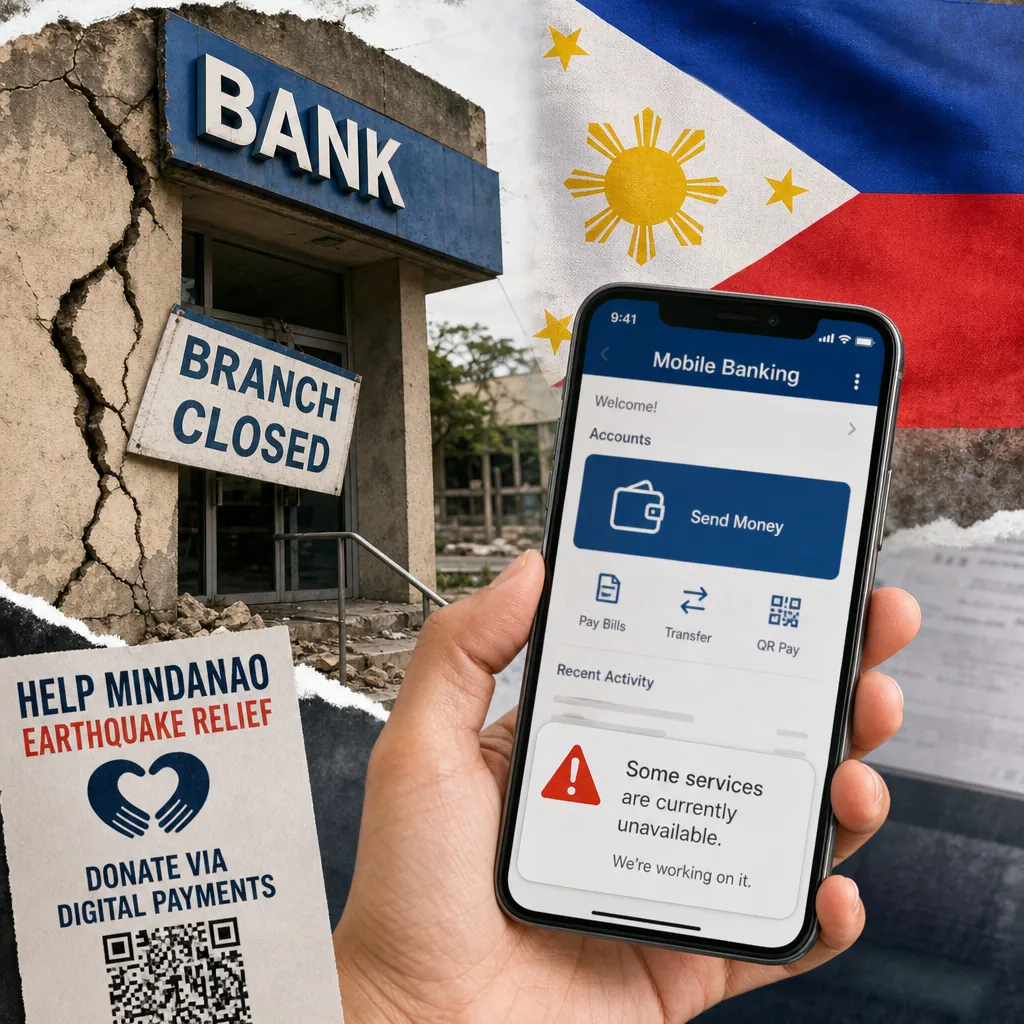
The conversation around Philippine banking and fintech on June 9–10, 2026, was dominated by the aftermath of a magnitude 7.8 earthquake that struck Mindanao on June 8. The disaster forced multiple bank branches to close, triggered a wave of relief donation posts that explicitly named digital payment channels, and prompted a government housing loan moratorium. At the same time, user complaints about banking app glitches—including a GCash update that locked users out—and a political controversy over LandBank's transfer of authorized signatures to Acting Senate President Sherwin Gatchalian added layers of complexity to the day's narrative.
Conversation snapshot. The earthquake response drove the highest engagement: ABS-CBN News' report on 37 deaths received 746 likes, 1,625 shares, and 4,273 sad reactions. Donation appeals from attyruphilbanocvideos and dyhprmncebu612 garnered 248 likes and 136 love reactions, with the latter reporting ₱236,992.73 raised. Official bank advisories from LandBank and BDO about branch closures earned modest likes (8 and 24 respectively) but high share counts (33 for BDO). On the political front, a tribunephl post about LandBank transferring signatures to Gatchalian drew 960 likes, 885 haha reactions, and 386 comments. User complaints on Reddit and Twitter saw lower engagement—a GCash update lockout post had 316 views and 1 like —but generated targeted troubleshooting threads.
Key themes
- Earthquake relief and digital donation channels. Donors quickly used GCash, bank transfers, and QR codes to send funds, with organizations like GMA Kapuso Foundation listing GCash, Palawan Pay, Metrobank credit cards, and Cebuana Lhuillier as accepted channels. The Department of Human Settlements and Urban Development (DHSUD) announced a housing loan moratorium for affected residents.
- Branch closures and digital channel promotion. LandBank closed six branches in Mindanao for safety assessments, urging customers to use its mobile app and iAccess. BDO closed three General Santos branches and directed users to BDO Pay and online banking. Chinabank confirmed all Mindanao branches were open but emphasized 24/7 digital banking.
- User complaints about banking app glitches. Reddit users reported a duplicate debit on a LandBank weekend transfer to GoTyme, an RCBC Pulz ID verification failure, and a three-month ordeal with BPI overseas login that finally resolved. On Twitter, a user vented about a GCash update that forced reinstallation but still failed to open.
- Credit card application timelines and friction. Reddit users shared detailed application timelines: an AUB Platinum card approved in 14 days with video KYC, and a BDO additional Visa Classic approved in 10 banking days. However, an RCBC captcha failure blocked a NAFFL promo application, and a user expressed anxiety about using RCBC's payment QR code.
- Security and scam awareness. BDO posted an anti-scam message under #BDOStopScam, warning users not to click links. GCash continued to troubleshoot OTP issues and reminded users never to share OTP or MPIN. A Reddit user reported a stolen phone leading to unauthorized access to GoTyme and BDO accounts.
- New partnerships and product launches. BPI partnered with VinFast to provide vehicle financing for electric vehicle buyers. Philippine Airlines launched a 0% installment program for domestic bookings with BPI, Metrobank, HSBC, and PNB. BPI also announced a salary-on-demand service for Auntie Anne's employees. Sun Life promoted a health protection plan for small business owners.
- Political controversy over LandBank signatures. A news report that LandBank transferred authorized signatures to Acting Senate President Sherwin Gatchalian, enabling him to sign checks, drew heavy engagement with 960 likes and 885 haha reactions, signaling public skepticism.
How the narratives stack
Dominant narrative. The earthquake crisis is the central story: it disrupted physical banking, elevated digital channels as essential infrastructure, and mobilized financial services for relief. Banks and e-wallets positioned themselves as critical utilities, with official advisories directing customers to apps and online platforms.
Counter-narrative. While digital channels were promoted as alternatives, user complaints about app glitches—duplicate debits, verification failures, update lockouts—undermined the message of seamless digital banking. The GCash update failure, in particular, showed that forced updates can lock users out during a crisis when they need access most.
Emerging narrative. The LandBank signature transfer story introduces a political dimension to banking operations. The high number of haha reactions suggests public amusement or cynicism, but the 386 comments indicate deeper concerns about fund control and institutional neutrality, especially during a disaster relief period.
Suppressed narrative. The persistent friction in credit card applications and payment processes—RCBC captcha failures, QR code anxiety, uneven approval timelines—remains under-covered relative to its significance. These issues affect customer acquisition and trust but are overshadowed by crisis and political news.
Platform insights
Facebook served as the primary hub for relief coordination, institutional announcements, and holiday advisories. Posts from banks and foundations generated high shares and care reactions but minimal debate in comments. The LandBank political story also broke on Facebook via tribunephl, where the high haha count reflected a different kind of engagement.
Reddit emerged as the space for technical troubleshooting, peer advice, and dispute resolution. Users shared detailed application timelines, reported app glitches, and sought advice on fee waivers and chargebacks. The contrast with Facebook's one-way communication underscores Reddit's role in surfacing operational pain points.
Twitter became a channel for direct customer service interactions and real-time complaints. A user's angry post about a GCash update lockout received a prompt but scripted reply from the official account, illustrating how the platform is used for urgent support rather than deep discussion.
Key voices and communities
Disaster relief donors and coordinators. Community organizers, radio networks, and foundation accounts mobilized financial support for earthquake victims. Their posts generated high emotional engagement and explicitly listed multiple bank accounts and GCash numbers as donation channels, directly influencing transaction volumes.
Credit card enthusiast communities. Facebook groups like Credit Card Holders PH and KasKasan Buddies, along with Reddit's r/PHCreditCards, serve as hubs for sharing application links, promo alerts, and peer advice. Members seek to maximize welcome gifts, NAFFL offers, and balance conversion options, and they actively share application timelines and troubleshooting tips.
Consumer support seekers and affected users. Individuals posting about account errors, lost SIMs, delayed card deliveries, unauthorized transactions, and debt management struggles, primarily on Reddit and Twitter. Their posts often generate lengthy comment threads, reflecting deep engagement from peers who share similar experiences.
Financial institution promoters. Official bank and insurance accounts using social media to promote products, services, and operational advisories. Their announcements generate the highest raw engagement, but during the crisis, promotional content was overshadowed by relief appeals.
Government and political stakeholders. Political figures and government agencies whose actions directly affect banking operations. The LandBank signature transfer story and the DHSUD housing loan moratorium fall under this group, demonstrating how banks become entangled in political disputes and regulatory relief efforts.
Narrative streams
Earthquake response and digital banking continuity
The June 8 earthquake immediately reshaped the banking conversation. LandBank announced the closure of six branches in Sarangani, South Cotabato, and General Santos, urging customers to use the LANDBANK mobile banking app and iAccess for transactions. BDO followed with a similar advisory, noting that three General Santos branches remained closed as safety checks continued, while BDO Pay, the BDO Online App, and the BDO Online Website remained available. These posts garnered modest engagement but the high share count for the tragic news post—ABS-CBN News' report on 37 confirmed deaths and hundreds injured received 746 likes, 1,625 shares, and 4,273 sad reactions—underscored the emotional gravity. In parallel, the GMA Kapuso Foundation posted donation channels that included GCash, Palawan Pay, Metrobank credit cards, and Cebuana Lhuillier, explicitly weaving financial service providers into the humanitarian response. The cause-and-effect was immediate: the earthquake crisis not only disrupted brick-and-mortar banking but also elevated digital channels and remittance services as essential infrastructure for relief.
User complaints and banking technical issues
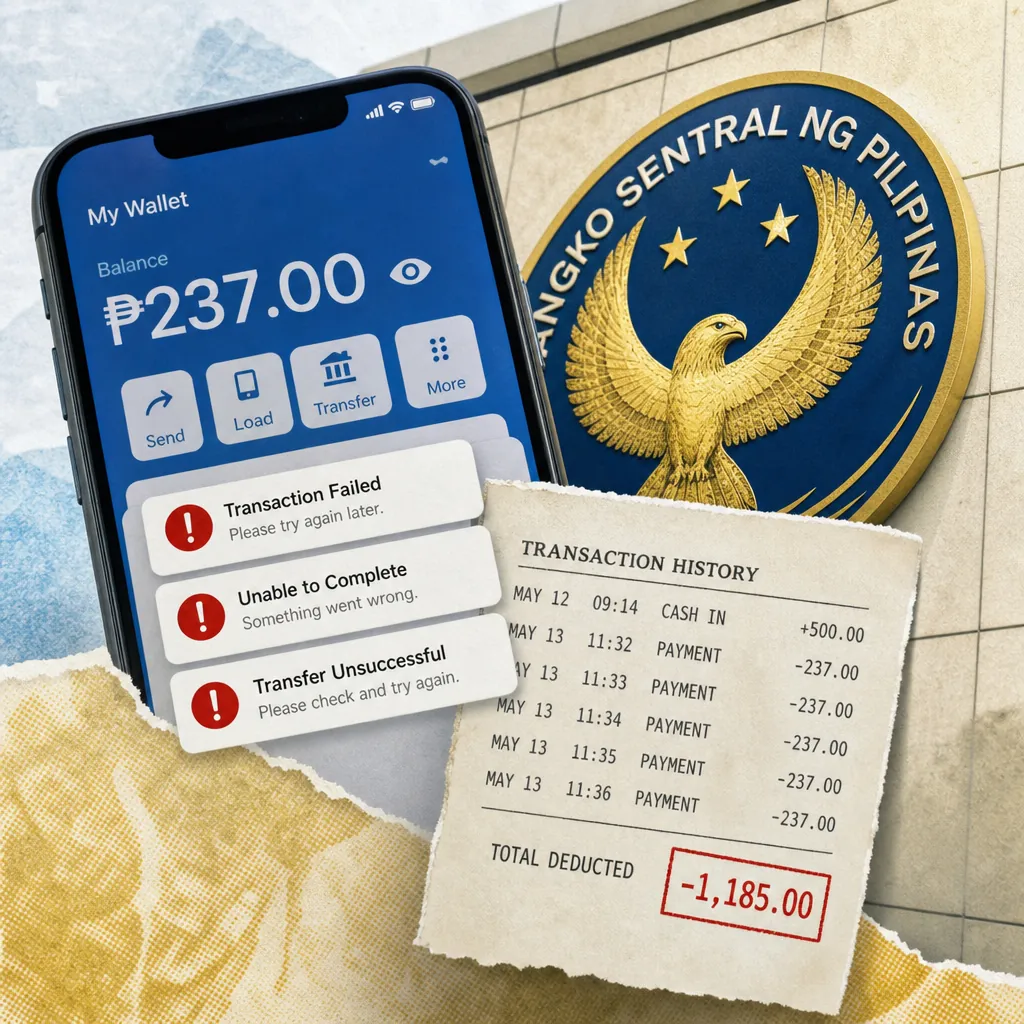
While relief efforts dominated Facebook, Reddit became the venue for frustrated users reporting banking glitches. A user posted about a duplicate debit on their Landbank account after a June 6 weekend transfer to GoTyme, stating, "nagdeduct agad sya sa balance ko, sa iaccess… pero parang nag dublicate debit sila"—a query that received 2 upvotes and prompted a recommendation to request a statement of account at the branch. Separately, a user struggled with RCBC Pulz ID verification, noting "Yung RCBC Pulz is on mobile, and yung instructions is not applicable sa mobile". Another user asked about disputing a UnionBank charge for a closed Gold's Gym membership, frustrated that the 60-day dispute period had lapsed. A detailed update on a three-month ordeal with BPI—unable to log in overseas, requiring a Zoom identity verification, then facing a persistent app error—before finally succeeding by chance two weeks later: "HAYUN NAKALOGIN AKO SA ACCOUNT KO SA WAKAS!". On June 10, new friction emerged on Twitter. A user vented frustration over a GCash update that forced reinstallation but still failed to open: "ANUNG KALOKOHAN ITO AFTER NIYO IPA UPDATE TAPOS DI MAOPEN 😡😡😡 TAPOS NEED INSTALLED PERO NAKA INSTALL AYUSIN NIYO ANG SYSTEM NIYO NAKAKAUMAY NA LAGI NALANG...WALANG PAGBABAGO..". GCash responded with two separate tweets—first asking which remittance partner was used for sending funds, then directing to a Help Center article on login issues, but the original complaint still sat with 316 views and only 1 like. These posts highlight gaps in real-time transaction processing, mobile app usability, dispute timelines, and now update-related lockouts—occurring on days when banks and e-wallets were simultaneously relied upon for philanthropic transfers and daily use.
Credit card strategy, application timelines, and payment friction
Beyond the earthquake, the credit card conversation on Reddit continued to grow with several new application stories and payment questions. A user shared a full AUB Platinum credit card timeline—applied May 26, video KYC on June 8, and approved June 9—noting that they had no prior relationship with the bank but still received approval for a NAFFL card, surprising themselves with "nagtry lng nman ako". The post, with 2 upvotes and 3 comments, provided a hopeful data point for applicants with thin files. Simultaneously, another user documented their BDO additional Visa Classic application: applied May 25, received a call on May 26, and saw the inactive card appear in the app on June 9—a 10-business-day turnaround that they credited with helping build their credit history. Both timelines were explicitly framed as resources for future applicants, reinforcing Reddit's role as an approval-process archive. However, not all credit card experiences were smooth—a user reported that the RCBC captcha image would not load when applying for their NAFFL promo, across multiple browsers and devices, effectively blocking the application. And another user asked about the RCBC payment QR code on the SOA, expressing fear of inputting details: "medyo takot lang mag input ng details kasi baka magkamali". This payment anxiety, despite the existence of QR codes, highlights a continued trust gap that banks must address through better user education and more prominent QR placement.
Political turmoil and bank operations
A new and unexpected thread emerged on June 10 when tribunephl reported that Landbank had transferred authorized signatures to Acting Senate President Sherwin Gatchalian, effectively giving him operational management and control of the Senate's bank accounts to sign checks and related documents. The post garnered 960 likes, 250 love reactions, and 885 haha reactions—an unusually high volume of amusement reactions for a banking-related story, indicating public skepticism or satire toward the political row. With 386 comments and 115 shares, this thread quickly became a cross-over between political drama and institutional banking operations. While no direct user complaints about Landbank services appeared in this dataset tied to the transfer, the timing—during an earthquake response week—raised questions about continuity of banking services for relief funds. The post served as a reminder that banks are not merely financial utilities but also operate within the political ecosystem, and that authorized signatory changes can have downstream effects on disbursements.
Conversation trajectory
The conversation is likely to evolve along three tracks over the next 4–6 weeks. First, digital banking reliability will remain a flashpoint as users continue to report app glitches and update failures. The GCash update lockout incident, if not resolved quickly, could trigger a broader conversation about e-wallet reliability, especially if it coincides with payday cycles or high-transfer periods. Second, the housing loan moratorium for earthquake victims will shift the conversation toward regulatory relief and bank forbearance policies. Banks that proactively communicate their continuity plans and relief measures will capture favorable attention. Third, the LandBank political controversy may intensify if the Senate leadership row escalates, potentially eroding public trust in state-owned banks. Trigger events to watch include: the final resolution or further escalation of the Senate leadership row (expected within two weeks), the end of the initial loan moratorium period (30–60 days out), and any recurrence of e-wallet app disruptions during high-volume periods.
Response guidance
For communicators in the Philippine banking and fintech sector, the earthquake crisis underscores the importance of clear, multilingual operational updates and proactive digital channel promotion. Banks should:
- Prioritize digital reliability communications. Address app glitches and update failures immediately with transparent messaging and step-by-step troubleshooting guides. The GCash complaint pattern shows that forced updates can create user lockout and anger; pre-announced maintenance windows and rollback options could turn this risk into a reliability differentiator.
- Amplify disaster-response messaging. Create consolidated advisory posts summarizing branch statuses, digital availability, and regulatory relief measures, updating them as conditions change. The Chinabank approach—confirming branches open and promoting 24/7 digital banking—is a model for reassuring customers.
- Leverage positive partnership stories. The BPI-Auntie Anne's salary-on-demand service and the BPI-VinFast EV financing partnership are examples of financial inclusion and innovation that can humanize banks and counter perceptions that digital banking only benefits the affluent.
- Navigate political sensitivities carefully. The LandBank signature transfer story highlights the risk of political entanglement. Banks should maintain a neutral, operational focus in all official statements and avoid commenting on leadership disputes.
- Invest in user education. The persistent friction in credit card applications and payment processes—RCBC captcha failures, QR code anxiety, uneven approval timelines—calls for better user education and more prominent placement of payment features.
See the full picture behind today's signals.
This report draws from Media Meter's MediaWatch, our real-time monitoring engine tracking 2,470+ Philippine sources across print, broadcast, digital, and social. Explore how the platform turns raw coverage into decision-grade intelligence, then see how it's configured for teams like yours — whether you're in PR agencies, corporate comms, government, or marketing.
Want more? Browse our Report Library for sector and crisis intelligence, or request a demo and we'll have your brand set up before the call.
Want this kind of intelligence on your brand?
This brief is built on the same MediaWatch methodology that runs continuously across every brand we monitor. See your competitive landscape, Impact Score, and narrative trajectory in a 30-minute demo.