Food safety crises and Ginebra title dominate June 17 conversation
Two major food safety incidents—a mass food poisoning of ROTC cadets in Iloilo and a warehouse seizure of tampered expired goods in Manila—dominated the Philippine food and beverage conversation on June 17, 2026, while Barangay Ginebra's PBA championship win generated massive engagement for the San Miguel Beer brand.
The social media conversation on June 17, 2026, was dominated by two urgent food safety narratives and a massive sports championship celebration that indirectly boosted a major beverage brand. The day's most significant developments were a mass food poisoning incident involving nearly 90 Reserve Officers Training Corps (ROTC) cadets in Dingle, Iloilo, and a separate product tampering scandal in Manila where authorities seized nearly P1 million worth of expired grocery items and medicines whose expiration dates had been altered. These stories generated high emotional engagement—sadness and anger—while a parallel conversation around the Barangay Ginebra San Miguel PBA championship win produced the highest volume of positive reactions, indirectly benefiting the San Miguel Beer brand through the team's name association.
Conversation snapshot. The ROTC food poisoning story broke just after noon on June 17 via bomboradyoiloilo, accumulating 252 likes, 197 sad reactions, and 35 care reactions within hours. A follow-up from k5newsfmiloilo88.7 confirmed 89 cadets hospitalized, with pork adobo from a local market suspected. The Quiapo warehouse seizure, reported by gmanews, drew 156 likes, 100 sad reactions, and 94 angry reactions, signaling public fury over deliberate fraud. Meanwhile, the Ginebra championship generated the day's highest engagement: a One Sports Facebook post announcing the win received over 11,700 likes and 38,455 love reactions, while Justin Brownlee's tearful interview earned 25,761 likes. The official Game 7 YouTube highlight accumulated over 113,000 views.
Key themes
- Mass food poisoning of ROTC cadets – Nearly 90 ROTC cadets from Western Visayas were hospitalized after consuming pork adobo prepared at Camp Hernandez in Dingle, Iloilo. The incident generated widespread concern, with 197 sad reactions on the initial post, and prompted official statements from military and health authorities.
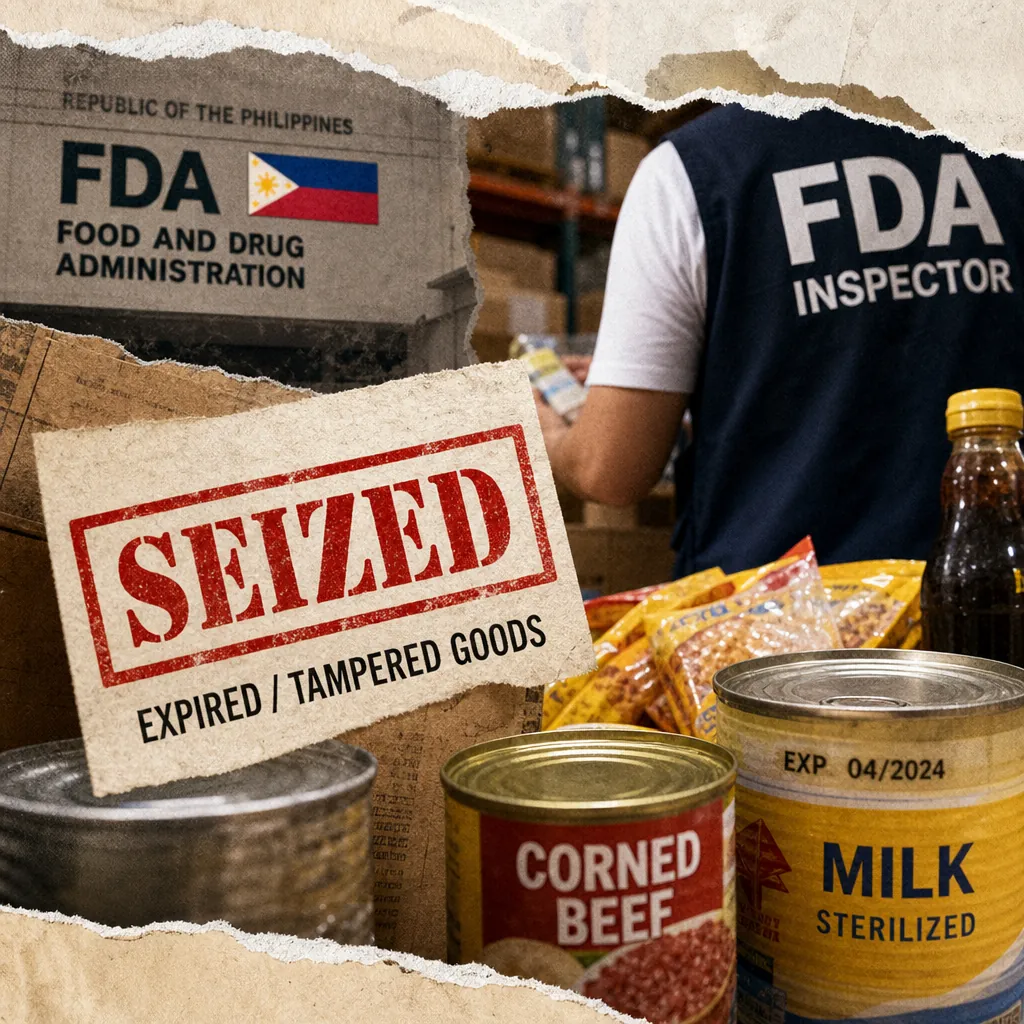
- Expired goods tampering scandal in Quiapo – Authorities seized approximately P950,000 worth of expired products—including cheese, spreads, canned goods, and medicines—whose expiration dates had been altered using tampering machines. Five suspects were arrested, and the operation drew 94 angry reactions, reflecting public outrage over deliberate consumer deception.
- Ginebra's championship victory – Barangay Ginebra San Miguel defeated TNT Tropang 5G 88-76 in Game 7 of the PBA Commissioner's Cup Finals, ending a three-year title drought. The win generated massive positive engagement across Facebook, YouTube, and Twitter, with record attendance of 24,617 at the MOA Arena.
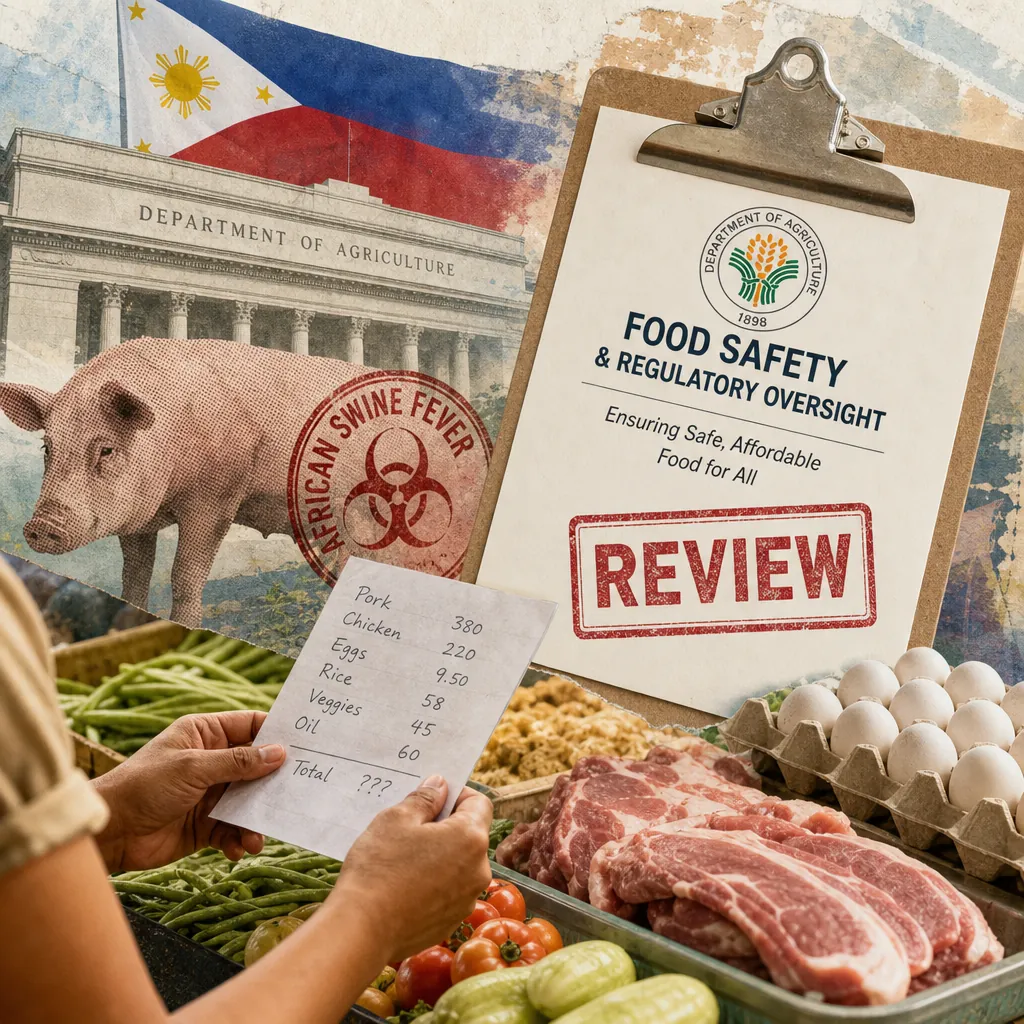
- Rice price cap enforcement – The Department of Agriculture-Davao Region issued Notices of Violation to 15 rice vendors at Bankerohan Public Market for non-compliance with the mandated price cap on 5% broken imported rice. This post received negligible engagement (1 like), indicating low public interest in regulatory enforcement news.
- African swine fever update – The Department of Agriculture confirmed that 23 African swine fever (ASF) cases detected in Nueva Vizcaya in 2026 were isolated and contained, with active cases limited to 5 regions. The swine inventory stood at 8.75 million heads in 2025, down from 9.57 million.
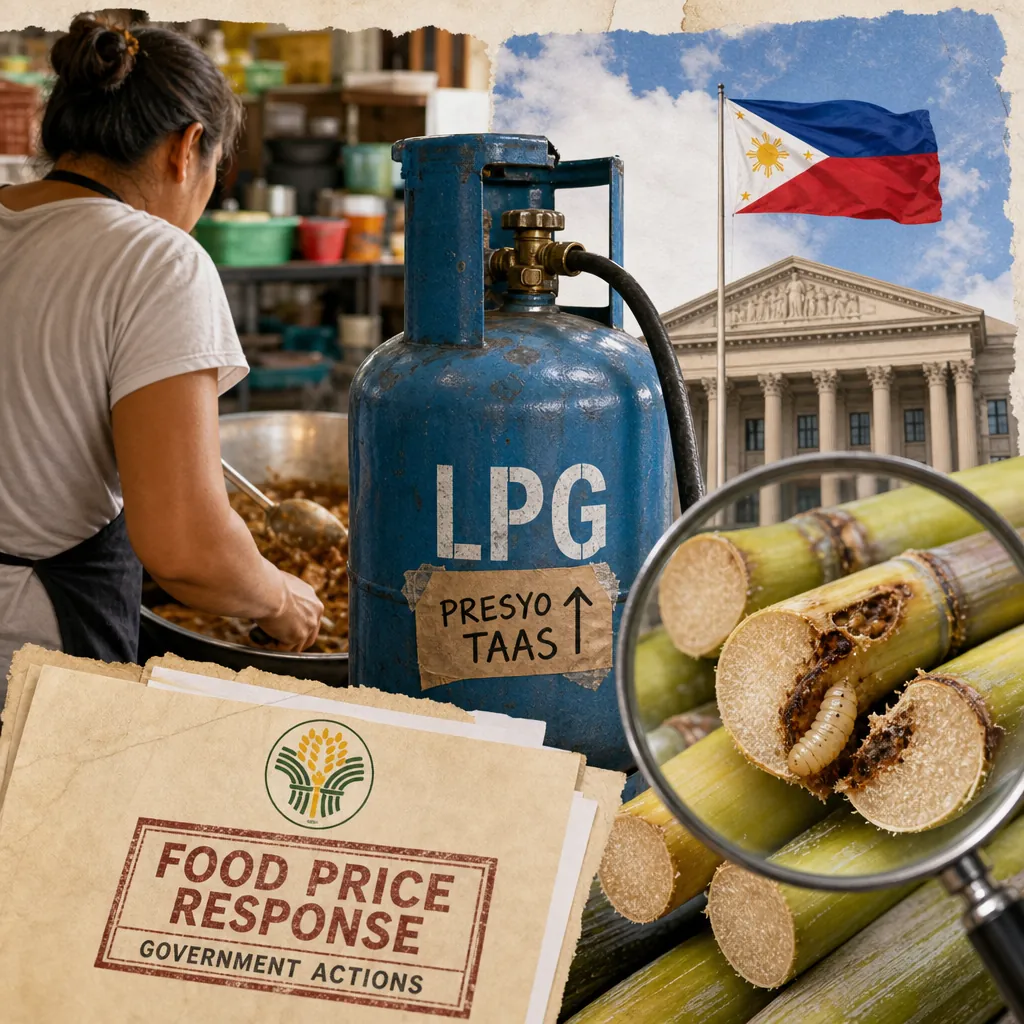
- Sugarcane pest infestation – The Department of Agriculture ordered mass production of a naturally occurring fungus to combat the red-striped soft scale insect (RSSI), which has infested over 4,600 hectares in Negros and can reduce sugar yield by up to 50%.
- Father's Day food promotions – Mang Inasal, Greenwich, and Mister Donut (via 7-Eleven) rolled out Father's Day meal bundles. Mister Donut's low-price donut box (P175) generated the highest engagement with 182 likes, 173 shares, and 189 love reactions.
- Pick.A.Roo expands into lifestyle platform – The grocery delivery service announced expansion into alcohol delivery, fresh market access, and movie ticket bookings, signaling intensifying competition in the on-demand delivery space.
How the narratives stack
Dominant narrative – The dominant story for the food and beverage sector is the convergence of two food safety crises: the ROTC food poisoning and the Quiapo tampering scandal. Together, they paint a picture of systemic vulnerability in the Philippine food supply chain—from institutional catering to retail groceries. The emotional response was split: sadness for the cadets (197 sad reactions) and anger for the deliberate fraud (94 angry reactions), indicating that the public distinguishes between accidental contamination and intentional deception.
Counter-narrative – Running parallel to the crises is the positive story of food system innovation and regulatory compliance. Pick.A.Roo's expansion into a broader lifestyle platform, the Jollibee Group Foundation's financing program for onion farmers, and the DTI's consumer safety campaigns all present a narrative of progress and accountability. These stories received far less engagement than the crises but offer a constructive counterpoint.
Emerging narrative – The Ginebra championship victory, while not a food story per se, created a massive emotional wave that indirectly benefited the San Miguel Beer brand. The team's name—Barangay Ginebra San Miguel—is a direct brand association, and the celebration posts frequently referenced "tagay" (drinking toasts) and "pulutan" (food pairings), linking the win to alcohol consumption. This suggests that sports championship moments can serve as powerful brand engagement opportunities for beverage and snack companies.
Suppressed narrative – The rice price cap enforcement story in Davao received almost no engagement (1 like) despite its direct impact on consumer welfare. Similarly, the DA's ASF update and sugarcane pest response garnered minimal attention. This indicates that regulatory and agricultural policy news struggles to break through when visceral health and safety stories dominate the conversation. The public's attention is captured by immediate threats, not systemic policy measures.
Platform insights
Facebook – Facebook was the primary platform for both crisis communication and celebration. Local news pages (bomboradyoiloilo, k5newsfmiloilo88.7) drove the ROTC story with high sad/care reactions, while gmanews' warehouse seizure post introduced anger (94 angry reactions). The Ginebra championship generated the highest engagement on Facebook, with official sports pages (One Sports, ABS-CBN Sports) receiving thousands of likes and love reactions. The platform's reaction buttons allowed users to express nuanced emotions—sadness for victims, anger for fraud, love for victory—making it the most emotionally expressive channel.
YouTube – YouTube served as the primary platform for long-form sports content. The official Game 7 highlight video from One Sports accumulated over 113,000 views and 1,228 likes. Livestreams and quarter-by-quarter highlights also drew significant watch time (e.g., third-quarter highlight at 55,952 views). Food safety content did not migrate to YouTube, suggesting that video platforms are underutilized for crisis communication in this sector.
Twitter/X – Twitter was used for real-time updates during the Ginebra game, with shorter, more frequent posts from @onesportsphl and @news5ph. Engagement per post was lower (hundreds of views, dozens of likes) but the volume of rapid updates made it the go-to source for minute-by-minute coverage. The platform was not a significant channel for food safety discussion.
Reddit – Reddit saw limited activity. A single thread on the Ginebra game discussed officiating controversies (26 comments), while a user post about a food delivery grievance (unpaid soup order) received only 4 likes. The platform did not emerge as a meaningful space for food safety or pricing conversations.
Key voices and communities
Local news media and community information networks – Regional outlets like bomboradyoiloilo and k5newsfmiloilo88.7 were the primary amplifiers of the ROTC food poisoning story. Their local credibility and ability to break urgent public health stories made them the most trusted sources for crisis information. Their posts generated high emotional engagement (197 sad reactions) and set the narrative arc from alarm to official reassurance.
National news outlets – GMA News and ABS-CBN News covered the Quiapo warehouse seizure, framing it as a consumer fraud scandal. Their posts drew angry reactions and highlighted the scale of the deception (P1 million worth of goods, tampering machines). These outlets also covered the Ginebra championship, providing official confirmation and celebration content.
Sports media and official PBA pages – One Sports, ABS-CBN Sports, Spin.ph, and Manila Bulletin Sports generated the largest share of video content and breaking news updates during the Ginebra game. Their YouTube highlights and Facebook posts attracted tens of thousands of views and thousands of shares. They set the narrative around player performances and the historic attendance record.
Barangay Ginebra fan community ("Never Say Die" Nation) – This group dominated the sports conversation with intense emotional engagement. Fans celebrated the championship as a long-awaited redemption, elevating players like Justin Brownlee and Scottie Thompson as cultural icons. The community's posts frequently referenced "tagay" and "pulutan," directly linking the win to San Miguel Beer brands.
Government regulatory agencies (DTI, DA) – The Department of Trade and Industry and Department of Agriculture posted about MSME support, consumer safety, and price cap enforcement, but their content received low engagement (20–54 likes). Their voices were largely drowned out by the food safety crises and sports celebration.
Narrative streams
ROTC food poisoning: a crisis of institutional catering
On June 17, 2026, over 70 ROTC cadets attending a summer camp at Camp Hernandez in Dingle, Iloilo, were rushed to hospitals after exhibiting symptoms of food poisoning. The initial report from bomboradyoiloilo broke just after noon, stating that the cause was suspected to be their evening meal. Within hours, k5newsfmiloilo88.7 provided a detailed update: 89 cadets total had been affected—74 sent to Iloilo Provincial Hospital, 10 to Barotac Nuevo, and 5 to Dumangas—and the suspected culprit was pork adobo sourced from the local market and cooked inside the camp.
The emotional reaction was immediate and intense. The original post accumulated 252 likes, 197 sad reactions, and 35 care reactions, signaling widespread concern rather than anger or outrage. By evening, another post from k5newsfmiloilo88.7 carried the military's official response: Colonel Edralin Poblete of the 6th Regional Community Defense Group called it an "isolated case" and confirmed that the cadets' conditions were stable, though investigation was ongoing.
The Iloilo Provincial Health Office secured samples of the food and water consumed by the cadets for laboratory testing. Many cadets had since been discharged, according to Iloilo PHO chief Dr. Maria Socorro Colmenares-Quiñon. The incident highlighted vulnerabilities in institutional food preparation, particularly when ingredients are sourced from local markets without rigorous supply chain oversight.
Quiapo warehouse seizure: consumer fraud and public anger
On the same day, a second food safety scandal emerged in Manila. GMA News reported that nearly P1 million worth of expired grocery items and medicines whose expiration dates had been tampered with were seized from a warehouse in Quiapo. The post, headlined "BINAGO ANG EXPIRATION DATE!" (They Changed the Expiration Date!), triggered a different emotional response: while it garnered 156 likes, the overwhelming reactions were 100 sad and 94 angry, reflecting public fury against deliberate deception rather than sympathy for victims.
According to PLt. Col. Edward Samonte, head of the Special Mayor's Reaction Team (SMaRT), the suspects were caught selling expired spreads, canned soft drinks, cheese, and noodles. The operation uncovered three tampering machines used to alter expiration dates, with the fraudulent activity taking place inside a bathroom where old dates were erased using chemicals before new ones were stamped. The warehouse was infested with rats, and some products—including instant noodles—had expired as far back as 2025.
Five suspects were arrested. The incident added a layer of concern around food fraud and regulatory enforcement, running parallel to the Iloilo crisis. No specific brands were named in either case, shifting scrutiny to general food handling and supply chain oversight.
Ginebra's championship: a brand engagement opportunity
Barangay Ginebra San Miguel defeated TNT Tropang 5G 88-76 in Game 7 of the PBA Commissioner's Cup Finals on June 17, ending a three-year title drought. The game was played before a record crowd of 24,617 at the Mall of Asia Arena, breaking the 2015 "Beeracle" record. Justin Brownlee led the Gin Kings with 30 points and 14 rebounds, while Scottie Thompson was named Finals MVP after posting 19 points, 11 rebounds, and eight assists.
The social media conversation unfolded in three phases: pre-game anticipation, in-game play-by-play, and post-game celebration. The emotional apex came when Brownlee broke down in a post-game interview, a moment that earned 25,761 likes on the One Sports Facebook page and over 1,097 comments. The phrase "Never Say Die" and "Kings are back" dominated captions across all platforms.
For the San Miguel Beer brand, the championship created an immediate window to convert celebration into consumption. The "tagay" culture was implicitly reinforced through posts showing players celebrating with drinks, though explicit product placement was minimal. The high engagement on family-oriented content (Thompson with his children) and fan interaction posts suggested that authentic, human-interest storytelling resonated more than formal brand messaging.
Rice price cap enforcement and agricultural policy
Running parallel to the crises, the Department of Agriculture-Davao Region issued Notices of Violation to 15 rice vendors at Bankerohan Public Market for failing to comply with the mandated price cap on 5% broken imported rice. This post received negligible engagement (1 like, no reactions), indicating that price control enforcement news, while important, failed to capture public attention compared to visceral health threats.
Similarly, the DA confirmed that 23 African swine fever cases in Nueva Vizcaya were isolated and contained, with active cases limited to 5 regions. The swine inventory stood at 8.75 million heads in 2025, down from 9.57 million, reflecting the ongoing impact of ASF on the industry. The DA also ordered mass production of a naturally occurring fungus to combat the red-striped soft scale insect (RSSI) infesting sugarcane farms in Negros, which can reduce sugar yield by up to 50%.
Father's Day promotions and value messaging
Father's Day food promotions from Mang Inasal, Greenwich, and Mister Donut generated modest but positive engagement. Mang Inasal offered a Chicken Inasal Solo Fiesta bundle with free Unli-Rice at P323, while Greenwich packaged a family meal (lasagna, pizza, chicken, drinks) at P1,149. Mister Donut's low-price donut box (P175) generated the highest engagement with 182 likes, 173 shares, and 189 love reactions, suggesting that low-cost, visually appealing promotions drive the most social conversation.
These promotions were framed as value-driven, with explicit mentions of savings ("save as much as P17") and DTI Fair Trade Permit numbers, reflecting a broader industry trend of using regulatory compliance as a trust signal. The absence of negative sentiment around pricing suggests that consumers are receptive to bundling strategies that emphasize value rather than discounting.
Conversation trajectory
Food safety scrutiny will intensify (next 7–14 days). The convergence of two food safety crises—the ROTC poisoning and the Quiapo tampering scandal—will likely trigger broader public demands for DTI and FDA crackdowns on tampered labels and counterfeit expiry stamps. Expect conversations to pivot from individual cases toward systemic supply chain vulnerabilities, especially affecting budget groceries and sari-sari store supply lines. Brands should prepare food safety communication assets before lab results from the Iloilo case are released.
Rice price cap enforcement may become a litmus test (next 3–4 weeks). While the DA-Davao enforcement story received minimal engagement, it aligns with the broader narrative of rising rice prices. As consumers continue to feel economic pressure, social media discussions—especially on platforms where market vendors organize—may pick up this enforcement story as a proxy for whether government can control staple costs. Brands with rice or staple food lines should consider issuing statements supporting fair pricing.
Ginebra championship afterglow will fade but offers a window (next 1–2 weeks). The emotional high from the Ginebra victory provides a narrow window for brand activations tied to the "Never Say Die" spirit. San Miguel Beer and related brands can launch limited-edition packaging or "championship feast" bundles to capitalize on lingering euphoria. However, the conversation will likely shift to the upcoming PBA Governors' Cup (likely August–September 2026), which will reignite sports-themed food promotions.
Fuel price rollback may ease pricing conversations (next 2–4 weeks). The drop in global oil prices following the US-Iran peace deal—with diesel down by up to P5.71 per liter—could reduce shipping and delivery costs for food brands. This offers a counter-narrative to sustained price hike complaints, but consumers are likely to demand that savings be passed on. Brands should prepare value-focused messaging that highlights stable pricing or budget-friendly options.
Trigger events to watch: Release of laboratory results from the Iloilo food poisoning case (expected within days); DTI-FDA investigation findings from the Quiapo tampering ring (likely within 2–3 weeks); the June 2026 food price index release (expected late July); and the start of the PBA Governors' Cup (likely August–September 2026).
Response guidance
For food safety communicators: The dual crises demand a coordinated response. Issue a rapid statement of concern within 24 hours of peak viral posts, expressing sympathy for affected cadets and committing to share lab results. Simultaneously, release a separate statement on the expiration-date tampering incident, urging consumers to check product labels and promising cooperation with FDA investigation. Leverage the DTI's consumer safety campaign to publish a joint advisory on proper meat handling and sourcing.
For beverage and snack brands: Capitalize on the Ginebra championship by launching limited-time "Champion Edition" packaging or promo campaigns that tie into the "Never Say Die" spirit. Produce short, mobile-friendly video content featuring family moments and fan interactions, as these formats generate the highest organic engagement. Explore co-branded "Championship Feast" bundles with leading QSR brands to tap into the "handaan" culture.
For brands facing price sensitivity: Use the fuel price rollback narrative in value-focused campaigns to reinforce affordability and responsiveness to consumer needs. Frame promotions as "sulit" (worth-it) rather than "discount" to avoid backlash if prices later rise. Monitor consumer sentiment for any emerging discussion of price increases or shrinkflation as fuel cost savings may not immediately lower retail prices.
Sensitive topics to navigate: Avoid commenting on officiating controversies in the Ginebra series; stay focused on celebrating fan passion. When addressing the food poisoning incident, avoid linking it directly to African swine fever unless lab results confirm it. For the Quiapo tampering scandal, avoid blanket stigmatization of all small vendors; instead, frame it as a need for stronger regulatory oversight and consumer vigilance.
See the full picture behind today's signals.
This report draws from Media Meter's MediaWatch, our real-time monitoring engine tracking 2,470+ Philippine sources across print, broadcast, digital, and social. Explore how the platform turns raw coverage into decision-grade intelligence, then see how it's configured for teams like yours — whether you're in PR agencies, corporate comms, government, or marketing.
Want more? Browse our Report Library for sector and crisis intelligence, or request a demo and we'll have your brand set up before the call.
Want this kind of intelligence on your brand?
This brief is built on the same MediaWatch methodology that runs continuously across every brand we monitor. See your competitive landscape, Impact Score, and narrative trajectory in a 30-minute demo.