Impeachment subpoena, BSP fee push, and UPLIFT rollout
The Senate impeachment court's subpoena of VP Sara Duterte's financial records dominates the news, while BSP pressures banks on transfer fees and the UPLIFT cash aid program shifts to digital disbursement.
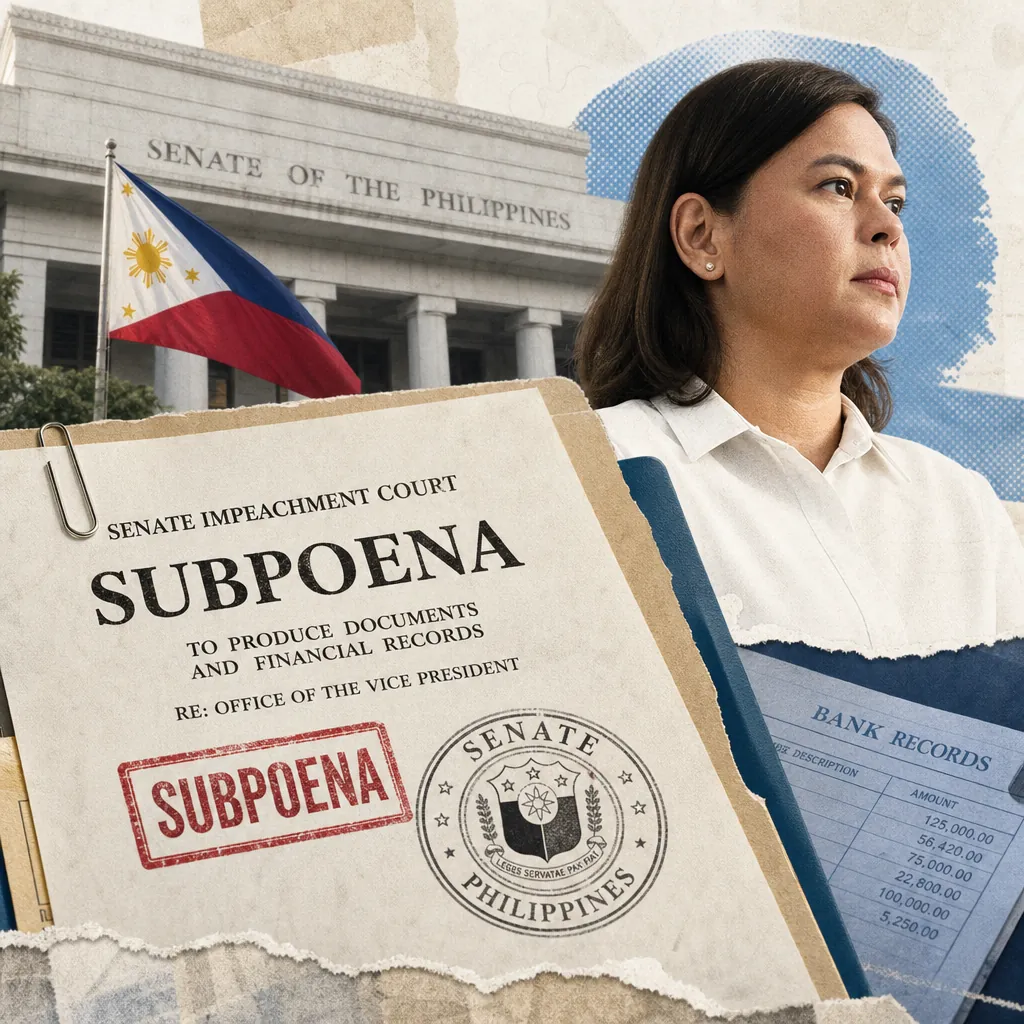
The conversation on July 20–21, 2026, ran on two tracks that rarely touched but together defined the day for Philippine finance. One was the Senate impeachment court's landmark ruling granting subpoenas for Vice President Sara Duterte's peso-denominated bank accounts, tax records from 2007 to 2021, and Anti-Money Laundering Council (AMLC) documents—a decision that drew heavy newspaper coverage worth an estimated ₱6.5 million in advertising-equivalent value across the captured set and sparked intense public debate. The other was the Bangko Sentral ng Pilipinas (BSP) review of banks and e-wallets that had not significantly cut interbank transfer fees, which triggered a wave of fee-waiver announcements from smaller players and renewed consumer attention on the cost of digital transactions. Between them, the government's UPLIFT cash assistance program continued its rollout, with the Department of Social Welfare and Development (DSWD) distributing the first ₱2,000 manual payout to 2.5 million poor and near-poor households while preparing to shift the remaining five monthly payments to GCash or LandBank accounts starting in August.
Key themes
- Impeachment subpoena reshapes financial transparency debate. The Senate impeachment court, sitting as a tribunal, on July 20 granted the House prosecution's motion to subpoena the peso-denominated bank accounts, tax records from 2007 to 2021, and AMLC documents of Vice President Sara Duterte, her husband Manases Carpio, 19 corporate entities linked to them, and the Carpio Lawyers partnership. The court excluded foreign currency deposits under Republic Act 6426 and two companies with insufficient links. Presiding Officer Francis "Chiz" Escudero ruled the records were "reasonably described, readily identifiable, and prima facie relevant" to the unexplained wealth charge under Article II of the impeachment complaint. The ruling was covered by every major outlet in the captured set—GMA News Online, Inquirer, Manila Bulletin, Philstar, Rappler, ABS-CBN News, and others—with combined advertising-equivalent value exceeding ₱3 million. On social media, the prosecution celebrated "Malaking tagumpay ito para sa katotohanan" (a big victory for truth), a post that drew over 1,100 likes and 15,000 views on Twitter. The defense, led by counsel Michael Poa, maintained that the Anti-Money Laundering Act's confidentiality provision was "absolute—walang pong ni isang exception" and signaled a possible motion for reconsideration or appeal to the Supreme Court.
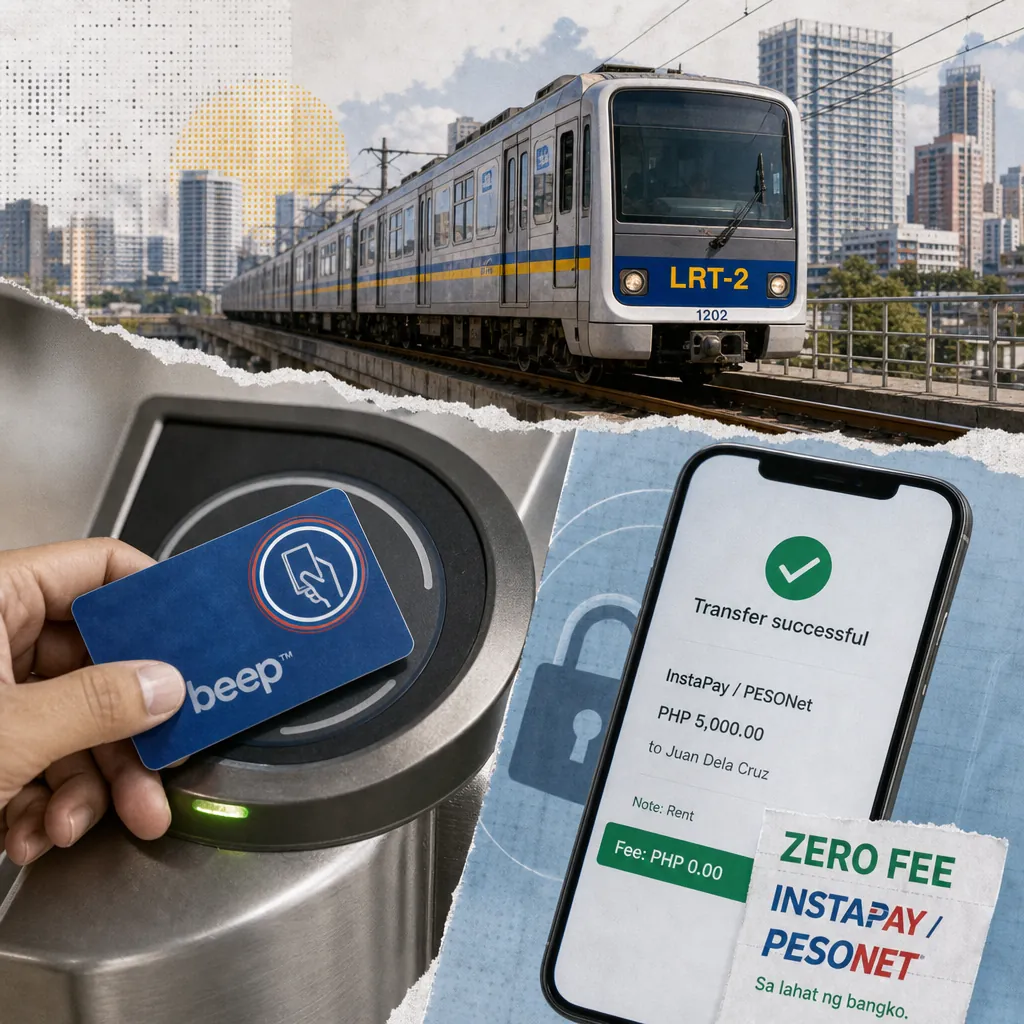
- BSP fee review pressures banks and e-wallets. BSP Deputy Governor Mamerto Tangonan confirmed that the central bank was reviewing explanations from institutions that had not fully complied with Circular No. 1238, which requires that fees for sending money to accounts outside a bank's own platform should not differ materially from internal transfer fees. The circular took effect July 4. Several major banks—BPI, LandBank, UnionBank, PNB, Metrobank, BDO, and Security Bank—have already waived InstaPay and PESONet fees entirely. GCash and Maya lowered their InstaPay fees to other banks to ₱10 from ₱15. CitySavings Bank and Bank of Commerce both announced zero transfer fees effective July 20, positioning themselves as consumer-friendly alternatives. The BSP tweet announcing the review drew 11,116 views, indicating high public awareness. An Inquirer analysis noted that while a ₱10–₱25 fee may seem small, it adds up for workers sending money home and online sellers making multiple transactions.
- UPLIFT program accelerates digital onboarding. The DSWD's UPLIFT (Unified Package for Livelihood, Industry, Food, and Transport) Assistance program began distributing the first ₱2,000 manual payout to Group 2 beneficiaries—2.5 million poor and near-poor households not covered by the 4Ps program. Starting August, the remaining five monthly payments will be sent digitally through GCash or LandBank accounts. A DSWD post about the Sagay City payout, where GCash registered around 50 beneficiaries and LandBank opened accounts for future direct credits, received 73 likes, 33 loves, and 18 shares on Facebook. The program represents a whole-of-government push toward digital disbursement, involving DSWD, LandBank, GCash, and local government units. However, a separate Facebook post from an American expat with a visitor ACR card highlighted a gap: the user described paying "huge fees to move money" through a multi-step workaround involving ATM withdrawals, PayPal, and GCash, drawing 114 comments—a signal that non-residents remain excluded from the digital inclusion push.
- Consumer finance friction and security fears persist. On Reddit, a user reported receiving an unsolicited message referencing "StarPay Corp" with no corresponding transaction, writing "Kinabahan lng baka nahack or something gcash ko hehe" (I got scared, maybe my GCash was hacked or something). The post captured growing anxiety around phishing and unauthorized access. Another Reddit user described accidentally using "Send Money" instead of "Pay Bills" on BDO, resulting in a double payment to a UnionBank credit card and a negative balance. A BPI debit card replacement query—asking if a family member could claim the card with authorization—received only one response, indicating unclear branch policies. LandBank's rollout of "ATM Protect" insurance with Cocogen Insurance, covering ATM robbery and fraudulent transactions, was a direct institutional response to such fears, though it garnered no public engagement on social media.
- Credit card NAFFL promos and application pain points. The no-annual-fee-for-life (NAFFL) conversation continued to drive engagement, with a KasKasan Buddies compilation post receiving 20 likes, 11 shares, and 22 love reactions. Metrobank's iPhone 17 installment promo at ₱2,582.92/month drew 109 likes and 146 love reactions, while UnionBank's similar iPhone 16 Plus offer earned only 2 likes—a stark disparity in consumer traction. However, application friction dominated Reddit: a user filed a BSP complaint against Metrobank for five unauthorized credit card applications in one week, a thread that received 66 upvotes and 21 comments. Another user reported UnionBank closing support tickets without resolving cashback promo payouts. The pattern signals growing consumer willingness to escalate to regulators.
- BDO finances Cebu Pacific aircraft acquisition. BDO Unibank announced it had financed Cebu Pacific's acquisition of two Airbus A320neo aircraft, serving as the sole lender for the transaction. The deal supports the airline's fleet modernization and sustainability goals, as the A320neo offers improved fuel efficiency and lower carbon emissions. BDO executive vice president Charles Rodriguez said the bank was "pleased to support Cebu Pacific in this milestone investment." The story was covered by Inquirer, Daily Tribune, and Bankero.com.ph, with combined advertising-equivalent value of about ₱360,000 in the captured set.
- DICT and LandBank partner on AI tools for MSMEs. The Department of Information and Communications Technology (DICT) and LandBank signed a memorandum of understanding to develop AI-enabled digital solutions for micro, small, and medium enterprises (MSMEs). The partnership, part of the ASEAN Priority Economic Deliverable on AI-Powered MSME Growth, aims to help entrepreneurs prepare business plans, organize documentary requirements, set prices, review contracts, and identify financing programs. The mobile-first platform will support Filipino, English, and other major Philippine languages. The story was covered by GMA News Online, Newsbytes Philippines, and Head Topics Online.
- Scam losses in Asia reach $114 billion in 2025. A United Nations report released July 21 estimated that victims of transnational online scams in East Asia, Southeast Asia, Australia, and New Zealand lost up to $114.1 billion in 2025, at least tripling from 2023. Southeast Asia, especially Cambodia and Myanmar, has emerged as a regional hub for crime syndicates running fake romance and cryptocurrency investment schemes. The report was covered by Inquirer Online and The Straits Times, with combined advertising-equivalent value of about ₱510,000 in the captured set. The Department of Migrant Workers separately reported that from January to July 2026, it assisted in the repatriation of 1,293 Filipino trafficking victims, 89% of whom were victims of forced criminality.
How the narratives stack
Dominant — The impeachment subpoena ruling is the dominant narrative in the captured set, both by volume of coverage and by consequence. Across the articles gathered here, the ruling generated at least 20 separate news items from major outlets—GMA News Online, Inquirer, Manila Bulletin, Philstar, Rappler, ABS-CBN News, Journal News Ph, The Chronicle PH, Head Topics Online, and others—with a combined advertising-equivalent value exceeding ₱6.5 million. The ruling compels the disclosure of a sitting vice president's personal financial data spanning nearly two decades, creating immediate reputational stakes for banks named in the subpoenas (LandBank, BPI, Metrobank, and others) and setting a legal precedent for the limits of bank secrecy in impeachment proceedings. The prosecution's framing of the ruling as a "victory for truth" resonated strongly on social media, while the defense's "absolute prohibition" argument under the Anti-Money Laundering Act continued to mobilize opposition supporters.
Counter-narrative — The defense's argument that the subpoena constitutes a "fishing expedition" and violates due process is the primary counter-narrative, amplified by Senator-judge Robin Padilla's public challenge for all senators to open their own bank records—a post that drew 300 likes and 247 comments on Facebook. Senator Imee Marcos also argued that the subpoena should be limited to Duterte's current term (starting June 30, 2022), citing the Supreme Court ruling in Duterte v. House of Representatives. This counter-narrative frames the prosecution's move as selective justice and risks broadening distrust in financial institutions as political tools. The defense's position that the AMLA's confidentiality is "absolute" and cannot be overridden even by a constitutional body creates legal uncertainty that could prolong media attention on bank-client relationships.
Emerging — The BSP-led fee waiver competition is an emerging narrative that could reshape consumer expectations for digital transaction costs. CitySavings and Bank of Commerce both announced zero transfer fees on July 20, and the BSP's public review of non-compliant firms signals that more institutions may follow. This trend intersects with the UPLIFT program's digital disbursement push, as beneficiaries will need affordable transfer options to move funds. The convergence of regulatory pressure, government digital inclusion policy, and consumer demand for free transfers could make fee-free digital banking a new baseline expectation within months.
Suppressed — The consumer finance friction stories—particularly the unauthorized Metrobank applications and the UnionBank cashback dispute—received high engagement on Reddit (66 upvotes and 21 comments for the Metrobank thread) but minimal coverage in traditional media. These stories represent a suppressed narrative of systemic customer service failures that, if left unaddressed, could erode trust in digital banking and trigger more BSP complaints. The expat remittance dilemma, which drew 114 comments on Facebook, also received no news coverage, highlighting a gap in accessible, low-cost inbound remittance options for non-residents.
Platform insights
- Facebook: The dominant platform for official announcements and partisan expression. DSWD UPLIFT payout posts generated the highest engagement, with one post receiving 1,799 likes and 378 shares. The impeachment ruling was widely shared by news pages, with BNC News attracting 7,162 reactions and 1,016 comments on a single post. The "love" and "haha" reactions were used as partisan signals—prosecution posts drew more "love," while defense-aligned content attracted "haha" reactions as a form of political mockery. The expat remittance thread on a community page generated 114 comments, making it the most conversational thread outside politics.
- Reddit: Served as the primary platform for detailed user experiences, scam reporting, and procedural confusion. The Metrobank unauthorized application thread received 66 upvotes and 21 comments, the highest engagement on the platform in this window. The impeachment ruling was summarized in a post that accumulated 1,228 upvotes and 96 comments. Reddit's audience skews toward digitally savvy individuals who share workarounds and warnings, making it a key channel for identifying app stability issues and customer service failures. The platform's analytical nature was evident in the lack of sensationalism, with users focusing on step-by-step solutions.
- Twitter (X): Acted as a real-time wire for breaking news and regulatory developments. The BSP announcement post achieved 11,116 views but low engagement (10 likes, 2 shares), typical of news consumption on the platform. The prosecution's celebration post—"Malaking tagumpay ito para sa katotohanan"—drew 15,068 views, 1,183 likes, and 201 shares, making it the highest-impression political post of the day. Twitter served as a broadcast medium for official statements rather than a conversation driver.
- YouTube: Major broadcasters dominated with live coverage and recap videos of the impeachment trial. The Manila Times' breaking news video became the highest-viewed at 23,434 views with 120 likes. A standalone analysis video titled "Paano sasagutin ni Sara Duterte ang AMLC report?" attracted 20,900 views and 598 likes, indicating strong public appetite for strategic interpretation. Consumer finance content was minimal, with only one tutorial video (eCebuana to GoTyme) that failed to gain traction (2 views).
Key voices and communities
- House Prosecution Panel — Led by Rep. Chel Diokno and former senator Leila de Lima, this group dominated the impeachment conversation with structured legal arguments and post-ruling press conferences. Diokno's refutation of the "fishing expedition" claim drew high engagement, with one Facebook post garnering over 34,000 likes and 4,000 shares. The panel consistently frames the subpoena as a victory for truth and accountability, citing the AMLC's testimony of ₱6.7 billion in suspicious transactions. Their messaging strategy—blending legal precision with moral framing—provides a template for communicating complex regulatory actions.
- Defense Team — Led by counsel Atty. Michael Poa, the defense maintains a tightly coordinated counter-narrative centered on absolute confidentiality under the Anti-Money Laundering Act and due process violations. A Facebook video of Poa's argument received over 4,100 views. The defense invokes the "fishing expedition" label and insists the impeachment court cannot override statutory prohibitions. After the ruling, the defense said they respect the decision but are considering a motion for reconsideration or an appeal to the Supreme Court.
- Senator-Judges — The 23 senator-judges, particularly Presiding Officer Chiz Escudero and vocal members Robin Padilla, Alan Peter Cayetano, and Joel Villanueva, shape the procedural and substantive outcomes. Escudero's ruling granting the subpoena was the most shared single piece of content from Day 7. Senator Padilla's challenge for all politicians to open their bank records received nearly 28,000 likes on Facebook, injecting an "us vs. them" dynamic that risks broadening distrust in financial secrecy. Senator Imee Marcos argued the subpoena should be limited to Duterte's current term.
- Major News Media Organizations — Legacy outlets (ABS-CBN, GMA, Inquirer, Philstar, Manila Bulletin, ANC) and digital platforms (Rappler, BNC) provide extensive live coverage, summaries, and analysis that drive public understanding. Their YouTube live streams of the trial accumulated tens of thousands of views. These outlets serve as the primary information filter for the general public, with their Facebook posts generating the highest comment volumes—often exceeding 1,000 interactions per post.
- Consumer Financial Advocacy Communities — Facebook pages like KasKasan Buddies and the Reddit subreddit r/PHCreditCards serve as central hubs for credit card discussions, application tips, and product comparisons. These communities generate high engagement through curated guides and direct-to-bank referral links. Their influence stems from trust built through peer validation and real-world application timelines. The growing discussion around digital bank comparisons adds a new layer relevant to GCash and GoTyme.
Narrative streams
The impeachment subpoena: legal precedent and political fallout
The Senate impeachment court's ruling on July 20 marks one of the most significant procedural decisions in Philippine impeachment history. Presiding Officer Escudero's 30-page ruling, largely prepared before the trial began on July 6, granted the prosecution's request for subpoenas covering Vice President Sara Duterte's peso-denominated bank accounts, tax records from 2007 to 2021, and AMLC documents. The court found that the records were "reasonably described, readily identifiable, and prima facie relevant" to the unexplained wealth charge—rejecting the defense's argument that the request amounted to a "fishing expedition."
The ruling explicitly excluded foreign currency deposit accounts, citing their confidentiality under Republic Act 6426 (the Foreign Currency Deposit Act), and denied requests for records of two corporate entities where links to Duterte were insufficient. The court also ordered that records of the Carpio Lawyers partnership be produced subject to attorney-client privilege protections. The subpoenas are returnable by July 30 at 9 a.m., giving banks, the BIR, and the AMLC 10 days to comply.
Prosecutor Chel Diokno called the ruling "a big step forward insofar as the prosecution of Article II on unexplained wealth is concerned," while emphasizing that the work was only beginning—the documents must still be produced, examined, and formally offered before their admissibility can be determined. Rep. Terry Ridon framed the ₱6.7 billion in flagged transactions in terms the public could grasp: enough to fund aid for 1.6 million families, fuel subsidies for 1.3 million drivers, hospital expenses for 1.9 million patients, and college education for over 893,000 students.
The defense signaled it would continue to challenge the compelled disclosure. Senator Imee Marcos argued that the subpoena should be limited to Duterte's current term (starting June 30, 2022), citing the Supreme Court ruling in Duterte v. House of Representatives. Senator Robin Padilla went further, publicly challenging all senator-judges to open their own bank records—a post that drew 300 likes and 247 comments on Facebook, injecting a populist "us vs. them" dynamic into the proceedings.
For financial institutions, the ruling creates immediate reputational stakes. Banks named in the subpoenas—LandBank, BPI, Metrobank, and others—must now comply with court orders to produce transaction records. The court's explicit exclusion of foreign currency deposits provides a reference point for reassuring customers that routine bank secrecy remains intact, but the defense's repeated characterization of the subpoenas as a "fishing expedition" risks creating public perception that bank records could be weaponized for political purposes. The prosecution's reliance on AMLC data to prove unexplained wealth underscores the financial system's crucial role in anti-money laundering, reinforcing the value of bank compliance.
BSP fee review and the race to zero
The Bangko Sentral ng Pilipinas' review of transfer fee compliance is reshaping the competitive landscape for digital payments. Circular No. 1238, which took effect July 4, requires that fees for sending money to accounts outside a bank's own platform should not differ materially from internal transfer fees. Any difference should reflect only the actual "switch cost" of processing a transaction through a payment network, estimated at around ₱1.50.
BSP Deputy Governor Mamerto Tangonan confirmed that the central bank was reviewing explanations from institutions that had not significantly cut fees. The announcement, posted on Twitter, drew 11,116 views—indicating high public awareness of the issue. Within hours, CitySavings Bank and Bank of Commerce both announced zero transfer fees on InstaPay and PESONet via their mobile apps, effective July 20. CitySavings' post emphasized "absolutely FREE" fund transfers to any bank or e-wallet, while Bank of Commerce's announcement was shared by personal finance influencer communities.
Major banks—BPI, LandBank, UnionBank, PNB, Metrobank, BDO, and Security Bank—had already waived fees entirely before the circular's deadline. GCash and Maya lowered their InstaPay fees to other banks to ₱10 from ₱15, while keeping transfers within their own ecosystems free. The BSP's review targets institutions that have not fully complied, creating pressure for remaining holdouts to follow suit.
An Inquirer analysis noted that while a ₱10–₱25 fee may seem small, it adds up significantly for workers sending money home, online sellers making multiple transactions, and households stretching every peso. The trend toward free transfers reflects growing competition among banks and e-wallet providers, but it also raises questions about whether costs are simply being shifted elsewhere—for example, through higher merchant fees or reduced interest rates on deposits.
For consumers, the fee waiver trend is a welcome relief. For banks, it represents a strategic trade-off: lower fee revenue in exchange for increased transaction volume and customer loyalty. The BSP's regulatory push ensures that the playing field remains level, preventing larger institutions from using their scale to undercut smaller players on price while maintaining high fees for interbank transfers.
UPLIFT program: digital disbursement at scale
The DSWD's UPLIFT Assistance program is executing one of the largest digital disbursement operations in Philippine history. Group 2 beneficiaries—2.5 million poor and near-poor households not covered by the 4Ps program—will receive ₱2,000 monthly from July to December 2026, for a total of ₱12,000 each. The first payout, which began July 20, is being distributed through manual onsite payments. Starting August, the remaining five payouts will be sent digitally through GCash or LandBank accounts.
DSWD Secretary Rex Gatchalian explained that beneficiaries will be called to assembly areas to receive the initial ₱2,000 assistance. The first payout also allows the agency to collect their preferred digital payment channel for succeeding months. In Sagay City, Negros Occidental, GCash personnel registered around 50 beneficiaries for digital wallets on the first day, while LandBank opened accounts for future direct credits. A Facebook post about the Sagay payout received 73 likes, 33 loves, and 18 shares.
The program represents a whole-of-government collaboration involving DSWD, the Philippine Statistics Authority (PSA), LandBank, GCash, and local government units. The shift to digital disbursement is expected to reduce leakage, speed up distribution, and onboard millions of new e-wallet users. However, early friction points are already surfacing: a Facebook user awaiting a LandBank deposit asked "Ma'am/Sir, possible kaya na deposited to? LandBank ako—approved July 16," receiving 9 comments that likely discussed payout timing and verification.
The digital pivot also creates reputational risks. If beneficiaries newly onboarded to GCash via UPLIFT encounter phishing messages—like the "StarPay Corp" scare reported on Reddit—they may associate the scam with the government program itself. The DSWD and partner e-wallets should issue security reminders alongside financial assistance to preempt trust erosion.
Consumer finance friction: unauthorized applications and BSP escalation
The most acute reputational threat in the consumer finance space is directed at Metrobank, driven by a Reddit post detailing five unauthorized credit card applications filed in the user's name within a single week. The thread received 66 upvotes and 21 comments, with users expressing outrage over data privacy violations. One comment framed the issue as indicative of broader indifference among Philippine banks: "god, wala talaga pakielam mga companies dito sa data privacy" (god, companies here really don't care about data privacy).
Within hours, another user recounted a Metrobank employee calling to plead for leniency, saying "matatanggal daw sa trabaho yung nag send ng application" (the person who sent the application might get fired), which further inflamed sentiment. The thread prompted several users to advise filing complaints through BSP's Online Buddy channel, signaling a shift from passive complaining to active regulatory recourse.
UnionBank faces similar criticism. A user reported that the bank kept closing support tickets without resolving cashback promo payouts, prompting a BSP complaint of their own. The thread drew advice from other users who had similar experiences, creating a narrative of systemic customer service failure.
For BPI, the conversation is notably quieter—only one post asks about annual fee waiver versus payment options—which presents a relative opportunity. However, silence can also indicate lower mindshare. The BDO send-money error thread (accidental use of "Send Money" instead of "Pay Bills" resulting in double payment) and the BPI debit card replacement query (unclear branch policies) suggest that even institutions with fewer complaints face friction points that could escalate if left unaddressed.
The pattern of BSP escalation is a red flag for all banking clients. The BSP Online Buddy channel has been explicitly name-checked as an effective tool by frustrated consumers, meaning any institution not proactively resolving service issues risks formal complaints that can trigger regulatory scrutiny and negative press.
BDO-Cebu Pacific aircraft financing: corporate banking in focus
BDO Unibank's financing of Cebu Pacific's acquisition of two Airbus A320neo aircraft represents a significant corporate banking transaction that received positive media coverage. The bank served as the sole lender, underscoring its continued support for strategic investments in high-growth sectors. The A320neo offers improved fuel efficiency, lower carbon emissions, and reduced noise levels, supporting the airline's sustainability goals.
BDO executive vice president Charles Rodriguez said the bank was "pleased to support Cebu Pacific in this milestone investment," while BDO Capital president Ed Francisco emphasized the bank's confidence in the aviation sector's continued recovery. The story was covered by Inquirer, Daily Tribune, and Bankero.com.ph, with combined advertising-equivalent value of about ₱360,000 in the captured set.
The transaction positions BDO as a key partner in the country's infrastructure and transportation development, a narrative that aligns with the government's economic agenda. For competitors, it signals BDO's willingness to deploy significant capital in strategic sectors, potentially setting a benchmark for corporate lending in the post-pandemic recovery.
Conversation trajectory
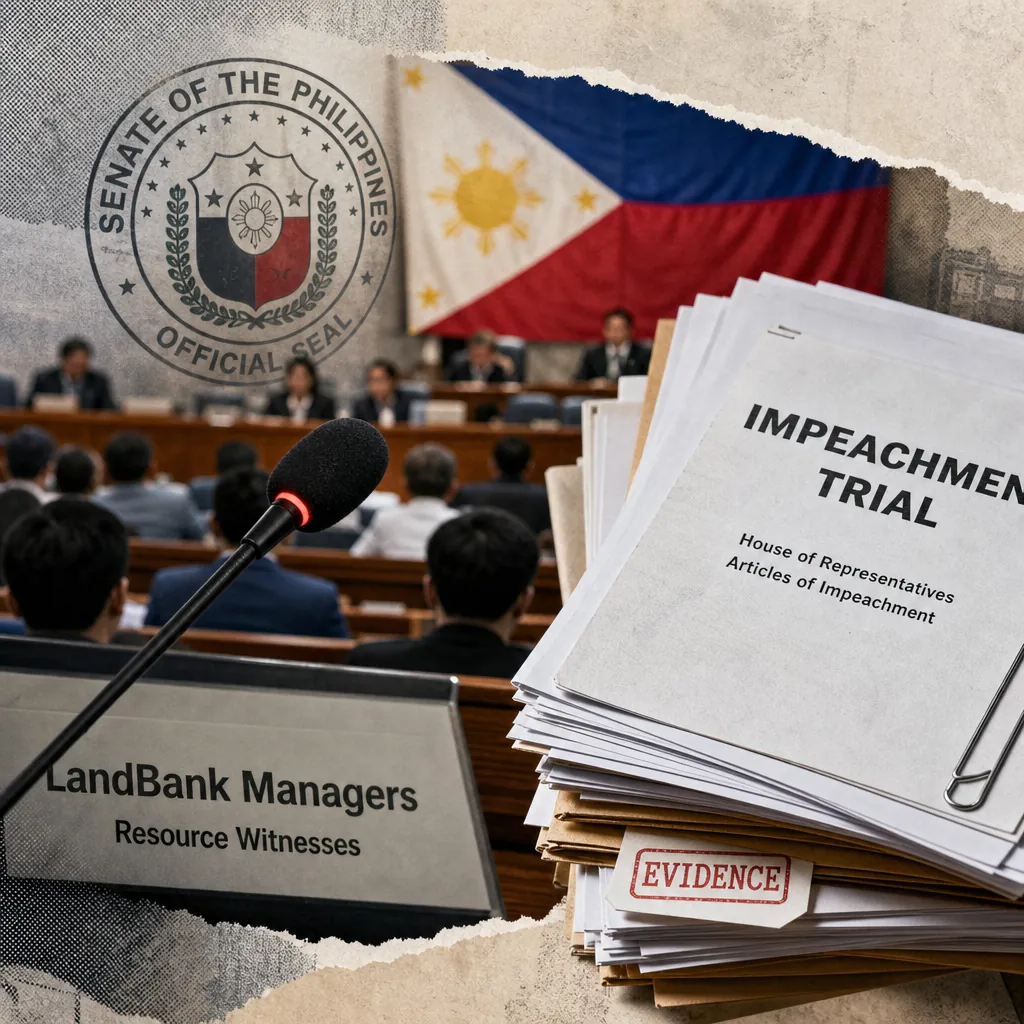
- Impeachment trial escalation (next 2–4 weeks): The July 30 deadline for banks and the AMLC to submit documents will likely reignite debate as details possibly leak. The prosecution's next witnesses—an NBI director and two former LandBank branch managers—are scheduled for the week of July 21, shifting focus to confidential fund allegations. Any defense move to elevate the subpoena issue to the Supreme Court remains a live risk. The parallel Ombudsman investigation into former House Speaker Martin Romualdez for plunder and AMLA violations reinforces public attention on AML mechanisms and government accountability.
- BSP fee waiver domino effect (next 2–4 weeks): The BSP's review of non-compliant firms will likely force more banks and e-wallets to announce fee cuts or waivers. The competitive pressure from CitySavings and Bank of Commerce, combined with regulatory scrutiny, could make free interbank transfers the new industry standard within months. For larger banks like BPI and BDO, maintaining or announcing fee-free transfers would bolster trust and preempt negative comparisons.
- UPLIFT digital disbursement surge (next 3–6 months): The shift to digital payouts starting August will drive a surge in new e-wallet and digital bank account openings among near-poor households. This creates both a reputation opportunity for institutions that facilitate seamless government payouts and a risk for those with app reliability issues. The August payout cycle is a high-stakes test for platform stability and customer support.
- Consumer finance complaints and BSP escalation (ongoing): The pattern of BSP complaints is likely to accelerate as more consumers become aware of the Online Buddy channel. Within 30–45 days, expect to see more users sharing BSP complaint templates and credit bureau check procedures, increasing pressure on banks to improve transparency in security protocols and application processes.
- Scam losses and regulatory response (next 6–12 months): The UN report on $114 billion in scam losses in Asia, combined with the DMW's repatriation data, signals growing international pressure on Southeast Asian countries to crack down on cybercrime syndicates. This could lead to stricter KYC (Know Your Customer) requirements for banks and e-wallets, potentially creating friction for legitimate users while reducing fraud.
Key trigger events: The July 30 document submission deadline for the impeachment trial; the BSP's next public statement on the fee waiver review (expected within 30 days); the August UPLIFT payout cycle; the expiration of several NAFFL promo periods in late July; and the Ombudsman's preliminary investigation into Romualdez.
Response guidance
For banking clients (BPI, BDO, UnionBank, Metrobank):
- Proactively communicate fee-waiver status. With BSP actively reviewing compliance, ensure your institution's fee structure is clearly communicated on social media and in-app interfaces. If fees have been waived, amplify this through owned channels. If not, prepare a defensible rationale to avoid being singled out in the BSP's review.
- Address customer friction points that generate recurring negative posts. For BPI, simplify debit card replacement authorization policies and publish the exact requirements on social channels. For BDO, create an official auto loan guide covering down payment revision, add-on rates, and dealership coordination. For Metrobank, urgently investigate and publicly address the unauthorized application reports—this is a data privacy crisis that requires immediate escalation.
- Develop a coordinated messaging framework for the impeachment subpoena. Emphasize that banks are complying with a lawful court order, not voluntarily sharing records. Highlight the court's explicit exclusion of foreign currency deposits to demonstrate that privacy protections were respected. Prepare a FAQ addressing common questions about when and why bank records can be legally accessed.
- Monitor and preempt escalation to BSP by strengthening first-contact resolution. Implement a closed-loop follow-up process and publicize a dedicated escalation hotline for unresolved cases. The BSP Online Buddy channel is being explicitly name-checked by frustrated consumers—proactive resolution can preempt formal complaints.
For telecommunications clients (PLDT, Smart):
- Monitor GCash and Maya service stability closely over the next 30 days as millions of new users transact under the UPLIFT program. Any widespread outage or crediting delay will generate backlash that spills over to your brand, especially if e-wallet recharging is affected.
- Prepare a rapid-response script that clearly separates network issues from application-level problems. Consider a joint awareness campaign with LandBank on updated merchant acceptance points for QR Ph to reduce point-of-sale friction.
For Malacañang-related monitoring:
- Track public sentiment on the UPLIFT program's digital disbursement success versus traditional manual payout. The official DSWD posts with the highest engagement show strong positive reception, but expect a shift toward negative posts about uncredited funds and confusion over e-wallet registration within 5–7 days.
- Prepare a summary of emerging pain points to help agencies improve the next tranche of distribution. The expat remittance thread reveals a gap in financial inclusion for non-citizens that could be addressed through policy or product development.
- Craft a balanced statement on the impeachment subpoena emphasizing respect for judicial independence without validating partisan attacks. The court's exercise of constitutional authority helps counter accusations of selective justice—a point that needs consistent reinforcement in official communications.
Key messages:
- "Philippine banks operate strictly within the law; compliance with a duly issued subpoena from the Senate impeachment court is a legal obligation, not a choice."
- "We are actively working to reduce the cost of digital transactions. Following the BSP's call, we have waived or lowered transfer fees on InstaPay and PESONet to make banking more affordable for all Filipinos."
- "We take data privacy and security seriously. If you suspect an unauthorized application under your name, please contact our official hotline immediately—we will investigate and take appropriate action."
- "Our institution supports financial inclusion by enabling secure digital payouts for government programs like UPLIFT, ensuring timely assistance reaches beneficiaries through both manual and digital channels."
Sensitive topics to navigate:
- Impeachment subpoena and bank secrecy: Avoid defensive language. Emphasize that the court imposed safeguards (in camera review, exclusion of foreign currency accounts) and that the subpoena was narrowly tailored. Do not repeat the defense's "fishing expedition" framing.
- BSP fee scrutiny: Frame responses as "we are reviewing our fee structure in line with BSP guidance" rather than making excuses. Do not name other institutions still under review.
- Unauthorized applications and data privacy: Acknowledge the seriousness, explain internal safeguards, and direct users to file complaints via BSP Online Buddy if they feel their case isn't being handled properly. Never blame the user or downplay the incident.
- App reliability complaints: Acknowledge user frustration without overpromising immediate fixes. Saying "we are aware of an issue and working on a solution" is better than denying the problem.
See the full picture behind today's signals.
This report draws from Media Meter's MediaWatch, our real-time monitoring engine tracking 2,470+ Philippine sources across print, broadcast, digital, and social. Explore how the platform turns raw coverage into decision-grade intelligence, then see how it's configured for teams like yours — whether you're in PR agencies, corporate comms, government, or marketing.
Want more? Browse our Report Library for sector and crisis intelligence, or request a demo and we'll have your brand set up before the call.
Want this kind of intelligence on your brand?
This brief is built on the same MediaWatch methodology that runs continuously across every brand we monitor. See your competitive landscape, Impact Score, and narrative trajectory in a 30-minute demo.