BPI Eala homecoming dominates; fintech partnerships advance
BPI's exclusive media homecoming for tennis star Alex Eala generated overwhelmingly positive social engagement, while fintech developments (Atome-AUB loan, GCash-Ant partnership) and BSP's zero-fee transfer mandate shaped the day's financial services conversation.
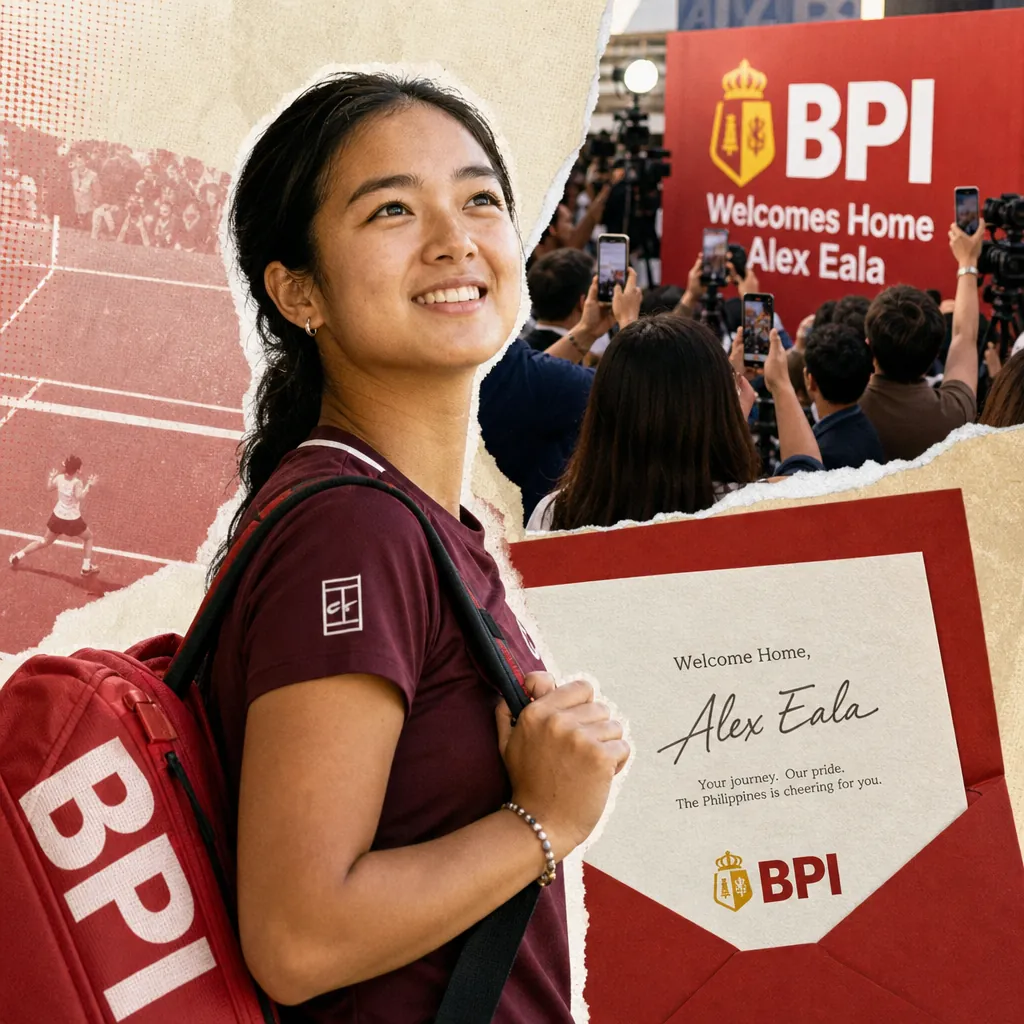
The conversation across Philippine banking and fintech on July 14, 2026, ran on two distinct tracks. One was a coordinated brand activation built around national pride: BPI’s exclusive media homecoming for Filipina tennis star Alex Eala, following her historic Wimbledon run, which generated the day’s highest social engagement by a wide margin. The other was a quieter but strategically significant thread of fintech expansion and regulatory compliance, including Atome’s ₱5 billion loan facility from Asia United Bank, GCash’s partnership with Ant International, and the full implementation of BSP Circular No. 1238 eliminating interbank transfer fees. A separate development—San Miguel Corp.’s ₱30 billion perpetual preferred share offering—drew coverage in the business press but minimal social conversation. The split between the two tracks is the story: aspirational brand content commands mass attention, while structural industry shifts, though consequential, remain largely invisible to retail audiences.
Key themes
- BPI’s Alex Eala homecoming as a brand-activation success – Coverage of Eala’s arrival at the BPI Wealth Lounge in Makati and her press conference dominated social feeds, with posts from GMA News, ABS-CBN News, and PeopleAsia using the branded hashtag #LexDoMore. A single PeopleAsia video post garnered over 8,000 likes and 4,683 love reactions, while the press conference clip on YouTube attracted nearly 30,000 views and 718 likes. Sentiment was overwhelmingly positive, with zero negative reactions detected across more than 20 tracked posts. The event positioned BPI as a champion of national pride and youth aspiration, reinforcing its brand affinity objectives.
- Fintech-bank partnerships accelerate – Atome secured a ₱5 billion loan facility from Asia United Bank (AUB) to expand its buy-now-pay-later (BNPL) card, which already serves 3 million users (80% first-time cardholders). GCash announced a partnership with Ant International to allow businesses to accept credit cards and online payments via a single platform. Tonik Bank reported a threefold increase in its Payhinga loan payment holiday, indicating rising demand for hardship accommodation among digital borrowers. These developments signal deeper integration between traditional banking infrastructure and digital-first lending models.
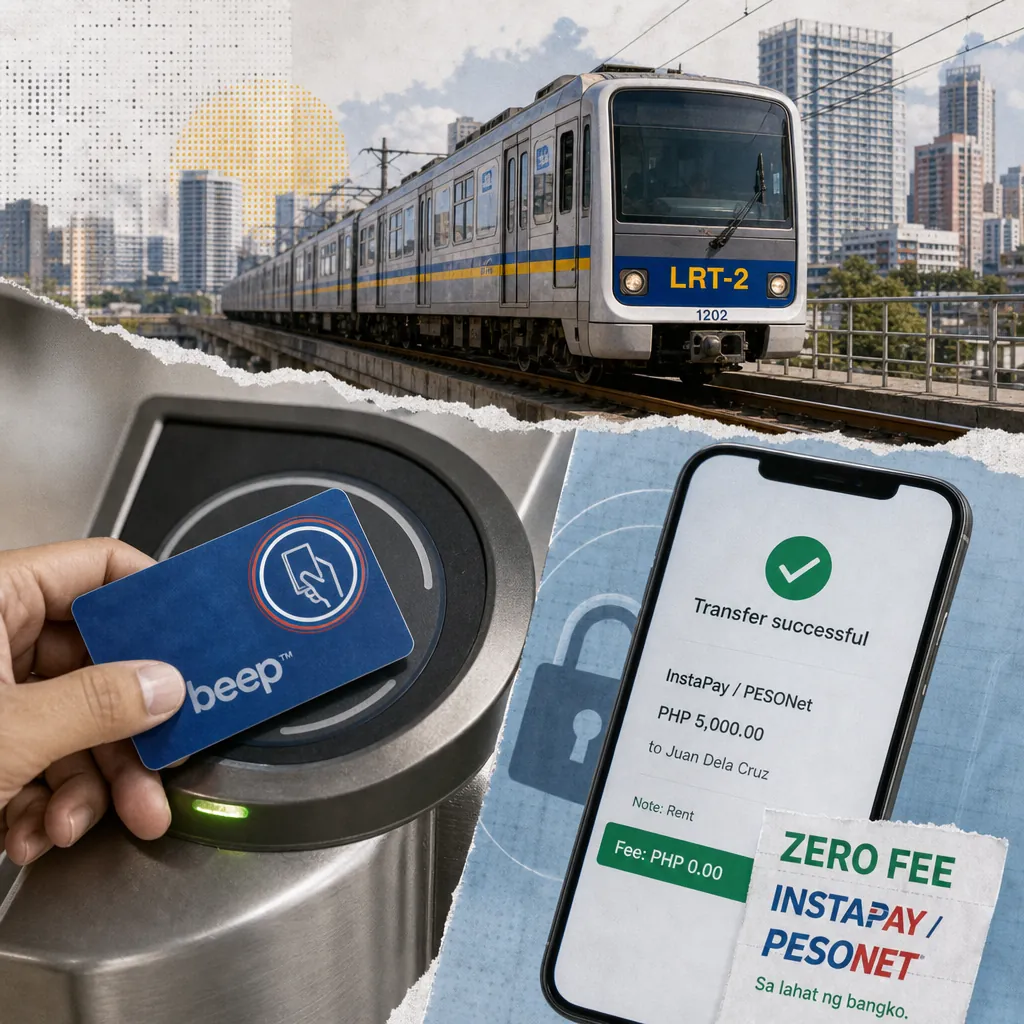
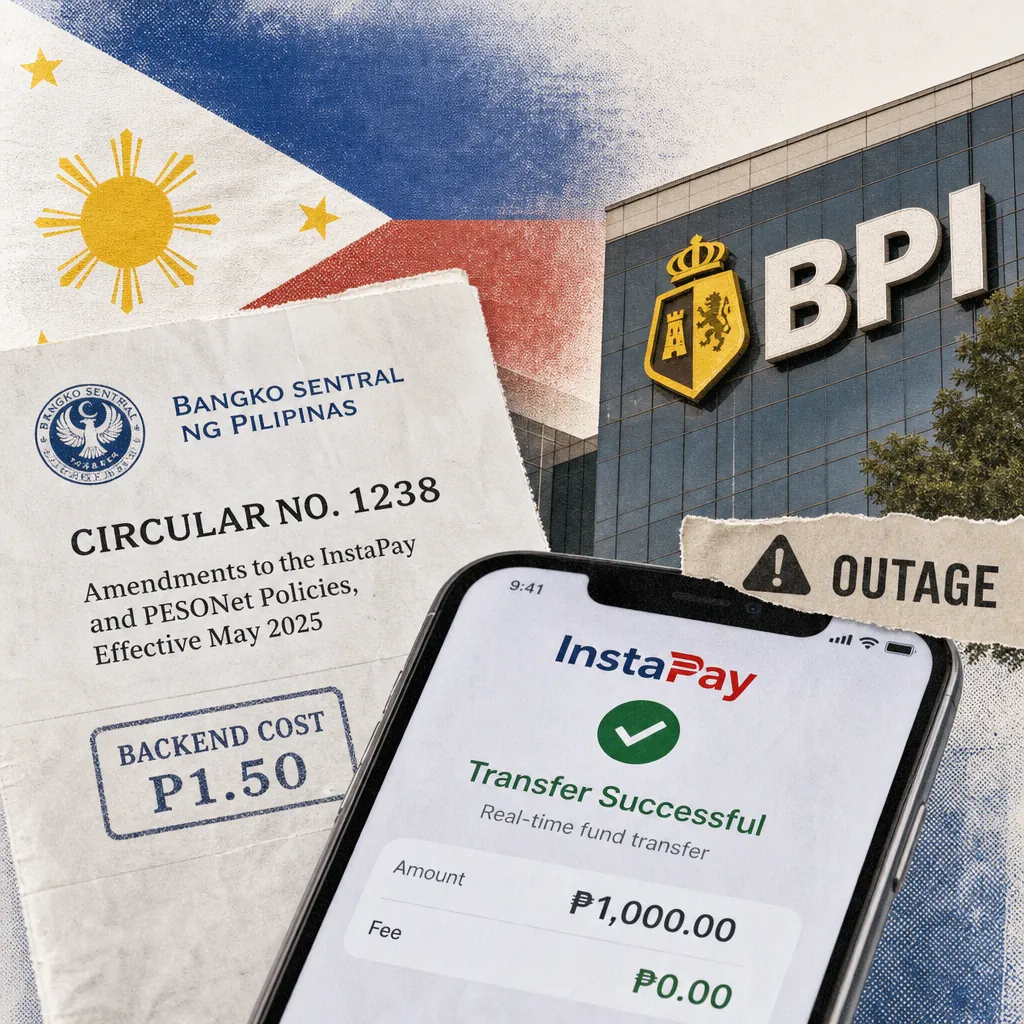
- BSP Circular 1238 reshapes consumer expectations – The full implementation of the central bank’s mandate eliminating interbank transfer fees triggered a cascade of zero-fee announcements from nearly all major banks (BPI on July 1, RCBC on July 4, LandBank and UnionBank on July 7, BDO and Metrobank on July 9, Security Bank and PNB on July 10, EastWest on July 15). Consumer guides celebrating the end of ₱10–₱50 charges went viral, with one post receiving 315 likes and 197 love reactions. However, e-wallets like GCash and Maya still charge ₱10 per InstaPay transfer, creating a pricing discrepancy that is drawing scrutiny.
- RCBC’s LRT-2 PISO Fare promo as a transit-payments innovation – RCBC launched an open-loop fare payment system at LRT-2 stations, offering a ₱1 promo fare for eligible cardholders (credit, debit, MySSS Card) from July 13 to 31, with cashback up to ₱300. The Department of Finance Secretary endorsed the system, and a detailed Reddit guide explained how to use GCash QR at turnstiles. The promo positions RCBC as a pioneer in integrating banking with public transit, aligning with the BSP’s cash-lite agenda.
- GoTyme Bank hits 10 million users – GoTyme Bank announced it had surpassed 10 million users and ₱53 billion in deposits just over three years after launch. The post received 422 likes and 586 love reactions, reflecting strong consumer trust. The milestone was picked up by news outlets and shared across platforms, reinforcing the narrative that digital-first competitors are setting the pace in customer acquisition.
- Consumer security concerns persist – Amid the positive news, multiple Reddit and Facebook users reported unauthorized transactions, app outages, and billing errors. A BPI customer described a ₱25,000 unauthorized transaction that was deemed “valid” by customer service, prompting an expletive-laden rant. Another user complained about BPI’s app being down for bill payments. The shift from SMS OTP to push notifications under BSP Circular 1213 is generating backlash, with users arguing that marketing notifications are now bundled with security alerts.
- Insurance conversation pivots away from VUL – A Reddit thread titled “At this day and age, worth it pa ba kumuha ng insurance?” generated 64 comments, with the original poster noting that their variable-unit-link (VUL) funds were losing to PSE performance. Multiple commenters explicitly requested “traditional health or critical illness plans” while stating “Pass po sa VUL.” This signals a market-wide trust erosion in investment-linked products, particularly among younger demographics.
- San Miguel’s ₱30 billion preferred share offering – San Miguel Corp. announced a follow-on offering of up to ₱30 billion in perpetual preferred shares, with initial dividend rates ranging from 8.04% to 8.65% per annum depending on the series. The offer period runs from July 15 to 23, with listing on the Philippine Stock Exchange on July 31. The story drew coverage in the business press but generated minimal social engagement.
How the narratives stack
Dominant – Within the captured set, the BPI–Alex Eala homecoming was the dominant narrative by engagement volume and positive sentiment. The coordinated media coverage across major outlets (ABS-CBN, GMA, PeopleAsia) and the consistent use of #LexDoMore created a unified brand moment that resonated strongly with audiences. No competing narrative came close in terms of likes, shares, or love reactions. This dominance reflects the power of personality-driven, aspirational content in capturing retail attention on social media.
Counter-narrative – The fintech expansion and regulatory compliance stories (Atome-AUB, GCash-Ant, BSP Circular 1238) represent a counter-narrative that is strategically significant but socially quiet. While these developments have long-term implications for the industry’s structure and consumer costs, they generated minimal engagement compared to the Eala event. This gap suggests that industry communicators face a challenge in making structural stories resonate with mass audiences.
Emerging – The consumer backlash against VUL insurance products and the growing preference for traditional health plans is an emerging narrative that could reshape the bancassurance market. The Reddit threads show active information-seeking behavior, with users explicitly rejecting investment-linked products and seeking transparent, fixed-benefit alternatives. This trend is still confined to online forums but has the potential to influence product design and sales messaging.
Suppressed – The San Miguel preferred share offering, despite its ₱30 billion size, received almost no social conversation. This is typical for capital markets stories, which are covered in business media but rarely break into mainstream social feeds. The story’s suppression in social conversation does not diminish its importance for investors and the broader market, but it highlights the gap between business news and public attention.
Platform insights
- Facebook: The dominant platform for this conversation, carrying over 25 relevant posts. Engagement was heavily skewed toward BPI’s Alex Eala content—a single PeopleAsia video post garnered over 8,000 likes and 4,683 love reactions, while the press conference video with Eala answering media questions reached 562 likes and 437 love reactions. Fintech posts, by contrast, averaged fewer than 5 interactions each, indicating that Facebook users in this dataset engage primarily with aspirational, personality-driven brand content rather than financial product news. The platform also hosted the most viral consumer guides on BSP Circular 1238 fee waivers, with one post receiving 315 likes and 197 love reactions.
- YouTube: The PeopleAsia upload of “Alex Eala in Manila” at the BPI Meet and Greet event attracted 29,528 views and 718 likes, making it the second-most-engaged asset of the day. This suggests video content extending the lifecycle of the brand moment beyond static posts. No other YouTube content related to finance keywords appeared in the dataset.
- Reddit: Served as the space for deeper user experiences and complaints. The main threads evolved from practical questions (credit card billing cycles, fraud disputes) to broader debates about insurance value and banking security. The VUL vs. traditional insurance thread gained 27 upvotes and 62 comments, while the BPI unauthorized transaction complaint reflected user helplessness. Reddit was also where the RCBC LRT-2 promo guide was shared and discussed, with users providing detailed instructions.
- Twitter: Used primarily for news clipping and announcements. Posts from Manulife about market outlook and GCash’s loan disbursement data were shared, but with lower engagement (0–800 views). The tweet about GCash disbursing ₱406 billion had only 308 views, indicating that breaking news spreads faster on Facebook and Reddit.
Key voices and communities
- Sports media and entertainment outlets – Major Philippine news organizations—ABS-CBN, GMA News, Pep.ph, and PeopleAsia—dominated coverage of the BPI-sponsored Alex Eala homecoming press conference, generating the highest engagement volumes across all posts observed. Their content consistently highlighted Eala’s positive messaging about representing the Philippines in the Asian Games and her partnership with BPI. This group directly amplifies BPI’s brand visibility to a mass audience, reinforcing positive sentiment around the bank’s sponsorship strategy.
- General public and tennis fan communities – Individual social media users and fan accounts generated the organic enthusiasm behind the event, contributing thousands of reactions and shares without any formal coordination. Their comments largely expressed pride in Alex Eala and gratitude toward BPI, with phrases like “More endorsements and sponsors for Alex Eala pls” reflecting a desire for continued brand support. This group’s engagement is overwhelmingly positive—across all fan-facing posts, “love” reactions outnumber negative reactions by a ratio exceeding 50:1.
- Financial sector observers and industry reporters – A smaller but strategically important group of finance-focused content creators and business news pages covered separate developments in the banking and fintech space. Posts from accounts like Manila Bulletin Business, Village Pipol, and radarsPH received low engagement (1–5 likes), but their content targets industry decision-makers rather than mass audiences. Topics included Metrobank’s hybrid-vehicle loan expansion, LandBank’s delayed capital market return, Tonik’s loan-payment-holiday growth, AUB’s ₱5 billion facility for Atome, and GCash’s partnership with Ant International.
- Fintech and crypto-native enthusiasts – A specialized cluster of accounts discussing blockchain-enabled financial services posted about Coins.ph’s new “Pay, Move, Trade” infrastructure and Skyro’s QR Ph–based credit line. Engagement is minimal (3–6 likes), but the language leans toward early-adopter excitement—phrases like “blockchain meets real-world business” signal a community that values technological innovation over traditional banking narratives.
- Security and fraud concerned consumers – Emotional frustration is concentrated in Reddit posts about unauthorized transactions and app-access issues. A BPI user wrote “Tarantado talaga tong mga scammer hayop! … ang unreliable ng system ng BPI” after a disputed OTP transaction. Another thread details repeated “temporary disabled” logins despite password resets. Banks’ shift to push notifications is criticized for bundling marketing messages. This group’s grievances, while not high in volume, carry significant reputational risk if left unaddressed.
Narrative streams
BPI’s Alex Eala brand activation: a masterclass in sports sponsorship
The day’s most prominent narrative stream opened with news of Alex Eala’s arrival at the BPI Wealth Lounge in Makati, quickly accumulating over 280 likes and 182 love reactions on a single Facebook post. By afternoon, multiple press conference videos had been published, with Eala discussing her Asian Games plans, her childhood idol Maria Sharapova, and the “Tennis Rodman” dive against Iga Swiatek. User engagement was overwhelmingly positive, with comments expressing national pride and gratitude toward BPI. The branded hashtag #LexDoMore was consistently used across all major outlets, reinforcing BPI’s association with national achievement.
The coverage value of this stream was substantial: the PeopleAsia YouTube feature alone drew nearly 30,000 views and 718 likes, while the press conference clip on Facebook reached 562 likes and 437 love reactions. Across the captured set, the Eala content generated the highest emotional engagement (predominantly “love” reactions) of any topic. No negative sentiment was detected, making this a textbook example of a brand activation that aligns with public sentiment.
For BPI, the strategic opportunity is to extend this momentum into financial literacy content targeting the same fan audience. Eala’s remark “It’s always an honor and it’s different to play for the country” could be repurposed to frame saving or investing as a form of national pride. The campaign also provides a template for competitor banks: identifying analogous brand ambassadors or community anchors that could capture similar emotional resonance.
Fintech-bank partnerships: the quiet engine of financial inclusion
While the Eala event dominated volume, a quieter but strategically significant stream unfolded around fintech funding and partnerships. Atome secured a ₱5 billion loan facility from Asia United Bank (AUB), signaling that traditional banks are increasingly backing buy-now-pay-later (BNPL) services as financial inclusion tools. The Atome-AUB deal includes projections of the BNPL market reaching $5.37 billion by 2030, positioning traditional banks as supportive of fintech lending.
This was echoed by GCash’s tie-up with Ant International to allow businesses to accept credit cards and online payments via a single platform. Tonik Bank also reported a threefold increase in its Payhinga loan payment holiday, indicating rising demand for hardship accommodation among digital borrowers. These developments, posted on the same day, suggest a coordinated trend toward deeper integration between traditional banking infrastructure and digital-first lending models.
The coverage value of these stories was modest in the captured set—the Atome-AUB post received only a few likes—but their strategic importance is high. For traditional banks not yet publicly partnering with fintechs, these moves create pressure to explain their digital inclusion strategies. For regulators, the trend raises questions about risk-sharing models and consumer protection disclosures.
BSP Circular 1238: the zero-fee revolution and its discontents
The full implementation of BSP Circular No. 1238, which mandates cost-based pricing for interbank transfers, triggered a cascade of zero-fee announcements from nearly all major banks. The narrative began on July 13 with a detailed Facebook post outlining the timeline of fee eliminations, and by July 14, the conversation shifted to practical implications. A post from KKB Tested highlighted that ShopeePay was the only e-wallet offering unlimited free transfers, while GCash and Maya had merely reduced fees from ₱15 to ₱10. This sparked discussion about why e-wallets lagged behind traditional banks.
The consumer response was overwhelmingly positive, with many posts receiving hundreds of likes and shares. One user commented, “Small fees add up. Keeping more of your money is a win,” reflecting widespread approval. However, the upcoming payday period on July 15 was being framed as a critical test of bank system reliability under free transfer volumes, with several community posts explicitly asking users to report any outages or slowdowns.
For BPI, which led the fee-waiver wave on July 1, this represents a chance to reinforce its digital leadership. But the bank also faces scrutiny: multiple Reddit and Facebook users reported app bill payment errors and login issues, risking erosion of the goodwill from the fee waiver. The gap between bank and e-wallet pricing is also a potential flashpoint, as consumers may pressure e-wallets to match the zero-fee standard.
RCBC’s LRT-2 PISO Fare: transit payments as a customer acquisition tool
RCBC’s promotional rollout of an open-loop fare payment system at LRT-2 stations dominated July 13–14. The initial Facebook post by RCBC on July 13 announced the ₱1 fare for eligible RCBC cardholders (credit, debit, MySSS Card) from July 13 to 31. This was followed by a news-style post on July 14 from Department of Finance Secretary Frederick D. Go, who endorsed the system as a way to skip ticket lines. The conversation expanded to include GCash Commute QR scanning at turnstiles, with a detailed Reddit guide explaining the mechanics.
The promo positions RCBC as a pioneer in integrating banking with public transit, aligning with the BSP’s cash-lite agenda. The involvement of the Department of Finance signals government support for such public-private partnerships. For other banks, the model offers a template for customer acquisition through everyday utility: daily commuters receive tangible financial rewards for using RCBC products, creating a sticky ecosystem.
The coverage value of this stream was moderate—RCBC’s promo post earned 62 likes and 35 loves—but the strategic implications are significant. If initial kiosk transaction volume data proves strong, similar transit partnerships could spread to other rail lines and payment providers within the next 2–3 months.
Consumer security and the push notification backlash
Amid the positive news, security concerns remained prominent. Multiple users reported unauthorized transactions across at least BPI and EastWest Bank, with one account describing a ₱25,000 Cebu Pacific transaction that processed without OTP. A frustrated BPI customer wrote “Tarantado talaga tong mga scammer hayop!” after being told their unauthorized transaction was deemed valid by customer service, with a 10-day investigation timeline falling after their billing date.
The industry-wide shift from SMS OTP to push notifications under BSP Circular 1213 is generating its own backlash. A Reddit user argued that marketing notifications are now bundled with security alerts, calling for better opt-out options. This directly impacts customer experience: the very security improvements meant to build trust are creating friction if not implemented with clear user control.
For banks, the challenge is to balance security with user convenience. Proactive communication about fraud-resolution timelines and opt-out options for marketing push notifications would address core grievances. The upcoming payday surge will test whether banks can maintain service reliability under increased transaction volumes.
Insurance: the VUL backlash and the pivot to traditional products
A persistent undercurrent was the debate over insurance value. On July 13, a Reddit thread titled “At this day and age, worth it pa ba kumuha ng insurance?” sparked 62 comments, with the original poster noting that VUL investments were losing to PSE performance. By July 14, another user sought critical illness insurance recommendations, explicitly stating “Pass po sa VUL hehe.”
Insurance companies like Pru Life UK and Sun Life Grepa posted their own content promoting protection products, but the Reddit sentiment leaned toward skepticism of VUL and preference for traditional health plans or MP2 savings. This signals a market-wide trust erosion in investment-linked products, particularly among younger demographics (millennials and Gen Z).
For bancassurance partners, the implication is clear: product emphasis should shift toward transparent, fixed-benefit products. The Sun Life Grepa Premier Legacy plan, targeting high-net-worth families with mental incapacity benefits, is an example of a product that aligns with this trend. Communicators should prepare comparative content that transparently illustrates the difference between traditional protection products and market-linked investments.
San Miguel’s ₱30 billion preferred share offering
Diversified conglomerate San Miguel Corp. announced a follow-on offering of up to ₱30 billion in perpetual preferred shares, with initial dividend rates ranging from 8.04% to 8.65% per annum depending on the series (three-year, five-year, or seven-year). The offer period runs from July 15 to 23, with listing on the Philippine Stock Exchange on July 31. The story drew coverage in the business press—the Manila Standard article had an estimated advertising-equivalent value of ₱139,629.60—but generated minimal social conversation.
This is typical for capital markets stories, which are covered in business media but rarely break into mainstream social feeds. The offering’s size (₱30 billion) and the dividend rates (above 8%) are notable in the context of a rising interest rate environment, but the story’s suppression in social conversation does not diminish its importance for investors and the broader market.
Conversation trajectory
- BPI’s sports sponsorship narrative will sustain momentum for 2–3 more weeks: The Alex Eala homecoming coverage generated outsized positive sentiment and brand association. Expect follow-on media cycles as Eala’s upcoming US Open campaign (late August/September 2026) and potential Asian Games participation generate additional coverage. BPI should double down on integrating its brand into Eala’s athletic journey.
- Fintech-bank partnerships will face regulatory scrutiny within 3–6 months: The Atome-AUB deal and GCash-Ant partnership signal accelerating convergence between traditional banks and digital lenders. The conversation will likely evolve toward scrutiny of risk-sharing models, regulatory alignment with the BSP’s open finance framework, and consumer protection disclosures. Banks not yet publicly partnering with fintechs may face pressure to explain their digital inclusion strategies.
- The zero-fee transfer revolution will test bank system reliability: The payday cycle arriving now represents a critical stress test for bank systems handling surging free transfer volumes. Bank app performance and reliability are becoming the new competitive battleground. Expect consumer pressure on e-wallets (GCash, Maya) to match bank pricing within 3–4 weeks.
- RCBC’s transit payment model will likely spread: The LRT-2 PISO Fare promo ends July 31, but if initial transaction volume data proves strong, similar partnerships could extend to other rail lines and payment providers within 2–3 months. This could reshape the competitive landscape for customer acquisition.
- Insurance conversation will pivot toward traditional products: The VUL backlash is gaining critical mass. Expect bancassurance partnerships to shift sales messaging toward “predictable returns” and “no market risk” language within the next quarter. Providers offering transparent, fixed-benefit products will gain share of voice.
Key trigger events: Alex Eala’s US Open campaign (late August/September 2026); the BSP’s next monetary board meeting and any inflation or rate announcements; the potential release of the 2026 Financial Inclusion Survey; LandBank’s delayed return to capital markets (pushed to early 2027); and the July 31 end of RCBC’s LRT-2 promo, which will provide data on conversion rates.
Response guidance
Platform approaches:
- Facebook: Leverage high engagement on promotional content (RCBC LRT-2, GoTyme milestone) by creating shareable infographics that explain complex BSP policies in plain language. Address recurring service complaints with a dedicated customer care response cadence that acknowledges frustration and provides clear resolution paths. Counter fraud narratives by co-creating “anti-scam checklists” with financial influencers.
- Reddit: Engage in discussions about credit card strategy and product comparisons by posting neutral, data-rich guides. In threads about technical issues, offer step-by-step troubleshooting steps. For the VUL vs. traditional insurance conversation, consider hosting an AMA with a licensed financial advisor.
- Twitter: Capitalize on real-time news about fee-free transfers by posting a continuously updated “Free Transfer Tracker” thread. Respond quickly to viral service outage complaints with a standardized acknowledgment tweet linking to the official status page.
Key messages:
- “BSP Circular 1238 is making digital transactions more affordable—most major banks now offer zero-fee InstaPay and PESONet transfers, but e-wallets still have room to align with cost-based pricing.”
- “While digital banking promos like RCBC’s ₱1 LRT-2 fare create immediate savings, the real long-term value lies in the secure, interoperable payment infrastructure being built under the BSP’s cash-lite vision.”
- “Fraud prevention is evolving—banks are moving away from SMS OTP toward silent authentication and biometrics. Users should enable push notifications from essential banking apps and stay vigilant against phishing attempts.”
- “Financial products like VUL and traditional insurance each serve different needs. The key is to match the product to your risk appetite and time horizon—never treat insurance solely as an investment.”
- “Trust in digital banking is growing—GoTyme crossing 10 million users and GCash disbursing P406 billion in loans prove that accessible, responsible digital finance is reaching first-time borrowers and underserved communities.”
Sensitive topics to navigate:
- Service reliability during payday surges: Acknowledge that peak loads can strain systems and outline concrete steps (scheduled maintenance, capacity planning). Avoid blaming third-party network providers unless confirmed.
- The gap between bank and e-wallet fee structures: Frame it as a transitional phase and highlight that BSP requires cost-justification for any remaining fees, rather than appearing defensive.
- Insurance product dissatisfaction: Avoid defending specific VUL products; instead, provide educational content comparing VUL, traditional term, and whole life insurance based on factual metrics.
Response priorities:
- Address immediate technical complaints on Reddit and Facebook within 24 hours: acknowledge the issue, provide a direct link to the bank’s support channel, and share an estimated resolution timeline.
- Amplify the BSP Circular 1238 “free transfer” narrative across all platforms: create a shareable, regularly updated comparison table and push it via Twitter threads and Facebook carousels.
- Proactively educate on the OTP-to-push notification transition: develop a short explainer on how to configure notification settings on major banking apps to receive only essential alerts.
See the full picture behind today's signals.
This report draws from Media Meter's MediaWatch, our real-time monitoring engine tracking 2,470+ Philippine sources across print, broadcast, digital, and social. Explore how the platform turns raw coverage into decision-grade intelligence, then see how it's configured for teams like yours — whether you're in PR agencies, corporate comms, government, or marketing.
Want more? Browse our Report Library for sector and crisis intelligence, or request a demo and we'll have your brand set up before the call.
Want this kind of intelligence on your brand?
This brief is built on the same MediaWatch methodology that runs continuously across every brand we monitor. See your competitive landscape, Impact Score, and narrative trajectory in a 30-minute demo.