Impeachment, WPS Tensions, and Corruption Claims Dominate PH Discourse
On August 1, 2026, Philippine social media and news coverage centered on the impeachment trial of Vice President Sara Duterte, escalating West Philippine Sea tensions, and corruption allegations against former senator Bong Revilla, with public sentiment marked by cynicism and anger.

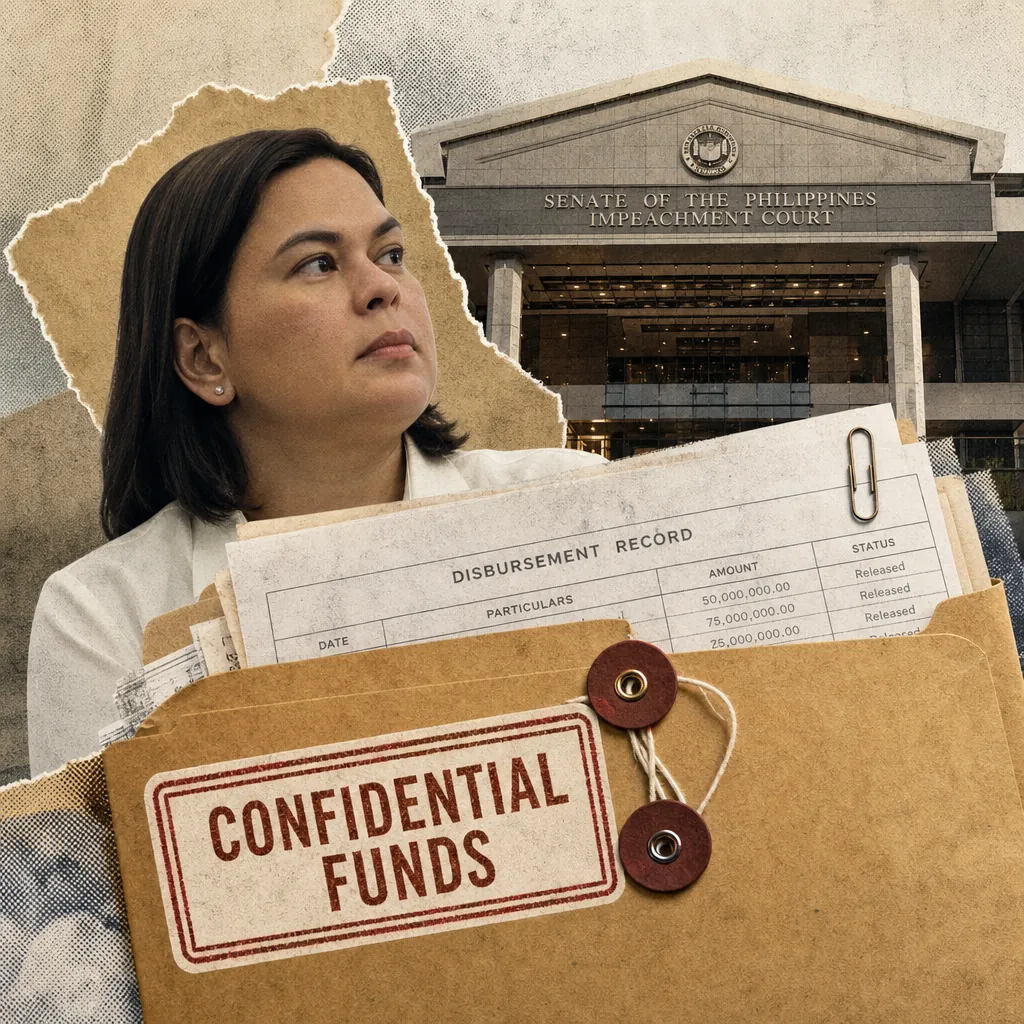
The conversation on August 1, 2026, in the Philippines was a volatile mix of political accountability, national security anxiety, and public cynicism. The day's most significant development was the impeachment trial of Vice President Sara Duterte, where the House prosecution panel claimed that P612.5 million in cash withdrawals from the Office of the Vice President came from the National Treasury. This revelation drew a striking public response on Facebook: 64 comments and 107 "haha" reactions against just 3 "love" reactions, signaling that the public mood was more derisive than outraged. The trial's next phase, with Commission on Audit (COA) auditors set to testify on the liquidation of confidential funds, shifted the narrative from political theater to institutional verification, as reflected in Reddit discussions that garnered 16 upvotes.
Simultaneously, the West Philippine Sea storyline intensified. The Philippine Coast Guard issued an advisory ahead of China's scheduled August 5 rocket launch, warning of debris in a drop zone near Babuyan Island and Sta. Ana, Cagayan. Reports of Chinese military drills near a disputed shoal triggered the day's strongest negative emotional spike, with 16 "angry" reactions and 9 comments on Facebook. On Twitter, the same story drew 1,874 views but zero replies, highlighting platform-specific passivity on security narratives.
A third narrative emerged around corruption allegations against former senator Bong Revilla. Ombudsman Jesus Crispin "Boying" Remulla suggested that Revilla's bail grant in a P92.8-million malversation case may have been "worked on," a claim that became the day's engagement peak on Facebook with 419 comments, 315 "haha" reactions, and 176 "angry" reactions. This story, amplified by news outlets like the Inquirer, dominated the conversation and reinforced public cynicism about elite impunity.
Meanwhile, the Department of Social Welfare and Development (DSWD) reported that 400,000 to 500,000 beneficiaries were waiting to enter the 4Ps program, and the Department of Health (DOH) Secretary admitted the agency still had much to fix. These institutional strain narratives competed with positive governance stories—such as the BARMM's e-wallet aid distribution and the LRT-2 free ride for National ID holders—which drew minimal engagement, underscoring the public's preference for conflict and spectacle over functional achievements.
Key themes
- Impeachment Trial Accountability: The impeachment proceedings against Vice President Sara Duterte dominated social media, with the P612.5 million cash withdrawal claim drawing 64 comments and 107 "haha" reactions on Facebook. Reddit users focused on the upcoming COA auditor testimony, shifting the frame from political theater to institutional verification.
- West Philippine Sea Security Escalation: China's military drills near Scarborough Shoal and the scheduled rocket launch triggered anger and anxiety. The Philippine Coast Guard's advisory drew modest engagement, but the drills report generated 16 "angry" reactions on Facebook, indicating frustration over territorial tensions.
- Corruption and Plunder Accountability: Ombudsman Remulla's suggestion that Bong Revilla's bail was "worked on" became the day's most engaging story, with 419 comments and 315 "haha" reactions on Facebook. The reminder of Revilla's P124 million civil liability reopened the pork barrel scandal.
- Social Services and Institutional Credibility: The DSWD's 4Ps waitlist of 400,000-500,000 beneficiaries and DOH's self-critical admission highlighted institutional strain. Positive governance stories like the BARMM e-wallet distribution drew minimal engagement, showing a disconnect between service delivery and public attention.
- Political Point-Scoring and Theater: The Cayetano-Lacson exchange over Taguig projects became a viral outlier with 89 comments and 268 "haha" reactions, illustrating how local political squabbles can dominate conversations over substantive policy.
- Weather Preparedness and Public Safety: Tropical Depression Luis formed, prompting Signal No. 1 in parts of Luzon. PAGASA updates drew 93 likes and 60 shares, showing public demand for timely risk communication.
- Peace Process and Amnesty: The government's statement on resuming CPP-NPA-NDF peace talks and the safe passage of 109 ex-NPA members drew minimal engagement, indicating low public interest in reconciliation efforts.
- Historical Memory and Drug War: A documentary on the drug war's Oplan Tokhang reanimated discussions on Reddit, with 48 upvotes, reflecting sustained interest in historical accountability.
How the narratives stack
Dominant: The impeachment trial and the corruption allegations against Bong Revilla were the most significant stories of the day, based on both consequence and public response. The impeachment narrative drew high engagement with a derisive tone, while the Revilla story generated the highest emotional peak with 419 comments and a mix of laughter and anger. These stories dominated the captured set, reflecting their prominence in the day's discourse.
Counter-narrative: Amid the corruption and security anxiety, positive governance stories—such as the BARMM e-wallet aid distribution, the LRT-2 free ride, and the DENR crocodile rescue—offered a counterpoint. However, these drew minimal engagement, indicating that the public's attention was overwhelmingly focused on negative narratives.
Emerging: The pre-2028 political realignment discourse, exemplified by DSWD Secretary Rex Gatchalian's endorsement of the "WinRi" ticket, is emerging. The public's humorous reaction (334 "haha" reactions) suggests skepticism, but the political significance could drive more substantive analysis in the coming weeks.
Suppressed: The peace process and amnesty stories, including the safe passage of ex-NPA members, received almost no engagement. This under-covered story is significant for its policy implications but failed to capture public attention, possibly due to the dominance of more sensational narratives.
Platform insights
- Facebook: Facebook hosted the highest-engagement content across all major narratives. The reaction buttons became a diagnostic tool: 107 "haha" reactions on the impeachment post versus 16 "angry" reactions on the China drills post captured the public's split emotional register. The platform favored mockery and anger over constructive debate.
- Reddit: Reddit served as the analytical counterweight, gravitating toward substantive accountability stories such as the COA audit testimony and the drug war documentary. The documentary thread drew 48 upvotes and reflective commentary, indicating a more serious engagement with historical and institutional issues.
- Twitter/X: Twitter functioned almost exclusively as a distribution channel. The peace talks statement, ex-NPA amnesty story, and China drills report accumulated between 950 and 1,874 views each, but none generated a single reply. This suggests that Twitter's role was amplification rather than deliberation.
- YouTube: While not explicitly covered in the monitoring writeup, the supplementary articles suggest that YouTube could be a platform for explainer videos on complex topics like confidential funds and weather safety, as recommended in the response guidance.
Key voices and communities
- Political Accountability Advocates: Politically engaged users on Reddit and Facebook who focus on government misconduct and impeachable offenses. They drive dense comment threads and upvote-driven visibility, especially around the impeachment proceedings and COA testimony. Their framing emphasizes transparency and institutional checks on executive power.
- Public Service Delivery Watchers: Citizens and community pages who monitor how agencies respond to everyday service issues. They reward tangible government action, as seen in the DPWH's response to a viral coffin warning, but also flag service gaps through humor and skepticism. Their engagement is fragmented but collectively shapes perceptions of government competence.
- Territorial Integrity Watchers: National security-conscious audiences who follow West Philippine Sea developments. They respond with anger to Chinese military activities and rely on official advisories like the PCG rocket launch notice. Their influence is amplified through emotional reactions, especially anger.
- Local Political Power Brokers and Their Followers: This group revolves around political figures like Cayetano and Lacson, whose project disputes generate high-volume, personality-focused engagement. The "See for yourself" challenge became a widely shared taunt, showing how local infrastructure claims can become viral political capital or public mockery.
- Peace Process and Human Rights Watchers: A policy-relevant but lower-engagement group that follows peace talks and amnesty mechanisms. They influence official discourse more than public virality, with statements emphasizing shared goals and "no hidden agenda." Their relevance lies in trust-building for peace process stakeholders.
Narrative streams
Impeachment Trial: From Allegations to Audit Trail
The impeachment trial of Vice President Sara Duterte has evolved from political allegations to a financial audit trail. The House prosecution panel's claim that P612.5 million was encashed from the National Treasury through the Office of the Vice President drew a derisive public response, with 107 "haha" reactions on Facebook. This reaction imbalance suggests that the public is skeptical of the prosecution's messaging, possibly viewing it as political theater rather than genuine accountability. However, the upcoming testimony of COA auditors, who will verify the liquidation of confidential funds, could shift the narrative toward institutional credibility. The COA is the government's independent audit agency, and its auditors' testimony will provide documented evidence of how the funds were spent. This stream is significant because it moves the conversation from personalities to processes, potentially influencing public trust in the impeachment process. For stakeholders, this means preparing technical explainers on how confidential funds are disbursed and audited, as the COA testimony will likely dominate coverage in the coming weeks.
West Philippine Sea: Gray-Zone Tensions and Public Anger
The West Philippine Sea narrative intensified with China's military drills near Scarborough Shoal and the scheduled rocket launch. The Philippine Coast Guard's advisory, which provided navigational coordinates for the drop zone, drew only 6 likes and 1 share, indicating that official advisories achieve modest organic reach. However, the China drills report triggered 16 "angry" reactions on Facebook, showing genuine public anger. This anger, however, did not translate into amplification, as the post had only 1 share. The scheduled August 5 rocket launch will test how effectively authorities communicate safety risks to affected communities. The Philippines' recent filing of its official nautical chart with the United Nations, as reported by the Manila Times, adds a legal dimension to the territorial dispute, emphasizing transparency and legal certainty. For communicators, this stream requires pairing official advisories with consistent updates to maintain trust, and recognizing that security stories need stronger calls to action to overcome audience passivity.
Corruption and Plunder: The Revilla Bail Controversy
The Ombudsman's suggestion that Bong Revilla's bail grant was "worked on" became the day's most engaging story, with 419 comments and 315 "haha" reactions on Facebook. This reaction pattern—more laughter than anger—signals public cynicism about elite impunity. The reminder of Revilla's P124 million civil liability in the pork barrel scam provides a concrete, shareable number that will likely resurface at every legal milestone. The pork barrel scam, which involved lawmakers diverting public funds to fake projects, remains a durable reference point for governance criticism. The Ombudsman's broader statements, such as characterizing EPIRA as protected by oligarchs, further normalize systemic corruption narratives. For government communicators, this stream underscores the need for rapid-response messaging that reaffirms respect for judicial independence while highlighting asset-recovery efforts. The high emotional engagement suggests that corruption stories will continue to dominate the news agenda, crowding out policy messaging.
Social Services: Backlogs vs. Digital Modernization
The DSWD's report that 400,000 to 500,000 beneficiaries are waiting to enter the 4Ps program—the government's conditional cash transfer program for poor families—drew "wow" and "haha" reactions, implying public skepticism toward welfare delivery promises. This backlog figure can easily be weaponized as proof of bureaucratic failure. In contrast, the BARMM's e-wallet aid distribution, which uses cashless technology to speed up disbursement, drew only 2 likes, showing that positive governance news fails to compete for attention. The LRT-2 free ride for National ID holders also drew minimal engagement. This split between backlog complaints and digital modernization success stories creates an opportunity to frame technology as the solution to delivery bottlenecks. For agencies like DSWD and DOH, the key is to lead with tangible outcomes rather than announcements, and to use digital inclusion as a proof point for efficiency.
Weather Preparedness: Tropical Depression Luis
Tropical Depression Luis formed on August 1, becoming the 12th tropical cyclone in the Philippines for 2026. PAGASA raised Signal No. 1 over parts of Luzon, and the update drew 93 likes and 60 shares on Facebook, with 45 "sad" reactions. This indicates that users were sharing preparedness information while reacting with concern or fatigue. The weather conversation presents a rare opportunity for government agencies to demonstrate responsive service delivery, as proactive disaster-preparedness communication can position them favorably before the peak typhoon season intensifies. The naming milestone of a storm is a key moment for public information pushes, as it maximizes reach and engagement.
Conversation trajectory
- Impeachment narrative deepening: The COA auditor testimony, expected within the next 2-4 weeks, will shift public focus from political rhetoric to documented spending claims. This will likely sustain the corruption narrative through the fourth quarter, especially as budget deliberations begin in September. Stakeholders should prepare technical explainers on confidential fund disbursement and audit processes.
- Territorial security escalation: The scheduled August 5 rocket launch and ongoing military drills will likely intensify the West Philippine Sea conversation within the next month. Public anger reactions indicate frustration is building, and any government response will be closely scrutinized. The next 7-10 days offer a narrow window to position safety advisories as evidence of institutional competence.
- Social service delivery split: The backlog complaints and digital modernization stories will continue to collide. Over the next few months, agencies that can demonstrate faster, traceable aid distribution will dominate positive narrative space. This is relevant for banking and telecommunications clients positioned within digital infrastructure stories.
- Historical memory resurfacing: The drug war documentary discussion on Reddit suggests that historical accountability themes will resurface around anniversaries and international human rights discussions. This cultural thread carries reputational implications for government-aligned stakeholders, and there is still time to prepare contextual messaging before it spreads to wider social channels.
Trigger events: The COA auditor testimony, the August 5 rocket launch, and renewed peace talk statements are key triggers that will reshape the conversation. Monitoring should prioritize the Sandiganbayan case calendar for the Revilla story, and the weather conversation will intensify with the peak typhoon months of August through October.
Response guidance
For government and institutional communicators, the day's conversation offers several actionable insights:
- Lead with tangible outcomes: The DPWH's response to the viral coffin warning—installing warning signs, guard rails, and concrete barriers—demonstrates how prompt corrective action can turn a meme into a positive safety narrative. Agencies should publish proof-of-response content to counter negative framing.
- Acknowledge public skepticism: The high "haha" reaction counts on corruption stories indicate that audiences are cynical. Rather than dismissing this, communicators should validate concerns and redirect to official legal facts. For example, when responding to speculation about a court decision, emphasize the judicial process and the government's commitment to legal remedies.
- Leverage digital modernization stories: The BARMM e-wallet aid distribution and LRT-2 National ID initiatives are proof points for digital inclusion. Partner agencies should highlight how cashless platforms and identity systems speed up service delivery, aligning with broader digital infrastructure narratives.
- Prepare for weather-related communication: With Tropical Depression Luis forming, agencies should activate weather communication protocols using official advisories as authoritative content. The naming milestone is a key moment to maximize reach, and proactive disaster-preparedness communication can position agencies favorably.
- Monitor Ombudsman statements separately: Ombudsman commentary can override official court outcomes in public perception. Clients should track Ombudsman statements separately from legal rulings and prepare rapid-response messaging that reaffirms institutional integrity.
- Avoid inflammatory language on sensitive topics: For West Philippine Sea and impeachment issues, focus on monitoring, diplomacy, and due process. Avoid commenting on evidence or guilt, and defer to independent institutions.
- Use platform-specific approaches: On Facebook, publish visual safety advisories and infographics for high-engagement policy posts. On Twitter, use short explainer threads for service announcements. On Reddit, provide neutral, data-backed context for long-form discussions. On YouTube, produce explainer videos on complex topics like confidential funds and weather safety.
By following these guidelines, communicators can navigate the volatile information environment and build trust with key audiences.
See the full picture behind today's signals.
This report draws from Media Meter's MediaWatch, our real-time monitoring engine tracking 2,470+ Philippine sources across print, broadcast, digital, and social. Explore how the platform turns raw coverage into decision-grade intelligence, then see how it's configured for teams like yours — whether you're in PR agencies, corporate comms, government, or marketing.
Want more? Browse our Report Library for sector and crisis intelligence, or request a demo and we'll have your brand set up before the call.
Want this kind of intelligence on your brand?
This brief is built on the same MediaWatch methodology that runs continuously across every brand we monitor. See your competitive landscape, Impact Score, and narrative trajectory in a 30-minute demo.