Confidential funds dominate PH discourse amid impeachment trial
A daily snapshot of Philippine social and news media on August 2, 2026, focusing on the impeachment trial of Vice President Sara Duterte, confidential funds, flood control politics, and other key narratives.
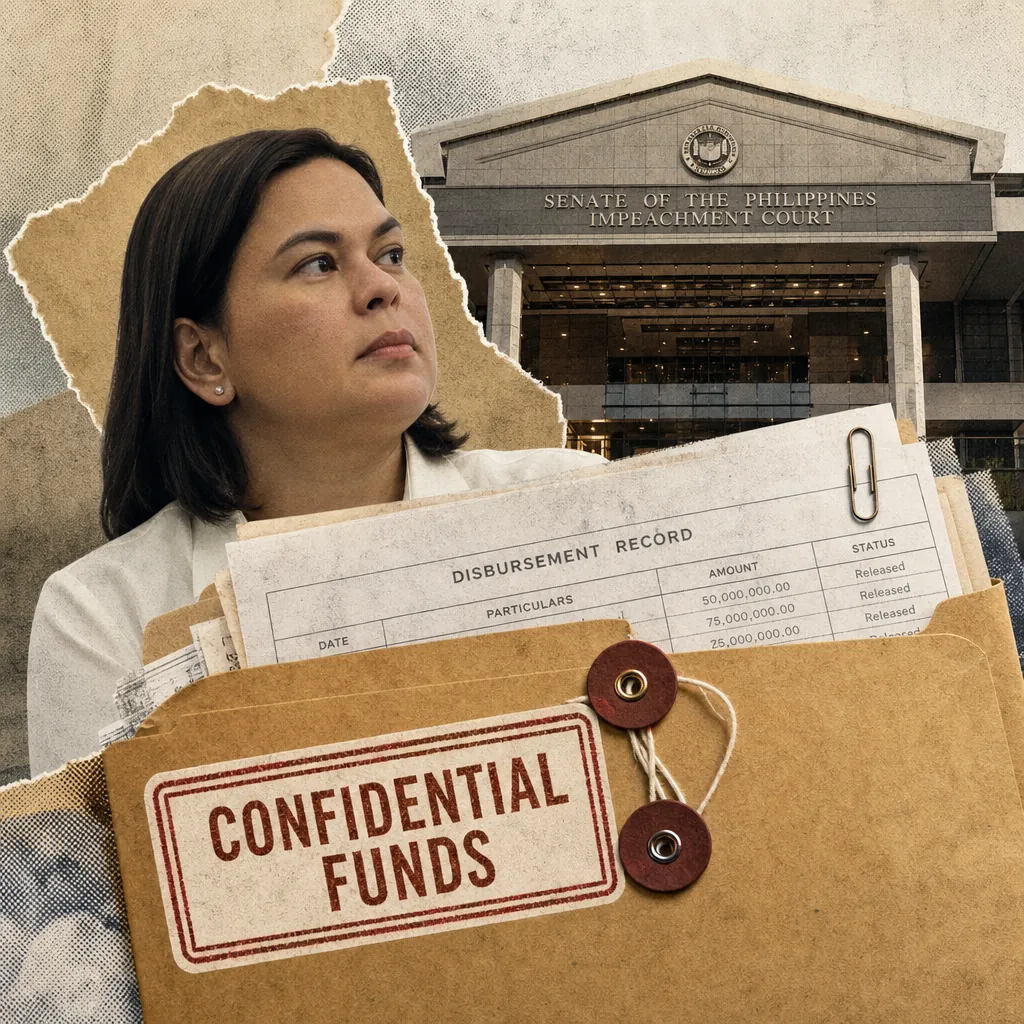
The conversation on Sunday, August 2, 2026, was not a single story but a series of overlapping waves, each carrying its own emotional weight. The day's most significant development was the intensifying accountability narrative around Vice President Sara Duterte's confidential funds, which dominated both social media and the news pages. On Facebook and Twitter, House prosecution panel spokesperson Rep. Zia Alonto Adiong stressed that the confidential fund was not a discretionary fund the Vice President could spend as she wished, while Deputy Speaker Paolo Ortega V insisted on tracing where the money went after being withdrawn from the bank. These posts drew modest reach—between 97 and 720 views on Twitter—but they set a scrutiny-driven tone that persisted through the day. By midday, the accountability thread expanded when Lingayen-Dagupan Archbishop Socrates Villegas described the possibility of bail for corruption-accused officials as "very alarming," a phrase that moved quickly from Facebook and Twitter onto Reddit, where the story drew 26 likes and a dedicated comment thread. This migration signaled that the corruption narrative was being absorbed not just as news but as a moral concern, with church figures lending it authority.
The next major pivot came from weather and public works. PAGASA's bulletin on Tropical Depression LuisPH, with Signal No. 1 still up over four Luzon areas, collected 42 likes and 7 sad reactions on Facebook and 2,159 views on Twitter, providing a real-world context for flood-related politics. That context made the Cayetano-Lacson exchange especially charged. Senator Alan Peter Cayetano fired back at Senator Panfilo Lacson's refusal to inspect Taguig flood-control projects, with the Facebook post headlined "MALULUNOD KA SA KATOTOHANAN" (You will drown in the truth) and a Twitter version quoting Cayetano's line. The Facebook iteration became the day's most emotionally engaging political item, with 896 likes, 1,295 haha reactions, and 300 comments, while the Twitter version drew 2,889 views. This exchange turned a genuine infrastructure issue into partisan entertainment, as evidenced by the overwhelming number of laughing emojis, and highlighted how disaster-preparedness topics can be weaponized for political messaging within a single news cycle.
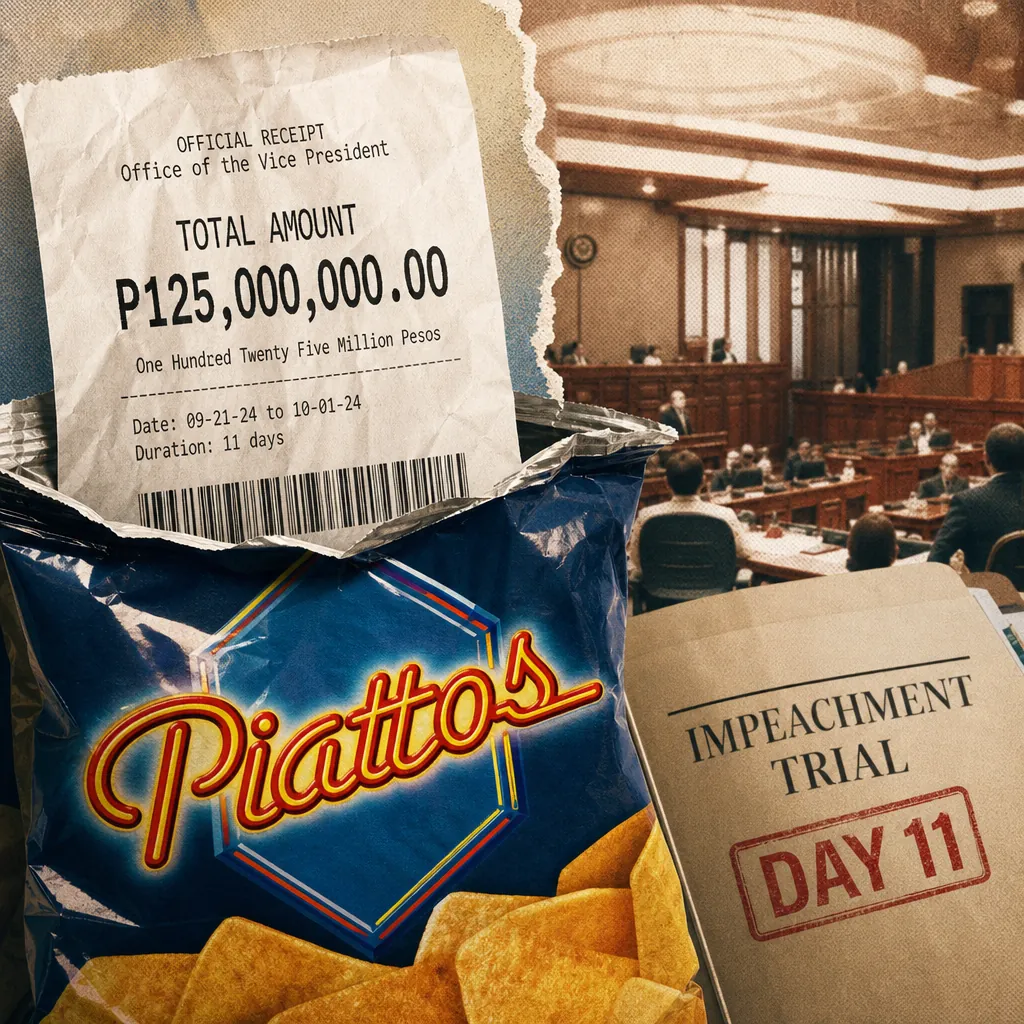
Meanwhile, the news media carried a parallel set of stories that fed into the same themes. The Manila Times led with the impeachment trial's next phase: two Commission on Audit (COA) auditors were scheduled to testify on Monday, the 11th day of the trial, to trace the movement of Duterte's confidential funds. The Inquirer reported that economic growth likely slowed to 2.7% in the second quarter, the weakest pace in nearly two decades outside the pandemic, partly due to the fallout from last year's flood control project scandal. The Manila Times also ran an opinion piece titled "Lumps and cancers" that drew an analogy between confidential funds and cancerous lumps in the national budget, echoing the accountability narrative. These articles, along with others on the West Philippine Sea, energy policy, and infrastructure, formed the news backdrop against which the social media conversation unfolded.
Key themes
- Confidential funds and impeachment trial dominate — The impeachment trial of Vice President Sara Duterte, centered on alleged misuse of confidential funds, was the day's most significant story. House prosecution figures pushed for tracing the funds, while the defense and Malacañang traded barbs. The trial's next witnesses, COA auditors, were set to testify, keeping the issue in the headlines.
- Flood control becomes political theater — The Cayetano-Lacson exchange over Taguig flood-control inspections drew massive engagement on Facebook, with the public responding with laughter rather than serious debate. This trivialized a critical public safety issue, especially with Tropical Depression LuisPH prompting weather alerts.
- Corruption and bail concerns gain moral authority — Archbishop Villegas's "very alarming" comment on possible bail for corruption-accused officials resonated across platforms, adding a moral dimension to the accountability narrative. This story gained traction on Reddit, indicating broader public absorption.
- West Philippine Sea cultural nationalism rises — A new film about Marines' sacrifices in the West Philippine Sea, "Ang Mamatay Nang Dahil Sayo," drew attention across social media, with one Twitter post reaching 6,014 views—the highest single-post audience of the day—despite zero likes. This showed steady appetite for nationalist storytelling.
- Political identity and polarization intensify — Reddit discussions questioned why few DDS (Diehard Duterte Supporters) openly oppose "Pax Silica," and whether political differences justify withholding empathy. The Alex Eala green outfit episode added a sports-and-pop-culture layer, with some interpreting it as a 2028 political signal.
- Economic concerns loom — Analysts forecast Q2 GDP growth slowed to around 2.6-2.7%, and July inflation likely eased to 6.3%, but both remain weak. These figures, due for release this week, are expected to set the tone for markets and policy.
- Energy sector at a crossroads — President Marcos's promotion of nuclear power, waste-to-energy, and natural gas in his SONA drew criticism from Greenpeace and others, who advocate for renewables. Meanwhile, a Meralco refund order was welcomed but seen as insufficient without broader reforms.
- Institutional governance and transparency — DepEd clarified its separate procurement processes for voice amplifiers and laptops, while COMELEC faced contradictory statements on BARMM election funding. These stories highlighted the public's demand for transparency in government spending.
How the narratives stack
Dominant — Within the captured set, the confidential funds and impeachment trial narrative was the most prominent, appearing in multiple news articles and social media posts. The Manila Times dedicated its banner headline to the upcoming COA testimony, and the Inquirer ran a story on House officials' demands to trace the funds. On social media, the confidential fund posts drew hundreds of reactions, including nearly 170 "haha" reactions on one post, indicating public mockery more than outrage. This narrative's dominance reflects both its news value and its emotional resonance, as it touches on corruption, accountability, and political rivalry.
Counter-narrative — The Marcos administration's defense, articulated by Malacañang Press Officer Claire Castro, argued that Vice President Duterte's own statements proved she was not mistreated by the President, and that the administration is implementing programs like housing and flood control. This counter-narrative sought to shift the focus from personality attacks to institutional achievements, but it struggled to gain traction against the more engaging accountability story.
Emerging — The West Philippine Sea cultural nationalism narrative is emerging as a significant undercurrent. The film "Ang Mamatay Nang Dahil Sayo" and the Reddit discussion on "Pax Silica" indicate a growing public interest in nationalist and military-sacrifice storytelling. This narrative could intensify in the coming weeks as more promotional materials surface, offering a lane for sovereignty messaging.
Suppressed — The DepEd procurement clarification, which models a transparent and process-based response to governance questions, received limited attention compared to the corruption narrative. Similarly, the declaration of 14 special non-working days in August, a lighter administrative story, was largely drowned out. These positive or neutral stories were overshadowed by the more sensational accountability and political theater, representing missed opportunities for the government to rebalance the news cycle.
Platform insights
- Facebook — Facebook was the primary space for emotional and visual political engagement. The Cayetano post generated the day's highest reaction mix, with 896 likes, 54 love, 1,295 haha, and 300 comments, showing that sarcastic political confrontations travel best on Facebook. The weather update also earned 7 sad reactions, indicating that genuine concern and mockery coexisted in the same feed. For communicators, this means that high-engagement political exchanges, particularly where laugh reactions dominate, require careful handling to redirect the conversation toward substantive issues.
- Twitter — Twitter functioned as a headline amplifier and news-distribution layer. Most political and institutional updates—confidential funds, weather, the WPS movie, DepEd's clarification—were shared as short bulletins or article links, with view counts ranging from 97 to 6,014. Engagement in the form of likes was low, but reach was broad, making Twitter the most efficient channel for tracking what stories were being pushed into wider circulation. This suggests that Twitter is where news breaks and spreads, but it is not where deep engagement occurs.
- Reddit — Reddit served as the analysis and reflection layer, where smaller audiences engaged more deeply. Threads on Pax Silica, political empathy, and Manila's uneven development drew 9 to 34 comments each, and the corruption-bail story earned 26 likes. Reddit users were more likely to question assumptions, compare narratives, and explore the social consequences of political identity. This platform offers a space for nuanced discussion, but it requires careful, non-promotional engagement to build trust.
Key voices and communities
- Political Accountability and Anti-Corruption Watchers — This community spans Facebook, Twitter, and Reddit, blending church voices, civic-minded citizens, and politically engaged observers. They are focused on two interlocking issues: possible bail for corruption-accused officials and the fate of Vice President Sara Duterte's confidential funds. Their influence is visible in reaction patterns, with a confidential-fund post drawing nearly 170 "haha" reactions and 70 comments, indicating public mockery more than outrage. A Reddit thread on Archbishop Villegas' bail warning also gained 26 upvotes, showing resonance among politically active users. Their primary narrative is that officials facing corruption charges should not be allowed to obtain provisional liberty, and confidential funds must be traceable rather than discretionary.
- Mainstream News Media and Amplifiers — National news organizations and their social media desks remain central to issue amplification, especially through Facebook and Twitter distribution. Their posts on weather, the West Philippine Sea, and political clashes consistently generated the largest reach in this dataset, including one West Philippine Sea movie item with over six thousand views on Twitter. A Cayetano-Lacson story drew nearly three thousand views on Twitter and hundreds of reactions on Facebook. These outlets mostly frame events as news, but their headline choices shape emotional response. The decision to lead with "MALULUNOD KA SA KATOTOHANAN" turned a flood-control inspection dispute into a comic moment, generating over a thousand "haha" reactions.
- Elected Officials and Political Factions — This group includes senators, House members, and election officials who are both sources and subjects of the conversation. Their statements create rapid engagement, especially when they attack each other. The Cayetano-Lacson flood-control exchange produced 300 comments on Facebook, making it one of the most interactive political posts in the sample. At the same time, House allies of the impeachment push used confidential-fund hearings to keep the issue alive across multiple platforms. Their primary narrative is political positioning, with flood control, BARMM election funding, and confidential funds all used as instruments of factional rivalry.
- Partisan Digital Blocs — The DDS and Kakampink dynamic remains a powerful undercurrent in Reddit and Twitter discussions, shaping how political projects and personalities are received. A Reddit thread asking why so few DDS voices openly oppose "Pax Silica" drew 34 comments, showing active internal debate about DDS loyalty. Another thread on whether political differences justify withholding empathy drew 9 comments, reflecting exhaustion with political tribalism. These blocs are not monolithic, and DDS supporters are being challenged to reconcile loyalty to Sara Duterte with positions on Marcos-era and US-backed initiatives.
- Civic and Disaster-Response Watchers — This group includes ordinary citizens, community observers, and weather-conscious users who engage around flooding, public works, and disaster preparedness. Their engagement is smaller in volume but highly localized and trusted, making them important for grassroots reputation. A Reddit observation about Manila's uneven cleanliness drew 22 comments, with users questioning why improvements concentrate near Manila City Hall. Weather updates also mobilize this group, with the TD LuisPH bulletin earning 42 likes and 6 shares. Their primary narrative is that government performance is judged visually and experientially, and residents compare what they see on the streets with official claims.
Narrative streams
The Impeachment Trial and Confidential Funds: A Deepening Accountability Crisis
The impeachment trial of Vice President Sara Duterte, now on its 11th day, has become the central political drama of the Philippines. The trial stems from an impeachment complaint alleging betrayal of public trust, grave threats, and inciting to sedition, among other charges. The prosecution, led by House representatives, is presenting evidence that Duterte misused confidential funds totaling P612.5 million, which were released and encashed through the Office of the Vice President and the Department of Education. On August 2, the Manila Times reported that two Commission on Audit (COA) auditors, Roderick Wamil and Celine May Del Campo, are scheduled to testify on Monday to trace the movement of these funds and examine how they were audited. Lead prosecutor Rep. Gerville Luistro said they would shift focus to tracing the funds' movement, having completed the phase on their release and encashment.
On social media, the narrative was driven by House prosecution figures. Rep. Zia Alonto Adiong stressed that the confidential fund is not discretionary, while Deputy Speaker Paolo Ortega V insisted on tracing where the money went after being withdrawn from the bank. A Facebook post on this topic drew nearly 170 "haha" reactions and 70 comments, indicating that the public is treating the issue as political entertainment rather than a serious governance debate. This mockery, while seemingly dismissive, actually reflects a deep cynicism about the accountability process. The Manila Bulletin ran a story quoting House impeachment adviser Robert Ace Barbers and Deputy Speaker Ortega, who posed the simple questions: "Where did the confidential funds go, and who benefited from it?" They referenced testimony from two former LandBank branch managers who described the encashment of treasury checks as "unusual and unprecedented" in their banking experience.
The defense, meanwhile, has argued that the prosecution's case is crumbling. A Manila Times opinion piece titled "Prosecution's case in impeachment trial crumbling" claimed that the NBI witnesses failed to prove that Duterte's remarks constituted grave threats or inciting to sedition. The piece argued that the NBI's investigation was "theatrical" and relied on bare remarks made in the heat of anger. This counter-narrative, however, has not gained significant traction on social media, where the accountability angle dominates.
For the general reader, the confidential funds issue is about whether public money is being used for legitimate purposes. Confidential funds are allocations given to government agencies for intelligence-gathering and other sensitive operations, and they are subject to audit by the COA. The controversy centers on whether Duterte used these funds appropriately or diverted them for personal or political gain. The trial's outcome could have significant implications for the Marcos-Duterte political alliance and the stability of the administration.
Flood Control and Disaster Response: From Policy to Punchline
The Cayetano-Lacson exchange over Taguig flood-control projects was the day's most emotionally engaging political item, but it also highlighted a troubling trend: serious infrastructure issues are being reduced to partisan entertainment. Senator Alan Peter Cayetano, who represents Taguig, invited Senator Panfilo Lacson to inspect flood-control projects in the city. Lacson declined, saying he "might drown in flood water." Cayetano fired back with a Facebook live post headlined "MALULUNOD KA SA KATOTOHANAN" (You will drown in the truth), which drew 896 likes, 1,295 haha reactions, and 300 comments. The Twitter version drew 2,889 views.
The exchange came as Tropical Depression LuisPH was bringing rains and Signal No. 1 warnings to parts of Luzon, making the flood-control issue particularly relevant. The public's response—overwhelmingly laughter—suggests that they are processing the issue as a joke rather than a serious policy debate. This trivialization is damaging because it undermines public trust in the government's ability to address flooding, which is a recurring problem in Metro Manila and other urban areas.
In the news media, the flood-control narrative was also present. The Manila Times reported that the Department of Public Works and Highways (DPWH) has launched emergency dredging operations in Davao City and General Santos City, following President Marcos's directive to strengthen flood control measures. Public Works Secretary Vince Dizon said the president ordered the immediate dredging and widening of major rivers after recent heavy rains triggered flooding. This proactive messaging, however, was overshadowed by the senator-versus-senator taunt on social media.
For communicators, the lesson is that infrastructure announcements can be turned into sarcastic political theater almost instantly. Agencies should monitor for humor and distrust signals alongside sentiment tone, and be prepared to redirect the conversation toward concrete project updates and measurable outcomes.
Economic Slowdown and Inflation: The Underlying Strain
The Philippine economy is facing significant headwinds, as reflected in the forecasts for Q2 GDP growth and July inflation. The Manila Times poll of economists put the median forecast for Q2 GDP growth at 2.6%, down from 2.8% in the first quarter and 5.4% a year earlier. The Inquirer's poll had a slightly higher median of 2.7%. If accurate, this would be the weakest quarterly expansion since the final three months of 2009, excluding the pandemic contractions. The slowdown is attributed to the inflationary impact of the war in the Middle East, which has driven up oil prices, and the continued fallout from last year's flood control project scandal, which has hobbled government spending.
Inflation, meanwhile, is expected to have eased for a third straight month in July to 6.3%, according to the Manila Times poll, down from 6.4% in June. This is still well above the central bank's target range of 2-4%, and transport inflation remains high at close to 13% due to rising fuel prices. The Philippine Statistics Authority is set to release official data on August 5 (inflation) and August 7 (GDP), and these figures are expected to set the tone for the stock market and monetary policy.
On social media, the economic narrative was less prominent than the political stories, but it was present in the news articles captured. The Inquirer's story on GDP growth noted that the slowdown was partly due to "stagnant public spending" and the "uncertainty stemming from the flood control project scandal." This connects the economic woes to the corruption narrative, suggesting that the public's perception of governance failures is having real economic consequences.
For the general reader, these figures matter because they affect jobs, prices, and the overall cost of living. The government's ability to manage the economy is a key measure of its performance, and the current slowdown could fuel further criticism of the administration.
West Philippine Sea and Cultural Nationalism
A new film about the sacrifices of Filipino Marines in the West Philippine Sea, "Ang Mamatay Nang Dahil Sayo," is generating attention across social media. The film, which centers on four Marines stationed aboard the BRP Sierra Madre at Ayungin Shoal, was promoted on Facebook and Twitter, with the Twitter post reaching 6,014 views—the highest single-post audience of the day—despite zero likes. This indicates a steady public appetite for nationalist and military-sacrifice storytelling, even when it does not generate heated debate.
The film's release comes amid ongoing tensions in the West Philippine Sea, where the Philippines has been asserting its claims against China. The narrative is shifting toward cultural nationalism, with the film serving as an emotional tribute to the soldiers who guard the country's territory. A Reddit thread questioning why few DDS supporters are openly anti-"Pax Silica"—a US-led initiative to strengthen supply chains for semiconductors, AI, and critical minerals—also drew 34 comments, indicating that the West Philippine Sea issue is intertwined with political identity.
For communicators, this narrative offers a lane for sovereignty messaging that can resonate across age groups. However, it is also a sensitive topic that can be politicized, so messaging should focus on the sacrifices of the military and the importance of national sovereignty, rather than engaging in partisan debates.
Energy Policy and the Meralco Refund
The energy sector was in the news on August 2, with two related stories. First, the Inquirer reported that activist priest Fr. Warren Puno welcomed the Energy Regulatory Commission's (ERC) order directing Meralco to refund approximately P9.5 billion to consumers. Puno, director of the Ministry of Ecology of the Diocese of Lucena, said the move is a positive step but should be accompanied by broader reforms in the power sector. He questioned why multibillion-peso refunds continue to recur, pointing to deeper problems in regulation.
Second, the Manila Times ran an opinion piece titled "Energy sector at a crossroads," which criticized President Marcos's promotion of nuclear power, waste-to-energy, and more natural gas in his 2026 State of the Nation Address. Greenpeace Southeast Asia-Philippines called these sources "costly and hazardous false solutions" and advocated for investment in local solar, wind, and modern renewable infrastructure. The piece also highlighted the Daanbantayan Solar Project in Northern Cebu, which faces challenges despite its potential to add 150 megawatts to the Visayas grid.
On social media, the energy narrative was not as prominent as the political stories, but it is a significant undercurrent. The Meralco refund is a consumer issue that resonates with the public, who are burdened by high electricity costs. The debate over energy sources is also relevant to the country's long-term economic and environmental goals.
For communicators in the energy sector, the key is to address consumer concerns about costs and reliability while also engaging with the broader debate on energy transition. Transparency about regulatory processes and the rationale for energy policies can help build trust.
Conversation trajectory
Over the next 7-14 days, the confidential funds and impeachment trial narrative is likely to intensify as the COA auditors testify and the trial progresses. The public's engagement, currently characterized by mockery, could shift to outrage if new evidence emerges. The next major committee or plenary action could trigger a five-to-tenfold engagement spike, as seen in previous high-profile moments. Communicators should prepare for this by having fact-first responses ready and avoiding amplification of political tension.
The flood control narrative will also remain active, especially with the peak typhoon season underway. The next major weather disturbance could activate flood-control blame games and infrastructure accountability threads. Agencies should use weather advisories as anchoring moments for preparedness messaging, pairing each PAGASA bulletin with clear community action items.
The West Philippine Sea cultural nationalism narrative is expected to grow within the next three to six weeks as more promotional materials for the film surface. This offers an opportunity for sovereignty messaging, but it should be handled carefully to avoid politicization.
Trigger events to watch include: the continuation of the House prosecution panel's confidential fund inquiry and related impeachment calendar developments; the release of Q2 GDP and July inflation data on August 5 and 7; and any new developments in the Middle East conflict that could affect oil prices and the economy.
Response guidance
For government-facing communications teams, the next 7-14 days are critical for setting the framing around confidential funds and disaster preparedness. Develop a rapid-response matrix that pairs every confidential funds query with a tangible governance accomplishment, such as the DepEd procurement clarification or COMELEC election preparations, to shift the frame from personality-driven attacks to institutional processes. For infrastructure stakeholders, prepare localized flood control achievement fact sheets and use weather bulletins as opportunities to demonstrate readiness, while avoiding direct engagement with senator-versus-senator taunts that trivialize disaster resilience.
For corporate clients, the key lesson is that political signifiers can attach to brands and personalities without warning, as the Alex Eala green-outfit moment showed. Monitoring partisan digital blocs and media framing should be part of standard reputation surveillance, not just election-period activity. For banking and telecommunications clients, activate monitoring for confidential fund discussions that reference banking transactions, and draft internal guidance for responding to speculative questions about financial flows before those narratives escalate.
In the medium term, avoid direct engagement in impeachment or confidential fund debates unless legally necessary, but track sentiment shifts around corruption accountability as they may affect stakeholder trust assumptions. Consider aligning corporate social responsibility narratives with disaster resilience and West Philippine Sea-affirming values where appropriate, as these themes are currently gaining emotional traction across multiple platforms.
See the full picture behind today's signals.
This report draws from Media Meter's MediaWatch, our real-time monitoring engine tracking 2,470+ Philippine sources across print, broadcast, digital, and social. Explore how the platform turns raw coverage into decision-grade intelligence, then see how it's configured for teams like yours — whether you're in PR agencies, corporate comms, government, or marketing.
Want more? Browse our Report Library for sector and crisis intelligence, or request a demo and we'll have your brand set up before the call.
Want this kind of intelligence on your brand?
This brief is built on the same MediaWatch methodology that runs continuously across every brand we monitor. See your competitive landscape, Impact Score, and narrative trajectory in a 30-minute demo.