Meralco refunds, media ownership, and monsoon chaos
A daily snapshot of Philippine news and conversation, covering Meralco's electricity refund, allegations of foreign media control, and the impact of monsoon rains and Typhoon Maymay.
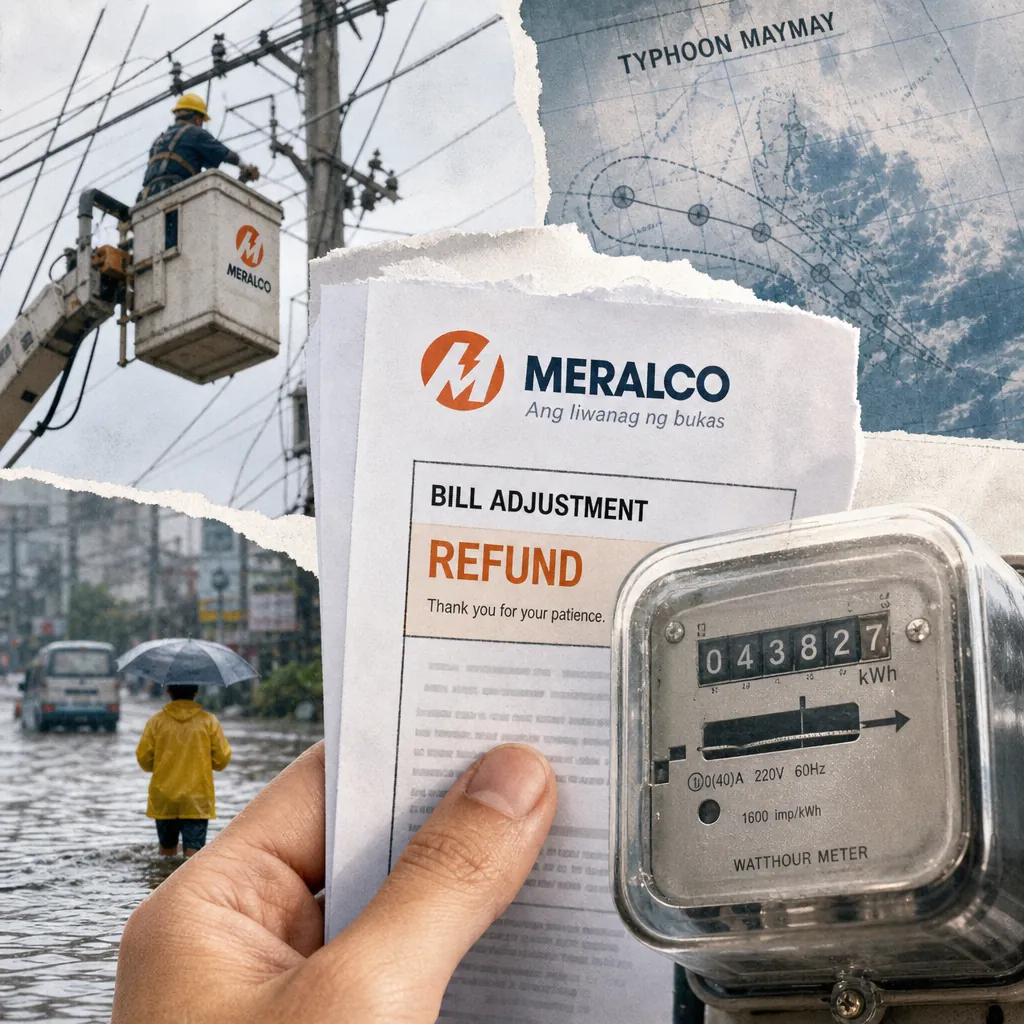
The day's conversation in the Philippines was a mix of consumer relief, political intrigue, and weather-driven disruption. The most significant development was the announcement that Manila Electric Co. (Meralco), the country's largest private electricity distributor, would refund residential customers P0.59 per kilowatt-hour (kWh) on their August bills. This followed a regulatory order for the company to return P9.5 billion to consumers after it was found to have over-recovered distribution charges. The news was covered extensively by business outlets, with the story's advertising-value-equivalent—the estimated cost of buying the same space as advertising—reaching over ₱1 million across the captured items. At the same time, a column by Rigoberto Tiglao alleging that an Indonesian billionaire controls the Philippine Star and other major media outlets drew significant attention, with a coverage value of over ₱2.3 million in the monitored set. Meanwhile, the southwest monsoon, enhanced by Typhoon Maymay, brought heavy rain and flooding to parts of Luzon, leading to the cancellation of two Philippine Basketball Association (PBA) games and the collapse of a wall along EDSA, a major thoroughfare. These stories, while disparate, paint a picture of a day when consumers were offered financial relief, the integrity of media ownership was questioned, and the forces of nature disrupted daily life.
Key themes
- Meralco's P9.5-Billion Refund: The Energy Regulatory Commission (ERC) ordered Meralco to refund customers after it over-recovered distribution charges. The refund, applied at P0.59 per kWh on August bills, is intended to offset other upward adjustments, providing some relief to consumers.
- Allegations of Foreign Media Control: A column by Rigoberto Tiglao claimed that Indonesian billionaire Anthoni Salim controls the Philippine Star and other major media outlets, allegedly violating the constitutional ban on foreign capital in media. The piece argues that this control has gone unchallenged for years.
- Monsoon Rains and Typhoon Maymay Disruptions: The southwest monsoon, enhanced by Typhoon Maymay, brought heavy rains and flooding to parts of Luzon. This led to the cancellation of PBA games, the collapse of a wall along EDSA, and warnings of continued rainfall from the state weather bureau, Pagasa.
- Government's Push for Results After SONA: President Ferdinand Marcos Jr. emphasized that the commitments made in his State of the Nation Address (SONA) must now translate into concrete programs and results, highlighting food security, healthcare, and social assistance as priorities.
- Businesses Still Face Red Tape: A study by the Department of Economy, Planning, and Development (DEPDev) found that nearly half of Philippine businesses remain dissatisfied with registration and closure procedures, despite the Ease of Doing Business Act. The study points to fragmented systems and uneven digitalization as key problems.
- Infrastructure and Agricultural Projects Move Forward: The Bases Conversion and Development Authority (BCDA) broke ground on a ₱172-million expansion of the Hacienda Luisita interchange on the Subic-Clark-Tarlac Expressway (SCTEX). The Department of Agriculture (DA) is targeting a harvest of up to 4,000 metric tons of palay from hybrid rice model farms in Iloilo and Antique.
- Tragic Events and Public Outcry: The mother of a student who drowned during an Ateneo de Manila University (ADMU) activity publicly criticized the university's handling of her son's death, alleging disrespect and a lack of compassion. This story, covered by Manila Bulletin Online, drew significant attention.
- Global and Regional Incidents: A school shooting in Thailand that killed nine people, including a 12-year-old girl, and the life imprisonment of a Filipino technical intern in Japan for murder were also covered, highlighting issues of violence and mental health.
How the narratives stack
Dominant: The Meralco refund story dominated the business news cycle. The announcement that the company would refund P0.59 per kWh to residential customers was covered by multiple outlets, including BusinessWorld Online and Head Topics Online. The story's prominence is reflected in its high advertising-equivalent value within the captured set, with the combined coverage worth over ₱1 million. This narrative is significant because it directly affects millions of households and involves a major regulatory action against a large utility.
Counter-narrative: The column by Rigoberto Tiglao alleging foreign control of Philippine media serves as a counter-narrative to the mainstream media's self-presentation. The piece, which claims that Indonesian billionaire Anthoni Salim controls the Philippine Star and other outlets, challenges the integrity and independence of the press. This narrative is notable for its direct accusation against a major media conglomerate and its constitutional implications, even if it did not generate the same volume of coverage as the Meralco story.
Emerging: The government's push for results after the SONA, as articulated by President Marcos, is an emerging narrative. The President's statement that the SONA should be a roadmap for action, not just a speech, signals a shift toward implementation and accountability. This narrative is likely to grow as the administration moves forward with its legislative agenda.
Suppressed: The story of Rene Baterbonia, a student who drowned during an Ateneo de Manila University activity, and his mother's allegations of mistreatment by the university, appears to be under-covered relative to its emotional and ethical weight. While Manila Bulletin Online covered the story, it did not receive the same level of attention as other news items. The mother's account of how the university handled her son's body, which she described as disrespectful, raises serious questions about institutional accountability and compassion.
Platform insights
- Facebook: Facebook is likely the primary platform for sharing and discussing news stories, especially those with strong emotional or consumer angles. The Meralco refund story and the monsoon-related disruptions would likely generate significant engagement, with users sharing their own experiences with electricity bills and flooding. The platform's large user base in the Philippines makes it a key space for public discourse.
- X (formerly Twitter): X is a hub for real-time news and opinion, particularly among journalists, politicians, and engaged citizens. The allegations of foreign media control would likely spark heated debates on the platform, with users sharing the column and expressing their views on media independence. The platform's character limit encourages concise, impactful statements, making it a space for quick reactions and viral moments.
- YouTube: YouTube serves as a platform for longer-form content, such as interviews and vlogs. President Marcos's vlog, where he discussed the need for results after the SONA, would be hosted here. The platform also hosts content from shows like "Toni Talks," where the mother of Rene Baterbonia shared her story. YouTube's comment sections provide a space for more in-depth discussion and reaction.
- Instagram: Instagram is used for visual storytelling and celebrity news. The BINI and SB19 collaboration photo, which was posted on the platform, would generate significant engagement from fans. The platform is also used by personalities like Alexandra Eala to share personal updates and mantras, as seen in her post about her Wimbledon journey.
Key voices and communities
- Business and Financial Analysts: This group, including writers at BusinessWorld Online, provides detailed analysis of corporate and regulatory developments. Their coverage of the Meralco refund and its implications for the company's earnings and dividend payout is crucial for investors and the business community.
- Media Watchdogs and Critics: Figures like Rigoberto Tiglao, who write columns questioning media ownership and independence, are key voices in the conversation about press freedom. Their work challenges the status quo and prompts discussions about the concentration of media power.
- Consumer Advocates and the General Public: The public, particularly residential electricity customers, are directly affected by the Meralco refund. Their reactions, shared on social media, reflect the real-world impact of regulatory decisions. The public is also a key voice in the conversation about the monsoon's impact, sharing updates and concerns about flooding and safety.
- Government Officials and Agencies: President Marcos, the Department of Agriculture (DA), the Bases Conversion and Development Authority (BCDA), and the Department of Public Works and Highways (DPWH) are all active voices in the day's news. Their statements and actions shape the narrative around government performance and infrastructure development.
- Celebrities and Entertainment Figures: The entertainment community, including actors like Janine Gutierrez and groups like BINI and SB19, are prominent voices in the cultural conversation. Their activities, such as the Cinemalaya film festival and potential collaborations, provide a lighter counterpoint to the day's more serious news.
Narrative streams
Meralco's Refund and the Cost of Electricity
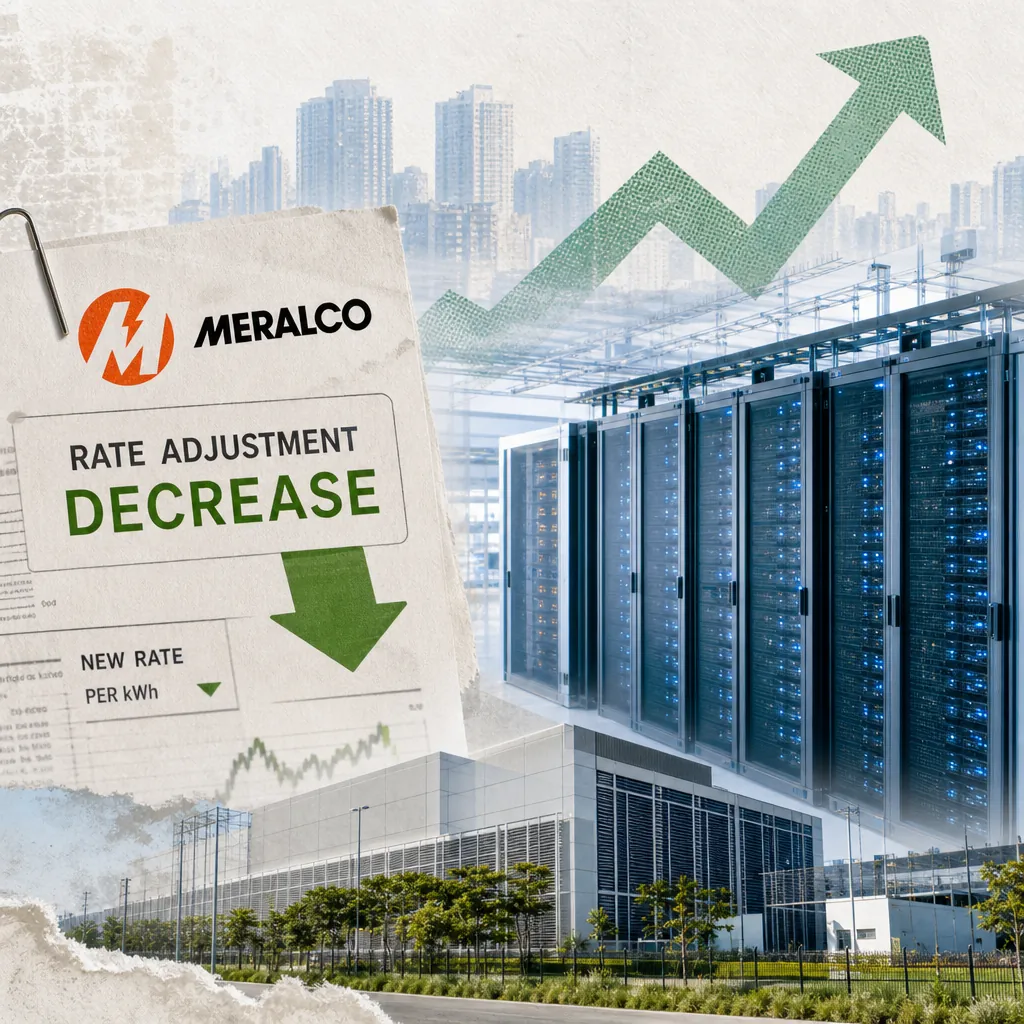
The Energy Regulatory Commission (ERC), the government agency that regulates the electricity industry, ordered Meralco to refund P9.5 billion to customers. This was because the company had over-recovered distribution charges—the fees it collects for delivering electricity through its network—due to delays in the rate-setting process. The refund is being applied at a rate of P0.59 per kilowatt-hour (kWh) on August bills. A kilowatt-hour is a unit of energy equivalent to using one kilowatt of power for one hour. For a typical household using 200 kWh per month, this would mean a reduction of about P118 on their bill.
Meralco's Vice-President for Corporate Communications, Joe R. Zaldarriaga, said the company expects the refund to offset other upward adjustments in the August bills. These adjustments include higher reserve market prices, an increase in the feed-in tariff allowance (FIT-All), and the recovery of pass-through costs. The FIT-All is a uniform charge on all electricity consumers that supports the development of renewable energy sources like solar and wind. The ERC approved an increase in the FIT-All from P0.2011 to P0.3359 per kWh, which will be added to bills starting in August.
The refund news was covered extensively by business media, with the combined advertising-equivalent value of the articles in the captured set exceeding ₱1 million. This figure represents the estimated cost of buying the same space as advertising, not the number of people who read the articles. The story also had a notable impact on Meralco's stock price, which rose by 2.9% in the week of August 3-7, outperforming the broader market. Analysts said the company could absorb the refund without materially affecting its earnings or dividend payout.
This narrative is significant because it directly affects the wallets of millions of Filipino households. It also highlights the role of the ERC in protecting consumers from overcharges and the complexities of electricity pricing in the Philippines. The story is a reminder that regulatory actions can have a tangible impact on household finances.
The Question of Foreign Media Control
A column by Rigoberto Tiglao, published in the Manila Times and republished on Head Topics Online, alleged that Indonesian billionaire Anthoni Salim controls the Philippine Star and other major media outlets. The column claims that Salim's control violates the constitutional ban on foreign capital in media, which is designed to ensure that the press remains independent and controlled by Filipinos. The piece argues that Salim has exploited legal loopholes to circumvent this ban and that no administration has ever questioned this arrangement in court.
The column details Salim's business empire, noting that he is the son of Soedono Salim, a late Indonesian-Chinese billionaire who was a close associate of former Indonesian strongman Suharto. It also describes how Salim recruited Filipino businessman Manuel V. Pangilinan to head his holding firm, First Pacific Co., which eventually gained control of PLDT, the country's largest telecommunications company. The column asserts that Salim's media holdings include a 76% stake in the business paper BusinessWorld, a 20% minority interest in the Philippine Daily Inquirer, TV5 Network, Nation Broadcasting Corp., Cignal TV, and The Freeman, a Cebu-based newspaper.
The column's advertising-equivalent value in the captured set was over ₱2.3 million, indicating that it drew significant attention from other outlets and readers. The story is a serious challenge to the credibility of the Philippine media, suggesting that a foreign national has significant control over the news that Filipinos consume. It raises questions about the independence of the press and the enforcement of constitutional provisions. The lack of any legal challenge to Salim's control, as noted in the column, is a point of concern for media watchdogs and advocates of press freedom.
Monsoon Rains and Typhoon Maymay Disrupt Daily Life
The southwest monsoon, locally known as "habagat," enhanced by Typhoon Maymay, brought heavy rains and flooding to parts of Luzon on Monday. The Philippine Atmospheric, Geophysical, and Astronomical Services Administration (Pagasa), the state weather bureau, forecast continued monsoon rains in several provinces, including Ilocos Sur, La Union, Benguet, Zambales, Bataan, and Occidental Mindoro. Pagasa weather specialist Charmagne Varilla warned of heavy rains in other areas, including Metro Manila, Cavite, Batangas, and Rizal.
The severe weather led to the cancellation of two Philippine Basketball Association (PBA) games scheduled for Sunday at the Ninoy Aquino Stadium. The PBA, the country's premier professional basketball league, said the postponement was due to the safety of fans, players, officials, and staff. The games, which were to feature Phoenix against Rain or Shine and Barangay Ginebra against Blackwater, were rescheduled, and subsequent games were moved to the Ynares Sports Centre in Antipolo.
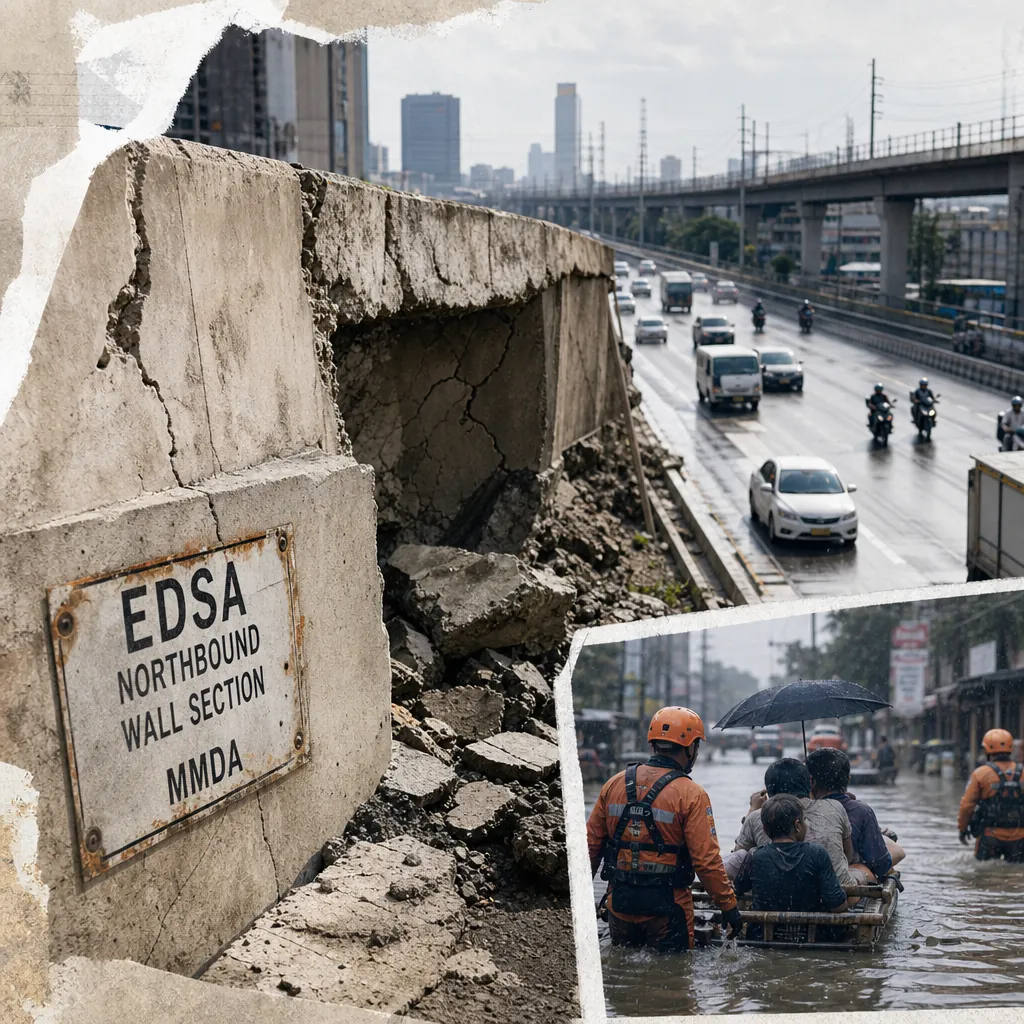
The rains also caused a wall along EDSA-Ayala northbound in Makati City to collapse. The wall, which was part of an exclusive subdivision, was found to be made of hardiflex, a type of fiber cement board, rather than concrete. Department of Public Works and Highways (DPWH) Secretary Vince Dizon and Metropolitan Manila Development Authority (MMDA) General Manager Nicolas Torre III inspected the site and ordered an investigation into who constructed the substandard wall. Dizon noted that the wall was made to look like concrete but was not, raising concerns about the quality of construction in the area.
The monsoon's impact was a major topic of conversation, with the story of the wall collapse and the PBA game cancellations drawing significant attention. The advertising-equivalent value of the coverage of these events in the captured set was substantial, reflecting the public's interest in weather-related disruptions. The story also highlights the vulnerability of infrastructure to extreme weather events and the importance of proper construction standards.
Government's Push for Results After SONA
President Ferdinand "Bongbong" Marcos Jr. said that the commitments made in his fifth State of the Nation Address (SONA) must now translate into concrete programs and tangible results. The SONA is an annual address delivered by the President to Congress, outlining the administration's legislative agenda and priorities. Marcos said the SONA should not be treated merely as a speech but as a roadmap for government action.
In his latest vlog, Marcos highlighted government initiatives on food security, healthcare, and social assistance as among the programs that must be expanded to ease the burden on Filipino families. These include assistance to local governments for rice distribution to needy communities. The President's statement signals a shift from planning to implementation, as his administration moves deeper into its term.
The story was covered by Panay News Online, with an advertising-equivalent value of over ₱300,000 in the captured set. This narrative is important because it sets the tone for the government's priorities and accountability. It also provides a framework for evaluating the administration's performance in the coming months.
Businesses Still Face Red Tape Despite Reforms
A study by the Department of Economy, Planning, and Development (DEPDev) found that nearly half of Philippine businesses remain dissatisfied with registration and closure procedures, despite a law aimed at cutting red tape. The study, titled "Streamlining Business Registration, Renewal, and Exit Processes in the Philippines," attributed the delays to fragmented government systems, weak data sharing, and uneven digitalization.
The Ease of Doing Business (EODB) and Efficient Government Service Delivery Act of 2018, or Republic Act (RA) No. 11032, was designed to streamline government processes and reduce bureaucratic hurdles. However, the study found that gaps remain between the law's intent and its actual implementation. The study pointed to the uneven adoption of the electronic Business One-Stop Shop (eBOSS) across local government units (LGUs) and limited interoperability among government systems as key problems.
The story, covered by Manila Bulletin Online, had an advertising-equivalent value of over ₱600,000 in the captured set. This narrative is significant because it highlights the ongoing challenges of doing business in the Philippines, despite legislative efforts to improve the environment. It also underscores the need for continued reform and investment in digital infrastructure.
Infrastructure and Agricultural Projects Move Forward
The Bases Conversion and Development Authority (BCDA), a state-run agency that manages former military bases, broke ground on a ₱172-million expansion of the Hacienda Luisita interchange on the Subic-Clark-Tarlac Expressway (SCTEX). The project includes the construction of two ramps to provide greater access to key industrial hubs in the area. BCDA President and CEO Joshua Bingcang said the project would complete the interchange, which currently only allows access from Clark but not from Luisita to Baguio or vice versa.
The Department of Agriculture (DA) also announced a target harvest of 3,250 to 4,000 metric tons of palay (unhusked rice) from 500 hectares of hybrid rice model farms across 10 municipalities in Iloilo and Antique. The project, under the Scalable Hybrid Rice Model Farm Establishment Project, aims to increase rice production through the use of high-yielding hybrid varieties and recommended technologies. The DA allocated 50 hectares of irrigated farmland in each participating municipality.
These stories, covered by Manila Bulletin Online and Panay News Online, highlight ongoing efforts to improve infrastructure and agricultural productivity. They are part of the government's broader agenda to boost economic growth and food security.
Tragic Events and Public Outcry
The mother of Rene Baterbonia, a student who drowned during an Ateneo de Manila University (ADMU) activity in Dipaculao, Aurora, publicly criticized the university's handling of her son's death. In an interview on "Toni Talks," Rovelyn Baterbonia alleged that the university showed disrespect to her family, which she described as poor. She claimed that the university did not clean or dress her son's body and that staff referred to him in a dehumanizing manner.
The story, covered by Manila Bulletin Online, had an advertising-equivalent value of over ₱200,000 in the captured set. It raises serious questions about institutional accountability and the treatment of grieving families. The university had previously apologized for the tragedy, but the mother's account suggests that the apology was not sufficient to address the family's grievances.
Global and Regional Incidents
The day's news also included coverage of a school shooting in Thailand, where a 14-year-old boy killed nine people, including his grandparents and a 12-year-old girl, before taking his own life. The incident has prompted education officials to vow stricter school safety protocols, including mental health checks and anti-bullying campaigns. The story, covered by Head Topics Online, had an advertising-equivalent value of over ₱200,000 in the captured set.
In Japan, a court sentenced a Filipino technical intern, Roel Bulan, to life imprisonment for the murder of two Cambodian technical interns in 2022. The court found that Bulan's stress and low self-esteem did not justify his actions. The story, covered by Manila Bulletin Online, had an advertising-equivalent value of over ₱200,000 in the captured set. These stories highlight issues of violence, mental health, and the challenges faced by migrant workers.
Conversation trajectory
- Meralco Refund and Electricity Prices (Observation window: 1-3 months): The refund is a one-time adjustment, but the broader issue of electricity prices will remain a topic of conversation. The increase in the FIT-All and other adjustments could lead to higher bills in the coming months, potentially sparking public outcry. The ERC's regulatory actions will be closely watched by consumers and businesses alike.
- Media Ownership and Press Freedom (Observation window: 3-6 months): The allegations of foreign media control could lead to increased scrutiny of media ownership structures. While it is unlikely to result in immediate legal action, the story may prompt calls for greater transparency and enforcement of constitutional provisions. Media watchdogs and civil society groups may push for investigations or legislative reforms.
- Monsoon Season and Infrastructure Resilience (Observation window: 1-2 months): The monsoon season is expected to continue, with more rains and potential flooding. The collapse of the EDSA wall highlights the vulnerability of infrastructure to extreme weather. The DPWH's investigation into the wall's construction could lead to stricter enforcement of building standards and accountability for substandard work.
- Government's Implementation of SONA Promises (Observation window: 6-12 months): The President's push for results will be tested in the coming months as the administration implements its programs. The public and media will likely track progress on key initiatives like food security, healthcare, and social assistance. Any delays or failures could become points of criticism.
- Business Registration and Red Tape (Observation window: 6-12 months): The DEPDev study's findings could lead to renewed efforts to streamline business processes. The government may push for wider adoption of the eBOSS and improved data sharing among agencies. However, meaningful change will require sustained political will and investment in digital infrastructure.
Trigger events to watch: The release of the August electricity bills, which will show the impact of the refund and other adjustments; any legal or regulatory action related to media ownership; the next major typhoon or monsoon event; the President's next vlog or public address on government programs; and any new legislation or executive orders aimed at reducing red tape.
Response guidance
For communicators in the energy sector, the Meralco refund story underscores the importance of clear and proactive communication about billing adjustments. Companies should explain the reasons for changes in electricity rates in plain language, highlighting any refunds or credits to consumers. They should also be prepared to address questions about the regulatory process and the components of the bill.
For media organizations, the allegations of foreign control highlight the need for transparency about ownership structures. Outlets should be prepared to respond to questions about their independence and editorial policies. They may also consider publishing their ownership information to build trust with their audience.
For government agencies, the monsoon-related disruptions and the EDSA wall collapse emphasize the need for effective crisis communication. Agencies should provide timely updates on weather conditions, road closures, and safety advisories. They should also communicate clearly about investigations into infrastructure failures and the steps being taken to prevent future incidents.
For businesses, the DEPDev study on red tape suggests that there is still work to be done in improving the ease of doing business. Companies should continue to advocate for streamlined processes and digitalization. They may also share their own experiences with registration and closure procedures to highlight the challenges and push for reform.
For all communicators, the day's news highlights the importance of empathy and sensitivity when dealing with tragic events. The story of Rene Baterbonia's mother shows how a lack of compassion can damage an institution's reputation. Organizations should ensure that their responses to tragedies are respectful and considerate of the affected families' feelings.
See the full picture behind today's signals.
This report draws from Media Meter's MediaWatch, our real-time monitoring engine tracking 2,470+ Philippine sources across print, broadcast, digital, and social. Explore how the platform turns raw coverage into decision-grade intelligence, then see how it's configured for teams like yours — whether you're in PR agencies, corporate comms, government, or marketing.
Want more? Browse our Report Library for sector and crisis intelligence, or request a demo and we'll have your brand set up before the call.
Want this kind of intelligence on your brand?
This brief is built on the same MediaWatch methodology that runs continuously across every brand we monitor. See your competitive landscape, Impact Score, and narrative trajectory in a 30-minute demo.