Meralco Cuts Power Rates; Data Center Demand Surges
A daily snapshot of Philippine business and consumer news, covering Meralco's rate reduction, surging data center demand, infrastructure projects, and other key developments.
The day's conversation in Philippine business and consumer news was anchored by two significant developments: a modest but welcome reduction in electricity rates for millions of households, and a stark warning from a major telecom that data center demand is outstripping supply. These stories, along with a mix of infrastructure, energy policy, and consumer safety items, painted a picture of an economy grappling with growth pains and the practical needs of its people.
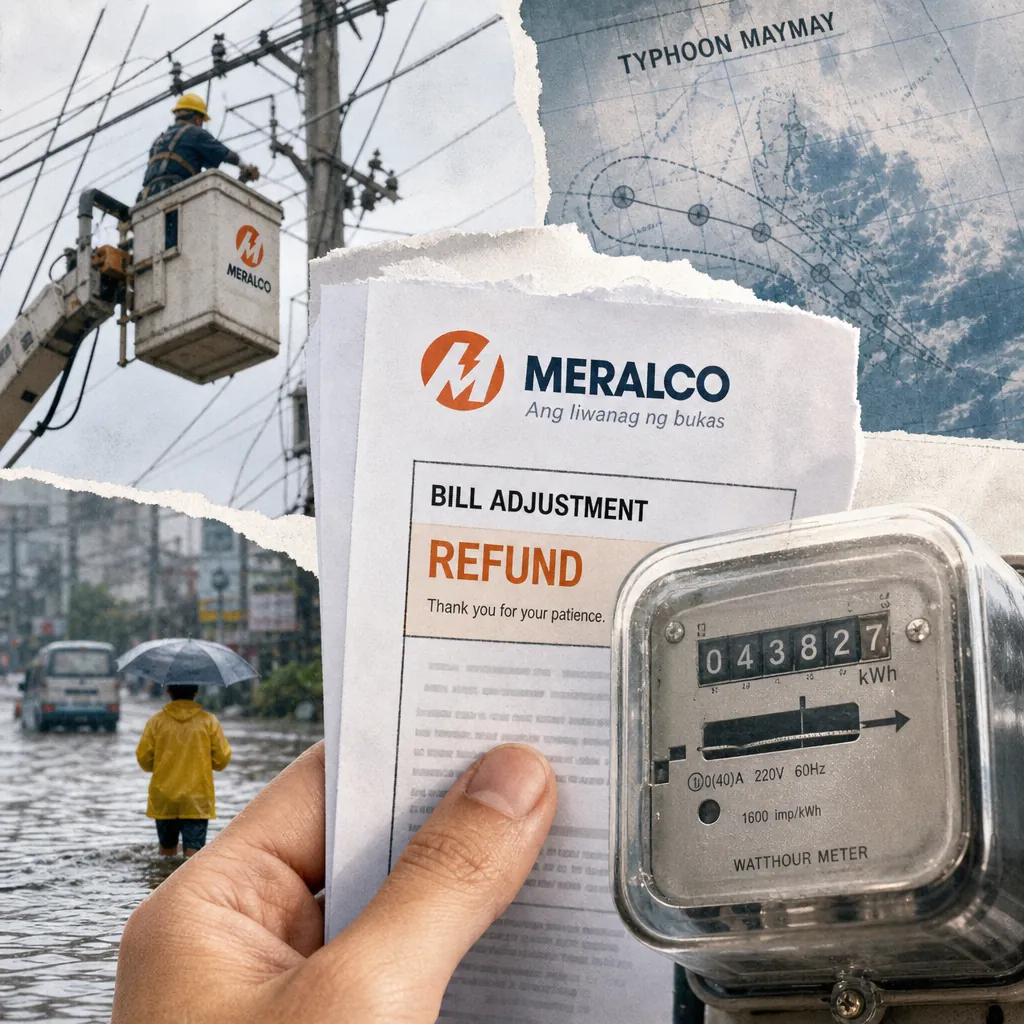
Leading the news cycle was Manila Electric Co.'s (Meralco) announcement that it would lower its rates for August. The company, which distributes power to Metro Manila and nearby provinces, said the overall rate would drop by P0.0428 per kilowatt-hour (kWh) to P14.7833 per kWh, down from P14.8261 in July. This decrease, though small, was attributed to a P9.5-billion refund approved by the Energy Regulatory Commission (ERC), the government body that oversees power rates. For a typical household consuming 200 kWh, this translates to a monthly savings of about P8; those using 300, 400, and 500 kWh would see reductions of roughly P13, P17, and P21, respectively. The story was covered by multiple outlets, including BusinessWorld and Head Topics, with the BusinessWorld piece providing the most detailed breakdown. The coverage value of these articles—the estimated cost of buying the same space as advertising—was notable, with the BusinessWorld article alone worth an estimated ₱394,743 in advertising-equivalent value.
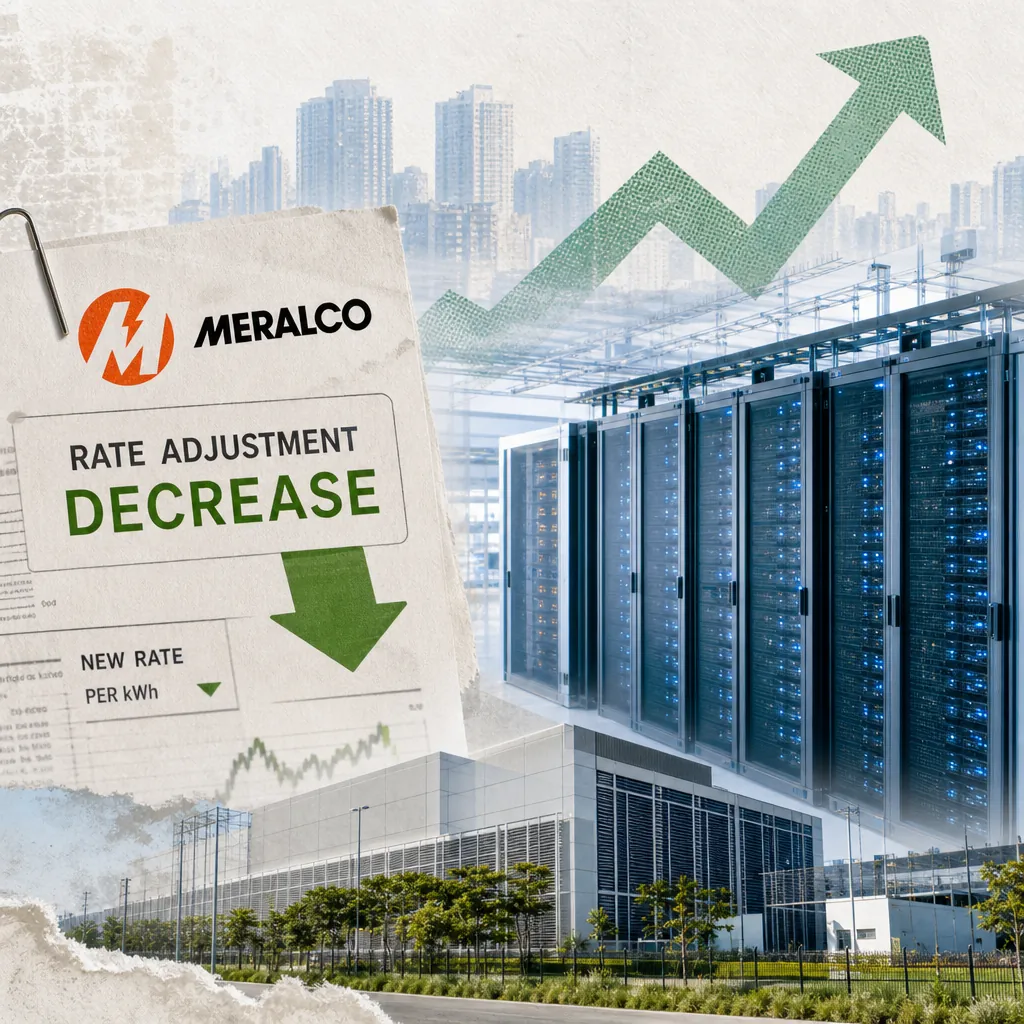
On the same day, Globe Telecom Inc. President and CEO Carl Cruz made headlines with a candid admission: "We are having a hard time coping with the demand right now for data centers." Globe, through its joint venture STT GDC Philippines, operates nine data centers with a combined IT load of 146 megawatts (MW). The company is racing to expand, with the first level of its STT Fairview facility fully sold out and the first phase of STT Cavite 2 already operational. Globe is on track to exceed 30 MW of operational capacity by end-2026, but nationwide capacity remains below 200 MW, according to the Department of Information and Communications Technology (DICT). This story, reported by the Inquirer, underscores the pressure that artificial intelligence (AI) and digital services are putting on the country's digital infrastructure.
Beyond these two anchors, the day's coverage included a mix of infrastructure, energy policy, and consumer safety stories. The Bases Conversion and Development Authority (BCDA) announced a P172.1-million expansion of the Hacienda Luisita Interchange along the Subic-Clark-Tarlac Expressway (SCTEx), a project aimed at improving access to Baguio and Metro Manila. A lawmaker urged the Department of Energy (DOE) to stop generation companies from building power plants wherever they want, arguing that strategic placement near transmission facilities could reduce system loss. And a fast-food chain in Houston faced a lawsuit from two customers who claimed they found a condom-like object in their fried chicken—a story that, while not Philippine-specific, was picked up by Manila Bulletin and drew attention for its shock value.
The social media conversation, as captured in the monitoring writeup, was more fragmented, with entertainment and lifestyle stories dominating. Posts about celebrities like Joy Barcoma, Gerald Anderson, and Shuvee Etrata generated engagement, but the most substantive social discussion revolved around the flooding in Taguig and the government's response. Residents of Barangay San Miguel called for solutions to yearly flooding, while Public Works Secretary Vince Dizon admitted there is no "overnight solution" to the country's flood problems. These stories, though not as heavily covered in the news media, resonated with the public, who are directly affected by the annual monsoon rains.
Key themes
- Electricity Rate Reduction: Meralco's rate cut, driven by a P9.5-billion refund, was the top business story, offering modest relief to households. The decrease of P0.0428 per kWh was small but symbolically significant, as it offset increases in other cost components.
- Data Center Demand Surge: Globe's admission that it cannot keep up with data center demand highlighted the strain of AI and digitalization on infrastructure. The company is expanding, but nationwide capacity remains limited.
- Infrastructure Investment: The BCDA's P172.1-million expansion of the SCTEx interchange was a key infrastructure story, aimed at improving connectivity and boosting economic activity in Central Luzon.
- Energy Policy Debate: A lawmaker's call for the DOE to regulate power plant locations sparked discussion on system loss and the need for strategic planning in the energy sector.
- Flooding and Disaster Response: The southwest monsoon brought flooding to Taguig and other areas, prompting residents to demand solutions and the government to activate disaster response teams. The AFP's HADR assets were placed on standby.
- Consumer Safety Concerns: The fast-food lawsuit, though based in the US, raised questions about food safety and corporate accountability, drawing significant attention in Philippine media.
- Digital Economy Growth: The rise of e-commerce and digital payments was reflected in stories about Maya's potential IPO and GCash's parent company Mynt filing for a stock market listing, signaling a maturing fintech sector.
- Entertainment and Celebrity News: A significant portion of the day's coverage was devoted to showbiz, including Gerald Anderson's starstruck moment with cinema legends and Claudine Barretto's support for Robin Padilla and Mariel Rodriguez amid online bashing.
How the narratives stack
Dominant: The dominant narrative of the day was the electricity rate reduction, as it directly affects millions of households and businesses. The story was covered by multiple outlets, including BusinessWorld and Head Topics, and carried significant advertising-equivalent value. The rate cut, though small, was framed as a positive development in the face of rising costs, and it dominated the business pages.
Counter-narrative: Running against the positive framing of the rate cut was the counter-narrative of infrastructure strain, exemplified by Globe's data center capacity crunch. While the rate cut offered short-term relief, the data center story highlighted the long-term challenges of meeting the demands of a digitalizing economy. This narrative was less prominent in terms of coverage volume but carried significant weight in terms of consequence.
Emerging: An emerging narrative was the push for strategic energy planning, as exemplified by the lawmaker's call for the DOE to regulate power plant locations. This story, though not heavily covered, signaled a growing concern about the efficiency and sustainability of the country's energy grid. It could gain traction as the government grapples with rising electricity demand and the integration of renewable energy.
Suppressed: A story that received relatively little attention but deserves more is the flooding in Taguig and the broader issue of flood control. While the AFP's disaster response and the DPWH secretary's comments were covered, the residents' calls for permanent solutions were largely drowned out by other news. This is a recurring issue that affects thousands of families every year, and the lack of sustained coverage suggests it remains an under-addressed problem.
Platform insights
- Facebook: Facebook was the primary platform for both news sharing and public discourse. Posts from news outlets like Manila Bulletin and ABS-CBN News generated significant engagement, particularly on stories about flooding, celebrity news, and the Meralco rate cut. The platform also served as a space for residents to share their experiences, as seen in the Taguig flooding posts.
- X (formerly Twitter): X was used for real-time updates and commentary, especially on breaking news like the SLEX truck accident and the fast-food lawsuit. Hashtags like #BalitaExclusives were used to share videos and updates, and the platform saw a mix of news dissemination and public reaction.
- YouTube: YouTube was a secondary platform, with content largely repurposed from news broadcasts and vlogs. The entertainment sector, particularly ABS-CBN's promotional content for shows like "Coco Martin's Sigabo," used YouTube to reach audiences, but engagement was lower compared to Facebook.
- Reddit: Reddit had minimal activity, with only a few threads discussing the data center demand and the PSE index decline. The platform's user base tends to be more niche, and the day's stories did not generate significant discussion there.
Key voices and communities
- Government Officials and Agencies: Figures like DPWH Secretary Vince Dizon and the AFP's disaster response teams were key voices in the flooding narrative. Their statements provided official context and reassurance, but also faced public scrutiny over the pace of solutions.
- Business Leaders: Carl Cruz of Globe and Meralco executives were prominent voices in the business narrative, offering insights into infrastructure challenges and corporate responses. Their statements were widely quoted in the news media.
- Residents and Affected Communities: Residents of Barangay San Miguel in Taguig and other flood-prone areas were vocal on social media, sharing their experiences and demanding action. Their voices humanized the flooding story and added urgency to the calls for solutions.
- Entertainment Personalities and Fans: The showbiz community, including celebrities like Joy Barcoma and Gerald Anderson, drove significant engagement on social media. Their posts and the resulting fan reactions formed a substantial part of the day's online conversation.
- Policy Advocates and Lawmakers: Philreca party-list Rep. Presley de Jesus was a key voice in the energy policy debate, calling for more strategic regulation of power plant locations. His statements were covered by the Inquirer and sparked discussion on energy efficiency.
Narrative streams
Meralco's Rate Cut: A Drop in the Bucket or a Sign of Relief?
The Meralco rate reduction was the day's most concrete piece of good news for consumers. The company announced that the overall rate would decrease by P0.0428 per kilowatt-hour (kWh) to P14.7833 per kWh in August, down from P14.8261 in July. This was attributed to a P9.5-billion refund approved by the Energy Regulatory Commission (ERC), which offset increases in other cost components. For a household consuming 200 kWh, the savings amount to about P8 per month—a modest sum, but one that could help ease the burden of high electricity costs.
The story was covered extensively, with BusinessWorld providing the most detailed analysis. The article quoted Meralco Vice-President Joe R. Zaldarriaga, who explained that the refund was equivalent to 58.61 centavos per kWh. The coverage value of the BusinessWorld article was estimated at ₱394,743 in advertising-equivalent value, reflecting the story's prominence in the business press.
For the sector, this rate cut is a double-edged sword. On one hand, it provides relief to consumers and demonstrates that regulatory mechanisms can work to hold utilities accountable. On the other hand, the cut is small and may be offset by future increases, especially as the cost of fuel and power generation fluctuates. The read for the sector is that electricity prices remain a sensitive issue, and any changes—up or down—will be closely watched by both consumers and regulators.
Data Center Demand: The Digital Economy's Growing Pains
Globe Telecom's admission that it is struggling to keep up with data center demand is a stark reminder of the infrastructure challenges facing the Philippines' digital economy. The company, through its joint venture STT GDC Philippines, operates nine data centers with a combined IT load of 146 megawatts (MW). But with the rise of artificial intelligence (AI) and the continued growth of digital services, demand is outpacing supply.
Globe President and CEO Carl Cruz said the company is working "doubly hard" to capture growth, but the reality is that nationwide capacity remains below 200 MW, according to the Department of Information and Communications Technology (DICT). This is a critical constraint for a country that is increasingly reliant on cloud computing, e-commerce, and digital payments.
The story, reported by the Inquirer, carried an advertising-equivalent value of ₱219,240, indicating its significance in the business press. For the sector, this is an early warning sign that the Philippines must invest heavily in digital infrastructure to support its economic ambitions. The government's push for more data centers, as well as the entry of global players like KKR and Singtel, are positive steps, but the gap between supply and demand is likely to widen before it narrows.
Infrastructure Spending: BCDA's SCTEx Expansion
The Bases Conversion and Development Authority (BCDA) announced a P172.1-million expansion of the Hacienda Luisita Interchange along the Subic-Clark-Tarlac Expressway (SCTEx). The project, which will add entry and exit ramps, toll plazas, drainage, and streetlights, is expected to take 240 days to complete. BCDA President and CEO Joshua Bingcang said the investment could eventually reach about P300 million, including toll facilities and other structures.
The expansion is part of BCDA's efforts to improve access to Baguio and Metro Manila, two key economic hubs. The agency owns a 50-percent stake in SCTEx, making it a key revenue-generating asset. The story, reported by the Inquirer, carried an advertising-equivalent value of ₱205,632.
For the sector, this project is a sign of continued government investment in infrastructure, which is crucial for economic growth. However, the pace of such projects remains a concern, as delays and cost overruns are common. The read is that infrastructure spending will continue to be a priority, but the benefits will only be realized if projects are completed on time and within budget.
Energy Policy: The Case for Strategic Power Plant Placement
Philreca party-list Rep. Presley de Jesus urged the Department of Energy (DOE) to stop generation companies from building power plants wherever they want. He argued that strategic placement near existing transmission facilities could reduce technical system loss—the electricity lost during transmission and distribution—which would ultimately lower costs for consumers.
"What I observed here is that generation companies are able to build power plants wherever they want to," de Jesus said in Filipino. He questioned whether the DOE has a policy on this and whether it coordinates with the National Grid Corporation of the Philippines (NGCP), the operator of the country's transmission network.
The story, reported by the Inquirer, carried an advertising-equivalent value of ₱623,700, making it one of the most valuable items in the day's coverage. This suggests that the issue resonates with the public and the business community, as electricity costs are a major concern.
For the sector, this is a call for more rational planning in the energy sector. Currently, generation companies have significant freedom in choosing where to build plants, which can lead to inefficiencies. A more coordinated approach could reduce losses and lower costs, but it would also require greater regulatory oversight, which some may resist.
Flooding and Disaster Response: A Recurring Crisis
The southwest monsoon brought heavy rains and flooding to parts of Metro Manila, particularly Taguig's Barangay San Miguel. Residents, accustomed to yearly flooding, called on authorities to find a permanent solution. Andrei Abundo, a resident, said they are used to the rising waters, but he hopes the government will raise the area to prevent future flooding.
Public Works Secretary Vince Dizon acknowledged the problem, saying there is no "overnight solution" to the country's flood issues. He emphasized that the government must go "project per project, LGU per LGU, province per province" to address the decades-old problem of poorly constructed flood control projects.
The Armed Forces of the Philippines (AFP) activated its Humanitarian Assistance and Disaster Response (HADR) teams, placing search, rescue, and retrieval units on standby. The Quezon City Veterinary Department also set up a pet evacuation area, underscoring the need to protect animals during disasters.
The flooding story was covered by multiple outlets, including Manila Bulletin and United News, with the Manila Bulletin article on Dizon's comments carrying an advertising-equivalent value of ₱214,016. For the sector, this is a reminder that climate change is making flooding more frequent and severe, and that infrastructure investments must be prioritized to mitigate the impact.
Fintech IPOs: The Next Big Thing?
Two blog posts from Astig Ph Online discussed the potential initial public offerings (IPOs) of Maya and GCash's parent company, Mynt. Mynt has already filed a registration statement with the Securities and Exchange Commission (SEC), a formal step toward listing on the Philippine Stock Exchange. Maya, on the other hand, is reportedly preparing for an IPO but has not yet filed.
These stories are significant because they signal the maturation of the Philippine fintech sector. GCash, with millions of users, is the country's number one finance superapp, and its parent company Mynt is the first Philippine company to reach a $5 billion valuation. An IPO would provide a way for the public to invest in these companies and could unlock significant capital for further growth.
The blog posts carried advertising-equivalent values of ₱226,884 each, indicating moderate interest. For the sector, these IPOs could be a major milestone, but they also come with risks, including regulatory scrutiny and market volatility. The read is that the fintech sector is poised for a public debut, but the timing and success will depend on market conditions.
Conversation trajectory
Over the next 4-6 weeks, the conversation is likely to be shaped by several factors. First, the Meralco rate cut may be followed by further adjustments, depending on fuel prices and the ERC's decisions. Consumers will be watching closely, and any increase could spark backlash. Second, the data center demand story is likely to intensify as more companies announce expansion plans. The government's response, including any incentives for data center investments, will be a key topic. Third, the flooding issue will remain in the news as the monsoon season continues. The government's progress on flood control projects will be scrutinized, and any delays could lead to public frustration.
Trigger events to watch include: the release of August inflation data, which could affect consumer sentiment; any announcements from Globe or other telecoms about new data center investments; and the progress of the SCTEx expansion, which could be a model for future infrastructure projects. Additionally, the SEC's review of Mynt's IPO filing could generate significant buzz in the financial community.
Response guidance
For communicators in the business and energy sectors, the key is to be transparent and proactive. On the Meralco rate cut, emphasize the regulatory process and the benefits to consumers, but also prepare for questions about future rate changes. For data center operators, highlight the investments being made to expand capacity and the economic benefits of digital infrastructure. On flooding, acknowledge the problem and communicate the steps being taken, but avoid overpromising. For fintech companies, manage expectations around IPOs and emphasize the long-term value proposition. Across all sectors, use plain language and avoid jargon to build trust with the public.
Sensitive topics to handle with care include electricity prices, which are a political issue, and flooding, which affects vulnerable communities. Avoid defensive or dismissive language, and instead focus on solutions and collaboration. Engage with stakeholders on social media, where much of the public conversation takes place, and be prepared to respond quickly to misinformation.
See the full picture behind today's signals.
This report draws from Media Meter's MediaWatch, our real-time monitoring engine tracking 2,470+ Philippine sources across print, broadcast, digital, and social. Explore how the platform turns raw coverage into decision-grade intelligence, then see how it's configured for teams like yours — whether you're in PR agencies, corporate comms, government, or marketing.
Want more? Browse our Report Library for sector and crisis intelligence, or request a demo and we'll have your brand set up before the call.
Want this kind of intelligence on your brand?
This brief is built on the same MediaWatch methodology that runs continuously across every brand we monitor. See your competitive landscape, Impact Score, and narrative trajectory in a 30-minute demo.