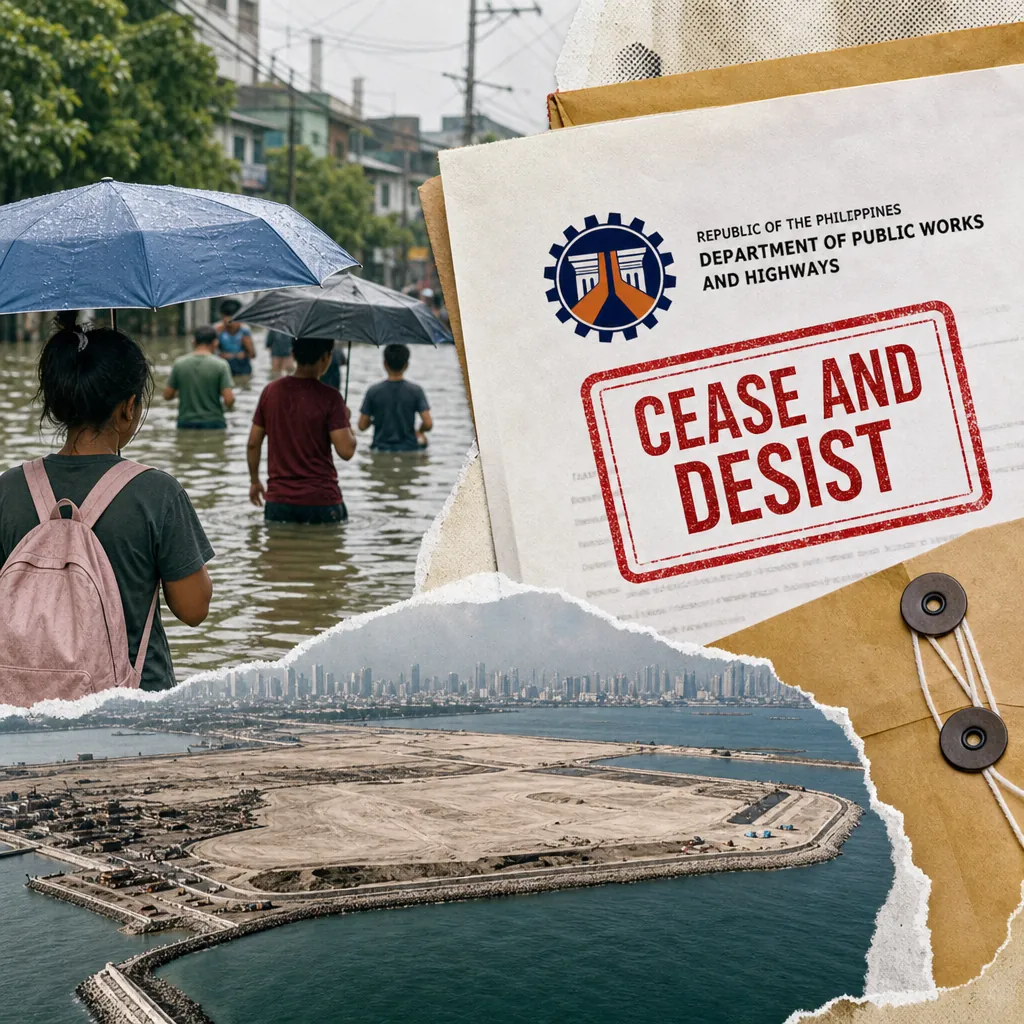
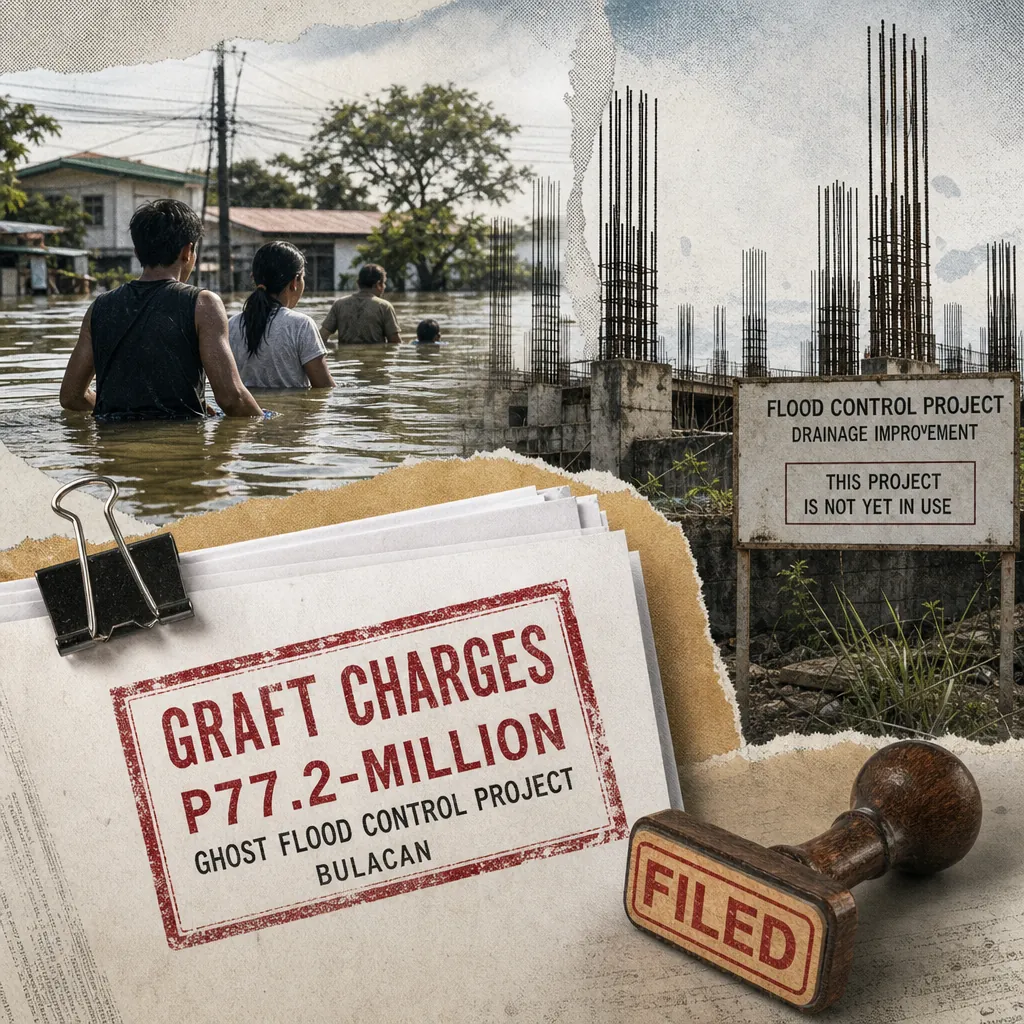
Olongapo Flood Outrage: 10th Flood in August
A resident's account of a tenth flood in August drew over 1,800 emotional reactions, dominating the day's conversation. Flooding in Olongapo and Manila, a fishkill in Laguna Lake, and a water supply appeal in Bulacan all pointed to infrastructure failures.
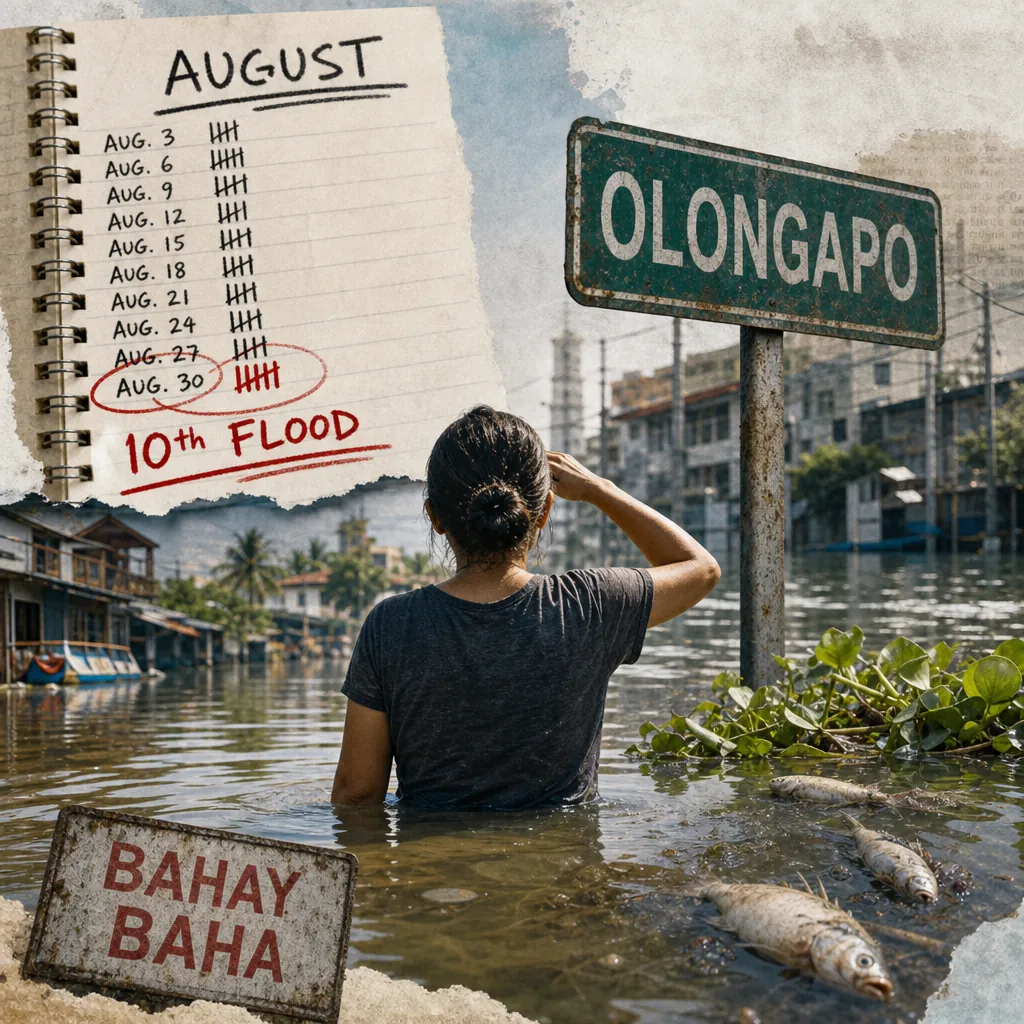
A single Facebook post documenting a family's tenth flood in a single month became the day's defining moment, drawing over 1,800 emotional reactions and 438 comments. The post, shared by Abante News from Olongapo resident @JCEben, showed floodwater reaching neck-level inside a home and captured the resident's frustrated question to the government: when will they think of a long-term solution?3 The overwhelming response — 1,398 sad reactions against 506 likes — signaled that this was not just a news event but a symbol of systemic failure, shifting the conversation from reporting to outrage.
The day's conversation unfolded against a backdrop of interconnected environmental and infrastructure concerns. It began with reports of a fishkill in Laguna Lake, where an estimated 34 fish cages across 6.4 hectares were affected in Jala-Jala, Rizal.1 Simultaneously, the Philippine Red Cross was conducting rescue operations in Barangay Sta. Rita, Olongapo City, where residents were submerged in waist-deep water.2 By evening, the flooding narrative had expanded to Manila, with gutter-deep flooding along Taft Avenue forcing motorists to brave potentially damaging waters.5 A separate thread emerged around water utility concerns, when Bulacan Vice Governor Alex Castro publicly called on Malacañang to address the long-standing water supply shortage under PrimeWater Infrastructure Corp.6
The emotional arc of the day was clear: institutional reporting of rescue operations drew modest engagement, but the personal account of repeated flooding generated exponentially more. The contrast between the 1,398 sad reactions on the citizen's post and the 3 sad reactions on the rescue operations post demonstrates how personal narratives generate significantly more engagement than institutional reporting. This pattern — from sympathy to anger directed at government inaction — is the central dynamic of the day's conversation.
Key themes
- A tenth flood in one month: Olongapo resident's story draws 1,398 sad reactions — A Facebook post from @JCEben documenting the tenth time their home flooded in August became the day's most engaging content, with 506 likes, 1,398 sad reactions, and 438 comments.3 The post's emotional weight — water reaching neck-level inside the home — and the resident's plea for long-term solutions captured public frustration with government inaction.
- Red Cross rescue operations in Olongapo document the human cost of flooding — The Philippine Red Cross conducted rescue operations in Barangay Sta. Rita, Olongapo City, with residents submerged in waist-deep water.2 The photo documentation drew 22 comments and multiple shares, providing institutional context for the day's flooding narrative.
- Taft Avenue flooding adds urban mobility dimension to infrastructure concerns — Gutter-deep flooding along Taft Avenue in Manila at 9:24 p.m. forced motorists to brave potentially damaging waters.5 The post drew 21 likes and minimal emotional responses, suggesting fatigue or normalization among netizens, but it directly implicates urban mobility and accessibility — core selling points for CBD-adjacent properties.
- Bulacan Vice Governor appeals to Malacañang over PrimeWater water supply — Vice Governor Alex Castro publicly called on Malacañang to address the long-standing water supply shortage under PrimeWater Infrastructure Corp.6 The appeal drew minimal engagement — 5 likes on Facebook — but signals simmering concerns that could escalate if water crises worsen.
- Laguna Lake fishkill adds environmental degradation to the narrative — An estimated 34 fish cages across 6.4 hectares were affected by fishkill in Jala-Jala, Rizal, reported by Pamalakaya.1 The report drew 10 likes and 8 sad reactions on Facebook, remaining peripheral but contributing to the overall picture of regional distress.
- Personal narratives outperform institutional reporting in engagement — The contrast between the 1,398 sad reactions on the citizen's flood post and the 3 sad reactions on the rescue operations post demonstrates how personal stories generate significantly more engagement than institutional reporting.32 This pattern has implications for how infrastructure failures are communicated and perceived.
- Reddit moderation removes flood-related post, curtailing discussion — A Reddit post about flooding was removed by moderators, with 16 likes and 1 comment prior to removal.4 The moderation action indicates potential concerns about misinformation or unverified claims, leaving the platform underutilized for this issue.
How the narratives stack
Dominant — The flooding narrative, anchored by the Olongapo resident's personal account, dominated the day's conversation within the captured set. The post's 1,398 sad reactions and 438 comments represent a massive spike in emotional engagement compared to all other content.3 The narrative arc — from institutional rescue reporting to citizen outrage — demonstrates that the most potent reputational threats emerge when official responses are perceived as inadequate to address repeated, visible failures in basic livability.
Counter-narrative — The Taft Avenue flooding post, with its 21 likes and minimal emotional responses, suggests a degree of fatigue or normalization among netizens.5 While the Olongapo story drew outrage, the Manila flooding was met with resignation, indicating that urban flooding may be increasingly accepted as a routine occurrence rather than a crisis demanding action.
Emerging — The Bulacan water supply appeal, while drawing minimal engagement, represents a simmering concern that could escalate.6 The direct call for Malacañang intervention on PrimeWater indicates institutional acknowledgment of infrastructure problems that affect residential communities and commercial operations. This narrative has the potential to expand into critiques of township developments and mixed-use projects that promise utility reliability but depend on distressed water concessionaires.
Under-covered — The Laguna Lake fishkill report, while framed as an agricultural issue, received minimal attention despite its environmental significance.1 The report's 10 likes and 8 sad reactions suggest awareness exists but mobilization potential remains untapped. This story could amplify if environmental groups or opposition figures connect it to specific projects or permitting failures.
Platform insights
- Facebook — The platform served as the primary emotional hub where citizen journalism and personal stories gained maximum traction. @JCEben's post became the defining moment, generating exponentially higher engagement than any other content.3 The platform showed a clear progression from news organization posts with low engagement to viral user-generated content that sparked widespread outrage. The high sad reaction count relative to other engagement signals suggests this content resonates emotionally with passive viewers as well.
- Twitter — Discussions remained more factual and less emotionally charged, with the fishkill and water supply stories primarily shared as news links with only 159-164 views and no engagement metrics beyond that.61 Twitter appeared to be a relay platform for official statements and news distribution rather than a space for community reaction, lacking the interactive depth seen on Facebook.
- Reddit — The conversation trajectory was abruptly halted with a post removed by moderators.4 While the 16 likes and 1 comment prior to removal suggest some interest, the moderation action indicates potential concerns about misinformation or unverified claims. This platform remained underutilized for this particular issue, with no substantive discussion emerging before the removal.
Key voices and communities
Local residents and flood-affected families — Residents in flood-prone areas across Olongapo, Manila, and surrounding regions constitute the most active participant group, with individual posts generating substantial emotional engagement.3 A single resident's account of repeated flooding drew over 1,800 emotional reactions and 438 comments, indicating a highly mobilized community with strong personal stakes in infrastructure and housing conditions. Their content focuses on the lived reality of inadequate drainage, repeated displacement, and frustration with government response timelines.
Mainstream media and news organizations — Traditional news outlets and their social media extensions serve as the primary amplification layer, distributing firsthand accounts and official updates across Facebook and Twitter.2 Their coverage of flooding incidents, fishkill events, and utility service issues reached moderate engagement levels, with rescue operation posts drawing 22 comments and multiple shares. These organizations function as the bridge between affected communities and institutional stakeholders.
Institutional and government voices — Government officials and institutional representatives contribute targeted statements that carry official weight, particularly regarding policy responses and resource allocation.6 The Bulacan Vice Governor's direct appeal to Malacañang regarding water supply issues under PrimeWater Infrastructure Corp. represents a notable example, though engagement on this content remains limited on both Twitter and Facebook. Their presence signals formal acknowledgment of infrastructure problems that affect residential communities and commercial operations.
Environmental and community advocacy groups — Environmental advocacy organizations contribute context and framing around ecological incidents that affect lakeside and coastal communities.1 Their reporting on the estimated 34 fish cages affected by fishkill across 6.4 hectares in Laguna Lake drew modest engagement but provides important environmental context for nearby property considerations. The limited audience response suggests these voices currently reach niche rather than mass audiences.
Narrative streams
Olongapo resident's tenth flood in August becomes a symbol of systemic failure
The day's most significant narrative stream began with a Facebook post from @JCEben, shared by Abante News, documenting the tenth time their home had flooded in August alone.3 The post accumulated 506 likes, 1,398 sad reactions, and 438 comments, representing a massive spike in emotional engagement compared to earlier posts. The resident's frustrated question captured the public mood perfectly: "Napatanong na lang siya sa pamahalaan kung kailan ba mag-iisip ng pangmatagalang solusyon?" (He could only ask the government when they would think of a long-term solution.)
The post's emotional weight — water reaching neck-level inside the home — and the high sad reaction count signaled that this was not just a news event but a symbol of systemic failure. The progression from reporting rescue efforts to citizen documentation of the tenth flooding incident created a clear emotional arc, moving from sympathy to anger directed at government inaction.
For the real estate sector, this narrative directly intersects with buyer concerns about flood-prone locations, particularly for developments near waterways or in low-lying areas. The emotional weight of the Olongapo story could easily be generalized into skepticism about all new construction in flood-prone regions. However, there is a countervailing opportunity for developers who can demonstrate superior flood mitigation infrastructure, elevated designs, and comprehensive drainage systems.
Red Cross rescue operations document the human cost of inadequate planning
The Philippine Red Cross conducted rescue operations in Barangay Sta. Rita, Olongapo City due to severe flooding, with residents submerged in waist-deep water, as documented in a photo post by @JohnnyReblando of Abante News.2 The post drew 22 comments and multiple shares, providing institutional context for the day's flooding narrative.
The rescue coverage highlights the human cost of inadequate planning, creating space for developers to differentiate themselves by showcasing proactive disaster resilience measures. The Philippine Red Cross's presence on the ground — and the documentation of their work — reinforces the narrative of infrastructure failing to keep pace with population growth and climate pressures.
For the real estate sector, this coverage underscores the importance of disaster resilience as a selling point. Developers who can demonstrate superior flood mitigation infrastructure, elevated designs, and comprehensive drainage systems can position themselves as responsible actors in a landscape where infrastructure failures are becoming visual, emotionally resonant stories.
Taft Avenue flooding adds urban mobility dimension to infrastructure concerns
By evening, the flooding narrative expanded geographically with posts showing gutter-deep flooding along Taft Avenue in Manila at 9:24 p.m., where motorists had no choice but to brave potentially damaging waters.5 This urban flooding post received mixed reactions with 21 likes and minimal emotional responses, suggesting fatigue or normalization among netizens.
The Taft Avenue flooding directly implicates urban mobility and accessibility, which are core selling points for CBD-adjacent properties. For condominium and township developers in Metro Manila, this narrative adds another layer concerning accessibility and property desirability in affected urban corridors.
The relatively muted response to this post — compared to the Olongapo story — suggests that urban flooding may be increasingly accepted as a routine occurrence rather than a crisis demanding action. This normalization could be as concerning as the outrage, as it implies a resignation to infrastructure failures that could affect long-term property values.
Bulacan Vice Governor appeals to Malacañang over PrimeWater water supply
A separate thread emerged around water utility concerns, when Bulacan Vice Governor Alex Castro publicly called on Malacañang to address the long-standing water supply shortage under PrimeWater Infrastructure Corp.6 The message was shared across Twitter and Facebook with very low engagement — 5 likes on Facebook — indicating that while infrastructure failures were being discussed, the emotional energy was firmly focused on the flooding crisis.
The water supply appeal signals formal acknowledgment of infrastructure problems that affect residential communities and commercial operations. For horizontal housing subdivisions and house-and-lot projects, utility reliability is a primary purchase driver, and the Bulacan water supply issue connects directly to these concerns.
The lack of engagement with this story versus the intense reaction to the flooding story suggests that water infrastructure issues, while critical, may not currently dominate public discourse compared to more visually dramatic disasters. However, the direct call for Malacañang intervention indicates simmering concerns that could escalate if water crises worsen.
Laguna Lake fishkill adds environmental degradation to the regional distress narrative
Initial reports from Pamalakaya detailed an estimated 34 fish cages, equivalent to 6.4 hectares of fishpen in Jala-Jala, Rizal on Laguna Lake, experiencing widespread fishkill.1 The report was shared across both Facebook and Twitter with minimal engagement at first — 10 likes and 8 sad reactions on Facebook.
The fishkill incident provides an environmental context that was initially reported neutrally but subtly reinforced the narrative of failing infrastructure and ecological management. The relationship between environmental disasters and urban flooding was implied rather than explicitly connected, suggesting an opportunity for analysts to bridge these narratives in future monitoring.
For developments in the Calabarzon corridor, the fishkill adds environmental risk perception, potentially affecting everything from preselling campaigns to REIT valuations tied to commercial properties in affected areas. The relatively low engagement suggests this is an early-stage narrative that could amplify if environmental groups or opposition figures connect it to specific projects or permitting failures.
Conversation trajectory
Flooding narrative expanding into property viability discourse (3-5 weeks) — The significant engagement spike around flooding incidents is creating a narrative bridge between climate vulnerability and real estate investment risk.3 This trend will likely intensify as the rainy season narrative matures, potentially prompting questions about flood-prone developments in Cavite, Bulacan, and Rizal. For banking clients financing developers and telecom clients with infrastructure investments in affected zones, this convergence warrants proactive scenario planning rather than reactive commentary.
Water infrastructure failures becoming a proxy for government effectiveness (7-10 days) — The Bulacan water supply complaint directed at Malacañang is gaining traction across Twitter and Facebook, with the vice governor's appeal serving as a catalyst for broader discussions about public-private partnership failures.6 This conversation has the potential to expand into critiques of township developments and mixed-use projects that promise utility reliability but depend on distressed water concessionaires. Expect this narrative to peak within 7-10 days, particularly if further local government statements emerge.
Environmental incidents elevating regulatory scrutiny questions (2-4 weeks) — The Laguna Lake fishkill report, while framed as an agricultural issue, is generating secondary discussions about environmental compliance in lakeshore developments and the adequacy of the Department of Environment and Natural Resources oversight.1 The relatively low engagement suggests this is an early-stage narrative that could amplify if environmental groups or opposition figures connect it to specific projects or permitting failures.
Rescue and relief operations content building implicit critique of urban planning (ongoing) — The Philippine Red Cross rescue coverage and the repeated flooding of the same household are collectively reinforcing a narrative about inadequate drainage infrastructure in urban and peri-urban areas.23 This content type is seeing consistent engagement even without viral peaks, suggesting sustained audience resonance that could translate into pressure on local government units and developers regarding subdivision approvals and building permits.
Trigger events to watch:
- The official end-of-August weather summary from state meteorologists (anticipated within 2-3 days), which will quantify rainfall anomalies and potentially spark renewed scrutiny of flood-prone developments.
- The first week of September budget deliberations in Congress, where infrastructure allocations for flood control and water supply will face public commentary that may connect to developer responsibilities.
- Any formal statement from the Department of Human Settlements and Urban Development regarding housing standards in flood-prone areas, which would immediately inject regulatory framing into these conversations.
Response guidance
Flood risk communication — Proactively publish and amplify development-specific flood mitigation and drainage infrastructure content, particularly for projects in or near areas referenced in recent flooding coverage.3 Given the high emotional engagement with flood stories, providing concrete evidence of elevated building designs, retention basins, and pump systems can preemptively counter quality concerns.
Rapid-response preparedness — Monitor and prepare rapid-response messaging for any negative posts linking specific developments to water supply or flooding issues. The Bulacan water appeal demonstrates how utility problems can escalate to political levels, and developers should have fact sheets ready that separate developer responsibility from utility provider failures.6
Environmental compliance validation — Commission or surface independent validation content highlighting environmental compliance and disaster-readiness certifications for developments near Laguna Lake and similar water bodies. The fishkill incident raises ecological sensitivity questions that could affect buyer confidence in lakeside or coastal projects.1 This proactive stance can transform potential reputational risk into a demonstrated commitment to sustainable development practices.
Empathetic engagement — Engage with high-engagement community posts where residents express frustration about repeated flooding, using a supportive, solution-oriented tone that acknowledges their concerns without making promises about specific projects.3 Responses must demonstrate genuine empathy rather than defensive positioning.
Third-party service provider boundaries — Infrastructure failures like water supply issues can trigger broader questions about developer accountability and project planning — avoid making commitments about third-party service providers.6 While utility services are provided by third-party providers, developers should advocate on behalf of their residents and coordinate with relevant agencies to ensure concerns are raised appropriately and addressed as quickly as possible.
Avoid defending past statements — Comparisons between flooding incidents and property marketing claims can create reputational challenges — avoid defending past statements and instead focus on current response and future improvements.3 The conversation is currently driven by emotional, real-time content rather than policy analysis, creating an opening for institutions to establish themselves as thought leaders on risk-informed property decisions before the narrative hardens into purely critical territory.
See the full picture behind today's signals.
This report draws from Media Meter's MediaWatch, our real-time monitoring engine tracking 2,470+ Philippine sources across print, broadcast, digital, and social. Explore how the platform turns raw coverage into decision-grade intelligence, then see how it's configured for teams like yours — whether you're in PR agencies, corporate comms, government, or marketing.
Want more? Browse our Report Library for sector and crisis intelligence, or request a demo and we'll have your brand set up before the call.
Want this kind of intelligence on your brand?
This brief is built on the same MediaWatch methodology that runs continuously across every brand we monitor. See your competitive landscape, Impact Score, and narrative trajectory in a 30-minute demo.