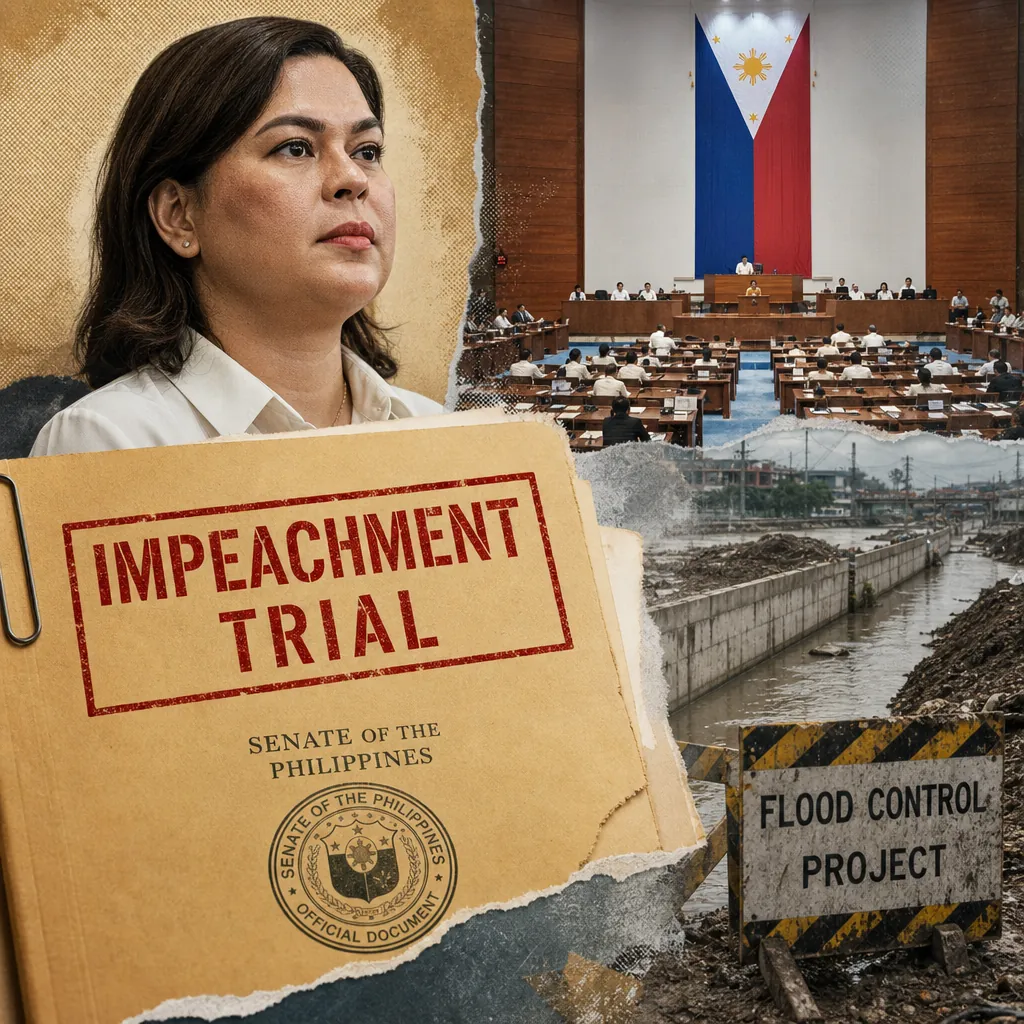
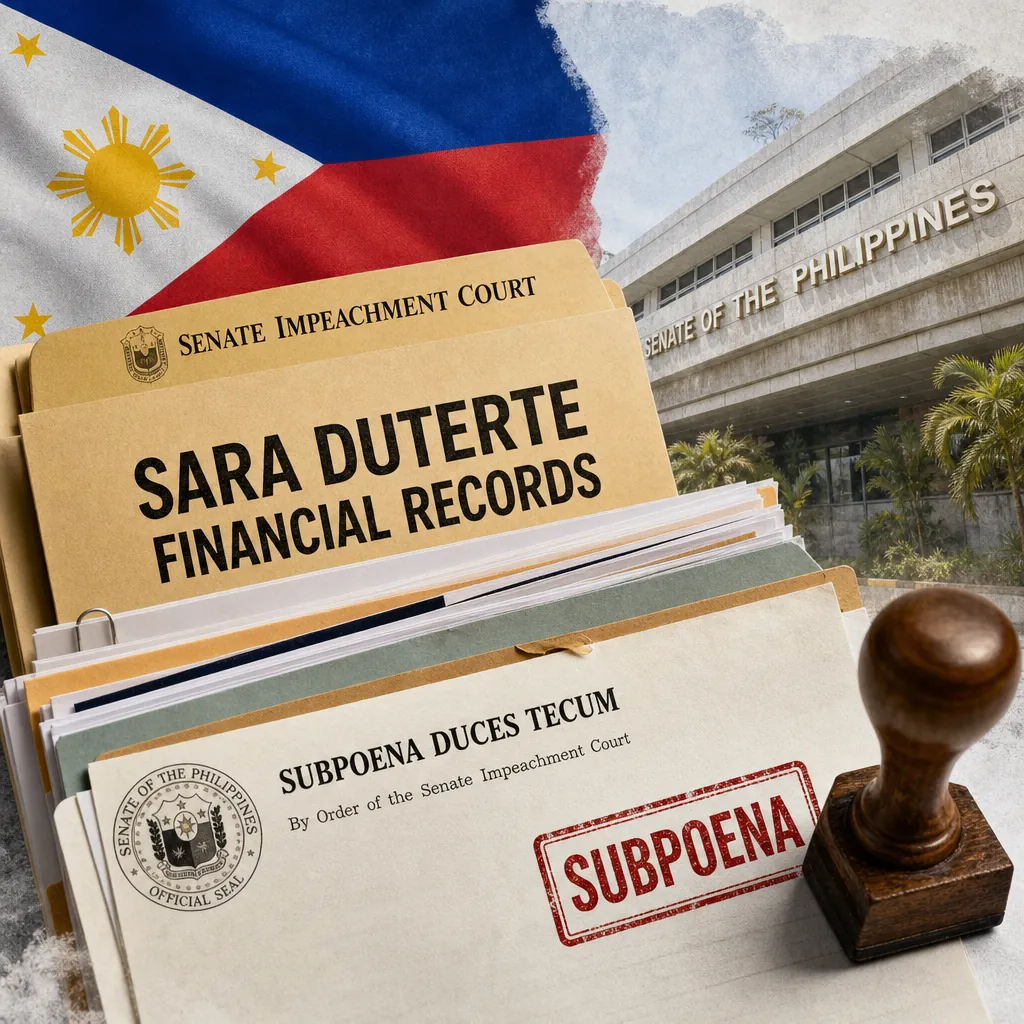
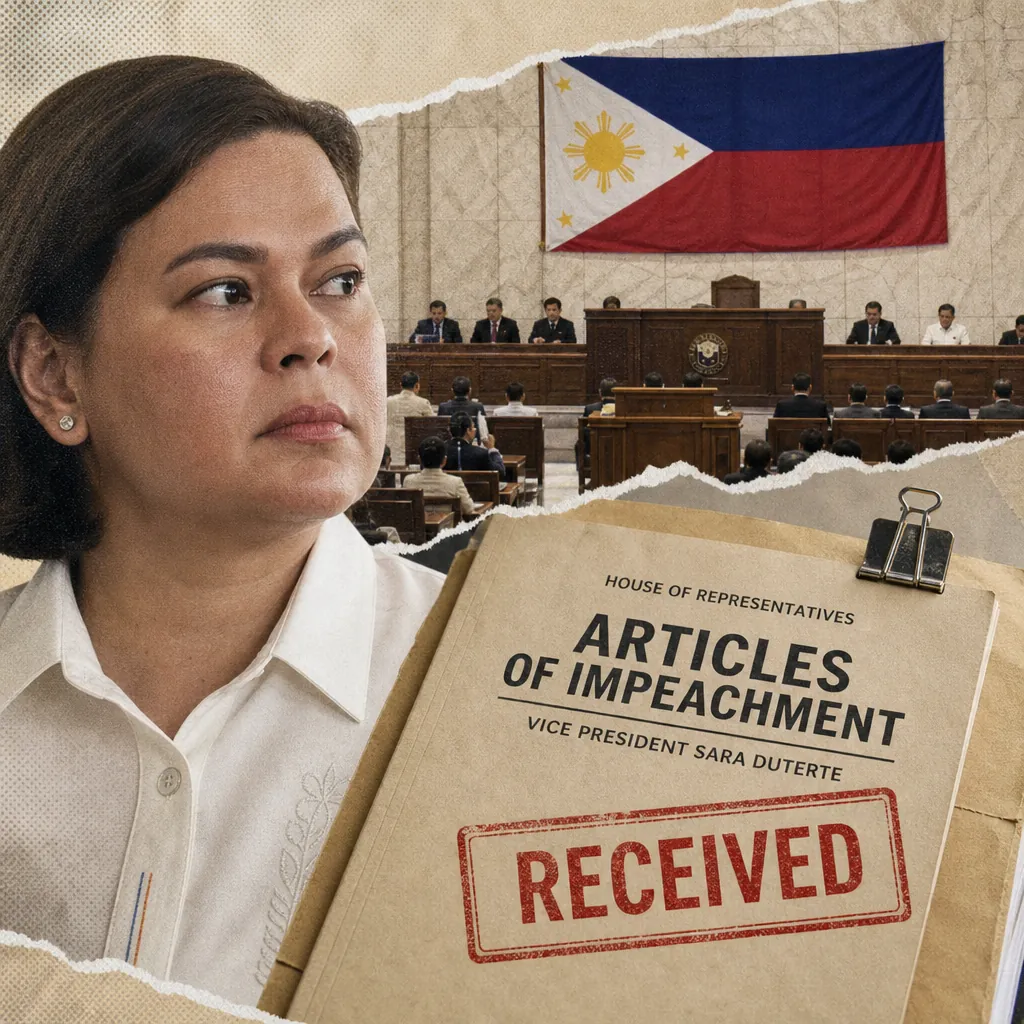
Philippine political crisis deepens: impeachment, corruption, and WPS tensions
A daily snapshot of the converging political crises in the Philippines: the impeachment trial of VP Sara Duterte, the flood control corruption scandal, and escalating West Philippine Sea tensions with China.
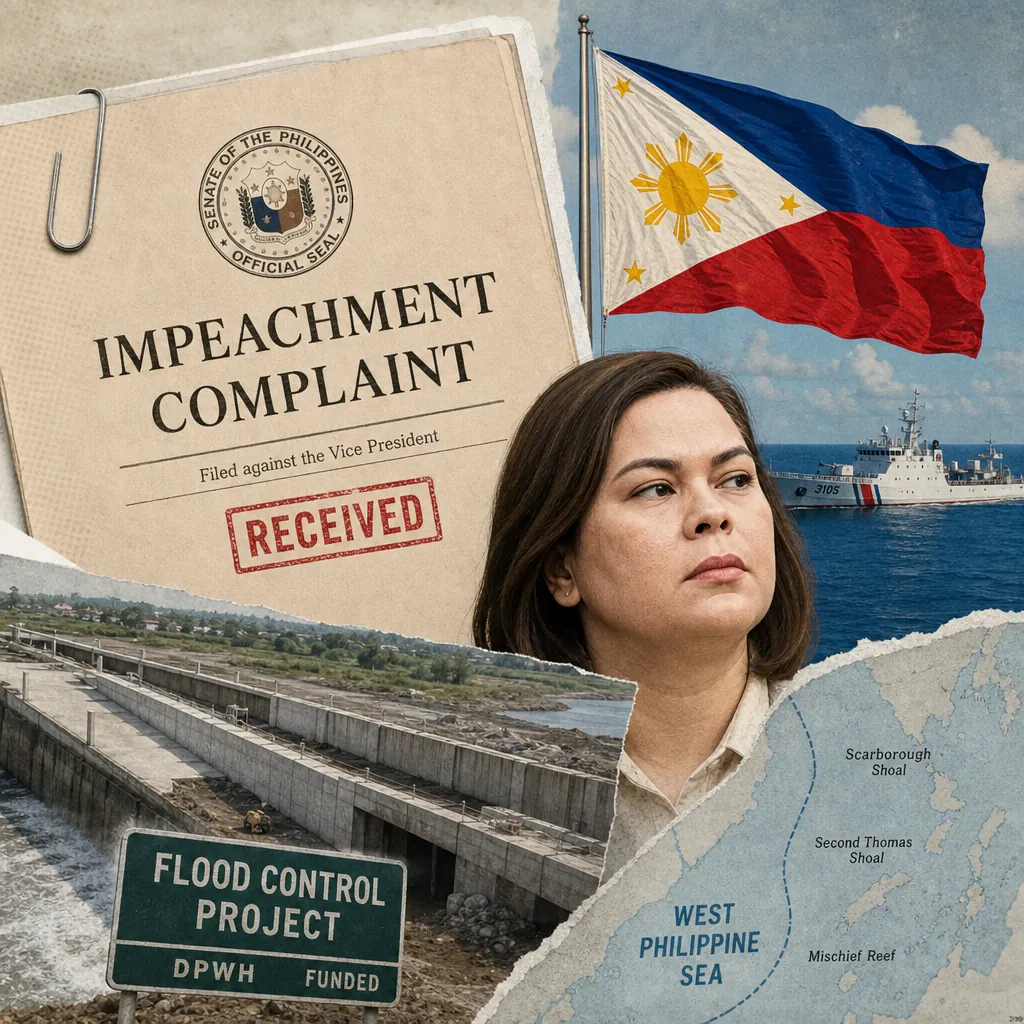
The conversation on June 12-13, 2026, was dominated by three interlocking crises: the impeachment trial of Vice President Sara Duterte, the flood control corruption scandal involving the "18 bagmen," and escalating tensions with China over Scarborough Shoal. These narratives converged to create a sense of institutional crisis, with the public reacting with a mix of outrage, mockery, and concern.
On June 12, House prosecutor Rep. Terry Ridon announced new evidence that Vice President Sara Duterte had allegedly failed to declare personal properties in her Statements of Assets, Liabilities and Net Worth (SALN) from 2007 to 2024. This development was immediately followed by a dispute over Senator Jinggoy Estrada's eligibility to serve as a senator-judge in the trial, given his own plunder case. Estrada's statement that the issue was "far from settled" was met with over 4,000 "haha" reactions on Facebook, signaling public skepticism. By June 13, the House prosecution panel formally moved to disqualify Estrada, while over 120 civil society groups launched the "Bantay Impeachment" citizen watch campaign.
Simultaneously, the flood control scandal deepened. On June 12, Senator Alan Peter Cayetano alleged that the investigation was being controlled by the administration to target non-allies, a claim that drew 213 likes and 156 haha reactions. The next day, Senator Ping Lacson publicly thanked Blue Ribbon Committee chair Erwin Tulfo for resisting pressure from colleagues, while Estrada claimed he was offered case dismissals in exchange for leaving the majority bloc. The "18 bagmen" thread evolved when lawyer Levito Baligod admitted his clients erred in naming Senator Loren Legarda but stood by accusations against Senators Villar and Escudero, a clarification that drew 574 comments on ABS-CBN's YouTube video.
On the West Philippine Sea front, China's sanctions on Defense Secretary Gilberto Teodoro Jr. dominated the conversation. Senator Kiko Pangilinan's condemnation of the sanctions as "a direct attack on Philippine sovereignty" became the highest-engagement post of the day with 890 likes and 103 comments. Teodoro himself issued a defiant statement, vowing not to be deterred, while the Armed Forces of the Philippines (AFP) released a formal statement of solidarity. The Philippine Coast Guard (PCG) spokesperson denied Chinese claims that he was "playing deaf and dumb" over Scarborough Shoal.
Conversation snapshot. The conversation was highly fragmented across platforms. On Facebook, the Estrada eligibility post on GMA News received 2,094 likes and 4,288 haha reactions. The Pangilinan condemnation post on Facebook garnered 890 likes, 186 loves, and 103 comments. On YouTube, the FactsFirstPH explainer on the impeachment vote threshold received 178,544 views and 4,414 likes. The ABS-CBN report on the bagmen retraction received 15,556 views and 444 comments. The BNC report on Cayetano's Martial Law comparison drew 380 likes and 218 comments. The AFP solidarity statement on Facebook received 55 likes and 21 loves. The PCG denial post on the Daily Tribune's Facebook page received 65 likes and 17 comments.
Key themes
- Impeachment trial legitimacy under question – The dispute over Senator Estrada's eligibility and the prosecution's push for his disqualification dominated the conversation, with the public largely treating the legal maneuvering as political theater.
- New SALN evidence against VP Sara – The disclosure of alleged undeclared properties provided a concrete, fact-based anchor for the prosecution's case, shifting the narrative from political spectacle to substantive accountability.
- Flood control scandal as proxy for administration accountability – Allegations that the investigation was being weaponized against political opponents, combined with claims of deal-making, deepened public distrust in legislative processes.
- China sanctions on Defense Secretary Teodoro – The sanctions were met with unified condemnation across the political spectrum, creating a rare moment of cross-party solidarity on national sovereignty.
- Civil society mobilization – The launch of "Bantay Impeachment" by over 120 groups signaled sustained public oversight, though the mixed reaction (high haha counts) indicated polarized trust in such initiatives.
- Senate leadership turmoil – The conflict between the Cayetano and Gatchalian blocs, including accusations of pressure tactics and comparisons to the Martial Law era, further eroded public confidence in the institution.
- Scarborough Shoal escalation – Reports of a Chinese floating platform and warnings from former Justice Antonio Carpio that China could replicate its Mischief Reef takeover amplified public anxiety about territorial integrity.
How the narratives stack
Dominant narrative – The impeachment trial of Vice President Sara Duterte is the central story, with the prosecution's new evidence and the dispute over senator-judge eligibility driving the conversation. The public mood is skeptical, with high haha reactions indicating that many view the proceedings as political theater rather than a serious judicial exercise.
Counter-narrative – The flood control scandal and allegations of administration interference in the investigation complicate the impeachment narrative by suggesting that the government is selectively targeting its opponents. This counter-narrative is amplified by Senator Cayetano's claims and the bagmen retraction.
Emerging narrative – The West Philippine Sea tensions, particularly China's sanctions on Teodoro and the Scarborough Shoal floating platform, are gaining momentum as a unifying issue that cuts across partisan lines. The cross-party condemnation of China's actions suggests this could become a dominant narrative in the coming weeks.
Suppressed narrative – The earthquake response in Mindanao, while receiving significant coverage, is being overshadowed by the political crises. The DOH's deployment of a water purification unit and DSWD's mobile kitchens are positive stories that are not getting the attention they deserve, potentially allowing criticism of the government's disaster response to fester.
Platform insights
Facebook – The platform was the primary battleground for emotional and opinion-driven conversation. Posts from mainstream outlets like GMA News, BNC, and the Daily Tribune generated high haha counts, indicating that audiences were using humor to process the chaos. The Pangilinan post on Facebook led all content with 890 likes and 103 comments, while the Estrada eligibility post accumulated over 4,000 haha reactions. Facebook's comment sections revealed deep polarization, with users quickly dividing into pro- and anti-administration camps.
YouTube – Longer-form analytical content dominated, with the FactsFirstPH explainer on the impeachment vote threshold receiving 178,544 views and 4,414 likes, indicating strong public appetite for procedural details. The ABS-CBN report on the bagmen retraction received 15,556 views and 444 comments, while the BNC report on Cayetano's Martial Law comparison drew 380 likes and 218 comments. YouTube served as a platform for deeper engagement, with comment sections featuring substantive debate.
Twitter – The platform served as a breaking-news feeder, with Rep. Ridon's "new evidence" tweet getting 4,224 views and 37 likes. Twitter's lower engagement relative to Facebook suggests that the story was more effectively discussed in the comment-heavy, share-driven Facebook ecosystem.
Key voices and communities
House Prosecution Panel and Congressional Allies – This group, led by Reps. Terry Ridon and Joel Chua, drives the narrative of new evidence and procedural urgency. Their statements receive thousands of views and hundreds of shares from news outlets. They frame the impeachment as a matter of legal accountability, focusing on SALN discrepancies and the need for impartial senator-judges.
Senator Jinggoy Estrada's Defense Camp – Estrada positions himself as a senator-judge fighting for due process amid what he calls premature disqualification claims. His statements are widely covered by major networks, generating high engagement but also significant mockery (over 4,000 haha reactions). His defense emphasizes legal technicalities and constitutional duties.
Civil Society Monitoring Groups (Bantay Impeachment) – Over 120 organizations launched the "Bantay Impeachment" campaign, calling for public vigilance and accountability. Their presence on YouTube and Facebook, though modest in reach compared to media, signals a structured citizen oversight effort that can influence narrative legitimacy.
Security and Defense Establishments – The AFP, PCG, and DND form a cohesive stakeholder block with strong institutional messaging. Their unified stance on the West Philippine Sea provides a credible, authoritative voice that can amplify narratives around sovereignty and security without appearing partisan. The AFP's solidarity statement with Teodoro and the PCG's denial of Chinese accusations demonstrate a willingness to engage in direct information warfare.
Opposition and Civil Society Advocates – Figures like former Senator Leila de Lima and Senator Kiko Pangilinan drive the WPS narrative, framing China's actions as a direct challenge to national sovereignty. Their posts generate high emotional resonance, with Pangilinan's condemnation receiving 890 likes. This group can serve as a powerful amplification channel for WPS-related messaging if aligned with government positions.
Narrative streams
Impeachment trial of VP Sara Duterte
The impeachment narrative intensified significantly over the two-day period. On June 12, House prosecutor Rep. Terry Ridon announced new evidence that VP Sara Duterte had allegedly failed to declare personal properties in her SALN from 2007 to 2024. This disclosure was widely covered by mainstream media, with ABS-CBN's TV Patrol reporting that the properties were "naka-rekord sa gobyerno at nagkakahalaga ng milyun-milyong piso". The evidence narrative was reinforced by a YouTube video from FactsFirstPH that asked "Ilang senador ang kailangan para ma-convict si Sara Duterte?" which garnered 178,544 views and 4,414 likes, indicating high public appetite for procedural details.
Simultaneously, a parallel thread emerged over Senator Jinggoy Estrada's eligibility to serve as a senator-judge. On June 12, Estrada issued a statement dismissing as "premature and baseless" claims that his own plunder case disqualifies him from the trial, arguing that the legal proceedings surrounding his suspension pendente lite remain unresolved. The posts accumulated a striking 4,288 "haha" reactions and 2,094 likes, signaling public skepticism toward his defense. By June 13, the narrative had expanded dramatically: House prosecutors formally urged the Senate impeachment court to disqualify Estrada, while over 120 civil society groups launched the "Bantay Impeachment" citizen watch campaign in Quezon City, calling for transparency and accountability.
Rep. Joel Chua, a House prosecutor, stated that only senator-judges who actively participated should vote on the verdict, hinting at "high profile" witnesses being added. The prosecution team expressed confidence they could secure the 16 votes needed for conviction, and Chua characterized VP Sara's legal response as "parang motion to dismiss," framing it as a delay tactic.
Flood control scandal and Senate leadership turmoil
The flood control scandal continued to dominate the conversation, with Senator Alan Peter Cayetano alleging on June 12 that the investigation was being controlled by the administration to target non-allies. This claim triggered 213 likes and 156 haha reactions on UNTV's post, indicating a skeptical but engaged audience. The next day, Senator Ping Lacson publicly thanked Blue Ribbon Committee chair Erwin Tulfo for resisting alleged pressure from colleagues, while Estrada claimed he was offered case dismissals in exchange for leaving the majority bloc.
The "18 kargador" or bagmen thread evolved when lawyer Levito Baligod admitted his clients erred in naming Senator Loren Legarda but stood by accusations against Senators Villar and Escudero, a clarification that drew 574 comments on ABS-CBN's YouTube video and sparked renewed debate about witness credibility. This partial retraction created a narrative pivot, with comment threads on ANC coverage showing audiences focused on why the claims were selective.
Senator Cayetano compared his group's struggle to the Martial Law era, attracting 380 likes and 218 comments on BNC's post, deepening the polarization. The conflict spilled into personal territory when Katrina Enrile took a swipe at Cayetano, and Fr. Robert Reyes criticized him for using the Bible for political agenda, the latter video garnering 45,702 views and 492 likes on YouTube.
West Philippine Sea tensions and China sanctions
China's sanctions on Defense Secretary Gilberto Teodoro Jr. dominated the WPS conversation. Senator Kiko Pangilinan's condemnation of the sanctions as "a direct attack on Philippine sovereignty" became the highest-engagement post of the day with 890 likes, 186 loves, and 103 comments. Pangilinan warned that sanctioning a sitting Cabinet official "for defending an arbitral award and asserting rights under international law undermines China's credibility as a responsible global power".
Teodoro himself issued a defiant statement on June 13, vowing not to be deterred by the sanctions and accusing China of treating individuals who speak out against "deception" and unlawful activities. His post received 101 likes and 28 love reactions, with the comment section showing active debate (18 comments). The AFP released a formal statement standing in solidarity with Teodoro, earning 55 likes and 21 loves, reinforcing the institutional unity around the Defense chief.
A new twist emerged when PCG Spokesperson Rear Admiral Jay Tarriela was described by the Chinese Embassy as "playing deaf and dumb" regarding the Scarborough Shoal issue. Tarriela denied the claim in a press interview, and the Daily Tribune's Facebook post on the exchange drew 65 likes and 17 comments, adding a layer of personal confrontation to the broader diplomatic standoff.
Former Associate Justice Antonio Carpio's warning that China could use the same "script" employed at Mischief Reef to seize Scarborough Shoal resonated across platforms, with BNC's video garnering 3,164 views and 69 likes on YouTube. The official exchange of statements between the Philippines and China regarding a floating platform in Scarborough Shoal drew substantial viewership on state media channels, with PTV's coverage reaching 11,667 views and 146 likes.
Conversation trajectory
Impeachment trial procedural battles to intensify (next 2-4 weeks) – The dispute over Senator Estrada's eligibility will likely be resolved by a court ruling within the next 30-45 days, which will either empower or strip the impeachment trial's legitimacy. The prosecution's confidence in securing 16 votes and the addition of high-profile witnesses will keep the narrative in the news cycle. Expect heightened media coverage once the Supreme Court rules on Estrada's suspension.
Flood control scandal to expand into institutional crisis (next 3-4 weeks) – The "Maleta Boys" testimony at the Ombudsman, claiming evidence implicating up to 200 lawmakers, will likely lead to more witnesses surfacing and potential direct naming of specific legislators. This could trigger calls for congressional investigations that fracture coalition alliances. The partial retraction regarding Legarda will fuel further scrutiny rather than quell it.
West Philippine Sea narrative to escalate around Arbitral Award anniversary (next 4-6 weeks) – The 10th anniversary of the 2016 Arbitral Award on July 12 will amplify WPS commentary and likely renew calls for a tougher diplomatic stance. The Scarborough Shoal floating platform issue and China's sanctions on Teodoro will keep the issue in the headlines. The ASEAN-Russia Summit on June 17-18 provides a diplomatic stage where the administration can project a foreign policy balancing act.
Civil society monitoring to grow in influence (ongoing) – The "Bantay Impeachment" coalition will likely produce independent commentary and act as a narrative counterweight to both government and opposition talking points. Their observations will be picked up by mainstream media, potentially shifting the conversation from partisan bickering to substantive accountability.
Key trigger events that will reshape this conversation include: the pre-trial conference on June 18 (where Estrada's status and evidence admissibility will be contested), the trial proper start on July 6 (shifting conversation to live proceedings and witness testimonies), the 10th anniversary of the 2016 Arbitral Award on July 12 (amplifying WPS commentary), and the President's State of the Nation Address in late July (where Senate leadership dynamics and national security policies will be formally addressed).
Response guidance
Platform-specific approaches:
- Facebook: Deploy direct, fact-based responses within high-engagement comment threads where claims about Senator Estrada's eligibility are being debated, using official statements to reinforce due process arguments. Use shareable graphic cards summarizing the pre-trial timeline and key legal thresholds (e.g., 16 votes needed for conviction) to counter speculation. Encourage civil society groups like Bantay Impeachment to share their monitoring reports, positioning them as credible third-party validators. Avoid direct rebuttals to humorous or sarcastic reactions (high haha counts on Estrada posts), as engaging with mockery often amplifies it; instead, pivot to substantive legal updates.
- YouTube: Produce short explainer videos (under 2 minutes) that visually break down the "senator-judge" qualification issue, using generic terms like "ongoing legal proceedings" rather than naming specific senators, to serve as a neutral reference. In the description and pinned comment, cite official Senate rules and the Constitution's impeachment provisions, making it easy for viewers to fact-check claims from both sides. Collaborate with legal analysts or law professors who can discuss the impeachment mechanics without partisan framing.
- Twitter: Leverage short, timely threads that clarify procedural steps—such as the pre-trial conference on June 18 and trial start on July 6—using official hashtags like #ImpeachmentWatch to increase discoverability. Retweet and quote key statements from House prosecutors but always accompany with context that due process is ongoing, to avoid appearing to pre-judge. Monitor replies for mentions of "SALN irregularities" and respond with a standard link to COA guidelines on asset declarations, reducing misinformation about what constitutes a violation.
Key messages:
- "The impeachment process follows clear constitutional rules—any decision on a senator-judge's eligibility must come from a final court ruling, not public speculation."
- "New evidence is being examined in pre-trial proceedings; the proper venue for these claims is the Senate impeachment court, where both sides will present their cases."
- "Transparency and accountability are central to this process—citizen watchdogs like Bantay Impeachment help ensure public confidence in the trial's fairness."
- "The Philippines firmly rejects China's travel ban on Defense Secretary Teodoro as political intimidation; our officials will continue to uphold the 2016 Arbitral Award and defend national sovereignty without fear."
- "The administration remains committed to investigating all corruption allegations, including those involving the flood control scandal, through independent and transparent mechanisms."
Sensitive topics to navigate:
- Senator Estrada's ongoing plunder case: Avoid framing him as either a victim or guilty party. Emphasize that his legal status is under judicial review and that due process must be respected by all sides.
- Allegations of delay tactics by VP Sara's camp: Do not amplify accusations of "strategy" or "delay" without concrete evidence. Instead, focus on the official trial schedule and the Senate's duty to proceed in an orderly manner.
- Potential political polarization around the impeachment: Use neutral, institutional language (e.g., "the Senate as an impeachment court," "the Constitution mandates") rather than engaging with partisan labels like "DDS" or "pinklawan" that appear in comment sections.
- China travel ban and perceived government weakness: Avoid defensive or dismissive language about the ban; instead, frame it as proof of the official's effective advocacy, while acknowledging that the ban may complicate diplomatic exchanges.
- Flood control scandal and accusations of administration control: Acknowledge public concern without directly engaging with individual accusers; instead, redirect to the established process of the Blue Ribbon committee and its independence.
See the full picture behind today's signals.
This report draws from Media Meter's MediaWatch, our real-time monitoring engine tracking 2,470+ Philippine sources across print, broadcast, digital, and social. Explore how the platform turns raw coverage into decision-grade intelligence, then see how it's configured for teams like yours — whether you're in PR agencies, corporate comms, government, or marketing.
Want more? Browse our Report Library for sector and crisis intelligence, or request a demo and we'll have your brand set up before the call.
Want this kind of intelligence on your brand?
This brief is built on the same MediaWatch methodology that runs continuously across every brand we monitor. See your competitive landscape, Impact Score, and narrative trajectory in a 30-minute demo.