Flood control scandal, IKEA Cebu, and airport progress shape PH real estate talk
A daily snapshot of Philippine real estate conversation on June 10, 2026, covering the resurgent flood control corruption scandal, developer-led CSR and retail expansion, infrastructure updates, and consumer cost concerns.
The conversation on Philippine real estate on June 10, 2026, was dominated by a resurgent flood control corruption scandal, tempered by positive developer-led corporate social responsibility (CSR) and retail expansion announcements. The day's most engaged post came from a political figure on Facebook, who reignited public anger over the Bulacan flood control anomaly with a call for accountability, drawing 907 likes and 203 comments. This narrative was reinforced by news of an intensified police manhunt for two remaining fugitives in the case and a separate report of non-functioning water facilities under a joint venture with PrimeWater in San Jose del Monte, Bulacan. In contrast, developer-driven stories generated significant goodwill: SM Prime's turnover of a 24-classroom school building in Quezon City received 384 likes and 541 humorous reactions, while Ayala Land's announcement of a second IKEA store in Mandaue City, Cebu, was hailed as an economic milestone. Infrastructure progress was also noted, with San Miguel Corp. on track to complete the first runway of the New Manila International Airport (NMIA) in Bulacan by 2028, possibly ahead of schedule. Meanwhile, consumer-focused conversations on Reddit revealed practical concerns about construction costs and building permit procedures, and a post on engineered bamboo as a sustainable construction alternative garnered 102 likes and 23 comments. The Department of Human Settlements and Urban Development (DHSUD) announced a housing loan moratorium for victims of the magnitude 7.8 earthquake in Mindanao, but the post received minimal engagement.
Conversation snapshot. The flood control scandal post by user benignobamaquino on Facebook was the highest-engagement item of the day, with 907 likes, 53 shares, and 203 comments. SM Prime's school turnover post on Facebook accumulated 384 likes, 352 love reactions, and 541 haha reactions. The engineered bamboo post on Facebook received 102 likes, 29 shares, and 23 comments. The PrimeWater investigation post on Facebook had 43 likes and 36 shares. The IKEA Cebu announcement on Facebook received 13 likes and 6 love reactions. The NMIA runway update on Twitter garnered 2 likes and 271 views. The DHSUD moratorium post on Twitter had 93 views and 0 likes. On Reddit, a query on construction costs in Baguio received 6 upvotes and 3 comments, while a building permit question in Tagaytay got 1 like and 1 comment.
Key themes
- Corruption and infrastructure failure – The flood control scandal in Bulacan resurfaced powerfully, with a Facebook post demanding accountability and continued investigation. The PNP manhunt for two remaining fugitives and the PrimeWater facility breakdown sustained the narrative of systemic infrastructure neglect, eroding public trust in both government and private partners.
- Developer-led community rehabilitation – SM Prime's turnover of a school building in Quezon City, replacing facilities destroyed by fire, generated overwhelmingly positive sentiment. This counter-narrative showed that visible CSR tied to disaster recovery can offset negative perceptions of developers.
- Retail and mixed-use expansion – Ayala Land's announcement of a second IKEA store at Ayala Malls Gatewalk in Mandaue City, set for December 2026, was framed as a milestone for Cebu's economy. This reinforces the trend of mixed-use township development outside Metro Manila.
- Infrastructure optimism – San Miguel Corp.'s update on the NMIA runway, potentially ahead of schedule, provided a positive infrastructure story. However, low engagement suggests the message has not yet captured broad public attention.
- Consumer cost and regulatory uncertainty – Reddit users posted practical inquiries about construction costs per square meter in Baguio and building permit signatories in Tagaytay, reflecting ongoing hesitation and confusion among prospective builder-owners.
- Sustainable construction alternatives – A Facebook post on engineered bamboo as a potential substitute for reinforced concrete in low-rise structures received strong engagement, signaling growing interest in sustainable materials despite current cost disadvantages.
- Government disaster response – The DHSUD announced a housing loan moratorium for earthquake victims in Mindanao, but the post saw negligible engagement, indicating that government relief measures do not resonate strongly in the broader conversation.
How the narratives stack
Dominant narrative – The dominant story on June 10 was the resurgent flood control corruption scandal, which tapped into deep public anger over infrastructure failures. The high engagement on the Facebook post and the follow-up news on the manhunt and water facility neglect created a narrative of systemic corruption and neglect that directly undermines confidence in real estate developments in flood-prone areas.
Counter-narrative – Developer-led CSR and retail expansion provided a strong counterpoint. SM Prime's school turnover and Ayala Land's IKEA announcement demonstrated that developers can generate significant goodwill through tangible community investments and economic anchors. These stories suggest that proactive, visible contributions to public welfare can offset negative sentiment.
Emerging narrative – The conversation around sustainable construction materials, particularly engineered bamboo, is gaining traction among professionals and eco-conscious consumers. While still niche, the engagement indicates a growing appetite for alternatives to traditional reinforced concrete, especially in the context of rising costs and safety concerns.
Suppressed narrative – The DHSUD housing loan moratorium for earthquake victims received almost no attention, despite being a significant policy response to a recent disaster. This suggests that government relief measures are not effectively reaching or resonating with the public, and that the conversation around housing affordability and disaster resilience is being driven more by scandal and developer actions than by policy announcements.
Platform insights
Facebook – Facebook was the epicenter of high-emotion and high-engagement content. The flood control scandal post and the SM Prime school turnover both generated hundreds of reactions and comments, but with very different emotional registers: anger and demand for accountability versus appreciation and humor. The PrimeWater investigation and IKEA announcement attracted moderate engagement, while the PNP manhunt post received almost none. This indicates that Facebook users prioritize scandal and feel-good CSR over routine news.
Twitter – Twitter saw only one new relevant tweet on June 10 – the NMIA runway update – which received minimal engagement (2 likes, 271 views). The DHSUD moratorium tweet also had low interaction (93 views, 0 likes). Twitter remains a low-engagement channel for real estate and infrastructure news, functioning more as a headline dissemination platform than a conversation driver.
Reddit – Reddit conversations diversified with practical questions on construction costs and building permits, as well as property listings. Engagement was modest (1–6 upvotes), but these posts reflect genuine consumer due diligence and pain points. Reddit serves as a space for niche, actionable discussions rather than viral content.
Key voices and communities
- Political accountability campaigners – A political figure's Facebook post reignited the flood control scandal narrative, achieving the highest engagement of the day. This voice frames corruption as a systemic failure requiring prosecution and reform, and resonates deeply with the public.
- Major developers and corporate accounts – SM Prime and Ayala Land drove positive narratives through CSR and retail expansion. Their posts generated significant affective engagement, particularly SM Prime's school turnover, which had a high love-to-like ratio.
- Media and regulatory watchdogs – News outlets reported on the PNP manhunt, PrimeWater investigation, and NMIA progress. Their content is authoritative but often low-engagement, serving to inform rather than spark discussion.
- Homebuyers and consumers – Reddit users represent the practical, cost-conscious end of the conversation. Their queries about construction costs and permits highlight barriers to homeownership that developers and policymakers could address.
- Construction material innovators – The engineered bamboo post from an architecture and engineering education page attracted strong engagement from professionals and eco-conscious consumers, signaling a niche but growing interest in sustainable alternatives.
Narrative streams
Flood control corruption and infrastructure neglect
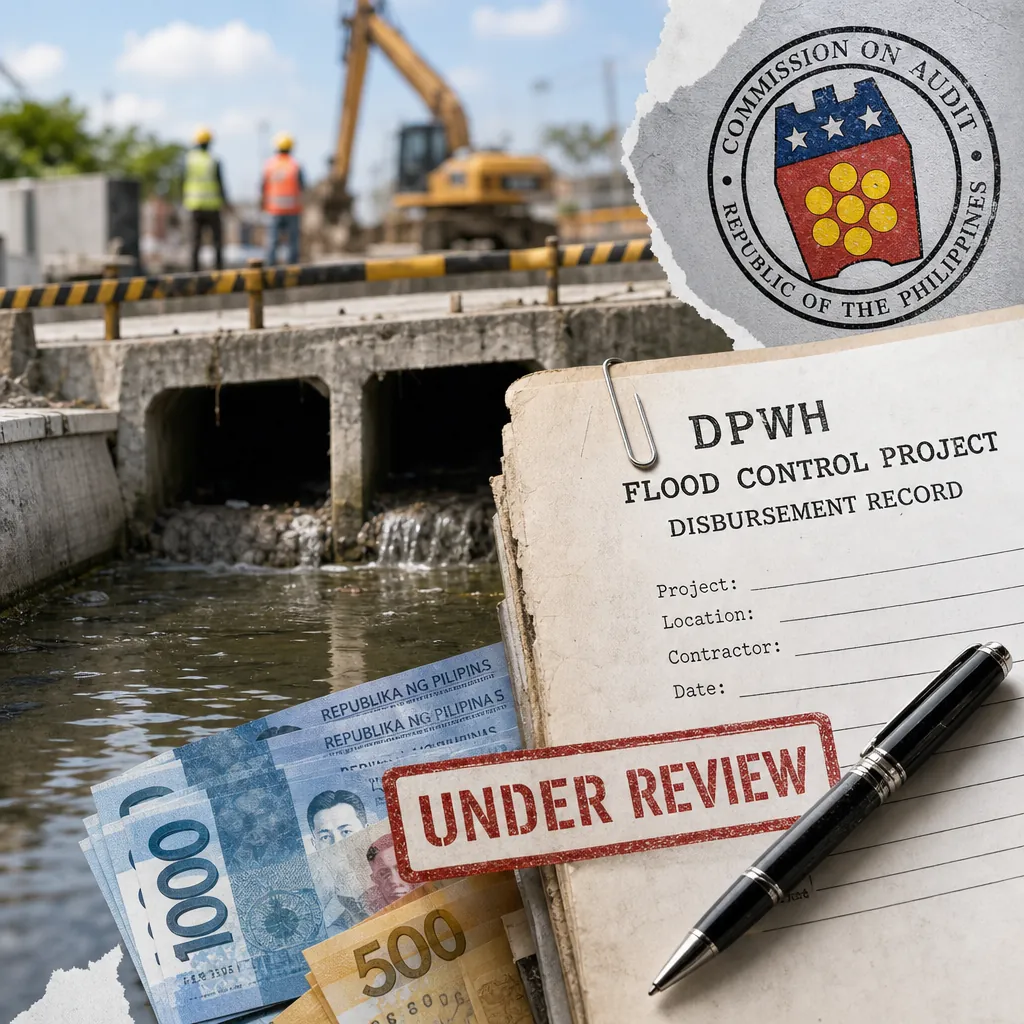
The flood control scandal in Bulacan dominated the day's conversation. A Facebook post by user benignobamaquino reminded the public that nearly a year had passed since the exposé and called for continued investigation, demanding that those involved be jailed and the money returned. The post accumulated 907 likes and 203 comments, making it the most engaged item of the day. This narrative was reinforced by news that the PNP had intensified manhunt operations for two remaining fugitives among 11 suspects, and by a report that water facilities under a joint venture with PrimeWater in San Jose del Monte, Bulacan, were non-functional or unmaintained. Together, these stories paint a picture of systemic infrastructure failure that directly affects communities and undermines confidence in real estate developments in flood-prone areas. The conversation taps into a broader distrust of both government and private partners, and suggests that any developer associated with such failures could face reputational damage.
Developer CSR and retail expansion as a counterweight
In contrast to the corruption narrative, developer-led initiatives generated significant positive sentiment. SM Prime, through Chairman Hans Sy, turned over a four-storey, 24-classroom building to San Francisco High School in Quezon City, replacing facilities destroyed by a fire a year earlier. The Department of Education's post received 384 likes, 352 love reactions, and 541 haha reactions – an unusually high number of humorous reactions that may indicate some skepticism about the gesture's motives, but overall the sentiment was positive. This shows that visible CSR tied to disaster recovery can generate goodwill and offset negative perceptions of developers.
Ayala Land announced the opening of the second IKEA store in the Philippines at Ayala Malls Gatewalk in Mandaue City, scheduled for December 2026. Local officials hailed it as a milestone for Cebu as the "Furniture Capital." The post received 13 likes and 6 love reactions, modest engagement but strategic significance for Ayala Land's mixed-use positioning in Cebu. This announcement reinforces the trend of retail-anchored township development outside Metro Manila.
Infrastructure progress and consumer uncertainty
San Miguel Corp. is on track to complete the first runway of the New Manila International Airport (NMIA) in Bulacan by 2028, with the possibility of finishing ahead of schedule. This update provides a positive infrastructure narrative for the Bulacan corridor, but the tweet garnered only 2 likes and 271 views, indicating that the message has not yet captured broad public attention.
On the consumer side, Reddit users posted practical inquiries that reflect ongoing uncertainty. User u/laswoosh asked about current construction costs per square meter and land clearing expenses for a lot in Baguio, receiving 6 upvotes and 3 comments. User u/WJmcm sought guidance on building permit signatories for a residential project in Tagaytay, highlighting confusion over which officials need to sign before submission. These low-engagement but highly practical posts show that some consumers are moving past general frustration into actionable research, and that there is a gap in accessible regulatory guidance.
Sustainable construction alternatives
A Facebook post from architectedtv on engineered bamboo as a potential substitute for reinforced concrete in low-rise structures received 102 likes, 29 shares, and 23 comments. The post cited projects like the Green School in Bali and argued that bamboo could become a mainstream material for sustainable construction, though it acknowledged current cost disadvantages due to limited local supply. This conversation signals growing interest among professionals and eco-conscious consumers in alternative building methods, especially against the backdrop of rising construction costs and safety fears highlighted by the Pampanga building collapse.
Conversation trajectory
The conversation is likely to intensify around the one-year anniversary of the flood control scandal exposé, expected within the next 30–60 days. This will likely drive renewed media and social media attention, potentially amplifying negative sentiment toward developments in flood-prone areas. Developers with projects in Bulacan should proactively communicate flood-mitigation measures and infrastructure investments to preempt reputational damage.
The IKEA Cebu grand opening in December 2026 is a key trigger event that will generate weeks of positive buzz around Ayala Land's Gatewalk development and Cebu's growth trajectory. Developers can capitalize on this by tying their pre-selling campaigns to the retail anchor and the broader economic momentum.
The seasonal onset of heavy monsoon rains in the coming months will historically amplify flood-related criticism and put infrastructure reliability at the center of property discussions. This could further fuel the corruption narrative if flooding occurs in areas with known infrastructure issues.
Finally, the DHSUD's new housing program methodology, announced on June 9, may generate more conversation as implementation details emerge. Developers involved in socialized housing should monitor this closely for partnership opportunities.
Response guidance
Platform approaches: On Facebook, developers should highlight positive CSR initiatives and retail anchors to counterbalance negative infrastructure narratives. Authentic beneficiary stories (e.g., students, teachers) can shift the tone from potential skepticism to genuine impact. On Reddit, creating informational posts that demystify common procedural questions (e.g., building permits, tax registration) can build trust and position developers as helpful resources. On Twitter, infrastructure progress updates should be paired with visual content (e.g., construction milestones) to increase engagement.
Key messages: Emphasize that developers are active partners in national progress – from delivering world-class retail to accelerating critical infrastructure. Consumer protection is a shared priority, and the industry operates within a strong regulatory framework. When operational issues arise (e.g., water facility maintenance), developers work closely with partners to ensure accountability and long-term habitability.
Sensitive topics to navigate: Avoid defensive language on flood control anomalies; instead, acknowledge public concern and emphasize ongoing investigations and the importance of infrastructure integrity. For water facility neglect, acknowledge reports without blaming any single party and pivot to remediation efforts. Validate user frustration on building permit delays and direct to official channels.
See the full picture behind today's signals.
This report draws from Media Meter's MediaWatch, our real-time monitoring engine tracking 2,470+ Philippine sources across print, broadcast, digital, and social. Explore how the platform turns raw coverage into decision-grade intelligence, then see how it's configured for teams like yours — whether you're in PR agencies, corporate comms, government, or marketing.
Want more? Browse our Report Library for sector and crisis intelligence, or request a demo and we'll have your brand set up before the call.
Want this kind of intelligence on your brand?
This brief is built on the same MediaWatch methodology that runs continuously across every brand we monitor. See your competitive landscape, Impact Score, and narrative trajectory in a 30-minute demo.