Philippine Road Safety Crisis: Fatal Accidents and Regulatory Crackdowns
A surge in road accidents, including fatal bus and truck crashes, motorcycle incidents, and MRT-3 breakdowns, has triggered regulatory suspensions and public outcry, while EV adoption and new model launches offer a contrasting narrative of industry progress.
The conversation around road safety in the Philippines intensified sharply on June 16-17, 2026, as a series of high-profile accidents and infrastructure failures dominated news and social media. A fatal bus crash on Marcos Highway in Baguio City, a multi-fatality dump truck collision in Pangasinan, and a morning rush-hour breakdown of the MRT-3 rail line collectively shifted public discourse from routine traffic complaints to urgent calls for accountability and systemic reform. Meanwhile, the automotive industry continued to advance with new electric vehicle (EV) launches, dealership openings, and policy developments, creating a stark contrast between the promise of modern mobility and the grim reality of the country's roads.
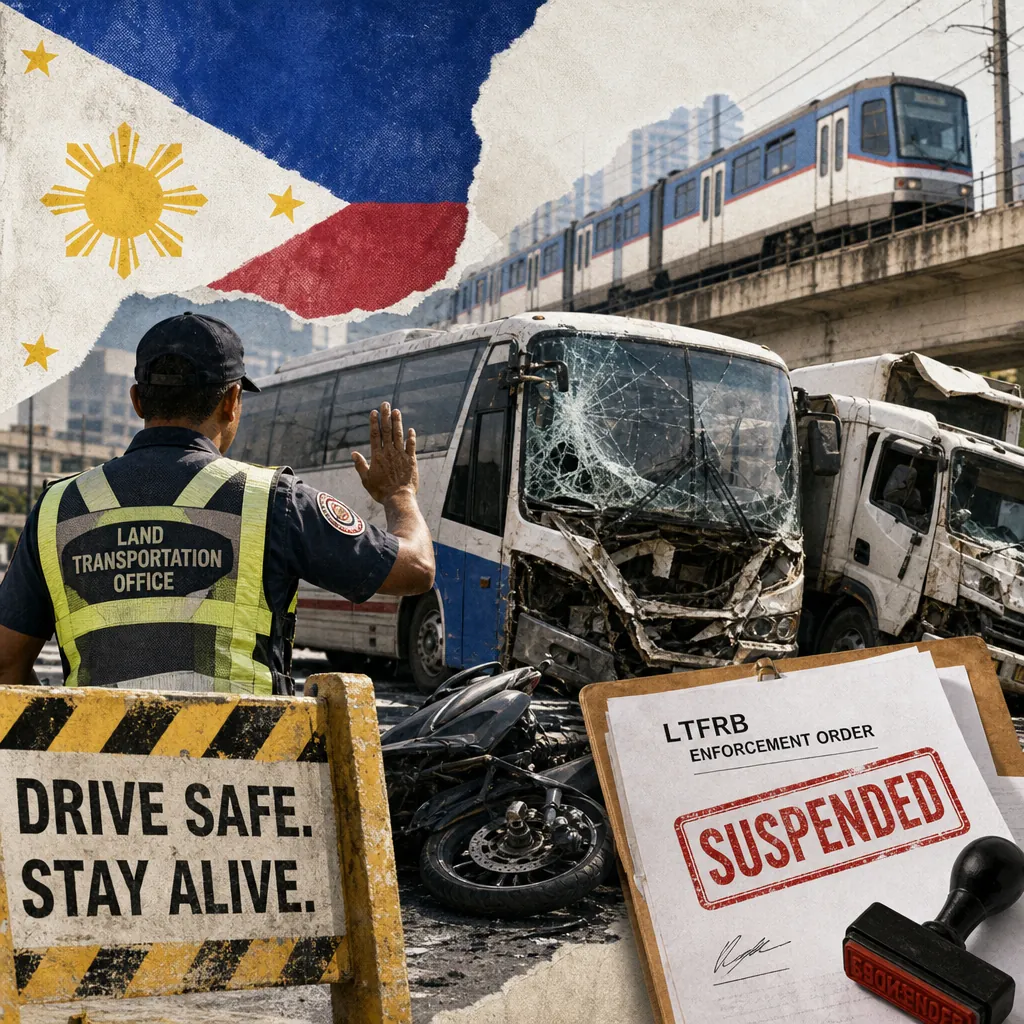
The most devastating incident occurred early Tuesday, June 16, when a North Genesis Bus Line bus collided with a parked truck on Marcos Highway in Baguio City. The bus conductor was killed, and six passengers were injured. The Land Transportation Franchising and Regulatory Board (LTFRB) swiftly suspended all 24 buses of the company for 30 days pending an investigation into possible violations of its operating certificate. LTFRB Chairman Vigor Mendoza II stated, "We commit to an impartial and no-nonsense investigation not only because it is our mandate but because it is the life and limb of commuters that are at stake when it comes to public transportation." The agency also ordered mandatory drug testing for all drivers and roadworthiness checks for the suspended units.
On the same day, a separate crash in Labrador, Pangasinan, killed five people when a mini dump truck carrying about 25 workers lost its brakes while descending a mountain road from a solar farm and collided with a pickup carrying 12 passengers. The dump truck then plunged into a ravine. This incident highlighted the dangers of poorly maintained commercial vehicles on mountainous routes. In Taytay, Rizal, a closed van driver who reportedly fell asleep at the wheel plowed into pedestrians, killing three and injuring two. A video of a near-miss on the South Luzon Expressway (SLEX) involving a truck and two cars was shared by News5, accumulating over 3,000 views across platforms and sparking debates about highway safety.
Motorcycle safety also came under scrutiny. A viral video on Raffy Tulfo's YouTube channel titled "MAANGAS NA RIDER SA SAMPALOC" (Arrogant Rider in Sampaloc) garnered over 87,000 views and 1,800 likes, reflecting public frustration with reckless riders. The Land Transportation Office (LTO) suspended the license of a traffic enforcer caught on video driving an impounded motorcycle without a helmet, citing violations of the Mandatory Use of Motorcycle Helmet Act. In Bacolod City, a tricycle driver was fined P2,000 and had his license suspended for 90 days after a fatal crash that killed a pedestrian. A delivery rider in Mandaue City was arrested on a warrant for qualified theft after allegedly failing to remit P40,000 in collections.
The MRT-3 breakdown on Wednesday morning added to the sense of crisis. A technical issue between Buendia and Guadalupe stations at around 5:30 a.m. forced the rail line to implement provisional service between North Avenue and Shaw Boulevard, stranding thousands of commuters during the morning rush. Normal operations resumed at 6:57 a.m., but Transportation Secretary Giovanni Lopez ordered MRT-3 General Manager Michael Capati and maintenance contractor Sumitomo Corporation to explain the disruption within 24 hours and show cause why administrative sanctions should not be imposed. Lopez also ordered free rides for the entire day, with the cost to be charged to Sumitomo. The incident reignited long-standing complaints about the reliability of the MRT-3, which has a history of breakdowns.
Amid the safety concerns, the automotive industry continued to make news with positive developments. BYD Cars Philippines launched the country's first Sealion 5 DM-i taxi fleet in the Cordillera region, deploying 20 units to the Highland Transport Service Cooperative. The plug-in hybrid electric vehicles (PHEVs) are expected to reduce operating costs and emissions. GWM introduced the Haval H7 SUV in the Philippines, priced from PHP 1.298 million to PHP 1.698 million, offering both hybrid and plug-in hybrid variants with genuine off-road capability. Nissan Philippines opened a new 3S dealership in Santa Rosa, Laguna, its 44th nationwide, expanding its service network in the growing southern Luzon market. Changan's luxury EV brand AVATR announced its entry into the Philippines through a distributorship agreement with Autowise Ventures Inc., starting with the AVATR 11 SUV. Lynk & Co's flagship PHEV, the 900 EM-P Ultra, appeared on the Department of Energy's list of recognized plug-in hybrids, signaling its impending local launch.
On the policy front, the Department of Energy (DOE) fast-tracked the nationwide rollout of a fuel subsidy program for agricultural logistics vehicles, offering a P10-per-liter discount at the pump to combat food inflation. The Cebu provincial government launched "Tabang Pangbyahe," the country's first province-led public transportation subsidy program, funded by a P20-million allocation from the Department of Transportation (DOTr). The program aims to improve bus services in Metro Cebu by incentivizing operators to meet higher standards. The DOTr also expressed confidence that multilateral development bank backing would attract more private-sector bidders to railway public-private partnership (PPP) projects, including the MRT-3 capacity expansion and the Metro Manila Subway.
Conversation snapshot. The day's conversation was dominated by road safety incidents and regulatory responses. The Raffy Tulfo video on reckless riders drew 87,706 views, 1,801 likes, and 385 comments on YouTube, making it the most engaged piece of content. The SLEX near-miss video on YouTube received 2,934 views and 52 likes. The MRT-3 breakdown generated multiple news articles and social media posts, with the DOTr's announcement of free rides being widely shared. The fatal Baguio bus crash was covered by numerous outlets, with the LTFRB's suspension order receiving significant attention. In contrast, the positive industry news—such as the BYD taxi fleet launch and the Haval H7 introduction—generated moderate engagement, primarily from automotive enthusiast sites and blogs. The overall sentiment across platforms was a mix of outrage over accidents, frustration with infrastructure failures, and cautious optimism about new vehicle technologies and policy initiatives.
Key themes
- Fatal bus crash triggers regulatory crackdown. The North Genesis Bus Line accident on Marcos Highway led to a 30-day suspension of 24 buses, mandatory drug testing for drivers, and a show-cause order from the LTFRB.
- Multiple road fatalities highlight systemic safety failures. Separate incidents in Pangasinan (5 dead), Rizal (3 dead), and Bacolod (1 dead) underscored the dangers of brake failures, driver fatigue, and reckless driving.
- Motorcycle safety and rider behavior under scrutiny. Viral videos of an arrogant rider and a helmetless traffic enforcer driving an impounded motorcycle fueled public demand for stricter enforcement.
- MRT-3 breakdown disrupts thousands, prompts investigation. A technical glitch during morning rush hour led to free rides and an order for Sumitomo to explain the failure.
- EV and PHEV adoption accelerates. BYD launched a taxi fleet in Cordillera, GWM introduced the Haval H7, and AVATR announced its entry, signaling growing electrification.
- Government launches transport subsidies and fuel discounts. The DOE expanded fuel subsidies to agricultural logistics, and Cebu launched a province-led bus subsidy program.
- Railway PPPs aim to attract private investment. The DOTr is leveraging multilateral development bank guarantees to make railway projects more bankable.
- Used car market and project car culture persist. A Nissan Navara listing and a student's query about a 90s Japanese project car indicated ongoing grassroots interest in affordable, customizable vehicles.
How the narratives stack
- Dominant narrative — The dominant story is that Philippine roads and public transport are in a state of crisis. A string of fatal accidents and the MRT-3 breakdown have eroded public trust in the safety and reliability of both private and public transportation. The regulatory response—suspensions, investigations, and free rides—is seen as reactive rather than preventive. The public mood is one of anger and frustration, with calls for accountability directed at bus companies, the LTO, and the DOTr.
- Counter-narrative — Despite the safety crisis, the automotive industry is modernizing. New EV and PHEV models are entering the market, dealerships are expanding, and government subsidy programs are being rolled out. This narrative suggests that the future of mobility in the Philippines is cleaner, more efficient, and more technologically advanced. However, this positive story is largely confined to industry enthusiasts and business news, struggling to break through the noise of accidents and breakdowns.
- Emerging narrative — A growing emphasis on data-driven enforcement and public accountability is emerging. The LTFRB's swift suspension of buses, the LTO's crackdown on fixers and helmetless enforcers, and the DOTr's demand for explanations from Sumitomo signal a shift toward more rigorous oversight. The viral nature of dashcam and CCTV footage is also empowering citizens to document and shame reckless behavior, potentially influencing policy.
- Suppressed narrative — The underlying causes of road accidents—poor infrastructure, inadequate driver training, corruption in licensing, and insufficient vehicle maintenance—are receiving less attention than the immediate incidents. The systemic issues that allow brake failures, driver fatigue, and reckless behavior to persist are not being addressed in the public conversation. The role of the LTO in ensuring vehicle roadworthiness and driver competence is mentioned but not deeply scrutinized.
Platform insights
- YouTube — The platform was the primary venue for long-form, high-engagement content. The Raffy Tulfo video on reckless riders dominated with nearly 88,000 views, while the SLEX near-miss analysis drew over 2,900 views. YouTube's comment sections facilitated detailed debates about fault and enforcement. The platform's algorithm favored emotionally charged, blame-assigning content over dry news reports.
- Facebook — Local news pages and community groups shared accident reports and viral videos. The delivery rider video (6,770 likes) showed that humorous or relatable content can outperform serious safety alerts. However, accident reports from local traffic offices received minimal engagement (e.g., 16 likes for the Tanjay crash), suggesting that users react more strongly to shareable, human-interest stories than to statutory reports.
- Twitter — The platform was used for real-time updates and news sharing. The SLEX near-miss clip on Twitter received only 319 views, indicating limited organic reach for news content. However, official accounts like the DOTr and LTFRB used Twitter to announce free rides and suspensions, making it a key channel for official communication.
- Reddit — Philippine-specific subreddits like r/Gulong and r/PHMotorcycles hosted niche discussions. A student's query about a project car received a few comments, while a motorcycle comparison thread (Kawasaki ZX-4RR vs. Yamaha R7) drew 39 comments. Reddit served as a space for detailed, community-driven advice rather than breaking news.
Key voices and communities
- Regulatory agencies (LTFRB, LTO, DOTr) — These bodies are the primary sources of official information on suspensions, investigations, and policy changes. Their statements are widely quoted by media and set the tone for accountability narratives. The LTFRB's decisive action on the bus suspension was praised, while the DOTr's handling of the MRT-3 breakdown was seen as responsive but reactive.
- Local news media (GMA News, ABS-CBN, Manila Bulletin, Daily Tribune) — These outlets provide the most comprehensive coverage of accidents and regulatory actions. Their reports include details on casualties, vehicle types, and locations, directly associating brand names (e.g., Toyota Hilux, Rusi, North Genesis) with incidents. They shape public perception of which brands are safe or risky.
- Public complaint platforms (Raffy Tulfo in Action) — This YouTube channel and TV show serves as an informal regulator, amplifying public outrage over reckless driving and demanding accountability. Its high viewership (87,000+) demonstrates strong public appetite for justice-oriented content. Motorcycle brands and rider training organizations could partner with such platforms to promote safety.
- Automotive enthusiasts and bloggers (AutoIndustriya, CarGuide.PH, Ignition PH) — These voices cover new model launches, EV adoption, and industry trends. They provide technical analysis and positive framing of industry developments. Their content reaches a niche but influential audience of potential buyers and industry insiders.
- Second-hand vehicle market participants — A small but active community on Facebook and Reddit discusses used car listings, project cars, and budget builds. Their conversations reveal concerns about scams, flood damage, and registration compliance. They represent a grassroots interest in affordable mobility that is often overlooked by mainstream media.
Narrative streams
Fatal bus crash and regulatory response
The June 16 crash on Marcos Highway, Baguio City, involving a North Genesis Bus Line bus and a parked truck, resulted in the death of the bus conductor and injuries to six passengers. The LTFRB immediately suspended all 24 buses of the company for 30 days, citing the need to investigate potential violations of the Certificate of Public Convenience (CPC). The CPC is the operating license that specifies routes, fares, and safety requirements. Chairman Mendoza emphasized the agency's commitment to an impartial investigation, noting that "the life and limb of commuters are at stake." The LTFRB also ordered mandatory drug testing for all drivers and roadworthiness checks for the suspended units. This swift action was widely reported and generally praised, though some commentators questioned why such measures were not taken before the accident. The bus company, North Genesis, faces potential fines or revocation of its CPC if found negligent.
Multiple road fatalities expose systemic failures
On the same day, a mini dump truck carrying workers from a solar farm in Labrador, Pangasinan, lost its brakes while descending a mountain road, colliding with a pickup and killing five people. The truck then plunged into a ravine. This incident highlighted the dangers of poorly maintained commercial vehicles on steep, winding roads. In Taytay, Rizal, a closed van driver who reportedly fell asleep plowed into pedestrians, killing three and injuring two. CCTV footage showed the van speeding before the crash. These accidents, combined with the Baguio bus crash, paint a picture of systemic failures in vehicle maintenance, driver training, and road infrastructure. The LTO's role in ensuring vehicle roadworthiness and driver competence is under scrutiny, though the conversation has not yet focused on specific regulatory gaps.
Motorcycle safety and rider accountability
Motorcycle safety emerged as a major sub-theme. A video on Raffy Tulfo's channel titled "MAANGAS NA RIDER SA SAMPALOC" (Arrogant Rider in Sampaloc) garnered over 87,000 views, reflecting public anger at reckless riders. The video likely showed a rider violating traffic rules and behaving aggressively. Separately, the LTO suspended the license of a traffic enforcer caught driving an impounded motorcycle without a helmet, citing the Mandatory Use of Motorcycle Helmet Act. This incident was particularly embarrassing for the LTO, as it involved one of its own enforcers breaking the law. In Bacolod, a tricycle driver was fined and had his license suspended for 90 days after a fatal crash. These cases show that enforcement is happening, but the high volume of incidents suggests that deterrence is insufficient. The viral nature of rider misconduct videos indicates that public shaming is becoming a tool for accountability, but it also risks stigmatizing all motorcyclists.
MRT-3 breakdown and infrastructure reliability
The MRT-3 breakdown on June 17 was a major blow to commuter confidence. A technical issue between Buendia and Guadalupe stations at 5:30 a.m. forced the line to operate only between North Avenue and Shaw Boulevard, causing massive delays. Normal operations resumed at 6:57 a.m., but the damage was done. Transportation Secretary Lopez ordered MRT-3 General Manager Capati and maintenance contractor Sumitomo to explain the failure within 24 hours and show cause why administrative sanctions should not be imposed. Lopez also ordered free rides for the entire day, with the cost charged to Sumitomo. This incident is the latest in a long history of MRT-3 breakdowns, which have plagued the line since its opening. The public is increasingly skeptical of promises of improvement, and the DOTr's response, while swift, is seen as a band-aid solution. The incident also highlights the fragility of Metro Manila's public transport system, which relies heavily on a single rail line.
EV and PHEV adoption gains momentum
Amid the safety crisis, the automotive industry continued to push forward with electrification. BYD Cars Philippines launched the country's first Sealion 5 DM-i taxi fleet in the Cordillera region, deploying 20 plug-in hybrid units to the Highland Transport Service Cooperative. The Sealion 5 DM-i uses BYD's Super DM-i technology, offering extended electric range and reduced fuel consumption. This initiative supports the government's Public Utility Vehicle (PUV) modernization program, which aims to replace aging jeepneys and buses with safer, more efficient vehicles. GWM introduced the Haval H7, a rugged SUV available in hybrid and plug-in hybrid variants, priced competitively from PHP 1.298 million. The H7 is positioned as an off-road capable family vehicle. Changan's luxury EV brand AVATR announced its entry into the Philippines, starting with the AVATR 11 SUV, which features advanced technology and design. Lynk & Co's 900 EM-P Ultra PHEV appeared on the DOE's list, indicating its impending launch. These developments signal that the Philippine market is gradually embracing electrified vehicles, though adoption remains limited by high prices and charging infrastructure gaps.
Government transport subsidies and policy initiatives
The DOE fast-tracked the nationwide rollout of a fuel subsidy program for agricultural logistics vehicles, offering a P10-per-liter discount at the pump. The program aims to lower food transportation costs and combat inflation. The Cebu provincial government launched "Tabang Pangbyahe," a P20-million subsidized bus service program, the first of its kind led by a provincial government. The program is designed to improve bus services in Metro Cebu by incentivizing operators to meet higher standards. The DOTr also expressed confidence that multilateral development bank backing from the Asian Development Bank (ADB) and World Bank would attract more private investors to railway PPP projects, including the MRT-3 capacity expansion and the Metro Manila Subway. These initiatives show that the government is actively trying to improve transport infrastructure and affordability, but the impact will take time to materialize.
Conversation trajectory
- Intensification of road safety discourse (next 2-4 weeks). The cluster of fatal accidents and the MRT-3 breakdown will likely keep road safety at the forefront of public conversation. Expect increased calls for stricter enforcement of traffic laws, mandatory vehicle inspections, and harsher penalties for reckless driving. The LTFRB's suspension of North Genesis may set a precedent for future regulatory actions. The LTO may face pressure to reform its licensing and vehicle registration processes.
- Shift toward accountability and enforcement (next 4-6 weeks). The viral nature of dashcam and CCTV footage will continue to empower citizens to document violations. This could lead to more public shaming campaigns and demands for accountability. The LTO's suspension of the helmetless enforcer shows that even officials are not immune. Expect more show-cause orders and license suspensions for traffic violators.
- Growing interest in EV and PHEV as safer alternatives (next 3-6 months). As safety concerns mount, the automotive industry may position EVs and PHEVs as not only cleaner but also safer, due to advanced driver-assistance systems (ADAS) and better build quality. The BYD taxi fleet launch and the Haval H7 introduction provide concrete examples. However, high prices and limited charging infrastructure will remain barriers.
- Potential for policy reforms (next 6-12 months). The cumulative impact of accidents and breakdowns may push the government to accelerate infrastructure projects and regulatory reforms. The DOTr's railway PPPs and the DOE's fuel subsidy program are steps in this direction. However, implementation challenges and budget constraints may slow progress.
Key trigger events that will reshape this conversation include: the next fuel price hike (typically every Tuesday), which will renew discussions on fuel subsidies and EV cost comparisons; the LTO's "Oplan Undas" road safety campaign (expected late October), which will generate a surge in checkpoint-related posts; and the upcoming Manila International Auto Show (MIAS) and Philippine International Motor Show (PIMS), which will shift focus toward new model launches and safety features.
Response guidance
- Platform approaches: On YouTube, partner with popular motovloggers and public-figure platforms like Raffy Tulfo to co-create content promoting safe riding behavior and vehicle maintenance. On Facebook, use local accident reports as anchoring content to promote defensive driving tips and vehicle safety features. On Twitter, share bite-sized safety alerts tied to trending incidents using hashtags like #RoadSafetyPH. On Reddit, engage with enthusiast communities by providing detailed buying guides and safety advice.
- Key messages: Emphasize that safety is every road user's responsibility—drivers, riders, and pedestrians all play a role. Highlight that modern vehicles include advanced safety systems, but they work best when combined with disciplined driving habits and regular maintenance. For those buying used cars, stress the importance of verifying vehicle history and registration status. For motorcyclists, promote the use of proper gear and adherence to traffic rules.
- Sensitive topics to navigate: Avoid assigning fault in specific incidents, as details are often incomplete. Frame messages around general preventive measures rather than capitalizing on tragedy. When addressing reckless rider videos, acknowledge that both riders and drivers have responsibilities and avoid stereotyping any group. Be careful not to appear insensitive when mentioning vehicle safety features after a fatal accident.
Want this kind of intelligence on your brand?
This brief is built on the same MediaWatch methodology that runs continuously across every brand we monitor. See your competitive landscape, Impact Score, and narrative trajectory in a 30-minute demo.