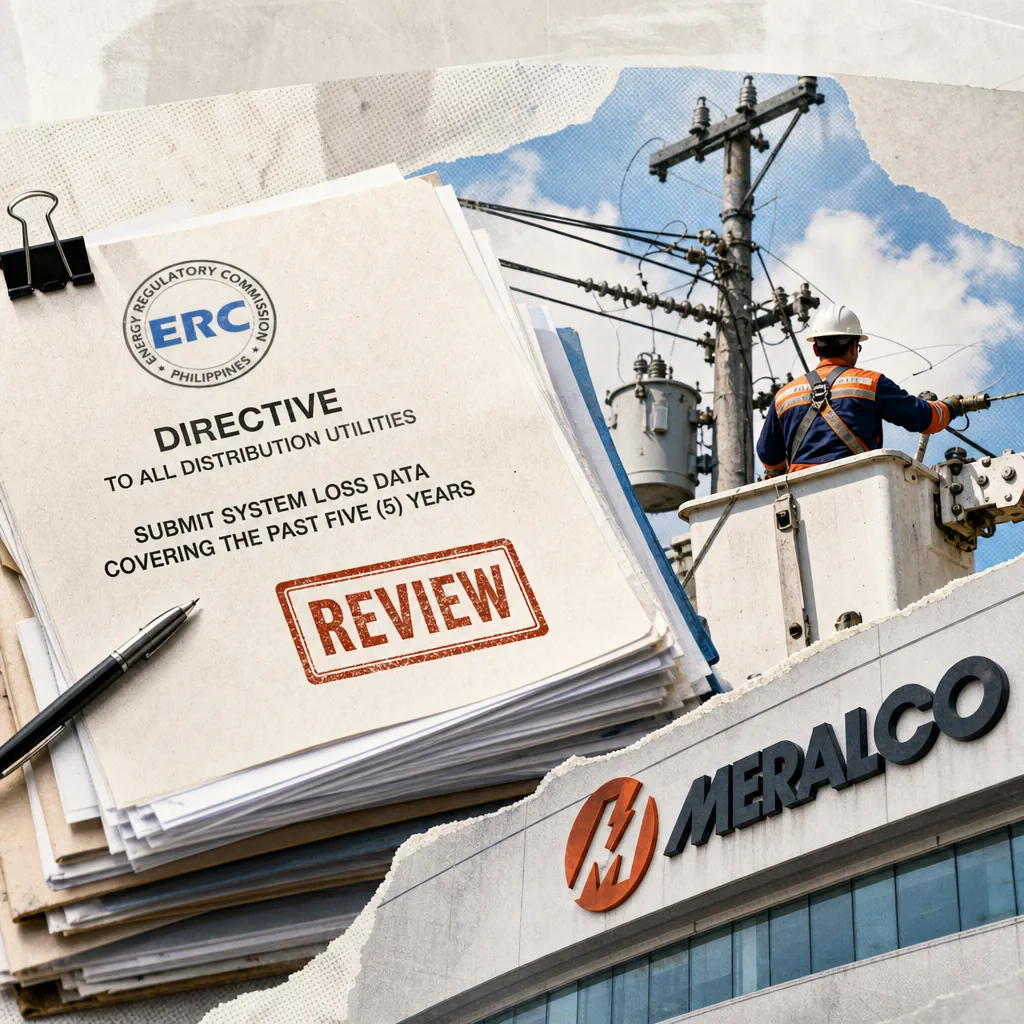
Philippine telcos face eSIM failures, quake response, and consumer churn
A snapshot of the Philippine telecommunications conversation on June 9-10, 2026, covering eSIM activation failures, customer service breakdowns, earthquake response efforts, and consumer switching behavior across major providers.
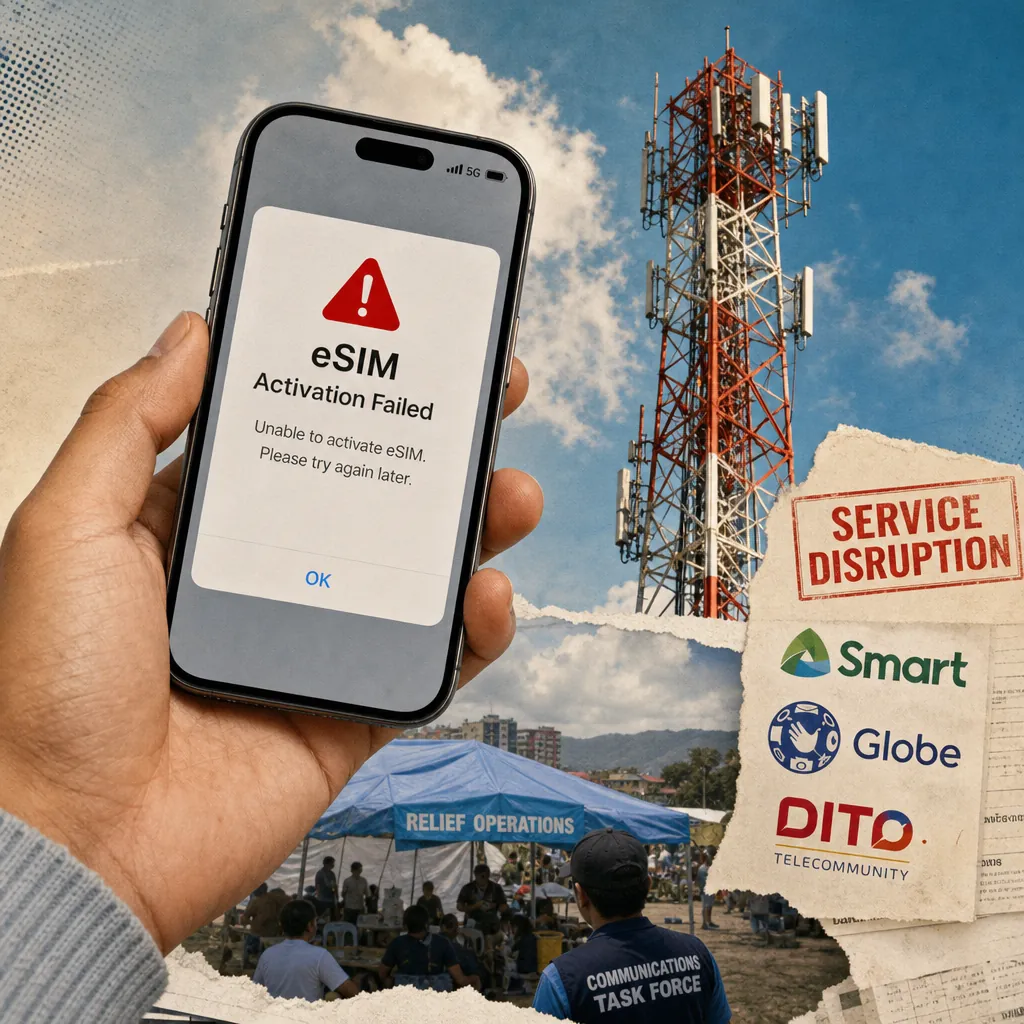
The Philippine telecommunications conversation on June 9 and 10, 2026, was defined by a sharp contrast between institutional messaging and grassroots user experiences. On one hand, the Department of Information and Communications Technology (DICT) celebrated its 10th anniversary with promises that "No Filipino will be left offline," while PLDT and Smart deployed Starlink satellite broadband to restore connectivity after a magnitude 7.8 earthquake struck Mindanao. On the other hand, a steady stream of user complaints on Reddit and Twitter detailed failed eSIM activations, unresponsive customer hotlines, and service outages that left paying customers without internet for days. The earthquake response generated positive sentiment for Globe, PLDT, and Smart, but the accumulation of unresolved technical issues—particularly around eSIM transfers and SIM retrieval—threatens to erode trust in the very connectivity the government and telcos are working to expand.
Conversation snapshot. The two-day window saw modest but concentrated engagement. On Reddit, five threads on June 10 covered DITO SIM retrieval (1 upvote, 1 comment), Globe eSIM transfer failure (1 upvote, 0 comments), PLDT vs. Converge comparison (1 upvote, 1 comment), and a SKY Fiber rant (0 upvotes, 0 comments). A Twitter complaint about a missing Smart eSIM QR code drew 2,541 views but only 1 like, while a separate hotline complaint had just 15 views. On Facebook, Globe's satellite activation post earned 5 likes and 4 shares, and DICT's free internet announcement received 16 likes and 1 share. The DICT anniversary posts on Twitter saw 22–29 views with no engagement. The most viral post was a Sarangani resident's plea for help on June 9, which garnered 139 likes, 369 shares, and 228 sad reactions.
Key themes
- eSIM activation and transfer failures across providers – Multiple users reported problems with eSIMs from Smart and Globe. One Twitter user paid for a Smart eSIM but never received the QR code. A Reddit user detailed a week-long struggle to transfer a Globe eSIM from a Pixel 7 Pro to a Pixel 10 Pro, noting that a Smart eSIM transfer worked instantly in contrast. Another user reported a Smart eSIM showing "No Signal" on an iPhone. These failures undermine the convenience that eSIMs are supposed to offer.
- Customer service breakdowns – Users expressed frustration with unresponsive hotlines and opaque processes. A Twitter user reported calling Smart's hotline since Monday without any answer. A DITO customer described a SIM retrieval process that required National Telecommunications Commission (NTC) verification, with no clear follow-up after five days. A SKY Fiber customer posted a rant titled "SKYBULOK" (rotten), claiming days without internet despite paying on time and being unable to reach support.
- Earthquake response as a brand differentiator – Globe activated satellite-to-mobile connectivity in three provinces affected by the magnitude 7.8 earthquake, earning positive engagement on Facebook. PLDT and Smart deployed Starlink satellite broadband and field teams, with official advisories receiving modest but positive attention. The DICT also provided free internet in Sarangani. These actions contrasted with the service complaints and positioned the telcos as essential partners in disaster recovery.
- Consumer switching and provider comparisons – Reddit users actively compared PLDT and Converge for fiber internet, with one user in Eastern Visayas considering switching after weeks of PLDT outage. Another user asked how to cancel Globe Fiber because they already had PLDT. A separate thread sought recommendations for an office with 20 users, finding Smart Prepaid WiFi and GOMO inadequate. These discussions indicate low brand loyalty and a pragmatic search for reliable service.
- DICT anniversary messaging fails to engage – The DICT's 10th anniversary posts on Twitter and Facebook received minimal engagement (22–29 views, no likes or comments). Secretary Henry Aguda's pledge that "No Filipinos will be left offline" was broadcast by IBCtv13 but attracted only 2 likes and 1 share. The gap between official messaging and user-driven concerns was stark.
- Disaster connectivity gaps highlighted by residents – A viral post from Bombo Radyo Gensan shared a resident's plea: "NO WATER, NO ELECTRICITY, NO SIGNAL". The post accumulated 369 shares and 228 sad reactions, underscoring the urgency of restoring communications in affected areas. This grassroots demand for connectivity stood in contrast to the DICT's claim that "stable ang connectivity sa affected areas".
- PLDT's data center IPO as a financial narrative – Business news outlets reported PLDT's plan to carve out its data center business into a Real Estate Investment Trust (REIT), targeting a $400 million initial public offering (IPO) by the fourth quarter of 2026. This story generated moderate views on Twitter (170–900) but low engagement, indicating interest from financial stakeholders rather than consumers.
How the narratives stack
Dominant narrative – The dominant story is that Philippine telcos are failing at the basics of customer service and eSIM provisioning, even as they invest in disaster response and financial restructuring. The accumulation of complaints about eSIM activation, hotline unresponsiveness, and service outages creates a perception that providers are not prioritizing the user experience. This narrative is driven by individual Reddit and Twitter posts that, while low in volume, are rich in detail and frustration.
Counter-narrative – The earthquake response provides a powerful counter-narrative. Globe's satellite connectivity, PLDT and Smart's Starlink deployment, and DICT's free internet all demonstrate that telcos and government can act decisively in a crisis. These actions generate positive sentiment and remind the public that connectivity is a lifeline. However, the counter-narrative is largely institutional—driven by official announcements and news outlets—rather than organic user praise.
Emerging narrative – The eSIM friction is emerging as a cross-provider pain point that could slow the adoption of digital SIMs in the Philippines. With users reporting failures across Globe and Smart, and DITO's SIM retrieval process adding regulatory delays, the promise of seamless eSIM migration is being undermined. This narrative is still building but has the potential to become a major issue as more users upgrade to eSIM-only devices.
Suppressed narrative – The disconnect between official claims of connectivity stability and on-the-ground reports of "NO SIGNAL" in earthquake-affected areas is a suppressed narrative. While the DICT and PLDT/Smart have issued reassuring statements, residents in Sarangani are sharing desperate pleas that contradict those claims. This gap between institutional messaging and lived experience is not being addressed directly by any stakeholder, but it could fuel distrust if left unresolved.
Platform insights
Reddit – Reddit was the primary platform for detailed, high-context complaints and technical discussions. Users shared specific device models (Pixel 7 Pro, Pixel 10 Pro, Huawei), steps taken (multiple store visits, hotline calls), and regulatory involvement (NTC verification). Engagement was low (0–5 upvotes per post), but the specificity of the content provides rich qualitative data for telco support teams. Reddit users are actively seeking peer advice on service failures and provider comparisons, making it a critical channel for monitoring churn signals.
Twitter – Twitter served as a broadcast channel for both official announcements and individual complaints. The DICT anniversary tweets saw very low viewership (22–29 views), while a Smart eSIM complaint reached 2,541 views but only 1 like. The platform's algorithm appears to favor visual or tagged content; the eSIM complaint with no image or @mention had only 15 views. Twitter is not yet a primary venue for sustained telco discussion, but it is used for one-off service grievances that can gain visibility if they catch a trend.
Facebook – Facebook hosted the most emotionally resonant content, particularly around the earthquake. The Sarangani plea for help (139 likes, 369 shares, 228 sad reactions) and Globe's satellite activation post (5 likes, 4 shares) both outperformed official telco advisories (11 likes, 18 shares for PLDT/Smart). Facebook users are more likely to share distress calls and positive disaster response stories than to engage with technical service complaints. The platform remains the primary space for crisis awareness and community solidarity.
Key voices and communities
Affected residents and local communities – Residents in earthquake-hit areas, particularly Sarangani, are the most urgent voice in the conversation. Their posts explicitly mention "NO SIGNAL" as a critical emergency issue, framing connectivity as a life-saving resource alongside water and electricity. The viral plea shared by Bombo Radyo Gensan (369 shares) demonstrates that grassroots voices can drive significant distribution when networks are down. This community's needs are not being fully addressed by official messaging.
Consumer decision-makers and residential users – A small but vocal group of Reddit users is actively comparing providers and seeking advice on switching. They are pragmatic, evaluating PLDT, Converge, Globe, and DITO based on reliability and value rather than brand loyalty. Their discussions reveal churn risk factors: unresolved outages, poor customer service, and eSIM failures. This group's willingness to ask for recommendations signals a lack of strong brand preference.
Financial and investor communities – Business news outlets and financial analysts are tracking PLDT's data center REIT IPO as a strategic move to reduce debt. This group engages primarily through Twitter and business publications, with moderate views and low interaction rates. Their focus on asset efficiency and debt management offers a lens through which PLDT's financial health is interpreted, separate from consumer sentiment.
Government and regulatory agencies – The DICT and NTC appear as both conveners and regulators. DICT's anniversary messaging emphasizes digital inclusion and workforce development, while its disaster response (free internet in Sarangani) generates positive engagement. The NTC is referenced in a DITO SIM retrieval process, where the store instructed the user to wait 2–3 days for NTC verification. This positions the regulator as a gatekeeper, but the process itself causes delays that frustrate consumers.
Corporate social responsibility and disaster response networks – PLDT, Smart, and Globe are leveraging earthquake response to build goodwill. PLDT and Smart's Starlink deployment and Globe's satellite connectivity are being amplified through news outlets and official channels. These efforts generate positive sentiment but struggle to reach the same audience as the viral distress calls. The MVP Group's philanthropic arm (Tulong Kapatid) is also referenced, adding a layer of corporate social responsibility.
Narrative streams
eSIM activation and transfer failures
The most technically detailed complaints of the window centered on eSIMs. On June 10, a Twitter user reported paying for a Smart eSIM but never receiving the QR code via email. On Reddit, a user described a week-long effort to transfer a Globe eSIM from a Pixel 7 Pro to a Pixel 10 Pro, involving multiple store visits and hotline calls, while noting that a Smart eSIM transfer worked instantly. Another Reddit user reported a Smart eSIM showing "No Signal" on an iPhone after activation. These posts, while low in engagement, reveal a systemic issue: eSIM provisioning is not yet seamless across providers. The contrast between Smart's smooth transfer and Globe's failure offers a competitive insight, but both providers face activation hurdles that undermine the promise of eSIM convenience. For the sector, this is a warning that eSIM adoption could be slowed by poor execution, especially as more devices (like the Pixel 10) rely on eSIM-only configurations.
Earthquake response and connectivity restoration
The magnitude 7.8 earthquake that struck Maasim, Sarangani on June 8 triggered a massive response from telcos and government. PLDT and Smart mobilized emergency teams and deployed Starlink satellite broadband to areas with power outages, as reported by insiderPH and Manila Bulletin. Globe activated satellite-to-mobile connectivity in South Cotabato, Sultan Kudarat, and Sarangani, a post that earned 5 likes and 4 shares on Facebook. The DICT provided free internet in Sarangani, with a PTV post receiving 16 likes and 1 share. However, the most powerful narrative came from residents themselves: a Bombo Radyo Gensan post shared a plea that read "NO WATER, NO ELECTRICITY, NO SIGNAL," which garnered 139 likes, 369 shares, and 228 sad reactions. This grassroots demand for connectivity stood in stark contrast to the DICT's claim that "stable ang connectivity sa affected areas". The earthquake response narrative is a double-edged sword: it demonstrates telco capability in crisis, but any gap between official claims and on-ground reality could erode trust.
Customer service breakdowns and hotline failures
Multiple users reported being unable to reach customer service through traditional channels. A Twitter user pleaded with Smart's hotline after days of unanswered calls, with the post receiving only 15 views. A SKY Fiber customer posted a scathing review titled "SKYBULOK," claiming days without internet despite paying on time, with calls unanswered or redirected. A DITO customer described a SIM retrieval process that required NTC verification, with no follow-up after five days. These posts, while isolated, paint a picture of a system where customers feel forced to escalate to regulators or public shaming to get attention. The lack of engagement on these posts (0–1 likes) suggests they are not yet reaching a wide audience, but they represent a latent risk: if unresolved, these complaints could coalesce into a larger backlash.
Consumer switching and provider comparisons
Reddit users continued to compare PLDT and Converge for fiber internet, with one user in Eastern Visayas considering switching after weeks of PLDT outage. Another user asked how to cancel Globe Fiber because they already had PLDT. A separate thread sought recommendations for an office with 20 users, finding Smart Prepaid WiFi and GOMO inadequate. These discussions indicate that consumers are actively managing multiple providers and are willing to switch based on reliability. The lack of strong brand preference creates an opportunity for providers that can demonstrate consistent service quality, but also a risk for those that fail to retain customers.
DICT anniversary and digital inclusion messaging
The DICT's 10th anniversary on June 9 was marked by official announcements across Facebook and Twitter, with the theme "Isang Dekadang Digital: Konektado sa Puso at Serbisyo" (A Decade of Digital: Connected in Heart and Service). Secretary Henry Aguda reiterated President Ferdinand R. Marcos Jr.'s directive that "No Filipinos will be left offline". However, engagement was minimal: the DICT's Twitter posts received 22–29 views with no likes or comments, and the IBCtv13 broadcast attracted only 2 likes and 1 share. The gap between institutional messaging and user-driven concerns was stark. While the DICT's job fair and cybersecurity forum (PhilSec 2026) generated some interest, the overall conversation remained top-down rather than grassroots-driven.
Conversation trajectory
The conversation is likely to evolve along three tracks over the next 4–6 weeks. First, eSIM activation failures will intensify as more users upgrade to eSIM-only devices (e.g., new Pixel models). If providers do not streamline provisioning and improve customer support, negative posts will accumulate and could trigger a hashtag trend (e.g., #eSIMFail). Second, the earthquake response narrative will fade as attention shifts to recovery and reconstruction, but the contrast between official claims and on-ground reality could resurface if restoration efforts stall. Third, consumer switching discussions will continue as users compare providers based on reliability, with PLDT and Converge facing particular scrutiny. Trigger events that could reshape the conversation include: a major aftershock or new disaster that tests telco preparedness, a regulatory announcement from the NTC or DICT on eSIM standards, or a viral complaint that gains enough traction to attract media coverage.
Response guidance
For communicators in the Philippine telco sector, the immediate priority is to address eSIM activation and customer service failures. Providers should audit their eSIM provisioning workflows and ensure that QR codes are delivered promptly, with clear troubleshooting steps for common issues. A dedicated support team should monitor Reddit and Twitter for unresolved complaints and respond within 24 hours, offering direct assistance rather than generic replies. For earthquake response, telcos should continue to amplify their disaster relief efforts through visual content (e.g., deployment photos, Starlink setup) and coordinate with government agencies to present a unified narrative. However, they must avoid overpromising: if connectivity is not yet restored in certain areas, acknowledge the gap and provide realistic timelines. For consumer switching discussions, providers should engage on Reddit with factual, non-promotional information about coverage and reliability in specific regions, without disparaging competitors. Finally, the DICT anniversary offers an opportunity for telcos to align with the "no one left offline" messaging by highlighting their own investments in rural connectivity and disaster resilience. Sensitive topics to navigate include eSIM delays (avoid blaming the user's device), service outages (confirm the issue and offer goodwill adjustments), and comparative discussions (focus on unique strengths, not competitor weaknesses).
See the full picture behind today's signals.
This report draws from Media Meter's MediaWatch, our real-time monitoring engine tracking 2,470+ Philippine sources across print, broadcast, digital, and social. Explore how the platform turns raw coverage into decision-grade intelligence, then see how it's configured for teams like yours — whether you're in PR agencies, corporate comms, government, or marketing.
Want more? Browse our Report Library for sector and crisis intelligence, or request a demo and we'll have your brand set up before the call.
Want this kind of intelligence on your brand?
This brief is built on the same MediaWatch methodology that runs continuously across every brand we monitor. See your competitive landscape, Impact Score, and narrative trajectory in a 30-minute demo.