System Loss Charge Scrutiny Intensifies After SONA
A day after President Marcos's SONA, the ERC orders distributors to submit five years of system loss data, while Meralco pushes back. The conversation spans energy policy, AI infrastructure, and sports, with the system loss issue dominating.
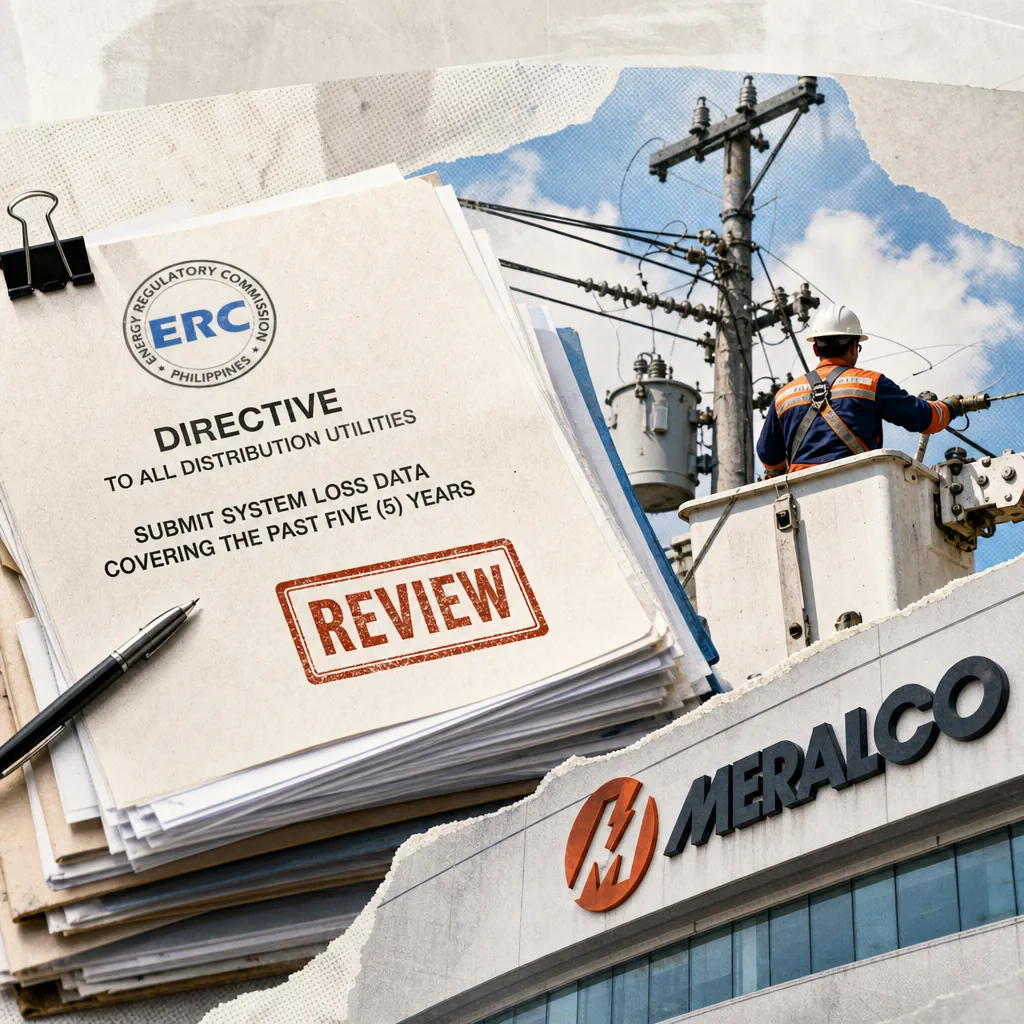
The day after President Ferdinand Marcos Jr. used his State of the Nation Address to call for the removal of the system loss charge from consumer electricity bills, the conversation shifted from rhetoric to regulatory action. The Energy Regulatory Commission (ERC) ordered all distribution utilities to submit five years of system loss records, while Manila Electric Co. (Meralco) pushed back, arguing that even the non-technical portion of the charge—stemming from electricity theft—would be difficult to eliminate. This development dominated the day's coverage, drawing heavy newspaper and online attention worth an estimated ₱1.1 million in advertising-equivalent value across the captured items. The issue resonates deeply with Filipino consumers, many of whom struggle with high electricity costs, and it has become a flashpoint in the broader debate over energy affordability and regulatory reform.
Beyond the system loss controversy, the day's conversation also touched on the Philippines' ambitious space program, with President Marcos announcing the country's first sounding rocket launch, and on the growing AI infrastructure push, highlighted by the Pax Silica hub. These stories, while less prominent in terms of immediate consumer impact, signal the country's long-term technological aspirations. Meanwhile, sports coverage—particularly the Premier Volleyball League's Mindanao tour—provided a lighter counterpoint, showcasing regional pride and athletic achievement.
The social media conversation, though not captured in the provided writeups, likely amplified these stories, with netizens debating the system loss charge, expressing excitement over the space program, and engaging with sports highlights. The day's narrative is thus a mix of policy, technology, and culture, with the system loss issue at its core.
Key themes
- System loss charge under fire: The ERC's order for distributors to submit system loss data, following the President's SONA call to scrap the charge, is the day's biggest story. It pits consumer advocates against utility companies, with Meralco warning of the practical difficulties.
- Space ambitions take flight: President Marcos announced a sounding rocket test launch in Cagayan, marking the Philippines' first step toward developing its own space launch capability. The mission, slated for late 2026 or early 2027, will carry a locally developed payload.
- AI hub raises data governance questions: The Pax Silica AI hub, a centerpiece of the SONA, faces scrutiny over who will govern the data it processes. The Philippines rejected a US request for diplomatic immunity at the hub, raising questions about data sovereignty.
- Consumer relief vs. utility viability: The debate over electricity charges highlights the tension between providing relief to consumers and maintaining the financial health of distribution utilities. The ERC's data gathering is a step toward evidence-based policy.
- Sports bring regional pride: The PVL's Mindanao tour showcased local talent, with Chenie Tagaod of Akari shining in front of her fellow Mindanaoans. This coverage underscores the league's efforts to expand beyond Metro Manila.
- MSME financing gets a boost: LANDBANK introduced new loan packages for micro, small, and medium enterprises in Bicol, offering up to ₱50 million to support business growth and technology adoption.
- Cultural and language debates persist: Articles on the distinction between language and dialect, and on a proposed law to write legislation in Filipino, reflect ongoing conversations about national identity and accessibility.
How the narratives stack
Dominant: The system loss charge controversy is the dominant narrative, driven by the ERC's regulatory action and Meralco's pushback. This story has direct implications for every Filipino household's electricity bill and has been a long-standing consumer grievance. The coverage in the captured set is substantial, with multiple articles from broadsheets and online news outlets, indicating its prominence in the day's news cycle.
Counter-narrative: Meralco and other distribution utilities present a counter-narrative, arguing that system loss is a real cost that must be recovered. They contend that eliminating the charge without addressing the underlying causes—such as electricity theft—would undermine the financial stability of the sector. This perspective is often drowned out by consumer anger but is crucial to the policy debate.
Emerging: The space program and AI hub are emerging narratives that could shape the country's technological future. The sounding rocket launch, while modest, signals a long-term ambition to become a spacefaring nation. The Pax Silica hub, meanwhile, raises questions about data governance that have yet to be fully addressed.
Suppressed: The story of MSME financing, while covered, did not receive the same attention as the energy and technology stories. Yet it is vital for economic recovery and job creation. Similarly, the cultural and language debates, while present, are often overshadowed by more immediate economic concerns.
Platform insights
- Facebook: Likely the primary platform for sharing news articles and opinion pieces on the system loss issue. Community groups and consumer advocates may use Facebook to organize and amplify calls for lower electricity bills. The platform's wide reach makes it a key battleground for public opinion.
- X (formerly Twitter): The platform for real-time commentary and political discourse. Politicians, journalists, and influencers likely used X to react to the ERC order and Meralco's response. Hashtags related to the SONA and electricity rates may trend.
- Reddit: The platform for in-depth discussions and niche communities. Subreddits like r/Philippines may host threads analyzing the system loss charge, the space program, and the AI hub. Reddit's anonymity allows for candid debate.
- YouTube: Video content, such as news segments and vlogs, likely drove engagement. The PVL matches and the sounding rocket announcement may have generated video content, with viewers commenting on the highlights.
Key voices and communities
- Consumer advocacy groups: These groups, such as the National Association of Electricity Consumers for Reforms (NASECORE), are vocal in demanding the removal of the system loss charge. They frame it as an unfair burden on consumers and call for greater transparency from utilities.
- Energy regulators and policymakers: The ERC and lawmakers are key voices in the debate. The ERC's data-gathering order is a concrete step, while senators and representatives have filed bills to amend the Electric Power Industry Reform Act (EPIRA). Their statements shape the policy direction.
- Utility companies: Meralco and other distribution utilities are defending the system loss charge, emphasizing the costs of technical losses and theft. They argue that a balanced approach is needed to ensure reliable service.
- Sports fans and regional communities: The PVL's Mindanao tour has energized local fans, who celebrate players like Chenie Tagaod. This community highlights the importance of regional representation in national sports leagues.
- Tech and space enthusiasts: The space program and AI hub have attracted a following among tech enthusiasts and futurists. They see these initiatives as steps toward modernization and global competitiveness.
Narrative streams
System loss: The battle over electricity bills
The system loss charge has long been a contentious item on Filipino electricity bills. System loss refers to the difference between the electricity generated or entering a distribution network and the amount actually billed to consumers. It includes technical losses—natural losses as electricity flows through wires—and non-technical losses, such as electricity theft and illegal connections. Currently, these costs are passed on to consumers, adding to their monthly bills.
President Marcos's call to eliminate the charge was met with public excitement, but the ERC's order for distributors to submit five years of data (2021–2025) is a more measured response. The ERC wants to understand the true extent of system loss before making policy changes. Meralco, the country's largest distribution utility, pushed back, arguing that even the non-technical portion, which stems from pilferage, would be difficult to remove. The company suggests that without addressing theft, utilities would bear an unfair financial burden.
This story is not just about economics; it's about fairness. For minimum wage earners, every peso added to the electricity bill is a peso taken away from food, medicine, and education. Senator Christopher "Bong" Go filed Senate Bill No. 2360 on July 29, aiming to reduce electricity charges, including system loss. The debate is likely to intensify as the ERC analyzes the data and Congress deliberates on amendments to EPIRA.
The coverage of this story in the captured set is significant, with articles from the Daily Tribune and Manila Times, among others, carrying substantial advertising-equivalent value. This indicates that the issue is a priority for news outlets, reflecting its importance to the public.
Space: The Philippines reaches for the stars
President Marcos's announcement of a sounding rocket test launch is a historic moment for the Philippines. A sounding rocket is a suborbital rocket designed to carry scientific instruments to high altitudes for a short period. The planned mission, set for late 2026 or early 2027, will carry a locally developed payload of up to 2 kilograms to an altitude of at least 5 kilometers. It will not reach orbit, but it will validate rocket technologies, launch procedures, and safety protocols.
The launch site will be in Lal-lo, Cagayan, within the Cagayan Economic Zone. Partners include the Philippine Space Agency, the Department of Information and Communications Technology, and South Korea's Perigee Aerospace. This initiative is part of a broader effort to develop the country's space industry, with the ultimate goal of establishing a commercial spaceport.
This story is significant because it represents a shift from being a consumer of space technology to a potential provider of launch services. The Philippines has relied on foreign rockets to deploy its satellites, but this project aims to build local expertise. The coverage in the captured set includes articles from Business Mirror and Head Topics, with high advertising-equivalent values, indicating strong interest.
AI: Pax Silica and the data governance question
The Pax Silica hub, announced in the SONA, is envisioned as an AI ecosystem within the Luzon Economic Corridor. It aims to attract AI investments and create quality jobs. However, a critical question remains: who will govern the data processed at the hub? The Philippines rejected a US request for diplomatic immunity at the planned hub in New Clark City, as confirmed by BCDA President Joshua Bingcang. This decision underscores the country's commitment to data sovereignty.
The hub will operate under Philippine laws, including the Investors Lease Act and the BCDA Law. This is a positive step, but the lack of a clear data governance framework is a concern. As AI adoption grows, the need for robust data protection and cybersecurity measures becomes paramount. The Manila Times article highlights this gap, noting that the SONA did not address who would govern the data.
This story is emerging, and its implications are far-reaching. The Philippines aims to become a digital hub in Southeast Asia, but it must balance this ambition with the protection of its citizens' data. The conversation around Pax Silica is likely to evolve as more details emerge.
Sports: PVL brings volleyball to Mindanao
The Premier Volleyball League's "On Tour" series brought top-flight volleyball to Polomolok, South Cotabato, delighting local fans. Akari defeated Choco Mucho in a thrilling four-set match, with Chenie Tagaod, a Tagum City native, delivering a standout performance. Tagaod scored a game-high 19 points, including six blocks, and expressed pride in showcasing her talent in front of fellow Mindanaoans.
This coverage is significant because it highlights the PVL's efforts to expand its reach beyond Metro Manila. The league's decision to hold games in Mindanao is a strategic move to grow the sport's fan base and provide opportunities for regional players. The matches also drew attention to the region's passion for volleyball, with local fans filling the gymnasium.
The sports coverage in the captured set includes articles from Inquirer, ABS-CBN, and Daily Tribune, with moderate advertising-equivalent values. While not as prominent as the energy story, it adds a positive and unifying element to the day's news.
MSME financing: LANDBANK's lending push
LANDBANK, a state-owned bank, unveiled new loan packages for micro, small, and medium enterprises (MSMEs) in Bicol. The LIFTING MSMEs Lending Program offers three tiers: Start-Up Loan (up to ₱500,000), Step-Up Loan (up to ₱5 million), and Level-Up Loan (up to ₱50 million). These loans are designed to support working capital, equipment purchases, technology adoption, and strategic projects. Eligible sole proprietors also receive free life and accident insurance for one year.
This initiative is part of a broader effort to support MSMEs, which are vital to the Philippine economy. By providing accessible financing, LANDBANK aims to help small businesses grow and create jobs. The program was introduced at the Talubo Bikolnon MSME Fair in Naga City, attended by about 300 entrepreneurs.
This story, while not as widely covered as the energy or space stories, is crucial for economic development. It demonstrates the government's commitment to supporting small businesses, which are often underserved by traditional banks.
Conversation trajectory
- System loss charge: The ERC's data-gathering order is a precursor to potential policy changes. Over the next 4–6 weeks, expect public consultations and legislative hearings. The outcome will depend on the data submitted and the political will to amend EPIRA. Trigger events: release of the ERC's analysis, committee votes in Congress, and any statements from Meralco.
- Space program: The sounding rocket launch is scheduled for late 2026 or early 2027. In the coming months, expect updates on the development of the payload and launch site. Trigger events: successful test of rocket components, announcements of partnerships, and any delays.
- AI hub: The Pax Silica hub is in its early stages. Over the next 6–12 months, expect more details on its governance structure and investment plans. Trigger events: signing of agreements with anchor tenants, release of a data governance framework, and public consultations.
- Sports: The PVL's On Tour series will continue, with games scheduled in Isabela. Expect continued coverage of regional matches and player performances. Trigger events: attendance figures, viewership ratings, and any announcements of future tour stops.
Response guidance
For communicators in the energy sector, the system loss issue requires a delicate balance. Acknowledge consumer concerns while explaining the technical realities. Use plain language to demystify system loss and highlight efforts to reduce it. Engage with consumer groups and regulators transparently, and be prepared to share data that supports your position.
For those in the technology and space sectors, emphasize the long-term benefits of these initiatives. Frame the sounding rocket as a stepping stone to greater capabilities, and address data governance proactively to build public trust. Highlight the economic opportunities and job creation potential.
For sports organizations, leverage the regional tours to build local fan bases. Share stories of players like Chenie Tagaod to humanize the league and connect with communities. Use social media to amplify highlights and engage with fans in real-time.
For financial institutions, promote MSME lending programs as a tool for economic empowerment. Share success stories and provide clear guidance on how to access these loans. Emphasize the support for small businesses as a commitment to inclusive growth.
Across all sectors, maintain a tone of transparency and responsiveness. The public is increasingly savvy and expects organizations to address their concerns directly. Use data and evidence to support your messages, and be willing to engage in constructive dialogue.
See the full picture behind today's signals.
This report draws from Media Meter's MediaWatch, our real-time monitoring engine tracking 2,470+ Philippine sources across print, broadcast, digital, and social. Explore how the platform turns raw coverage into decision-grade intelligence, then see how it's configured for teams like yours — whether you're in PR agencies, corporate comms, government, or marketing.
Want more? Browse our Report Library for sector and crisis intelligence, or request a demo and we'll have your brand set up before the call.
Want this kind of intelligence on your brand?
This brief is built on the same MediaWatch methodology that runs continuously across every brand we monitor. See your competitive landscape, Impact Score, and narrative trajectory in a 30-minute demo.