Power sector reforms, telco cable plan, and AI adoption lead news
A snapshot of the day's conversation on energy reforms, telecom infrastructure, and AI in the workplace, based on monitoring and media coverage.
The day's conversation was dominated by three interlocking stories: the government's push to reform electricity pricing, a landmark proposal by the country's biggest telecom firms to build a national undersea cable, and the accelerating adoption of artificial intelligence in the workplace. Each drew substantial coverage across online news outlets, with the power sector reforms generating the most commentary and analysis. The telecom cable proposal, unveiled by the Department of Information and Communications Technology (DICT), signaled a rare moment of cooperation among fierce competitors. Meanwhile, Globe Telecom's disclosure that its employees had built dozens of AI tools highlighted a quieter but significant shift in how Philippine corporations are preparing for an AI-driven future. The day's reporting also touched on the national debt crossing ₱19 trillion, a Meralco refund order, and a political spat between senators over flood control, but the energy and telecom stories carried the most weight for the sectors involved.
Key themes
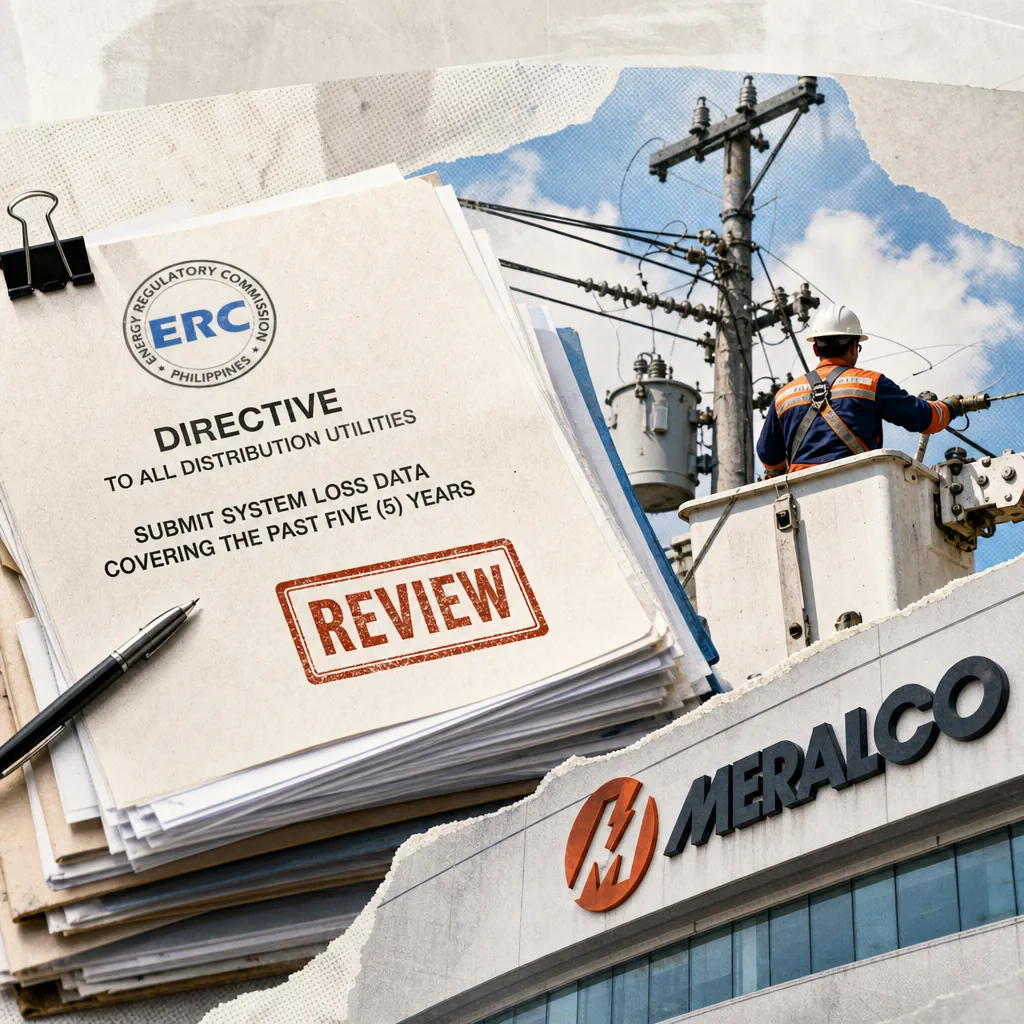
- Power sector reform under scrutiny: President Marcos's proposal to scrap the system loss charge on electricity bills drew both support and skepticism. The Energy Regulatory Commission (ERC) ordered Meralco to refund ₱9.5 billion to consumers, while also requiring all distribution utilities to submit five years of system loss data. Analysts and industry players questioned whether removing the charge would actually lower rates or simply shift costs elsewhere.
- Telco giants unite for undersea cable: PLDT, Globe, and Converge proposed a $500-million (about ₱30.6 billion) domestic submarine fiber-optic cable that would loop around the archipelago, from Batanes to Palawan, through the Visayas and Mindanao. The project, still subject to government approval, aims to connect unserved islands and double as a sensor network for earthquakes and tsunamis.
- AI adoption accelerates in the workplace: Globe Telecom revealed that its employees had developed more than 30 AI tools and bots now deployed across network monitoring, procurement, and customer service. The company's network monitoring tool cut service restoration time by 70 percent, and over 2,500 employees have completed AI training. This reflects a broader trend of companies investing in AI upskilling.
- National debt hits record high: The Bureau of the Treasury reported that the Philippines' total debt reached ₱19.065 trillion at the end of June, up 2.8 percent from May. This translates to roughly ₱169,130 per Filipino, based on the population of 112.7 million. The increase was driven by government borrowing to fund development projects.
- Meralco refund offers consumer relief: The ERC ordered Meralco to refund ₱9.5 billion to its customers, equivalent to ₱0.3448 per kilowatt-hour, over six months. The refund corrects over-collections from January to December 2025 due to delays in the rate-setting process. Over 8 million consumers are expected to benefit.
- PXP Energy seeks partners for oil and gas exploration: Billionaire Manuel V. Pangilinan's PXP Energy Corp. is courting foreign investors, including Chinese firms, to fund exploration in service contracts within undisputed Philippine territory. The company also expressed interest in native hydrogen, a nascent energy source.
- E-governance and transparency push: The Marcos administration highlighted its digitalization efforts, including the Sumbong sa Pangulo website for reporting anomalous flood control projects, as part of its anti-corruption agenda. The initiative aims to rebuild public trust through transparency.
- Weather disruptions and class suspensions: Tropical Depression Luis prompted class suspensions in several areas in Luzon on Monday, August 3. The storm, the 12th of the year, brought heavy rain and wind signals, affecting daily life and underscoring the need for resilient infrastructure.
How the narratives stack
Dominant: The power sector reform narrative dominated the captured set, with multiple articles covering the ERC's Meralco refund order, the proposed scrapping of system loss charges, and the FIT-All rate hike request. This story had the most direct impact on consumers and drew the most analytical commentary, including a Manila Bulletin opinion piece questioning whether the SONA promise would ever materialize. The coverage value of these items was substantial, reflecting the issue's prominence in the business pages.
Counter-narrative: Against the optimism of reform, a counter-narrative emerged from industry players and analysts. Iloilo's electric cooperative ILECO 1 warned that removing system loss charges could create financial burdens unless the government identifies who absorbs the cost. A Manila Bulletin columnist argued that the cost would simply be moved or renamed, not eliminated. This skepticism provided a necessary balance to the political promise.
Emerging: The telco undersea cable proposal is an emerging story with significant long-term implications. It represents a rare collaboration among competitors and could reshape the country's digital infrastructure. The project's dual purpose as a sensor network for disaster preparedness adds a novel dimension. While still subject to approval, it signals a potential shift in how connectivity is delivered across the archipelago.
Suppressed: The story of the national debt crossing ₱19 trillion received relatively little attention compared to its magnitude. While it was covered by Manila Bulletin, the deeper implications for fiscal sustainability and the burden on every Filipino were not explored in depth. This is a significant under-covered story that deserves more scrutiny.
Platform insights
- Facebook: The political exchange between Senators Cayetano and Lacson over flood control in Taguig played out on Facebook, with Cayetano using Facebook Live to respond. This platform remains a primary venue for political messaging and public engagement, with posts generating comments and shares. The exchange drew attention to the flood control controversy, a sensitive issue for the administration.
- X (formerly Twitter): Senator Lacson used X to decline Cayetano's invitation, quipping that he might drown in floodwater. This platform is favored by politicians and journalists for quick, public statements. The exchange on X was picked up by news outlets, amplifying the story.
- YouTube: While not explicitly mentioned in the monitoring, the PVL volleyball coverage and other sports content likely drew engagement on YouTube. The platform is a key channel for sports highlights and full matches, with fans commenting and sharing.
- Reddit: No significant Reddit activity was noted in the captured set. However, discussions on power rates and telecom issues often surface on Philippine subreddits, where users share personal experiences and opinions.
Key voices and communities
- Government officials and regulators: The ERC, DICT, and Malacañang were central voices, announcing policy decisions and defending the administration's record. Their statements set the agenda for the day's news.
- Industry executives: Manuel V. Pangilinan (PXP Energy), Henry Aguda (DICT), and Globe's HR chief Renato Jiao provided insights into corporate strategies and investment plans. Their comments shaped the business narrative.
- Consumer advocates and analysts: Market analysts and columnists offered critical perspectives on power sector reforms, questioning the feasibility of scrapping system loss charges. Their voices added depth to the coverage.
- Local officials and cooperatives: ILECO 1's general manager Miguel Paguntalan Jr. represented the concerns of electric cooperatives, highlighting the practical challenges of reform. This community is often overlooked but crucial for implementation.
- Sports fans and local communities: The PVL coverage, featuring Chenie Tagaod's game-winning performance, drew attention to Mindanao's talent and the league's On Tour initiative. This community celebrates regional pride and athletic achievement.
Narrative streams
Power sector reform: The promise and the pitfalls
The day's most significant narrative centered on the government's proposal to remove the system loss charge from electricity bills, a pledge made by President Marcos in his State of the Nation Address (SONA). System loss refers to the electricity lost during transmission and distribution due to technical inefficiencies and theft. Currently, this cost is passed on to consumers as a separate line item. The President's proposal, which would require amending the Electric Power Industry Reform Act (EPIRA) of 2001, was met with enthusiasm from consumers but skepticism from industry experts.
The Energy Regulatory Commission (ERC) took a parallel step by ordering Meralco to refund ₱9.5 billion to its customers. The refund, equivalent to ₱0.3448 per kilowatt-hour, corrects over-collections from January to December 2025, a period when the rate-setting process was delayed. ERC Chair Francis Saturnino Juan said implementation would begin in the next billing cycle. This decision was widely covered, with BusinessWorld and Inquirer Plus both reporting on it.
However, the feasibility of scrapping system loss charges was questioned. ILECO 1's general manager, Engineer Miguel Paguntalan Jr., told reporters in Iloilo that the proposal raises difficult questions about who would absorb the losses. "Sin-o sina ang magabayad? Sin-o ang maga-assume sang mga losses?" he asked in Hiligaynon, meaning "Who will pay? Who will assume the losses?" He argued that it would be unfair for distribution utilities to absorb the cost alone.
A Manila Bulletin opinion piece titled "Scrapping system loss: Why that SONA promise may never happen" echoed this skepticism, arguing that the cost would simply be moved, renamed, or folded into other tariff components. "Electricity follows arithmetic, not political rhetoric," the columnist wrote. This perspective suggests that consumers may not see the promised savings.
The ERC also issued an advisory requiring all distribution utilities to submit their system loss data from 2021 to 2025, and every year thereafter. This move aims to promote transparency and inform the ongoing deliberations on EPIRA amendments. The data will help regulators understand the true extent of system losses and design a fairer mechanism.
For the sector, this narrative underscores the tension between political promises and economic reality. While reform is needed, the implementation details will determine whether consumers actually benefit. The coming months will be critical as Congress deliberates on the proposed amendments.
Telco undersea cable: A $500-million bet on connectivity
In a surprising show of unity, the country's three largest broadband providers—PLDT, Globe, and Converge—proposed a $500-million (about ₱30.6 billion) domestic submarine fiber-optic cable network. The announcement was made by DICT Secretary Henry Aguda, who said the telcos had presented the plan to the department. The project would lay undersea cables from Batanes in the north, looping around Palawan, linking the Visayas, and extending to Mindanao, before looping back along the Pacific Ocean.
The cable would not only provide broadband connectivity to unserved islands but also double as a national sensor network for earthquakes, tsunamis, and maritime intrusions. This dual purpose adds a layer of national security and disaster preparedness, making the project attractive to the government.
The entire cost would be borne by the telcos, sparing the government any financial outlay. Aguda noted that the project would include landing stations that plug into 14 international submarine cables, ensuring redundancy and resilience against outages. The target completion is within 24 months of approval.
This proposal is significant because it represents a rare collaboration among fierce competitors. It also aligns with the government's National Fiber Backbone initiative, which aims to improve internet speeds for approximately 70 million Filipinos. If approved, the project could dramatically reduce the digital divide, bringing high-speed internet to remote islands.
However, the proposal is still subject to government approval, and details such as the exact route and regulatory framework remain to be finalized. The telcos' willingness to invest suggests they see long-term value in expanding their networks, even in areas that may not be immediately profitable.
For the sector, this is a positive development that could enhance the Philippines' digital infrastructure and attract further investment. It also signals a shift toward collaborative infrastructure building, which may become a model for future projects.
AI in the workplace: Globe's people-first approach
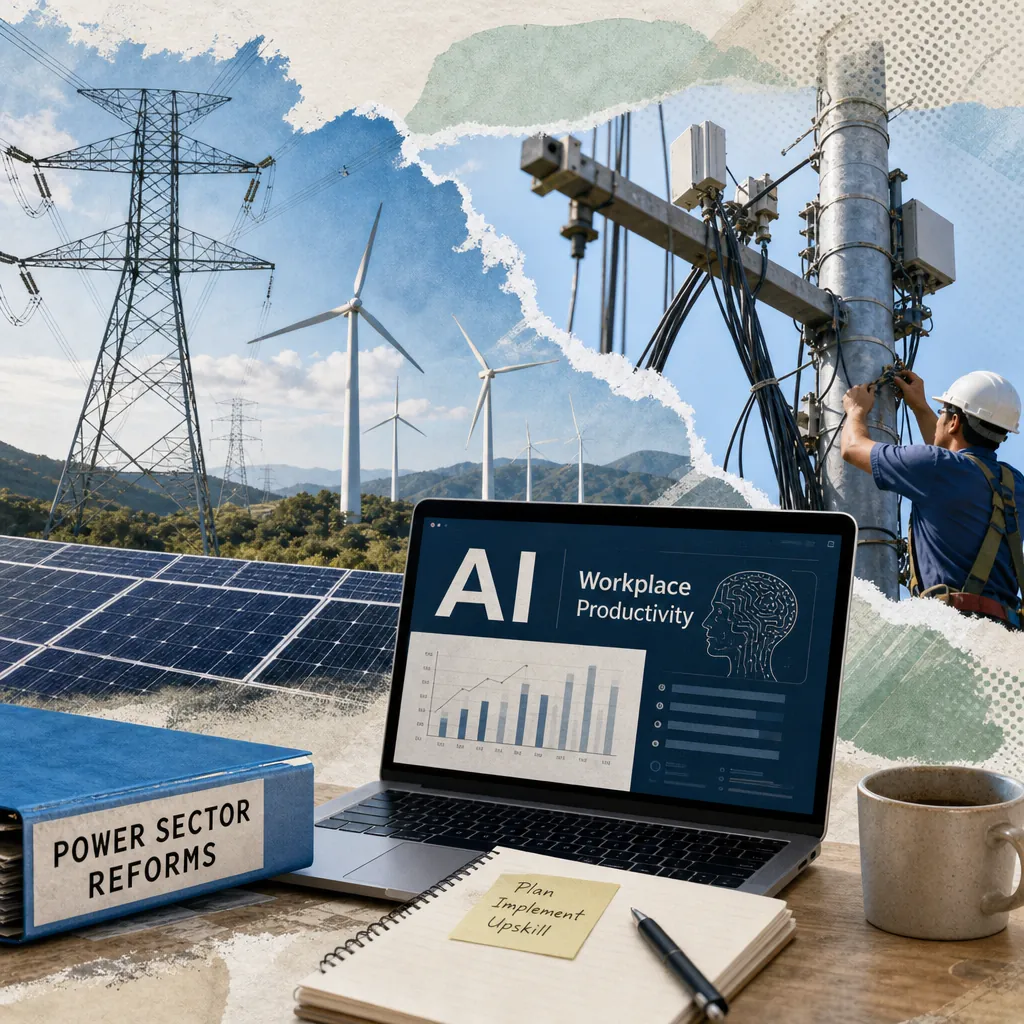
Globe Telecom's announcement that its employees had developed more than 30 AI tools and bots marked a notable milestone in the country's corporate AI adoption. The tools are deployed across procurement, quality assurance, customer engagement, data analytics, and network operations. The network monitoring application alone cut service restoration time by 70 percent, with 90-percent fault detection accuracy.
The company's internal upskilling push has seen over 2,500 employees complete AI learning programs, and more than 80 percent of its workforce now has access to AI productivity tools. According to Globe, 84 percent of employees reported higher productivity, saving an average of three to four hours per week.
Renato "Ato" Jiao, Globe's chief human resource officer, emphasized a "people-first" approach: "At Globe, we see AI as an enabler of human potential. Our goal is not simply to adopt new technologies, but to equip our people with the tools, skills, and confidence to thrive in an AI-enabled workplace."
This narrative is part of a broader trend of companies investing in AI to improve efficiency and competitiveness. It also addresses concerns about AI displacing workers by focusing on upskilling and augmentation. For the sector, this is a model for how to integrate AI responsibly, with a focus on employee development.
The coverage of Globe's AI initiatives appeared in multiple outlets, including Business Mirror and Insider Ph, indicating strong interest in the topic. The story resonates with a wider audience concerned about the future of work in an AI-driven economy.
PXP Energy: Exploring new frontiers
PXP Energy Corp., chaired by billionaire Manuel V. Pangilinan, is seeking foreign partners to fund its oil and gas exploration ventures. The company has secured new service contracts, including SC 91 in the Northwest Palawan Basin and SC 88 for the Galoc Oil Field, but needs capital to pursue them. Pangilinan told reporters that the company has invited Chinese firms to invest via farm-in agreements, where a partner takes a stake in a contract in exchange for funding.
Notably, PXP is focusing on service contracts within undisputed Philippine territory to avoid the geopolitical tensions that have stalled its West Philippine Sea assets. The company's core assets, SC 72 (Recto Bank) and SC 75 (Northwest Palawan), remain under force majeure due to the ongoing disputes.
Pangilinan also expressed interest in native hydrogen, a naturally occurring gas found underground. The Philippines has already awarded three native hydrogen service contracts to US-based Koloma Inc., and PXP is keen to explore this emerging energy source.
This narrative highlights the challenges and opportunities in the upstream oil and gas sector. While geopolitical risks remain, the company is diversifying its portfolio and seeking innovative energy sources. For the sector, this signals a cautious but forward-looking approach to energy exploration.
National debt: A growing burden
The Bureau of the Treasury reported that the Philippines' total debt reached ₱19.065 trillion at the end of June, up 2.8 percent from May's ₱18.546 trillion. This translates to approximately ₱169,130 per Filipino, based on the population of 112.7 million. The increase was driven by net availment of domestic and external borrowings to fund development projects, though the favorable movement of the peso tempered the rise.
This story, covered by Manila Bulletin, is a stark reminder of the country's fiscal challenges. While the debt-to-GDP ratio remains manageable, the per-capita figure is a useful way to communicate the scale. The government's borrowing is intended to finance infrastructure and social programs, but it also raises concerns about future debt servicing.
For the sector, this narrative underscores the importance of fiscal discipline and the need for sustainable economic growth. It also connects to the broader conversation about government spending and accountability.
E-governance and transparency
Amid the flood control controversies, the Marcos administration highlighted its digitalization efforts as a tool for transparency and accountability. The Sumbong sa Pangulo website allows citizens to report nonoperational or anomalous flood control projects. President Marcos said in his SONA, "All of your reports and complaints submitted through Sumbong sa Pangulo have been a great help. Your vigilance and active participation in holding the government accountable are key to the fight against corruption."
The administration also promoted the DPWH Transparency Portal and the Integrity Chain, which make government infrastructure projects, budgets, and procurement documents accessible to the public. These initiatives aim to rebuild public trust by making government actions more visible.
This narrative is part of a broader push for e-governance, which has been a core priority of the Marcos administration. It also ties into the digitalization agenda, which includes improving internet connectivity and digital services. For the sector, this is a positive development that could enhance governance and reduce corruption.
Conversation trajectory
- Power sector reform (4-6 weeks): The ERC's data collection from distribution utilities and the ongoing deliberations on EPIRA amendments will shape the future of system loss charges. Watch for the release of the data and any legislative progress. If the scrapping proposal gains traction, expect intense lobbying from utilities and consumer groups.
- Telco undersea cable (6-12 months): The proposal is still subject to government approval. Watch for the DICT's evaluation and any public consultations. If approved, the project could break ground within a year, with completion targeted in 24 months. This will be a key indicator of the government's commitment to digital infrastructure.
- AI adoption (ongoing): Globe's AI initiatives may prompt other companies to follow suit. Watch for announcements from other telcos and large corporations about AI upskilling programs. The impact on employment and productivity will be a growing topic of discussion.
- National debt (quarterly): The Bureau of the Treasury releases debt data monthly. Watch for the next report to see if the trend continues. The per-capita debt figure may become a talking point for opposition politicians.
- Meralco refund (next billing cycle): The refund will appear as a separate line item in consumers' bills. Watch for consumer feedback and any issues with implementation. This could be a short-term positive story for the administration.
Trigger events: The ERC's decision on the FIT-All rate for 2027, the first batch of system loss data submissions, the DICT's approval of the undersea cable project, and the next debt report are all events that could shift the narrative.
Response guidance
For communicators in the energy and telecom sectors, the following guidance is relevant:
- Power sector: Be transparent about the true costs of electricity. When discussing system loss reform, explain the technical realities and the potential trade-offs. Avoid overpromising savings; instead, focus on the long-term benefits of a more efficient grid. Engage with consumer concerns and provide clear, simple explanations of how rates are calculated.
- Telecom: Highlight the collaborative nature of the undersea cable project and its benefits for national connectivity and disaster resilience. Emphasize the private sector's investment and the government's supportive role. Address any concerns about cost recovery and the timeline.
- AI adoption: Frame AI as a tool for human empowerment, not replacement. Share success stories of employees who have benefited from upskilling. Be clear about the data and privacy implications of AI tools, and reassure stakeholders that ethical guidelines are in place.
- General: Monitor the political discourse around flood control and infrastructure. Avoid getting drawn into partisan debates; instead, focus on factual, solution-oriented messaging. Use plain language to explain complex issues, and be prepared to respond to misinformation.
- Sensitive topics: The national debt and the system loss charge are politically sensitive. When discussing these, acknowledge the challenges but also highlight the government's efforts to manage them. Avoid making promises that may not be kept, as this can erode trust.
See the full picture behind today's signals.
This report draws from Media Meter's MediaWatch, our real-time monitoring engine tracking 2,470+ Philippine sources across print, broadcast, digital, and social. Explore how the platform turns raw coverage into decision-grade intelligence, then see how it's configured for teams like yours — whether you're in PR agencies, corporate comms, government, or marketing.
Want more? Browse our Report Library for sector and crisis intelligence, or request a demo and we'll have your brand set up before the call.
Want this kind of intelligence on your brand?
This brief is built on the same MediaWatch methodology that runs continuously across every brand we monitor. See your competitive landscape, Impact Score, and narrative trajectory in a 30-minute demo.