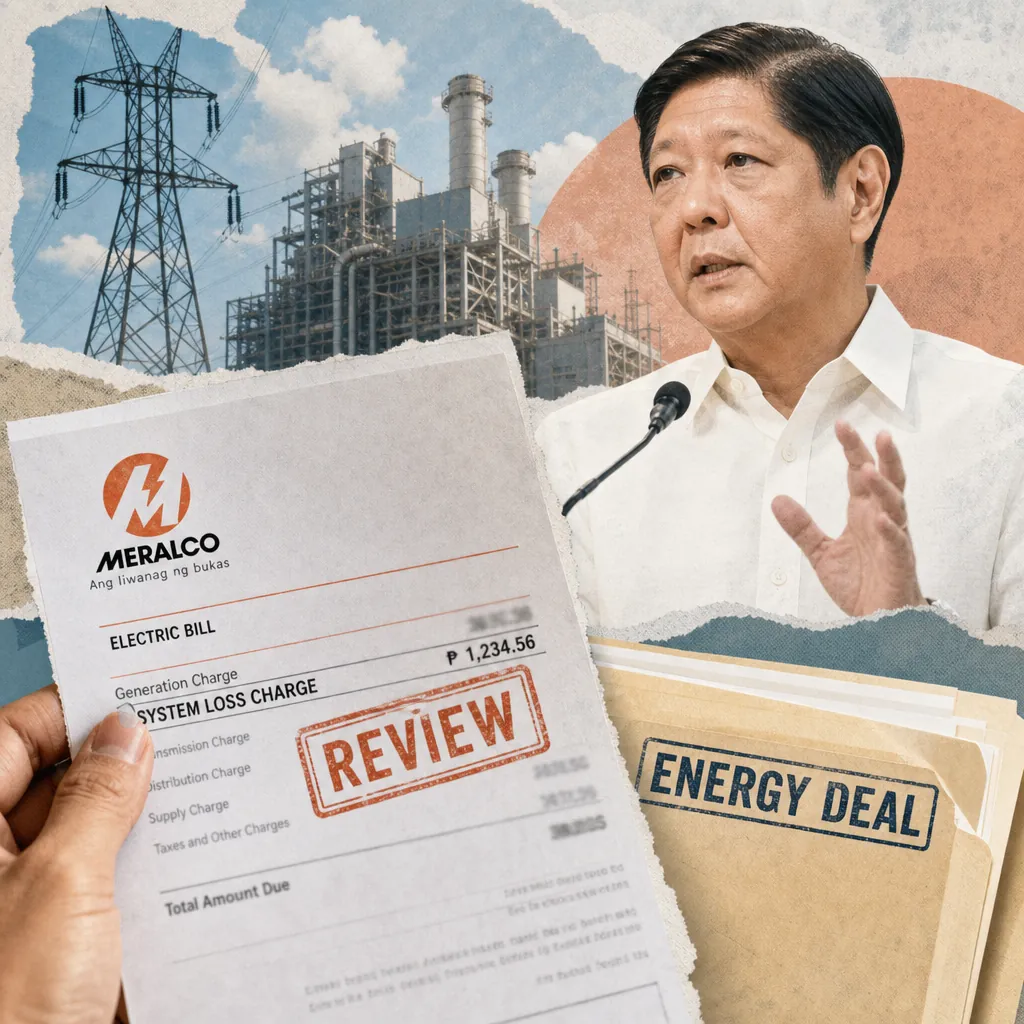
SONA Fallout: Power Sector, Space Ambitions, and AI Hub Debate
The day after President Marcos Jr.'s SONA, the conversation is dominated by his pledge to remove system loss charges, the planned spaceport in Cagayan, and the Pax Silica industrial hub, with mixed reactions from industry and public.
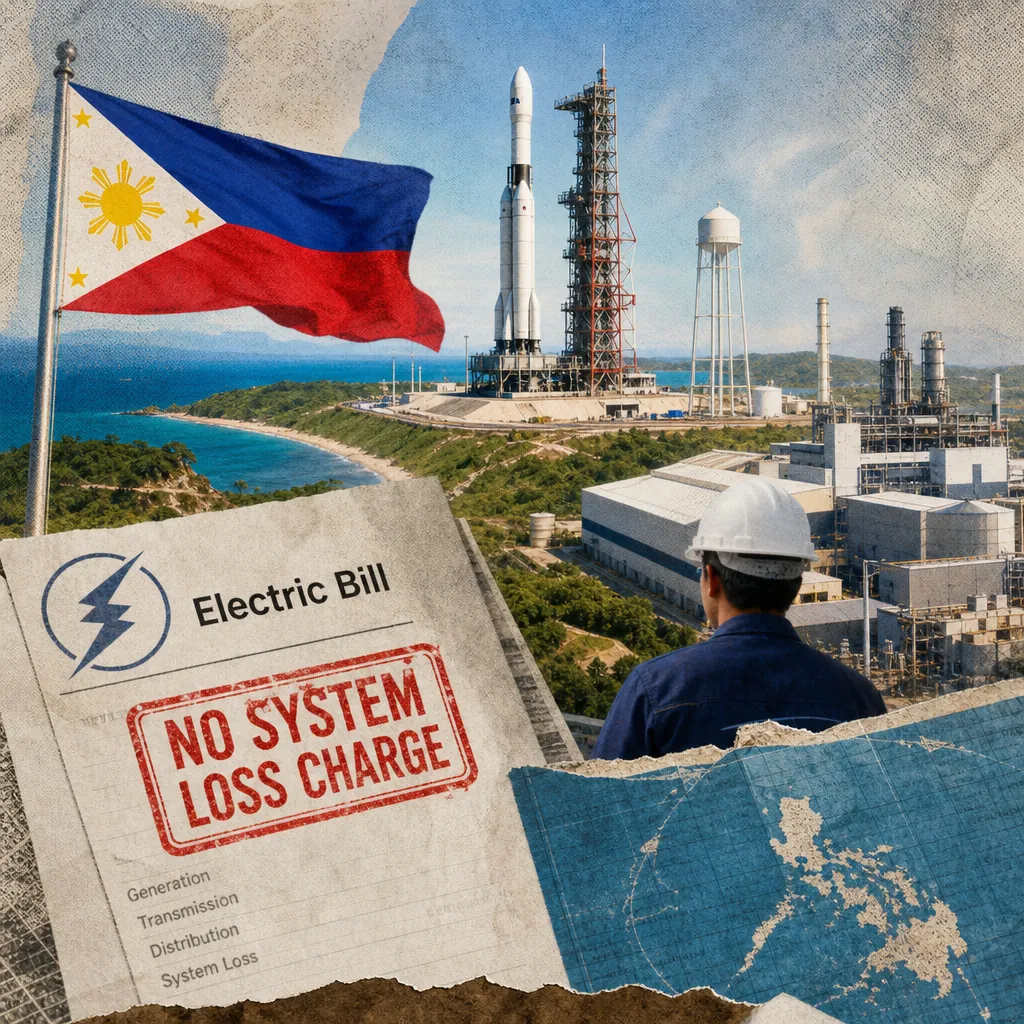
The day after President Ferdinand Marcos Jr.'s fifth State of the Nation Address (SONA), the conversation is split between three major announcements: a pledge to remove system loss charges from electricity bills, a planned spaceport in Cagayan, and the Pax Silica industrial hub. Each drew significant coverage and social media engagement, but the power sector proposal generated the most intense debate, with industry leaders warning of unintended consequences.
Key themes
- System loss charge removal: popular but problematic – President Marcos's SONA pledge to eliminate system loss charges from consumer bills drew a standing ovation in Congress but raised immediate concerns among industry players. System loss charges cover the cost of electricity lost through technical inefficiencies and pilferage. Removing them without a funding mechanism could shift the burden to utilities or taxpayers. Meralco Chairman Manuel V. Pangilinan warned that the proposal is "not a small matter" and could impact the entire power industry.
- Spaceport announcement fuels national pride and questions – Marcos declared that Cagayan is "primed to serve as our gateway to space" and announced a sounding rocket launch test in 2027. The Philippine Space Agency (PhilSA) has been working on this for years, including training engineers in South Korea. The announcement generated excitement but also raised questions about costs, safety, and long-term benefits.
- Pax Silica industrial hub: economic promise vs. environmental risk – The Pax Silica Initiative, a US State Department-backed project to build an AI data center in Tarlac, was highlighted in the SONA as a source of billions in investment and 200,000 jobs. However, critics including Sen. Kiko Pangilinan and Akbayan Rep. Chel Diokno called for safeguards to protect communities and the environment. An editorial in Philstar warned against embracing the project "with eyes closed."
- Meralco earnings show resilience amid uncertainty – Meralco reported a 3.8% rise in core net income to P26.5 billion in the first half, driven by its power generation business. However, the company expects electricity prices to remain under pressure due to geopolitical tensions in the Middle East.
- Stock market rebounds on BSP dovish signals – The Philippine Stock Exchange Index (PSEi) rose 0.78% to 6,353.04, and the peso strengthened to P61.41 against the US dollar, after Bangko Sentral ng Pilipinas (BSP) Governor Eli Remolona Jr. indicated a low chance of aggressive rate hikes.
- Philex Mining profit doubles on Padcal recovery – Philex Mining Corp. saw its second-quarter net income more than double to P392 million, as operations at its Padcal mine normalized and gold and copper prices remained high.
- Flood control funding for Davao City announced – DPWH Secretary Vince Dizon said funding for a long-delayed Japan International Cooperation Agency (Jica) flood control master plan for Davao City will be allocated in the 2027 budget, following recent flooding.
- Ethics complaint filed against Sen. Pia Cayetano – A group of women's rights advocates filed an ethics complaint against Senator Pia Cayetano for posting an allegedly edited video during the impeachment trial of Vice President Sara Duterte, claiming it misrepresented a House prosecutor.
How the narratives stack
Dominant – Within the captured set, the system loss charge removal proposal dominates both news coverage and social media reaction. Multiple outlets covered Meralco's response and the policy implications, while the public debate centers on who will pay for the lost revenue. The proposal was reportedly a last-minute addition to the SONA speech, adding to the sense of uncertainty.
Counter-narrative – Industry voices, led by Meralco's Pangilinan, argue that removing system loss charges without a clear funding mechanism is irresponsible. They emphasize that the costs don't disappear—they would have to be absorbed by the industry or passed on through other charges. This counter-narrative is gaining traction in business media.
Emerging – The spaceport announcement is an emerging narrative that blends national pride with practical questions. While the SONA generated excitement, follow-up coverage is beginning to probe the technical and financial details, including the role of foreign partners and the timeline.
Suppressed – The Pax Silica industrial hub, despite its potential economic impact, received relatively less critical scrutiny in the immediate SONA aftermath. While some editorials and politicians raised concerns, the broader conversation has not yet delved into the specifics of land use, water requirements, and data sovereignty.
Platform insights
- Facebook – The dominant platform for discussion, with posts from news outlets and politicians generating high engagement. Sen. Kiko Pangilinan's Facebook post laying out his conditional support for Pax Silica was widely shared. The system loss charge debate also trended, with many users expressing support for the removal but questioning the feasibility.
- X (formerly Twitter) – More focused on real-time reactions to the SONA and subsequent press conferences. Journalists and analysts used X to highlight the last-minute insertion of the system loss pledge and to share quotes from Meralco's briefing. The spaceport announcement generated excitement among science and tech communities.
- YouTube – News channels uploaded full press conferences and analysis segments. Meralco's earnings briefing and the DPWH flood control announcement were among the most viewed.
- Reddit – Limited activity, but the Philippines subreddit had threads discussing the spaceport and the system loss charge, with users debating the economic implications.
Key voices and communities
- President Ferdinand Marcos Jr. – His SONA set the agenda. His statements on system loss, spaceport, and Pax Silica are the primary drivers of the day's conversation.
- Manuel V. Pangilinan (MVP) – As chairman of Meralco and Philex, his warnings about the system loss charge and his company's earnings reports are heavily covered. He is the leading industry voice pushing back on the proposal.
- Sen. Kiko Pangilinan – His conditional support for Pax Silica, expressed on Facebook, represents a cautious political stance that balances economic opportunity with environmental and community safeguards.
- Philippine Space Agency (PhilSA) – The agency is the technical authority behind the spaceport plans. Its years of preparation, including training in South Korea, lend credibility to the announcement.
- Energy Regulatory Commission (ERC) and Department of Energy (DOE) – These regulators are expected to play a key role in any reform of system loss charges. Their silence so far is notable.
Narrative streams
System loss charge removal: a popular promise with a price tag
President Marcos's declaration that system loss charges would be removed from consumer bills was met with a standing ovation in Congress, but it was not in the advance copy of the speech distributed to media, suggesting it was a last-minute addition. System loss charges cover the cost of electricity lost through technical inefficiencies in transmission and distribution, as well as non-technical losses such as pilferage and illegal connections. Eliminating the charge from bills does not eliminate the underlying costs—it merely shifts them.
Meralco Chairman Manuel V. Pangilinan, in a media conference covered by multiple outlets, called the proposal "not a small matter" and warned that it could have a "big impact" on the entire power industry. "It's a big bill for the industry because it cuts across generation, transmission, and distribution. The bill is too big for the industry to absorb all of it," he said. He stressed that a discussion is needed on who will pay for the lost revenue.
The Daily Tribune's editorial (source 13) noted that the proposal raises "difficult policy questions" and that without a clear funding mechanism or structural reforms, it would merely transfer a multibillion-peso burden. The coverage of this issue was heavy, with an estimated advertising-equivalent value of over P500,000 for the Tribune piece alone.
On social media, the proposal was popular among consumers who see it as a way to lower electricity bills, but industry watchers and economists cautioned that the costs would eventually be passed on through other charges or taxes. The narrative is still developing, with the Energy Regulatory Commission and Department of Energy yet to comment.
Spaceport: from SONA to launch pad
President Marcos's announcement that a sounding rocket launch test is slated for 2027 in Cagayan was a highlight of his SONA. "Cagayan is both geographically and economically primed to serve as our gateway to space and host the country's first spaceport," he said. A sounding rocket is a relatively small research vehicle designed to carry scientific instruments into the upper atmosphere or space before returning to Earth—unlike an orbital rocket, it does not place satellites into orbit.
The Philippine Space Agency (PhilSA) has been working on this for years. Filipino engineers have trained in rocket development in South Korea, and PhilSA has entered into agreements for experimental launches in the Philippines. The test launch will be a demonstration flight of a liquid-fueled rocket carrying a locally developed payload of up to 2 kg to an altitude of at least 5 km. The project is implemented by PhilSA, the Department of Information and Communications Technology (DICT), and the Cagayan Economic Zone Authority.
Coverage of the spaceport announcement was extensive, with an article on Del Superior Govierno (source 11) carrying an estimated advertising-equivalent value of over P700,000. The narrative is one of national pride and technological ambition, but questions remain about the total cost, the timeline for a full spaceport, and the economic benefits for Cagayan.
Pax Silica: economic opportunity meets cautious scrutiny
The Pax Silica Industrial Hub, a US State Department-backed initiative to build an AI data center in New Clark City, Tarlac, was touted by President Marcos as a way for the Philippines to enter the global AI, semiconductor, and advanced manufacturing value chain. He claimed it could bring billions of dollars in investment and nearly 200,000 jobs.
However, the proposal has drawn cautious responses. Sen. Kiko Pangilinan, in a Facebook post, laid out his conditional support: "Simple lang ang paninindigan ko sa Pax Silica: Kung makakatulong itong palakasin ang industriyang Pilipino habang pinoprotektahan ang mga komunidad at kalikasan natin dito sa Pilipinas, nararapat lamang itong suportahan." He added that if the cost is further pressure on the already struggling and exploitation of nature without safeguards, that is a line he will not cross.
An editorial in Philstar (source 24) warned against embracing the project "with eyes closed," noting that the 1,620-hectare site in New Clark City has large requirements for water and electricity, potential impacts on land and communities, and implications for data infrastructure and foreign investment amid the global tech rivalry.
The narrative is still emerging, with most coverage focusing on the SONA announcement rather than in-depth analysis. The project's environmental impact assessment and the specifics of job creation have yet to be fully debated.
Meralco earnings: resilience amid uncertainty
Meralco reported a 3.8% rise in consolidated core net income to P26.5 billion for the first half of 2026, driven by stronger contributions from its power generation and retail electricity supply businesses. Reported net income rose 12.6% to P27.54 billion. Total energy sales volume grew 2% to 34,328 gigawatt-hours.
Despite the positive results, Meralco Chairman Pangilinan said the company expects electricity prices to remain under pressure due to geopolitical tensions in the Middle East, which continue to roil global fuel markets. "We expect that the energy industry will continue to face uncertainty caused by geopolitical developments in the Middle East. Consequently, global fuel markets are extremely fragile and volatile," he said.
The earnings report was covered by multiple outlets, including BusinessWorld (source 22) and Philstar (source 25), with combined estimated advertising-equivalent value of nearly P700,000. The narrative positions Meralco as a resilient player navigating a challenging environment, but the system loss charge debate adds a layer of regulatory risk.
Stock market and peso gain on BSP dovish tone
The Philippine Stock Exchange Index (PSEi) rebounded 0.78% to 6,353.04 on Wednesday, while the peso strengthened by 20.4 centavos to P61.41 against the US dollar. The gains were attributed to bargain hunting and remarks by BSP Governor Eli Remolona Jr., who said there was only a small chance of aggressive monetary tightening. The central bank has hiked rates twice in response to inflation from the Gulf conflict.
Trading remained relatively muted at P6.03 billion as investors awaited the US Federal Reserve's policy decision and monitored geopolitical developments. The narrative is one of cautious optimism, with the BSP's dovish stance providing a floor for sentiment.
Philex Mining profit doubles on Padcal recovery
Philex Mining Corp. reported that its second-quarter attributable net income more than doubled to P392 million, as operations at its Padcal mine in Benguet normalized after rehabilitation works. Revenues climbed 30% to P2.423 billion, supported by elevated gold and copper prices. The company expects the operational momentum to continue through the remainder of 2026.
The story was covered by Head Topics (source 19) and BusinessWorld (source 21), with combined estimated advertising-equivalent value of over P240,000. The narrative highlights the mining sector's recovery and the benefits of high commodity prices.
DPWH to fund Jica flood control plan for Davao City
DPWH Secretary Vince Dizon announced that funding for the Japan International Cooperation Agency's (Jica) Master Plan and Feasibility Study on Flood Control and Drainage in Davao City will be allocated in the 2027 budget. The plan aims to mitigate water-induced disasters in 13 barangays. Dizon admitted the plan has not yet been implemented and that detailed engineering designs are still pending. He said he would not allow inaction after the recent flooding.
The announcement was covered by Head Topics (source 9) and Sunstar (source 10), with combined estimated advertising-equivalent value of over P870,000. The narrative is one of long-delayed action finally moving forward, but the timeline remains uncertain.
Ethics complaint against Sen. Pia Cayetano
A group of women's rights advocates, academics, and feminists filed an ethics complaint against Senator Pia Cayetano for posting an allegedly edited video during the impeachment trial of Vice President Sara Duterte. The complaint, filed with the Senate Committee on Ethics and Privileges, claims the video gave a false impression that House prosecutor Chel Diokno admitted to pursuing the impeachment case without evidence. Cayetano was serving as a senator-judge at the time.
The story was covered by Manila Bulletin (source 20) with an estimated advertising-equivalent value of over P220,000. The narrative adds a layer of political controversy to the ongoing impeachment proceedings.
Conversation trajectory
- System loss charge removal (4–6 weeks): Expect continued debate as the Energy Regulatory Commission and Department of Energy weigh in. The proposal may face significant pushback from industry groups and could be scaled back or tied to structural reforms. Watch for legislative proposals and public hearings.
- Spaceport (6–12 months): The 2027 test launch will keep the spaceport in the news, but detailed plans and budget allocations will determine momentum. Public interest is high, but sustained attention will depend on tangible progress.
- Pax Silica (3–6 months): Environmental impact assessments and community consultations will be critical. The project's fate may hinge on the government's ability to address concerns about water, energy, and data sovereignty. Expect more political debate as details emerge.
- Meralco earnings and power prices (ongoing): Geopolitical tensions in the Middle East will continue to influence fuel costs and electricity prices. The system loss charge debate adds regulatory uncertainty. Meralco's next quarterly report will be a key indicator.
- Stock market (1–2 weeks): The BSP's next monetary policy meeting in August will be a key event. A dovish outcome could sustain the rally, while a hawkish surprise may reverse gains.
Trigger events to watch:
- BSP Monetary Board meeting (August)
- Release of detailed spaceport budget and timeline
- Filing of bills to amend EPIRA regarding system loss charges
- Publication of Pax Silica environmental impact assessment
- US Federal Reserve policy decision
Response guidance
For communicators in the energy sector, the system loss charge debate requires a careful balancing act. Acknowledge the public's desire for lower bills while explaining the technical and financial realities. Emphasize the need for a comprehensive solution that does not undermine grid reliability or shift costs unfairly. Use plain language to explain what system loss charges cover and why they exist.
For those involved in the spaceport and Pax Silica projects, transparency is key. Proactively share timelines, budgets, and environmental safeguards. Address public concerns about costs and benefits early to avoid backlash. Highlight local economic benefits and job creation.
For financial communicators, the BSP's dovish tone provides an opportunity to emphasize stability. However, geopolitical risks remain, so messaging should acknowledge uncertainty while focusing on long-term fundamentals.
See the full picture behind today's signals.
This report draws from Media Meter's MediaWatch, our real-time monitoring engine tracking 2,470+ Philippine sources across print, broadcast, digital, and social. Explore how the platform turns raw coverage into decision-grade intelligence, then see how it's configured for teams like yours — whether you're in PR agencies, corporate comms, government, or marketing.
Want more? Browse our Report Library for sector and crisis intelligence, or request a demo and we'll have your brand set up before the call.
Want this kind of intelligence on your brand?
This brief is built on the same MediaWatch methodology that runs continuously across every brand we monitor. See your competitive landscape, Impact Score, and narrative trajectory in a 30-minute demo.