AI Search Attribution: Google Owns the Answer Surface Now
Google now sells ads inside the answers your brand appears in. What AI search attribution can still prove for a Philippine board report, and what it cannot.

AI search attribution is breaking in two directions at once. Google is selling ad inventory inside the answers where brands appear, while the source list that proved a brand appeared there keeps being redesigned on Google's timetable. A Philippine communications report built on referral sessions and clip counts now understates real exposure and blurs earned against paid, from the same dataset.
Every channel report carries a quiet assumption: that search volume and brand reach move in the same direction. More queries, more impressions, more chances to be seen. Alphabet retired that assumption on its own third-quarter 2026 earnings call, by conceding that the surface absorbing all the new volume pays Google less per query than the one it is replacing.
That concession changes what AI search attribution has to do for a Philippine comms team. The place your brand turns up is being rebuilt as inventory Google owns and sells, and the evidence that you turned up there is being redesigned at the same time. Which leaves one defensible sequence for anyone who signs off a number: read the answer text first, then argue about the metric.
Google's own earnings call broke the volume-equals-reach assumption
Search and other advertising revenue grew 12% to $63.3 billion in the quarter, alongside Google's fastest year-on-year query growth in five years. Chief Business Officer Philipp Schindler had to account for the gap between those two lines: strong growth in AI Mode queries had an impact, he said, because of the lower monetisation Google was seeing there. Search Engine Land's account of the Q3 call carries the revenue figure, and Search Engine Roundtable pinned the admission to the 37-minute mark, naming the offset as more queries plus multiturn ads that monetise follow-up questions.
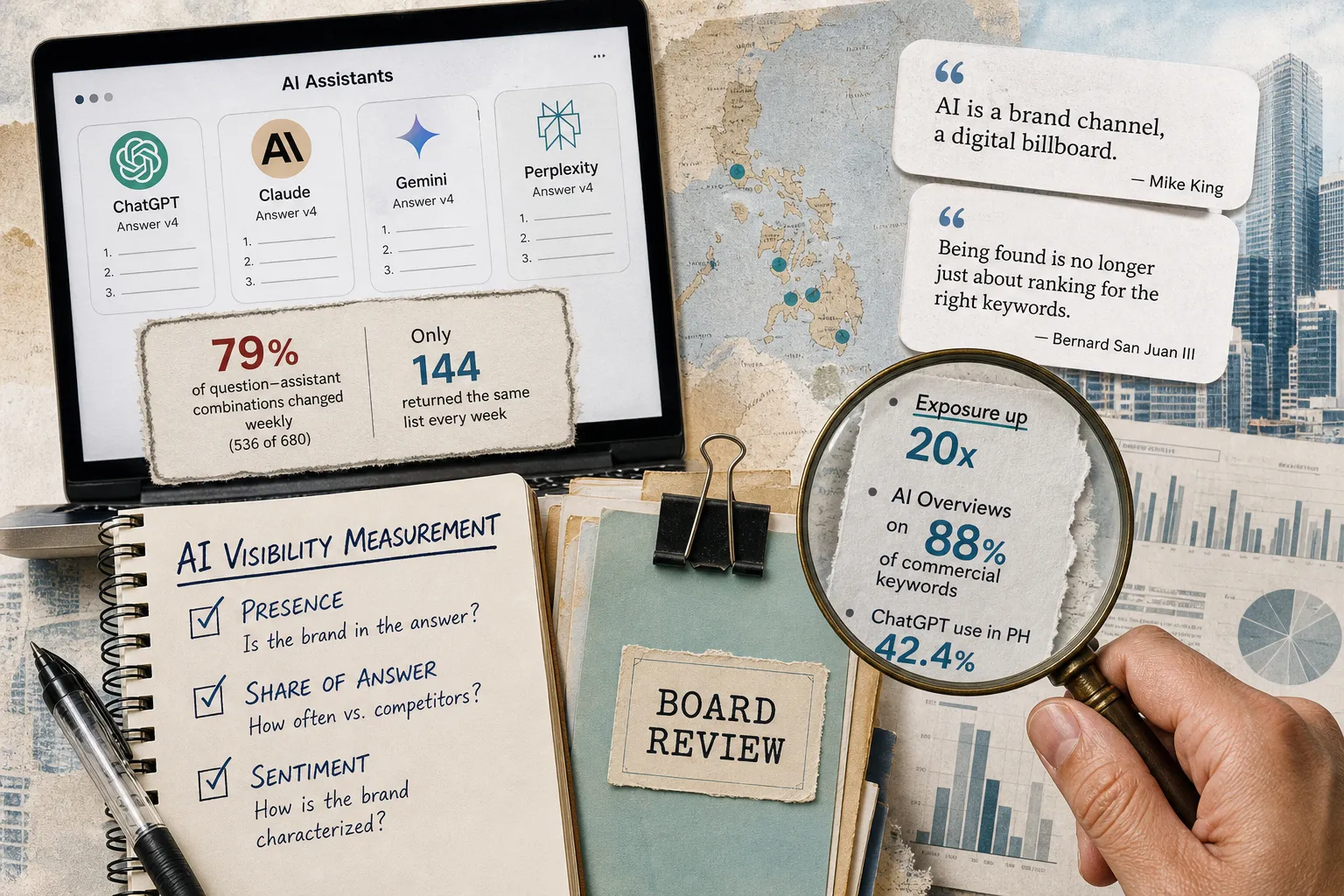
The surface is close to universal wherever commercial intent lands. AI Overview coverage reached 88% of 400 tracked commercial keywords in August 2026, up from 45.75% in September 2025, and 97.08% of estimated commercial searches once weighted by volume, in Semrush's commercial-modifier study of US desktop data. Semrush sells AI-visibility tooling and used its own panel, so read it as vendor research.
Denominators decide what that means. Across all searches rather than commercial ones, the only independent real-user panel found 18%, or 12,593 of 68,879 searches, from 900 US adults who shared browsing activity in March 2025, as Pew Research Center reported. The same panel holds the number a comms lead should sit with: only 1% of visits to a page carrying an AI summary produced a click on a link inside that summary.
[PH] No equivalent Philippine measurement exists. The closest figure came from a Manila forum in April 2026, where Greenpark Chief Strategy Officer Ian Colvin said nearly one in three Google searches in the Philippines already returns an AI-generated answer, reported by MARKETECH APAC. Read it as a practitioner estimate rather than a prevalence rate: presented from a stage, no published method, by an agency that sells AI-visibility auditing, and roughly seven months old now. His further line that AI answers could reach around 60% of results within 12 to 18 months is a projection. A trend does show underneath it, though. A Truelogic study put AI answers in 13% of Philippine searches in March 2025, up from 6.5% that January, covered by Back End News, vendor-produced and now 17 months old.
What AI search attribution actually measures when the citation card moves
Attribution surfaces are being rebuilt in both directions, and neither is the brand's choice. Google appears to be reducing the citation cards that surfaced two or three source domains beside an AI Overview, spotted by Search Engine Roundtable, which could not replicate the change over a day of testing and received no response from Google. That is an unconfirmed test. Pointing the other way, Google said in mid-October 2026 that it will place links higher and more prominently in AI-powered results and expand its link carousel worldwide, per AFP's report via The Manila Times, a piece that also carries Chartbeat's finding of a 40% drop in Google traffic to news publishers between July 2025 and July 2026.
So the honest claim is not that attribution is being removed. It is that the attribution surface is under continuous redesign on a schedule nobody outside Google sees, which makes any baseline built on its current shape a wasting asset. How brands surface inside those answers in the first place is covered separately in Media Meter's work on AI search visibility.
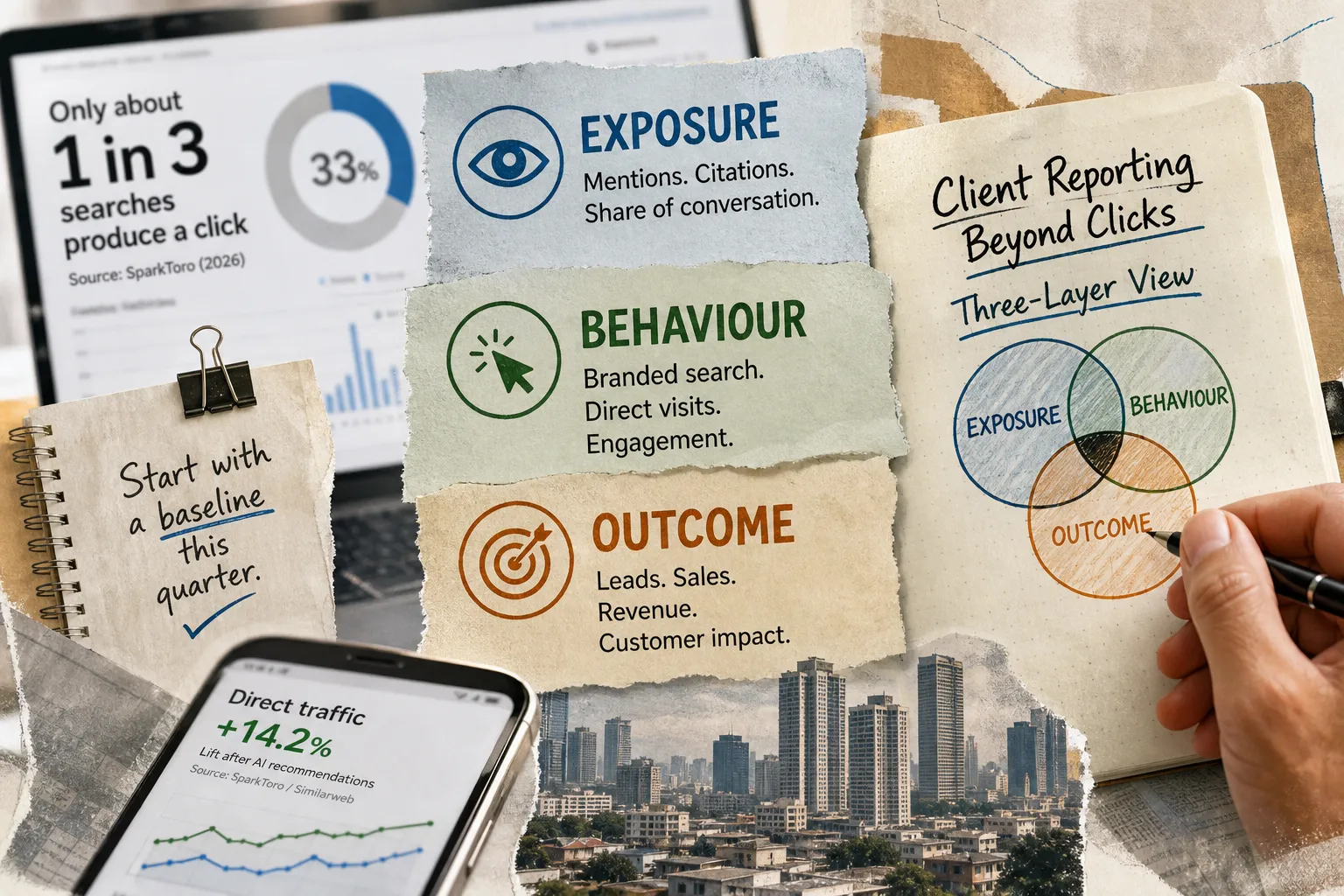
Two errors now compound in opposite directions out of one dataset. Rank channels by sessions and you bury the highest-value audience: AI-referred visitors to US retail sites generated 83% more revenue per visit and converted at a 90% higher rate in September, with AI traffic up 71% year on year, from Adobe's analysis of more than a trillion US retail visits. Count clips and links instead and you cannot see a brand being used without credit at all. A report can be wrong about the size of AI exposure and wrong about whether it was earned or bought, simultaneously.
Cited, not named: the appearance your clip report cannot see
Being cited and being named are separate events, and the gap is wide. Of 3,981 domain appearances measured across ChatGPT, Gemini, AI Overviews and AI Mode, 61.7% were citations with no brand mention and only 13.2% were both cited and named, in Semrush's ghost-citations study with Kevin Indig. Vendor data again, and a small sample: 115 localised prompts across 14 countries, collection dates not stated. Search Engine Land's write-up of the same problem adds a separate Writesonic figure of roughly 40% unnamed across 16 million brand appearances. Think of it as a quote attributed to "a bank" rather than to your bank. The information lands, the association never forms, and nothing in your coverage log registers the difference. That shift from clipping to citation is the structural change behind how media monitoring is evolving in the AI era.
Self-preferencing is a measurement problem before it is a commercial one. Google AI Mode linked only to Google's own pages in 46.5% of US product answers, with 57% of product-answer links going to Google Shopping, highest in fashion and beauty and as low as 1.1% for software, in a Findrix study of 55,198 AI answers across 18,400 buyer questions in 35 US markets. It measured links shown, not clicks or purchases. The pattern is not US-only: in Germany, SISTRIX found Google linking to its own services most across many millions of AI Mode answers, with YouTube in about 40%, a Google service second and Wikipedia around 17%. SISTRIX sells SEO tooling, and that reading dates to October 2025, the month AI Mode launched there.
[PH] The mechanism is already live here even though the local split is not measured. Gemini's shopping features launched for Filipino users in June 2026 with product search, comparison tables and where-to-buy results assembled from Google's own Shopping Graph, described by Google as over 60 billion listings with two billion updated hourly, reported by Philstar. Whether a Philippine brand's appearance in that comparison resolves to the brand or to a Google property is exactly what no local report currently measures. Regional habits suggest where it bites hardest: 71% of Southeast Asian consumers still discover products through marketplaces and 57% through search engines, with 24% using generative AI to support shopping, from a 2,400-respondent survey across six markets that includes the Philippines in its interview sample but breaks out no Philippine figures. Those are the same marketplace-heavy categories behind Filipino shopping trends.
State the absence plainly, because it is the finding. No published study measures AI-answer self-preferencing or unnamed-citation rates for the Philippine market, or for Filipino and Taglish queries, and the three strongest multi-market datasets include no Philippine or Southeast Asian market at all. Borrowing another country's rate is the one genuinely indefensible move on the table.
Can you still split earned from paid in a board report?
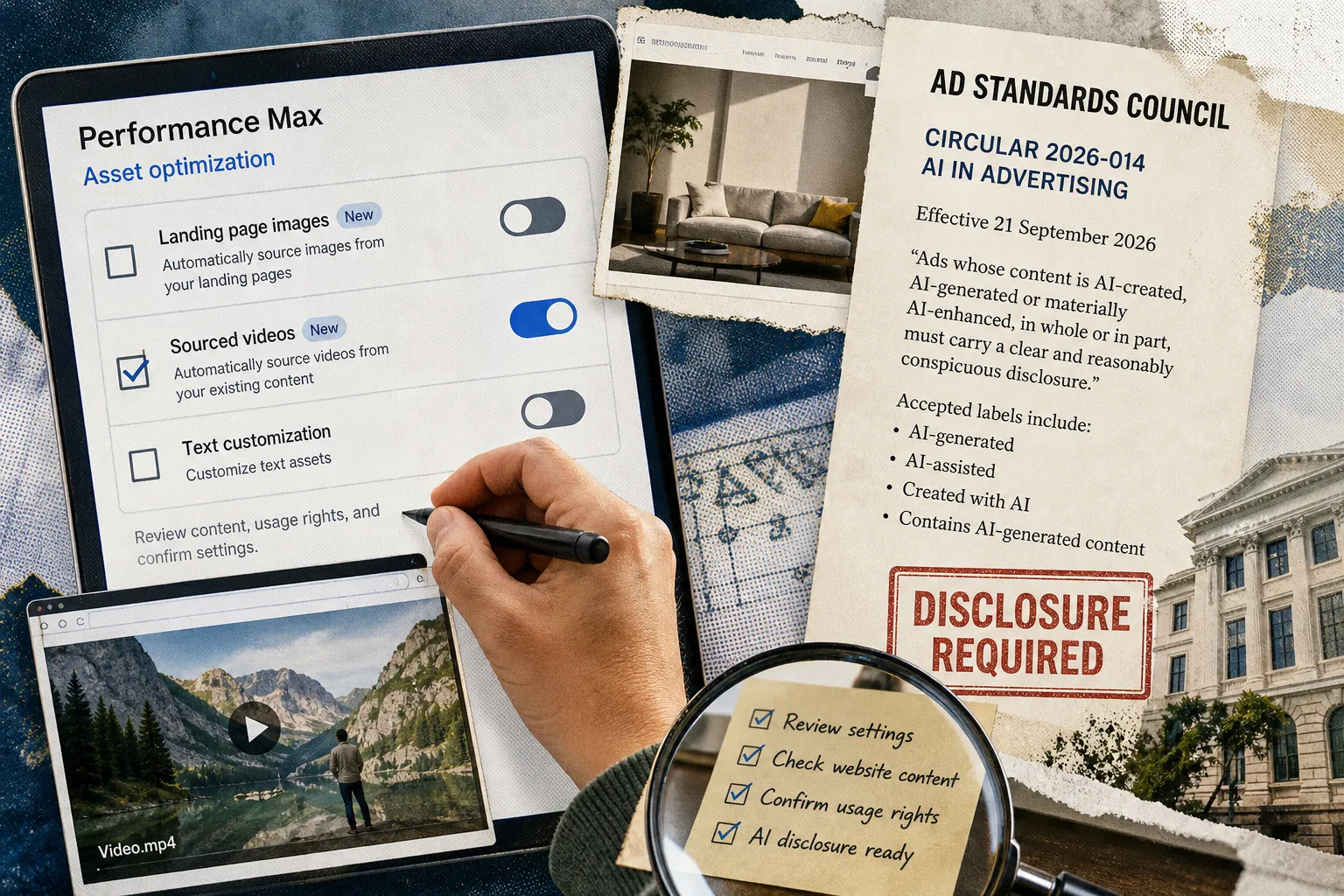
Only as an estimate, and only if you label it one. Google confirmed on the record that Shopping Ads can appear alongside organic visual results inside AI Mode carousels for commercially relevant queries, with all sponsored listings labelled, confirmed to Search Engine Roundtable by a spokesperson. The reporter looking at the screenshots still could not reliably tell paid from organic. Google is now testing separate "Sponsored" and "All products" headings to address that, with no rollout date and no disclosed effect on ad engagement, per Search Engine Land. When the trade press testing the feature cannot separate the two, a brand's visibility report cannot either.
The inventory keeps expanding. AI Mode ads moved into ten more markets with Brazil, Mexico and the UK queued for the fourth quarter of 2026, and multiturn ads launched in the US, announced via Search Engine Land, alongside Google's claim that click-through rates for sponsored and organic product listings inside AI Mode are already similar. [PH] Philippine availability of AI Mode and of AI Mode ads is unverified in that announcement and in everything else we could check, so treat it as a question to confirm rather than a fact to plan on. Colvin's description of AI-driven advertising as being in beta, with contextual relevance replacing clicks as the targeting basis, is the local signal worth watching.
Standards work has moved faster than the platforms here. AMEC's GEO Principles and practitioner guide place downstream AI outputs, citations, framing and omissions included, in their own evidence domain, separate from upstream earned coverage. AMEC's application piece, by board director James Crawford, is blunter: a mention is separate from a citation, citation and mention and recommendation and referral "should each have their own measure," and "a citation without a click will not appear in web analytics." It also kills the market-share framing, noting there is "no known total population of prompts from which a population estimate or market-wide share can be calculated," and that visibility belongs in a report as an observed output, phrased as "the organisation appeared in 54 of 90 recorded answers."
Note what AMEC has not said. No standards body has ruled that an AI-answer appearance counts as earned media. The available position is stronger for a corporate comms team anyway: AI outputs are a separate, sampled evidence domain reported with their own denominator, which is precisely why the earned and paid columns in a legacy report cannot absorb them. [PH] No Philippine disclosure rule covering blended paid and organic presentation inside an AI answer could be verified on the public record as of 3 November 2026, which leaves your own disclosed method as the only standard in the room.
Rebuild the baseline: read the answer, then restate the number
Let's be concrete about what a Philippine team can run this week. AMEC's baseline requirements are repeatable prompts, documented methods, transparent assumptions and stated limitations, with AI outputs treated as "directional evidence rather than absolute truth" and no reliance on a single opaque score. AMEC chief executive Johna Burke gave the reason plainly: "no single organisation, platform or perspective can fully define or measure AI-driven discovery alone."
Four things follow. Record citation and brand mention as separate fields, since most measured appearances in the Semrush panel carried one without the other. Run the prompts in Filipino and Taglish as well as English, because nobody has measured whether the behaviour differs and your audience is not querying in American English. Read on a fixed cadence rather than once, since SISTRIX's citation-drift study of 82,619 prompts across six countries found weekly churn of 54% to 59% in AI Mode source sets, with news and media domains at a 12% median appearance rate and a 1.4% core rate (vendor data again). And treat every platform dashboard as a sample, not an inventory: Google's John Mueller told a site owner not to anchor on the Search Console links report because it has always shown a sampling, and a dashboard's silence is not evidence.
The upstream half is the part a Philippine footprint can actually answer. AI visibility behaves as a share of voice operating inside answer engines, sometimes called share of model, and Meltwater research cited by AMEC Insights puts 48% of citations across large language models as coming from news media, rising to 66% on ChatGPT. That piece was written by a Meltwater communications director and published by AMEC, so the vendor interest sits on the page. The practical read holds regardless. If answer engines lean that heavily on news coverage, then real-time coverage monitoring across national, provincial and vernacular Philippine media is an input to your answer-surface position rather than a separate exercise. Truelogic's Philippine analysis pointed the same way, finding credible third-party mentions mattered more than backlink volume. Attribution inside AI search will keep moving on Google's timetable; this half of it does not. For in-house corporate communications teams, that is the half of this problem you can still instrument without Google's cooperation.
Key takeaways
- Report AI exposure with its denominator attached. "The brand appeared in X of Y recorded answers" survives scrutiny; a market-wide share of answer does not, because no total population of prompts exists to divide by.
- Split citation from mention in your tracking schema. Around three in five measured appearances in the Semrush panel were cited without the brand being named, and a clip count cannot see that difference.
- Label the earned-versus-paid line in any AI-visibility report as an estimate. Google confirms blended paid and organic carousels, and the reporters testing them cannot reliably separate the two on screen.
- Commission a Philippine baseline instead of importing a rate. No published study covers AI-answer self-preferencing or unnamed citations for this market or for Filipino and Taglish queries, so the absence is your starting position.
About Media Meter
Clip counts do not survive a boardroom, and neither does a visibility score with no stated denominator. Media Meter builds decision-grade reporting on AMEC-aligned methodology, with the method and the coverage stated on the page, calibrated for the Philippine media landscape rather than imported from a global template.