ChatGPT Ads Philippines: Set a Baseline Before You Spend
ChatGPT Ads Philippines launched with no local benchmark. Set a presence, recommendation-share and sentiment baseline before the first peso leaves the account.

ChatGPT Ads Philippines went live on 24 September 2026 with no local performance benchmark attached to it, so the only reference point a Philippine brand can hold is the one it builds itself. Take the reading first: brand presence, recommendation share and directional sentiment inside conversational answers, measured before launch and re-read on a fixed cadence through the pilot.
Most Philippine planning conversations about conversational advertising are still stuck on the easier question, which is whether to buy and how much. The surface has been buyable here for about a month, and a self-serve Ads Manager will take your money this afternoon. The harder question lands four to six weeks later, when someone senior asks what the spend bought and the honest answer is that nobody took a reading before it went out.
ChatGPT Ads Philippines arrived without a single published local benchmark. That makes the baseline yours to build, or yours to lose.
ChatGPT Ads Philippines Arrived Before Its Benchmarks Did
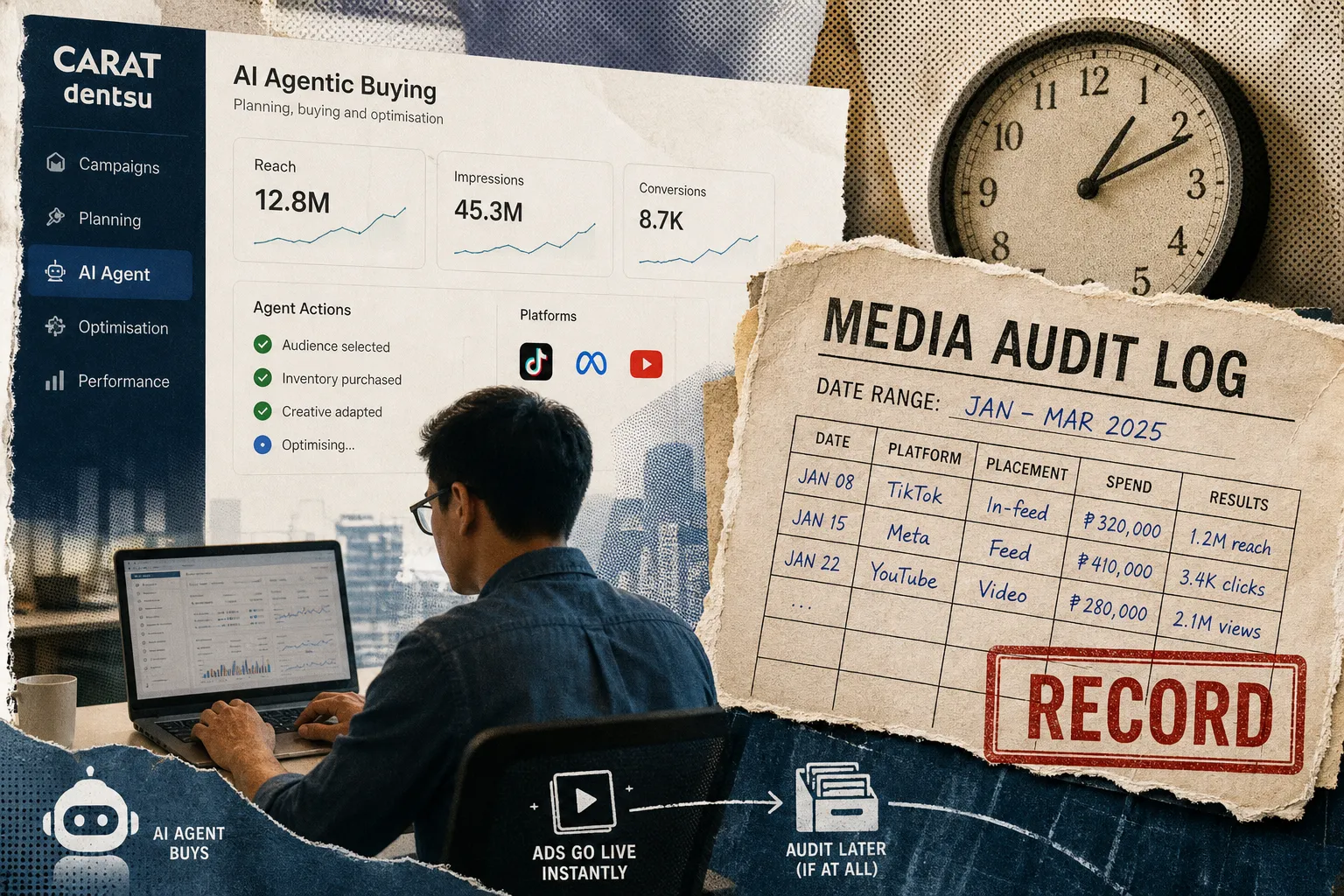
OpenAI switched the channel on here on 24 September 2026, in the same wave as Indonesia, Malaysia, Singapore, Thailand, Vietnam and Taiwan, taking the product past 60 countries. MARKETECH APAC's account of the Southeast Asian rollout carries the mechanics a planner needs. Eligible Philippine businesses can buy through the self-serve Ads Manager, or go via the OpenAI Ads Solutions team, technology partners, or the agency partners named at launch (dentsu, Havas Media, Omnicom Media, Publicis Groupe and WPP). Ads serve only to Free and Go plan users, which puts Plus, Pro and Enterprise subscribers outside the buy. Delivery is matched on "the current conversation and, when available and enabled, broader ChatGPT account context." Household and consumer goods, local services, travel and entertainment, digital products and education were the early categories, with Shopee named as a commerce partner.
Two details in that announcement matter more than the launch. OpenAI says new formats, optimisation tools and measurement solutions are still planned, so the platform's own measurement layer was not in place when Philippine advertisers started spending. OpenAI also declined to share regional usage figures, which means the surface being sold here has no published size.
What stands in for size is survey data, and it should be read as survey data. BusinessMirror's report on Filipino brand discovery through AI cites Digital 2026 figures putting the Philippines sixth worldwide, with 42.4% of surveyed Filipino internet users saying they had used ChatGPT in the previous month. That is self-reported, among surveyed internet users rather than a user count, and Digital 2026 is published by We Are Social and Meltwater, both commercial vendors in this category.
The absence runs further than usage. Four weeks after launch, a sweep of the Philippine business and trade press returned no local performance benchmark, no named first Philippine advertiser and no PH cost-per-outcome data. Read that as no public evidence found, which is weaker than proven absence and strong enough to plan around.
Pricing a Pilot With No Local Yardstick
The figure circulating in regional decks is around US$20,000 a month. Check its provenance before it reaches a budget line. Arya Nugraha, country director for Indonesia at M+C Saatchi Performance, offered it in MARKETING-INTERACTIVE's guide to ChatGPT Ads budgets and barriers and was explicit that it is the agency's guidance rather than a platform minimum. Both practitioners quoted in that piece are Indonesia and region-based voices advising on a rollout that happens to name the Philippines, so what they describe is regional guidance. Treating US$20,000 a month as a Philippine standard is the first mistake available in this channel.
There is also nothing solid to size it against. No published Philippine digital ad-spend forecast or monthly-budget norm for a mid-sized consumer brand surfaced in this research, so a marketer scoping a conversational pilot here is working without a denominator. The locally reported market figures that do exist are regional and forward-looking, such as Aleph's projection that the Southeast Asian digital ad market could grow at a 14.5% compound annual rate to US$63.89 billion by 2031, reported by the Philippine Star. None of that tells you what a peso buys inside a ChatGPT answer.
So size the pilot against what the channel actually is. Across 145 million sessions on 100 websites, ChatGPT accounted for 0.62% of Google organic session volume, with all large language model referrals together at roughly 0.73%, per the three studies collected by Search Engine Roundtable. SparkToro's review of the same work, from a company that sells audience-research tooling, keeps the reframe worth carrying: Mike King's reading of AI as a brand channel, closer to a digital billboard than a traffic source. A brand channel bought on a performance budget and judged on performance reporting will fail that judgment every time, at any spend level.
Where Does a Conversation Sit in the Filipino Buying Journey?
The case for the channel rests on a stage conventional search does not cover, which is the consumer still working out what they want. Nugraha's illustration, in MARKETING-INTERACTIVE's analysis of where ChatGPT Ads fit the media mix, is the cleanest version of it. "A person typing in 'business travel' is in a very different position to a person asking which airline is best for a weekly Jakarta to Singapore commute. ChatGPT can tell the difference," he said. That piece also notes more than 100,000 advertisers have run campaigns on the platform, per OpenAI on 21 October, with ads labelled separately from AI-generated answers.
Conrad Victorino, head of media and general manager at DO. Asia, puts the brand question more bluntly. "'Are you part of the answer?' is becoming a serious brand question," he said. His Philippine example carries a price anchor and a buyer in one line: someone asking which laptop to buy for a college student under 35,000 pesos "has already given you a budget, a customer and a need." He also names the register, noting how often a purchase starts with "Ano bang magandang…?", a question that leads to more about price, model, catch and fit. A first washing machine, a prepaid plan and the week's baon sit in the same consideration frame as cars and holidays, because a modest purchase involves real research when the household budget is tight.
That is a practitioner argument, and it deserves to be labelled as one. No Philippines-specific measurement of AI-assistant use at the pre-purchase stage surfaced in this research, so pre-search consideration is reasoning rather than measured local behaviour. The nearest evidence is regional. Across 2,400 respondents in the annual e-commerce influencer and affiliate report by impact.com with Cube and Dentsu, reported by MARKETECH APAC, 24% of Southeast Asian consumers now use generative AI tools to support their shopping journey. The Philippines is among the markets surveyed, but the report publishes no per-market breakdown, so there is no Filipino figure inside it. The same study complicates the story usefully: marketplaces still lead discovery at 71% against search engines at 57%. A conversational assistant is a third entry point in a journey that already starts in Shopee or TikTok Shop as often as in a search box, which is the pattern Filipino shopping behaviour has been showing for some time.
Two unknowns belong on the list before anyone buys. Nugraha flagged matching ads to local-language conversations as a live problem in Indonesia, where consumers switch between Bahasa Indonesia and English inside one sentence. Nothing published tells us how well these surfaces handle Taglish or a code-switched product question, or whether they reach a shopper in Cebu or Davao the way they reach one in Metro Manila. A baseline can answer both. A platform report will not.
Set the Presence Baseline Before the First Peso
Let's be precise about what to measure, because the platform has already told you what it cannot measure for you yet. Nugraha's pre-launch list is sound and conventional: conversion tracking in place, reporting agreed, success defined, campaign structure kept simple rather than split across too many ad groups where it risks under-delivery, and performance compared against your own search and social campaigns for the same products. That last instruction is the admission. When the recommended comparator is your own account, no external benchmark exists.
Build the baseline on the three things that move inside a conversational surface: whether the brand appears in the answer at all, what share of relevant recommendations it holds against named competitors, and how it is characterised when it does appear. How brands surface in AI answers is the mechanism underneath all three, and it is already measurable.
Philippine brands are being read this way now. The same BusinessMirror report covers a Truelogic study of 80 Philippine brands across seven sectors, which found mentions in Google AI Overviews rose more than twentyfold in 2025 while organic branded traffic across those 80 sites fell between 3% and 8%. The study did not establish causation, and that unresolved pairing is the attribution gap in Philippine numbers. The individual readings are sharper than the averages: a leading Philippine bank reached 38.1% AI share of voice, the highest in its peer group, and a major property developer reached 53.38% across Google AI Overviews, ChatGPT and Perplexity, 3.8 times its closest competitor. Truelogic is a digital marketing firm that sells AI-visibility services, so treat this as vendor research. A brand whose baseline is supplied by the party selling it the channel is holding a sales document rather than a reading.
Sentiment belongs in the baseline too, and in this market it is a brand-risk measure before it is a performance one. Twilio's 2026 Customer Insights Series found 73% of Filipino consumers want brands to disclose upfront that they are interacting with AI, while only 26% of Philippine organisations say they disclose their AI identity at the start of every interaction. Those figures rest on a Philippine sample of 353 consumers and 35 business leaders, fielded between 9 April and 1 May 2026, inside a study of 7,652 consumers and 660 business leaders across 18 markets, reported by The Manila Times. Local disclosure expectations run well ahead of local practice, and a brand buying presence inside an assistant buys exposure to that gap. Automated sentiment stays directional rather than settled, particularly across Filipino and Taglish registers, so read the sentiment line as a trend and keep an independent record of what is being said next to it.
The compliance position is thinner than the risk. No Philippine rule specific to conversational or AI-surface advertising surfaced in this research. The general prohibition on misleading and deceptive advertising under RA 7394, the Consumer Act, applies as it does to any medium, and the DTI's draft advertisement-permit order was withdrawn in May 2026 after the department said the internal draft did not reflect current policy direction. HB 9465, the Digital Media Anti-False Information Act, which as reported would require digital platforms to disclose sponsored content, passed the House on third reading on 4 June 2026. It remains a pending bill rather than law, with no Senate passage found. Plan for the direction of travel and do not brief it as a current obligation.
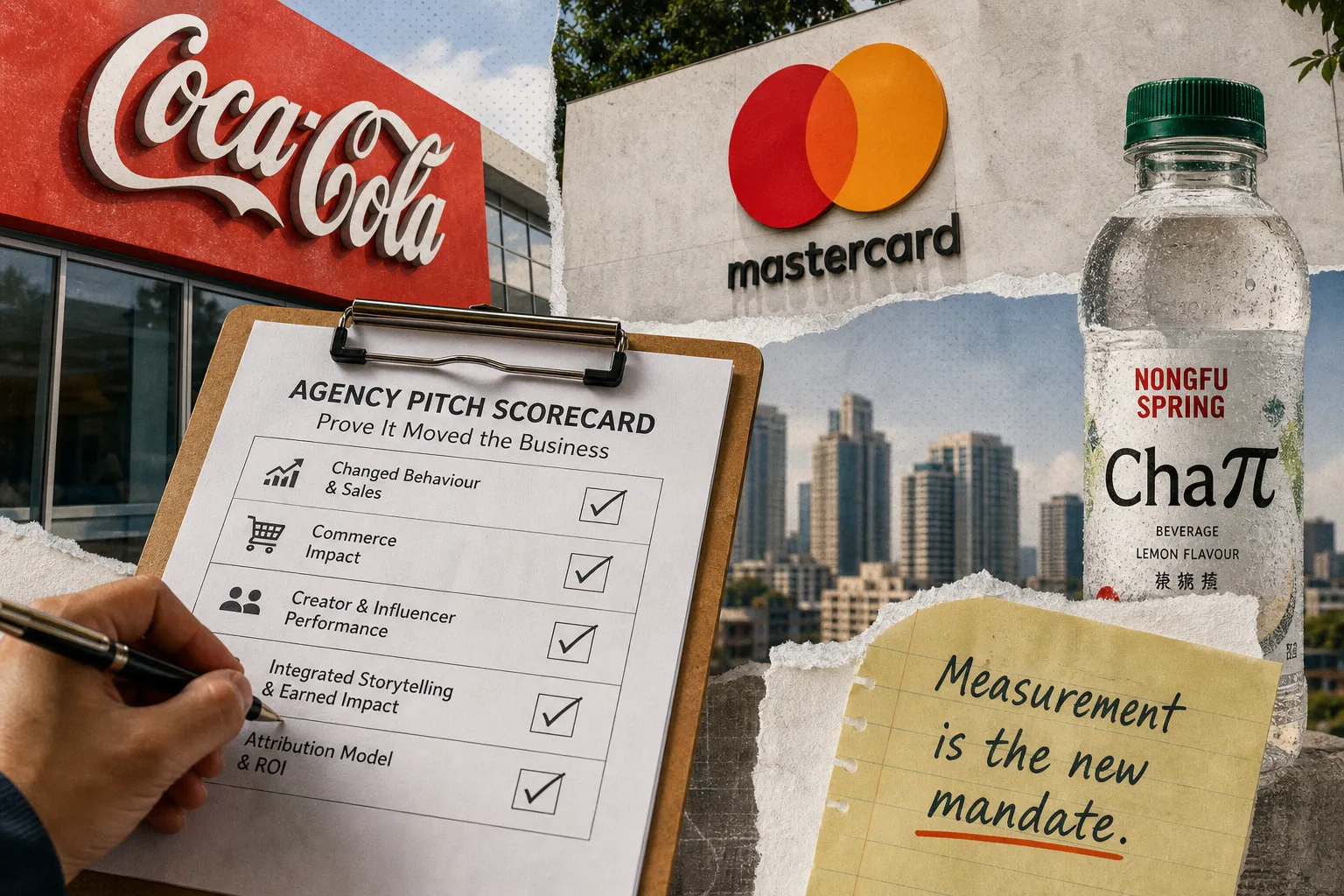
For a consumer brand this is a scoping exercise before it is a media buy. Marketing teams that want the pilot to survive a budget review commission the pre-launch reading as a custom report, repeat it monthly through the window, and keep the measurement outside the buy.
A Pilot Should End With a Recommendation
Victorino's structure is worth copying closely: one proposition, a controlled budget, a measurable action, and an initial four-to-six-week testing window where delivery supports it. Scale if results meet agreed commercial thresholds, refine if engagement is promising but conversion needs work, stop if sufficient testing produces neither. "A pilot should end with a recommendation, not another presentation about potential," he said. Nugraha's version is the paperwork that makes that possible. "You need to write down your scaling criteria prior to launch so that the call to scale, the call to keep testing or the call to pull back is based on actual agreed numbers rather than just your gut."
On whether the channel added anything, both are candid about the limit. "On incrementality we know attribution on its own won't prove it," Nugraha said. The method he points to is a controlled test, holding back by region or by audience, then watching what happens to branded search and direct traffic. In a Philippine account that is unusually practical, because a regional holdback is available to most national advertisers here and the question of how this surface behaves outside NCR is unanswered anyway. Where a controlled comparison is not possible, Victorino's advice is to report attributed results without presenting them as proof of incremental growth.
Arshan Saha, Aleph's APAC regional managing director, gave the Philippine Star the one-line version of the whole problem: "being visible on a global platform is easy, but actually performing in that market is a different matter." A baseline is how a marketing team tells those two apart, and it only exists if someone takes the reading first.
Key takeaways
- Local advertisers have been able to buy since 24 September 2026, and no Philippine benchmark, named first local advertiser or cost-per-outcome figure has been published to judge that spend against.
- Attribute the US$20,000-a-month figure as agency guidance from a regional voice every time it appears. It is not a platform minimum and not a Philippine norm.
- Fund and judge this as a brand channel. ChatGPT accounted for 0.62% of Google organic session volume across 145 million sessions, so a performance scorecard will condemn it regardless of how well it works.
- Measure presence, recommendation share and directional sentiment before launch, then on a fixed cadence. Philippine brands are already scored this way, at 38.1% and 53.38% AI share of voice in one vendor study.
- Write the scale, refine and stop thresholds before launch, and have someone with no stake in the channel take the reading.
About Media Meter
Media Meter's Reports & Analytics turn presence, share of answer and Philippine-calibrated sentiment into board-ready measurement, taken before a pilot starts and again while it runs, by a party with nothing to sell inside the result.