Facebook Link Post Limits: What Philippine Pages Should Know
Facebook link post limits may cap Pages at two links a month. What Philippine government and brand Pages should check now, and how to prove an advisory landed.

Facebook link post limits are spreading: Facebook is expanding a test that caps non-paying Pages at two link posts a month unless they subscribe to Meta One, and Meta has not said whether Philippine or government Pages are covered. Link posts already drew a tiny share of views in Meta's own US data, so the lesson for Philippine information offices is bigger than the paywall: posting an advisory does not prove the public saw it.
Every information officer knows the routine. You draft the advisory, clear it, post it to the agency's Facebook Page with a link to the full bulletin, and log the job as done. The working assumption is simple: if it's on the Page, the public has it.
That assumption was already shaky, and last week it got more expensive. Social Media Today reported that Page managers started seeing a pop-up limiting them to two link posts a month unless they pay for a Meta One subscription. For most Page managers, that pop-up is their first encounter with Facebook link post limits. In a country where Facebook is the main road to the news, any change to what Pages can publish deserves attention. The bigger issue for your office isn't the paywall. It's the gap between "posted" and "seen", and whether you can show a secretary, a council or a hearing that the message actually reached people.
The link just became a paid feature
Meta has been working toward this for almost a year. The first version, which TechCrunch covered in December 2025, applied to professional mode profiles and Facebook Pages, with publishers excluded. Affiliate links, links in comments and links to Meta's own apps did not count toward the cap.
Then Meta launched its business subscriptions. According to Meta's announcement of Meta One plans, the service comes in four bundle plans priced per profile, packaging a verified badge, impersonation protection, more responses from its Meta Business Agent on WhatsApp, and audience insights. Meta says the core experience stays free. (These are Meta's own claims about its own product.) Social Media Today reports that right after the launch, the two-link restriction appears to have spread to more non-paying professional accounts. Meta has described the test as a way to learn "whether the ability to publish an increased volume of posts with links adds additional value" for paying users, and publisher Pages remain exempt.
Think of it as a toll on the road between your Page and your own website. The road still exists. Free passage now covers two trips a month.
Paying for reach is becoming a product line. AFP's report via Philstar noted that Meta's consumer Facebook Plus and Instagram Plus plans include "expanded audience reach", by Meta's own description, with no Philippine pricing announced.
So what is confirmed for Philippine Pages? Very little. The Meta Newsroom announcement calls Meta One available globally but adds that "plans, benefits, pricing, and availability may vary by region, by app, and by account." APAC agency Relevant Audience writes that Meta did not confirm the exact market rollout. No Meta statement we found mentions a government category; the only published exemption covers publishers. Our reading: a Philippine agency Page is likely in scope for Facebook link post limits, but neither the local rollout nor government-Page eligibility is confirmed.
No Philippine body has weighed in either. The government's dealings with Meta concern takedowns, not reach: Palace Press Officer Claire Castro said Malacañang will not ban Facebook "for now" because Meta has cooperated on removing disinformation and violent content.
Link posts were already losing the feed
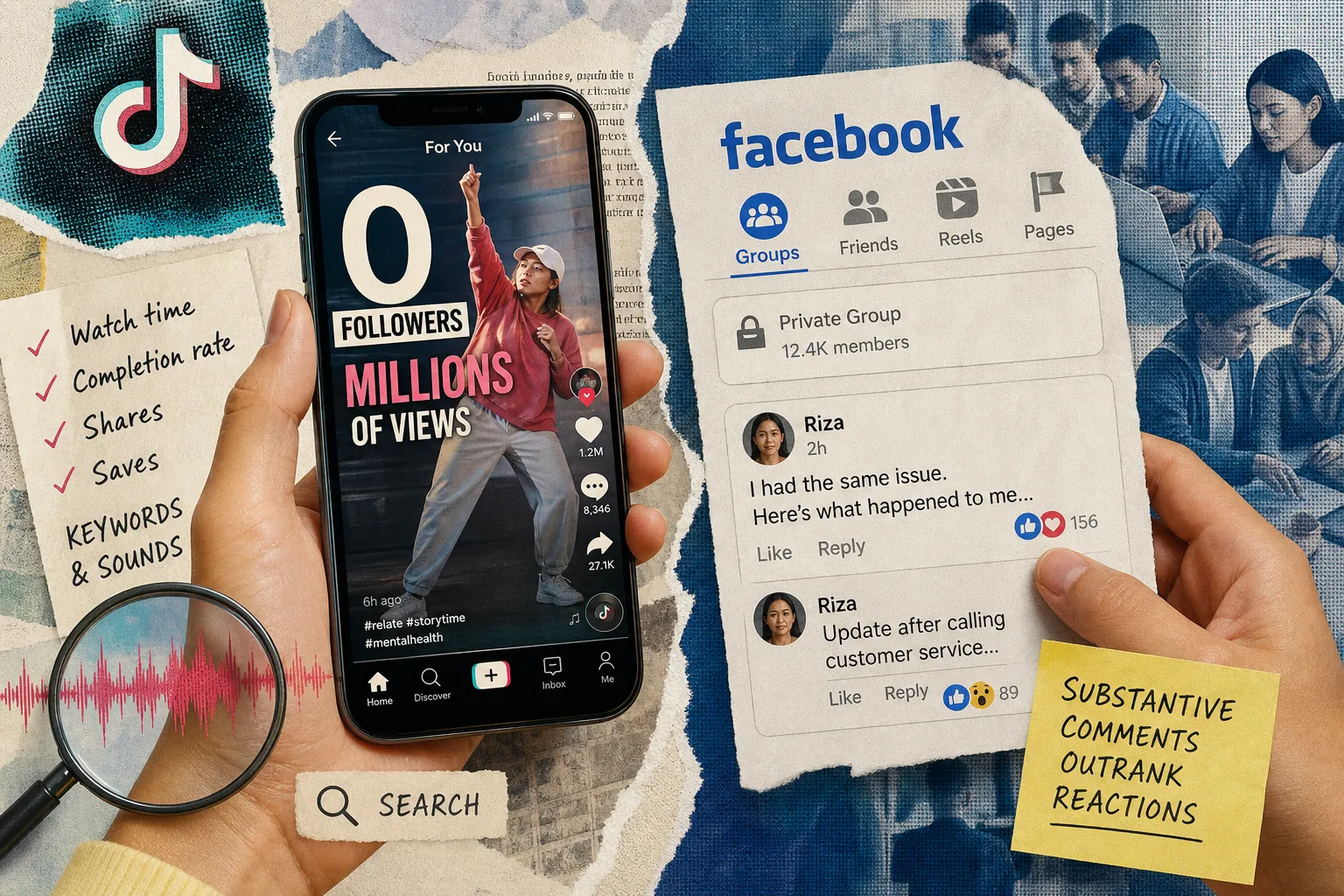
Before anyone panics, consider how little of Facebook was links to begin with. Meta's own numbers show outbound links shrinking for years. In its Widely Viewed Content report for Q1 2026, cited by Social Media Today, 98.7% of US post views did not include a link to a source outside Facebook, and the share of viewed content carrying a link fell from 9.8% in 2022 to 1.3%. That is US data from Meta itself, so treat it as a direction, not a Philippine measurement.
Independent benchmarks point the same way, more gently. Socialinsider, an analytics vendor, studied 70 million posts and found Facebook averaged 0.15% engagement, dipping in early 2025 and declining gradually afterward. The Rival IQ and Quid benchmark report (150 companies in each of 18 industries) found engagement held steady at a 0.17% median, and Emplifi's 2026 benchmarks call it stable at lower levels. All three are vendor research measuring engagement, not reach. Together they describe Page engagement as low and flat to slipping, not collapsing.
That strengthens the case. If links were barely seen before the paywall, "we posted the link" was never evidence of reach. Facebook link post limits just make an old measurement problem harder to ignore.
Why "we posted it" is not a reach report
Platform numbers make this problem worse, not better. A Poynter fact-check of convention ratings spells out what an impression is: content appeared in someone's feed. No click, like or extended view is required, and a post that appears twice counts twice. Justin H. Gross, who directs a data analytics program at the University of Massachusetts Amherst, called an impression "a lottery ticket for a chance at engagement." Nielsen, by contrast, counts someone as reached only after at least a minute of viewing. When the White House cited more than 70 million TikTok impressions, the TV comparison it wanted to win showed more than 43 million viewers for two NFL games against about 7 million for the convention.
Apply that to a Page report. Posts published and impressions logged tell you the platform displayed something. They don't tell you whether a barangay captain, a parent or a fisherfolk association read the advisory.
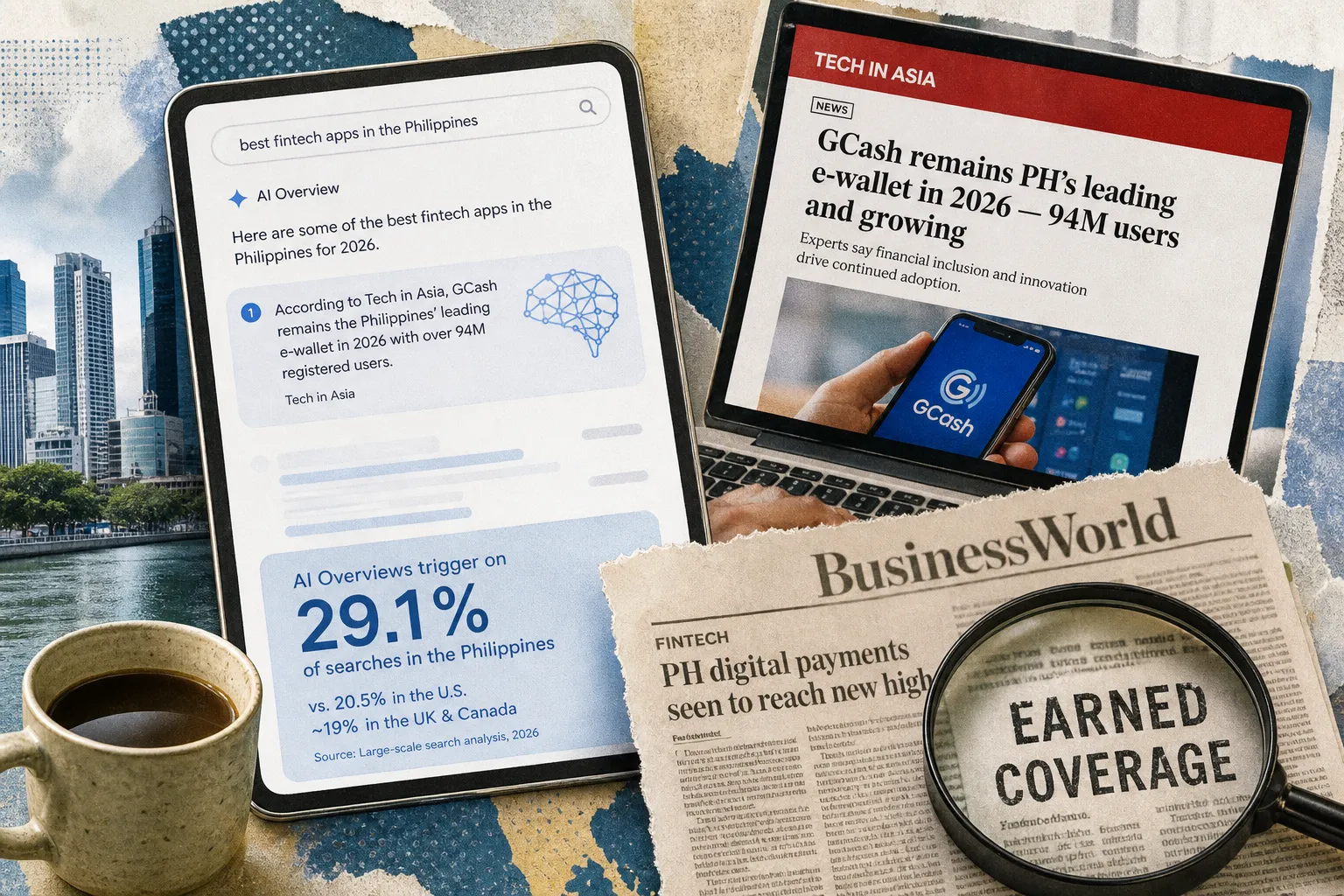
The link was supposed to close that gap by sending people to a full bulletin or a news story. That route is narrowing too. At a closed-door session covered in Digiday's Google Zero briefing, publishers speaking anonymously conceded that Google search traffic "is not coming back", and one estimated clicks from AI Overviews at about 1%. UK publisher Reach is cutting 160 editorial jobs as AI summaries cut its traffic. These are US and UK publishers, but the pattern travels: the news sites that carry agency stories get fewer search visits, and your Page can send them fewer links. How your agency appears in AI answers is its own question (see our piece on AI search visibility).
Follow the advisory, not the post [PH]
Filipinos meet government news on Facebook, and very few click through to a website. Pulse Asia's survey of 2,400 respondents (fieldwork June 28 to July 6, 2026; ±2% margin) found 91% use Facebook as a news source, down from 94% in March, against 61% for YouTube, 21% for TikTok and only 5% who go directly to news websites. The same poll found 97% use the internet for news about government and politics. The dip since March is worth watching, not proof of a decline.
The Reuters Institute's 2026 survey tells a similar story. As Philstar's Digital News Report coverage summarises it, 79% of Filipinos surveyed use Facebook for news. Social and video networks were the only weekly news source that grew (66% to 70%), while news websites and apps fell from 50% to 42%, TV from 46% to 42%, radio from 17% to 14% and print from 13% to 10%. Your link sends people toward the one destination they are leaving fastest.
Trust complicates it further. The Reuters Institute's Philippines page records trust in news falling 10 points to 28%, the steepest drop of the 48 markets surveyed (the global average is 37%), and DZMM's offline reach recovering to 15%. When trust is low, people tend to check an agency's word against other voices. The version of your advisory that matters may be the one a radio anchor reads or a community page screenshots.
Picture a typhoon bulletin during the ber months (an illustrative case, not a documented chain). The Page post is the first stop. The message can then surface on provincial radio, a regional news site, a vernacular community page and a group chat, each with its own framing and each able to drop the evacuation detail. Offices planning for the 2026 rainy season need to see that whole chain. Only monitoring across print, broadcast, online and social, vernacular sources included, shows where the advisory actually landed and how it was told.
What to check this month
Let's turn this into a short routine your team can run before the next advisory goes out.
1. Audit your Page for the pop-up. Meta hasn't confirmed that Facebook link post limits apply in the Philippines, so check your own Page and log the date if the notice appears. According to NBI Director Melvin Matibag, Meta plans a Philippine office to coordinate with government on harmful posts. Whether it will field Page-eligibility questions is open, but it gives agencies a place to ask.
2. Write advisories that work without the link. Put the essential instruction, area and time in the post itself. In the December 2025 test, links in comments did not count toward the cap; confirm that still holds on your Page before relying on it.
3. Watch for impersonators yourself. Meta One's impersonation protection requires verification, which sits inside the paid plans. An agency that doesn't pay still needs to spot fake Pages using its name, and that job happens outside the platform.
4. Report reach, not posts. Replace "posts published" and "impressions" with pickup: which outlets carried the advisory, in which regions and languages, and how accurately. Independent reach reporting holds up at a hearing because it doesn't come from the platform selling the reach. If you are procuring that service, check the provider's government accreditation first.
For a weekly read on platform shifts like this one, subscribe to our insights newsletter.
Key takeaways
- Treat Facebook link post limits as likely but unconfirmed for Philippine and government Pages, and check your own Page.
- Stop reporting posts and impressions as reach; an impression only means content appeared in a feed.
- Write advisories so the key instruction survives without a click.
- Track where each advisory resurfaces and how it is framed, especially in typhoon season.
About Media Meter
When "we posted it" isn't enough, Media Meter supports government communicators with accredited, procurement-ready media monitoring: daily briefings, sentiment tracking and issue monitoring across national, regional and vernacular media, calibrated for how Filipinos actually get their news.