TikTok vs Facebook: Different Media Monitoring Strategies
Why do TikTok and Facebook need different media monitoring strategies? See algorithm differences, PH usage data, and blind spots each platform create.

Why TikTok and Facebook need completely different media monitoring strategies: see how each platform's structure changes what a team should actually track.
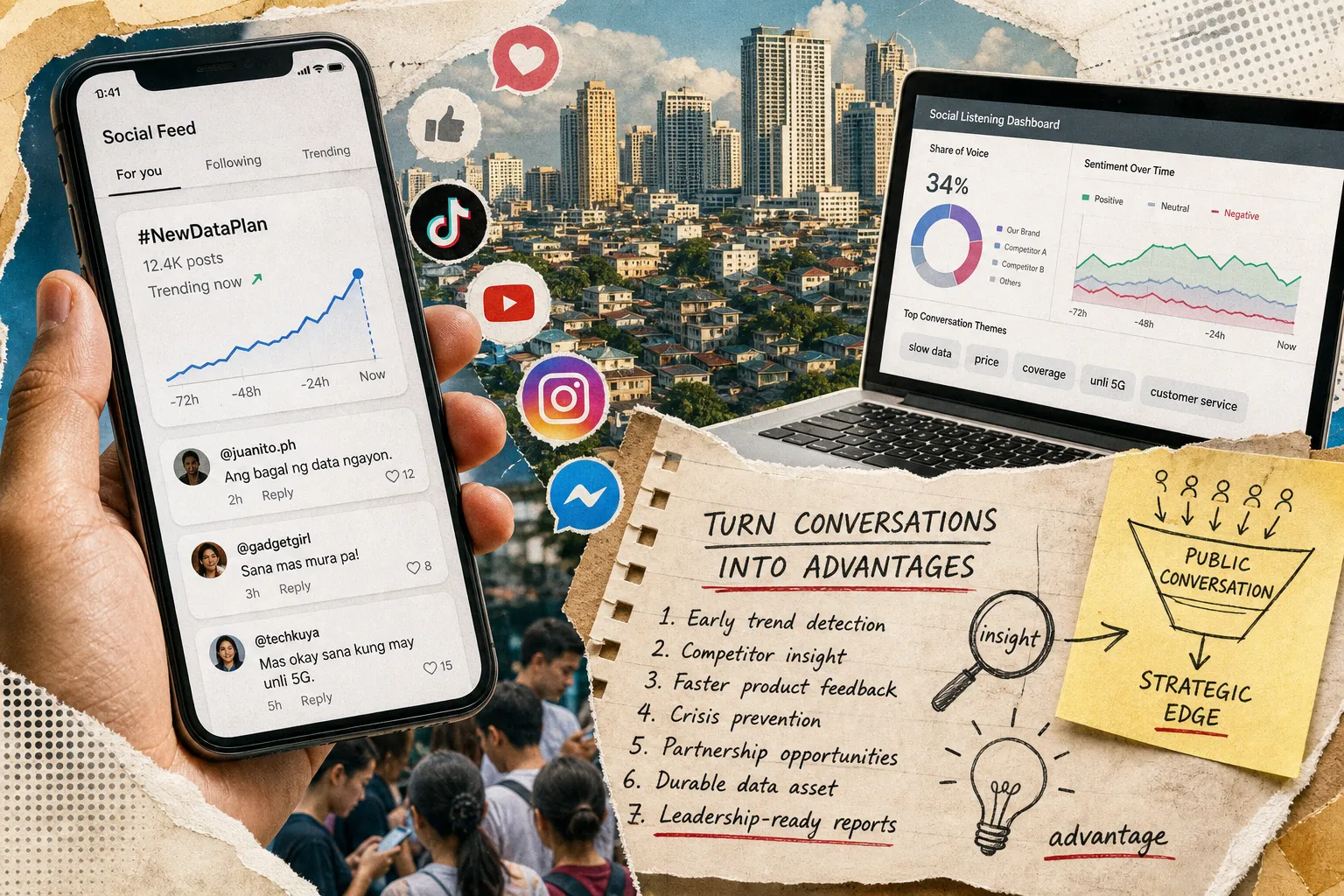
Picture this: a monitoring dashboard flags a mention spike on both TikTok and Facebook the same morning. The Facebook number comes from an account with 40,000 followers. The TikTok number comes from an account with zero followers and a video posted six hours ago. A junior analyst assumes the bigger account is the bigger risk, and misses that the TikTok clip is already outperforming a paid Facebook post ten times its size. That's the real question behind media monitoring strategies for TikTok vs. Facebook: two platforms in the same dashboard that behave nothing alike underneath.
The Core Difference:
- TikTok runs on an interest graph: content is shown based on what the algorithm predicts a user will watch, regardless of whether they follow the account.
- Facebook runs on a social graph, and in 2026 has become Groups-first: the algorithm prioritizes Groups, friends, and Reels creators over public Pages.
- The practical result: a zero-follower TikTok account can outreach an established Facebook Page within hours, something structurally impossible in reverse.
1. TikTok: Content-First, Not Follower-First
TikTok's For You feed shows content based on what the algorithm predicts a user will watch, regardless of the creator, so a zero-follower account can reach millions within 24 hours. By 2026, search has become a major discovery channel too: keyword-optimized captions, voiceovers, and on-screen text now carry equal or greater weight than hashtags, and the strongest ranking signals are watch time, completion rate, shares, and saves, not follower counts.
Monitoring implications: track keyword and sound performance, not account watchlists. Flag watch-time and completion-rate spikes. Read spoken and on-screen text, not just captions and hashtags. 72% of women on TikTok say it's easy for communities to bond over shared experiences, so tapping into one can amplify a mention far past its origin account, which also means a spike can't be judged as niche or mainstream by follower counts alone.
2. Facebook: Groups-First, Not Feed-First
Facebook's algorithm in 2026 increasingly favors Groups, friends, and Reels creators over the main News Feed, and Page reach keeps declining. Not all engagement counts equally: a single long comment from a friend outranks hundreds of reactions from strangers, and threaded replies of 10+ words trigger stronger distribution.
Monitoring implications: track Group activity and comment substance, not reaction counts. A substantive complaint thread in a closed Group can shape opinion for days before surfacing publicly, a blind spot standard Page-only monitoring won't catch. It's also worth remembering Facebook still drives 84.17% of Philippine social referral traffic to brand websites, far ahead of YouTube's 11.54%, so its reach still matters even as its algorithm rewards different things than it used to.
3. Why the Numbers Aren't Comparable
TikTok's engagement rate runs 3.70% to 5.53%, compared to just 0.15% on Facebook, a gap wide enough that comparing the two on the same scale actively misleads. In the Philippines, Facebook has the larger base, roughly 95.8 million users and close to 90% penetration, while TikTok's smaller base of 62 to 64 million users spends more time per month on the platform, 40 hours 39 minutes versus Facebook's 23.5 hours. Facebook is where the population is. TikTok is where attention concentrates hardest per user.
The Quick Test for Media Monitoring Strategies
If a mention's importance depends on who posted it and how big their network is, you're reading it correctly on Facebook and incorrectly on TikTok. If it depends on watch time and how fast a format is spreading regardless of the poster, the reverse is true. Checking which lens applies before checking the numbers is what keeps a cross-platform report accurate.
Why the Industry Draws This Line
The distinction has backing beyond any one team's experience. The Media Rating Council, with the Interactive Advertising Bureau, has published formal Social Media Measurement Guidelines establishing standardized methods and definitions for measuring social media activity, an independent, cross-industry signal that social media measurement deserves the same rigor as any other media channel, not an afterthought bolted onto a PR report. TikTok's own 2026 marketer guidance tells brands to track watch time and completion rate over follower growth, while Meta's own 2026 changes reward Group content and substantive replies over Page reach, each platform pointing toward genuinely different signals. A 2026 IAB study found 72% of U.S. advertisers now prioritize cross-platform measurement, up from 64% the year before, a sign platform-by-platform reporting has stopped being treated as sufficient industry-wide.
What's Shifting Next
Meta is pushing Reels harder to compete with TikTok, so some Facebook video is starting to inherit TikTok-style discovery dynamics, a shift covered further in Clippings to Citations: Media Monitoring's AI Era. TikTok's move toward search-based discovery also means hashtag-only monitoring is already falling behind, part of a broader shift explored in What Brands Must Know About AI Search Visibility. For Philippine brands, the stakes keep rising: the country had 95.8 million social media identities as of October 2025, up 10.3% year over year, growing across both platforms at once.
Media Meter builds media monitoring strategies for how each platform actually surfaces content, not one keyword sweep applied twice. MediaWatch tracks platform-specific signals in real time, turning them into decision-grade intelligence your team can act on. Request a demo or browse a sample report to see it work on your own coverage.