Media Monitoring for ASEAN 2026: 7 Things to Track
Media monitoring for ASEAN 2026: the 7 stories PR, marketing and brand teams should track around the Manila summit, Nov 16 to 18.

Media monitoring for ASEAN 2026: the 7 stories PR, marketing and brand teams should track around the Manila summit, Nov 16 to 18.
Media monitoring for ASEAN 2026 has to track more than the diplomacy. The 49th ASEAN Summit and Related Summits open in Metro Manila on November 16, and Executive Secretary Ralph Recto said 20 heads of state will attend, Malacañang has confirmed that US President Donald Trump will be there, and roads around the Philippine International Convention Center (PICC) in Pasay are fully closed from November 9 to 20. Many communications teams handle a summit by setting an alert for "ASEAN," clipping the front pages and sending leadership a coverage count. That captures volume but misses what matters to a brand: which stories shape public mood, which conversations pull in your category, and how the narrative shifts once leaders fly home. Here are seven things worth tracking, and how to read each one.
Topics covered
- ASEAN 2026 ends in Manila, and every channel will report it
- 1. The Code of Conduct wording will set the summit's tone
- 2. Trump will lead share of voice, but the background matters more
- 3. DEFA becomes a consumer story only if outlets explain it
- 4. Most brands will meet the summit through traffic and flights
- 5. The ₱22.9-billion question could return during summit week
- 6. Tourism gains need a baseline before delegates arrive
- 7. Eleven member states will frame one summit eleven ways
- How to set up monitoring for summit week
- What this means for marketing, analyst and brand teams
- Frequently asked questions
ASEAN 2026 ends in Manila, and every channel will report it
The Philippines took the chair after Myanmar opted to skip its turn because of domestic problems, leading under the theme "Navigating Our Future, Together" with three priorities: Peace and Security Anchors, Prosperity Corridors, and People Empowerment across some 650 preparatory meetings, which moved online after a March recalibration. The November summit is the closing chapter before Singapore assumes the chairmanship in 2027, so what the Philippines delivers in Manila becomes the reputational record of its year. It will also play out on every channel at once. DataReportal counted 94.7 million social media user identities in the Philippines in October 2026, or 80.3 percent of the population, and while identities may not equal unique people, the scale means summit news will be reinterpreted in comment threads, group chats and short videos within hours. A plan that only watches news sites will see half the story.
1. The Code of Conduct wording will set the summit's tone
Maritime security is the issue most likely to dominate international headlines. The Philippines wants a Code of Conduct with China that is legally binding, and in Cebu in May, leaders adopted the ASEAN Leaders' Declaration on Maritime Cooperation and backed a proposed ASEAN Maritime Centre in the Philippines, in a year that marks the 10th anniversary of the 2016 arbitral award. Not everyone expects a breakthrough: one Southeast Asia analyst told UPI he would not expect a binding code regardless of which country chairs ASEAN, and that is one analyst's view rather than a consensus forecast. Track how Philippine outlets, Chinese state media and regional newspapers frame the same outcome, and watch whether the chair's statement says "concluded," "substantial progress" or "continued negotiations." Our reading: for most brands this is context, but a flare-up at sea can crowd out every other angle, and brands with tourism or supply-chain exposure to China should watch for spillover, especially around the ASEAN Maritime Forum on November 17 and the Expanded ASEAN Maritime Forum on November 18. Three words in one statement can decide the week's tone.
2. Trump will lead share of voice, but the background matters more
Trump will drive international coverage, but the Philippines also invited heads of state or government from 11 dialogue partners, including China, Japan, India, the European Union, Russia and the United States, each bringing its own press corps and national angle. Track share of voice at the leader level: who dominates coverage, which bilateral meetings break through, and how often foreign outlets mention the Philippines itself. For brands, the sharper question is which local venues, hotels, restaurants and companies appear in the background when international journalists file from Manila. Those incidental mentions rarely trigger an "ASEAN" alert, yet they are some of the most valuable exposure a Philippine brand can get from the week. The background is where the brand story sits.
3. DEFA becomes a consumer story only if outlets explain it
Our reading: the biggest business story of the week is digital. ASEAN concluded negotiations on the ASEAN Digital Economy Framework Agreement (DEFA) in Manila in May, and economic ministers confirmed in September that it is set for signing on the sidelines of the 49th Summit. It sits within 19 Priority Economic Deliverables grouped under the acronym SAIL-ASEAN, alongside plans to establish an ASEAN Center of Excellence for Creative Industries and a ministerial push for MSMEs to use tools such as the ASEAN Tariff Finder and ASSIST. The telling signal is how general-audience outlets explain the signing: if coverage stays technical, it fades, but if it connects DEFA to online shopping, digital payments or jobs, it becomes a consumer story. Fintech, e-commerce, logistics, BPO, creative-industry and SME-focused brands should track their category alongside DEFA and note who gets quoted, because being absent from that conversation is itself a finding.
4. Most brands will meet the summit through traffic and flights
Our reading: disruption, not diplomacy, is where most consumer brands will feel the summit. Malacañang declared November 16 to 18 special non-working days in the National Capital Region, the MMDA put the PICC and CCP Complex under full lockdown from November 7 and suspended permits for fun runs, motorcades and processions until November 20, and Philippine Airlines has cancelled or rescheduled Manila flights from November 14 to 18. Expect a spike in complaints and questions, much of it in Filipino and Taglish, directed at airlines, ride-hailing and delivery apps, retailers, banks and BPO employers. Social listening should separate complaints about your service, which need a reply, from general summit frustration that only tags your brand in passing. Watch the opposite signal too: a long weekend means travel, staycations and shopping, and brands that respond helpfully during the disruption often earn more goodwill than those that try to sell into it. Answer the first kind of mention. Monitor the second.
5. The ₱22.9-billion question could return during summit week
Public sentiment has not been uniformly positive. The government allocated ₱22.9 billion across two fiscal years for ASEAN 2026, and in March, amid a fuel price crisis, Batangas Rep. Leandro Leviste filed a resolution asking the government to cap hosting expenses at ₱10 billion, noting that only 51 percent of the 2017 ASEAN budget was disbursed, while Senate leaders backed studying a possible postponement. President Marcos proceeded but ordered a recalibration that scaled down non-essential activities, and preparatory meetings moved online. That debate could resurface if traffic and flight disruptions give people a fresh reason to question the event. Government communicators will need evidence of how their messages landed, not just proof they were posted, and brands planning summit tie-ins should avoid campaigns that look lavish. Posted is not the same as heard.
6. Tourism gains need a baseline before delegates arrive
Foreign Affairs Secretary Ma. Theresa Lazaro said hosting would boost the country's economy and tourism and showcase Filipino hospitality, and as lead country coordinator, the Philippines spearheaded the ASEAN Tourism Sectoral Plan 2026 to 2030, launched at Cebu's ASEAN Tourism Forum in January. World Travel and Tourism Council figures from its 2025 Economic Impact Report put tourism at 19.9 percent of the Philippine economy, supporting about 11.22 million jobs, though these are WTTC estimates rather than official statistics. Compare destination mentions in foreign coverage against a pre-summit baseline, track how visiting journalists and delegates describe Manila, and note which hotels, food spots and cultural sites appear in their posts. Hospitality brands should also watch for negative experience stories, since one viral complaint about traffic or service can travel further than a dozen positive features.
7. Eleven member states will frame one summit eleven ways
ASEAN is now an 11-member bloc: Timor-Leste joined in October 2025, and the Cebu Protocol adopted in May amended the ASEAN Charter for the first time since 2007 to reflect its membership. With nearly 700 million people in the region, each member state's media will cover Manila through its own national lens and language. A June 2026 flagship report on ASEAN's Socio-Cultural Community Knowledge Hub found that member states increasingly use data and behavioral insights in national communications, while regional initiatives remain less developed, and many teams still monitor one country at a time. For brands with regional operations, or anyone measuring how the chairship is perceived abroad, coverage from Jakarta, Bangkok, Hanoi or Kuala Lumpur will often frame the same outcome differently. The reverse gap matters too: regional monitoring rarely reaches the provincial and vernacular Philippine outlets where local reaction plays out. A complete read needs both the regional width and the local depth.
How to set up monitoring for summit week
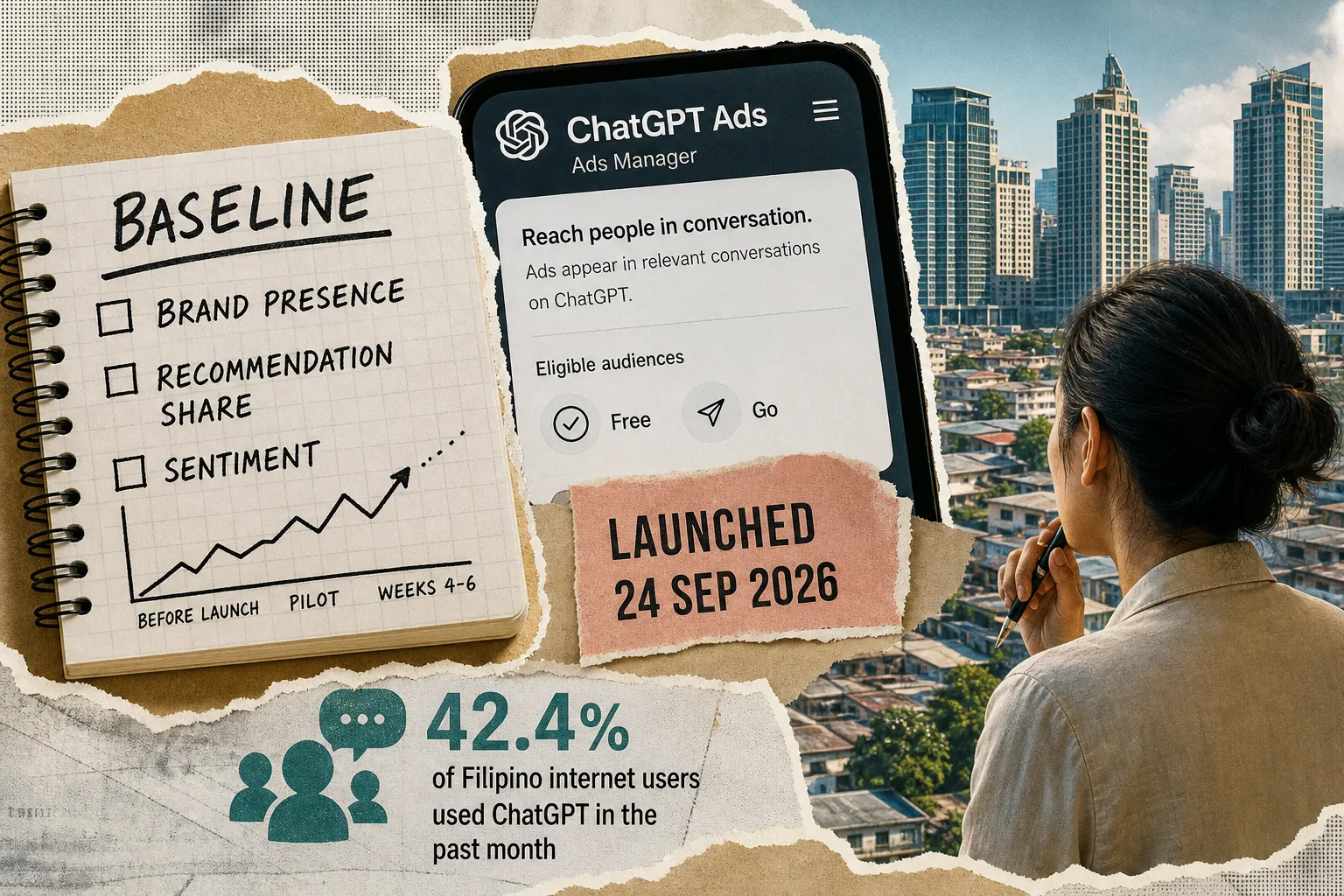
- Set a baseline now. Pull the last two weeks of coverage for your brand, competitors and category before November 16, so you can show what changed.
- Build keyword sets in English, Filipino and Taglish. Go beyond "ASEAN" and "summit" to terms like "PICC," "road closure," "walang pasok" and "cancelled flight," combined with your brand and category names.
- Cover broadcast, radio, print and provincial media, not only online. Primetime newscasts, AM radio and vernacular outlets will cover the summit too, and those mentions rarely appear in online-only alerts.
- Measure outcomes, not just volume. AMEC's Barcelona Principles V4.0 call for blending qualitative and quantitative analysis and warn against treating outputs as outcomes. A hundred neutral mentions in passing are worth less than one critical segment on a primetime newscast.
- Extend the window past November 18. Analysis of the chair's statement, the DEFA signing and the Code of Conduct will keep coming for at least a week after leaders leave.
- Check what AI assistants say. Ask AI search tools about ASEAN 2026 and your category, note which sources they cite, and track your AI search visibility over time. Those answers increasingly shape what people learn after the headlines fade.
For a regular read on stories like this one, subscribe to our insights newsletter.
What this means for marketing, analyst and brand teams
For marketing teams, summit week is mostly about timing: a long weekend, heavy traffic and saturated feeds change when audiences pay attention, and monitoring shows when to pause scheduled posts, when to lean into service updates and when campaigns can land again. For media analysts, volume will spike for everyone, so the value lies in segmenting coverage by topic, channel, language and sentiment, and explaining which shifts the summit actually caused, with the cost debate and disruption chatter the likeliest sources of sentiment swings. For brand and reputation managers, the priority is unplanned exposure, from incidental mentions in foreign coverage to complaints tagged during the disruption and your category's place in DEFA or tourism stories, and a post-summit report showing where the brand appeared, how it was framed and what changed from the baseline is far more useful to leadership than a clipping count.
Key takeaways
- Set a baseline before November 16, not after the spike.
- Track Filipino and Taglish terms alongside English ones.
- Separate service complaints from general summit frustration.
- Keep monitoring for at least a week after November 18.
About Media Meter
Media Meter Inc. is a Philippine media monitoring and analytics company. Its footprint covers more than 2,470 Philippine sources, including provincial and vernacular media, so brands, agencies and government offices can see how a national story like ASEAN 2026 lands well beyond Manila's headlines, measure how their messages perform, and turn media data into decisions.