Media Monitoring vs. Media Intelligence vs. Media Analytics
Media Monitoring vs. Media Intelligence vs. Media Analytics: see how each layer works and which one your team needs first.

Picture this: it's Monday morning and your director asks for "media intelligence" on last week's product launch. You pull together a spreadsheet showing 340 mentions, up from 210 the week before, and hit send feeling good about it. Ten minutes later: "This is just a mention count. What does it actually mean?" That's the moment most analysts in the Philippines run into the real question behind media monitoring vs. media intelligence vs. media analytics: three terms that live in the same workflow, run on the same underlying mentions, and often get bundled into one dashboard by vendors selling a single platform.
But they're three distinct layers of work, and the analyst who treats media monitoring, media analytics, and media intelligence as one thing is usually the one stuck explaining a report that never answered the question leadership actually asked.
Comparison:
- Media monitoring tracks where and how often a brand, competitor, or topic gets mentioned across news, broadcast, and social media.
- Media analytics quantifies how those mentions performed, covering metrics like reach, engagement, and share of voice.
- Media intelligence turns that data into insight, explaining sentiment shifts, narrative changes, and the recommended next move.
1. Media Monitoring: Collecting What Was Said
Media monitoring is the tracking and collection layer: mentions of a brand, competitor, or keyword across print, broadcast, online news, and social channels. Boolean queries, real-time alerts, clip counts, source logs. This is the foundation everything else is built on. You can't analyze coverage you never captured, so the quality of monitoring caps the quality of whatever comes after it.
A telco announcing a rate hike, for example, needs monitoring running the moment the news breaks, catching every provincial radio pickup and social media thread before the story sets its own narrative unchallenged.
What it looks like day to day: setting up keyword alerts, logging mentions by outlet, flagging spikes for a possible crisis.
Used for:
- Early crisis detection, catching a negative story before it spreads
- Tracking competitor announcements and product launches as they happen
- Confirming a press release or media placement actually ran
- Building the raw dataset that feeds analytics and intelligence reporting
What it can't do on its own: tell you whether 200 mentions this week are good news or a warning sign.
2. Media Analytics: Measuring How It Performed
Media analytics takes that raw feed and turns it into numbers: reach, impressions, engagement, mention volume over time, audience demographics. It's the KPI layer, the one that shows up in a weekly or monthly performance dashboard.
A fast-food chain running a value-meal promotion against a rival's can pull mention volume and engagement rate for both campaigns side by side and see, in numbers, which one is actually winning attention this week.
What it looks like day to day: building the share-of-voice chart, tracking engagement rate by platform, comparing this month's mention volume to last month's.
Used for:
- Proving campaign performance in weekly or monthly reports
- Benchmarking share of voice against named competitors
- Spotting which channels or content formats are earning the most engagement
- Justifying PR or marketing budget with hard numbers instead of impressions
What it can't do on its own: explain why the numbers moved. A spike in mentions could mean a successful campaign or a brewing controversy. Analytics shows the spike; it doesn't say which one it is.
3. Media Intelligence: Explaining What It Means
Media intelligence is the interpretive layer on top of both. It adds sentiment, narrative tracking, competitive benchmarking, and context, the analysis that turns "you were mentioned 200 times" into "sentiment turned negative on Thursday, one outlet drove 60% of that coverage, and it traces back to a competitor's announcement." This is also where media intelligence has expanded beyond PR: compliance and risk teams now use it to flag reputational issues and controversial coverage before they become bigger problems.
That same fast-food chain's intelligence layer is what tells them whether a spike in mentions is genuine excitement over the new promo or backlash over a price hike buried in the fine print, and what to say about it before the story runs its course on its own.
What it looks like day to day: writing the "so what" section of a report, connecting a sentiment shift to a specific trigger, briefing leadership on what to do next.
Used for:
- Briefing executives on reputation risk before a board meeting or press event
- Adjusting messaging strategy mid-campaign based on how narratives are shifting
- Flagging reputational or compliance red flags for legal and risk teams
- Informing bigger calls like crisis response, spokesperson selection, or market positioning
The Quick Comparison
Think of the three less as separate tools and more as a funnel, where each layer depends on the one before it. Skip a layer and the one built on top of it gets shakier: analytics run on incomplete monitoring is just measuring gaps in your own coverage, and intelligence without solid analytics behind it is opinion dressed up as insight. That's also the fastest way to check your own report before it goes out. If it only counts mentions, it's monitoring. If it scores or ranks those mentions, it's analytics. If it tells someone what to do next, it's intelligence.
Why the Industry Draws This Line
This isn't just semantics between media monitoring, media analytics, and media intelligence. AMEC's Barcelona Principles, the global standard for communications measurement, explicitly reject raw clip counts and impressions as meaningful on their own, and have long called out Advertising Value Equivalency (AVE) as a measure of media cost rather than communication value. In other words, the industry's own standard-setter agrees: stopping at monitoring, or even at analytics, isn't measurement. It's a headcount.
The Shift Analysts Need to Watch in 2026
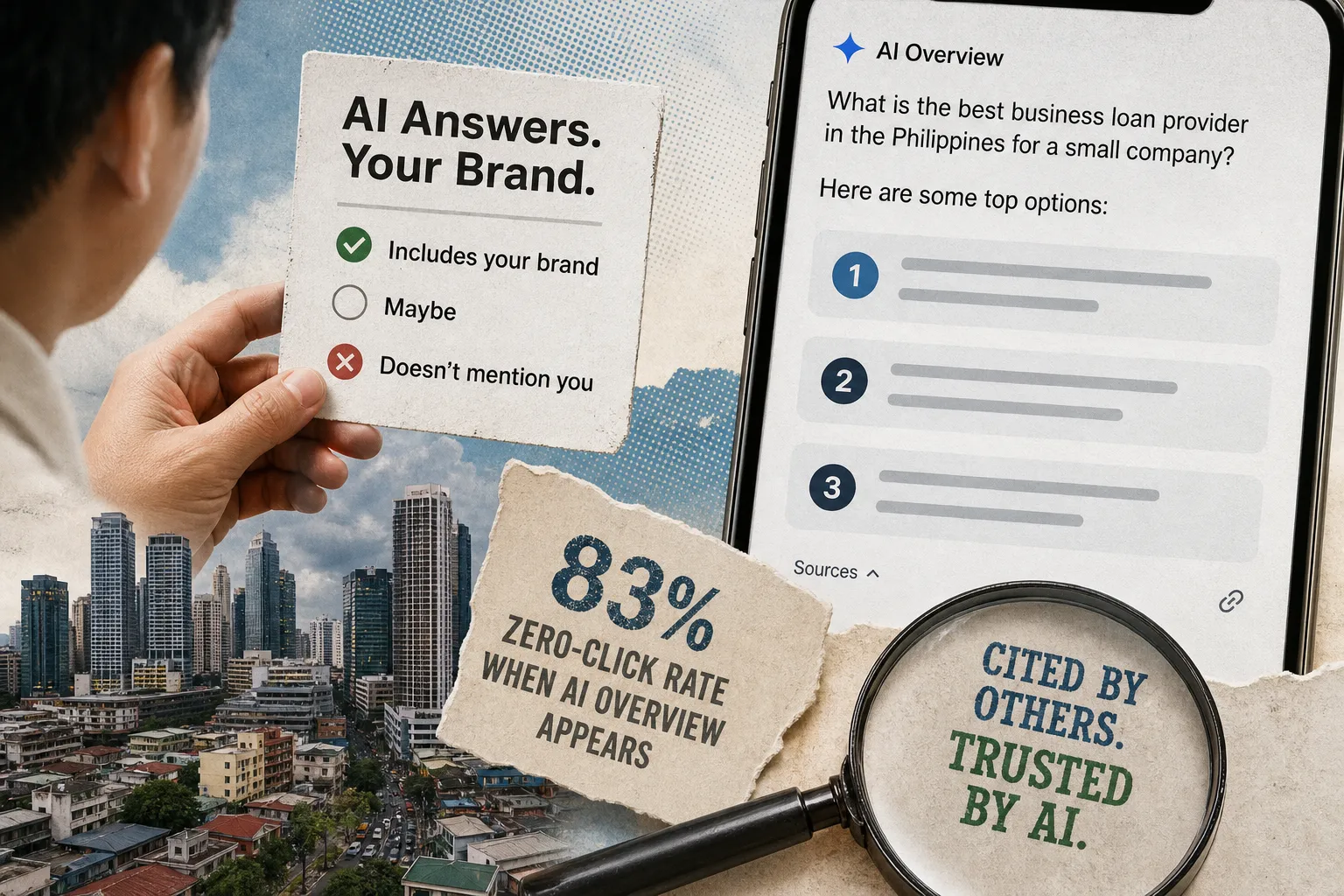
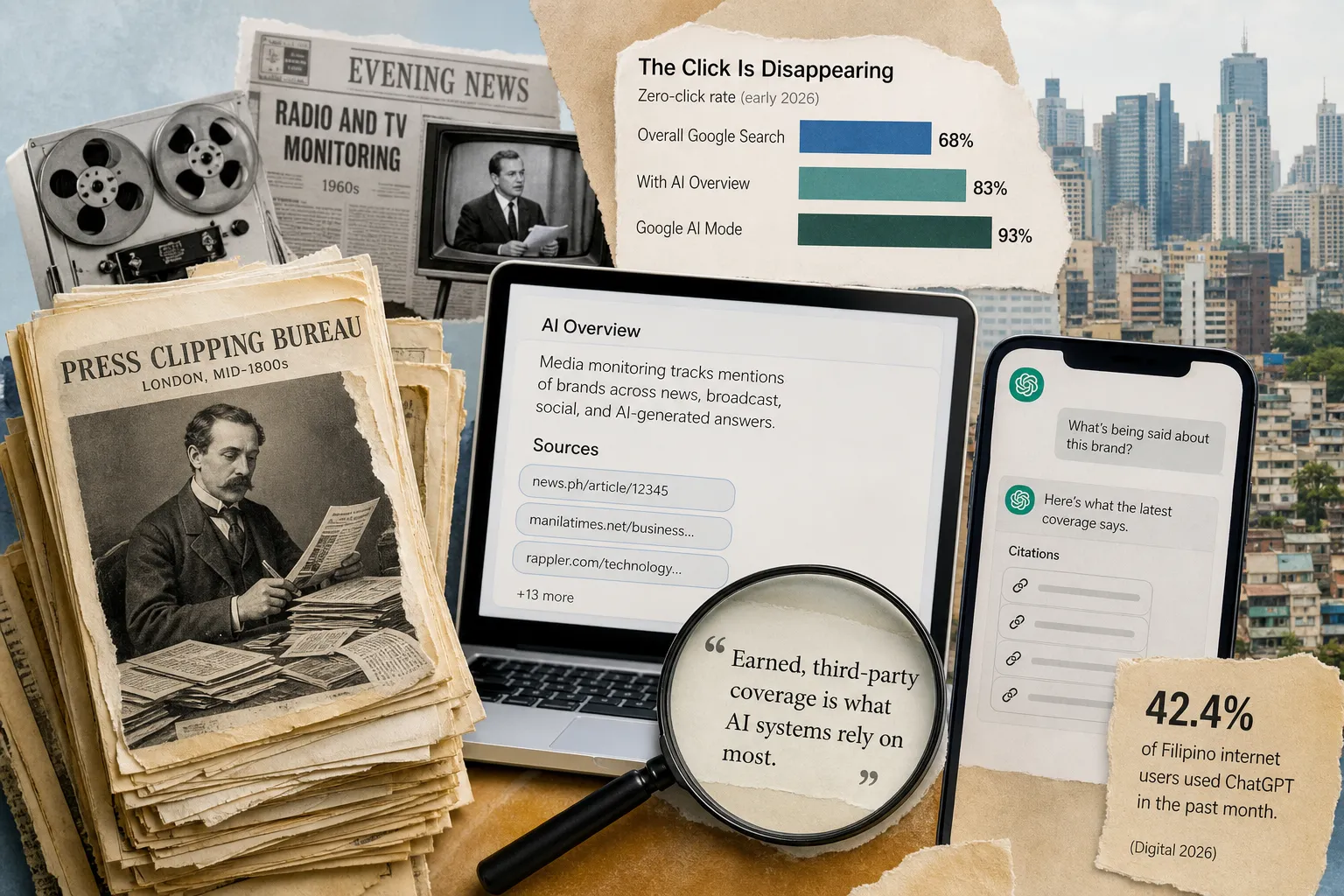
AI is currently reshaping all three layers. AI Overviews and zero-click search results mean a growing share of "coverage" never generates a traditional clip, a shift covered in more depth in What Brands Must Know About AI Search Visibility. Synthetic and automated content can also inflate mention volume without reflecting real audience sentiment, which makes a monitoring-only view increasingly unreliable on its own. That's pushing more teams to lean on the analytics and intelligence layers to separate real signal from noise, something we broke down further in Clippings to Citations: Media Monitoring's AI Era.
For Philippine brands specifically, the stakes are higher than average. The country had 95.8 million social media identities as of October 2025, up 10.3% year over year, faster growth than internet users or mobile connections saw over the same period. In a market that saturated, mention counts alone get noisy fast. Knowing which layer you're actually working in, and which one your leadership team needs next, is what keeps a report useful instead of just busy.
Media Meter is built around this exact handoff, catching every mention through MediaWatch, scoring what actually matters, and turning it into the kind of decision-grade intelligence your leadership team can act on before the story moves without you. Request a demo or browse a sample report to see it work on your own coverage.
The full report is open below.
We also emailed a PDF download link to your inbox — check your spam folder if it doesn't arrive in 2 minutes.