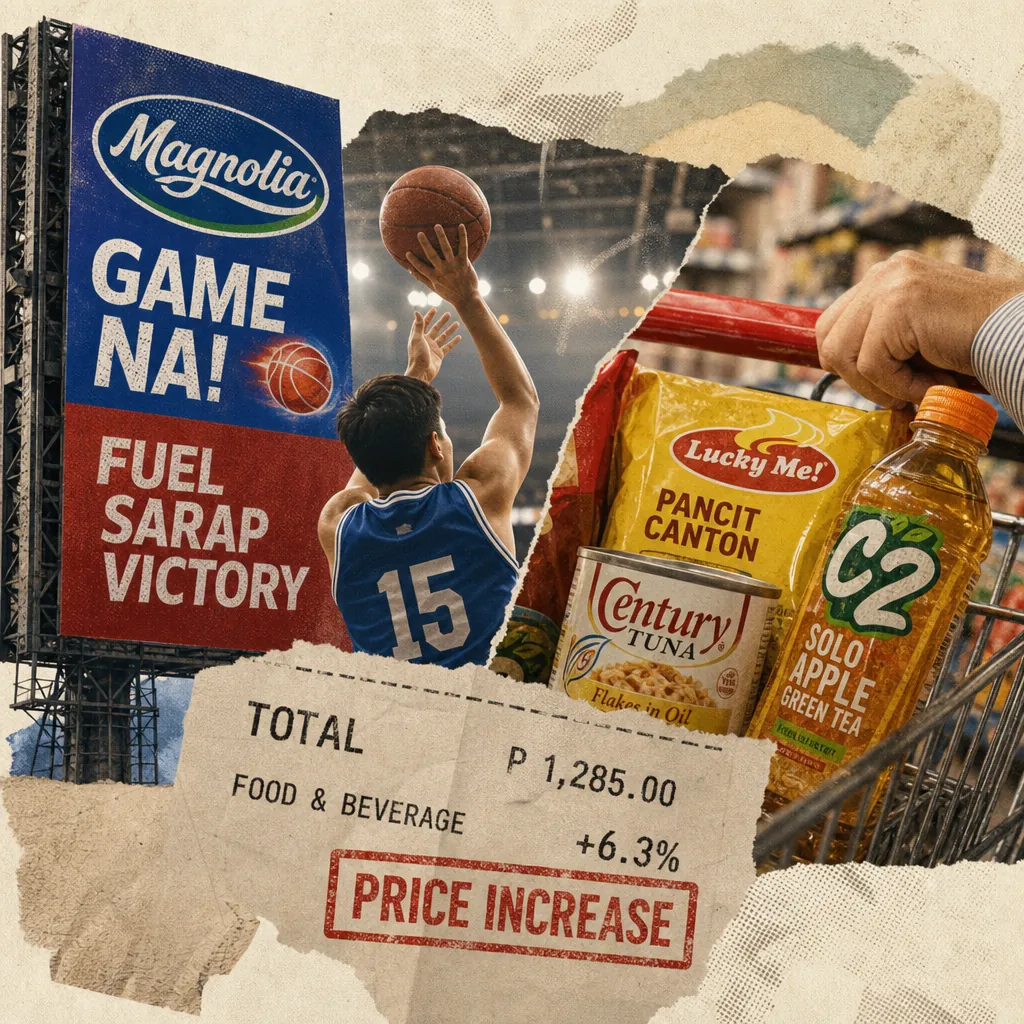
ASF outbreaks and fuel hikes squeeze Filipino households as value promos offer relief
African Swine Fever outbreaks in the Visayas trigger pork bans, while rising fuel and electricity costs compound consumer anxiety. Mang Inasal's value promotion draws strong engagement, and regulatory scrutiny of pricing practices intensifies.
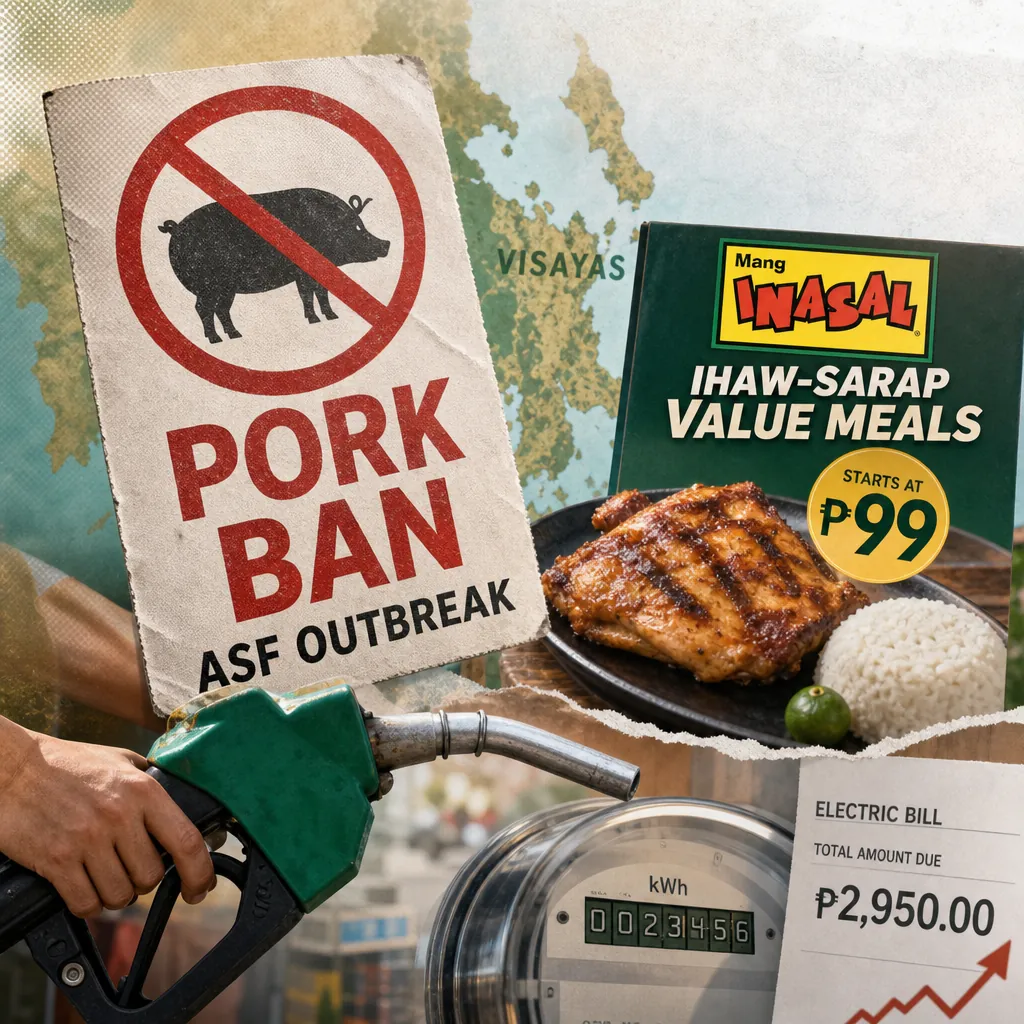
The conversation around Philippine food and consumer goods in mid-2026 is tightly interwoven with broader economic pressures, safety concerns, and brand loyalty. Discussions began escalating in late June when the Department of Energy announced a fuel price rollback for June 23–29, but by June 26, uncertainty about the next week’s adjustment triggered a spike in consumer anxiety. That same day, a powerful magnitude 6.6 earthquake struck Davao Occidental, generating over 7,800 sad reactions and 634 comments on Facebook, momentarily diverting attention from economic topics. However, by July 4, the narrative shifted sharply as Cebu Governor Pamela Baricuatro signed Executive Order No. 36 banning pork and live hogs from Negros Occidental due to African Swine Fever (ASF), reigniting food supply and price fears.
As July progressed, three distinct threads emerged. The first centered on the Mang Inasal Pork BBQ Blowout promotion—first announced for July 8 at ₱69 for two pieces with rice, then extended with a delivery edition on July 15. The second thread involved ASF-related restrictions spreading: Cebu City banned pork products on July 12, and a Reddit user asked about bringing chicharon to Mindanao, reflecting practical consumer confusion. The third thread intensified around fuel and electricity costs, with Meralco announcing a ₱0.34/kWh increase for July, and diesel prices projected to rise by ₱3.00–5.00 per liter on July 14, compounding household budgets already stretched by food inflation.
Key themes
- Mang Inasal’s value promotion captures consumer attention – The Mang Inasal Pork BBQ Blowout, offering two pieces of BBQ with rice for ₱69, generated significant buzz across social media. A follow-up delivery edition on July 15 extended the reach. The promotion resonated strongly with price-sensitive consumers facing rising costs of living.
- ASF outbreaks trigger pork bans and supply fears – African Swine Fever outbreaks in Negros Occidental led to a provincial ban on pork and live hogs from the area, followed by a similar ban in Cebu City. The restrictions threaten pork supply for major food brands and raise concerns about price increases for staples like lechon and processed pork products.
- Fuel and electricity hikes compound household budgets – Meralco announced a ₱0.34/kWh increase for July, and diesel prices were projected to rise by ₱3.00–5.00 per liter. These increases add to the financial strain on consumers, driving demand for value-oriented promotions and sparking anger on social media.
- Consumer watchdog behavior intensifies on pricing practices – A Reddit thread exposing a deceptive sale tag at a grocery store garnered 221 upvotes and 53 comments, with users urging DTI action. This reflects growing consumer vigilance and a willingness to call out perceived unfair pricing.
- Jollibee branch closure highlights regulatory compliance risks – A Jollibee branch along FPJ Avenue in Quezon City was temporarily closed over environmental code violations, drawing public attention and media coverage. The incident underscores the reputational risk of non-compliance with local ordinances.
- Brand nostalgia and international content provide resilience – Jollibee first-time-try videos from London and the US continue to generate strong engagement, with one Facebook post receiving over 17,000 reactions. This “global Filipino pride” narrative creates a positive sentiment halo that can offset negative local stories.
- Agricultural sector faces flat growth outlook – The University of Asia & the Pacific Center for Food and Agri Business projects flat growth for agriculture, fisheries, and forestry this year, with climate shocks and geopolitical tensions weighing on production. This adds to concerns about food supply and prices.
- Government incentives for EVs and renewable energy signal long-term shifts – The Board of Investments approved P461.84 billion in investments in the first half of 2026, with renewable energy accounting for 74%. The government is also finalizing incentive packages for electric vehicle manufacturers, signaling a push toward sustainable industries.
How the narratives stack
Dominant – Within the captured set, the dominant narrative is the convergence of cost-of-living pressures (fuel, electricity, food) and the consumer response seeking value. The Mang Inasal promotion and the ASF-related pork bans are the two most prominent storylines, each generating substantial engagement and coverage. The Mang Inasal promotion drew heavy social media buzz, with posts celebrating the ₱69 deal accumulating thousands of likes and shares. The ASF bans, meanwhile, were covered by multiple news outlets and sparked practical consumer questions on Reddit and Facebook.
Counter-narrative – A counter-narrative emphasizes consumer empowerment and regulatory action. The DTI’s consumer education seminars and the Reddit thread on deceptive pricing position consumers as active watchdogs. This narrative suggests that while prices rise, consumers are fighting back through reporting and social media exposure, potentially forcing retailers to be more transparent.
Emerging – An emerging narrative is the tension between short-term value promotions and long-term supply chain risks. The Mang Inasal promotion’s success depends on pork availability, which is threatened by ASF. If supply tightens, brands may face menu changes or price hikes, potentially triggering negative sentiment. This narrative is still developing but could become dominant if ASF spreads further.
Suppressed – The story of agricultural sector stagnation and its implications for food security is under-covered relative to its importance. While the UA&P forecast of flat growth was reported by several outlets, it did not generate the same level of public engagement as the ASF or fuel price stories. This gap means that the structural challenges facing the sector may be overlooked in public discourse.
Platform insights
- Facebook – Dominated emotional reactions to cost-of-living increases and ASF news. Posts about Meralco bills and oil hikes received hundreds of shares and high engagement (e.g., 7,243 shares for the earthquake post, but also 634 comments on the earthquake and 45 on electricity). ASF advisory from Cebu Police gained 257 likes and 48 comments, indicating strong local concern. Brands like Mang Inasal used Facebook to distribute press releases and promotional graphics, but user-to-user sharing amplified the ASF ban updates more organically.
- YouTube – Centered on first-person food experiences, particularly Jollibee “first time” reviews from London and the US, as well as Mang Inasal blowout footage. A 2018 Jollibee mukbang by @BrianandLateria still holds over 1 million views, showing enduring international curiosity. In July 2026, newer videos like “Trending MANG INASAL PORK BBQ BLOWOUT 2026 live!” had only 9 views, suggesting the promotion’s buzz was more real-time than search-driven.
- Reddit – Served as a platform for consumer complaints and practical queries. A post on July 12 about a DTI loophole regarding misleading sale tags received 221 upvotes and 53 comments, showing consumer frustration with deceptive pricing. Another thread about Mang Inasal’s BBQ nostalgia (90 upvotes) highlighted how brand affinity remains strong despite price pressures.
Key voices and communities
- General consumers (price-sensitive public) – This group spans Facebook, Twitter, Reddit, and YouTube, driving the largest conversation volume around food pricing, promotions, and deceptive retail practices. Their engagement spikes during value promotions like Mang Inasal's Pork BBQ Blowout, where posts of long queues and satisfaction generate tens of thousands of reactions. However, a vocal subset expresses frustration over shrinkflation, misleading sale tags, and poor customer service—especially on Reddit, where a thread about expired sale signage garnered 221 upvotes and 53 comments.
- Food brand advocates and content creators – A mix of lifestyle vloggers, mukbang channels, and brand loyalists actively produce and amplify positive content around Jollibee, Mang Inasal, and Century Tuna. Their reach is substantial: a “First Time Jollibee Mukbang” channel accumulated 880,000 views and 6,400 likes. Century Tuna’s Superbods 2026 finalist announcement on Facebook garnered 1,847 likes and 200 comments.
- Regulatory and government actors (DTI, DA, LGUs) – Official accounts and government-affiliated pages from DTI, Department of Agriculture, and provincial governments (e.g., Cebu) are active in disseminating consumer protection guidance and food safety advisories. Their content generates lower engagement than consumer posts but carries authority—DTI’s post on the Prohibition of Deceptive Sales Act was shared 18 times and had 14 likes, reinforcing its role as a trusted referee.
- Agricultural and livestock stakeholders (hog industry, farmers) – This group includes hog raisers, meat processors, and local government units in ASF-affected areas, mainly active on Facebook and Twitter through news sharing and advisory posts. Their influence is high among policy-engaged audiences; a post from the Cebu Provincial Police about ASF checkpoints received 257 likes and 48 comments. Older Reddit threads show lingering consumer confusion about ASF bans.
Narrative streams
Mang Inasal’s Pork BBQ Blowout: A value anchor in tough times
The Mang Inasal Pork BBQ Blowout, first announced for July 8, offered two pieces of BBQ with rice for ₱69—a price point that resonated deeply with consumers feeling the pinch of rising fuel and electricity costs. The promotion generated significant buzz across social media, with Facebook posts celebrating the deal accumulating thousands of likes and shares. A follow-up delivery edition on July 15 extended the reach, offering a 4-piece Pork BBQ Buddy Size for ₱169 and an Ihaw Duo for ₱349. This second wave was likely a response to strong demand on July 8, as earlier Reddit discussions from 2023–2024 had consistently praised Mang Inasal’s BBQ, indicating a loyal customer base eager for value meals. The brand’s ability to pivot to delivery-only deals shows an adaptive marketing response to mobility and cost-of-living concerns. However, the promotion’s success depends on pork availability, which is threatened by ASF outbreaks. If supply tightens, Mang Inasal may face menu changes or price hikes, potentially triggering negative sentiment.
ASF resurgence: Supply chain risks and consumer confusion
African Swine Fever discussions date back to January 2021 when Cebu first banned trucks carrying meat products, but the narrative reignited in late June 2026 as Negros Occidental experienced a fresh outbreak. On July 4, Cebu’s provincial ban on pork from Negros Occidental took effect, citing a ₱20-billion hog industry at stake. By July 11–12, multiple Facebook posts amplified the ban and police advisories, with the public beginning to question how this would affect pork prices and availability—especially for staples like lechon and processed products. A Reddit user from June 2023 simply asked “naa pa bay asf ban? magda unta kog chicharon padung mindanao”, illustrating persistent consumer uncertainty about cross-regional pork transport. The ban directly impacts iconic pork-based menu items at Mang Inasal (Pork BBQ, liempo), Jollibee (burger steak patties with pork), and even Lucky Me canned goods and Century Tuna alternatives. Consumer sentiment on Reddit already reflects confusion about ASF restrictions and practical concerns—one user asked “Pwede ba mag dalag og bawn sa airport terminal 2, pork og rice nga kaonon sa sulod?”—indicating an emerging information gap that DTI and FDA communications teams should fill.
Fuel and electricity hikes: The macro pressure on household budgets
Starting June 22, the DOE’s oil price announcements became a daily barometer of financial strain. On July 10, a tweet captured the mood: “Handa ka na ba? 😭 JUST IN! PATAAS ulit ang paparating na Meralco bill... UP din ang presyo ng petrolyo... Nakupo, puro BAD NEWS!” The following day, ABS-CBN News projected diesel hikes of ₱3.00–5.00/L and kerosene increases of ₱2.20–4.20/L, attributing them to Middle East tensions. Facebook users reacted with widespread anger—a post about Meralco’s increase garnered 37 angry reactions and 45 comments, many expressing frustration as these costs directly raised food production and delivery expenses. The cumulative effect of these hikes likely drove consumers toward value-driven promotions like Mang Inasal’s, which offered a rare affordable indulgence. For brands, this means that any price increase announcement must be handled carefully to avoid reputational backlash.
Consumer watchdog behavior: The rise of pricing vigilance
A viral Reddit thread on July 12 detailed a deceptive “sale” tag on expiring string cheese, where the store displayed a sale tag but charged full price. The post received 221 upvotes and 53 comments, with users urging DTI reporting. One user wrote “either sinasadya nila yan or naubos nga lang talaga pero hindi ba dapat alisin din agad ng staff if ganon?” This follows DTI’s own consumer education push on fair pricing and the Bagwis Seal program. Given parallel triggers—Jollibee’s Quezon City branch temporarily closed over environmental code violations and ongoing complaints about Mang Inasal delivery service—a broader accountability narrative is forming. Over the next 2-3 weeks, expect a spike in “DTI complaint” and “price tag loophole” mentions, particularly around large grocery chains and FMCG brands. This trend requires proactive shelf-management communications and transparent promotional policies from all food-sector clients.
Jollibee branch closure: A local issue with national implications
A Jollibee branch along FPJ Avenue in Quezon City was temporarily closed over environmental code violations on July 10–12. The closure was covered by multiple news outlets and drew public attention, underscoring how quickly a local issue can become a national story. A tweet about the closure received 2,230 views. The incident reminds stakeholders that regulatory compliance is a zero-tolerance issue. For Jollibee, the closure is a reputational risk that requires proactive communication. The brand should share the reopening confirmation and emphasize cooperation with local government to prevent a “frequent violator” narrative from taking hold.
Agricultural outlook: Flat growth and structural challenges
The University of Asia & the Pacific Center for Food and Agri Business projects a “flat horizon” for the agriculture, fisheries, and forestry cluster this year, forecasting between a 0.5 percent decline to 0.5 percent growth. This follows a 3.1 percent expansion in 2025, the cluster’s strongest in five years. Growth was driven by poultry (9.1 percent), other agricultural activities and services (3.9 percent), crops (3.1 percent), and fisheries (0.5 percent), while livestock and forestry declined 2.0 percent and 0.5 percent, respectively. UA&P-CFA executive director Marie Annette Dacul said the 2025 growth was not a breakthrough, but largely a recovery from a 1.5 percent decline in 2024, when the country was hit by both La Niña and El Niño. For this year, the research center expects mixed subsector performance. The flat outlook adds to concerns about food supply and prices, especially in the context of ASF outbreaks and rising input costs.
Conversation trajectory
- Cost-of-living convergence driving value-seeking behavior (observation window: 2-4 weeks): Consecutive fuel price increases and a Meralco rate hike create a compounding affordability squeeze for Filipino households. This macro-pressure intensifies consumer demand for value meals and promos, as evidenced by the viral success of Mang Inasal’s National Pork BBQ Blowout on July 8. The follow-up Delivery Edition on July 15 extends the conversation into delivery channels, with projected 30-40% higher engagement on platforms like GrabFood and foodpanda. Expect other QSR brands—particularly Jollibee, Chowking, and Greenwich—to announce matching or competing promos within 7-14 days, amplifying the “budget meal” narrative across traditional and social media.
- African Swine Fever (ASF) resurgence threatening pork supply chains (observation window: 30-60 days): Cebu’s renewed ban on pork products from Negros Occidental and other ASF-affected provinces signals escalating supply-side pressure. This directly impacts iconic pork-based menu items at Mang Inasal (Pork BBQ, liempo), Jollibee (burger steak patties with pork), and even Lucky Me canned goods and Century Tuna alternatives. Consumer sentiment on Reddit already reflects confusion about ASF restrictions and practical concerns—one user asked “Pwede ba mag dalag og bawn sa airport terminal 2, pork og rice nga kaonon sa sulod?”—indicating an emerging information gap that DTI and FDA communications teams should fill. Over the next 30-60 days, expect a 20-30% increase in searches for “pork price,” “ASF Philippines,” and “pork alternatives,” driven by a mix of health and cost concerns.
- Consumer watchdog behavior intensifying on pricing and labeling practices (observation window: 2-3 weeks): A viral Reddit thread detailing a deceptive “sale” tag on expiring string cheese garnered substantial engagement, with users urging DTI reporting. This follows DTI’s own consumer education push on fair pricing and the Bagwis Seal program. Given parallel triggers—Jollibee’s Quezon City branch temporarily closed over environmental code violations and ongoing complaints about Mang Inasal delivery service—a broader accountability narrative is forming. Over the next 2-3 weeks, expect a spike in “DTI complaint” and “price tag loophole” mentions, particularly around large grocery chains and FMCG brands. This trend requires proactive shelf-management communications and transparent promotional policies from all food-sector clients.
- Brand nostalgia content serving as a resilience buffer (observation window: ongoing): Despite economic headwinds, Jollibee’s international first-time-try videos (London, US) continue to generate strong engagement, with one Facebook post receiving over 17,000 reactions and 500+ shares. This “global Filipino pride” narrative creates a positive sentiment halo that can offset negative local stories. However, the content is largely creator-driven rather than brand-initiated. For clients like Malacañang’s economic communications, this emotional dimension can be leveraged in messaging about Filipino resilience and business success abroad.
Key trigger events that will reshape this conversation include: the July 14 oil price hike announcement (already generating high anticipatory engagement with emoji-laden complaints); the Mang Inasal Delivery Blowout on July 15 (will set the benchmark for value-promo reception); the OUR CEBU! trade showcase on July 17-19 (a platform for local food producers amid ASF concerns); and any additional ASF detection announcements in Luzon or Mindanao, which would trigger province-level bans and immediate consumer alarm.
Response guidance
Platform-specific approaches:
- Facebook: Leverage high-engagement posts on Mang Inasal’s Pork BBQ Blowout by amplifying user-generated content showing long queues and happy customers, reinforcing the brand’s affordability and community appeal. Address the Jollibee FPJ branch closure narrative directly in official comment threads, using a brief factual statement that the issue has been resolved and operations resumed, without engaging in debate about the city’s environment code. For posts about ASF-related pork bans, share visually clear infographics from the Department of Agriculture or local government explaining that cooked, properly handled pork products remain safe, and that the brand sources from ASF-free areas.
- Twitter: Use trending hashtags like #MangInasalPorkBBQBlowout2026 to insert concise, value-focused messages (e.g., “P69 for 2 pcs BBQ + rice – sarap at tipid!”) alongside the brand’s official countdown posts, capitalizing on the real-time conversation around affordability. Monitor for customer service complaints—such as the Reddit thread about cancelled delivery orders and poor service at Mang Inasal Dapitan—and respond within minutes with a direct message request for order details, demonstrating proactive problem-solving. Retweet and reply to official government announcements about fuel price hikes with contextual reminders that QSR brands are offering fixed-price promos, reinforcing the “value anchor” narrative during economic strain.
- Reddit: Engage in the r/Philippines thread about misleading sale tags at a grocery store by posting a standardized DTI-aligned message that encourages users to report such incidents, and reiterate the brand’s commitment to transparent pricing in its own stores. Avoid naming the retailer; focus on consumer education. In threads about Mang Inasal BBQ quality (like the “apakasarap talaga” post), leave a lighthearted, brand-voiced reply that thanks the user and invites them to try the upcoming Delivery Edition promo, turning organic praise into a call-to-action. Monitor the Jollibee International subreddits (e.g., London taste-test threads) for OFW-centric conversations. A simple “We’re glad you brought a taste of home to London!” response reinforces emotional brand attachment without being overly promotional.
- YouTube: On the Mang Inasal Pork BBQ Blowout video that hit 1,084 views, pin a comment linking to the official delivery promo page and a short “How to Order” guide, capturing the audience’s transaction intent while the video is trending. For Jollibee first-time review videos (especially those with high engagement like “I Review JOLLIBEE – My FIRST TIME!”), the brand can leave a gracious comment thanking the creator and noting that the recipe has been adapted for local tastes, which subtly addresses any flavor discrepancy feedback. Compile a short playlist of “Behind the BBQ” or “Chickenjoy Prep” content from official channels to counter the ASF-related anxiety by visually demonstrating quality sourcing and cooking processes, then share the playlist link in relevant YouTube comments.
Key messages:
- “Our Pork BBQ Blowout proves that great-tasting, affordable meals are still within reach even when household expenses rise.”
- “We comply fully with all local ordinances, and our FPJ Avenue branch has resumed operations after addressing the concern—no long-term impact on service.”
- “All our pork products come from ASF-free, government-certified sources, and we follow strict food safety protocols from farm to table.”
- “Fair pricing is a promise: if you see a price tag, it applies to all stocked items—if a promo item is sold out, we remove the tag immediately.”
Sensitive topics to navigate:
- ASF and Pork Safety: Avoid defensive language. Acknowledge the ban’s necessity for the industry, then pivot to the brand’s rigorous sourcing and cooking processes that eliminate risk. Never dismiss consumer fear as irrational.
- Price Hikes and Consumer Sentiment: Do not compare prices directly with competitors or claim “we absorb costs.” Instead, frame promos as a temporary relief measure, avoiding overpromising long-term price locks.
- Deceptive Pricing Allegations: When addressing sale-tag confusion, avoid blaming store staff. Focus on the system—committing to training and immediate tag removal—to show accountability without creating a liability narrative.
Response priorities:
- Capitalize on the Mang Inasal Promo Wave: July 8 and July 15 Blowout dates generated real buzz—use earned media and user content to extend the conversation into a weekly “value deal” series. Rationale: It directly counters the negative fuel/price-hike sentiment with a tangible positive.
- Mitigate Jollibee Closure Reputation Risk: The FPJ branch closure has already been reported by mainstream outlets. Proactively share the reopening confirmation and emphasize the brand’s cooperation with local government to prevent a “frequent violator” narrative from taking hold.
- Address the DTI Loophole Conversation: The Reddit thread about misleading sale tags received 221 upvotes and 53 comments—indicating high resonance. Issue a brief, public-facing statement committing to regular price-tag audits across all owned stores, and direct consumers to DTI for other retailers.
Example language for common scenarios:
- When responding to ASF-related safety questions: “We understand your concern. All our pork is sourced from DA-certified ASF-free farms. Cooking at high temperatures kills the virus, and our grilling process exceeds safety standards. You can enjoy our BBQ with confidence.”
- When engaging with a customer complaint about a missed promo or order issue: “We’re sorry to hear about your experience. Please send us your order details via private message so we can look into it right away and make it right. We value your patronage.”
- When addressing price increase concerns generally: “We know every peso counts right now. That’s why we launched promos like the Pork BBQ Blowout—to give you the same great taste at a price that helps you stretch your budget.”
See the full picture behind today's signals.
This report draws from Media Meter's MediaWatch, our real-time monitoring engine tracking 2,470+ Philippine sources across print, broadcast, digital, and social. Explore how the platform turns raw coverage into decision-grade intelligence, then see how it's configured for teams like yours — whether you're in PR agencies, corporate comms, government, or marketing.
Want more? Browse our Report Library for sector and crisis intelligence, or request a demo and we'll have your brand set up before the call.
Want this kind of intelligence on your brand?
This brief is built on the same MediaWatch methodology that runs continuously across every brand we monitor. See your competitive landscape, Impact Score, and narrative trajectory in a 30-minute demo.