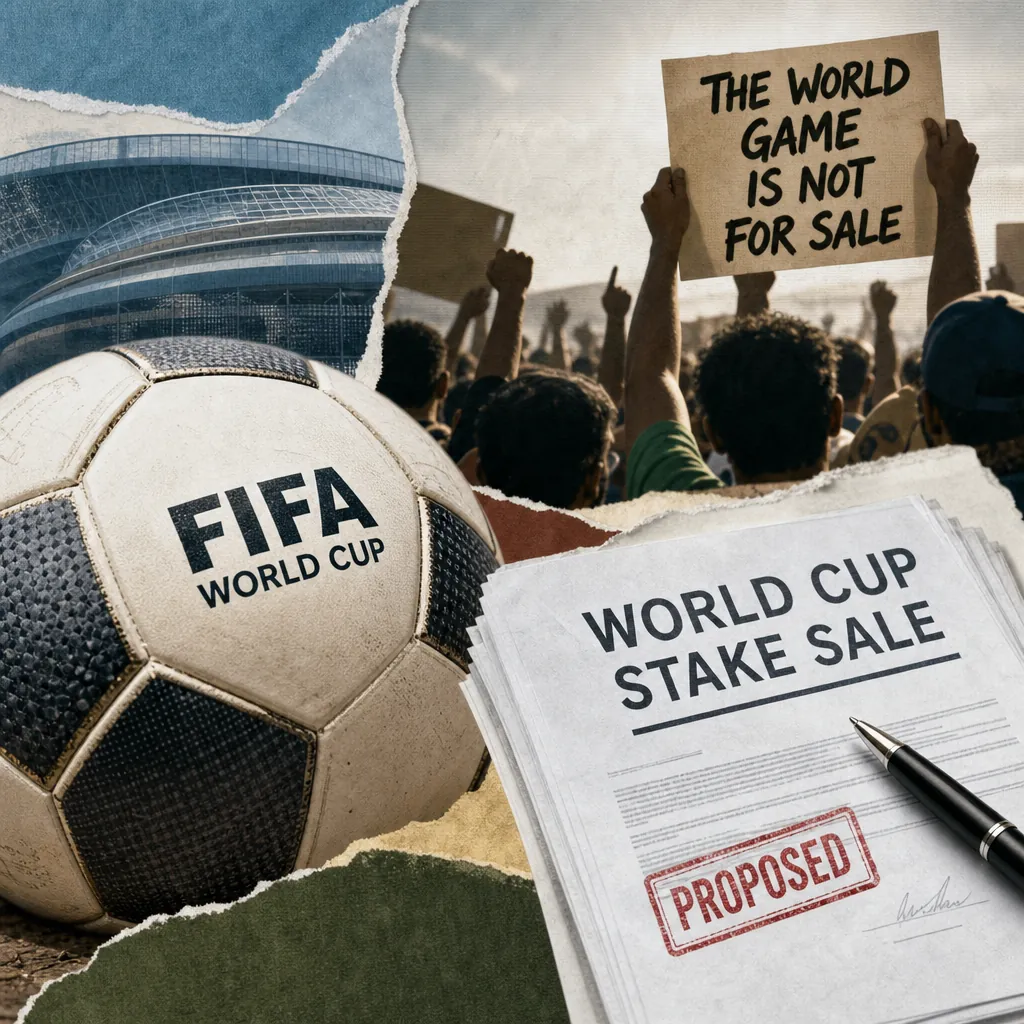
UEFA Boycott Threatens FIFA World Cup Over Private Equity Plan
UEFA's unanimous vote to boycott FIFA competitions over plans to sell World Cup stakes to private investors dominates global sports coverage, while the Philippines advances EV incentives and trade pacts.
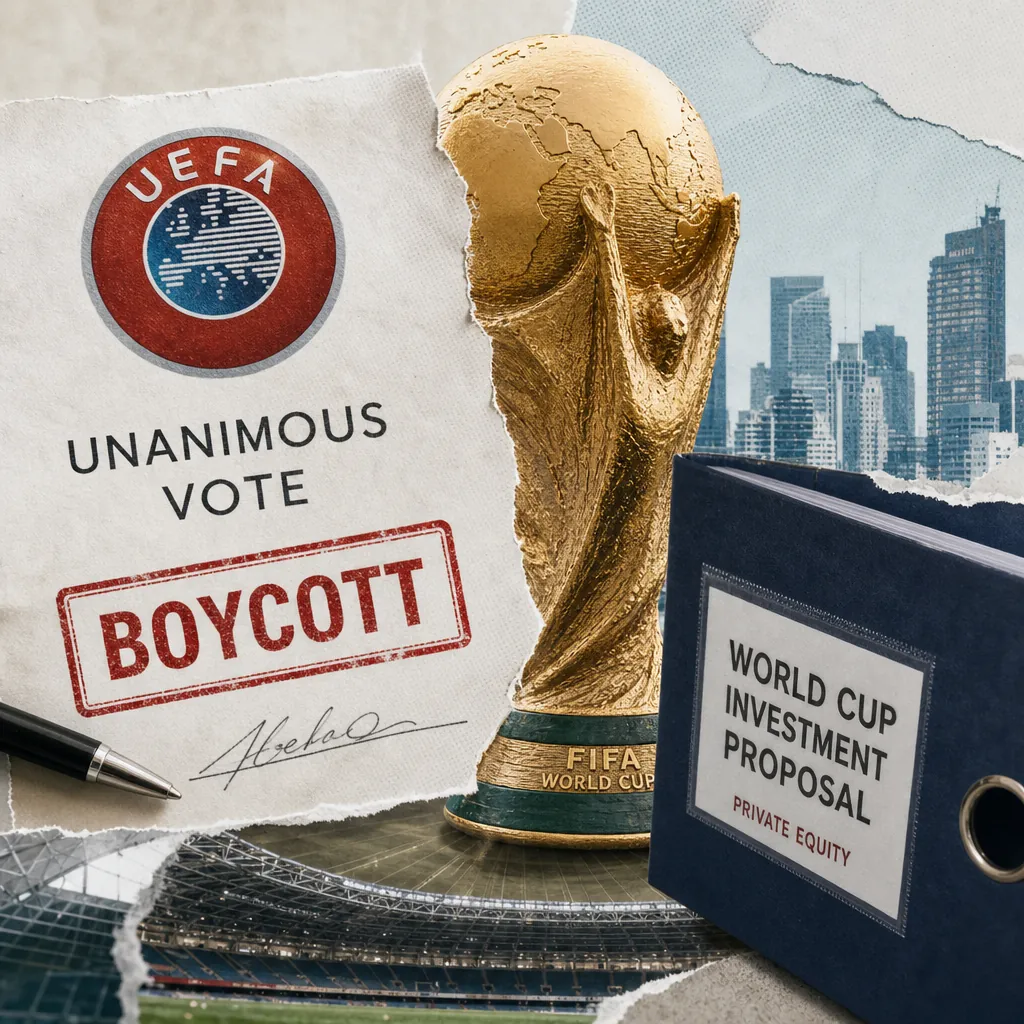
The day's conversation was dominated by a seismic development in global football: UEFA and its 55 member associations voted unanimously on Thursday to boycott all FIFA tournaments, including the men's and women's World Cups, in protest of FIFA's plan to sell a minority stake in the World Cup to private investors. The decision, reported by multiple outlets including CNBC, Fox News, The Guardian, Forbes, and The Straits Times, represents an unprecedented escalation in the conflict between European football's governing body and FIFA President Gianni Infantino. The boycott would take effect if FIFA proceeds with its proposal to create a new commercial entity, FIFA Forward Enterprise (FFE), that would sell roughly 20% stakes to external investors, a plan backed by Jared Kushner's investment firm. UEFA's statement declared that no European teams would participate in any FIFA competition "so long as these proposals remain alive," unless the plan is "abandoned in its entirety" and binding assurances are given. The move has drawn sharp reactions: U.S. Representative Jamie Raskin, the top Democrat on the House Judiciary Committee, warned of a potential congressional investigation, calling the plan a "smash-and-grab scam of colossal proportions" and highlighting FIFA's ties to the Trump administration. The English FA, Scottish FA, and Danish FA all voiced support for the boycott. The coverage across the captured set was extensive, with CNBC's article alone carrying an estimated advertising-equivalent value of ₱822,759, and Forbes at ₱613,800, indicating heavy newsroom attention. On social media, the story sparked intense debate, with fans and analysts weighing the implications for the 2030 World Cup, which could be missing European powerhouses like Germany, France, and Spain. The conversation also touched on the broader governance crisis within FIFA, with many questioning the legitimacy of the September 19 deadline for member associations to approve the deal. This development overshadows other sports news, but the Philippine basketball scene also saw notable coverage, including PBA updates and the Jones Cup team announcement, as well as the BTS Grammy boycott, which resonated with K-pop fans globally.
Key themes
- UEFA's historic boycott threat against FIFA – European football's governing body unanimously voted to boycott all FIFA tournaments if the World Cup privatization plan proceeds, marking a potential rupture in the sport's global governance.
- FIFA's private equity plan draws political scrutiny – U.S. Representative Jamie Raskin warned of a congressional investigation, accusing FIFA of a "smash-and-grab scam" and highlighting ties to the Trump administration and Jared Kushner.
- Philippines launches EV incentive program – President Marcos signed Executive Order No. 121 establishing the Electric Vehicle Incentive Strategy (EVIS), offering fiscal incentives to attract EV manufacturing investments, with Mitsubishi Motors pledging ₱7 billion.
- Philippines trade deficit widens in June – The trade gap reached $4.94 billion, up 12.3% year-on-year, as imports outpaced record-high exports driven by AI-related semiconductor demand.
- BTS boycotts Grammys over new Asian pop category – The K-pop group announced it will not submit music for the 2027 Grammys, criticizing the new "Best Asian Pop Music Performance" category as divisive.
- Jersey Mike's IPO debuts below pricing – The sandwich chain's stock opened at $21 per share, below its $23 IPO price, raising about $1 billion and valuing the company at $7.3 billion.
- Philippine basketball: PBA updates and Jones Cup team – San Miguel Beer's dominant win, Ginebra's struggles, and Strong Group Athletics' roster additions for the William Jones Cup were covered.
- Food safety recalls: Dairy Queen and Rohto eye drops – The FDA announced recalls of Dairy Queen chocolate soft-serve mix for metal shavings and over 12 million bottles of Rohto eye drops for sterility concerns.
How the narratives stack
Dominant – Within the captured set, the UEFA boycott threat against FIFA is the dominant narrative, drawing the highest advertising-equivalent value and extensive coverage from major international outlets. The story's consequence for global football and its political ramifications make it the day's most significant development.
Counter-narrative – A counter-narrative, primarily on social media and in some opinion pieces, questions the effectiveness of a boycott, arguing that it could harm European teams and fans more than FIFA. Some commentators suggest the boycott is a negotiating tactic rather than a genuine threat.
Emerging – The Philippines' EV incentive program (EVIS) is an emerging narrative, with coverage from BusinessWorld and Head Topics. The program's potential to attract major automakers and boost the local supply chain is gaining attention, though it remains early-stage.
Suppressed – The story of the Michigan taco truck owner facing harassment for catering a Republican event received coverage but was largely overshadowed by the FIFA crisis. The incident highlights political polarization affecting small businesses, but it did not gain the same traction as the sports governance story.
Platform insights
- Facebook – The UEFA boycott story was widely shared by football fan pages and news outlets, generating thousands of comments debating the merits of the boycott. Many users expressed support for UEFA, while others criticized FIFA's governance. The BTS Grammy boycott also trended among K-pop fan groups, with posts calling for solidarity.
- X (formerly Twitter) – The platform saw real-time reactions from journalists, politicians, and fans. Jamie Raskin's warning about a congressional inquiry was retweeted heavily. The hashtag #UEFABoycott trended globally, with users posting memes and analysis. The BTS announcement also trended, with fans expressing pride in the group's stance.
- Reddit – On r/soccer and r/worldnews, threads about the UEFA boycott received high engagement, with users discussing the implications for the 2030 World Cup and FIFA's financial structure. The BTS boycott was discussed on r/kpop, where fans debated the Grammys' handling of Asian music.
- YouTube – News channels like CNBC and Fox News uploaded videos analyzing the boycott, garnering tens of thousands of views. Sports commentary channels also produced content speculating on the future of the World Cup.
Key voices and communities
- Football governing bodies and officials – UEFA, the English FA, Scottish FA, and Danish FA are central voices, framing the boycott as a defense of football's integrity against private ownership. Their statements are widely cited.
- U.S. political figures – Representative Jamie Raskin emerged as a key voice, threatening a congressional investigation and linking FIFA to the Trump administration. His comments added a political dimension to the story.
- Football fans and analysts – On social media, fans and pundits are driving conversation, with many supporting UEFA but some questioning the boycott's feasibility. The community is split between those who see it as necessary and those who fear it will harm the sport.
- K-pop fans (ARMY) – The BTS boycott mobilized the group's fanbase, who amplified the message on social media and criticized the Grammys for creating a separate category for Asian pop.
- Philippine business and government officials – Trade Secretary Cristina Roque and PEZA Director General Tereso Panga are key voices promoting the EVIS program and new trade agreements, framing them as boosts to competitiveness.
Narrative streams
UEFA's boycott threat: A crisis for global football
On July 30, UEFA and its 55 member associations voted unanimously to boycott all FIFA tournaments if FIFA proceeds with its plan to sell a minority stake in the World Cup to private investors. The plan, which involves creating a new entity called FIFA Forward Enterprise (FFE), would sell roughly 20% stakes to external investors, including a firm backed by Jared Kushner, former President Donald Trump's son-in-law. UEFA's statement declared that no European teams would participate in any FIFA competition "so long as these proposals remain alive," unless the plan is "abandoned in its entirety" and binding assurances are given. The boycott would affect the men's and women's World Cups, as well as the Club World Cup. The English FA said, "We stand shoulder to shoulder with our European colleagues and fully support the collective view. We oppose FIFA's plans - the FIFA World Cup belongs to football and always will." The Scottish FA board agreed "unequivocally with the concerns raised by all members over the manner in which these proposals have been issued, and deadline set, without a full consultation process or consideration to good governance." The coverage in the captured set was extensive, with CNBC's article carrying an estimated advertising-equivalent value of ₱822,759, Forbes at ₱613,800, and The Guardian at ₱199,800. The story also drew political attention: U.S. Representative Jamie Raskin, the top Democrat on the House Judiciary Committee, warned of a potential congressional investigation, calling the plan a "smash-and-grab scam of colossal proportions" and accusing FIFA of embedding itself in a pattern of corruption surrounding the Trump administration. Raskin vowed to make FIFA an early target of scrutiny if Democrats reclaim the House in November. The development has massive implications for the 2030 World Cup, which is set to be hosted by Spain, Portugal, and Morocco, and could be missing European powerhouses. The September 19 deadline for FIFA's 211 member associations to approve the plan adds urgency. For the sports sector, this crisis threatens the unity of global football and could lead to a split similar to the breakaway European Super League attempt. Communicators should prepare for heightened scrutiny of FIFA's governance and the role of private equity in sports.
Philippines launches EV incentive program to boost manufacturing
President Ferdinand Marcos Jr. signed Executive Order No. 121 on July 30, establishing the Electric Vehicle Incentive Strategy (EVIS) program. The program offers "time-bound, targeted, performance-based and transparent" fiscal incentives to manufacturers of battery electric and hybrid passenger cars, commercial vehicles, and their parts and components. The goal is to narrow the cost gap between EVs and conventional vehicles, set domestic production targets over the next eight years, and encourage major auto manufacturers to establish operations in the Philippines. Malacañang said the program aims to help the country seize market opportunities from the global transition to electric mobility and deepen its role in the regional EV supply chain. Mitsubishi Motors has already pledged a ₱7-billion investment in hybrid vehicle production. The coverage in the captured set included BusinessWorld (₱424,393 in estimated advertising-equivalent value) and Head Topics (₱356,970). The EVIS program is part of a broader push to attract high-value investments, alongside the lifting of the moratorium on IT parks and centers in Metro Manila, which PEZA Director General Tereso Panga called a "major policy breakthrough." For the automotive and manufacturing sectors, this signals a clear government commitment to EV adoption and local production, potentially creating jobs and reducing reliance on imported vehicles. However, the success of the program will depend on implementation and the ability to compete with other countries in the region, such as Thailand and Indonesia, which have established EV industries.
Philippines trade deficit widens to $4.94 billion in June
The Philippine Statistics Authority reported on July 30 that the country's trade-in-goods deficit widened to $4.94 billion in June, up 12.3% from $4.4 billion in the same month last year. Exports jumped 24.1% to a record high, driven by rising global demand for semiconductors and other electronics, particularly from the artificial intelligence (AI) boom. Imports also grew, outpacing exports and widening the deficit. Month-on-month, the trade gap narrowed from $6.1 billion in May. The country's trade balance has been in deficit for over a decade, since the surplus recorded in May 2015. Chinabank Research noted that "rising global demand for semiconductors and other electronics is increasingly shaping the Philippines' trade profile." The coverage in the captured set included BusinessWorld (₱490,668) and Philstar (₱363,109). For the economy, the widening deficit underscores the country's reliance on imports for capital goods and raw materials, even as exports benefit from the AI-driven tech cycle. Policymakers may need to focus on boosting domestic production and diversifying export markets to narrow the gap.
BTS boycotts Grammys over new Asian pop category
K-pop group BTS announced on July 30 that it will not submit any music for consideration at the 69th Annual Grammy Awards in February 2027, citing dissatisfaction with the Recording Academy's new category for "Best Asian Pop Music Performance." The category, announced on June 16, covers music from South Korea, Japan, China, and other Asian markets, including K-pop, J-pop, and C-pop, with meaningful use of one or more Asian languages. BTS members shared the news on Instagram, writing, "We have decided not to enter the Grammys this year. I hope that music can be heard and loved for what it is, rather than being divided by region or language." This marks the first time the group has opted out of the awards. The decision has sparked debate about whether the category is a step toward recognition or a form of segregation. The coverage in the captured set included BusinessWorld (₱347,653) and Head Topics (₱290,955). For the music industry, BTS's boycott could pressure the Recording Academy to reconsider its approach to global music categories and may influence other Asian artists. The move also highlights the growing influence of K-pop and the desire for equal treatment in Western award shows.
Jersey Mike's IPO debuts below pricing
Jersey Mike's Subs made its public debut on the New York Stock Exchange on July 30 under the ticker "JMKE," with shares opening at $21, below the initial public offering (IPO) price of $23. The company raised approximately $1 billion by selling 43.5 million shares, valuing it at $7.3 billion. The stock was trading down about 2% by Thursday afternoon. The $23 price came at the midpoint of the marketed range of $21 to $25. Jersey Mike's, backed by Blackstone and the Abu Dhabi Investment Authority, is the second-largest hoagie chain by sales behind Subway. In 2025, the company posted total revenue of $724 million and net income of $55 million, with same-store sales rising 3%. The IPO is one of the largest in the restaurant industry. Coverage in the captured set included CNBC (₱236,232) and Yahoo Philippines (₱126,600). For the restaurant sector, the IPO's performance signals investor appetite for fast-casual chains, but the below-pricing open suggests caution amid market volatility. The company's growth story, including expansion plans and loyalty programs, will be key to its stock performance.
Philippine basketball: PBA updates and Jones Cup team
The Philippine Basketball Association (PBA) Governors Cup continued with several notable games and developments. San Miguel Beer erupted for 143 points in a 38-point demolition of Titan Ultra Giant Risers, with import George King delivering 35 points, eight rebounds, and eight assists. Barangay Ginebra, the reigning Commissioners Cup champions, struggled with a 1-2 record, leading coach Tim Cone to criticize his team's effort. TNT Tropang 5G hopes import Rahlir Hollis-Jefferson can address their import woes after Darius Days was deemed overweight and out of shape. Meanwhile, Strong Group Athletics announced the addition of veteran wings Matthew Wright, William Navarro, and Shaun Ildefonso for the 45th William Jones Cup in Taiwan next month. The team aims for a third consecutive title. Coverage in the captured set included Manila Times (₱334,236 for Ginebra-Meralco article), Philstar (₱324,719 for Gin Kings article), and Panay News (₱163,812 for Beermen article). For Philippine sports, these stories highlight the competitive landscape and the importance of imports in the PBA, as well as the country's participation in regional tournaments.
Food safety recalls: Dairy Queen and Rohto eye drops
Two significant recalls were reported on July 30. The U.S. Food and Drug Administration (FDA) announced a recall of 74 cases of DQ Chocolate Reduced Fat Ice Cream Mix, produced by Galliker Dairy Co., after metal shavings were found in the product. The recall was initiated on May 21 and classified as Class II, meaning contact may cause temporary or medically reversible adverse health consequences. The mix was distributed to Dairy Queen restaurants in Delaware, Maryland, New Jersey, New York, and Pennsylvania. Separately, over 12 million bottles of Rohto-brand eye drops were recalled nationwide for "lack of assurance of sterility," meaning the bottles could have lost sterile properties that prevent germ contamination and infection. The recall, initiated on July 14 by Rohto-Mentholatum, affects products manufactured in Vietnam and distributed through the Mentholatum Company. Coverage in the captured set included Yahoo Philippines (₱79,800 for eye drops, ₱76,800 for Dairy Queen). For consumers, these recalls underscore the importance of checking product recalls and the potential risks of contamination in everyday products. Companies should ensure robust quality control and transparent communication with regulators.
Conversation trajectory
- Over the next 4–6 weeks: The UEFA-FIFA crisis will likely intensify as the September 19 deadline approaches. Expect more national associations to take sides, with potential boycotts from other confederations. The U.S. Congress may hold hearings if Democrats gain momentum. The story will dominate sports news and could spill into political discourse.
- Over the next 2–3 months: The Philippines' EVIS program will begin to attract investment announcements, with Mitsubishi's pledge as a bellwether. The trade deficit will continue to be monitored, with AI-driven exports providing a buffer. The BTS Grammy boycott may inspire other Asian artists to take similar stances, potentially leading to changes in award show categories.
- Trigger events: The September 19 FIFA deadline is a key trigger; if FIFA proceeds without changes, the boycott could become reality. Any new investment pledges under EVIS will boost confidence. The release of Jersey Mike's first quarterly earnings as a public company will be closely watched.
Response guidance
- For sports organizations: Prepare for reputational risks associated with FIFA's governance crisis. Emphasize transparency and stakeholder consultation. Avoid taking sides publicly unless aligned with your region's governing body. Monitor social media for fan sentiment and be ready to address questions about the future of international competitions.
- For automotive and manufacturing companies: Leverage the EVIS program to highlight investment opportunities in the Philippines. Communicate sustainability goals and alignment with government incentives. Be proactive in addressing supply chain and tariff concerns.
- For consumer goods companies: The food safety recalls highlight the need for rigorous quality assurance. Ensure recall communication is clear and timely. Use social media to provide updates and reassure customers.
- For entertainment and music industry: The BTS boycott signals a shift in how global artists view award categories. Consider inclusive approaches that celebrate diversity without creating divisions. Engage with fan communities to understand their perspectives.
See the full picture behind today's signals.
This report draws from Media Meter's MediaWatch, our real-time monitoring engine tracking 2,470+ Philippine sources across print, broadcast, digital, and social. Explore how the platform turns raw coverage into decision-grade intelligence, then see how it's configured for teams like yours — whether you're in PR agencies, corporate comms, government, or marketing.
Want more? Browse our Report Library for sector and crisis intelligence, or request a demo and we'll have your brand set up before the call.
Want this kind of intelligence on your brand?
This brief is built on the same MediaWatch methodology that runs continuously across every brand we monitor. See your competitive landscape, Impact Score, and narrative trajectory in a 30-minute demo.